TO BE NOTED: From Resolve Uganda:
"BREAKING NEWS: Landmark legislation to help end war introduced TODAY in US Congress
 After much anticipation (and more than a little hand-wringing here at Resolve Uganda HQ), the "LRA Disarmament and Northern Uganda Recovery Act" was introduced in both the US Senate and House of Representatives today.
This landmark legislation does three key things to help end the immediate violence being committed by the LRA and also help assist those communities who have been affected by the war. They are:
-Requires a strategy for stopping the LRA: The bill mandates Secretary of State Clinton to devise an interagency strategy to apprehend top LRA leaders and demobilize child soldiers held within rebel ranks;
- Provides lifesaving aid: It increases emergency support to communities in the DR Congo most affected by recent LRA attacks;
- Invests in sustainable peace: The legislation will target US assistance to recovery and reconciliation efforts in northern Uganda to help prevent further outbreaks of conflict.
The bill was introduced by Senators Brownback (R-KS) and Feingold (D-WI) in the Senate and Representatives McGovern (D-MA), Miller (D-NC) and Royce (R-CA) in the House of Representatives.
Here's some of what Senator Feingold had to say when he introduced the bill today: "If we are now to finally see this conflict to its end, we need to commit to a proactive strategy to help end the threat posed by the LRA and support reconstruction, justice, and reconciliation in northern Uganda. This bill seeks to do just that.
The Lord’s Resistance Army Disarmament and Northern Uganda Recovery Act of 2009 reaffirms and refocuses that commitment to help see this—one of Africa’s longest running and most gruesome rebel wars—to its finish. I believe that, with the necessary leadership and strategic vision envisioned by this legislation, we can contribute to that end. I urge my colleagues to support this bill."
We have our work cut out for us in getting this legislation passed and signed by President Obama, but today is the first step!
Many (many) more details to come in the days to follow. For the daring and courageous, click here to download the bill and read the full text."
O:\DAV\DAV09327.xml S.L.C.
111TH CONGRESS
1ST SESSION S. ll
To support stabilization and lasting peace in northern Uganda and areas
affected by the Lord’s Resistance Army through development of a regional
strategy to support multilateral efforts to successfully protect
civilians and eliminate the threat posed by the Lord’s Resistance Army
and to authorize funds for humanitarian relief and reconstruction, reconciliation,
and transitional justice, and for other purposes
IN THE SENATE OF THE UNITED STATES
llllllllll
Mr. FEINGOLD (for himself and Mr. BROWNBACK) introduced the following
bill; which was read twice and referred to the Committee on
llllllllll
A BILL
To support stabilization and lasting peace in northern Uganda
and areas affected by the Lord’s Resistance Army
through development of a regional strategy to support
multilateral efforts to successfully protect civilians and
eliminate the threat posed by the Lord’s Resistance
Army and to authorize funds for humanitarian relief
and reconstruction, reconciliation, and transitional justice,
and for other purposes
1 Be it enacted by the Senate and House of Representa2
tives of the United States of America in Congress assembled,
2
O:\DAV\DAV09327.xml S.L.C.
1 SECTION 1. SHORT TITLE.
2 This Act may be cited as the ‘‘Lord’s Resistance
3 Army Disarmament and Northern Uganda Recovery Act
4 of 2009’’.
5 SEC. 2. FINDINGS.
6 Congress makes the following findings:
7 (1) For over 2 decades, the Government of
8 Uganda engaged in an armed conflict with the
9 Lord’s Resistance Army (LRA) in northern Uganda
10 that led to the internal displacement of more than
11 2,000,000 Ugandans from their homes.
12 (2) The members of the Lord’s Resistance
13 Army used brutal tactics in northern Uganda, in14
cluding mutilating, abducting, and forcing individ15
uals into sexual servitude and forcing a large num16
ber of children and youth in Uganda, estimated by
17 the Survey for War Affected Youth to be over
18 66,000, to fight as part of the rebel force.
19 (3) The Secretary of State has designated the
20 Lord’s Resistance Army as a terrorist organization
21 and placed the Lord’s Resistance Army on the Ter22
rorist Exclusion list pursuant to section 212(a)(3) of
23 the Immigration and Nationality Act (8 U.S.C.
24 1182(a)(3)).
25 (4) In late 2005, according to the United Na26
tions Office for Coordination of Humanitarian Af3
O:\DAV\DAV09327.xml S.L.C.
1 fairs, the Lord’s Resistance Army shifted their pri2
mary base of operations from southern Sudan to
3 northeastern Democratic Republic of Congo, and the
4 rebels have since withdrawn from northern Uganda.
5 (5) Representatives of the Government of
6 Uganda and the Lord’s Resistance Army began
7 peace negotiations in 2006, mediated by the Govern8
ment of Southern Sudan in Juba, Sudan, and signed
9 the Cessation of Hostilities Agreement on August
10 20, 2006, which provided for hundreds of thousands
11 of internally displaced people to return home in safe12
ty.
13 (6) After nearly 2 years of negotiations, rep14
resentatives from the parties reached the Final
15 Peace Agreement in April 2008, but Joseph Kony,
16 the leader of the Lord’s Resistance Army, refused to
17 sign the Final Peace Agreement in May 2008 and
18 his forces launched new attacks in northeastern
19 Congo.
20 (7) According to the United Nations Office for
21 the Coordination of Humanitarian Relief, the new
22 activity of the Lord’s Resistance Army in north23
eastern Congo and southern Sudan since September
24 2008 has led to the abduction of at least 711 civil4
O:\DAV\DAV09327.xml S.L.C.
1 ians, including 540 children, and the displacement of
2 more than 160,000 people.
3 (8) In December 2008, the military forces of
4 Uganda, the Democratic Republic of Congo, and
5 southern Sudan launched a joint operation against
6 the Lord’s Resistance Army’s bases in northeastern
7 Congo, but the operation failed to apprehend Joseph
8 Kony, and his forces retaliated with a series of new
9 attacks and massacres in Congo and southern
10 Sudan, killing an estimated 900 people in 2 months.
11 (9) The escalated activity of the Lord’s Resist12
ance Army over recent months and the inability of
13 military operations to stop them or protect civilians
14 has perpetuated fears amongst communities in
15 northern Uganda that the rebels could cross back
16 into Uganda in the future, which complicates ongo17
ing recovery efforts.
18 (10) Despite the refusal of Joseph Kony to sign
19 the Final Peace Agreement, the Government of
20 Uganda has committed to continue reconstruction
21 plans for northern Uganda, and to implement those
22 mechanisms of the Final Peace Agreement not con23
ditional on the compliance of the Lord’s Resistance
24 Army.
5
O:\DAV\DAV09327.xml S.L.C.
1 (11) Since April 2008, recovery efforts in
2 northern Uganda have moved forward with the fi3
nancial support of the United States and other do4
nors, but have been hampered by a lack of strategic
5 coordination, logistical delays, and limited capacity
6 of the Government of Uganda.
7 (12) Continued economic disparities between
8 northern Uganda and the rest of the country and a
9 failure to take meaningful steps toward reconcili10
ation and accountability, if unchanged, risk perpet11
uating longstanding political grievances and fueling
12 new conflicts.
13 SEC. 3. STATEMENT OF POLICY.
14 It is the policy of the United States to work vigor15
ously for a lasting resolution to the conflict in northern
16 and eastern Uganda and other affected areas by—
17 (1) eliminating the threat posed by the Lord’s
18 Resistance Army to civilians and regional stability
19 through political, economic, military, and intelligence
20 support for a comprehensive multilateral effort to
21 protect civilians in affected areas, to apprehend or
22 otherwise remove Joseph Kony and his top com23
manders from the battlefield, and to disarm and de24
mobilize Lord’s Resistance Army fighters; and
6
O:\DAV\DAV09327.xml S.L.C.
1 (2) further supporting comprehensive recon2
struction, transitional justice, and reconciliation ef3
forts as affirmed in the Northern Uganda Crisis Re4
sponse Act of 2004 (Public Law 108–283) and sub5
sequent resolutions, including Senate Resolution
6 366, 109th Congress, agreed to February 2, 2006,
7 Senate Resolution 573, 109th Congress, agreed to
8 September 19, 2006, Senate Concurrent Resolution
9 16, 110th Congress, agreed to in the Senate March
10 1, 2007, and House Concurrent Resolution 80,
11 110th Congress, agreed to in the House of Rep12
resentatives June 18, 2007.
13 SEC. 4. REQUIREMENT OF A REGIONAL STRATEGY FOR DIS14
ARMING THE LORD’S RESISTANCE ARMY.
15 (a) REQUIREMENT FOR STRATEGY.—Not later than
16 180 days after the date of the enactment of this Act, the
17 President shall develop and submit to the appropriate
18 committees of Congress a regional strategy to guide
19 United States support for multilateral efforts to protect
20 civilians from attacks by the Lord’s Resistance Army, to
21 eliminate the threat to civilians and regional stability
22 posed by the Lord’s Resistance Army, and to enforce the
23 rule of law and ensure full humanitarian access in LRA24
affected areas.
7
O:\DAV\DAV09327.xml S.L.C.
1 (b) CONTENT OF STRATEGY.—The strategy should
2 include the following:
3 (1) A viable plan to protect civilians from at4
tacks by the Lord’s Resistance Army and eliminate
5 the threat posed by the Lord’s Resistance Army,
6 while building institutions in the affected areas that
7 can help to maintain the rule of law and prevent
8 conflict in the long term.
9 (2) An interagency framework to plan, coordi10
nate, and execute all diplomatic economic, intel11
ligence, and military elements of United States pol12
icy across the region regarding the Lord’s Resist13
ance Army.
14 (3) A description of the type and form of diplo15
matic engagement to work with regional mecha16
nisms, including the Tripartite Plus Commission and
17 the Great Lakes Pact, and to coordinate the imple18
mentation of United States policy toward the Lord’s
19 Resistance Army across the region.
20 (4) A description of how this engagement will
21 fit within the context of broader efforts and policy
22 objectives in the Great Lakes Region.
23 (5) A framework to evaluate the progress and
24 effectiveness of the United States strategy toward
8
O:\DAV\DAV09327.xml S.L.C.
1 eliminating the threat posed by the Lord’s Resist2
ance Army.
3 (c) FORM.—The strategy under this section shall be
4 submitted in unclassified form, but may include a classi5
fied annex.
6 SEC. 5. HUMANITARIAN ASSISTANCE FOR AREAS OUTSIDE
7 UGANDA AFFECTED BY THE LORD’S RESIST8
ANCE ARMY.
9 (a) AUTHORITY.—In accordance with section 491 of
10 the Foreign Assistance Act of 1961 (22 U.S.C. 2292) and
11 section 2 of the Migration and Refugee Assistance Act of
12 1962 (22 U.S.C. 2601), the President is authorized to
13 provide assistance to respond to the humanitarian needs
14 of populations in northeastern Congo, southern Sudan,
15 and Central African Republic affected by the activity of
16 the Lord’s Resistance Army.
17 (b) AUTHORIZATION OF APPROPRIATIONS.—There is
18 authorized to be appropriated $10,000,000 for fiscal year
19 2010 to carry out this section.
20 SEC. 6. ASSISTANCE FOR RECOVERY AND RECONSTRUC21
TION IN NORTHERN UGANDA.
22 (a) AUTHORITY.—It is the sense of Congress that the
23 President should support efforts by the people of northern
24 Uganda and the Government of Uganda—
9
O:\DAV\DAV09327.xml S.L.C.
1 (1) to assist internally displaced people in tran2
sition and returnees to secure durable solutions by
3 spurring economic revitalization, supporting liveli4
hoods, helping to alleviate poverty, and advancing
5 access to basic services at return sites, specifically
6 clean water, health care, and schools;
7 (2) to enhance the accountability and adminis8
trative competency of local governance institutions
9 and public agencies in northern Uganda with regard
10 to budget management, provision of public goods
11 and services, and related oversight functions;
12 (3) to strengthen the operational capacity of the
13 civilian police in northern Uganda to enhance public
14 safety, prevent crime, and deal sensitively with gen15
der-based violence, while strengthening account16
ability measures to prevent corruption and abuses;
17 (4) to rebuild and improve the capacity of the
18 justice system in northern Uganda, including the
19 courts and penal systems, with particular sensitivity
20 to the needs and rights of women and children;
21 (5) to establish mechanisms for the disar22
mament, demobilization, and reintegration of former
23 combatants, including vocational education and em24
ployment opportunities; and
10
O:\DAV\DAV09327.xml S.L.C.
1 (6) to promote programs to address psycho2
social trauma, particularly post-traumatic stress dis3
order.
4 (b) FUTURE YEAR FUNDING.—It is the sense of Con5
gress that the Secretary of State and Administrator of the
6 United States Agency for International Development
7 should work with the appropriate committees of Congress
8 to increase assistance in future fiscal years to support ac9
tivities described in this section if the Government of
10 Uganda demonstrates a commitment to transparent and
11 accountable reconstruction in war-affected areas of north12
ern and eastern Uganda, specifically by—
13 (1) finalizing the establishment of mechanisms
14 within the Office of the Prime Minister to suffi15
ciently manage and coordinate the programs under
16 the framework of the Peace Recovery and Develop17
ment Plan for Northern Uganda (PRDP);
18 (2) increasing oversight activities and reporting
19 to ensure funds under the Peace Recovery and De20
velopment Plan for Northern Uganda framework are
21 used efficiently and with minimal waste; and
22 (3) committing substantial funds of its own,
23 above and beyond standard budget allocations to
24 local governments, to the task of implementing the
25 Peace Recovery and Development Plan for Northern
11
O:\DAV\DAV09327.xml S.L.C.
1 Uganda such that communities affected by the war
2 can recover.
3 (c) COORDINATION WITH OTHER DONOR NA4
TIONS.—The United States should work with other donor
5 nations, on a bilateral and multilateral basis, to increase
6 contributions for recovery efforts in northern Uganda and
7 strengthen accountability mechanisms to ensure the trans8
parent and timely use of those funds.
9 (d) TERMINATION OF ASSISTANCE.—It is the sense
10 of Congress that the Secretary of State should withhold
11 bilateral assistance to the Republic of Uganda for the pur12
poses described under this section if the Secretary deter13
mines that the Government of Uganda is not committed
14 to transparent and accountable reconstruction and rec15
onciliation in the war-affected areas of northern and east16
ern Uganda.
17 SEC. 7. ASSISTANCE FOR RECONCILIATION AND TRANSI18
TIONAL JUSTICE IN NORTHERN UGANDA.
19 (a) SENSE OF CONGRESS.—It is the sense of Con20
gress that the President should support efforts by the peo21
ple of northern Uganda and the Government of Uganda
22 to advance efforts to promote transitional justice and rec23
onciliation on both local and national levels, including to
24 implement the following mechanisms outlined in the
25 Annexure to the Agreement on Accountability and Rec12
O:\DAV\DAV09327.xml S.L.C.
1 onciliation between the Government of Uganda and the
2 Lord’s Resistance Army/Movement, signed at Juba Feb3
ruary 19, 2008, namely—
4 (1) a body to investigate the history of the con5
flict, inquire into human rights violations committed
6 during the conflict by all sides, promote truth-telling
7 in communities, and encourage the preservation of
8 the memory of events and victims of the conflict
9 through memorials, archives, commemorations, and
10 other forms of preservation;
11 (2) a special division of the High Court of
12 Uganda to try individuals alleged to have committed
13 serious crimes during the conflict, and a special unit
14 to carry out investigations and prosecutions in sup15
port of trials;
16 (3) a system for making reparations to victims
17 of the conflict; and
18 (4) a review and strategy for supporting transi19
tional justice mechanisms in affected areas to pro20
mote reconciliation and encourage individuals to
21 take personal responsibility for their conduct during
22 the war.
23 (b) AUTHORIZATION OF APPROPRIATIONS.—There is
24 authorized to be appropriated $10,000,000 for each of fis25
cal years 2010 through 2012 to carry out this section.
13
O:\DAV\DAV09327.xml S.L.C.
1 SEC. 8. REPORT.
2 (a) REPORT REQUIRED.—Not later than 1 year after
3 the submission of the strategy required under section 4,
4 the Secretary of State shall prepare and submit to the ap5
propriate committees of Congress a report on the progress
6 made toward the implementation of the strategy required
7 under section 4 and a description and evaluation of the
8 assistance provided under this Act toward the policy objec9
tives described in section 3.
10 (b) CONTENTS.—The report required under section
11 (a) shall include—
12 (1) a description and evaluation of actions
13 taken toward the implementation of the strategy re14
quired under section 4;
15 (2) a description of assistance provided under
16 section 5 and section 6;
17 (3) an evaluation of bilateral assistance pro18
vided to the Republic of Uganda and associated pro19
grams in light of stated policy objectives;
20 (4) a description of the status of the Peace Re21
covery and Development Plan for Northern Uganda
22 and the progress of the Government of Uganda to
23 take the steps outlined in section 6(b); and
24 (5) a description of amounts of assistance com25
mitted, and amounts provided, to northern Uganda
26 during the reporting period by the Government of
14
O:\DAV\DAV09327.xml S.L.C.
1 Uganda, each donor country, and all relevant organi2
zations.
3 SEC. 9. OFFSET.
4 Of the total amount appropriated to purchase excess
5 secondary inventory for the Department of the Air Force,
6 the amount available for obligation and expenditure shall
7 be reduced by $40,000,000.
8 SEC. 10. DEFINITIONS.
9 In this Act:
10 (1) APPROPRIATE COMMITTEES OF CON11
GRESS.—The term ‘‘appropriate committees of Con12
gress’’ means the Committee on Appropriations and
13 the Committee on Foreign Relations of the Senate
14 and the Committee on Appropriations and the Com15
mittee on International Relations of the House of
16 Representatives.
17 (2) GREAT LAKES REGION.—The term ‘‘Great
18 Lakes Region’’ means the region comprising Bu19
rundi, Democratic Republic of Congo, Rwanda,
20 southern Sudan, and Uganda.
21 (3) LRA-AFFECTED AREAS.—The term ‘‘LRA22
affected areas’’ means the territory affected by the
23 activity of the Lord’s Resistance Army in the past
24 and as of the date of the enactment of this Act,
25 comprising all or parts of northern Uganda, south15
O:\DAV\DAV09327.xml S.L.C.
1 ern Sudan, northeastern Democratic Republic of
2 Congo, and southeastern Central African Republic.


 I've thrown a lot of statistics at you over the past few months.. staggering numbers of displaced people, percentages of populations not receiving any humanitarian aid, frequency of LRA attacks and estimates of how many children have been stolen by the LRA in the Congo and southern Sudan.
 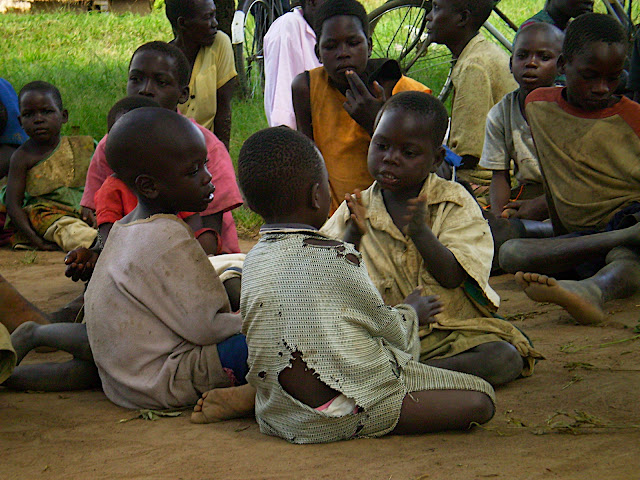 For those of you who have been involved in this movement for some time, the Barlonyo Massacre needs no explanation. For those newer to the cause, it was one of the most horrific attacks in the history of this two-decade war, in which the LRA killed hundreds of civilians in just a few hours in Lira District.
 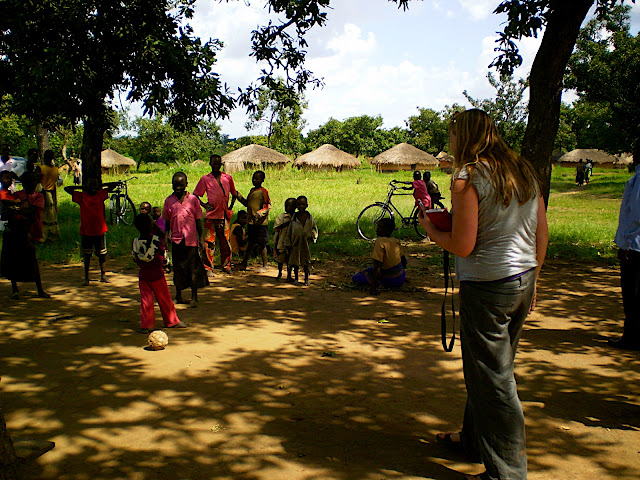 In this line of work, it's sometimes difficult to internalize the meaning and significance of the words and statistics we so readily use... 2 million people, displacement, abductee, atrocity. For me, those words and statistics were given faces and names last August, when I visited Barlonyo with a colleague from
 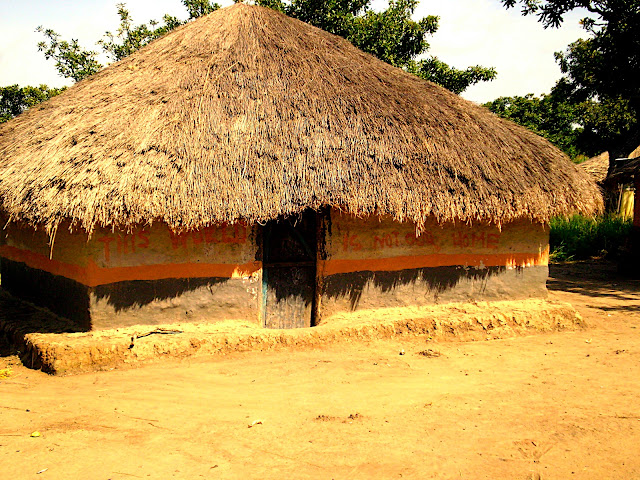 In the conclusion to the field note, its authors remind us that ultimately our search for an end to this war is not about Joseph Kony. It's about what he's done, and more importantly, the people he's done it to. They have stories that, while hard to hear and difficult to read, must be told, and more importantly, listened to. The people who have survived this brutal war are requesting something of each of us.


 Posts
Posts


