Showing posts with label Free Market Econ. Show all posts

Friday, March 6, 2009

All this shows is that this kind of approach is a failure.

From Clusterstock:

"
NYT Bashes Economists For Not Giving Up On Free Markets Yet

We don't think it's possible or productive to blame the financial crisis on any particular ideology. Bush policy was far, far from the laissez-faire dogma his critics made it out to be. Conversely, we do have a market system in most areas, so to say we live in some kind of socialist state is wrong, too.

But Patricia Cohen at the New York Times is dismayed that the financial collapse hasn't prompted academic economists to get on their hands and knees and beg for forgiveness. As she puts it, the "Ivory Tower" elite, still haven't learned the lesson that they were wrong.

This exercise is silly. Not because they're right and she's wrong, but because she thinks it's so obvious that her view has been vindicated, and that their has been invalidated. Of course, we've read similar arguments in more conservative publications on how the crisis proves beyond a doubt that government regulation is a failure (we've even made some ourselves!).

All this shows is that this kind of approach is a failure.

For some reason Cohen's argument appears in the NYT Books section, so maybe that should tell you something.

(via Jeff Tucker)"

Me:

Don the libertarian Democrat (URL) said:
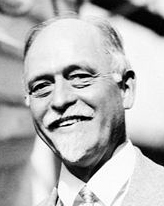
We have a welfare state. The only real question is the mix and balance between government and the private sector, and which interest groups are currently pulling the levers. I'm a very free market person and a Democrat. I follow Milton Friedman in at least three main ways:
1) I think that a guaranteed income would be a fairer and more efficient social safety net than what we have. In the meantime, I'm a strong supporter of a robust social safety net, and my party fits my position on that issue better than the GOP.
2) Like MF, I believe that, in health care, we should either have a government run program or a totally free market. Given where we are, I believe that a government run program is more viable. But the current hybrid is a total mess as far as costs are concerned, and far worse than the extremes.
3) I favor a return to narrow banks, as did Milton Friedman.
Finally, this is Milton Friedman about Socialism:

"MF: At the moment, opinion has shifted a great deal away from the idea of planning. Nobody anymore is a socialist in the dictionary sense, of the ownership and operation of the means of production. Nobody thinks that's the way a country should go. It is widely accepted that private property, private enterprise, and the market are more efficient."

I can't find an actual socialist. The current use is as a meaningless pejorative. The idea that our current investor class, after crying for more and more government support, defies belief. The real worry, from my point of view, is nationalism, and even more concentrated power and wealth. Those are free market concerns, in my view.

People might be interested in this essay:

Read "Did Reagan Rule In Vain? A Closer Look at True Expenditure Levels in the United States and Europe by Jacob Funk Kirkegaard " here:

http://petersoninstitute.org/publications/interstitial.cfm?ResearchID=1096

I do expect more intrusive government in the short run, but that's a bother more than a serious worry.
Don the libertarian Democrat (URL) said:
The idea that our current investor class, after crying for more and more government support, are Cato Scholars, defies belief

Saturday, January 3, 2009

“We had what was for all intents and purposes a systemic bank run for the first time in 70 years,”

Some good points on Bloomberg:

"By James Sterngold

Dec. 31 (Bloomberg) -- It has been a year of record misery: the largest bankruptcy, bank failure and Ponzi scheme in U.S. history; $720 billion in writedowns and losses by financial institutions; $30.1 trillion( AS YET UNEXPLAINED ) in market valuation wiped out.

The biggest loss and the hardest thing to recover, though, may be something that can’t be precisely measured -- confidence in the markets and the firms that rely on them.

“The wholesale funding model lost its credibility,” said David Hendler, senior analyst at New York-based CreditSights Inc. “That started the semi-nationalization( WE SHOULD HAVE ACTUALLY NATIONALIZED SOME OF IT. IT WOULD HAVE BEEN SIMPLER AND MORE EFFECTIVE. ) of funding in the financial markets. It’s a real chink in the armor of capitalism( WE DON'T HAVE THAT. WE HAVE A WELFARE STATE. ) as supposedly the best process for allocating capital. The government( IT HAS BEEN DOING THIS ALL ALONG ) is now deciding who gets access to capital.”

For Paul DeRosa, a principal of Mount Lucas Management Corp., a $1 billion hedge fund in Princeton, New Jersey, most unnerving was that the credit crisis revived something that, like the bubonic plague, was supposed to be a relic of the past.

“We had what was for all intents and purposes a systemic bank run( A CALLING RUN FOLLOWED NOW BY A PROACTIVITY RUN ) for the first time in 70 years,” said DeRosa, whose fund is up 25 percent this year. “This ended our belief that financial panics were a thing of the past( TRUE ). That’s why this is a transcendent event.”

The price tag has been transcendent, too. Global stock markets lost about half of their value in 2008, or $30.1 trillion dollars. In the U.S., $7.2 trillion of shareholder value was wiped off the books, as the Standard & Poor’s 500 Index fell 39 percent through Dec. 30 and the Nasdaq Composite Index dropped 42 percent.

Madoff Swindle

And if market losses weren’t bad enough, as much as $50 billion went up in smoke when New York money manager Bernard L. Madoff confessed to authorities this month to what may be the biggest swindle in history -- an alleged Ponzi scheme that spanned the globe, claiming victims from Alicia Koplowitz, one of Spain’s richest women, to filmmaker Steven Spielberg.

Institutions that seemed as solid as their Manhattan headquarters buildings crumbled. Lehman Brothers Holdings Inc., with assets of $639 billion, filed the largest bankruptcy in U.S. history on Sept. 15. Its creditors may have lost as much $75 billion, the firm’s chief restructuring officer said.

Bear Stearns Cos. was taken over by JPMorgan Chase & Co. in March after a funding crisis triggered by losses from subprime- mortgage investments. Merrill Lynch & Co., facing a crisis of its own, sold itself to Charlotte, North Carolina-based Bank of America Corp. And the last two major investment banks, Goldman Sachs Group Inc. and Morgan Stanley, converted to bank holding companies and got capital injections from the U.S. government.

Bank Failures

In the largest U.S. bank failure, Seattle-based Washington Mutual Inc. collapsed in September with $307 billion in assets.

There were 25 bank failures in 2008, the most in 15 years, according to the Federal Deposit Insurance Corp. The combined assets of lenders that failed in 2008 exceeds the total of those that collapsed in the preceding six years.

New York-based Citigroup Inc., whose shares lost 78 percent of their value this year, needed $20 billion in U.S. bailout funds in November on top of an earlier $25 billion infusion of capital. The government also guaranteed $306 billion of the bank’s troubled assets.

The wave of writedowns and losses that swamped financial institutions around the world reached $720 billion this year. It also eroded employment: 221,360 job cuts in the financial- services industry were announced.

Wall Street bonuses became so rich in recent years that $1 million was referred to as “a buck.” This year, chief executive officers including Lloyd Blankfein of Goldman Sachs and John Mack of Morgan Stanley have said they will get no bonuses at all.

The Amex Securities Brokers/Dealers Index hit a high of 267.69 on June 1, 2007; as of Dec. 30, it stood at 74.26.

AIG, GM

The U.S. government was forced to rescue the world’s largest insurance company, American International Group Inc., with a $152.5 billion package of investments, loans and capital infusions. It had to start purchasing corporate commercial paper to give companies the capital they needed to meet payrolls and conduct routine business.

Overall, the federal government has committed $8.5 trillion( YIKES ) in trying to jumpstart a shrinking economy. General Motors Corp. and Chrysler LLC will get $13.4 billion in federal loans to stay afloat until President-elect Barack Obama’s administration can devise a rescue plan of its own.

The paralysis of credit markets sent ripples through many of the businesses that had flooded Wall Street with profits over the past decade. U.S. corporations raised $4.54 trillion issuing securities in 2008, down from $5.14 trillion in 2007. Global merger activity fell to $2.5 trillion in deals announced from a record $4.1 trillion the previous year.

Loss of Faith

Hedge funds lost 18 percent of their value for the year through November, the worst year since record-keeping began in 1990, according to Chicago-based Hedge Fund Research Inc. Morgan Stanley estimated that, by year end, at least 620 hedge funds will have closed.

At bottom, the debacle amounted to a loss of faith( FEAR AND AVERSION TO RISK ), especially for individual investors. They pulled $215.7 billion from stock mutual funds in the first 11 months of the year, according to Investment Company Institute, a Washington-based association. That compares with a $91 billion inflow of funds for the same period of 2007.

As a result of those withdrawals and market losses, the total net assets in all types of mutual funds fell by $2.67 trillion in the first 11 months of 2008, the institute reported.

While the fear may pass, it will leave permanent changes in its wake. Few believe Wall Street will emerge as anything like the freewheeling industry it was over the past few decades.

“I see this as a Darwinian event,” said Mount Lucas Management’s DeRosa. “You find out which specimens of the species are genetically fit. I’m reasonably sure that things in 2009 will get better, but they’ll get materially worse before( I SAY FOR A FEW MORE MONTHS ) they start to look up.”

To contact the reporter on this story: James Sterngold in Los Angeles at jsterngold2@bloomberg.net"

This post does get the fact that we had a Calling Run, which is similar to a Bank Run. Now we have a proactive shedding of jobs that constitutes a sort of Proactive Firing Run, as well as a proactive decrease in output which is also approaching a run. So, in the wake of a series of bubbles based upon ignoring the fundamentals of investing sense, we now have a simliar downward flight which is also ignoring fundamentals. It doesn't seem to occur to people that the problem of ignoring fundamentals is what got us into this mess, and that ignoring fundamentals could well prolong it.

Somewhere along the line, instead of wailing about the free market, capitalism, nationalization, etc., we are going to need to simply get back to common sense investing basics. That's why I suggest the following:

1) Bagehot's Principles in organizing our financial system.

2) Grant's Graham in organizing our investing system.

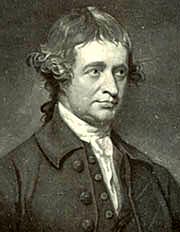
3) A Burkean approach to society that realizes that social dislocation is no more inherently impossible than a financial panic.

4) Serious investigation and prosecution of Fraud, Negligence, Fiduciary Mismanagement, and Collusion. The laws necessary to prosecute these crimes are on the books. What is needed now is the funding and will.

5) A return to Political Economy.

6) A focus on Behavioral Economics.

7) A return to Human Agency Explanations as opposed to pseudo-scientific Mechanistic Explantions of Human Societies, Politics, Etc.

The capitalism/socialism blather is just that. We have a Welfare State, which is a Hybrid System. The real threat to our system remains, as always, Totalitarianism, which can only win out through massive social dislocation, which we need to avoid at all cost.

Thursday, January 1, 2009

"to control its price by buying and selling blocks of shares on the open market."

An alternative to Bagehot's Principles from the FT:

"By Roger E.A Farmer

The US recession that began in December 2007 resulted in 403,000 lost jobs in September, 320,000 in October and 533,000 jobs in November. Projections for 2009 are ominous( BUT THEY ARE PROJECTIONS ).

The global financial system is undergoing a meltdown that has not been seen since the 1930s and nobody seems to know what to do about it. How did we get to this point and how can we move forward?

Since world war two, economic policy in most western democracies has been based on Keynesian economics.( I WOULD SAY THAT WE HAVE WELFARE STATES, WHICH ARE GOVERNMENT/PRIVATE SECTOR HYBRIDS. )

But although policy makers still rely on Keynes’ ideas, academics gave up on his theories 40 years ago and went back to classical economics( THEY ARE BOTH RELEVANT AND USEFUL. THERE'S NO NEED FOR A CHOICE BETWEEN THE TWO. ): Keynesian theory( THAT WHAT IT IS: A THEORY ) could not explain how unemployment and inflation can coincide. The result has been 40 years of disconnect in which policy makers are tinkering with the engine without a manual( SILLY ANALOGY ).

The US stock market has lost 40 per cent in the past three months and this is a good performance by the standards of many global markets.

In classical economics, the prices of stocks are determined by fundamentals and the fundamentals of the economy are sound. The US had the same stock of factories and machines in August that it had in July and the US workforce has not been afflicted by a sudden attack of contagious laziness. Although Keynes didn’t manage to work out all of the details of his theory he was right on one point: In the real world; psychology matters for the behaviour of markets!( WHICH IS WHAT I CALL A HUMAN AGENCY EXPLANATION )

When households believe that assets are not worth much, they spend less; unemployment increases and the belief becomes self-fulfilling( THIS IS TRUE. BELIEFS INFLUENCE BEHAVIOR. ). This is why households and firms are not spending today; they are forecasting further falls in asset prices and there is a real danger that these gloomy forecasts may turn out to be correct( SEE THE RECENT NEWS N ECONOMICS POST ).

We have seen economies stagnate for a decade or more in the past – the UK in the 1920s, the US in the 1930s and Japan in the 1990s – and it would be presumptuous to think that this cannot happen again when the existing dominant paradigm says that it could not happen in the first place( CHEAP SHOT ).

Classical economists argue that falling wages will restore equilibrium; but this is based on the belief that the labour market works like an auction in which employment is determined by demand and supply.( THE MODEL IS OF SOME USE. HERE, IT SHOWS THAT EMPLOYER'S HAVE BEEN PROACTIVELY LAYING OFF WORKERS WHILE DEMAND REMAINS HIGHER THAN THEY ARE ASSUMING. )

It ignores the very real frictions( TRUE. IT'S SIMPLY A MORE OR LESS USEFUL MODEL. NOT REALITY. ) involved in searching for a job by both households and firms that can lead to many possible equilibrium employment levels just as Keynes argued in the General Theory.

For much of the post-war period, the US Federal Reserve has been relatively successful at combating recessions by lowering the interest rate to stimulate aggregate demand. The policy was unavailable in the 1930s because the interest rate on treasury securities was already near zero, just as it is today( ZIRP ). It is this fact( ONE OF THE ONLY ONES, AND EVEN IT IS AN ABSTRACTION FROM THE REALITY AND CONTEXT OF THE TIME. ) that makes the current crisis more like the Great Depression than any other of the post-war recessions.

So where do we go from here? The only actor large enough to restore confidence in the US market is the US government( UNFORTUNATELY, I AGREE. AND THAT IS ITS JOB. ). The current policy of quantitative easing by the Fed is a move in the right direction but it does not, as yet( OK ), go nearly far enough.

It is time for a greatly increased role for monetary policy through direct intervention of central banks in world stock markets to prevent bubbles and crashes( IMPLEMENT BAGEHOT'S PRINCIPLES ). Central banks control interest rates by buying and selling securities on the open market( NO ).

A logical extension of this idea is to pick an indexed basket of securities: one candidate in the US might be the S&P 500, and to control its price by buying and selling blocks of shares on the open market.( A VERY BAD AND BLUNT INSTRUMENT )

Even the credible announcement that a policy of this kind was being considered should be enough to boost( SCARE ) the markets and restore consumer and investor confidence in the real economy( I DON'T AGREE ).

Critics will argue that this policy is dangerous socialist meddling( NO. IT'S BAD POLICY. ). But I am not arguing that the government should pick winners and losers( ACTUALLY, IT WILL HAVE A SLIGHT EFFECT ON THAT I'M AFRAID. ): only that it should stabilise( FIX THE PRICE ) a broad basket of stocks.

This policy would still allow poorly run firms to fail but it would not allow all firms to fail at the same time( BUT WE MIGHT HAVE LESS FIRMS. ). Although the free market is very good at deciding how many left and right shoes to produce( TRUE ), it cannot prevent systemic risk( BANK OR CALLING RUNS ) that arises from the psychology of herd behaviour( I AGREE THAT THE FEAR AND AVERSION TO RISK AND ACCOMPANYING FLIGHT TO SAFETY ARE SUCH BEHAVIOR. ). This is a job for Uncle Sam.( BY IMPLEMENTING BAGEHOT'S PRINCIPLES. ACTUALLY, FDIC INSURANCE HAS HELPED STOP BANK RUNS. BAGEHOT'S PRINCIPLES OFFER SIMILAR AID IN PREVENTING CALLING RUNS. THIS IDEA IS SIMPLY TOO BLUNT AN INSTRUMENT. )

Prof Roger E. A. Farmer is vice chair for graduate studies in the department of economics at the University of California Los Angeles and the author of two forthcoming books on economics: Expectations, Employment and Prices and How the Economy Works and How to Fix it When it Doesn’t"

Saturday, December 27, 2008

"However, the free market does have a cure: it's called a recession, and it's not fun, easy or quick."

A Doomsayer in the WSJ:

"
By PETER SCHIFF

As recession fears cause the nation to embrace greater state control of the economy and unimaginable federal deficits( THIS IS TRUE. THAT'S WHY WE DON'T WANT THEM GENIUS ), one searches in vain for debate worthy of the moment( WE CAN HAVE THE DEBATE LATER, RIGHT NOW WE NEED ACTION. THE TWO AREN'T SYNONYMOUS ). Where there should be an historic clash of ideas, there is only blind resignation and an amorphous queasiness that we are simply sweeping the slouching beast under the rug( DON'T BE DAFT. YOU'RE WRITING IN THE WSJ AND YOU'VE BEEN ALL OVER THE TELLY AND BLOGS. THERE ARE PLENTY OF DISSENTING VIEWS. THEY'RE SIMPLY NOT CONVINCING TO MANY OF US ).

With faith in the free markets now taking a back seat to fear and expediency( SILLY ), nearly the entire political spectrum agrees that the federal government must spend whatever amount is necessary to stabilize the housing market, bail out financial firms, liquefy the credit markets, create jobs and make the recession as shallow and brief as possible( TRUE ). The few who maintain free-market views have been largely marginalized( THEIR VIEWS WON'T WORK. WE DON'T HAVE A FREE MARKET. WE HAVE A HYBRID ).

Taking the theories of economist John Maynard Keynes as gospel( IT'S MORE LIKE A NARRATIVE, BUT YOU OBVIOUSLY FAVOR PEJORATIVES AND OVERSTATEMENTS. YOU'VE BEEN READING MENCKEN, PERHAPS. HE WAS ONE OF A KIND ), our most highly respected contemporary economists imagine a complex world in which economics at the personal, corporate and municipal levels are governed by laws( LAWS? LIKE NEWTONIAN MECHANICS? ) far different from those in effect at the national level.

Individuals, companies or cities with heavy debt and shrinking revenues instinctively( THEN WHY HAVEN'T THEY BEEN DOING THAT UNTIL NOW? ) know that they must reduce spending, tighten their belts, pay down debt and live within their means. But it is axiomatic in Keynesianism that national governments can create and sustain economic activity by injecting printed money into the financial system( IT CAN. AN ECONOMY ISN'T A HOUSEHOLD. BY THE WAY SCIENTIST, THE LAWS OF NATURE ALSO APPLY DIFFERENTLY AT DIFFERENT LEVELS OF EXPLANATION, OTHERWISE WE'D HAVE KEYNE'S CAT OR SOME SUCH MONSTROSITY ). In their view, absent the stimuli of the New Deal and World War II, the Depression would never have ended( MORE LIKE TOTALITARIANISM MIGHT HAVE WON ).

On a gut level( IS THAT A DIFFERENT LEVEL THAN THE NATIONAL? WHAT ARE ITS LAWS? ), we have a hard time with this concept( WHAT IS IT AGAIN? ). There is a vague sense( QUITE SPECIFIC AREN'T YOU GALILEO ) of smoke and mirrors, of something being magically created out of nothing( LIKE THE BIG BANG? ). But economics, we are told, is complicated( MORE LIKE OF LIMITED USE ).

It would be irresponsible in the extreme for an individual to forestall a personal recession by taking out newer, bigger loans when the old loans can't be repaid( ACTUALLY, MANY PEOPLE HAVE MAXED OUT THERE CREDIT CARDS, GONE BUST, AND THEN STARTED OVER AGAIN. PRESUMABLY, ON THIS MODEL, COUNTRIES COULD THIS AS WELL. IT DOES APPLY TO CITIES. ). However, this is precisely what we are planning on a national level.( IT'S A SILLY ARGUMENT )

I believe these ideas hold sway largely because they promise happy, pain-free solutions( ARE THOSE NOT TO BE DESIRED? ). They are the economic equivalent of miracle weight-loss programs that require no dieting or exercise( ENOUGH OF THE ANALOGIES ). The theories permit economists to claim mystic wisdom, governments to pretend that they have the power to dispel hardship with the whir of a printing press, and voters to believe that they can have recovery without sacrifice( MAYBE THEY'D LIKE MUTUAL SACRIFICE ).

As a follower of the Austrian School of economics I believe that market forces apply equally to people and nations( I'VE POSTED ON THE PHILOSOPHY OF THE AUSTRIAN SCHOOL. IT HAS SOME VERY USEFUL INSIGHTS, BUT THIS ISN'T ONE OF THEM. ). The problems we face collectively are no different from those we face individually( OF COURSE THEY ARE ). Belt tightening is required by all, including government( FOR A SCIENTIST, YOU THROW AROUND A LOT OF CLICHES ).

Governments cannot create but merely redirect( IS THIS LIKE THE DEBATE ABOUT WHETHER GOD CREATED THE WORLD FROM NOTHING, OR JUST REARRANGED MATTER? ). When the government spends, the money has to come from somewhere( SAME THING WHEN I SPEND ). If the government doesn't have a surplus, then it must come from taxes( THE GOVERNMENT CAN INVEST. YOU'VE JUST GIVEN A WHOLE TREATISE TELLING US THAT THE NATION AND PEOPLE ARE THE SAME ). If taxes don't go up, then it must come from increased borrowing. If lenders won't lend, then it must come from the printing press, which is where all these bailouts are headed( I SHOULD HOPE SO ). But each additional dollar printed diminishes the value those already in circulation ( AND? ). Something cannot be effortlessly( HOW MUCH EFFORT DOES IT TAKE? ) created from nothing.

Similarly, any jobs or other economic activity created by public-sector expansion merely comes at the expense of jobs lost in the private sector( MORE OR LESS ). And if the government chooses to save inefficient jobs in select private industries, more efficient jobs will be lost in others( THERE'S NO WAY TO KNOW THAT A PRIORI. IT'S CONCEIVABLE THAT THE PRIVATE ECONOMY COULD CREATE EVEN LESS EFFICIENT JOBS ). As more factors of production come under government control, the more inefficient our entire economy becomes( OVER THE LONG RUN THAT IS TRUE ). Inefficiency lowers productivity, stifles competitiveness and lowers living standards( TRUE ).

If we look at government market interventions through this pragmatic lens( WHAT'S PRAGMATIC ABOUT WHAT YOU JUST SAID? IT'S ALL THEORY ), what can we expect from the coming avalanche of federal activism( TELL ME )?

By borrowing more than it can ever pay back( HOW'S THAT ? ), the government will guarantee higher inflation for years to come, thereby diminishing the value( NOT REALLY. PRICES WILL VARY BASED ON MANY FACTORS ) of all that Americans have saved and acquired. For now the inflationary tide is being held back by the countervailing pressures of bursting asset bubbles in real estate and stocks, forced liquidations in commodities, and troubled retailers slashing prices to unload excess inventory. But when the dust settles, trillions of new dollars will remain, chasing a diminished supply of goods. We will be left with 1970s-style stagflation, only with a much sharper contraction and significantly higher inflation( NOT ).

The good news is that economics is not all that complicated( USEFUL ). The bad news is that our economy is broken( IT'S NOT A MACHINE. GOD SPARE US MECHANISTIC THINKERS ) and there is nothing the government can do to fix it. However, the free market does have a cure( THAT MAKES THE UNEMPLOYED WHAT ? ): it's called a recession( AREN'T WE GOING THROUGH IT? ), and it's not fun, easy or quick. But if we put our faith( TRY ARGUMENTS, WHICH YOU HAVEN'T EVEN BOTHERED TO ARGUE AGAINST ) in the power of government to make the pain go away, we will live with the consequences for generations( DON'T BE SILLY. IF WE LISTEN TO YOU, WE WILL LIKELY END UP WITH SERIOUS SOCIAL DISLOCATIONS, WHICH, BELIEVE ME, YOU AREN'T PREPARED TO DEAL WITH. )"

I guess if you're rich, you're supposed to be smart. I don't believe that.

Let's go over this once again. The context determines the range of possible actions. Since he likes analogies, the same is true for human communication. The context determines the meaning of a sentence or word. Because our investor class believes in government bailouts and was preparing for them, they were entirely unprepared to handle this crisis on their own. That is the true context of this crisis. The free market does not exist here. We have a Welfare State. Most people accept its terms of operation.

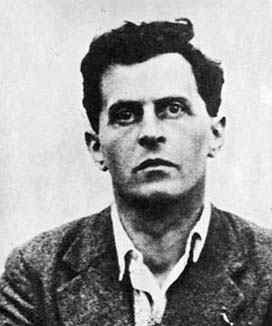
Wittgenstein had a sentence about meaning that applies here:

"If a lion could talk, we could not understand him."

Let's try this:

"If a free market proposal were offered, we could not implement it. "

Let me add a postscript from Thoreau:

"That government is best which governs not at all"; and when men are prepared for it, that will be the kind of government which they will have. "

Men are not prepared for it, including libertarians. It's our job to get them there, but, as a good Burkean, I believe that it will take time and compromise, and nothing is written.


Tuesday, December 16, 2008

"Southern states, which have fronted billions in local taxpayer dollars in the past two decades to attract foreign auto plants"

I mentioned in a previous post that Southern GOP Senators claiming to defend the free market in the Big 3 Bailout was largely BS. I've no doubt that Ideology played some small part in their positions, but the main reasons were Sectionalism and protecting their constituents, and skewering Labor Unions who are a major Interest Group in the Democratic Party. I mentioned that Southern Auto Plants have received government favors in order to be lured to those southern states. I term that Government Intervention.

Here's Matthew Yglesias:

"Nice piece from Mike Lillis at The Washington Independent about the tenuous commitment to free market ideology shown by the union-busting southern conservatives who want the domestic auto industry to die, in order to benefit Dixie-built cars from foreign-owned firms:

“We don’t think it is the role of government to intervene,” Sen. Jim DeMint (R-S.C.) told the Fox Business Network last week. “We need to let the market and the laws work the way they are already in place.”

Yet this argument — that the government has no business interfering in free markets — ignores an increasingly frequent tradition among Southern states, which have fronted billions in local taxpayer dollars in the past two decades to attract foreign auto plants. Those incentives, arriving in the form of tax breaks, training for new employees and even land, have enticed BMW to South Carolina, Mercedes to Alabama and Nissan to Tennessee. The result of the government subsidies has been the steady emergence of the South as an auto-manufacturing powerhouse. Some are dubbing it the “New Detroit” – a region where real estate is cheap and the labor’s not unionized.

Not coincidentally, these Southern states are represented by the same coalition of GOP senators who led the fight against the recent Detroit bailout proposal. That legislation would have provided $14 billion in emergency bridge loans to General Motors and Chrysler, both of which say they lack the finances to survive the month. Rallying behind the animated opposition of GOP Sens. Bob Corker (Tenn.), Richard Shelby (Ala.), Mitch McConnell (Ky.) and South Carolina’s DeMint, Senate Republicans killed the legislation.

This is, of course, but a small slice of the larger southern politics tradition which has always insisted since the end of the Civil War that cheap labor and a low-tax, low-service, high-inequality social and economic system are the key to prosperity. This approach left the South perennially poorer than the rest of the country, but over the past couple of decades this made-in-dixie failed approach to economic development has come to dominate national policy. Not coincidentally, during this period the United States has begun to fall behind high-wage, high-service, low-inequality northern European countries in terms of average living standards."

If people are resorting to incentives to lure industry and jobs to their area, it's not immediately clear how that lowers wages and living standards for that area. It might be true that it has a negative effect on the whole country, but, then, there wouldn't be any Sectionalism, which there clearly is. I list Sectionalism under Interest Groups.

Nevertheless, this does provide yet more evidence that we don't have a "Free Market" system, but, rather, a Mixed Economy or Welfare State, in which various Parties and Interests vie for Government Largess, which, to be fair, they are helping to pay for. This would seem to give them some claim on government aid, depending, of course, on the merits of each individual case.

Friday, October 10, 2008

Whither Free Markets?

Floyd Norris:

"4. This may cause long-term damage to the free-market doctrine, particularly in countries where it is not entrenched. Among the worst performers is the Ho Chi Minh index in Vietnam. That is not very important internationally, but Vietnamese who lost savings may suspect the Americans have struck them again, albeit with weapons of a different sort."

I think that free markets will come back, but in a different form and it might be a while.

Thursday, October 9, 2008

Is The Free Market Dead?

An article by Anthony Faiola which echoes an earlier post from me:

When investors see a concerted effort by governments to deal with this crisis in a global, and guaranteed government manner,i.e, with governments pledging whatever resources are necessary to deal with this crisis, the situation will stabilize and improve. What that means for free market economics is going to be a huge issue going forward, since it isn’t clear that investors actually believe in it.
Here's Faiola:

"The worst financial crisis since the Great Depression is claiming another casualty: American-style capitalism.

Since the 1930s, U.S. banks were the flagships of American economic might, and emulation by other nations of the fiercely free-market financial system in the United States was expected and encouraged. But the market turmoil that is draining the nation's wealth and has up-ended Wall Street now threatens to put the banks at the heart of the U.S. financial system at least partly in the hands of the government.

The Bush administration is considering a partial nationalization of some banks, buying up a portion of their shares to shore them up and restore confidence as part of the $700 billion government bailout. The notion of government ownership in the financial sector, even as a minority stakeholder, goes against what market purists say they see as the foundation of the American system.

Yet the administration may feel it has no choice. Credit, the lifeblood of capitalism, ceased to flow. An economy based on the free market cannot function that way."

Read on.

Where We're Going

Today, on Paul Krugman's blog, I posted the following comment:

  • 87.

    When investors see a concerted effort by governments to deal with this crisis in a global, and guaranteed government manner,i.e, with governments pledging whatever resources are necessary to deal with this crisis, the situation will stabilize and improve. What that means for free market economics is going to be a huge issue going forward, since it isn’t clear that investors actually believe in it.

    — Posted by Don the libertarian Democrat

Here's from Brad DeLong's blog:

"Barry Eichengreen and Richard Baldwin: Rescuing our jobs and savings: What G7/8 leaders can do to solve the global credit crisis: Without rapid and coordinated action by G7/8 leaders, this financial crisis could turn into a jobs crisis, a pension crisis and much more. This column introduces a collection of essays by leading economists on what the G7/8 leaders should do this weekend. The dozen essays present a remarkable consensus on a few points: we need immediate, coordinated global action that includes recapitalisation of the banks."

And here's Gordon Brown via Calculated Risk:

"But because this is a global problem, it requires a global solution. Indeed this now moves to a global stage with a range of international meetings starting this week with the G7 and the IMF and, we propose, culminating in a leaders meeting in which we must lay down the principles and the new policies for restructuring our banking and financial system all around the globe.

... I believe through wider European co-operation and also co-ordination among the leading economies, there are four broad steps we must now all take to restore our international financial system.

First, every bank in every country must meet capital requirements that ensure confidence. Just as in the UK we have made at least £50 billion of new capital available, so other countries where banks have insufficient capital will need to take measures to address this. Only strong and solid banks will be able to serve the global economy.

Secondly, short-term liquidity is simply a means of keeping the system going. What really matters for the future is to open the money markets that have been closed for medium-term funding from the private sector. ...

Thirdly, we must have stronger international rules for transparency, disclosure and the highest standards of conduct. ...

And fourthly, national systems of supervision are simply inadequate to cope with the huge cross-continental flows of capital in this new, ever more interdependent world. ..."

And Bob McTeer gave this as his reason for advocating a rate cut
:

"Wednesday morning it announced a half-point cut in the federal funds and discount rates coordinated with the European Central Bank, the Bank of England and several others. In a posting in my other blog Tuesday, I urged the Fed to do exactly what it did, not so much because it would do much good in the United States, which has already reduced rates substantially, but because it would give the E.C.B. cover to cut its rate."

It's very clear where this crisis is leading. What's less clear is what it means for our economies or economics in the future.

Thursday, October 2, 2008

Rare Occasions Breed Less Rare Occasions

Gary Becker weighs in on the Financial Crisis:

"Finally, the "too big to fail" approach to banks and other companies should be abandoned as new long-term financial policies are developed. Such an approach is inconsistent with a free market economy. It also has caused dubious company bailouts in the past, such as the large government loan years ago to Chrysler, a company that remained weak and should have been allowed to go into bankruptcy. All the American auto companies are now asking for handouts too since they cannot compete against Japanese, Korean, and German carmakers. They will probably get these subsidies, even though these American companies have been badly managed. A "too many to fail" principle, as in the present financial crisis, may still be necessary on hopefully rare occasions, but failure of badly run big financial and other companies is healthy and indeed necessary for the survival of a robust free enterprise competitive system."

And here's the problem facing us once again. He's telling us to leave the government out of it. That's fine, but simply not realistic. Rare occasions breed less rare occasions. I'm sorry, but that's the truth in a pluralistic society.

As always, he makes good points, but they strike me as unreal in our current political climate.

Tuesday, September 23, 2008

How Much And What Kind Of Pain?

Anthony Randazzo gives a free market solution to the current crisis on Reason. It's interesting, but he asks the following:

"Ultimately, the debate over what to do comes down to a threshold of pain and perspective. Capitalist philosophy suggests that short-term financial pain—even a great degree of pain—will prevent long-term financial destruction. The markets, in other words, are going through a cleansing process. But this is not acceptable to many, particularly the politically motivated, who always prefer to solve future problems at a later date.

Here's the issue: Are we willing to consider all treatment options, or will we dive for the quick, easy, and untested procedure and then hope for the best?"

The problem is that some of the pain will fall on parts of the economy not directly involved in this financial crisis.

In order for people to accept such pain, I believe that we would have to put in place a more significant social safety net which would address the issue of people being destitute or wiped out in such a crisis.

So, there are really two options:

1) Put in place regulations to keep such crises from occurring.

2) Have a social safety net to address the problem of the truly needy, in which case such pain might be accepted.

Otherwise, no matter how much we might want to leave government totally out of this equation, it won't be possible.