Showing posts with label ICC. Show all posts

Wednesday, March 18, 2009

Many of us are wondering what we can do to help address this latest crisis in Sudan

TO BE NOTED: From Enough:

"Trying to Put Effective Pressure on Sudan

Printer-friendly version
Congressman Capuano

As readers of this blog know, Sudan’s President Omar al Bashir was indicted for war crimes and crimes against humanity by the International Criminal Court on March 4th. Right after that, the Government of Sudan – at Bashir’s behest – expelled 13 non-governmental aid organizations (NGOs) from Darfur, accusing them of cooperating with the ICC investigation. These groups provide approximately 40-50 percent of the aid in Darfur. Without them, millions of people are at risk of starvation and other preventable deaths.

Many of us are wondering what we can do to help address this latest crisis in Sudan, when President Bashir seems to ignore international pressure and simple appeals to respect life. As Co-Chair of the Sudan Caucus in the House of Representatives, I worked with Rep. Michael McCaul of Texas to circulate three letters to leaders to whom Bashir might listen. We hope in this way Members of Congress could act to restore humanitarian aid in Darfur. The letters are being sent today to President Hu Jintao of China, Secretary-General Amre Moussa of the Arab League of State, and Chairman Muammar Qadhafi of the African Union, asking that they urge Bashir to allow the humanitarian NGOs back into Darfur. China, the Arab League, and the African Union all have friendly relations with Sudan, but it’s also in their best interest to ensure that the humanitarian crisis in Darfur doesn’t spiral out of control. A calmer, more peaceful Sudan will allow them to continue cementing business relationships and exercise political clout, and we are hoping to appeal to their pragmatism as much as anything else.

Crises in Sudan (for example, the North-South civil war that was ended by 2005’s Comprehensive Peace Agreement or CPA and the genocide in Darfur) typically represent an area where Members of Congress can cooperate across party lines to further the interests of peace and justice. Genocide is not a partisan issue. People forced to live in IDP camps don’t care whether the appropriations bill that provides humanitarian aid was authored by a Democrat or a Republican. It is in this spirit that we’ve seen a number of dedicated Members from both parties consistently engage on these issues. Bi-partisan efforts have aimed to make sure that the United States is applying appropriate sanctions to the regime in Khartoum while also doing everything we can to help the IDPs and the peacekeepers charged with keeping them safe.

Concerned citizens can play an active role as well. Many of my colleagues heard from their constituents that they should sign these letters to China, the Arab League, and the African Union. Those voices matter.

The author is a Member of Congress from Massachusetts and co-chairs the Sudan Caucus in the U.S. House of Representatives. This post is the first in a four-part series. Tune in next Wednesday to hear more from Congressman Capuano on Sudan."

Thursday, February 26, 2009

This is not to say that there is reason for skepticism about the tribunal itself

TO BE NOTED: From the UN:

"
Lebanese Tribunal to Begin, With Three Suspects Fewer

Mixed news for the UN tribunal designed to investigate the assassination four years ago of former Lebanese premier Rafik Hariri. On the one hand, the tribunal's work is scheduled to begin in The Hague on Sunday, a welcome milestone for a process that some feared would never get underway. On the other hand, though, three of the seven suspects held in Lebanese jails were summarily released by a judge yesterday, a mysterious development to say the least, given the proximity of the tribunal's start date.

The judge did not have to give a reason for his decision, which is perhaps discomfiting but also perhaps understandable because of various legal restrictions, et cetera. The timing of the release, though, coupled with the celebrations of the news in a reputedly "Islamic fundamentalist stronghold" to which the three civilian suspects returned, do add a certain questionable aura to the proceedings.

This is not to say that there is reason for skepticism about the tribunal itself. It is rigorously supported by many Lebanese, and its staffing and funding is split relatively evenly between international and Lebanese sources. The same questions still loom, though: if the chain of suspects does in fact lead up to Syrian president Bashar al-Assad, how will the tribunal handle this tricky issue? I imagine the folks working on this one are relieved that the ICC's potential indictment of Sudanese president Bashir is going to come down first.

(image of Rafik Hariri, 2003)"

Tuesday, February 17, 2009

the tens of thousands of Chadians who have been forced from their homes due to ongoing violence in the East.

TO BE NOTED: From Enough:

"It's Coup Time
Printer-friendly version
Darfur desert

The writing is on the wall, the pieces are in place, and Déby’s mercenaries are landing attack helicopters in Abéché. All this can only mean one thing: rebellion season is fully underway in Chad.

Enough Said reported recently on the developments of the Khartoum-backed Chadian rebel coup plot. Since then, it has become increasingly likely that there will be coup attempt on N’Djamena in the coming weeks. Chad expert Roland Marchal suspects that Khartoum might encourage the Chadian rebels to attack if the ICC issues an arrest warrant for President Bashir. This move may be Khartoum’s best way to counter an assault from the Darfur rebels, who may feel emboldened by the ICC’s decision.

Meanwhile, an independent United Nations expert has called on the Chadian government to bolster its protection efforts for the tens of thousands of Chadians who have been forced from their homes due to ongoing violence in the East."

Monday, January 26, 2009

Nkunda, once Rwanda's tool in keeping Hutu militias at bay, had become an embarrassment.

From Stop The War In North Kivu, some context:

"
Diplomatic pressure and unknown deals In Analysis, News on January 25, 2009 at 3:43 pm

Last Friday, Chris McGreal provided a very comprehensive analysis of the recent events in The Guardian. Together with Foreign Policy, the Guardian points to diplomatic pressure pushing the deal, specially after Kiwanja and the Stearns report:

Kagame’s closest allies overseas, the US and Britain( ABOUT TIME ), which provide the bulk of Rwanda’s foreign aid and a lot of diplomatic cover, quietly made clear that the conflict in eastern Congo had to be brought to an end.

However, as Jason Stearns said last Friday on the NYT, Nkunda’s arrest is part of a broader realignment. As he underlines, the unknowns and risks over the horizon are many."

Here's the Guardian:

Rwanda: why former military hero was disowned after rampages in Congo
The arrest of Laurent Nkunda reflects a dramatic diplomatic shift after tiny but ambitious state found itself on receiving end of international criticism
Laurent Nkunda

Laurent Nkunda: had become an embarrassment to Kigali Photograph: AP

Tony Blair happened to be in Rwanda at the time the Tutsi rebel general, Laurent Nkunda, was slaughtering his way through eastern Congo late last year.

Blair – who has taken on saving Rwanda as another of his post-premiership missions, inserting people into the offices of the president, prime minister and cabinet in Kigali to help run the government – was keen to talk up the prospects for the tiny central African nation that has made remarkable strides since the 1994 genocide that left about 800,000( 800,000 ) Tutsis dead.

But the world's attention was on a different aspect of Rwanda entirely. This time Rwanda was on the receiving end of international criticism for backing Nkunda amid the continuing horror of massacres, mass rape and perpetual refugees in Congo, where about 5 million( 5 Million ) have died as the result of more than a decade of war and its effects.

Nkunda, once Rwanda's tool in keeping Hutu militias at bay, had become an embarrassment. The rebel general had already spilled a lot of blood before the crisis flared again last October when his forces marched to the edge of Goma in eastern Congo. But on that occasion the world, for once, took notice when Nkunda's men went through the town of Kiwanja systematically killing hundreds of the remaining men, and some families.

In Rwanda President Paul Kagame's government was alarmed. His minority Tutsi-led administration, which drew much of its foreign support from the moral authority of having ended the genocide, was now seen more as perpetrator than victim.

Kagame's grand scheme to project his country as a rapidly modernising state embracing Anglo-Saxon liberal capitalism – even to the extent of switching the education system from French to English( WOW. OF COURSE, HE'S PROBABLY NOT FOND OF THE FRENCH. ) – was threatened by its support of Nkunda. Its involvement in Congo sent out the message that Rwanda was really run by another bunch of bloodthirsty warlords.

At that point Nkunda became more of a liability than an asset. His arrest yesterday, as he fled into Rwanda with large amounts of cash, gold and diamonds( HOW NICE ), is one part of a dramatic diplomatic shift as Kigali tries to detach itself from direct involvement in Congo that used to pay dividends in securing its frontier and vast profits from the plunder of minerals but which has become a political burden.

Nkunda's close ties to Rwanda go back to his days fighting in the rebel army, the Rwandan Patriotic Front (RPF), that overthrew the genocidal regime and took power in 1994. He returned to Congo – or Zaire as it then was – and was again drawn in to collaboration with the RPF after it invaded Congo twice in the second half of the 1990s to fight the Hutu militias that had fled there after leading the genocide.

After Rwanda pulled out of Congo in 2003, it saw Nkunda's National Congress for the Defence of the People (CNDP) as a buffer force against the Hutu force, the Democratic Front for the Liberation of Rwanda (FDLR), which had gained control of swaths of territory on Rwanda's border and kept up the mantra of genocide, threatening to exterminate Tutsis.

But Nkunda, in the name of defending Tutsis, was increasingly bloodthirsty. His forces rampaged through cities such as Bukavu, murdering and raping. They also got into the mining business, getting rich out of plundering gold, diamonds and coltan, a crucial but rare component of mobile phones.

Much of the world turned a blind eye to Rwanda's backing for Nkunda. Officially it had stopped because Kigali was embarrassed by his excesses but there was no doubt that links remained. Nkunda's soldiers included English-speaking Tutsis most likely drawn from Rwandan exiles who grew up in Uganda. The UN observed weapons being shipped through a triangle of land that linked Rwanda, Uganda and Congo. Above all, for a long time Nkunda served Rwanda's interests and Kigali declined to condemn him.

No more. Rwanda is trying to reshape itself as a modern, forward-looking country, far from the semi-fascist state that took hold during the three decades from independence to the genocide. The government's successes can be seen in how the capital has boomed since the genocide. Millions of dollars flowed in to build new hotels now filled with tourists and conferences. Kagame is talking up his country's prospects as a regional information technology hub.

But Congo increasingly threatened to wreck the new image, and Nkunda – who, as he grew more powerful, took to greeting visitors to his hilltop headquarters dressed in flowing white robes, like some messianic figure, with his white pet goat in tow – went from being an asset to a problem.

The political capital that the minority Tutsi-led government of Rwanda could draw on because of western guilt and sympathy after the genocide was increasingly overshadowed by the crimes being committed in Congo.

In December a UN report accused the Rwandan government of fuelling the conflict through covert support to Nkunda. The report also accused the Congolese government of ties to the Hutu militias threatening Rwanda, but that attracted less attention.

Rwanda vigorously denied the accusations but they were well documented and a further embarrassment after the crimes of Nkunda's forces a few weeks earlier. In response, some European governments cut off aid to Rwanda, emphasising to Kigali that it was now no longer viewed as the victim.

Kagame's closest allies overseas, the US and Britain, which provide the bulk of Rwanda's foreign aid and a lot of diplomatic cover, quietly made clear that the conflict in eastern Congo had to be brought to an end.( AT LAST )

Last week saw two dramatic and complementary developments. Nkunda faced a revolt within the CNDP, with some of his officers saying they had removed him from command and would no longer fight the Congolese government. At the same time, thousands of Rwandan troops moved across the border in agreement with the Congolese government to purse the Hutu militias controlling swaths of territory.

The deal was in place. Rwanda would neutralise Nkunda and the CNDP so long as the Hutu militias were also confronted. Tellingly, the rebel general fled across the border after he was confronted by a joint Rwanda-Congolese force. Nkunda's benefactor was allied with his enemy in pursuit of him.

Eastern Congo has been here before, and there is unlikely to be a complete halt to the violence for some time. There are still too many armed groups and mining groups with a vested interest in continued instability.

But dealing with the Hutu militia and Nkunda does confront the root causes of the conflict in eastern Congo for the first time, and gives its long suffering people the prospect of hope they have not had for many years."( GOOD )

From the NY Times:

A Congolese Rebel Leader Who Once Seemed Untouchable Is Caught

Uriel Sinai/Getty Images

Gen. Laurent Nkunda, shown in November 2008, was apprehended late Thursday by Rwandan troops. Rwandan authorities on Friday were tight-lipped about what they would do with him.

Published: January 23, 2009

KIGALI, Rwanda — Overnight, the battle in Congo has suddenly shifted.

Skip to next paragraph
Benedicte Kurzen/VII Mentor

Gen. Laurent Nkunda, the leader of a group of rebels, with his pet goat Betty in the mountains of Congo in November.

Benedicte Kurzen/VII Mentor

Mr. Nkunda at a training camp in North Kivu Province for the group of rebels that he leads.

General Nkunda was cornered near Bunagana.

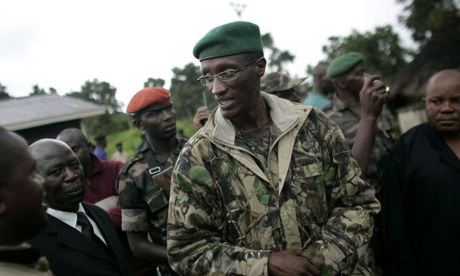
Gen. Laurent Nkunda, the Congolese rebel leader whose brutal tactics and Congo-size ambitions have threatened to bring about another catastrophic war in central Africa, was arrested late Thursday, removing an explosive factor from the regional equation.

According to United Nations officials and Rwandan authorities, General Nkunda was captured by Rwandan troops as he tried to escape a Congolese-Rwandan offensive that has taken aim at several rebel groups terrorizing eastern Congo.

General Nkunda had seemed untouchable, commanding a hardened rebel force that routinely humiliated Congolese troops and then calmly gliding through muddy villages in impossibly white robes. But he may never have anticipated that his old ally, the Rwandan Army, would take him away.

The surprise arrest could be a major turning point for Congo, which has been mired in rebellion and bloodshed for much of the past decade. It instantly strengthens the hand of the Congolese government, militarily and politically, right when the government seemed about to implode. But it could also empower other, even more brutal rebel figures like Jean Bosco Ntaganda, General Nkunda’s former chief of staff, who is wanted by the International Criminal Court in The Hague for war crimes.

Still, analysts and politicians say they hope that General Nkunda’s capture at the hands of Rwanda means that the proxy war between Rwanda and Congo is finally drawing to a close.

A United Nations report in December accused high-ranking Rwandan officials of sending money and troops to General Nkunda, a fellow Tutsi who claimed to be protecting Congolese Tutsi from marauding Hutu militias. This cross-border enmity has been widely blamed for much of the turmoil, destruction, killing and raping that has vexed Congo for years.

John Prendergast, a founder of the Washington-based Enough Project, which campaigns against genocide, called it a “massive turn of events.”

“Finally the two countries are cooperating,” he said.

Kikaya bin Karubi, a member of Congo’s Parliament, said General Nkunda’s arrest “could be the beginning of the end of all the misery.”

“Look what happened at Kiwanja,” he said, referring to a small Congolese town where United Nations officials said General Nkunda’s forces went door to door, summarily executing dozens of civilians in November.

Now, if Congo gets its way, General Nkunda will have to face the consequences. The government is urging Rwanda to extradite General Nkunda so he can stand trial in Kinshasa, Congo’s capital, where he could face a war crimes tribunal and treason charges, punishable by death.

But Rwandan authorities were tight-lipped on Friday about what they would do with General Nkunda. “I can’t speculate,” said Maj. Jill Rutaremara, a spokesman for Rwanda’s Defense Forces. All he would say was that General Nkunda was “in the hands of Rwandan authorities.”

Though General Nkunda never controlled more than a handful of small towns in eastern Congo, he was Congo’s No. 1 troublemaker. His troops have been accused of committing massacres dating back to 2002. General Nkunda recently began cultivating national ambitions to overthrow Congo’s weak but democratically elected government, which threatened to draw in Congo’s neighbors and plunge central Africa into a regional war, something that has happened twice before.

General Nkunda’s confidence may have been his undoing. On Thursday night, hundreds of Rwandan troops cornered him near Bunagana. Congolese officials said he refused to be arrested and crossed into Rwanda, where he was surrounded and taken into custody. It is not clear how many men he had with him at the time, but it appears he was taken without a shot.

Just a few days ago, Rwanda sent several thousand soldiers into Congo as part of a joint operation to flush out Hutu militants who had killed countless people in the 1994 Rwanda genocide and were still haunting the hills on Congo’s side of the border.

Few expected the Rwandan troops to go after General Nkunda. Not only is he a Tutsi, like Rwanda’s leaders, but he had risen to power by fighting these same Hutu militants. Several demobilized Rwandan soldiers recently revealed a secret operation to slip Rwandan soldiers into Congo to fight alongside General Nkunda. He had been trained by the Rwandan Army in the mid-1990s and was widely believed to be an agent for Rwanda’s extensive business and security interests in eastern Congo.

But it seems that the Rwandan government abruptly changed its tack, possibly because of the international criticism it has endured for its ties to General Nkunda. Several European countries recently cut aid to Rwanda, sending a strong signal to a poor country that needs outside help. Rwanda may have figured the time was ripe to remove General Nkunda, analysts said.

Earlier this month, some of General Nkunda’s top commanders split from him, saying they were fed up with his king-of-the-world brand of leadership. One of those commanders was Mr. Ntaganda. Prosecutors at the International Criminal Court have accused him of building an army of child soldiers, a war crime.

But Mr. Ntaganda suddenly switched sides, denouncing General Nkunda and saying that he and his men were now eager to join the Congolese Army, which they had been battling for years. Many analysts believe that the Congolese government promised to try to protect Mr. Ntaganda from being sent to The Hague.

According to Jason Stearns, an analyst who recently served on a United Nations panel examining the conflict: “It’s fairly clear that Kigali and Kinshasa have struck a deal. Kinshasa will allow Rwanda onto Congolese soil to hunt down” the Hutu militants, “and in return Rwanda will dethrone Nkunda.”

Congolese officials are now talking about restoring full diplomatic relations with Rwanda, which had been suspended for years, and reinvigorating economic ties. But many uncertainties remain, including a possible power scramble by other militant groups hoping to fill the vacuum.

“Nkunda’s arrest is part of a larger, radical realignment,” Mr. Stearns said. “There are, however, many unknowns and risks.”

From Enough Said:

Printer-friendly version
Congo tank

In a dramatic reversal of fortune for one of Central Africa’s most powerful warlords, Congolese rebel leader Laurent Nkunda was arrested by Rwandan authorities last night along the Congo-Rwanda border. When my colleague Rebecca and I met with Nkunda in the town of Rwanguba on Thanksgiving Day, he seemed on top of the world. His rebel movement, the National Congress for the Defense of People, or CNDP, had routed the Congolese army, embarrassed UN peacekeepers, consolidated control of a large swath of North Kivu province, and threatened the regional capital of Goma. Nkunda shrugged off allegations that his lieutenant, Bosco “The Terminator” Ntaganda, had directed a massacre of civilians in Kiwanja, and confidently demanded direct negotiations with Congolese President Laurent Kabila. Journalists flocked to his compound, diplomats had him on speed dial, and the UN appointed a former president of Nigeria to mediate a solution. This morning, Nkunda was in Rwandan custody, and it sounds like he is already back in Congo and headed for detention in the capital, Kinshasa. What happened?

The power play orchestrated by the Congolese and Rwandan governments has been brewing for weeks. As Nkunda’s power and ambition grew, the governments of both Rwanda and Congo came to see him as a serious problem, albeit for different reasons. Unable to defeat Nkunda militarily and unwilling to treat him as a legitimate political actor, President Kabila needed Rwanda’s help to neutralize him. Rwandan President Paul Kagame was stung by Nkunda’s increasingly bold pronouncements (particularly his ambition to take his fight all the way to Kinshsa) and a U.N. panel of experts report documenting Rwandan support for CNDP and involvement with conflict minerals in eastern Congo. European donors began to threaten aid money and Rwanda no longer had plausible deniability that it was not involved with Nkunda.

Congolese officials sought Rwandan help to get rid of Nkunda. The quid pro quo: the Rwandan military would be allowed to re-enter eastern Congo to hunt down the Democratic Forces for the Liberation of Rwanda, or FDLR, a Rwandan Hutu rebel group led by commanders responsible for the 1994 Rwanda Genocide. In a fantastically cynical move, the two sides also agreed that indicted war criminal Bosco Ntaganda would replace Nkunda as head of CNDP, and that his forces would join in the offensive against the FDLR.

A week ago in Goma, Ntaganda announced that he had taken control of CNDP and would collaborate with the Congolese and Rwandan armies against the FDLR. As reported on this blog earlier this week, more than 3,000 Rwandan troops crossed into eastern Congo this past weekend, isolating Nkunda and ultimately arresting him. My colleague John Prendergast noted in the New York Times today, “Now the hard part begins.”

While the move to take more aggressive action to remove the FDLR from eastern Congo and arrest of Nkunda are welcome developments and could contribute mightily to a lasting peace in eastern Congo, there are lots of reasons to be profoundly apprehensive.

  • The planned operations against the FDLR have the potential to be catastrophic for Congolese civilians. The Congolese army and Rwandan armies have abysmal track records in protecting civilians, and the FDLR will almost certainly not stand their ground and fight. As they have done in the past (and as the Lord’s Resistance Army has done in northeastern Congo), the FDLR may well melt into the bush, leave civilians to bear the brunt of the offensive, and return with a vengeance when the operation is over. Moreover, Congo and Rwanda have clear economic motive to assert control over valuable mines in FDLR controlled areas. This could be why the UN peacekeeping force charged with protecting civilians in eastern Congo has been kept deliberately in the dark and is now restricted from traveling to certain areas.
  • The role of Bosco “The Terminator” Ntaganda sends a chilling message about the lack of accountability for crimes against humanity. Ntaganda is wanted for war crimes by the International Criminal Court, and the Congolese government, a signatory to the Rome Statute that established the ICC, is in full violation of international law by failing to arrest him. Human Rights Watch has documented his role in recent massacres.
  • Even though Nkunda has been arrested, allowing Rwandan troops back onto Congolese soil is a dangerous gamble for Congolese President Kabila. Many people in eastern Congo loathe Rwanda for its behavior during the wars that ripped the country apart from 1996 to 2002, when they failed to dislodge the FDLR while looting substantial mineral wealth. The Rwandan military has been able to inflict substantial casualties on the FDLR on the past, but never to the point where they were able to break them as a force. The longer Rwandan forces remain in eastern Congo, the more vulnerable Kabila will be to internal challenges.
  • Lastly, and as Enough has consistently argued, even a successful operation against the FDLR must be accompanied by a process to deal with the other major root causes of conflict in eastern Congo: the fight for control over lucrative natural resources, access to land, economic and physical security of ethnic minorities (particularly Tutsis), and contentious debates over citizenship and identity.

Events are unfolding rapidly on the ground, and Enough is preparing on a statement with recommendations for policymakers on how to help avoid the situation from spiraling downward. We will release the statement next week, but as a first step the Obama administration should immediately appoint a special envoy to the Great Lakes region. The administration has not yet named its Africa policy team, but the people of eastern Congo cannot wait another day for the United States to get engaged at a high level."( THIS POST IS MORE WORRYING )

In a related post from Reuters:

Photo
1 of 1Full Size

By Aaron Gray-Block

THE HAGUE (Reuters) - Congolese militia leader Thomas Lubanga trained child soldiers to kill, pillage and rape, a prosecutor told the International Criminal Court at the start of its first war crimes trial on Monday.

Lubanga, 48, pleaded not guilty on the first day of the historic trial, which opened more than six years after the ICC was set up as the world's first permanent war crimes court.

Lubanga, an ethnic Hema, is accused of enlisting and conscripting children under 15 to his Union of Congolese Patriots (UPC) in Congo's eastern Ituri district to kill rival Lendus in a 1998-2003 war in the Democratic Republic of Congo.

ICC prosecutors say child soldiers recruited by the UPC were involved in hostilities between October 2002 and June 2003, and that some of them were forced to kill, while others lost their lives in combat.

In an opening address to the Hague-based court, chief prosecutor Luis Moreno-Ocampo said Lubanga committed the most serious crimes of concern to the international community -- crimes against children.

"Lubanga's armed group, recruited and trained hundreds of children to kill, pillage and rape. Hundreds of children still suffer the consequences of Lubanga's crimes. They cannot forget what they suffered, what they did, what they saw," he said.

"They cannot forget the beatings they suffered, they cannot forget the terror they felt and the terror they inflicted. They cannot forget the sounds of the machine guns, they cannot forget that they killed. They cannot forget that they raped, that they were raped."

Some of the children were now using drugs, some had become prostitutes, and others were jobless, Moreno-Ocampo said.

He said he intended to demand close to the maximum sentence, which court officials say is life imprisonment.

Moreno-Ocampo showed the court a map indicating where hostilities took place and videos he said showed Lubanga with child soldiers.

"At this stage, our client would like to plead not guilty," Catherine Mabille, lead defence lawyer, told the court.

Dressed in a dark suit and red tie, Lubanga looked impassively ahead as his charges were read aloud to him.

BUNIA LINK-UP

Some 400 people in Congo's eastern town of Bunia -- at the heart of the Hema-Lendu violence -- were watching the trial via video-link, including many UPC supporters, a Human Rights Watch official said.

She said the start of the trial is a signal to the world that there will be accountability for war crimes, but also urged the court to look into officials in Uganda and in Rwanda who armed and supported groups operating on the ground.

More than 30,000 children were recruited during the conflict in Congo, many given marijuana and told they were protected by witchcraft, according to Bukeni Waruzi, the Africa and Middle East coordinator for human rights group Witness.

Lubanga's trial had been due to start in June 2008, but judges postponed because the defence was unable to view some evidence against him.

The matter was resolved in November when prosecutors began releasing documents to the defence that had been provided on condition of confidentiality to protect sources in war zones.

But some procedural measures are still pending.

The three-judge court has allowed 93 victims to take part in the case and give evidence. They can also seek compensation.

Four of the victims are among the 34 witnesses that prosecutor Moreno-Ocampo will call during the trial, which is expected to be completed before the end of the year.

Ethnic violence in the Ituri region between the Hema and Lendu, and clashes between militia groups vying for control of mines and taxation, have killed 60,000( 60,000 ) people since 1999.

Lubanga was handed over to the court in 2006 after Congo referred the case to the ICC prosecutor in March 2004.

The defence will make its opening statement on Tuesday."

In case you want to hear him speak. From the Hub:

DR Congo rebel chief justifies his fight - 21 Nov 08
As the UN agrees to deploys more forces to halt the DR Congo conflict, Laurent Nkunda, the rebel chief, acknowledges partial responsibility for the upheaval in an interview to Al Jazeera's Yvonne Ndege at a secret location in eastern Congo. But insisting that there is "no life, no economy, no administration, no justice", he says "you cannot destroy what is not there".

Sunday, January 18, 2009

"That makes them all the more resentful of Western calls for action on Darfur"

Checking in on Sudan. From AI:

"
Sudanese opposition leader arrested
© AP GraphicsBank">Hassan Al Turabi, leader of Sudanese opposition party, the Popular Congress Party

Hassan Al Turabi, leader of Sudanese opposition party, the Popular Congress Party

© AP GraphicsBank16 January 2009

A Sudanese opposition leader has been arrested after calling on Sudan's president to present himself to the International Criminal Court (ICC) and face his responsibility for crimes under international law that have been committed in the conflict in Darfur.

Hassan Al Turabi, the leader of the Popular Congress Party (PCP), was taken from his home in Khartoum by armed agents of the Sudanese National Intelligence and Security Services (NISS), on 14 January. He has since been held incommunicado and without charge.

Al Turabi’s arrest came two days after he addressed journalists in the PCP offices. He told them that President Al Bashir should present himself to the ICC and face trial, to spare Sudan further internal crisis and collapse.( THAT MAKES SENSE )

He said that, because President Al Bashir was in power, he was politically responsible for crimes such as killing, rape, displacement and the burning of villages, which have been taking place in Darfur since the conflict started in 2003. ( TRUE )

Turabi is the latest in a series of individuals, including human rights activists and others, detained solely for the peaceful exercise of their right to freedom of expression in Sudan.
Some of those arrested and detained were tortured and otherwise ill-treated. ( HELLISH )

These arrests have been happening especially since 14 July 2008, when the ICC Chief Prosecutor Luis Moreno Ocampo applied for a warrant of arrest against President Al Bashir, for 10 counts of genocide, crimes against humanity and war crimes.( TO TRY AND INFLUENCE THE ICC TO LAY OFF BY COMMITTING MORE WAR CRIMES AND HUMAN RIGHTS VIOLATIONS. )

Neither Al Turabi's family nor his lawyers have been officially informed of the reasons for his arrest. His family do not know how he is being treated, or how his health has been affected.
First held at an NISS detention centre, Al Turabi was then moved to Kober prison in Khartoum.

His family initially followed him to the NISS detention centre, but were not allowed to go in with him. The NISS have since refused to allow them to see him, to give him his medicine and special food. Al Turabi is about to turn 77 and requires medication as well as a special diet.

Amnesty International considers that Al Turabi’s arrest is arbitrary, carried out in response to his 12 January statement to journalists. The organization has urged the Sudanese authorities to charge Hassan Al Turabi with a recognisable criminal offence or else release him immediately. It has also urged them to allow Al Turabi immediate access to his family, legal representation and any medical treatment he may require.

Amnesty International has also called for an immediate stop to the harassment and unlawful arrest of human rights activists and members of the opposition for the peaceful exercise of their right to freedom of expression and assembly.

Al Turabi was one of the key figures behind the 1989 coup d'état that brought President Omar Al Bashir to power. He fell out with the president in the late 1990s.

He was imprisoned in Kober from February to May 2001, after which he was put under house arrest until October 2003, when he was pardoned by presidential decree. He was never brought to trial. He was again incarcerated between 2004 and 2005."( WHAT A HELL HOLE )

From Reuters:

"By Cynthia Johnston - Analysis

CAIRO (Reuters) - When the International Criminal Court prosecutor sought an arrest warrant for Sudan's president, the move set off alarm bells in Arab capitals that fear it may showcase a new form of Western meddling in Arab affairs.

Arab leaders, many of whom run governments accused of rampant human rights abuses, worry the court could next turn its focus to other Arab states if it succeeds in prosecuting Omar Hassan al-Bashir for Darfur war crimes.

Anticipating the ICC move, Sudan swiftly called for an emergency meeting of Arab foreign ministers, whose ranks include strong North African friends of Khartoum and who swung to action with a plan that appeared aimed to avoid prosecution of Bashir.( A GREAT ORGANIZATION )

"A large part of the developing world is very, very suspicious of the ICC," Sudan expert John Ashworth said. "If you look at the Arab League itself, I guess there would be members of the Arab League who would fear being indicted as well."( THEY SHOULD BE )

Many Arabs believe that Muslim states are being targeted disproportionately by the West for any perceived missteps, citing the U.S.-led wars on Iraq and Afghanistan as well as pressure on Iran over its nuclear program.

Meanwhile, Arabs say the international community has failed for half a century to secure statehood for Palestinians or speak up about Israeli human rights violations. ( THE UN CONDEMNS ISRAEL ALL THE TIME. COME ON. )

That makes them all the more resentful of Western calls for action on Darfur, where the ICC prosecutor has accused Bashir of orchestrating genocide that has killed 35,000 people outright, at least another 100,000 through slow death( 135,000 ) , and forced 2.5 million from their homes. ( COMPARE THE NUMBERS WITH GAZA AND LEBANON. )

ARAB PLAN

Arabs' cultural and political affinity with Sudan's largely Arab north also means some may feel more natural empathy with the Bashir government than with mostly non-Arab Darfur rebels.

"All the Arabs now feel, and I think they have a right, that they are already targeted... For those average people, Omar al-Bashir represents Arab legitimacy, Arab dignity even," Cairo-based political analyst Diaa Rashwan said.( SO 135,000 PEOPLE NEED TO DIE BECAUSE 2000 DID IN LEBANON AND GAZA? )

Both the Arab League and the African Union want the U.N. Security Council to put on hold the ICC move to indict Bashir, and the Arab League said on Tuesday that it had secured a pledge from Sudan to try those it suspects of crimes in Darfur at home.( A JOKE )

The deal will allow the United Nations, African Union and Arab League to follow the proceedings, although it would be up to Sudan to decide who to try. The League did not say if two Sudanese indicted by the ICC last year would face charges.

The agreement, after a visit by Arab League chief Amr Moussa to Khartoum, showed the League may be well-placed to pressure Sudan. But the move may still not satisfy Western critics.

"From the Sudan government's point of view, what they clearly want to do is to get the Arab League to put pressure on the African Union to try and back up the president," said Patrick Smith, editor of UK-based Africa Confidential.

"Part of its strategy is to have at any one time four or five different initiatives to deal with what's going on in Darfur. So in that way the core issues are obfuscated," he said.

INSTABILITY FEARS

Some Arab states have practical concerns as well. Cairo, for example, fears a handful of potentially unpredictable new states emerging to its south that could threaten stability or covet Egypt's share of Nile waters, analysts say. Those fears are among factors that lead it to lend more support to Khartoum than to separatist rebels.

But there is by no means a true Arab consensus for full backing of Khartoum( GOOD ), and the League's criticism of the ICC has so far been relatively mild.

Analysts say some states may want to avoid strong criticism of the ICC or unconditional backing for Khartoum because it could embarrass them before the international community. ( I WONDER WHY?)

Yet if diplomatic efforts by Arab and African states are unable to delay an arrest warrant for Bashir, analysts said they doubt very much that the Sudanese leader would face any dangers in the countries of his Arab friends.

"I don't think at all that President Bashir will have any kind of problems in any Arab country," Rashwan said. "I think they will decide to receive President Bashir( A MASS MURDERER )."

(Writing by Cynthia Johnston; Editing by Samia Nakhoul)"


Wednesday, January 14, 2009

"International experts say almost six years of fighting in Darfur has killed 200,000 and driven 2.5 million from their homes. "

From Reuters:

Photo
1 of 1Full Size

By Andrew Heavens

KHARTOUM (Reuters) - Sudan's army said on Wednesday it had bombed rebel positions in Darfur, a rare admission of air attacks in the western region.

Tension is growing in Darfur ahead of an expected ruling within weeks by the International Criminal Court on whether to issue an arrest warrant against Sudan's President Omar Hassan al-Bashir on charges of war crimes in the region.

A statement said planes bombed near Muhajiriya in south Darfur, targeting rebels who had rejected a 2006 peace agreement and the unconditional ceasefire declared by Bashir last year.

"The Sudanese army has bombed this area to protect the Sudanese civilians living in this area," a spokesman said.( RIGHT )

No one was immediately available from Sudan's government to comment on whether the attacks broke the ceasefire or other agreements. Bombing is forbidden under terms of the 2006 deal and U.N. Security Council resolutions.( THEY DON'T CARE )

A commander of the rebel Justice and Equality Movement (JEM) said the bombing took place on Tuesday. "They know our troops are moving in the area," said Suleiman Sandal, adding that he had no reports of casualties.

Both the government and rebels are preparing for more fighting if the global court issues a warrant for Bashir at the request of the court's prosecutor. He would be the first sitting head of state to be pursued by the court.( GOOD )

Officials from the joint U.N./African Union peacekeeping force confirmed the bombing on Tuesday and said they also had evidence that two people were wounded in bombing elsewhere in south Sudan on Saturday.

The rebels also accuse the army of bombing in North Darfur.

JEM chief negotiator Ahmed Tugud told Reuters there was evidence government troops had been re-arming militias and had succeeded in persuading some other rebel factions to join Khartoum in recent weeks.

Peace efforts in Darfur have faltered and rebel groups are increasingly fragmented. International experts say almost six years of fighting in Darfur has killed 200,000 ( 200,000 )and driven 2.5 million from their homes. Khartoum says 10,000 have died."

This is about to get bad again.

Monday, January 12, 2009

slow but steady devolution of the region into the same bloody no-man's land that Kony created for 20 years in northern Uganda.

Let's check in on the Lord's Resistance Army on Peter Eichstaedt's blog:

"Kony fires Matsanga, others

In a statement said to be from the rebel Lord’s Resistance Army (LRA) and issued in Paris this weekend, the guerrilla force has apparently fired what's left of its negotiating team, according to the Sudan Tribune, on-line edition.

This is a simpering end to a bizarre and tortured history of negotiations between the LRA and Uganda that has had little or no credibility since they began two-and-a-half years ago in Juba, South Sudan.

The most immediate effect is that it means the end of David Nyekorach-Matsanga's claims that he speaks for the LRA.

As mentioned in an early edition of this blog, Matsanga's credibility was sabotaged in last spring when he announced that he was heading a new team of LRA negotiators

He claimed to be in touch with the LRA's leader, the self-proclaimed prophet and spirit medium Joseph Kony, who had agreed to sign the peace deal with Uganda that had been negotiated by the earlier, and perhaps even less credible team.

Matsanga even convinced the international community to fly him to The Hague, Netherlands, along with a couple of Kampala lawyers, to make an appeal to the International Criminal Court.

The court has indictments against Kony and his remaining two top commanders for war crimes and crimes against humanity pending since 2005.
These Matsanga
claimed were why Kony wouldn't sign.

Therefore the court should drop the indictments and let Kony go free, he said. The court didn't, of course, and sent Matsanga packing.

Reality dawned on the international community in late April 2008 when Kony didn't show at a pre-arranged site to sign the peace deal, despite the presence of hundreds of "officials" to witness the event.

When it was revealed that Matsanga had never talked with Kony and had duped the entire assembled cadre of blithering apologists for this, Africa's most vicious and demonic cult, he fled the jungle enclave.

As the Sudan Tribune notes, he was arrested at the Juba airport with a letter from Uganda President Yoweri Museveni and $20,000 in cash. The money was his pay from the international community for his "work" as team leader. The letter showed that Matsanga had been used by Museveni.

But the lunacy didn't stop. Others in the so-called negotiating team said it all had been a misunderstanding and that Kony would sign the deal a month later. Again, Kony's didn't show.

By this time, Kony's marauders had already completed an extended raid across portions of South Sudan and into the Central African Republic, killing, looting and abducting hundreds of people to bolster its force. ( A PLAGUE )

Then Matsanga resurfaced, again claiming he was the spokesman for the LRA and that Kony would sign the deal. Then for the third time last year, people from northern Uganda, the UN, and the international community traipsed to the jungle.

Again, Kony didn't sign, and as mentioned in earlier entries, threatened the ethnic leaders from the north, calling them traitors.

Kony was finally attacked on Dec. 14 in his camps in northern DRC by the Uganda army, which propelled Kony's LRA on the bloodiest rampage in the militia-cult's history.

The apparent official statement, meanwhile, ends all contacts with Matsanga and a couple of women named Miss Abalo and Justine Labeja, both presumable from northern Uganda.

The statement was also reportedly sent to all of the official parties who have been involved in the so-called negotiations, including the United Nations, African Union, non-governmental organisations, UN special envoy to the talks, Joachim Chissano, and presidents of the DRC, Kenya, Southern Sudan, Central African Republic, Uganda, and various international observers.

What this means is unclear, but one can guess. First of all, it means that Kony has finally acknowledged that the peace talks were a farce and nothing more than a ruse for him and his negotiating "team" to collect per diem payment from the international community.

Rumors were that in order to be part of the team, one had to share the cash with Kony. This was in addition to the tons of food that was shipped to the jungle each month for Kony by the Catholic Charity, Caritas, and paid for by the blithering apologists.( UNREAL )

Now that he has been attacked, Kony has realized it's over and the gravy train has stopped rolling his way.

What is next, is anyone's guess. My prediction is that Kony will regroup his beleaguered forces and take them to the CAR. In the meanwhile, he'll be desperately reaching out to anyone willing to provide him arms and cash, as he continues to loot and kill innocents in the region.

What we can expect is a slow but steady devolution of the region into the same bloody no-man's land that Kony created for 20 years in northern Uganda.( UNREAL )

"a serious rift in the C.N.D.P., and it’s clear that it will compromise the Nairobi peace talks.”

The Congo in the NY Times:

Published: January 11, 2009

DAKAR, Senegal — Disagreements over tactics and power have split the once seemingly invincible Congolese rebel group that has played havoc across the eastern side of the country over the past year and has brought the weakened government to the edge of collapse.

Skip to next paragraph
Benedicte Kurzen/VII Mentor

Gen. Laurent Nkunda last fall in eastern Congo, where his thriving rebel group has humiliated Congolese troops in the past year.

Related

Times Topics: Congo

Lionel Healing/Agence France Presse — Getty Images

Jean Bosco Ntaganda, a rebel known as the Terminator and shown on Sunday near Goma, has split with General Nkunda.

Gen. Laurent Nkunda, the leader of the Tutsi-dominated rebel group known as the C.N.D.P., is fighting off an attempt to topple him by Jean Bosco Ntaganda, his chief of staff, a ruthless fighter known as the Terminator who is wanted by the International Criminal Court in The Hague for war crimes, according to accounts from both camps.( HE'S A WAR CRIMINAL )

The rebel group has humiliated Congolese troops in battle after battle in the past year, growing in momentum and ambition to the point where it has directly threatened the regional capital, Goma. The result has been hundreds of thousands of people displaced, and a serious undermining of the government, the country’s first freely chosen one in four decades.

Although there have been no accounts yet of actual combat between General Nkunda’s and Mr. Ntaganda’s camps, the split is likely to complicate efforts to win peace in the troubled region. Olusegun Obasanjo, the former president of Nigeria, has been shuttling between the Congolese government and General Nkunda’s rebels in their jungle hide-outs as the United Nations envoy to the faltering peace talks aimed at ending the fighting with the government.

Jason Stearns, an independent Congo analyst who recently served on a United Nations panel examining the conflict there, said that it was unlikely that Mr. Ntaganda’s decision to split from General Nkunda came lightly, and that the split would have serious repercussions for faltering peace talks taking place in Nairobi, Kenya.

“Nobody has been able to say where the senior command stands,” he said. “We are all trying to see what will emerge. What is clear is this has produced a serious rift in the C.N.D.P., and it’s clear that it will compromise the Nairobi peace talks.” ( TRUE )
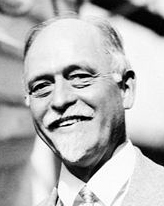
Mr. Ntaganda declared himself the leader of the C.N.D.P. last Monday and claims to have taken a significant portion of the group’s fighters with him. General Nkunda insists that he remains in control and has tried to play down the disagreement. He told Reuters in an interview that Mr. Ntaganda had been “disrespectful” but remained a member of the rebel group, and that a commission of rebel leaders had been sent “to listen to him, to bring him back to his senses.”
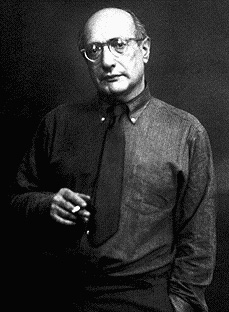
The fracture seems to have been building for some time as the two men disagreed over how far the rebellion should go to achieve its aims — and in some ways over what those aims actually were, according to diplomats and analysts in the region. Mr. Ntaganda wanted to push harder and overrun Goma last year, and he told some of the rebellion’s backers that he was disappointed when General Nkunda heeded United Nations demands to hold back, according to human rights investigators.

General Nkunda, meanwhile, was dismayed by the barrage of international criticism that came after a massacre by his troops in November that was led by Mr. Ntaganda, according to a close ally of the general who spoke on condition of anonymity.

At least 150 people were killed in about 24 hours in the town of Kiwanja in early November. A report in The New York Times and an investigation by Human Rights Watch based on witnesses’ accounts found that fighters went door to door, killing mostly unarmed boys and young men, accusing them of being enemy fighters.

The faction loyal to General Nkunda discussed the possibility of handing Mr. Ntaganda over to the International Criminal Court, contacting at least one international organization about how this might be achieved, according to a person at the organization who was briefed on the matter( NOW WE KNOW WHY HE'S DOING THIS. TOO BAD THEY DIDN'T GET HIM. ).

General Nkunda’s group has rung up a series of military victories, routing the Congolese Army in an offensive late last year, reaching the outskirts of Goma and taking several other important towns.

But the dispute between the two most powerful men in an insurgency that has until now seemed unified and unstoppable creates the first cracks in the invincible image General Nkunda has cultivated.( I WAS FOOLED BY NKUNDA'S REMARKS )

It could also offer the government some breathing room for the first time in months, said Alison Des Forges, a senior adviser for Africa at Human Rights Watch.

“If it comes to military conflict, we could potentially see the situation dissolve into even further combat,” she said. “But it also offers an opportunity for Congo’s forces to get themselves together and gives more time to find a political solution while the two factions argue it out.”

General Nkunda and Mr. Ntaganda share similar histories. Both are Congolese Tutsi who fought alongside the Rwandan Tutsi rebels who overthrew Rwanda’s Hutu-led government in the aftermath of the genocide there in 1994. They both found their way back to Congo by fighting in Rwandan- and Ugandan-backed rebel groups there as Congo descended into a broad regional conflict set off by the genocide’s aftermath. Both men have been accused of serious human rights violations( TO ME, NKUNDA IS NOT CLEARLY ANY BETTER. HE'S A BETTER BSer. ), though the International Criminal Court has named only Mr. Ntaganda so far.

But they differ profoundly in both style and tactics. General Nkunda is well educated and a fiery and articulate speaker( BS ARTIST ). He has refused virtually every attempt to settle his differences with the Congolese government, and in the wake of his military triumphs has essentially refused to recognize the legitimacy of the first elected government that Congo has known in more than four decades. But Mr. Ntaganda is much more pragmatic, and in the past few days has accused General Nkunda of blocking peace efforts in eastern Congo.( THIS IS WHAT SURPRISES ME )

Ms. Des Forges said Mr. Ntaganda was “somebody who has made his career out of being a useful military person regardless of the cause.”

“I don’t think he has the kind of aspiration of Nkunda,” she said, “but I think he is someone who can transfer his loyalties and adapt his position depending on his interests.”

What a mess. Did I mention Ethnic Conflict?

Thursday, January 8, 2009

"An estimated 200,000 people have died in the violence and 2.5 million have fled their homes."

We can't ignore Darfur. From Reuters:

"By Andrew Heavens

KHARTOUM (Reuters) - Darfur rebels accused Sudan's army of bombing their positions on Thursday, breaking a period of relative( THAT'S ALL IT IS ) calm in the country's violent west.

No one was immediately available to comment from Sudan's armed forces. International sources, who asked not to be named, said they had heard similar reports.

The insurgent Justice and Equality Movement (JEM) told Reuters government helicopters and Antonov planes attacked their fighters across a wide area of north Darfur from around midday on Wednesday until Thursday afternoon.

"There is bombing going on right now," said JEM commander Suleiman Sandal at 2pm local time (1100 GMT) on Thursday.

"They have seen JEM forces moving across the area. They think JEM is going to attack them ... This is the first for some time."

The reported attacks were around the towns of Kutum, Mallit and Um Sidir. Sudan's president announced an "unconditional" ceasefire in the region less than two months ago.

The joint United Nations/African Union UNAMID peacekeeping force said it was looking into reports of clashes between government and rebel forces in the days after the November ceasefire announcement. But the fighting appeared to die down in December.

JEM's accusation will add to tension mounting ahead of a ruling from the International Criminal Court on whether to issue an arrest warrant against Sudanese President Omar Hassan al-Bashir on charges of orchestrating genocide in Darfur.( PLEASE )

A senior foreign office official on Monday told Reuters the government had intelligence JEM was planning to attack Sudanese cities and oil fields as soon as the global court's decision was announced.

Sandal confirmed JEM was planning to mark the ruling with some form of action, but declined to go into details.

"It is true we are preparing for the ICC day. But we are not sure what day it will be," he told Reuters, speaking by satellite phone from Darfur.

"We are preparing militarily and with the IDP (internally displaced people) camps. There will be demonstrations. We are trying to make it an important day for justice."

Mostly non-Arab rebels took up arms in early 2003 accusing Khartoum of neglect. Khartoum mobilised militias to quell the revolt, who now stand accused of war crimes.

An estimated 200,000( 200,000 ) people have died in the violence and 2.5 million have fled their homes. Khartoum accuses the western media of exaggerating the death toll( RIGHT. THEY'VE ONLY KILLED HALF THAT NUMBER. )."

Tuesday, January 6, 2009

"The fate of hundreds of thousands of men, women and children living as IDPs will lie tomorrow on that table of negotiations."

An interesting situation in the Congo. From Reuters:

Photo
1 of 1Full Size

By John Kanyunyu

GOMA, Congo (Reuters) - A split emerged on Tuesday in Congo's eastern Tutsi rebellion after the movement's top military commander openly challenged founder General Laurent Nkunda in an apparent power struggle.( WOW )

Senior military and political representatives of the rebel National Congress for the Defence of the People (CNDP) rejected an announcement by its military chief of staff, General Bosco Ntaganda, that he had deposed Nkunda as the group's leader.

Signs of a split emerged as the Tutsi rebel movement, whose attacks in east Democratic Republic of Congo in recent months have displaced a quarter of a million civilians, was preparing to resume peace talks this week with Congo's government.

In a statement to the BBC late on Monday, a spokesman for Ntaganda, who is wanted by the International Criminal Court for war crimes, said the CNDP's military commanders had decided to oust Nkunda because of his "bad governance".

This was quickly denied by other CNDP spokesmen.

"General Bosco Ntaganda does not have the authority to depose the chairman Laurent Nkunda. The CNDP remains one movement and one army," Col. Sultani Makenga, the group's military second in command, told Reuters. He said he did not know why Ntaganda had made the announcement.

Attempts to contact Ntaganda, known as "the Terminator" and popular among the rebel rank and file, were unsuccessful.

After launching a renewed offensive in late August, Nkunda's battle-hardened rebels routed President Joseph Kabila's army and captured large swathes of Congo's eastern North Kivu province before declaring a unilateral ceasefire in late October.

The fighting triggered a fresh humanitarian emergency in the border province, where conflict between rival rebels, militias and the government army has raged on despite a formal end to a wider 1998-2003 war in the former Belgian colony.

United Nations officials and human rights campaigners said the CNDP leadership may have planned to discipline Ntaganda over the massacre of around 150 civilians in the North Kivu town of Kiwanja, shortly after it was seized by the rebels in November.

Up to now, the CNDP has denied its fighters slaughtered civilians, blaming rival pro-government Mai-Mai militiamen.

U.N. PEACEKEEPERS ON ALERT

Officials from Congo's 17,000-strong United Nations peacekeeping force (MONUC) said they were monitoring the situation closely in case of fighting within the CNDP.

"To the extent these events threaten to aggravate the situation on the ground, we are very concerned," said Kevin Kennedy, a MONUC spokesman.

Talks between the CNDP rebels and government representatives are due to restart on Wednesday in the Kenyan capital, Nairobi, under U.N. and African Union mediation.

CNDP political spokesman Bertrand Bisimwa said Ntaganda's announcement had no impact on the group's leadership structure, and negotiators still planned to attend the talks in Kenya.

"If an officer has demands, he must address them to the movement itself and not the media," he said. "Our disciplinary body is being activated to deal with this situation."

A spokesman for Congo's government said its negotiators were also planning to go ahead with the talks on Wednesday.

In April last year, the ICC issued an arrest warrant for Ntaganda, accusing him of recruiting children under 15 to fight in a bloody ethnic-based conflict in northeast Ituri district.

Ntaganda is a former associate of Ituri militia leader Thomas Lubanga, who is in ICC custody in The Hague ahead of his own trial on charges of recruiting child soldiers.

Ntaganda returned to his native North Kivu in 2006, where he joined the CNDP led by Nkunda, who says his rebels seek to defend Congo's Tutsi minority against persecution by the government and by Rwandan Hutu militiamen in the east.

Nkunda has so far refused to hand over Ntaganda to Congolese or international authorities, demanding that the ICC first share evidence with the CNDP proving his guilt of war crimes."

Here's the take of Stop The War In North Kivu:

"According to different sources, Bosco Ntagana has replaced Laurent Nkunda as head of CNDP. It still has to be confirmed at the official webpage of this armed group.

Some Congolese media talk about Rwanda choosing Ntagana in order to harden peace negotiations, while other stress that his replacement is a consequence of the recent UN report released by a panel of experts on the DRC.

It is a worrying move taking place in a key moment. The replacement at the head of CNDP happens just before the beggining of the third round of the current peace talks.

The fate of hundreds of thousands of men, women and children living as IDPs will lie tomorrow on that table of negotiations. Unfortunately, I am afraid that none of the speakers sitting on both sides of that table will truly care about them."

It's hard to see how a war criminal taking over can help things.