"Inflation, We Need You
On this blog, I post stories, comments, anything that interests me. Sometimes, I comment upon them. I post the entire story, column, or whatever, in order to save it for my reference. On the right are comments, blogs, etc., that I find useful, or that express what qualify as my opinions. Feel free to contact me via the comment option. Rest assured, you will be treated civilly. On this blog, the assumption is that, properly presented, anyone can understand anything.

Casey B. Mulligan is an economics professor at the University of Chicago.
Subsidies can have a perverse effect on activity if they are debated too long. The banking sector bailout is one example; the purchase of hybrid automobiles by Chicago cab drivers is another.
Hybrid automobiles can save gas, especially in urban driving conditions when the automobile is moving slowly or idling, where alternative power sources have a bigger advantage. A problem is that the purchase price of hybrid vehicles is often higher, and many are less spacious than the more ubiquitous sport utility vehicles.
A significant fraction of the taxicab fleet may be well suited for hybrids, because many of the miles driven are in urban conditions, and often the vehicles have only one passenger. Thus I have been surprised to notice so few hybrid taxis in Chicago, where less than 1 percent of cabs are hybrids.

by Ray Tsang
In an admittedly unscientific survey, I watched for Toyota taxis with about 100,000 miles. I assumed that many drivers of Toyotas would be likely to buy a Toyota for their next taxi, and that the Prius — the company’s hybrid model — would get their consideration. I asked the drivers about buying a Prius.
The drivers told me about the Chicago City Council’s debates about transforming the city’s taxi fleet.
The council has debated mandating hybrid purchases. But the rumor among taxi drivers is that in addition, or perhaps instead, the city or another government agency will eventually subsidize the purchase of a hybrid. Drivers have decided that they should not purchase a Prius or another hybrid until the subsidy arrived. Buying one now would mean overpaying.
Regardless of whether it is realistic to expect Chicago to someday subsidize purchases of hybrid taxis, the fact is that some cab drivers are considering the possibility. If taxi drivers consider future subsidies in their industry, then so must bank executives.
Last fall the public learned that banks were not selling many of their legacy mortgages and mortgage-backed securities, despite the impression that ownership of the assets was hindering the banks’ lending. A variety of theories have been put forward to explain this failure, and to suggest what the government might do to fix it.
But the lack of trade in mortgage-backed securities may have something in common with the lack of trade in hybrid Chicago taxicabs. The secondary market for legacy mortgages may have stagnated largely because of the (ultimately correct) anticipation of a huge government subsidy. As I wrote last week, banks were not “unable” to sell their legacy mortgages; they were prudently unwilling to sell because they expected the government to step in eventually and help push the prices of the assets higher.
There would have been two preferable possibilities: for the government to come forth quickly with its subsidy, or make it clear from the beginning that no subsidy was coming. With both Chicago taxis and the secondary market for mortgages, the government did neither. Instead, it only fueled rumors that subsidies were on the way, and froze the same markets it intended to stimulate."

Casey B. Mulligan is an economics professor at the University of Chicago.
Last week the Obama administration released what has become known as the “Geithner plan”: an administration policy to reorganize asset ownership in the banking sector. The plan may have its desired effect of loosening up the market for “legacy assets,” but probably not for the reasons the Obama administration has stated.
Banks own mortgages (either directly, or through ownership of mortgage-back securities) whose values plummeted in 2008, because the mortgages are collateralized with real estate whose value crashed.
Conventional wisdom about the banking crisis says that bank lending to the wider economy cannot occur because banks have been unable to sell these assets, which adds to their difficulties in making new loans.
As Treasury Secretary Timothy F. Geithner says, a secondary market for mortgages “does not now exist” because there is a “ lack of clarity about the value of these legacy assets [which makes] it difficult for some financial institutions to raise new private capital on their own.”
I agree that (to a good approximation) a secondary market for legacy mortgages does not exist. But the biggest reason is not lack of clarity, but rather the lack of a viable government policy to deal with the banking crisis. Until now, perhaps.
But let’s stick with the conventional wisdom for a moment more. According to that wisdom, it does not help for the Treasury and the F.D.I.C. to subsidize and leverage the purchase of legacy mortgages from banks as Secretary Geithner proposes, because the plan does nothing to (a) create clarity in legacy asset value or (b) ensure that banks no longer have significant direct or indirect holdings of mortgages on their balance sheets.
As Professors Paul Krugman and Joseph Stiglitz have explained, the Geithner plan does increase the value of legacy mortgages to its owners, because it subsidizes the purchase of them. But it does not increase the clarity of those values, and in fact reduces clarity.
Consider an example, again from the conventional wisdom. Market participants are not sure whether a pool of mortgages will be worth $30 million or $50 million, and are concerned that the current owner knows a bit better and thus will offer for sale only the weakest of the weak. This $20 million worth of uncertainty, according to Secretary Geithner and the conventional wisdom, stops the secondary market from operating.
Thanks to the emergence of the Geithner plan’s subsidy and its leverage, the pool of legacy mortgages last week suddenly became worth $40 to $90 million (the Geithner subsidy raises private investors’ value of all types of bad mortgages, and its leverage increases the gap between the value of the best and the value of the worst). Yes, the legacy mortgages are worth more, but the profit of owning them is now less certain.
To make matters worse, the Geithner plan has no provision to stop banks from financing some of the ventures that will purchase the banks’ own legacy assets. The result may be bank ownership of mortgages that is less direct, but is bank ownership nonetheless.
Thus, if the conventional wisdom is right, this plan will fail because it creates no clarity, and it does little to separate banking from legacy mortgage ownership.
But I believe that the conventional wisdom is highly exaggerated. Instead, the secondary market for legacy mortgages has stagnated largely because of the (ultimately correct) anticipation of a huge government subsidy. Banks were not “unable” to sell their legacy mortgages; they were prudently unwilling to sell because they expected the government to eventually step in and help push the prices of those assets higher.
We all witnessed last week the big capital gains to banks that came with the unveiling of the Geithner plan. A bank would have been foolish to sell off its legacy mortgages during the fall or winter, before such a plan was unveiled and executed, because a fall or winter non-bank buyer of legacy mortgages would likely be ineligible for the ultimate subsidy.
Thus, the secondary market for legacy mortgages has failed so far because of the lack of a plan rather than a lack of clarity. To get the market operating again, the Geithner plan does not need to alleviate the market weakness improperly identified by its authors, but needs only to stay on the path to execution."

Don said...You're correct. One of the main reasons that Deflation is a disaster is that it's disorienting, and causes people to panic, as if they're in a foreign and unfriendly landscape with no way out. It's a panic magnifier.
Don the libertarian Democrat
February 25, 2009 8:14 AM
In October, it was not clear that employers would begin proactively shedding workers. Beginning in the middle of November, they did. Also, it was not written in stone. Policy actions have made things worse.
Don the libertarian Democrat
Don said...I believe that Bob Murphy is correct. I believe that is has to do with the way you view the Productivity Numbers. You say that workers are holding out. I say that Employers are Proactively laying workers off in anticipation of the depth of the downturn. In other words, the layoffs are exceeding the fall in demand. Hence, a temporary rise in productivity. My evidence amounts to quite a few posts showing that this is exactly what employers and employment experts are now saying is happening. Remember, I said that this would happen months ago. A Proactivity Run is a consequence of a Calling Run. These are my own terms for Fisher's Debt-Deflation, which I think is turning out to be a very useful model for what's happening. Based on Fisher, I also predicted a Savings Spree which is now occurring as well.
The current numbers are in line with what I said, only worse. I too thought that GDP would only go down 1%. The real fall is very worrying, because for me it means things are moving faster than Fisher's view would indicate. This is more like falling dominoes. If the projections were using unemployment numbers, then I see that the real drop is less than the drop expected given unemployment. Hence, more evidence that jobs are being shed far ahead of the actual amount of the downturn. Having said all this, I ,quite frankly, find these numbers more dubious than most as a general rule. They are useful, but no more. I admit to not being an economist. I'm just a citizen trying to understand the world. I have to admit that your productivity point does seem important, even though I disagree on what it means.
By the way, I enjoy any comments that help me understand these issues.
January 30, 2009 8:55 AM
After Lehman failed and “credit markets froze” in the second half of September 2008, many people proclaimed that a second Great Depression( I DIDN'T ) would unfold. In hindsight, we readily see that at least one of the purported pathways to depression was never followed.
During the first days of October 2008, it was claimed that businesses would not be able to borrow from banks even for basic operational expenses, such as making their payrolls. As employees had to work without pay (so the story goes), the businesses patronized by those employees would suffer, and the downward spiral would continue. Then presidential-candidate Barack Obama said that “the credit market is seized up and businesses, for instance, can't get loans to meet payroll.” It was even suggested that “recession proof” employers such as colleges and municipalities would not be able to pay their employees.
Now that a couple of months have passed, let’s look at payroll spending measured by the Bureau of Economic Analysis. The chart below shows payroll spending (measured in billions of dollars) for each of the months of second half of 2008 (December data not yet available), including contributions to pension and health funds for employees. Aggregate payroll spending was highest in August, and has remained within 0.1 percent of the August high ever since.
The Lehman Brothers investment bank failed on September 15. The bank was deeply intertwined with other financial institutions – its failure to pay its obligations put its creditors at risk – and brought the credit crisis to its crescendo. By the end of the month, the intense financial chaos motivated Mr. Obama and others to warn that banks needed lots of money from taxpayers, or else the banks’ business customers would not be able to pay their employees.
Because the bailout bill took time to pass, and then additional time for the Treasury to design and execute its $700 billion Capital Purchase Program (CPP), no bank received any money from the Treasury pursuant to the CPP until the last couple of days of October. Thus, if the warnings were right, payroll spending should have been precipitously lower in October than in the previous months. Instead, payroll spending was almost $1 billion dollars higher in October than in September – not exactly the collapse that we feared.
Some of the details of the CPP became known earlier in October. Anticipation of the CPP expenditures cannot explain why payroll spending did not collapse in October, because the purported pathway to depression was about the day-to-day cash needs of otherwise strong businesses. Even the United States Treasury admitted last week that “capital [from its CPP] needs to get into the system before it can have the desired effect.”
Even when some (but by no means all) of the CPP funds finally got “into the system” in the last days of October and the full month of November, Congress was dismayed to see that banks were not using the funds to lend. Nevertheless, payroll spending did not collapse in November, either.
It is true that payroll employment fell by about 850,000 in October and November – and that’s serious as compared to the last couple of recessions – but the payroll spending data show that the employment loss was small compared to the spending collapse forecasted in early October. The fact is that more than 136,000,000 workers received their paychecks – more than $1.3 trillion worth in October and November combined – essentially the same aggregate payroll that was paid out in the two months prior to Obama’s warning.
None of the above denies or confirms that our economy is headed for economic depression, because there are multiple pathways for getting there. Nor does it deny that the Treasury CPP might help in some way. But it does refute one of the scariest pathways to Depression – a collapse of payroll spending – that politicians from both parties alarmingly described to the American public in order to justify spending $700 billion of taxpayer funds on a bailout of United States banks."
There may have been a little silver lining in the horrific December job losses reported by the Labor Department Friday. Companies are cutting back so aggressively( A PROACTIVITY RUN ), they actually might be increasing their productivity even in the face of a wrenching economic shock.( THAT'S MY THEORY )

In the final three months of 2008, employers reduced the number of hours that workers logged at a 7.7% annual rate, through a combination of layoffs and cutbacks in things like overtime and manufacturing production shifts. It was the largest quarterly contraction in hours worked since 1975, according to Macroeconomic Advisers LLC.( A PROACTIVITY RUN )
The hours worked contraction might have been greater than the contraction in overall economic output for the quarter, which will be reported later this month( THAT'S THE FIGURE THAT I'M WAITING FOR. ). In other words, businesses might have been able to squeeze more out of the workers they kept on staff, increasing business productivity, even though the economy was going through its most severe contraction in decades.( THAT'S IT. )
The government’s estimate of productivity growth — a measure of the nation’s output per hour worked by the work force — comes out in early February. Most economists focus on productivity growth among non-farm businesses — excluding agriculture, government and certain parts of housing. Macroeconomic Advisers estimates that output in the nonfarm business sector contracted at an 8.25% rate for the quarter, while hours worked during the quarter contracted at an 8.6% annual rate.
What’s so good about companies laying off workers, cutting overtime hours and eliminating production shifts, as happened during the quarter? Clearly, it means workers are suffering. But it also means the economy is adjusting to the shock of the financial crisis, and the crisis can’t end until an adjustment has taken place.( YES )
U.S. productivity trends have changed dramatically in the past decade. The U.S. experienced a productivity boom in the late 1990s and it has proven surprisingly enduring. Productivity hasn’t declined on a year-over-year basis since 1995. In the 1970s and 1980s, it experienced long contractions around recessions.
Chris Varvares, a Macroadvisers economist, says many companies entered this downturn with inventories relatively lean, meaning companies have not been caught on their heels by the collapse in consumer demand. The expanded use of temporary workers also has made it easier for business to adjust its workforce as the environment changes. Technology, the source of the 1990s boom, has made it easier to manage both inventories and employment levels.
This certainly isn’t going to make the financial crisis go away quietly. It won’t fix huge losses on dumb loans made by banks. It doesn’t solve the crisis faced by millions of Americans left without work. And its possible that even this good news could be revised away by statisticians.( TRUE )
But if it persists, it could be a source of some long-term optimism. At least here’s some evidence that the economy is making the adjustments it needs to make to eventually get back on track. In the long run, productivity is an economy’s primary driver of growth and wealth( YES. THAT'S MY THEORY. TAKE THAT CASEY. ). – Jon Hilsenrath
"We will end up with a bank, there is no doubt about that," Ross, the chairman and CEO of WL Ross & Co., said in an interview Tuesday.
Ross, a major player in the private equity industry, said that his plans to purchase a depository institution were delayed last year after the government moved to inject capital into the nation's banking system as part of a broader effort to halt the financial crisis.( WHY? )
He estimated that the rescue package delayed his investment anywhere between six to twelve months( WHY? ), and suggested that his firm might look to buy a commercial bank or thrift institution.
Ross made a string of investments across the financial services sector last year, including the purchase of H&R Block's (HRB) subprime mortgage servicing unit last spring for $1.3 billion and the acquisition of bankrupt American Home Mortgage Investment Corp.
But some of those bets have backfired. Last February he plowed $250 million into the bond insurer Assured Guaranty (AGO) at around $21 a share. The company's market value has been nearly cut in half since then.
Still, acquiring sources of deposits has become a top priority for banks and other financial institutions in the past few months since credit has gotten harder to come by as a result of the ongoing crisis. Private equity investors like Ross have also expressed a desire to buy banks as well.
"What is important is to get access to a stable, low-cost source of funding," Ross said. "That is what we are interested in."
Faced with a quickly rising tide of bank failures, banking regulators have relaxed restrictions about who can buy a depository institution in the hopes of coaxing outside investors to take part in the bidding.( THAT'S TRUE. I'VE POSTED ON THIS.)
Last Friday, a group of private investment firms, including buyout shop J.C. Flowers & Co and hedge fund Paulson & Co.( APPARENTLY PAULSON CAN DO WHAT ROSS CAN'T ), struck a deal with the Federal Deposit Insurance Corp. to buy failed mortgage lender IndyMac for $13.9 billion.
As part of the deal, the buyers will take responsibility for the first 20% of losses, and the FDIC will cover the majority of additional losses.
Last week's IndyMac announcement is particularly noteworthy since there have only been a few investments made in banks by private equity firms and other distressed investors in recent months -- and many of those deals have quickly soured.
Most notably, private equity firm TPG made a disastrous investment in Washington Mutual, the savings and loan that collapsed in September. It was the largest bank failure in history. WaMu was subsequently sold( WHERE WAS ROSS? ) to JPMorgan Chase (JPM, Fortune 500).
But Ross said it would make more sense if private equity firms are allowed to take full ownership of a bank instead of just a small stake.
"Private equity is not passive. We are not minority investors. We are control investors. That is the whole theory of private equity - adding value through better management," he said. ![]()
In an exclusive interview with CNBC.com, Wilbur Ross, chairman and CEO of WL Ross & Co., says he sees possibly as many as a thousand bank closures in the coming months. And this will create opportunities for investors.
"I do think a lot of the regional ones will (close), just as they did in the last savings and loan crisis in the 1990s," Ross said. (Watch the full CNBC.com exclusive interview with Wilbur Ross on the left)
Ross says he will be looking to pick up smaller distressed institutions. "There will be opportunities, but we will need federal assistance in them( WILL YOU WILBUR? ), because what we're mainly looking for is stable sources of deposits( FDIC ), not so much the loan portfolio."
Ross feels that there will be too many people willing to provide capital to the large financials, which makes them less of a bargain than smaller banks.
When asked about his views on Bank of America's purchase of Merrill Lynch , Ross said that he didn't think that Merrill was in that dire a position.
"I think people in general felt better about Merrill's situation than about Lehman. I think ever since John Thain came in, he's done a wonderful job trying to fix what was a very difficult situation," Ross said.
He also noted that this was really now the second successful turnaround for Thain. "He (Thain)saved Merrill, went into BoFA ... Temasek, for example, went into something like a $5 a share profit out of this. So it's not a tragic ending."
"It will be very interesting to see where Thain ends up in the Bank of America hierarchy," Ross added.
"By Will McSheehyApril 16 (Bloomberg) -- Billionaire financier Wilbur Ross Jr., who made his fortune turning around distressed steel and textile companies, plans to seek about $4 billion from investors including Arab sovereign funds to buy U.S. depositary banks.
Ross, 70, will talk with Gulf investors in Abu Dhabi next week about 100 to 200 so-called thrift banks, he said in a phone interview from New York today. He said some of the lenders are good investments, even after a mortgage-market slump led to $245 billion of asset writedowns and credit losses at the world's biggest banks.
Regional depositary banks have ``more narrowly defined'' problems and ``a more stable base of deposits'' than cross-border lenders such as Citigroup Inc. and UBS AG, Ross said. He plans to package U.S. thrift bank acquisitions ``as a finished product'' to sovereign wealth funds( THEY'RE DOING WELL NOW ), he said.
Flush with cash from record oil income, Gulf funds are among investors that committed at least $59 billion in the past year to shore up banks including Citigroup and Merrill Lynch & Co. Abu Dhabi's sovereign fund, the world's richest with estimated assets of $875 billion, agreed to invest $7.5 billion in Citigroup in November. Qatar's fund will spend as much as $15 billion on bank stakes, the Gulf state's prime minister said in February.
Thrifts Are `Vulnerable'
Thrifts are ``particularly vulnerable because their portfolios tend to be so real estate-oriented,'' and so can be bought ``at a very attractive price,'' Ross said today. Acquired banks could be combined with a mortgage business to provide stable funding for home loans that are ``essential'' to the U.S. economy even if ``singularly unprofitable'' right now.
Depositary banks are regulated by the Federal Deposit Insurance Corp. and can accept consumer deposits. The FDIC insures deposits at 8,534 banks and savings associations in the U.S., more than 90 percent of which are community-based banks. Thrifts can be savings and loans, credit unions or savings banks.
Each thrift acquisition would probably be valued at around $500 million, Ross said. His buyout company, WL Ross & Co., may invest about $2 billion of its own money in the acquisitions. The firm has ``relations and existing investments'' with some Gulf sovereign wealth funds, he said, without providing names.
Washington Mutual Inc., the biggest U.S. savings and loan institution, on April 8 said it got $7 billion from a group of investors led by David Bonderman's TPG Inc. after losses on subprime loans erased 74 percent of its market value.
`Less Than Satisfactory'
Citigroup stock has slumped 24 percent since it announced Abu Dhabi's investment on Nov. 26. Merrill Lynch is down 16 percent since Kuwait's fund said it bought $2 billion of convertible securities Jan. 15.
``Some of the initial forays have been less than satisfactory, at least on a temporary trading basis, so there is obviously a degree of caution,'' by Gulf funds, Ross said.
Investors like Ross can profit from a decline in value of financial-services companies amid the U.S. subprime crisis, said Steven Kaplan, a professor of finance at the University of Chicago's business school.
``Financial companies have declined in value a lot,'' Kaplan said in a phone interview today. ``I'm sure many of them deserve to have declined. But some of them probably haven't, and those are the ones he's going after.''
Ross is already betting on the mortgage-servicing industry, which processes loan payments and forecloses on bad mortgages. Servicing companies can gain value during housing slumps because borrowers are less likely to move or refinance, making the stream of fees paid by a mortgage owner last longer.
Acquisitions
Ross is seeking to acquire H&R Block Inc.'s mortgage- servicing unit for $1.1 billion. His AH Mortgage Acquisition Co. this week closed its purchase of an American Home Mortgage Investment Corp. subsidiary. That transaction was valued at about $500 million last year.
Ross's firm joined with Richard Branson's London-based Virgin Group Ltd. earlier this year to bid for U.K. lender Northern Rock Plc. The bank was taken over by the U.K. government instead. The collapse of the U.S. subprime mortgage market lifted the cost of credit around the globe and led to a run on Northern Rock last year.
Ross said today that the Northern Rock bid provided ``knowledge we'd like to put back to work'' if the right opportunity arises in the U.K. mortgage market.
Ross is scheduled to speak at a conference in Abu Dhabi April 21 organized by the Asian Venture Capital Journal."
So, since April of last year, Wilbur Ross has been looking into buying a bank. Since then, a number of banks have been sold. Others have failed. What he's looking for is a total collapse of the market. He sees 1000 banks failing. Whenever an investor telegraphs his intentions like this, please take it with a grain of salt. He might buy a bank next week, or never.
Finally, I have posted a fairly large number of quotes now, from billionaires to some of the best investors in the world, who have said that investors are waiting on and want government intervention, even though some of these sources don't. Yet, that doesn't qualify as evidence, but one blowhard investor trumpeting on in public for eight months about his buying a bank constitutes proof. Really?
On Monday, the form of potential fiscal stimulus, 2009-style, took a step forward detail-wise. From the Wall Street Journal:
“President-elect Barack Obama and congressional Democrats are crafting a plan to offer about $300 billion of tax cuts to individuals and businesses(ODDLY, THAT'S THE SAME AMOUNT AS MY PROPOSAL FOR THESE TWO TAX CUTS ), a move aimed at attracting Republican support for an economic-stimulus package and prodding companies to create jobs( I WANT TO USE IT AS AN INCENTIVE TO ATTACK THE FEAR AND AVERSION TO RISK, WHICH I BELIEVE TO BE THE MAIN PROBLEM NOW.).
“The size of the proposed tax cuts—which would account for about 40% of a stimulus package that could reach $775 billion over two years( MY FIGURE IS $700 Billion )—is greater than many on both sides of the aisle in Congress had anticipated.”
The plan appears to make concessions to both economic theory—which suggests that consumers will save a relatively large fraction of temporary increases in disposable income—and recent experience—which seems to suggest that what works in theory sometimes works in practice. Again, from the Wall Street Journal:
“Economists of all political stripes widely agree the checks sent out last spring were ineffective in stemming the economic slide, partly because many strapped consumers paid bills( ISN'T THAT SPENDING? ) or saved the cash( I HOPE SOME PEOPLE DO. JUST NOT EVERYBODY. ) rather than spend it. But Obama aides wanted a provision that could get money into consumers’ hands fast, and hope they will be persuaded to spend money this time if the credit is made a permanent feature of the tax code.”( I THINK THAT THE TAX HAS TO BE PHASED OUT TO ENCOURAGE SPENDING SOONER RATHER THAN LATER.)
As for the business tax package:
“… a key provision would allow companies to write off huge losses incurred last year, as well as any losses from 2009, to retroactively reduce tax bills dating back five years. Obama aides note that businesses would have been able to claim most of the tax write-offs on future tax returns, and the proposal simply accelerates those write-offs to make them available in the current tax season, when a lack of available credit is leaving many companies short of cash.
“A second provision would entice firms to plow that money back into new investment( THIS IS WHAT I WOULD FAVOR ). The write-offs would be retroactive to expenditures made as of Jan. 1, 2009, to ensure that companies don’t sit on their money until after Congress passes the measure.”
A relevant question here is really quite similar to the one we ask when the tax cuts are aimed at households: Will the extra cash be spent? This graph provides some interesting perspective:
Relative to net worth (of nonfarm nonfinancial corporate businesses), private fixed investment has been in consistent decline since the second quarter of 2006. (The level of fixed investment has declined in each quarter, save one.) In fact, the investment/net worth ratio is currently at a postwar low. ( IS HOUSING INCLUDED? )
Why? A couple of hypotheses come to mind. (1) Firms are extremely pessimistic about the outlook and see relatively few worthwhile projects in which to commit funds.( TRUE ) (2) Credit markets are so impaired that the net worth of firms—a critical variable in mainstream models of the so-called “credit channel” of monetary policy—is supporting increasingly smaller levels of lending.( TRUE ) (3) Nonfinancial firms, like financial firms, are deleveraging and hence not expanding( TRUE ). ALL OF THESE ARE PROBABLY TRUE TO SOME EXTENT, BUT WHEN I LOOK AT THE GRAPH, IT SEEMS THAT INVESTMENT STARTED GOING DOWN DURING THE TECH BUBBLE YEARS AND CONTINUED IN THE HOUSING BUBBLE YEARS. I'M WONDERING IF THERE HASN'T BEEN A MASSIVE AMOUNT OF MONEY INVESTED IN STOCKS AND HOUSING AS OPPOSED TO, SAY, MANUFACTURING. SEE BELOW.
Of course, even if one of these hypotheses is true, it need not be the case that marginal dollars sent in the direction of businesses will go uninvested. But it makes you wonder.( I STILL FAVOR MY IDEA. THE GRAPH ISN'T CONCLUSIVE. )
By David Altig, senior vice president and research director at the Atlanta Fed"
Here's Casey Mulligan:
The latest figures show construction spending was down, but not out, in the month of November. Total spending declined 0.6% against market expectations for a decline of 1.4%. October's decline was also revised to just -0.4% from a previously reported drop of -1.2%.
The residential market continues to be a lead anchor, with private residential spending down 4.2% -- the biggest decline since July's -6.2% reading. Private nonresidential spending, on the other hand, increased 0.7% after a 0.4% decline in October. Within the private nonresidential sector, spending on lodging was up 0.7%, spending on office property rose 0.9%, spending on transportation projects jumped 3.2% and spending on power facilities climbed 5.3%.

Construction in manufacturing also increased by 61.5% over the past year, as the manufacturing sector had been struggling during this economic recession, as evidenced by the ISM Manufacturing announcement on Friday, a 28 year low.


Whenever he does anything, this is before his mind. In a way, how are we to know whether to say he believes this will happen or not?
Asking him is not enough. He will probably say he has proof. But he has what you might call an unshakeable belief. It will show, not by reasoning or by appeal to ordinary grounds for belief, but rather by regulating for in all his life
Although Adam Smith is often quoted, the so-called "Father of Economics" has rarely been read, either by his detractors or his admirers. Consequently he is often misunderstood.
Smith, who made such a strong stand against the protectionist mercantile system of trade of his day, devoted over ONE THIRD of his masterpiece An Inquiry into the Nature and Causes of the Wealth of Nations, to discussing the subject of government revenue and the methods by which it may be best collected, including new taxes. This is not generally known.
When examining the different forms of taxation, Smith adheres to four maxims which a good tax should conform to:
2. "The tax each individual is bound to pay ought to be certain, and not arbitrary. The time of payment, the manner of payment, and the quantity to be paid, ought all to be clear and plain to the contributor, and to ever other person."
3. "Every tax ought to be levied at the time, or in the manner in which it is most likely to be convenient for the contributor to pay it."
4. "Every tax ought to be so contrived as both to take out and to keep out of the pockets of the people as little as possible, over and above what it brings into the public treasury of the State."
On the subject of luxury consumables, he is adamant about the definiton of 'luxury' and of 'necessary.' By his definition, a 'necessary' may vary from place to place and from time to time. At the time of his writing, linen shirts, leather shoes and a minimum of food and shelter were definitely to be regarded as essential to a minumum decent standard of living. Taxes on salt, soap, etc., he harshly criticized as inequitably taking from the poorest elements of society. Taxes on luxuries, which were to include tobacco, he considered excellent in that no one is obliged to contribute to the tax: "Taxes upon luxuries have no tendency to raise the price of any other commodities except that of the commodities taxed ... Taxes upon luxuries are finally paid by the consumers of the commodities taxed, without any retribution."
More deserving of priase is the tax on ground-rents: "Both ground- rents and the ordinary rent of land are a species of revenue which the owner, in many cases, enjoys without any care or attention of his own. The annual produce of the land and labour of the society, the real wealth and revenue of the great body of the people, might be the same after such a tax as before. Ground-rents, and the ordinary rent of land are, therefore, perhaps the species of revenue which can best bear to have a peculiar tax imposed upon them."
Excise, customs, taxes on profits, were, according to Smith, either expensive to collect, as in the case of excise, or disincentives to produce, as in the tax on profits. He reserves harsh words for taxes which occasion the invasion of privacy, and on the subject of excise he says: "To subject every private family to the odious visits and examination of the tax-gatherers ... would be altogether inconsistent with liberty."
The harshest condemnation of all, however, was for taxes upon labour: "In all cases, a direct tax upon the wages of labour must, in the long run, occasion both a greater reduction in the rent of land, and a greater rise in the price of manufactured goods, than would have followed from a proper assessment of a sum equal to the produce of the tax, [levied] partly upon the rent of land, and partly upon consumable comodities."
2) The rules for LOLR( from here on down this includes any government guarantee ) intervention should be clear, public, and followed, otherwise Moral Hazard is ineffective. All guarantees must be explicit.
3) The terms must be onerous.
"Who can forget the end of "Planet of the Apes" when Charlton Heston, kneeling before the half-buried remains of the Statue of Liberty, slams his fists into the sand and cries, "You maniacs! You blew it up! Ah, damn you ... damn you all to hell!"
Now imagine the same scene, but with a half-buried Morgan Stanley building standing in for Miss Liberty and a time-traveling Walter Bagehot playing the lead and you've got the perfect Hollywood dramatization of the real-life tragedy that, with luck, is having its denouement on Wall Street.
Bagehot? The great Victorian man of letters, best remembered today as the second and most celebrated editor of the British magazine The Economist, wasn't exactly a hunk. But he certainly could have delivered those futile last lines with real conviction, for he was among the first to recognize the vast destructive potential of that newfangled weapon of Victorian finance: the modern central bank.
Bagehot first alerted readers to this potential and offered his suggestions for containing it in an article that appeared in The Economist after the great panic and credit crisis of 1866. That panic witnessed the spectacular collapse of Overend, Gurney & Co., which had long been Great Britain's premier investment house.
Bagehot understood that, during such panics, the Bank of England alone commanded the confidence needed to serve other financial firms as a "lender of last resort." But as Bagehot put it later in his book "Lombard Street: A Description of the Money Market" (1873), the bank's "faltering way" -- its arbitrary and inconsistent use of its unique lending powers -- tended only to make things worse.
"The public," Bagehot wrote, "is never sure what policy will be adopted at the most important moment: it is not sure what amount of advance will be made. ... And until we have on this point a clear understanding with the Bank of England, both our ability to avoid crises and our terror at crises will always be greater than they would otherwise be."
The ultimate source of trouble, Bagehot believed, was the very existence of the Bank of England and the special privileges it enjoyed. But because nothing save a revolution seemed likely to do away with the "Old Lady of Threadneedle Street," as it was called, Bagehot's preferred, practical solution was for the bank expressly to commit itself to lending freely during crises, though on good collateral only, and at "penalty" rates.
The restrictive provisions were supposed to limit aid to otherwise solvent firms panic had rendered illiquid.
Bagehot's recommendation has since become a sort of master precept of central banking -- albeit one that's mainly honored in the breach by central bankers.
To be fair to today's central bankers, there's never been much agreement on how to apply Bagehot's rule in practice. Just what do "good collateral" and "penalty rates" mean in times like these?
While no one might precisely be able to define good collateral -- and one can debate whether the rate at which banks offer to lend unsecured funds to other banks, known as the London Interbank Offered Rate, or LIBOR rate, plus 8 percent constitutes a "penalty" rate -- who even pretends that recent central bank lending has been based on good collateral?
But rescuing insolvent firms is the least of it. The real damage comes from the Treasury's utter lack of any consistent last-resort lending rule. The recently enacted financial institutions bailout bill does little to clarify this.
That's just the sort of thing that troubled Bagehot almost a century and a half ago, when central banks were still in their swaddling clothes. Yet central bankers and governments still don't get it, despite the lip service they pay to this great thinker from our past."
Neither Barack Obama nor John McCain had much of value to say about the financial crisis as it raged through the headlines this fall. Rather than shred their campaign strategies, they played it safe, as most politicians would have. But in the name of justice we ought to recall that there was one candidate who did foresee our predicament with considerable accuracy when it still lay far in the future. Ron Paul, in almost every speech he made during the Republican primaries, spoke of bubbles, reckless credit growth, and the "unsustainability" of present policy. So why isn't there more demand for the common-sense solutions he put forward? Because common sense is not much use in a financial panic. This was the great discovery of Walter Bagehot, the prolific 19th-century essayist and journalist, who was editor of the Economist from 1860 to 1877. (His name rhymes with gadget.) Ninety-nine percent of the time, common sense is a synonym for practicality. But in a serious banking crisis, doing the commonsensical thing--hunkering down and counting your pennies--has proved to be not practical at all. Bagehot's Lombard Street is an insider's look at the Bank of England, and at the principles on which political and financial leaders act when advanced economies come under pressure. Those principles are depressing in the extreme for anyone with an uncomplicated idea of how a democracy works. But they are effective. That is why, in the so-called Anglo-Saxon world, Bagehot's book still provides the bedrock of policy thinking during financial emergencies, including our present one. Lombard Street was published in 1873, seven years after the sudden collapse of Overend, Gurney & Co., a bank that lost £11 million, spread panic among investors, sparked a run, and became "the model instance of all evil in business." The crisis made such a deep impression on British finance and government that the country did not have another bank run for 141 years--not until Northern Rock collapsed in the summer of 2007. (English investors must have longer memories than American ones. Most of our own noxious subprime mortgages were contracted, and the securities built on them concocted, after Enron became our own model instance of evil in 2001.) It was the Bank of England that took charge of averting panic, during the Overend, Gurney crisis and thereafter. It did so by injecting credit into the economy, by bailing people out. Bagehot approved of this. Many ordinary retailers could not pay their suppliers until they got the money for the things they sold. Without credit, they would be ruined, and the ruin would spread to those to whom they owed money. This was not a question of moral failing, it was just the way a modern economy worked. But the modern economic system interacts with the modern political system--democracy--in a rather uncomfortable way. Indeed, at more than one juncture in Lombard Street, Bagehot framed the problem of booms and busts as part of the "increasingly democratic structure of English commerce." People in a democracy are most comfortable when their institutions do the same things that they would do as individuals. In a crisis, banks--like everyone else--reflexively hoard their money. But a central bank must do the opposite. It must lend freely. This was the most basic affront to common sense that the Bank of England presented, but it was not the worst. The worst was that the bank could carry out its necessary duties as a lender of last resort only by breaking the law. The basis of the bank's operating procedure--and of its soundness--was the Bank Act of 1844. We would call it a regime of sound money. It included stringent caps on the ratio of notes issued to reserves held. These caps were hewed to when the economy was running smoothly. Yet at the time Bagehot was writing, a quarter century later, the law had already been suspended three times. Not just that. "No similar occasion has ever yet occurred," Bagehot wrote, "in which it has not been suspended." So the law on which the solvency of the British nation rested was ironclad, except when someone felt a need to break it. Stranger still, never did the Bank of England acknowledge its duty as the lender of last resort. Some of its governors even denied that any such duty existed. Bagehot thought the bank should come clean about what it really was:
But there was a reason for the central bankers' dissembling. If the bank ever acknowledged a duty to rescue banks by generous extensions of credit, it would create a form of moral hazard. Thomson Hankey, a Bank of England director whom Bagehot much admired (and to whom the financial writer James Grant devotes an admiring essay in his new book Mr. Market Miscalculates), called Bagehot's lender-of-last-resort views "the most mischievous doctrine ever broached in the monetary or banking world in this country." In practice, Bagehot was right and Hankey was wrong. The bank was beyond question the lender of last resort. In principle, Hankey was right and Bagehot was wrong. Unless there was a real, credible threat that a bank would be allowed to fail, the guarantee of rescue would simply get priced into any financial bubble that developed, making things worse when the bubble popped. The situation required what we would now call "strategic ambiguity"--both Hankey's doctrine and Bagehot's practice, which contradicts it. The situation today requires the same mix. Central banking is thus often a high-stakes game of chicken. And sometimes, when banks enter the game insufficiently scared, it will be played out to the end. It certainly was in September when the U.S. Treasury terrified the financial world by not coming to the rescue of Lehman Brothers. This was a catastrophe in terms of Bagehot's practice, but it will produce benefits in terms of Hankey's principle. It will discourage people from paying more than is reasonable for assets on the belief that they come equipped with an insurance policy (the promise of a central bank rescue) that has been underwritten by taxpayers. The Republicans who nearly derailed the Treasury's Troubled Assets Relief Program in September played a similar role. A final problem is that there are limits to how accountable a central bank can be. Everyone is always hollering for clear rules and transparency. But a dirty secret of regulation is that it frequently influences conduct most effectively when it is capricious and opaque. Any regulatory system will reveal its vulnerabilities over long use. If it addresses economic problems in a predictable way, savvy investors will find a way to "game" that predictability. You can draw an analogy with antidepressant drugs. There is no permanent right match of medication for a depressive. Antidepressants work only until the mind (or is it the brain?) finds a way around them, at which point a new, unfamiliar drug must be substituted. In the same way, no matter how good the content of a regulatory regime, it must change periodically if big market players are to be kept from profiting off it. As Bagehot outlined his system, he was conscious that the practical realities of banking required him to heap paradox upon paradox. There is a hint of both Andrew Jackson and Thomas Aquinas in the way he referred to central banking as an "unnatural" thing in its very conception. "The business of banking ought to be simple," he wrote. "If it is hard it is wrong." If it is hard, the banker is either delegating poorly or has entangled his institution in complex transactions where it has no business. According to Bagehot, "Adventure is the life of commerce, but caution, I had almost said timidity, is the life of banking." Centralizing a society's cash reserves is complicated, reckless, and artificial:
In his ideas of company size, Bagehot harkened back to the 18th century rather than ahead to our own. To modern eyes, Bagehot is, as a factual matter, simply wrong. The natural tendency under free-market conditions is towards consolidation, and even monopoly. If you want small firms, you must protect them through government--whether this means Teddy Roosevelt-ian trust-busting, French-style subsidies to tobacconists, the EU's hounding of Microsoft, or the NIMBY anti-Wal-Mart campaigns aimed at preserving Mom-and-Pop stores. Bagehot sometimes contradicted himself on this point, noting also that "a large bank always tends to become larger, and a small one tends to become smaller," but his application of the word unnatural to a large central bank was frequent and must be taken as his settled view. It is curious that Bagehot, a contemporary of Marx, came to the opposite (and false) conclusion about how firms evolve. Where Bagehot would agree with Marx is in his belief that there is something predictably destabilizing about modern economies. You don't need banks to have a precarious economy, or one liable to speculation--Bagehot noted that there were no banks, as we would understand them, in 1720, at the time of the South Sea Bubble and the Mississippi Scheme. But modern banking is precarious by design. "In exact proportion to the power of this system is its delicacy," he wrote. "I should hardly say too much if I said its danger." The power, delicacy, and danger all have the same source. In fact they are just different names for the same thing: leverage. At the very opening of the book, Bagehot illustrates with exquisite simplicity how, at least in a boom economy, traders on margin can "harass and press upon, if they do not eradicate, the old capitalist." The old capitalist in question is the poor sap who believes all this stuff about neither-a-borrower-nor-a-lender-be and is foolish enough to be using his own cash:
Later, Bagehot showed that this need for leverage is no different for those selling money than it is for those selling dry goods. The banker can no more choose not to lend than the merchant can choose not to borrow:
In finance, once you can have leverage, you must have leverage. Once you have some leverage, getting more of it than your competitors is a matter of survival. And when governments and central banks debate whether to loosen or tighten up money, they face a constant clamor from the financial world to permit more leverage still. That is why, even in democracies, the instruments of monetary policy tend to be kept far from the influence of voters, and even hidden from view. Otherwise, credit tends to spiral. Bubbles result. Nothing could be more foolish than to assume that this process of spiraling speculation is unleashed by "greed," unless by greed you mean human nature. Credit spirals are a darker aspect of the world Adam Smith described in The Wealth of Nations and Bernard de Mandeville did in the Fable of the Bees. Just as society can be improved by the uncoordinated action of the selfishly motivated, an economy can collapse for reasons having nothing to do with anybody's cupidity. We should be moral in the way we think about money, but a credit system tends to make a mess of moral accounting. Bagehot described London's financial district as "a sort of standing broker between quiet saving districts of the country and the active employing districts." Decent, puritanical Suffolk farmers want to put their money in a safe place; Lancashire entrepreneurs want money to put to work. Thanks to London bankers, both can follow their wishes and make a profit in the process. We have an idea that the Suffolk dairyman is the "moral" party here (he's saving) and the Lancashire speculator the "immoral" one (he's gambling). But, once a banking system intervenes, they are both gambling and they are both saving. In good times you are welcome to mouth the folkloric cliché that holds farmers to be better people than financiers. When depression looms, you had better realize that the rain falls on the just and the unjust. Many Americans who have wound up underwater on their houses and maxed out on their credit cards are greedy, climbing, brand-intoxicated, materialistic shopaholics who thought the world owed them a living. But just as many of them are not. They are trapped, as surely as financial institutions are, in a system based on wild borrowing. Participation in this system is not exactly required, but it is not exactly optional, either. One's quality of life is determined not just by one's purchasing power but also by one's relative economic standing. Chagrin at seeing one's neighbors get richer faster may be a sign of bad character, but do not for a minute assume there is nothing to feel chagrin about! When it comes to the very goods people deem most essential--the proper mate; the schooling of one's children; the size, location, elegance, and comfort of one's house--relative standing is more important than absolute wealth. Those who kept their money in savings banks in the 1990s lost out to those who did things we are supposed to disapprove of, like "spending money they didn't have," borrowing profligately to invest in stocks and even bonds, which appreciated at an average of 15 percent a year over the decade. Among rich people, how one entered the present decade had more to do with how one had done in the stock market than with how one had done in the labor market. Is that just? Of course it's not! It's easy to see now. But while the boom was going on there was all sorts of rationalizing about why it was okay that the social hierarchy should be reordered through stock and housing speculation. One line of argument was that people who did not have a ton of money in stocks, as well as those who rented rather than bought the houses they lived in, were foolish. This line of argument peaked at the turn of the decade, when Americans elected a president who had argued that the public was foolish for not launching its retirement savings onto the open seas of the stock market. Bagehot saw that a speculative mania eventually sweeps up everyone in its path. "Every great crisis reveals the excessive speculations of many houses which no one before suspected," he wrote, "and which commonly indeed had not begun or had not carried very far those speculations, till they were tempted by the daily rise of price and the surrounding fever." Avaricious people get hurt, but it is in the nature of crashes that they are not the ones who get hurt most. A tragic figure present in almost every historic account of speculation and collapse in history is the person who believed, year after year, that the boom was an illusion, and held himself aloof until, at the very last minute, whether out of self-doubt or deference to the opinions of his fellow man, he entered the fray and was (having bought at the top, rather than the bottom, of the market) wiped out. What a wicked irony! His punishment is as much for his long and wise forbearance as for his momentary weakness. So the "cultural contradictions of capitalism" run deeper than we thought. The classic idea, as laid out in their different ways by the economist Joseph Schumpeter and the sociologist Daniel Bell, is that capitalism rewards diligence; diligence produces wealth; wealth begets idleness; and idleness undermines capitalism. But when, as now, push comes to shove, we can ask whether there is really anything particularly capitalist about the virtues of diligence and self-restraint. The real capitalist virtues appear to be optimism and luck. From a central-banking perspective, the cultural contradictions are not results of capitalism but elements of it. The problem with central banking is that it reacts to a system that has been mismanaged by rewarding the managers. That is why objections to central banking, although they can come from the right (Ron Paul, Jim Bunning) or the left (Barney Frank, William Greider), tend to be populist. Bagehot was no populist. He was comfortable with the idea that what some people think should be more important than what other people think:
Although he would surely fault Treasury Secretary Hank Paulson for many things, the criticism most often heard at present--that Paulson is too close to former colleagues on Wall Street, where he worked for years as CEO of Goldman Sachs--would strike Bagehot as misplaced. Because it is on Wall Street, alas, that "the state of credit" is to be determined:
To be blunt, credit is successfully reestablished when financial elites say, "When." Credit is close to a synonym for the mood of the ruling class. To say an economy is based on credit is to say it is based on animal mysteries. Glamour, prestige, élan, sprezzatura, cutting a figure . . . that is what the economy is made of. It is a rather terrifying thought. Viewed as Bagehot viewed it, from the perspective of a central bank in a crisis, an advanced economy looks an awful lot like a primitive economy." |
"Loyal readers, please take a moment to check out Gretchen Morgenson’s column this week. She’s taken a close look at the buyout of Bear Stearns organized by the Federal Reserve, and she has come to an intriguing conclusion: that the Fed not only wanted to prevent financial havoc - it also wanted to deter speculators who were betting on big banks to fail.
Adherents of the Walter Bagehot school of central banking - and I have been among them at times - have cried foul at the sight of big bailouts and the granting of emergency credit at low interest rates. The Bagehot argument is that emergencies that arise from the risks that banks have chosen to take should not be treated with overwhelming sympathy. Emergency credit should be offered, yes, but at rates that will make banks think twice about using the safety net again. That’s not the case this time around (neither in the United States nor in Britain, and probably not in Europe either by the time the folks in Brussels are finished), so the central banks may be telling financial institutions that they can take silly risks without fear of disaster.
But if Morgenson is right, there is a long-term purpose here, too: to reduce the winnings of those who bet on failure, and thus to reduce the incentives to bring that failure to pass. And let’s face it, the speculators aren’t operating in a vacuum; their bets can start to snowball with market sentiment, as they did against Lehman Brothers last week. Still, the Bagehot argument (often called moral hazard) is also a powerful one - which one do you agree with?"
Federal Reserve Chairman Ben Bernanke, who has read his Bagehot and kept a copy in his Princeton office when he was a professor, responded to recent developments first by pumping money into the markets through the New York Fed’s open-market operations and then last week by easing the terms on loans to banks from the Fed’s discount window.
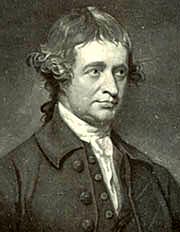
Bagehot (pictured at right) still makes for good reading at times like this.

“What is wanted and what is necessary to stop a panic is to diffuse the impression, that though money may be dear, still money is to be had. If people could be really convinced that they could have money if they wait a day or two, and that utter ruin is not coming, most likely they would cease to run in such a mad way for money. Either shut the Bank at once, and say it will not lend more than it commonly lends, or lend freely, boldly, and so that the public may feel you mean to go on lending. To lend a great deal, and yet not give the public confidence that you will lend sufficiently and effectually, is the worst of all policies; but it is the policy now pursued.”
Robert Feldman, Morgan Stanley’s chief economist for Japan, writes in a note today that it’s key to distinguish between internal discredit — private domestic lenders retreating — and external discredit, which Bagehot defined as a foreign drain on a bank’s money. (Bagehot’s solution to the problem of external discredit is to still lend freely but “at very high rates.”) That doesn’t apply in today’s floating rate system, Feldman says, and exchange rates don’t provide a good substitute, with the dollar’s drop against the yen suggesting we have external discredit while the strengthening against the euro saying we don’t.
Feldman writes: “My view is that the modern counterpart of ‘external discredit’ is moral hazard. The credit of the U.S. IS a problem, since no one knows how big the subprime and related housing market problems really are. Given how poorly banks know their clients, the ‘high rates’ part should come into play. There is no way to re-establish confidence unless those who have made loans to questionable borrowers pay a price for rash lending. Only then will markets regain confidence that risk is under control.
“The next stage of the credit problem — and whether it affects the real economy seriously — depend on eliminating the moral hazard,” Feldman says. “The faster the moral hazard in eliminated, the less impact on the real economy.”
Fed officials are acutely aware of the moral hazard, having resisted action for weeks to not be seen as bailing out risky investments. But they also don’t want a crisis to feed on itself. The Fed stressed its statement, in lowering the discount rate for banks, that it would accept “a broad range of collateral…including home mortgages and related assets.” The central bank sought to reassure a market that had been roiled by risky investments in subprime mortgages.
That’s how the Bank of England halted a panic in 1825, as Bagehot recounts: “A panic, in a word, is a species of neuralgia, and according to the rules of science you must not starve it. The holders of the cash reserve must be ready not only to keep it for their own liabilities, but to advance it most freely for the liabilities of others. They must lend to merchants, to minor bankers, to ‘this man and that man,’ whenever the security is good. In wild periods of alarm, one failure makes many, and the best way to prevent the derivative failures is to arrest the primary failure which causes them. The way in which the panic of 1825 was stopped by advancing money has been described in so broad and graphic a way that the passage has become classical. ‘We lent it,’ said Mr. Harman, on behalf of the Bank of England, ‘by every possible means and in modes we had never adopted before; we took in stock on security, we purchased Exchequer bills, we made advances on Exchequer bills, we not only discounted outright, but we made advances on the deposit of bills of exchange to an immense amount, in short, by every possible means consistent with the safety of the Bank, and we were not on some occasions over-nice. Seeing the dreadful state in which the public were, we rendered every assistance in our power.’ After a day or two of this treatment, the entire panic subsided, and the ‘City’ was quite calm.”
"Bagehot advocated in 1873 that a Lender of Last Resort in a crisis should lend at a penalty rate to solvent but illiquid banks that have adequate collateral. The doctrine has been criticised as having no place in our modern interbank market, but this is wrong. Bagehot’s prescription aims to eliminate the coordination problem of investors at the base of the crisis. It is still a useful guide for action when the interbank market stalls.1 It makes clear that discount-window lending to entities in need may be necessary in a crisis.
Bagehot's doctrine, however, is easy to state and hard to apply. It requires the central bank to distinguish between institutions that are insolvent and those that are merely illiquid. It also requires them to assess the collateral offered. Central banks, because of information limitations, are bound to make mistakes, losing face and money in the process. This doesn’t mean they should not try.
Poor collateral versus massive liquidity
The collateral should be valued under “normal circumstances”, that is, in a situation where the coordination failure of investors does not occur. This involves a judgment call in which the central bank values the illiquid assets. A central bank that only takes high quality collateral will be safe, but will have to inject much more liquidity and/or set lower interest rates to stabilise the market. This may fuel future speculative behavior. Some of this may have happened in the Greenspan era, in the aftermath of the crisis in Russia and LTCM, and after the crash of the technological bubble. The ECB and the Federal Reserve have accepted now partially illiquid collateral that the market would not. This seems appropriate and releases pressure to lower interest rates to solve the problem, something that should be done only if there are signs of deterioration in the real economy. The problem is that central banks are extending the lender of last resort facility outside the realm of traditional banks to entities, like Bear Stearns, that they do not supervise and, therefore, over which they do not have first hand information. How does the Fed know whether Bear Stearns or other similar institutions are solvent? It seems that the Fed is not following Bagehot’s doctrine here.
Finally, if banks and investors are bailed out now, why should they be careful next time? This is the moral hazard problem: help to the market that is optimal once the crisis starts has perverse effects in the incentives of market players at the investment stage. The issue is that only when the moral hazard problem is moderate does it pay to eliminate completely the coordination failure of investors with central bank help. When the moral hazard problem is severe, a certain degree of coordination failure of investors - that is, allowing some crises - is optimal to maintain discipline when investing and, amending Bagehot, some barely solvent institutions should not be helped."
To repeat Bagehot's Rule: "very large (domestic) loans at very high rates are the best remedy for the worst malady of the money market when a foreign drain is added to a domestic drain." The Fed, and the U.S. government more generally, have so far got it only half right."
http://findarticles.com/p/articles/mi_m2751/is_56/ai_55015114/pg_6"In a number of recent blog contributions, we have sketched the role of a modern central bank as ‘market maker of last resort’ (MMLR). This MMLR is the analogue, in a world where intermediation is increasingly through financial markets, to Bagehot’s lender of last resort (LOLR) in a world where most intermediation took place through banks (see e.g. Willem H. Buiter and Anne C. Sibert “The Central Bank as the Market Maker of last Resort: From lender of last resort to market maker of last resort"; Willem H. Buiter “Central banks as market makers of last resort, again”; Willem H. Buiter and Anne C. Sibert “A missed opportunity for the Fed”).
The market maker of last resort function can be fulfilled in two ways. First, the central bank can make outright purchases and sales of a wider range of securities than they currently do. Second, central banks can accept a wider range of securities as collateral in repos, and in collateralised loans and advances at the discount window than they currently do. Following Bagehot’s rule, the MMLR should buy these securities outright or accept them as collateral only on terms that would imply a stiff financial penalty to the owner. The central bank of course already applies a liquidity ‘haircut’ even to liquid instruments offered as collateral in repos or at the discount window. Because the MMLR would have to establish a buying price ‘in the dark’, that is, unaided by recent relevant market prices, and would inevitably take on much more credit risk than central banks have become accustomed to, the ‘haircuts’ should be severe – a financial version of ‘short back and sides’.I doubt a week has gone by since last summer during which I haven't seen some pundit or other trot out Walter Bagehot's dictum that in the event of a credit crunch, the central bank should lend freely at a penalty rate. More often than not, this is contrasted with the actions of the Federal Reserve, which seems to be lending freely at very low interest rates.
Ben Bernanke, in a speech today, addressed this criticism directly:
What are the terms at which the central bank should lend freely? Bagehot argues that "these loans should only be made at a very high rate of interest". Some modern commentators have rationalized Bagehot's dictum to lend at a high or "penalty" rate as a way to mitigate moral hazard--that is, to help maintain incentives for private-sector banks to provide for adequate liquidity in advance of any crisis. I will return to the issue of moral hazard later. But it is worth pointing out briefly that, in fact, the risk of moral hazard did not appear to be Bagehot's principal motivation for recommending a high rate; rather, he saw it as a tool to dissuade unnecessary borrowing and thus to help protect the Bank of England's own finite store of liquid assets. Today, potential limitations on the central bank's lending capacity are not nearly so pressing an issue as in Bagehot's time, when the central bank's ability to provide liquidity was far more tenuous.
I'm no expert on Walter Bagehot, and in fact I admit I've never read Lombard Street. But I'll trust in Bernanke as an economic historian on this one, unless and until someone else makes a persuasive case that Bagehot's penalty rate really was designed to punish the feckless rather than just to preserve the Bank of England's limited liquidity."
"So, we have, what I will call "Grant's Graham For Investing":
1) Decent Size
2) Current Assets Exceed Liabilities By Two Times
3) 10 Continuous Years Of Profit
4) 20 Continuous Years Of Dividends
5) 10 Years Of Earnings Growth Exceeding 33%
6) Price To Earnings Ratio Less Than 15
7 ) Price To Book Ratio Less Than 1.5"The Government will succumb and will lend taxpayers' money to non-financial companies.
In a way, there's no choice, because we'll be hobbled for years as an economy if our few remaining manufacturers and exporters are wiped out."
"Trader's Narrative's Due Diligence":
"The process of investigation undertaken by an party to gather material information on actual or potential risks involved in a financial transaction or relationship."– Jean Améry, At the Mind's Limits, p. 94
94. But I did not get my picture of the world by satisfying myself of its correctness; nor do I have it because I am satisfied of its correctness. No: it is the inherited background against which I distinguish between true and false.
95. The propositions describing this world-picture might be part of a kind of mythology. And their role is like that of rules of a game; and the game can be learned purely practically, without learning any explicit rules.
96. It might be imagined that some propositions, of the form of empirical propositions, were hardened and functioned as channels for such empirical propositions as were not hardened but fluid; and that this relation altered with time, in that fluid propositions hardened, and hard ones became fluid.
97. The mythology may change back into a state of flux, the river-bed of thoughts may shift. But I distinguish between the movement of the waters on the river-bed and the shift of the bed itself; though there is not a sharp division of the one from the other.
98. But if someone were to say "So logic too is an empirical science" he would be wrong. Yet this is right: the same proposition may get treated at one time as something to test by experience, at another as a rule of testing.
99. And the bank of that river consists partly of hard rock, subject to no alteration or only to an imperceptible one, partly of sand, which now in one place now in another gets washed away, or deposited.
100. The truths which Moore says he knows, are such as, roughly speaking, all of us know, if he knows them.
The landmarks are gone. Nevertheless
There is something familiar about
this country.
Slowly now we begin to recall
The terrible whispers of our elders
Falling softly about our ears
In childhood, never believed till now.
"In camp too, a man might draw the attention of a comrade working next to him to a nice view of the setting sun shining through the tall trees of the Bavarian woods (as in the famous water color by Dürer), the same woods in which we had built an enormous, hidden munitions plant. One evening, when we were already resting on the floor of our hut, dead tired, soup bowls in hand, a fellow prisoner rushed in and asked us to run out to the assembly grounds and see the wonderful sunset. Standing outside we saw sinister clouds glowing in the west and the whole sky alive with clouds of ever-changing shapes and colors, from steel blue to blood red. The desolate grey mud huts provided a sharp contrast, while the puddles on the muddy ground reflected the glowing sky. Then, after minutes of moving silence, one prisoner said to another, 'How beautiful the world could be!'


Your comment is awaiting moderation.
“Banks were not “unable” to sell their legacy mortgages; they were prudently unwilling to sell because they expected the government to eventually step in and help push the prices of those assets higher.”
I agree. Many Toxic Assets have, in fact, been sold. However, the fact that the government has been bailing everyone out has led to the belief that it was worth holding on to many of the TAs to see if the government could induce a better price. As well, money to banks has lessened the need for a fire sale of TAs.
Thus, having given incentives and subsidies to the sellers, it must do this for the buyers as well. Also, the large banks are counting on the government not being able to seize them for some time.
One other point: although many people are complaining that the buyers are getting a very good deal, they should remember that the buyers know that the government can always get some of that money back, through taxes.
— Don the libertarian Democrat