Showing posts with label Mark Spitznagel. Show all posts

Thursday, June 18, 2009

I don't know that even an extreme version of a commonly held view can be called a Black Swan.

From Accrued Interest:

"Black Swan: Fallen from the pure faith

This story in today's Wall Street Journey has me scratching my head. (I know, it was reported a couple weeks ago as well, I'm a busy blogger). I read Black Swan. I thought it was absolutely brilliant. Nassim Nicholas Taleb has truly come up with one of the most useful and original ideas about markets that I've read in my entire career.

All that being said, what I'm reading about Universa betting on inflation is total incongruous with what I thought was Taleb's philosophy: basically that the big events in life, history, and markets are almost totally unpredictable. Given this, the best way to invest is to bet on change. Not to bother with long-term predictions based on fundamentals as we see them today, because by the time the long term comes around, fundamentals will be wildly different.

Now I'll admit. I'm not convinced Taleb's method of investing (doing nothing but buying out of the money options) is a good trading strategy. But I am convinced that his general way of thinking is a critical addition to any trader's mindset. Don't assume that the world as we know it today will exist tomorrow. Don't assume that just because you can't think of a reason why the world will radically change, doesn't mean it won't. Just because you make an accurate prediction about a certain event, doesn't mean you'll be able to accurately predict the myriad of consequential events. Just because something seems impossible given what we currently know, doesn't mean its actually impossible.

Taleb and his colleagues have never been more vindicated than now, when what seemed like a backwater portion of the mortgage market (sub-prime) touched off a series of events that almost crashed the whole capitalist system. Even among those that saw sub-prime as a problem, few imagined how this crisis would play out. And that's was Taleb's whole point. Its nearly impossible to see the Black Swan coming.

So now... Mark Spitznagel, who runs Universa, the hedge fund Taleb advises, is betting on inflation? I'm not going to rehash my own view on inflation, that's not the point. The point is that Taleb is known specifically for not betting on markets and economic events. Any market/economic outcome that you can see ahead of time, even as a lesser possibility, it isn't a Black Swan at all. Many people see inflation accelerating. Almost every client meeting I attend, I get a question asking about the consequences of hyperinflation. I don't know that even an extreme version of a commonly held view can be called a Black Swan.

Second of all, Taleb and Spitznagel aren't economists. They are mathematicians and traders. I don't know that they are especially equipped to make an inflationary call.

So it makes you wonder. Is Spitznagel doing this because its his view of markets or his view of what's marketable? I have a feeling its more of the later than the former. He's brought in all kinds of new assets based on Universa's huge returns in 2008. Now he wants to continue the trend. He knows that hyperinflation is a common fear, and his fund is known for thriving during a period of disaster. Its an easy fit.

It just doesn't fit his purported philosophy. I remember an interview Taleb gave on CNBC during the winter when he derided the money bank executives had made, specifically arguing that they managed their banks to enrich themselves, not their shareholders... Mmmm...

Our methods are not as different as you pretend. I am but a shadowy reflection of you."

Me:

Don said...

"The latest wager is more of a directional bet( NB DON ) that regulators' efforts to prop up the financial sector and the broader economy will spark inflation."

This story was hype. The recent story on Russia and US Treasuries was hype. Is this position even controversial? Hell, I believe, and hope, that QE and the stimulus will lead to some inflation. And, for QE to work, people need to believe that there will be inflation, so he's doing my view a favor in proclaiming this.

But somebody, anybody, tell me what's so newsworthy in this point.

Don the libertarian Democrat

6/18/09 10:40 AM

Wednesday, June 17, 2009

latest wager is more of a directional bet that regulators' efforts to prop up the financial sector and the broader economy will spark inflation.

TO BE NOTED: From the WSJ:

"
Black Swan Trader Bets Reputation on Inflation

Mark Spitznagel made a fortune predicting the "black swan" that hit markets last year. Now the relatively unknown hedge-fund manager is emerging from the shadow of his collaborator, Nassim Nicholas Taleb, with a big bet inflation will soar.

The 38-year old Mr. Spitznagel managed the Black Swan funds to triple digit returns last year with a bet on volatility. The returns have brought a flood of cash, sending assets for his firm, Universa Investments LP, rising to $6 billion from $300 million.

But, for all the gains, Mr. Spitznagel is still far less known than "Black Swan" author Mr. Taleb, who invests in the funds and helps shape their strategies but doesn't manage the money.

[Mark Spitznagel] Susan Hall
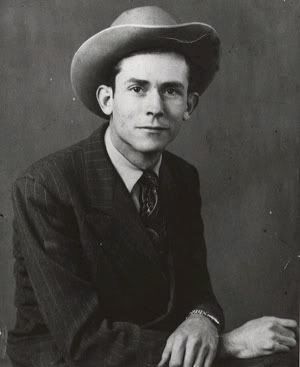
Mark Spitznagel sees economic stimulus efforts spurring inflation.

"Black swan" alludes to the once-widespread belief that all swans are white -- proved false when European explorers found black swans in Australia. A black-swan event is something extreme and highly unexpected.

Mr. Spitznagel's winning streak now will be tested. Universa is poised to make a huge wager that will reap big rewards if inflation surges. Inflation is on investors' radar thanks to extensive economic stimulus efforts.

"The consequences of the monetary bender the government has put on could( NB DON ) be huge," Mr. Spitznagel says.

The new fund, expected to start trading in July, will place bets on options tied to assets expected to benefit from a big leap in prices, including commodities such as corn and crude oil, and options on shares of oil drillers and gold miners. It also will short Treasury bonds, likely to weaken in an inflationary economy.

The inflation bet marks a change for Universa. Typically, Messrs. Spitznagel and Taleb don't have an opinion about the near-term direction of the markets or economy. Rather, they argue, investors tend to underestimate the risks of major market swings. The latest wager is more of a directional bet( NB DON ) that regulators' efforts to prop up the financial sector and the broader economy will spark inflation.

Mr. Spitznagel's approach to trading dates to his time as a fledgling pit trader in the early 1990s at the Chicago Board of Trade, where he bought and sold commodities such as cotton and soybeans.

Mr. Spitznagel's mentor, commodity-trading veteran Everett Klipp, trained him to limit losses by having him immediately exit trades as soon as they moved against him.

The notion of quickly folding a hand is alien to many traders who insist the market will come around to their point of view, says Mr. Klipp, 82, who retired several years ago. "You don't argue with the market," he said in an interview.

In the late 1990s, Mr. Spitznagel moved to New York to take courses at New York University, where Mr. Taleb taught. Mr. Taleb was planning to launch a hedge fund in which he would buy far out-of-the-money "put" options that would pay off if the market plunged sharply. Usually it didn't, and the options expired worthless, generating small losses. Options give their owner the right, but not the obligation, to buy or sell a stock at a certain price.

"One thing Mark taught me was that when someone isn't afraid of losing small amounts, they're almost invincible" because they have more staying power, Mr. Taleb said.

The strategy often either looses money or posts flat returns, which can turn off investors. Though the fund Mr. Taleb launched, Empirica Capital, initially made some money, when volatility fell its returns did, too. Burned out by the day-to-day trading grind, Mr. Taleb in 2004 closed down Empirica and concentrated on writing.

Mr. Spitznagel, meanwhile, joined a Morgan Stanley trading unit called Process Driven Trading. Not inclined to meet the bank's request that he sign a stringent "noncompete" agreement, he left Morgan in early 2007 and started to lay the groundwork for Universa.

Universa started trading out of a small office in Santa Monica, Calif., a location Mr. Spitznagel selected partly because of its distance from Wall Street. Mr. Spitznagel doesn't read financial news; rather, he developed software programs that troll options markets for deals.

A small group of mathematically trained traders track the programs, frequently discussing which trades to make with Mr. Spitznagel. Only 14 people work at the firm, though more will be hired for the inflation funds.

From time to time, a Chinese expert in tai chi visits the fund to train Mr. Spitznagel in the martial art, specifically the idea of using an opponent's force again him. Mr. Spitznagel sees similarities between the technique and his trading strategy, he says, since he believes the small losses he takes can eventually give him leverage over traders on the other side of his positions.

Mr. Spitznagel's strategy gained an advantage last year as the turmoil in subprime mortgages turned into a rout. In late September, he was meeting a client outside Chicago while keeping track of the market on his BlackBerry. Investors were on edge as Congress voted on the Treasury Department's $700 billion financial-rescue package.

Suddenly, the market plunged after the House voted it down. Mr. Spitznagel rushed back to his hotel to field calls from investors and manage the fund's positions from a laptop along with traders at Universa's headquarters.

During the next few months, Universa's positions surged in value. Investors piled in, eager for protection as the market spiraled lower. In early 2009, Mr. Spitznagel closed the strategy to new investors.

Now, Universa faces the risk that a quick market recovery eases investors' concerns about another crash. Mr. Spitznagel says that would be a mistake.

"People have been very quick to think that the low is in," he said. "They've lost all perspective on what a bear market can look like and how long it can last."

Write to Scott Patterson at scott.patterson@wsj.com"