Showing posts with label Illicit Mineral Trade. Show all posts

Thursday, April 2, 2009

Last summer, I traveled to the Congo and saw firsthand the rape survivors, the former soldiers, and the devastation

TO BE NOTED: From Enough:

Enough Takes On Congo's Conflict Minerals

Printer-friendly version
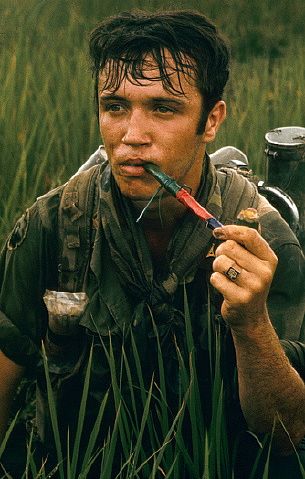
Emile Hirsch

Today, the Enough Project is launching the Conflict Minerals initiative to hold responsible electronic companies that are funding militias, war, and death by purchasing conflict minerals in Congo. Many of these companies may not even be fully aware of the pain they are causing through these purchases, but the time has come for everybody to be responsible for their actions. The people of the Congo have suffered enough. Join us in support of this campaign, and know that you are contributing to helping people who need your help - right now.

Last summer, I traveled to the Congo and saw firsthand the rape survivors, the former soldiers, and the devastation that war has done. It’s time to do what we can.

Join us. We have had enough.

Learn more by reading Enough's newest strategy paper Can You Hear Congo Now? Cell Phones, Conflict Minerals, and the Worst Sexual Violence in the World, and by visiting Enough's Conflict Minerals special page.

Emile Hirsch is an Enough Envoy.

The Conflict Minerals initiative is part of Enough's Raise Hope for Congo campaign.

Thursday, January 22, 2009

The EU only last December added 11 names to a list of some 160 officials, including Mugabe himself, banned from entering the bloc.

Finally. From Reuters:

Photo
1 of 1Full Size

BRUSSELS (Reuters) - The European Union will next Monday step up pressure on Zimbabwe's President Robert Mugabe to share power by urging a probe into whether diamond sales are being used to support his government, a draft showed.

The bloc's foreign ministers, who meet in Brussels on January 26, will also add names to a list of Zimbabwean officials banned from travelling in the EU because of their links to alleged human rights abuses, a draft EU paper obtained by Reuters showed.( FINALLY )

"The (EU) Council supports action to investigate the exploitation of diamonds from the site of Marange/Chiadzwa and their significance in possible financial support to the regime and recent human rights abuses," the document, which will be presented to EU ministers, said.

The draft urges the Kimberley Process -- an international certification scheme set up to ensure diamonds do not fund conflict -- "to take action with a view to ensure Zimbabwe's compliance with its Kimberley obligations".

Alongside platinum and gold, diamonds are among the natural wealth that Zimbabwe could expect to profit from if it emerges from a humanitarian and economic crisis that has seen thousands die of cholera and inflation rocket to stratospheric rates.

The World Diamond Council industry body has put Zimbabwe's production of rough diamonds at 0.4 percent of world production, mostly exported with the Kimberley Process certificate. However in December it raised concern about possible illegal exports "for the personal gain of a few".

Despite growing international pressure on him to step down, power-sharing talks between Mugabe and opposition leader Morgan Tsvangirai remain deadlocked in a dispute over cabinet posts.

"The (EU) Council condemns the regime for its ongoing failure to address the most basic economic and social needs of its people ... The Council urges stakeholders to comply with the power sharing agreement," the EU draft said. ( THANK GOD )

Critics say Mugabe's policies, such as the seizure of white-owned farms, have ruined Zimbabwe's economy, but the ruler -- in power since independence from Britain in 1980 -- blames Western sanctions for the crisis. ( HE'S A LYING DESPOT )

The EU only last December added 11 names to a list of some 160 officials, including Mugabe himself, banned from entering the bloc. The EU draft did not say how many more would be added."

Get going!

Tuesday, January 20, 2009

"triggered a conflict-driven humanitarian catastrophe that killed an estimated 5.4 million people."

From Reuters:

Photo
1 of 1Full Size

By John Kanyunyu

KIBATI, Congo (Reuters) - Rwandan troops crossed into eastern Congo on Tuesday in a joint military operation by the Great Lakes neighbours to disarm Rwandan Hutu rebels seen as a root cause of more than a decade of conflict.( WOW )

While both countries presented the operation as part of internationally-backed efforts to end conflict in Democratic Republic of Congo, analysts said allowing the Rwandan army in posed political risks for Congolese President Joseph Kabila.( TRUE )

The presence of the Rwandan Hutu FDLR fighters, who finance themselves by exploiting illegal mines( NB ) in the mineral-rich east, triggered two previous Rwandan invasions of Congo that led to a wider 1998-2003 conflict. It also helped cause a 2004 rebellion by Congo Tutsi rebels who went on the offensive late last year.

Diplomats and U.N. peacekeepers said that up to 2,000 Rwandan troops entered Congo's eastern North Kivu province on Tuesday under a December joint accord to act against the mostly Hutu Democratic Forces for the Liberation of Rwanda (FDLR).

The FDLR's strength is estimated at around 6,000 fighters, spread across North and South Kivu.

"The operations are beginning. We have invited Rwandan officers with their security contingents for their safety. They are observers ... The operations to disarm the FDLR are planned for a length of 10 to 15 days," Lambert Mende, Congo's information minister and government spokesman, told Reuters.

But the size of the Rwandan deployment appeared to be more than a simple observation mission.

A Reuters reporter saw hundreds of Rwandan troops, wearing Rwandan flag patches on their uniforms and carrying mortars, rocket launchers and AK-47s, moving into Congo in the Kibati area north of the North Kivu provincial capital Goma.

Rwandan military spokeswoman Major Jill Rutaremara told Reuters in Kigali the details of the operation were "secret".

Rwanda's Information Minister, Louise Mushikiwabo, said the Rwandan forces would operate under Congolese command.

"This is a result of recent intense and sincere efforts -- diplomatic, military and other ... to bring peace and stability to the region." he told Reuters by text message.

U.N. peacekeepers also confirmed the Rwandan deployment.

"This morning between 1,500 and 2,000 RDF (Rwanda Defence Forces) crossed the border in the Munigi-Kibati zone," Lieutenant-Colonel Jean-Paul Dietrich, military spokesman for the U.N. force, MONUC, said. MONUC, the biggest U.N. peace force, said it had not been involved in planning the operation.

Congolese army forces were on the move with tanks, armoured personnel carriers and mobile rocket launchers, Dietrich said.

FEARS OF ESCALATION

Analysts said the latest entry of Rwandan troops into Congo, at the same time as a Ugandan-led offensive against Ugandan LRA rebels further north in Orientale, were an acknowledgement by Kabila that he had failed to pacify his country( VERY TRUE ). He had promised to do this after winning 2006 elections.

"Look where we are, two years after elections, the Rwandan army back in Congo and the Ugandans are back in Congo ... and the Congolese get screwed again( SAD BUT TRUE )," one veteran foreign Congo analyst, who asked not be named, said.

The analyst recalled Congo's 1998-2003 war, when Rwanda and Uganda backed rival rebel groups.

"It's a confirmation of what everybody knows -- the DRC army has no control over its own territory( TRUE )," said a foreign diplomat.

The presence in eastern Congo of Rwandan Hutu FDLR rebels, many of whom participated in Rwanda's 1994 genocide, has been at the heart of more than a decade of bloodshed.

The 1998-2003 war sucked in the armies of half a dozen nearby countries, and triggered a conflict-driven humanitarian catastrophe that killed an estimated 5.4 million( 5.4 MILLION ) people.

Rwanda and Congo have agreed on several past occasions to cooperate to tackle the Hutu rebels, but have failed to carry this out amid accusations that ill-disciplined Congolese government forces have sided with the FDLR Hutu fighters.

Fighting flared again in North Kivu last October, when the National Congress for the Defence of the People (CNDP), a Congolese Tutsi rebel group led by renegade General Laurent Nkunda ended a ceasefire and launched an offensive against Goma.

The fighting, which killed hundreds and displaced around 250,000 people, prompted fears of a fresh regional war.

U.N. experts told the Security Council last month that the governments of both Rwanda and Congo had been backing rebel groups in the conflict, and recommended targeted sanctions such as travel bans and freezing of assets against some individuals( ANYTHING ).

Since then diplomatic efforts to achieve a peaceful solution have picked up pace with frequent high-level contacts between Kigali and Kinshasa, in the absence of formal diplomatic ties."

If they actually cooperate, this might be the right course of action to end this nightmare.

Thursday, December 25, 2008

"consumers in the west do have the power to limit their funds."

Caroline Sourt in the Guardian about the East Congo, and what we can do about it ( which isn't much ):

"Caroline Sourt

As Simon Tisdall has pointed out on Comment is Free, the conflict in eastern Democratic Republic of the Congo looks intractable – and there is little appetite, in Britain or elsewhere, to send more troops there. But while the fighting is not going to stop as long as militias control the region's natural resources, consumers in the west do have the power to limit their funds( GOOD ).

One of the precious metals mined in eastern Congo is coltan. It is used in many common products: mobiles, computers, digital cameras, GPS equipment, airbags, hearing aids and even pacemakers. While 80% of the world's known coltan reserves are in eastern Congo, only about 1% of the metal sold on the open market is Congolese.

The reality is that most of Congo's coltan is sold illegally and the revenue, instead of going towards the country's development, is helping to fund the ongoing violence. The coltan mines in the east are controlled by various armed groups. One of the consequences is that civilians, including children, are recruited as forced labour. The mortality rate in these mines is high.

In a UN report discussed yesterday by the security council, the Congolese and Rwandan governments are accused of backing militias to fight a "war by proxy". All the groups, including the Congolese army, are accused of human rights violations that range from massacres and torture to widespread rape of women and children. In this on-off war, it's estimated that 45,000 people die each month( 45,000 ); since August, 250,000( 250,000 ) have been displaced.

The UN's force in Congo, Monuc, has so far failed to stop the fighting, despite being the largest and most expensive peacekeeping mission in the world( COME ON ). Democratic Republic of the Congo is the size of western Europe: 17,000 troops, or even the proposed increase to 20,000-strong force, are insufficient. The EU recently refused to send in soldiers, preferring to try political negotiations. What it should be doing is to regulate the international sales of Congolese minerals more efficiently( TRUE ).

Just as blood diamonds fuelled the civil war in Sierra Leone, the illegal trade fuels the DRC conflict. As long as militias and politicians continue to make money from minerals, there is no real incentive to find a lasting peace( I SUPPOSE THAT'S TRUE ). The companies involved in buying Sierra Leone's diamonds only located their consciences when consumers started asking questions about where their gems were coming from, and profits were threatened.

A certificate systemis supposed to detail the origins of any coltan, but it is not strictly adhered to. Many companies don't ask and if they do, they settle for vague answers and fraudulent papers because Congo's coltan is abundant and much cheaper than that of rival exporters.

Now, a break. From Reuters:

"By Joe Bavier

KINSHASA (Reuters) - Democratic Republic of Congo hopes to set up a scheme to certify columbite-tantalite produced within its borders in 2009, the country's Deputy Mines Minister Victor Kasongo said on Tuesday.

The illegal traffic of the rare metal, used in mobile phone chips and commonly referred to as coltan, helped fuel a 1998-2003 war and resulting humanitarian crisis in the central African country that killed an estimated 5.4 million people.

But a new G8-backed and German-financed pilot initiative aimed at creating a mineral fingerprint for coltan could soon help developing countries trace ore that is illegally exported and boost their profits from legal exports.

Kasongo said he hoped a global certification process aimed at ethically-minded consumers would follow.

"All the large companies are fighting for this. They'll be able to display a certificate to prove fair trade. You'll begin seeing many machines, many iPods, that are certified," he said.

Congo plans to use the data to set up its own certification process within the next eight months, which should help the creation of a global system similar to the Kimberley Process set up to end the trade in "blood diamonds" from war zones.

"We believe that in 2009 we should be able to enforce certification ... early next year," Kasongo told Reuters in an interview. "Licences. Centralised control. Certification. More revenues to Congo. More peace and stability. Those are the things we are aiming for."

A team from Germany's Federal Institute for Geosciences and Natural Resources is due to arrive in Congo on April 2.

Researchers will map the country's coltan producing areas and isolate unique characteristics of local ore samples to create mechanisms for tracing ore to its origin.

"BLOOD COLTAN"

Congo, believed by many experts to possess the world's largest coltan reserves, was one of the principal suppliers of the ore as demand from the mobile phone and electronics industries spiked in the late 1990s.

Much of the so-called "blood coltan" originating in Congo was illegally smuggled into Uganda, Rwanda, and Burundi during a five-year war that saw the plunder of its natural resources by neighbours and foreign-backed militias.

Congo's coltan-rich eastern borderlands remain a patchwork of militia-controlled zones and rebel fiefdoms, where a United Nations Security Council-commissioned report recently said illegal armed groups still buy weapons with mining revenues.

Ethical concerns and more efficient industrialised mining have now made Australia the world's leading producer and exporter of coltan.

Congo hopes the certification process will rehabilitate the image of its coltan and help to stabilise its eastern reaches.

"We'll make sure that the coltan is not linked to any military activities. We understand that once we have control of the coltan itself, we'll have some control over the stability of the area," Kasongo said."

Back to our post:

The vast majority of those who donate to charitable appeals for Congo are unaware that their Christmas present purchases are probably feeding the conflict as fast as charities can alleviate it. Asking a few more questions about the gifts we buy would force the suppliers to come clean about their origins."

It's the least that we can do.

Saturday, December 20, 2008

“Democracy is not elections. Democracy is legitimacy. And legitimacy comes from what you are doing to your people.”

Here's a portrait of a War Criminal:

"BUNAGANA, Congo — At the entrance to this bustling border town is a most unusual sight: a speed limit sign. In fresh red, white and blue paint, it is a rare manifestation of order in a nation better known for chaos.
Skip to next paragraph
Benedicte Kurzen/VII Mentor

Mr. Nkunda at a training camp in North Kivu Province for the group of rebels that he leads.

Multimedia

Lydia Polgreen on Congolese rebel leader Laurent Nkunda

Related

Times Topics: Laurent Nkunda | Congo

Benedicte Kurzen/VII Mentor

Gen. Laurent Nkunda, the leader of a group of rebels, with his pet goat Betty in the mountains of Congo. His aims include the removal of President Joseph Kabila, whose power has been waning.

Benedicte Kurzen/VII Mentor

Gen. Laurent Nkunda after a meeting with the news media in November in the town of Kichanga in Congo.

The seemingly innocuous signpost is emblematic of the growing might and wider ambitions of Laurent Nkunda, the renegade Congolese general and warlord who now holds part of Congo’s future in his grip.

“I am fighting for the destiny of this country,” said Mr. Nkunda, offering up the orderly streets and neatly terraced farms of the surrounding countryside as evidence of what Congo might be like if he ran things. “What we want is to restore the dignity of this country and these people.”

But beneath the veneer lies a ruthlessness of a piece with Congo’s unbroken history of brutality. With a military campaign in October and November that was met with a feeble response( THIS IS A DISGRACE ) from both the Congolese government and United Nations peacekeeping forces here in eastern Congo, General Nkunda has pushed the nation to its most dangerous precipice in years.

Many here fear a new regional war or that an alliance of convenience between General Nkunda and other enemies of the president could lead to the ouster of Congo’s first democratically elected government in four decades.

That General Nkunda, who is suspected of committing a litany human rights violations, could be a leading figure in such a move is a chilling thought for many Congolese. A recent journey through territory he controls revealed a host of contradictions between the image he puts forward and reality, including evidence of mass killings, the extraction of onerous payments from residents, illegal profiteering from the mineral trade and the conscription of child soldiers.

General Nkunda’s campaign began as a local insurgency aimed at redressing the grievances of a Tutsi minority that felt threatened by the aftershocks of the Rwandan genocide. But it has grown into a rebellion with a broad set of aims that include the removal of President Joseph Kabila, who was elected in 2006 after more than 40 years( 40 YEARS ) of tyranny and war in this country. “We have national ambitions,” General Nkunda declared, a hint of triumph in his voice. “We are talking about Congo.”

Some of this talk may be grandiose bluster from a man fond of referring to himself in the third person( WHO'D WANT TO BE HIM ) and who prefers to be photographed holding a scepter capped by a silver-plated eagle’s head. General Nkunda is despised by many in eastern Congo for his brutal tactics. He is also widely perceived as a proxy for Rwanda, a country whose meddling is largely detested by Congolese citizens. The general claims that he does not want to replace Mr. Kabila, merely to sit down and have direct talks.

But his forceful new challenge poses grave risks for Mr. Kabila, who is weaker than ever. The national army was routed on the battlefield, retreating virtually without a fight, pillaging and raping as it went.

The country’s economy, once fast-growing, is in shambles as the prices of minerals have plummeted in the global recession, and Mr. Kabila is increasingly unpopular. In eastern Congo, many people are unhappy at his failure to halt General Nkunda’s relentless military advance. In the west, where he has never been popular, he is under threat from political opponents who see his government as intolerant of dissent.

One by one, those who oppose him have felt the violent wrath of his security forces, according to human rights investigators and political analysts. A Human Rights Watch investigation found that 500 people had died and 1,000 had been detained in these crackdowns.

In the face of Mr. Kabila’s plummeting stature, General Nkunda has cultivated an image as a disciplined crusader bent on bringing order to the country. He dresses in sharp uniforms or flowing, immaculate white robes. He has claimed to be an evangelical minister and at times wears a pin that reads, “Rebels for Christ.” General Nkunda and his top commanders say their fighters have a commitment to discipline as well: drunkenness, looting and rape are offenses punishable by imprisonment and possibly death, according to senior rebel officers.

But in 2002, when General Nkunda was a commander in a different rebel group, he participated in the mass killing of 160 mutineers in the city of Kisangani, human rights groups say. According to Human Rights Watch, “Forces under Nkunda’s command bound, gagged, and executed twenty-eight persons and then put their bodies in bags weighted with stones and threw them off a Kisangani bridge.”

Two years later, his men took the city of Bukavu, and days of killing and rape followed, investigators say. Since 2005, when he formed his own rebel group, known as the National Congress for the Defense of the People, or C.N.D.P., his forces have carried out a number of massacres, according to human rights investigators, most recently at Kiwanja, in early November, where 150 people were executed.

In Nkunda territory, the general says, civilians are never harmed and live without fear of violence or looting. His men offer up the endless, Eden-like valleys around this town as proof. Terraced into rows as tidy as seats in an amphitheater, the land bespeaks a kind of ordered plenty.

But farmers here say they are forced to hand over a precious portion of their harvest to feed the fighters: 45 pounds of beans or grain, and as much as $20 a season in taxes, an enormous sum in a place where most people live on far less than a dollar a day.

General Nkunda said his rebellion was not motivated, like so many others fighting here, by plunder of Congo’s natural resources.

“I am not here for minerals,” he said. Indeed, there are almost no mines in the areas under his control, and General Nkunda has avoided getting directly involved in mining, fearing the taint of blood minerals that has stained virtually every group fighting here, including Congo’s own army.

But his fighters collect taxes on virtually every commercial vehicle and bushel of crops that come out of territory they control, according to residents and a United Nations report released last week. They even take a cut of the $300 permits sold to tourists wishing to see Congo’s rare mountain gorillas.

“The money goes to the rebels,” said one of the park rangers who monitors the animals. “None of it comes to us( UNREAL ).”

General Nkunda’s men also profit from Congo’s minerals. Thousands of tons of tin ore, coltan and other minerals pass through the border crossing here to Uganda, headed to Kenya’s Indian Ocean port, and the rebels take a slice of the duties and taxes collected here, United Nations officials say. General Nkunda denied this, saying his men sent all taxes to the government.

According to rebel officials, in Nkunda territory children are never made to wield Kalashnikov rifles and kill. But boys like Eric, who is now 16 but says he has been fighting with armed groups since he was kidnapped by Hutu militiamen at the age of 9, say General Nkunda’s rebellion forces hundreds of children to fight.

“The strategy they use is this,” he explained. “When they met children on the road, they ask them to help them carry their goods.”

The boys are then taken to training camps, given guns and taught to fight, Eric said. His eyes are wide in permanent surprise, and he said he had headaches that did not respond to medicine. Loud noises terrify him.

“Too many bombs,” he explained in a soft voice.

For two years, from 13 to 15, he said he fought with General Nkunda’s troops.

“Many of us were boys,” he said. “They would send us out first, then the men.”

He lives in a shelter for boys separated from their parents by the war. In the next bunk is his friend Fabrice, a 14-year-old former Mai Mai fighter who used to do battle with General Nkunda’s forces.

“I always felt bad to kill other children, because I knew they had been forced to fight just like me,” he said.

General Nkunda seems to have little trouble drawing new recruits, because each man is issued a uniform, a gun and training, unlike Congolese soldiers, who can go months without salaries. Some fighters are drawn to the rebels for ethnic reasons, but many others simply want to fight on the side that wins. His force is more disciplined, General Nkunda says, because they are fighting for a cause they believe in.

General Nkunda seems determined to play the role of statesman in waiting, receiving visiting diplomats and emissaries like a chief of state. He rejects the legitimacy of the Kabila government, so the United Nations appointed the former president of Nigeria, Olusegun Obasanjo, to cajole General Nkunda back to the negotiating table.

“What is democracy?” he mused, worrying his scepter, which has grown brassy over the years as his rebellion has flourished. “Democracy is not elections ( HERE WE GO ). Democracy is legitimacy. And legitimacy comes from what you are doing to your people( TERRORIZING THEM ).”

General Nkunda is all but certain to face an arrest warrant from the International Criminal Court for atrocities committed during his years fighting here, human rights investigators say, most recently in Kiwanja, where his men executed civilians and torched camps that housed 30,000 displaced people.

“Nkunda destroyed my life,” said Anorite Zawadi, 27, whose 8-year-old daughter disappeared when General Nkunda’s troops razed the camp in which her family lived. The girl has not been seen since.

“He has no mercy on us,” she continued. “He brings only death and sorrow.”

Monday, December 15, 2008

"the world could soon be living with a greater shame than the Rwandan genocide."

Thank God for Giles Foden in the Guardian:

"In 2001, I was in a bar in Kigoma, on the Tanzanian side of Lake Tanganyika. As I sipped my beer, I could hear the clipped tones of a South African speaking into a radio transceiver. He was ordering supplies for the United Nations peacekeeping mission known as Monuc, then operating out of Kalemie on the lake's Congolese side. At the time, Monuc's blue berets were just about managing to keep a lid on things in eastern Congo, but already the strain was showing.

Earlier that year Congolese president Laurent Kabila was shot by his bodyguard. He was replaced by his son Joseph, largely as a result of pressure brought to bear by Robert Mugabe. Zimbabwe was one of a number of nations then taking part in the second Congo war (1998-2003). It was allying itself, along with Angola, Namibia, Chad and Sudan, with the Kabilas. On the other side, though sometimes fighting each other, were Uganda and Rwanda.

All sides in this many-phased conflict, which has claimed more than five million lives( PLEASE READ THIS NUMBER ) during the past decade, have been engaged in extraction of Congo's rich mineral deposits ( THAT'S RIGHT ). These have been a cause of bloodshed in the region right back to the 1960s, following Belgium's messy exit from its former colony. These riches are one reason why regional collaborations to end the conflict have so far failed; another is the historical effects of the 1994 Rwandan genocide.

Since the official end of the second Congo war, fighting has been concentrated in the eastern region - the Congolese borders of Uganda, Rwanda and Sudan - with mainly Rwandan proxies fighting a circumstantial alliance of the Congolese army and Hutus. The most recent focus is on the territorial ambitions of "General" Nkunda, a Rwandan-backed warlord accused of massacring 150 civilians in Kivu last month. ( THIS IS A PROXY WAR )

Last week Ban Ki-moon, the UN secretary general, wrote to European leaders asking the EU to intervene in Congo. The recent collapse of the Congolese army in the eastern region has caused hundreds of thousands of people to be displaced and an eruption of mass killings and rapes. The letter was an admission that Monuc had failed, having too few troops to deal with a conflict that could potentially again spread over an area as large as the EU itself.

The UN has authorised more troops, but they will not be deployed for at least four months. EU foreign policy chief Javier Solana, who met Ban yesterday in New York, has proposed four options to EU leaders: sending a rapid response "battle group" of 1,500 troops; dispatching within several months a 3,000-strong mission; simply reinforcing Monuc with forces from European countries; or achieving a concrete objective, such as securing the all-important Goma airport and other sites.

The second proposal has already been rejected by France. On Friday, Nicolas Sarkozy said African forces should reinforce Monuc. He also questioned whether an increase in the number of troops was the answer. Britain, too, is adamant the EU should not get involved, and Germany is not keen. These big EU players cite practical or tactical reasons, but underneath the shilly-shallying is a collective failure of moral leadership. The long-term lack of proper response to the scale of this fluid, deadly conflict is part of the same narrative that saw western governments fail to respond to genocide in Rwanda. It is eminently possible that a tragedy of a larger scale could now take place.( SOMETHING SHOULD BE DONE! )

Ordinary Africans are already suffering on a scale that dwarfs casualties from terrorist outrages and conflicts in Afghanistan and Iraq. In particular, the harrowing reports of mass rape in the Congo demand a response - a military one. There are good political as well as human rights reasons why stopping mass rape should be the platform for this intervention. Women are the "glue" in central African society. They are the carers, the food providers. If many in several generations of women are damaged, injured or killed, the chances of a return to civil society are extremely slim.

In the immediate term, pressure should be put on the Rwandan leadership itself to rein in Nkunda; in the short term, Monuc should be supplemented by a large EU force; in the longer term, as eastern Congo seems ungovernable from Kinshasa, I see no option but the creation of a buffer state on the western shores of Lakes Kivu and Tanganyika. This could be achieved by regional forces with Monuc-EU backup. ( GO FOR IT! )

Geopolitically, the Great Lakes region is a hornet's nest - but unless someone puts smoke in that nest, the world could soon be living with a greater shame than the Rwandan genocide. ( THE WORLD WEARS SHAME WELL )

Thursday, December 4, 2008

"Behind any rebellion with legs is usually a meddling neighbor."

This is a very important post in the NY Times from Jeffrey Gettelman:

"KIGALI, Rwanda — There is a general rule in Africa, if not across the world: Behind any rebellion with legs is usually a meddling neighbor. And whether the rebellion in eastern Congo explodes into another full-fledged war, and drags a large chunk of central Africa with it, seems likely to depend on the involvement of Rwanda, Congo’s tiny but disproportionately mighty neighbor."

This is more like a universal rule, and one of the most important to keep in mind. Although the Domino Effect seems like an antiquated concept, there does seem to be a real correlation between the fighting of one war and the beginning of the next war. The genocide in Rwanda had a major role in the problems that have since occurred in the Congo:

"There is a long and bloody history here, and this time around the evidence seems to be growing that Rwanda is meddling again in Congo’s troubles; at a minimum, the interference is on the part of many Rwandans. As before, Rwanda’s stake in Congo is a complex mix of strategic interest, business opportunity and the real fears of a nation that has heroically rebuilt itself after near obliteration by ethnic hatred."

Let's find out why:

"The signs are ever-more obvious, if not yet entirely open. Several demobilized Rwandan soldiers, speaking in hushed tones in Kigali, Rwanda’s tightly controlled capital, described a systematic effort by Rwanda’s government-run demobilization commission to send hundreds if not thousands of fighters to the rebel front lines.

Former rebel soldiers in Congo said that they had seen Rwandan officers plucking off the Rwandan flags from the shoulders of their fatigues after they had arrived and that Rwandan officers served as the backbone of the rebel army. Congolese wildlife rangers in the gorilla park on the thickly forested Rwanda-Congo border said countless heavily armed men routinely crossed over from Rwanda into Congo.

A Rwandan government administrator said a military hospital in Kigali was treating many Rwandan soldiers who were recently wounded while fighting in Congo, but the administrator said he could be jailed for talking about it.

There seems to be a reinvigorated sense of the longstanding brotherhood between the Congolese rebels, who are mostly ethnic Tutsi, and the Tutsi-led government of Rwanda, which has supported these same rebels in the past.

The brotherhood is relatively secret for now, just as it was in the late 1990s when Rwanda denied being involved in Congo, only to later admit that it was occupying a vast section of the country. Rwanda’s leaders are vigilant about not endangering their carefully crafted reputation as responsible, development-oriented friends of the West."

So this is an ethnic based intervention.

"Senior Rwandan officials do not deny that demobilized Rwandan soldiers are fighting in Congo, but they say the soldiers are doing it on their own, without any government backing.

“They are ordinary citizens, and if their travel documents are in order, they can go ahead and travel,” said Joseph Mutaboba, Rwanda’s special envoy for the Great Lakes region.

But according to several demobilized soldiers, Rwandan government officials are involved, providing bus fare for the men to travel to Congo and updating the rebel leadership each month on how many fighters from Rwanda are about to come over. Once they get to the rebel camps, the Rwandan veterans said, they flash their Rwandan Army identification cards and then are assigned to a rebel unit.

“We usually get a promotion,” said one fighter who was recently a corporal in the Rwandan Army and served as a sergeant in the rebel forces last month. He said that he could be severely punished if identified and that Rwandan officials and rebel commanders told the fighters not to say anything about the cooperation.

Another cause for suspicion is Rwanda’s past plundering of Congo’s rich trove of minerals, going back to the late 1990s when the Rwandan Army seized control of eastern Congo and pumped hundreds of millions of dollars of smuggled coltan, cassiterite and even diamonds back to Rwanda, according to United Nations documents.

Many current high-ranking Rwandan officials, including the minister of finance, the ambassador to China and the deputy director of the central bank, were executives at a holding company that a United Nations panel in 2002 implicated in the illicit mineral trade and called to be sanctioned. The officials say that they are no longer part of that company and that the company did nothing wrong. Nonetheless, eastern Congo’s lucrative mineral business still seems to be heavily influenced by ethnic Rwandan businessmen with close ties to Kigali."

So money is involved as well.

"Some of the most powerful players today, like Modeste Makabuza Ngoga, who runs a small empire of coffee, tea, transport and mineral companies in eastern Congo, are part of a Tutsi-dominated triangle involving the Rwandan government, the conflict-driven mineral trade and a powerful rebel movement led by a renegade general, Laurent Nkunda, a former officer in Rwanda’s army.

Several United Nations reports have accused Mr. Makabuza Ngoga of using strong-arm tactics to smuggle minerals from Congo to Rwanda and one report said that he enjoyed “close ties” to Rwanda’s president, Paul Kagame. This week a rebel spokesman said that Mr. Makabuza Ngoga was on Mr. Nkunda’s “College of Honorables,” essentially a rebel advisory board. Mr. Nkunda’s troops recently marched into areas known to be mineral rich — and areas where ethnic Rwandan businessmen are trying to gain a foothold.

Mr. Makabuza Ngoga said in an interview that he was not doing anything illegal.

“I’m just a businessman,” he said. “I work with them all.”

Sure you are. I doubt that he is doing anything illegal, if that means subject to some kind of legal jurisdiction.

"A Tale of Two Africas

Rwanda and Congo are polar opposites, a true David-and-Goliath matchup. Crossing the border from Gisenyi, Rwanda, to Goma, Congo, is a journey across two Africas, in the span of about 100 yards.

The two-minute walk takes you from one of the smallest, tidiest, most promising countries on the continent, where women in white rubber gloves sweep the streets every morning and government employees are at their desks by 7 a.m., to one of the biggest, messiest and most violent African states, home to a conflict that has killed more than five million people, more than any other since World War II."

Stop here. Register that figure in your mind: More Than 5 Million People Killed. That's over and above what happened in Rwanda.

"While Congo is vast, Rwanda is packed. While the Congolese are often playful, known for outlandish dress and great music, Rwandans are reserved. While Congo is naturally rich, Rwanda is perennially poor. Yet Rwanda has emerged as a darling of the aid world, praised for strong, uncorrupt leadership and the strides it has made in fighting AIDS and poverty.

The fates of the two countries are inextricably linked. In 1994, Hutu militias in Rwanda killed 800,000 people, mostly minority Tutsis, and then fled into eastern Congo. Rwanda responded by invading Congo in 1997 and 1998, denying it each time initially but later taking responsibility. Those invasions catalyzed years of war that drew in the armies of half a dozen African countries.

When the Rwandan military controlled eastern Congo from 1998 to 2002, it established a highly organized military-industrial network to illegally exploit Congo’s riches, according to United Nations documents.

A 2002 United Nations report said that top Rwandan military officers worked closely with some of the most notorious smugglers and arms traffickers in the world, including Viktor Bout, a former Soviet arms dealer nicknamed the Merchant of Death who was arrested this year.

“I used to see generals at the airport coming back from Congo with suitcases full of cash,” said a former Rwandan government official who said that if he was identified, he could be killed.

Rwanda may have a lot going for it — a high economic growth rate, low corruption, a Parliament with a majority of seats held by women. But many people here say they do not feel free. When the former government official was interviewed at a Kigali hotel, he abruptly stopped talking whenever the maid walked by.

“You never know,” he whispered, nodding toward the young woman who was smiling behind a plate-glass window smeared with soap suds. “She could be a lieutenant.”

It has many things going for it, but that should not be at the expense of the Congo.

"Scarred by a Genocide

Rwanda is tiny, tough and intensely patriotic. Like Israel, it is a postgenocidal state, built on an ethos of self-sacrifice. Its national motto is Never Again.

One oft-cited threat is the Democratic Forces for the Liberation of Rwanda, also known as the F.D.L.R., a mostly Hutu militia that is based just across the border in the green folds of eastern Congo. The militia is thought to number 5,000 to 10,000 fighters. Some of its leaders are wanted “genocidaires” who fled Rwanda in 1994 after massacring Tutsi.

“These guys want to come back and finish the job,” said Maj. Jill Rutaremara, a spokesman for Rwanda’s Defense Forces.

Mr. Nkunda, the rebel leader, has used the presence of the Hutu militia and the Congo government’s failure to disarm it as a rationale for his continued armed struggle. His forces have routed Congolese government troops in the past two months and pushed the region to the precipice of another regional war.

United Nations officials say he has not acted entirely alone, either: they said they observed Rwandan tanks firing from Rwandan territory to support Mr. Nkunda’s troops as they advanced in October. Rwandan officials denied this.

Rwandan military officers admit, when pressed, that the Hutu militia has little chance of destabilizing Rwanda. The last time it attacked inside Rwanda was 2001.

Some Western diplomats, Congolese officials and Rwandan dissidents now believe that the Rwandan government is simply using the F.D.L.R. as an excuse to prop up Mr. Nkunda and maintain a sphere of influence in the mineral-rich area across the border.

“These are people who want to make business, and they cover it up with politics,” said Faustin Twagiramungu, a former Rwandan prime minister now in exile in Belgium.

Congolese officials say that that the Rwandan government is making no efforts to bring the Hutu militiamen back into Rwanda because Rwanda wants to make sure that any Hutu-Tutsi violence plays out in Congo.

“What’s happening in eastern Congo is a Rwandese war is being fought on Congolese soil,” said Kikaya bin Karubi, a member of Congo’s Parliament.

Rwandan officials dismiss these claims with a confident chuckle.

“We want to deal with these guys here,” Major Rutaremara said. “We want them back.”

Mr. Mutaboba, the Rwandan government envoy, said the allegations were part of “an organized campaign to distort the whole problem and give it a regional dimension.”

“It’s not,” he said. “It’s a Congo problem.”

If Rwanda was a world problem, and it should have been, then the Congo is a world problem, and it should be.

"Ethnic and Business Ties

But it may be hard drawing a fine line between Congo and Rwanda, despite the lines on a map. There is a long history of ethnic and business ties that seamlessly flow across the colonially imposed borders, especially among the minority Tutsi who dominate business on both sides, yet at the same time, feel threatened and a heightened sense of community as a result.

For example, several demobilized Rwandan soldiers in Kigali said the vast majority of volunteers who recently crossed the border to fight with Mr. Nkunda were Tutsi. Some of the soldiers said that they had relatives living in eastern Congo and that it was like a second home to them.

According to four soldiers and one employee at the Rwandan demobilization commission, at the end of their monthly meetings, officials at the commission ask for anyone fit and ready to fight to stand up. Sometimes the commission provides bus fare to the border, the soldiers said, and other travel costs. The soldiers usually travel unarmed, picking up weapons on the other side, they said.

One demobilized Rwandan lieutenant who just got back from fighting in Congo looked surprised when asked why he went.

“Why? I am Tutsi,” he said. “One hundred percent Tutsi.”

I'm going to tell you my feeling about this. We should focus a higher percentage our efforts on where the most people are dying and suffering, and work our way down the list. The Congo might well head the list, with Sudan in the running.

Of course, this will mean focusing on other countries' interventions, like France's in Rwanda. And it will also mean that the Israeli-Palestinian Problem isn't the world's central problem, but one down the list.

I'm not saying that all these conflicts shouldn't be addressed in some fashion, only that we should focus where hundreds of thousands are dying, and that allowing these humongous numbers of people to die has been a terrible legacy of our time.