Showing posts with label Rawls. Show all posts

Monday, December 15, 2008

"This kind of thing, incidentally, is one reason why I’m glad I majored in philosophy in college."

Matthew Yglesias on why he majored in Philosophy in college:

"From the thread about lying about books you’ve read comes a question about books I have read:

Also, any suggestions on books by or on Rawls?

In terms of book by Rawls, the trouble is that while A Theory of Justice and Political Liberalism are both great books, neither is really what I’d call a good book. They’re not fun to read and they’re not short. But if you want to read Rawls, they’re the books you have to read. There’s also Justice as Fairness: A Restatement which is short and tries to synthesize the two works.

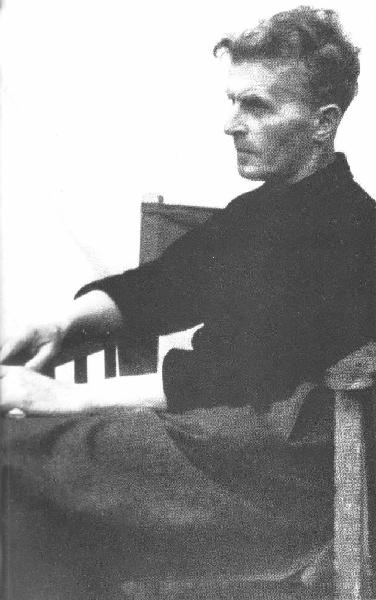
freemanrawls.jpg

This kind of thing, incidentally, is one reason why I’m glad I majored in philosophy in college. Other things I’m interested in, like history, I find it’s pretty feasible to learn about on my own by trying to ask people for suggestions on good books to read and so forth. But a lot of key philosophical writings are things I would find it extremely difficult to get through without teachers. The good news on the Rawls front, though, is that these days people can check out Samuel Freeman’s Rawls which is a book-length explication and defense of Rawls’ work. It came highly recommended to me, and it’s definitely what the doctor ordered. It’s not an easy read by any means, but it’s a clear presentation of the ideas and the general consensus is that it’s the best introduction to the subject available."

I majored in Philosophy in college, although I was one course away from having a Linguistics double major. I did so because it was a major that allowed me to think about and take courses in, basically, math, art, biology, music, logic, history,literature, etc. In other words, it allowed me to satisfy my desire to study a number of different subjects and areas without specializing. I've always wanted to a Generalist, and not a Specialist. Philosophy allowed me to do that in college, but not in graduate school, which was why graduate school ended so badly for me.

Luckily for me, study and learning continues to go on after college and graduate school.

As for Rawls, I was and am a big fan of his, and, in college, I did a course of independent study on Rawls and Nozick with a professor who had studied with both of them. It was great fun, although that professor did spend a lot of time mocking my breadth of study. I can still hear him saying one day, "Who are you synthesizing today, Don, Rawls and Heidegger?". Strangely enough, he wasn't far off.

Friday, December 12, 2008

What's The Bother About Labor Unions?

I want to consider the following point by Sebastian Mallaby in the Washington Post:

"And, given the object lesson from the collapse of the Big Three carmakers, government should think carefully before empowering labor unions further."

Now, I understand that Labor Unions are, in general, an interest group in the US tied to the Democratic Party. I also understand that GOP Senators from Southern States where there are foreign automakers competing with Detroit wouldn't be excited about given a lending hand to Detroit, based on regional politics and the interest's of their constituents. It might be nice to know if those states used what are called "incentives" in order to lure those automakers to those states, which I call government intervention in the market. So far, I understand.

What I don't understand is the bother created by Labor Unions in general. After all, the Labor Unions represent individuals who have freely chosen this representation, and the contracts that they arrive at with their employers are also freely entered into. What's the big problem?

As to wages, I have no idea if the wages they receive are fair or not, without looking into exactly what they're making and what they do and how much the company makes. Even then, I have no exact feelings about the correct or fair wage compensation. That's up to the people involved.

I don't understand this bother created by people making good money. What's the problem? That's not a bad thing. I would hope that they make as much as they can. So would I.

I also agree with Dean Baker here:

"The Employee Free Choice Act and the Right to a Secret Ballot

Workers do not currently have the right to a secret ballot in elections deciding whether or not they will have a union. The employer has the option to recognize a union based on card check (a majority of workers sign a card indicating their desire to join a union) or to demand an election certified by the National Labor Relations Board. The Employee Free Choice Act that will be considered by Congress in the next session gives this choice to workers.

Under the legislation, workers could organize by card check, but they can also petition to have an election overseen by the NLRB. Therefore it is incorrect for the Post to assert that the bill's "intent [is] to eliminate secret ballots in union elections."

But my bottom line is that I have no opinion about Unions. If people want them, that's fine. If they don't, that's fine as well. As long as people are freely choosing to organize and freely agreeing to a contract with their employer, who is also freely agreeing, I don't have a position one way or another.

This also informs my feelings about CEO pay and Hedge Fund Managers pay. It does seem excessive and the incentives seem poorly designed, but I have no position on what they should make. Again, I'd have to see what they do and how well they do it, and how important they are to their business in general. I have no a priori figure in mind.

I also understand that if, as I said before, I worked at AIG in a division that had been making money throughout this bubble and crisis, I wouldn't be too happy about having to take a pay cut because of other's stupidity. It might well make me feel unappreciated, and I would leave AIG. So, not all of their bonuses are necessarily idiotic.

I know that there are people who have theories of justice, say, that demand certain limits to salaries and wealth and their concentration, which I have some agreement with. I certainly don't want to see concentrations of power, and, if concentrations of wealth lead to that, then that's a problem that needs to be addressed.

My main concern is for the truly needy. In that sense, I agree with Rawls and others who believe that our shared resources should aid the truly needy first. Now, who's truly needy is a matter of opinion in many cases, and whether or not people are derserving of help is another matter of opinion, but I stand by the belief that we should help the truly needy first, as in foreign policy, we should focus, in our human rights aspect of foreign policy, on where the most people are suffering and dying. What good we can do might vary, but we can at least keep our eyes on, and focus enough of our attention on, where the worst human suffering is occurring.

Tuesday, November 18, 2008

"The smartest man Pete Boettke ever met; he is high on my list too."

Marginal Revolution gives a link to a post about Nozick:

"As one of our readers pointed out, November 16th is
Robert Nozick's birthday. I had the good fortune to meet Robert Nozick at a Templeton sponsored two-week long seminar in Newport, RI, and in that context it was easy to juxtapose Nozick with other leading thinkers in legal and political philosophy and economics, political science and history. Nozick at the time had already been battling with cancer, but at the time was in remission (though the cancer would come back again over the next year and cut his life short). Nevertheless, he stood above the crowd with his quick and penetrating mind, and his argumentative abilities. Nozick knocked down one argument after another claiming that freedom was such a contested term that individualism and collectivism could be seen as consistent positions in the freedom philosophy. In conversations with Richard Tuck, Margaret Jane Radin, Michael Sandel, Jeremy Waldron, etc., Nozick was often dismissed as merely clever, until he entered the room then they all shrunked as the force of his arguments overwhelmed theirs. He also was particularly approachable during that seminar compared to the other superstars in attendence.

He even listened to me explain why when I teach Anarchy, State and Utopia I stress his "Austrianism" rather than the idea of "rights as trumps." I pointed out to him that his style of reasoning for 2/3rds of the books is that of the "invisible hand explanation" and that qualifies as a more Austrian or Hayekian style of argument than the rights based arguments that many others focus on in either their critique or their endorsement of Nozick.

Here's my comment:

That's an interesting take on Nozick, but I had a different experience with him. I got to know him a bit, and have a few casual conversations with him. One time, I told him that I was still more in his camp than Rawls, but over the years I'd drifted towards Rawls. He told me, "Me too."

I also asked him if he would be interested in studying Talmud, and told him that he would be good to study it with. He told me, "Not in this life". He died a few years later.

Posted by: Don the libertarian Democrat at Nov 17, 2008 5:07:55 PM