On this blog, I post stories, comments, anything that interests me. Sometimes, I comment upon them. I post the entire story, column, or whatever, in order to save it for my reference. On the right are comments, blogs, etc., that I find useful, or that express what qualify as my opinions. Feel free to contact me via the comment option. Rest assured, you will be treated civilly. On this blog, the assumption is that, properly presented, anyone can understand anything.
Showing posts with label Ahlu Sunnah Wal Jama. Show all posts
Showing posts with label Ahlu Sunnah Wal Jama. Show all posts
MOGADISHU, Somalia (Reuters) — Rival Islamist groups battled for a central Somali town on Friday, leaving at least 56 militants dead, while the number of new refugees from a month of fighting in the capital, Mogadishu, approached 100,000.
Somalia’s insurgency, which represents the latest cycle of violence in 19 years of conflict in the nation, has killed 18,000 civilians and thousands of fighters.
It has also drawn foreign jihadists into Somalia, enabled piracy to flourish offshore and unsettled the whole region, with the country’s East African neighbors on high security alert.
On Friday, rebels from two militant groups, the Shabab and Hizbul Islam, said they had wrested control of Wabho, the town in central Somalia, from pro-government moderate Islamists, known as Ahlu Sunnah Wal Jama, in a day of heavy mortar and machine-gun exchanges, witnesses said.
“We have pounded mortars on the infidels and entered the town from all sides,” said Sheikh Muse Arale, a spokesman for Hizbul Islam. “Wabho is now under our control.”
Fighters said dozens were killed, and a local group, the Elman Peace and Human Rights Organization, said it had confirmed 56 fighters killed and dozens more wounded.
Towns in central Somalia have been changing hands regularly between militant and moderate groups in intermittent fighting this year.
Later on Friday, however, the pro-government group Ahlu Sunnah said that it had retaken Wabho. Leaders on both sides were interviewed by satellite phone, but other phone lines to the town were cut, so it was not possible to independently verify what had taken place.
The United Nations refugee agency said that 96,000 residents had been forced from their homes in Mogadishu since a flare-up in fighting between the rebels and government forces in early May. That has added to the more than one million internal refugees in Somalia.
Aid agencies say Somalia now has one of the world’s worst, and most neglected, humanitarian crises. Among other things, three million Somalis urgently need food aid, officials said.
The United Nations said that about 35,000 of those who were displaced in Mogadishu over the past month were still in the city and were seeking shelter, because they had no means to leave.
An additional 26,000 people have reached makeshift camps 20 miles southeast of Mogadishu, according to the relief agency, the Office of the United Nations High Commissioner for Refugees, or U.N.H.C.R.
“According to U.N.H.C.R.’s local partners in Somalia, some 2,000 people have indicated that they plan to cross the border into Kenya,” the agency said in a statement. “More than a thousand said they are ready to risk their lives and make the perilous journey with smugglers across the Gulf of Aden to Yemen.”
Members of a Sufi militia in Dusa Merrab, Somalia, have taken up arms to fight against the Shabab, one of the most fearsome extremist Muslim groups in Africa. More Photos »
Somalia has been plagued by civil war between rival clans for almost 20 years. Now, religious groups are killing each other over competing visions of Islam.
DUSA MARREB, Somalia — From men of peace, the Sufi clerics suddenly became men of war.
Their shrines were being destroyed. Their imams were being murdered. Their tolerant beliefs were under withering attack.
So the moderate Sufi scholars recently did what so many other men have chosen to do in anarchic Somalia: they picked up guns and entered the killing business, in this case to fight back against the Shabab, one of the most fearsome extremist Muslim groups in Africa.
“Clan wars, political wars, we were always careful to stay out of those,” said Sheik Omar Mohamed Farah, a Sufi leader. “But this time, it was religious.”
In the past few months, a new axis of conflict has opened up in Somalia, an essentially governmentless nation ripped apart by rival clans since 1991. Now, in a definitive shift, fighters from different clans are forming alliances and battling one another along religious lines, with deeply devout men on both sides charging into firefights with checkered head scarves, assault rifles and dusty Korans.
It is an Islamist versus Islamist war, and the Sufi scholars are part of a broader moderate Islamist movement that Western nations are counting on to repel Somalia’s increasingly powerful extremists. Whether Somalia becomes a terrorist incubator and a genuine regional threat — which is already beginning to happen, with hundreds of heavily armed foreign jihadists flocking here to fight for the Shabab — or whether this country finally steadies itself and ends the years of hunger, misery and bloodshed may hinge on who wins these battles in the next few months.
“We’re on terra incognito,” said Rashid Abdi, an analyst at the International Crisis Group, a nonprofit group that tries to prevent deadly conflicts. “Before, everything was clan. Now we are beginning to see the contours of an ideological, sectarian war in Somalia for the first time, and that scares me.”
For two years, Islamist insurgents waged a fierce war against Somalia’s transitional government and the thousands of Ethiopian troops protecting it. In January, the insurgents seemed to get what they wanted: the Ethiopians pulled out; an unpopular president walked away; and moderate Islamists took the helm of the internationally recognized transitional government of Somalia, raising hopes for peace.
But since then, the verdict on the moderates has been mixed. In the past two weeks, the Shabab have routed government forces in Mogadishu, the capital. The tiny bit of the city the government controls is shrinking, block by block, and Ethiopian troops have once again crossed the border and are standing by. As many as 150 people have been killed, and the relentless mortar fire has spawned streams of shellshocked civilians trudging into the arid countryside, where they face the worst drought in a decade.
If Mogadishu falls, Somalia will be dragged deeper into the violent morass that the United Nations, the United States and other Western countries have tried hard to stanch, and the country will fragment even further into warring factions, with radical Islamists probably on top.
But out here, on the wind-whipped plains of Somalia’s central region, it is a different story. The moderates are holding their own, and the newly minted Sufi militia is about the only local group to go toe-to-toe with the Shabab and win.
The several-hundred-square-mile patch of central Somalia that the Sufis control is not nearly as strategic as Mogadishu. But the Sufis have achieved what the transitional government has not: grass-roots support, which explains how they were able to move so quickly from a bunch of men who had never squeezed a trigger before — a rarity in Somalia — into a cohesive fighting force backed by local clans.
Many Somalis say that the Sufi version of Islam, which stresses tolerance, mysticism and a personal relationship with God, is more congruent with their traditions than the Wahhabi Islam espoused by the Shabab, which calls for strict separation of the sexes and harsh punishments like amputations and stonings.
“We see the Sufis as part of us,” said Elmi Hersi Arab, an elder in the battered central Somalia town of Dusa Marreb. “They grew up here.”
The Sufis also tapped into an anti-Shabab backlash. The Shabab, who recruit from all clans, and, according to American officials, are linked to Al Qaeda, controlled Dusa Marreb for the better part of last year. Residents described that period as a reign of terror, with the Shabab assassinating more than a dozen village elders and even beheading two women selling tea.
“We respected the Shabab for helping drive out the Ethiopians,” said one woman in Dusa Marreb who asked not to be identified for safety reasons. “But when the Ethiopians left and the Shabab kept the war going, that to us didn’t make sense.”
The Sufis, a loosely organized, religious brotherhood, also drawing from many different clans, had studiously avoided getting gummed up in Somalia’s back-and-forth clan battles, often no more than thin cover for power struggles between businessmen and warlords. But in November, Sheik Omar said, the Shabab shot dead several Sufi students. The next month, the Shabab tore apart Sufi shrines.
A spike of panic shot through the Sufi schools, where young men like Siyad Mohammed Ali were studying Islamic philosophy. “We had never told the Shabab how to worship,” he said. “But now we were under attack.”
Men like Mr. Siyad became the backbone of the new Sufi militia, which got a crate of AK-47s from one set of clan elders or a sputtering armored truck from another. In December, the Sufis, whose organization is called Ahlu Sunnah Wal Jama, which roughly translates as the followers of the Prophet Muhammad, drove the Shabab out of Dusa Marreb. Since then, the Sufis have defended their territory several times against Shabab incursions.
Hassan Sheik Mohamud, the dean of a college in Mogadishu, said the rise of the Sufis was “absolutely, totally new historically.”
“They had a reputation for being peaceful,” he said.
The Sufis are loosely allied to the transitional government, which has promised to rule Somalia with some form of Islamic law. The president, Sheik Sharif Sheik Ahmed, is a bit of an enigma, coming from a long line of Sufi clerics, yet rising to power in 2006 as part of an Islamist alliance with a decidedly Wahhabi bent. He has said that he wants women to play an important role in government, but several prominent Somali women said that during a recent meeting, he would not look them in the eye.
Many Somalis say that Sheik Sharif is making the same mistake his predecessors made, spending more time riding around foreign capitals in a Mercedes than working Mogadishu’s streets to cultivate local allies.
Out here, the Sufis are moving ahead with their own small administration, meeting with United Nations officials and running patrols. At night, in a circle under a tree, they rest their AK-47s on their Korans, drop their foreheads to the earth and pray.
“We have jihad, too,” said Sheik Omar, a tall man with a long beard and warm eyes. “But it’s inner jihad, a struggle to be pure.”
If people did not sometimes do silly things, nothing intelligent would ever get done.
Frazer's account of the magical and religious views of mankind is unsatisfactory; it makes these views look like errors.
Are you not really a behaviourist in disguise? Aren't you at bottom really saying that everything except human behaviour is a fiction?" — If I do speak of a fiction, then it is of a grammatical fiction
Could one imagine a stone's having consciousness? And if anyone can do so—why should that not merely prove that such image-mongery is of no interest to us?
An 'inner process' stands in need of outward criteria
For a large class of cases--though not for all--in which we employ the word "meaning" it can be defined thus: the meaning of a word is its use in the language.
What Copernicus really achieved was not the discovery of a true theory but of a fertile new point of view.
mathematics is a motley of techniques and proofs.
Everything that can be said, can be said clearly.
Whenever he does anything, this is before his mind. In a way, how are we to know whether to say he believes this will happen or not?
Asking him is not enough. He will probably say he has proof. But he has what you might call an unshakeable belief. It will show, not by reasoning or by appeal to ordinary grounds for belief, but rather by regulating for in all his life
I did not get my picture of the world by satisfying myself of its correctness; nor do I have it because I am satisfied of its correctness. No: it is the inherited background against which I distinguish between true and false.
All testing, all confirmation and disconfirmation of a hypothesis takes place already within a system. And this system is not a more or less arbitrary and doubtful point of departure for all our arguments; no it belongs to the essence of what we call an argument. The system is not so much the point of departure, as the element in which our arguments have their life.
What I hold fast to is not one proposition but a nest of propositions.
At the core of all well-founded belief, lies belief that is unfounded.
Knowledge is in the end based on acknowledgement.
At the end of reasons comes persuasion.
Nothing is so difficult as not deceiving oneself.
The way you use the word "God" does not show whom you mean — but, rather, what you mean.
One can mistrust one's own senses, but not one's own belief. If there were a verb meaning "to believe falsely," it would not have any significant first person, present indicative.
What has to be accepted, the given, is — so one could say — forms of life.
If a lion could talk, we could not understand him.
An entire mythology is stored within our language.
There are, indeed, things that cannot be put into words. They make themselves manifest. They are what is mystical.
Scepticism is not irrefutable, but obviously nonsensical, when it tries to raise doubts where no questions can be asked. For doubt can exist only where a question exists, a question only where an answer exists, and an answer only where something can be said.
The mystical is not how the world is, but that it is.
The subject does not belong to the world, but it is a limit of the world.
It is quite impossible for a proposition to state that it itself is true.
What do I know about God and the purpose of life? I know that this world exists. That I am placed in it like my eye in its visual field. That something about it is problematic, which we call its meaning. This meaning does not lie in it but outside of it. That life is the world. That my will penetrates the world. That my will is good or evil. Therefore that good and evil are somehow connected with the meaning of the world. The meaning of life, i.e. the meaning of the world, we can call God. And connect with this the comparison of God to a father. To pray is to think about the meaning of life.
Make sure that your religion is a matter between you and God only.
La Bête: Mon cœur est bon, mais je suis un monstre.
You can never plan the future by the past.
We must all obey the great law of change. It is the most powerful law of nature, and the means perhaps of its conservation.
Economy is a distributive virtue, and consists not in saving but selection. Parsimony requires no providence, no sagacity, no powers of combination, no comparison, no judgment.
A very great part of the mischiefs that vex the world arises from words.
It is the nature of all greatness not to be exact.
The march of the human mind is slow.
Liberty, too, must be limited in order to be possessed.
If any ask me what a free Government is, I answer, that, for any practical purpose, it is what the people think so, — and that they, and not I, are the natural, lawful, and competent judges of this matter.
A state without the means of some change is without the means of its conservation.
Better to be despised for too anxious apprehensions, than ruined by too confident a security.
Our patience will achieve more than our force.
Politics and the pulpit are terms that have little agreement.
All government, indeed every human benefit and enjoyment, every virtue, and every prudent act, is founded on compromise and barter we give and take; we remit some rights, that we may enjoy others
It is one of the finest problems in legislation, What the state ought to take upon itself to direct and what it ought to leave, with as little interference as possible, to individual discretion.
History is a preceptor of prudence, not of principles.
No rational man ever did govern himself, by abstractions and universals.
I always distinguish between a man's talkative and writative character.
A revolution will be the very last resource of the thinking and the good.
... all that wise men ever aim at is to keep things from coming to the worst. Those who expect perfect reformations, either deceive or are deceived miserably.
Man acts from motives relative to his interests; and not on metaphysical speculations.
Before men can transact any affair, they must have a common language to speak otherwise all is cross-purpose and confusion.
We owe an implicit reverence to all the institutions of our ancestors.
You may talk of the tyranny of Nero and Tiberius; but the real tyranny is the tyranny of your next-door neighbor... Public opinion is a permeating influence, and it exacts obedience to itself; it requires us to think other men's thoughts, to speak other men's words, to follow other men's habits.
It is good to be without vices, but it is not good to be without temptations.
Why should it not be the whole function of a word to denote many things?
It may justly be urged that, properly speaking, what alone has meaning is a sentence
We become obsessed with 'truth' when discussing statements, just as we become obsessed with 'freedom' when discussing conduct...Like freedom, truth is a bare minimum or an illusory ideal
Like 'real', 'free' is only used to rule out the suggestion of some or all of its recognized antitheses. As 'truth' is not a name of a characteristic of assertions, so 'freedom' is not a name for a characteristic of actions, but the name of a dimension in which actions are assessed.
[O]rdinary language is not the last word: in principle it can everywhere be supplemented and improved upon and superseded. Only remember, it is the first word.
...our common stock of words embodies all the distinctions men have found worth drawing, and the connections they have found worth marking, in the lifetime of many generations: these surely are likely to be more numerous, more sound, since they have stood up to the long test of survival of the fittest, and more subtle, at least in all ordinary and reasonable practical matters, than any that you or I are likely to think up in our armchair of an afternoon – the most favorite alternative method.
The situation in which I would properly be said to have evidence for the statement that some animal is a pig is that, for example, in which the beast itself is not actually on view, but I can see plenty of pig-like marks on the ground outside its retreat. If I find a few buckets of pig-food, that's a bit more evidence, and the noises and the smell may provide better evidence still. But if the animal then emerges and stands there plainly in view, there is no longer any question of collecting evidence; its coming into view doesn't provide me with more evidence that it's a pig, I can now just see that it is.
Nor is there any reason why the state should not assist the individuals in providing for those common hazards of life against which, because of their uncertainty, few individuals can make adequate provision. Where, as in the case of sickness and accident, neither the desire to avoid such calamities nor the efforts to overcome their consequences are as a rule weakened by the provision of assistance—where, in short, we deal with genuinely insurable risks—the case for the state’s helping to organize a comprehensive system of social insurance is very strong.
"Adam Smith's Recommendations on Taxationby Nadia Weiner, Director of the Adam Smith Club of Sydney, Australia
Although Adam Smith is often quoted, the so-called "Father of Economics" has rarely been read, either by his detractors or his admirers. Consequently he is often misunderstood.
Smith, who made such a strong stand against the protectionist mercantile system of trade of his day, devoted over ONE THIRD of his masterpiece An Inquiry into the Nature and Causes of the Wealth of Nations, to discussing the subject of government revenue and the methods by which it may be best collected, including new taxes. This is not generally known.
When examining the different forms of taxation, Smith adheres to four maxims which a good tax should conform to:
1. "The subject of every State ought to contribute towards the support of the government, as nearly as possible, in proportion to their respective abilities; that is, in proportion to the revenue which they respectively enjoy under the protection of the State."
2. "The tax each individual is bound to pay ought to be certain, and not arbitrary. The time of payment, the manner of payment, and the quantity to be paid, ought all to be clear and plain to the contributor, and to ever other person."
3. "Every tax ought to be levied at the time, or in the manner in which it is most likely to be convenient for the contributor to pay it."
4. "Every tax ought to be so contrived as both to take out and to keep out of the pockets of the people as little as possible, over and above what it brings into the public treasury of the State."
Bearing all these things in mind, there are two types of taxation which obtain Smith's recommendations: a tax on luxury consumables and a tax on ground-rents (the annual value of holding a piece of land).
On the subject of luxury consumables, he is adamant about the definiton of 'luxury' and of 'necessary.' By his definition, a 'necessary' may vary from place to place and from time to time. At the time of his writing, linen shirts, leather shoes and a minimum of food and shelter were definitely to be regarded as essential to a minumum decent standard of living. Taxes on salt, soap, etc., he harshly criticized as inequitably taking from the poorest elements of society. Taxes on luxuries, which were to include tobacco, he considered excellent in that no one is obliged to contribute to the tax: "Taxes upon luxuries have no tendency to raise the price of any other commodities except that of the commodities taxed ... Taxes upon luxuries are finally paid by the consumers of the commodities taxed, without any retribution."
More deserving of priase is the tax on ground-rents: "Both ground- rents and the ordinary rent of land are a species of revenue which the owner, in many cases, enjoys without any care or attention of his own. The annual produce of the land and labour of the society, the real wealth and revenue of the great body of the people, might be the same after such a tax as before. Ground-rents, and the ordinary rent of land are, therefore, perhaps the species of revenue which can best bear to have a peculiar tax imposed upon them."
Excise, customs, taxes on profits, were, according to Smith, either expensive to collect, as in the case of excise, or disincentives to produce, as in the tax on profits. He reserves harsh words for taxes which occasion the invasion of privacy, and on the subject of excise he says: "To subject every private family to the odious visits and examination of the tax-gatherers ... would be altogether inconsistent with liberty."
The harshest condemnation of all, however, was for taxes upon labour: "In all cases, a direct tax upon the wages of labour must, in the long run, occasion both a greater reduction in the rent of land, and a greater rise in the price of manufactured goods, than would have followed from a proper assessment of a sum equal to the produce of the tax, [levied] partly upon the rent of land, and partly upon consumable comodities."
Getting Involved in Bitcoin
-
When bitcoin value skyrocketed in late 2013, everyone suddenly started
paying attention to this unusual currency. A large number of online
businesses alrea...
Corporate ETFs and Risk Appetite
-
Via Bloomberg : Bond ETFs Awash in Pain May Be Red Flag for Risk Appetite
(1) 2018-01-22 14:56:05.415 GMT By Dani Burger and Sid Verma (Bloomberg) —
U.S. c...
Whose Gold Is JP Morgan Dumping Now?
-
Author’s Note: This piece is unfinished, but the data presented here is
simply too important not to publish. They say phrasing allegations in the
form of...
Industrial Finance for the Twenty-First Century
-
Equally applicable to Africa, Heberto Limas-Villers writes:
Traditional financial institutions have been unable to finance these needs,
as most bankers are...
The beginning of the end
-
borrowed wisdom is still wisdomGreetings readers!
After 10 years, I am going to stop blogging at aguanomics.
I am doing this because I have written quite ...
*Sigh* No Forest
-
In a move that should surprise no one, Canadian/Chinese forestry company
Sino-Forest filed for bankruptcy in Canada yesterday. The timing of the
filing sh...
Lahti
-
I am in Lahti, Finland, to give a talk at the Lahti Symphony's Sibelius
Festival. I've been wanting to visit since I encountered Osmo Vänskä's
revelatory B...
Change Is Good (Website Redesign)
-
Hey out there! Just a heads up to let you know that this blog has moved!
All this content has been migrated over to my primary website,
alexandragardner.ne...
Whether (and how) America can survive Trumpism
-
Georgetown Professor Thomas Zimmer joins us to talk about polarization and
extremism, and what insights American and world history provide as to
whether ...
The ideas of Liberal liberals
-
Nearly 30 years ago now I dropped out of a PhD exploring the communitarian
critique of liberalism. My interest in liberalism continued through
articles, ch...
Nine Chapters on the Semigroup Art
-
While Googling something or other, I came across Nine Chapters on the
Semigroup Art, which is a leisurely introduction to the theory of
semigroups. (While ...
Peston Picks is moving
-
[image: Cardboard Boxes on a trolley]
My blog is dead. Long live the new blog. Or to put it another way, my page
- and those of other BBC bloggers - is hav...
Moving on
-
Stephanomics is dead. Long live Stephanomics. Today's news is that this
blog is moving to a new home with a fresh format.
I know, change is hard, but the...
Happy New Year! - January 2026
-
Good morning from Vienna, VA. My goals for 2026 include being a better
writer and analyst. I’m still writing over at substack, and I’m working to
make th...
Sad Puppies Delete Their Own Weblog Posts!
-
Brad Torgersen deletes his own weblog posts: **Rogers Cadenhead**: [Brad
Torgersen's 'Science Fiction Civil
War'](http://workbench.cadenhead.org/news/3742/...
FTX and an old blog post
-
A long time ago I wrote a blog post about rehypothecation with brokers. It
is - unsurprisingly - relevant again.
In some sense crypto provides fast-track...
Schäublenomics
-
The veteran German will be the most familiar face around the table as the
eurozone’s longest serving finance minister, having taken office in late
2009.
...
Rooting for Wuhan
-
This, with one key correction that you will notice in the second paragraph,
is the latest edition (mailed out Feb. 9) of my occasional e-mail
newsletter, w...
Some Links
-
(Don Boudreaux) TweetWriting in the Wall Street Journal, NYU physicist
Steven Koonin reports on how the Biden White House inadvertently told the
truth abou...
Jobs growth update: modest improvement in August.
-
Private sector job growth (the only jobs that really count) exceeded
expectations in August (+127K vs +50K), but the overall picture remains the
same: jobs...
This is the End and a New Beginning
-
I've been thinking about this for some time.
After 21 years of writing this blog almost daily, I've decided to stop
writing the daily updates on the blog.
...
Russian elections this month - exciting!
-
*[Spoiler alert - contains election result] *
The exciting prospect of a Russian election is upon us! Not the
Presidential this time, but the Duma and ...
Historic Chart of the Day
-
Based on today's Census Bureau report on April retail sales, consumer
spending at "*Food Services and Drinking Places*" (restaurants and bars,
see red li...
Michael Lewis breaks news from 2008
-
Michael Lewis, of Liar's Poker fame, has emerged as a leading writer of the
credit crisis and its aftermath. I wish there were 10 of him. And if only
one o...
Soros on Oil and Agriculture
-
From Bloomberg News:
George Soros’ $21 billion fund returned 8% last year, which is incredible
not only in light of the global crisis, but also given hi...
How Banks Really Work
-
Banking services form the backbone of the world’s financial system. At the
heart of a bank’s operations are the various services it offers to
individuals...
A Former Expat on China: Grim
-
1. LaoWhy86 on YouTube Spent the last few days catching up on my China
reading and viewing, mostly those articles and videos friends, clients and
readers w...
Adjust contrast of a pdf free
-
Closer to the eye of the shooter, this is because Preview is quite
literally applying a filter to each individual page of the PDF you are
saving. the proce...
It's really very simple
-
[Note: I am pushing this article live two days early because ZeroHedge
somehow managed to get a hold of it and post it before I did. Needless to
say, I do...
PLEASE READ: Website Update In Progress
-
Most readers know we've been hard at work behind the scenes rebuilding the
guts of the PeakProsperity.com website.
For a few months now, we've been sayin...
Bundling Status
-
In my 2014 Sociological Theory, I argued that some things are gross or
illegal to buy overtly and so people sometimes find ways to create exchange
circuits...
Long Live the Future
-
This is the last of more than a thousand columns published in the Express,
which began when Denis Jambart and Christophe Barbier, asked me to be one
of the...
Best Nu Skin ReDesign ageLoc Galvanic Body Spa
-
Nu Skin ReDesign ageLoc Galvanic Body Spa Is Cheap, But It Isn't Two-Penny
Product*Nu Skin ReDesign ageLoc Galvanic Body Spa* is the leading product
among ...
110. Great Expectations: The Implacable Externality
-
*I saw a sign in front of a shop the other day that read, "We will exceed
your expectations." So I walked in expecting them to exceed my
expectations. By t...
Creative Destruction in Small Business Bankruptcy
-
Two distantly related items caught my eye this morning, as both reinforce
the need for "creative destruction" as a response to all-too-common small
busines...
Goodbye to Credit Writedowns
-
Good morning everyone, I have some exciting — and also – sad news to tell
you today. First, I am going to Bloomberg as a Senior Editor. And I am
going to...
Crisis Talk is Moving!
-
Dear Crisis Talk readers, In an act of consolidation and collaboration,
Crisis Talk is merging with the World Bank's Private Sector Development
blog, where...
Morning News: June 1, 2026
-
Oil Prices Jump as U.S. and Iran Exchange Fire An LNG Glut Is On Its Way
Turnberry Won’t Fix Transatlantic Trade. But It’s a Start […]
Save pdf smaller size mac online
-
High image quality, bring your ideas to life save pdf smaller size mac
online beautiful presentations. and instantly got the shrunken file!
Although the de...
Maximize the Resale Value of Your Car
-
Filed under: Travel Industry, Did You Know
Did you know...
There are some easy things you can do to get more money for your used car,
with a little less ...
IEA World Congress 2021
-
A few words on the International Economics’ Association online World
Congress, July 2-6, on the theme “Equity, Sustainability and Prosperity in
a Fractured...
Inside Goldman’s ABACUS Trade
-
Today, in the Huffington Post, I posted a document that shows an earlier
incarnation of the ABACUS trade (although, not that different from the one
that ha...
calculated risk calls a bottom
-
with some qualifications, but a bottom call nevertheless. this is not to be
taken lightly. bill is the best working commentator on US housing markets,
and ...
On Existence and Mathematics
-
I started working on what I suppose you could call Foundations of
Mathematics when I was in Sweden back in 2019, but I’m reluctant to call it
that, because...
Options Action: OptionApps Top 5 for 2017-06-28
-
Options Action: OptionApps Top 5 for 2017-06-28 Academic Algorithms: ( Term
LT-ST Difference ) Ticker Stock Name Close Difference 1 CAMP
CALAMP CO...
Brainteasers From My Dad
-
When my sister and I were little, our Dad would challenge us with riddles
and word games. I mentioned three in my eulogy for Dad: 1. Imagine a
two-volume d...
The Dove at Peace
-
Leila Abu-Saba, 1962-2009 The Dove, Leila Abu-Saba, passed away on October
8, 2008 after a five-year battle with breast cancer. She leaves behind her
husba...
Adjust contrast of a pdf free
-
Closer to the eye of the shooter, this is because Preview is quite
literally applying a filter to each individual page of the PDF you are
saving. the proce...
Energy
-
With almost 600 coal plants shut down since 2010, we are racing towards
a grid reliability crisis of our own making. Millions of Americans are at
risk of e...
Wisconsin in Last Place for Start-up Activity
-
The Kauffman Foundation has just released its report on startup activity.
Wisconsin comes in last place in startup density. Figure 1: Source:
Kauffman Foun...
How to Believe in Free Speech
-
Almost all libertarians earnestly say, "I believe in free speech."
Normally, though, this goes way beyond the right to speak freely. Most
libertarians al...
New Growth Rate Cycle Date Determined for the U.S.
-
Today ECRI is announcing May 2016 as a new growth rate cycle trough date
for the U.S. Growth rate cycles are alternating periods of accelerating and
decele...
Quick update
-
I just logged in for the first time in ... five years. I am occasionally
thinking about restarting this blog, but blogging is not what it was, plus
current...
Back In Business
-
After six months offline, Economic Principals’ site has returned to life.
Betweentimes, EP has been appearing on Substack since March […]
Mind the Gap? Rethinking the Investor Gap Equation
-
Morningstar released the latest version of Mind the Gap, an annual piece
which shares with its readers analysis that "measures the costs of bad
timing".
I...
Capitalism Has Two Ways of Dealing with Leisure
-
"Capitalism has two ways of dealing with leisure, stigmatizing it within an
ideology of unemployment, or taking it up into itself to make it
profitable. ...
Suspected rebel officers jailed in Ecuador
-
AFP QUITO — A judge ordered 14 police officers held in preventive detention
as court proceedings began against the alleged perpetrators of a rebellion
in E...
Record Job Openings Not As Impressive As It Sounds
-
I'm seeing a lot of headlines about a record high number of job openings.
While it's technically true that the number of job openings (as reported
in the...
Invitation to connect on LinkedIn
-
LinkedIn
Emre,
I'd like to add you to my professional network on LinkedIn.
- Emre
Emre Deliveli
Freelance Consultant & Economics Columnist at 'Self-Emp...
The Japanisation Of Europe
-
By now it should be clear that the monetary experiment currently being
carried out in Japan (known as “Abenomics”) is fundamentally different from
the kind...
The search for the best middle-class tax cut
-
Say you want to help struggling middle-class families by cutting their
taxes. Say you want to figure out an actually helpful plan to do that, and
not just ...
A Better Stablecoin on a Perp DEX
-
Creating a stablecoin position on a perp exchange is hard, but it should
be easy. It not only caters to demand, but it also adds liquidity to perp
marke...
How to Solve Logic Puzzles with Euler Diagrams
-
In a couple of previous entries, I explained how to use Venn diagrams to
solve certain types of logic puzzle. In this one, I'll show how you can do
so with...
Plastic Bottle Deposits – Still?
-
It has been more than a decade since people began to realize that consumer
recycling programs often consume more resources than they save. (Note the
update...
The Flipping and Flopping Edition
-
Slate Money on President Obama’s flip-flop on the 529 college savings plan,
the FCC’s flip-flop on net neutrality, and Shake Shack’s flipping of
burgers bu...
Financial policy: Looking forward
-
Washington is turning its attention to the future, having put out most of
the financial fires. The crisis seems to be over, but questions remain
about how ...
Ceterum autem censeo Twiterinem esse delendam
-
The fresco is housed in a room that is small, but quite ornate. Four
corner-anchored medallions define the lower-than-expected ceiling's
borders. Though ...
Why Do Americans Still Hate Welfare?
-
"Welfare" remains a charged word in the American lexicon, even though it's
rarely talked about as a political issue any more. But why?
Jay Rock’s hearing
-
Friends of the blog, Vertrue and its subsidiary Adaptive Marketing, found
themselves the subject of a Senate Commerce Committee hearing yesterday
entitled,...
Live tweeting the Friday Night Dump
-
We are now offering a subset of our Pro data via Twitter. Find out more by
clicking here: https://premosocial.com/footnotedFND
Wendell Berry and the Choice of Life
-
It would be hard to imagine the existence of Front Porch Republic without
Wendell Berry. FPR is a project that does not compute.
Markets & Trump
-
Brouwer & Janachowski November 9, 2016 This Week: Markets settling down.
Probably less disruption than the headlines imply. As we write in the
morning se...
100 Positive News from 2023
-
Many bad things happened in 2023. You already know them. Many tragic events
were so terrible we will never forget them and we shouldn’t. You can easily
f...
Did You Know That Gary Weiss Speaks?
-
Yes, he does, or to put it another way, I do. My well-received speaking
engagements have spanned many topics, from media bias in the Middle East to
Ayn Ran...
Democratising public institutions: Reform needed!
-
If Bahamians got through the implementation of Value Added Tax, they can
get through anything. Thus the confidence I have in reforming our public
instituti...
Moving on
-
Moving on
Finally, at long last, I can tell you what I've been up to with finding a
new home for this blog. I've created a new, community-based science
b...
Paul Krugman on Food Economics
-
Paul Krugman doesn't typically write about food, so I was a little
surprised to see this. Still, I think he got most things right, at least
by my way of...
WHO’s 2026 Cancer Report
-
This month, the World Health Organization (WHO) released its annual report
on cancer titled Global status report on cancer 2026: the future we choose
toget...
2016 as a ten-letter word
-
In the end of November, as it is the case every year since 2004, Oxford
Dictionaries revealed their choice for the word of the year. For 2016, they
settled...
Carrie Gracie
-
Campaign for Equal Pay I have noticed that individuals who make a
difference, often don’t set out with that intention. Usually, an event in
peoples’ lives ...
A Time for Caution
-
*A Trend Model Status Report*
My Trend Asset Allocation Model has performed remarkably on an
out-of-sample basis by beating the 60/40 benchmark almost every...
Speaking trip this April
-
I'm speaking at Libertycon in Tbilisi on April 20th, will probably either
go or come via London. Anyone interested in a talk? I'll probably be in
Europe ...
Support the RNLI!
-
I see that the fascist mob that is nowadays given free rein by the UK
police to roam the streets, block traffic, close ports, and generally do
whatever the...
Incentives Matter, Indeed
-
Friend Ennyman rights a great piece on the role of incentives, here's the
conclusion: "Whether it's meeting deadlines, forming good habits in our
children ...
InfoVis vs. i|e
-
People have set out varying hopes and interpretations for the term
“Information Aesthetics,” and they mostly differ from what this
organization was creat...
China has much to teach us. John Roberts does not.
-
So, I don’t really write here any more. I write at drafts.interfluidity.com
instead. Please follow that feed or subscribe by e-mail. I do still offer
perio...
Byron Wien Announces “The Ten Surprises” for 2013
-
Byron Wien, Vice Chairman of Blackstone Advisory Partners, yesterday issued
his list of “The Ten Surprises for 2013″. This is the 28th year Byron has
given...
Residential Roofing Choices For Flat Roofs
-
There are a lot of different types of residential roofing material
available for residential units. Some are more common than others and some
are cheaper...
herbal untuk jantung dan darah tinggi yang ampuh
-
Apakah Anda tahu bahwa madu mampu memberikan M segala macam manfaat bagi kesehatan
manusia? Madu diakui mengingat bahwa zaman kuno sebagai obat, dan penggun...
Obama’s vague Buffett Rule a political ploy
-
A few thoughts on the economics and politics of President Obama’s
tax-the-rich “Buffett Rule” and new debt reduction “plan”: 1) What problem
does the Buffe...
This blog has moved
-
To a new blog-support vendor. You can read the latest posts by clicking
here. If you're a regular reader, thank you and please update your
favorites to the...
The Surface: I Came, I Saw, I Left
-
I went to the Microsoft store in Times Square yesterday to see for myself
the new Surface tablet with the spiffy keyboard, since nobody I know
actually ...
Financial Markets Will Move To Asia
-
Chicago, they invented the Soybean futures contracts. But now, China uses
more soybeans than ... *READ THE REST OF THE ARTICLE ON THE NEW WEBSITE:
JIM ROGE...
The US Navy just lost another war
-
… but that won’t change any minds It’s now six months since the US-Israel
war on Iran began with air attacks which killed the Iranian leader
Ayatollah Kham...
A CryptoFiction
-
Here’s a micro-story I started with the Access Crypto Summit flash fiction
prompt in mind, left half done, and then belatedly finished off anyway,
because ...
Comment perdre du ventre ?
-
Une brioche, voici le nom que l’on donne au ventre lorsqu’il est un peu
trop rond. « On pourrait presque le pétrir avec les mains, un peu comme on
prépare ...
Multiplication of unlawful disjunctions
-
Charles B. writes: Apparently, birds are not considered wild animals by
law. Reference here, where apparently feeding them in parks in permitted
except if ...
Somaliland in the Great Game
-
The small self-proclaimed state of Somaliland is aiming to become a
regional player: it is now an ally of Israel and has commercial and
security agreemen...
-
*above: While Menzies was far from without fault, on many issues today's
Liberal Party would be unrecognizable for him. *
*Dr Tristan Ewins*
Much ...
Let a Thousand New Green Deals Bloom
-
I write that “[a] decentralized ecological approach would recognize that
managing emissions is one part of a larger equation that includes the
natural carb...
Clinton’s Lost Votes
-
https://www.facebook.com/rchusid/posts/2670987959585088 Establishment
Democrats love to blame third party voters for Clinton losing, but The New
York Times...
Awaiting my execution: A letter from Iran
-
BREAKING: Saman Naseem’s execution did not go ahead as originally scheduled
on the morning of Thursday 19 February. More information to come. Saman
remains...
Allan Meltzer's Life Work
-
The Hoover Press and the Mercatus Center have just released a new book on
Allan Meltzer's contributions to economics. The book is comprised of papers
th...
The Argentina Siren Song And Where Else It Is Sung
-
I’m back! After an extended leave of absence I’ve decided to start writing
again.
Let’s start with a story familiar to those that read MM in my first ter...
Do Higher Wages Mean Higher Standards of Living?
-
Editor's note: We have updated macroblog's location on our website,
although archival posts will remain at their original location. Readers who
use RSS sho...
The End
-
I started this blog back in 2008. What a ride it's been! Thanks to all who
took the time to interact with me -- I profited greatly from the
experience. And...
Downright intuitive and comical
-
I was on my hands and knees yesterday scrubbing a LOT of blood off a tennis
court. And yes, we won. Note to friends - my tennis is not that good, but,
I am...
Tuesday assorted links
-
1. The Carob Prize, for scholars who tell the truth (WSJ). 2. Observations
from watching Iranian social media. 3. The Emma McAleavy feminist vision.
4. I...
Exhibition: Man's Inhumanity to Man
-
[ Meanwhile... in Guatemala - Mark Vallen. 1988. Pencil on paper 10" x 14".
On view at Man's Inhumanity to Man. Military death squads were responsible
for ...
Adjust contrast of a pdf free
-
Closer to the eye of the shooter, this is because Preview is quite
literally applying a filter to each individual page of the PDF you are
saving. the proce...
Recovering ancient voices from clay pots
-
MIT reports recovering voices from high-frame-rate video of a potato-chip
bag, extracting information from vibrational displacements as small as
1/100 of a...
The Real Elites vs. The Ruling Elites
-
Those who become "elites" through the initiation of violence, and through
the looting of others, have always been frauds and imposters.
Bond vigilantes call for “Day of Rates”
-
Flustered by the obstinate refusal of US interest rates to move up, bond
vigilantes are resorting to the revolutionary tactic *du jour*: Twitter!
In a thr...
Big D Has Your Rivalries Right Here
-
Editor's Note--Well that wasn't how we like it last week. 2-4. But this
week is rivalry week in the college where you throw out the records and
teams play ...
Summing up economic history in one para
-
Prof Luis Garicano sums up all the economic history brilliantly in one
para: “Adam Smith said a bunch of stuff that was mostly right. Marx said a
bunch of...
Goodbye and Hello from New Geography
-
Dear Readers:
After 17 years we are closing New Geography.com.
You'll now find Joel Kotkin's articles on his new Substack page,
jkotkin.substack.com, wh...
Rebecca Wilder is moving to the EconoMonitors
-
I've decided to migrate News N Economics over to my new blog, The Wilder
View, on the Roubini EconoMonitors platform.
Really, I jumped at the opportunity t...
Monday Morning Readings
-
I've really been slacking on the posting lately. The must read:
July Economic Data Summary
Recommended:
Turning Dumpsters Into Swimming Pools
A Simple Expl...
The myth of the cession of Māori sovereignty [sic]
-
A piece from a Dr Luke Fitzmaurice-Brown is doing the rounds again. It's
called 'The Myth of the Cession of Māori Sovereignty' -- and argues
(unsurprising...
We’ve moved to www.nudges.org. Come with us.
-
Nudges.wordpress.com has been a great home for the Nudge blog over the past
year and a half, but it’s time to move on. Where to? www.nudges.org. That’s
rig...
What to do?
-
by liberal japonicus from
https://everything.typepad.com/blog/2025/08/typepad-is-shutting-down.html
Typepad is shutting down August 27, 2025 We have made t...
Migration or Stagnation
-
Michael Clemens shows that a rise in noncitizen worker prevalence in Korea
from 3% to about 14% over four decades would offset the effect of Korea's
demo...
AI Pause Regs Look Risky
-
People dislike AI for many reasons, but one extreme fear is that AIs will
escape control from those who make, buy, or rent them, and then hurt others.
Strong US Jobs Report Reignites Rate Hike Fears
-
Sean Conlon, Lee Ying Shan, Ananya Chetia and Chloe Taylor of CNBC report
the Dow tumbles more than 260 points after strong jobs report reignites
rate hik...
PFM Blog announcement: we are moving!
-
iStock.com/tumsasedgars Posted by Teresa Curristine, Holger van Eden, and
Richard Allen DEAR PFM BLOG USERS – The PFM Blog will be transferring to a
brand ...
To Save America’s Cities, We Need to Let Them Fail
-
Downtown Los Angeles
America's flagship cities have become laboratory experiments for social
justice. Heavily controlled by political leaders who subscri...
Inside Bright Star
-
Read about Jane Campion's film Bright Star, chronicling the love affair
between John Keat and his neighbor Fanny Brawne, as well as the poems and
love lett...
COOPERATION IS PROFITABLE
-
part of my new - ELITE MANAGEMENT THEORY series
Personal interests are paramount – most important.
The smaller the cooperating group is the better it refle...
The Bailout: By The Actual Numbers
-
by Paul Kiel
Quick, how many billions in the red are taxpayers on the bailout of GM?
AIG? Fannie and Freddie? Is it true that the government has reaped ...
A rethink on the Middle East
-
Below is an oped I have in today's Boston Globe.Middle East peace policy
has tanked, despite a flurry of diplomatic activity to block out that
reality. The...
Check Out The New Quantifiable Edges!
-
Quantifiable Edges has undergone a complete site overhaul! Part of that
overhaul included moving the blog. New posts can be found at the address
below:
h...
Printable Bookmarks With Quotes
-
Creative Handmade Bookmarks Design With Quotes – Google Search with regard
to Printable Bookmarks With Quotes Printable Bookmarks With Quotes | Second
Star...
Unforced Variations: Sep 2026
-
This month’s open thread on climate topics. Please be constructive and keep
nonsense to a minimum.
The post Unforced Variations: Sep 2026 first appeared ...
Another Bad Critique of AI, in the New York Times
-
Want to get your uninformed opinion about AI published in the most
prestigious newspaper in the United States? Then follow my advice.
First, it helps if y...
The World Cup and Making Soccer Less Boring
-
It is World Cup time, a good time to reintroduce two posts I did one of the
last times we had the World Cup capture the imagination. One of them
suggests ...
Banking fraud - is dishonesty the new greed?
-
It has not been a good month for the financial industry: JPM's ever growing
CDS trading (and apparently mismarking) loss; PFG Best's appreciation for
Adobe...
Does Death Exist? New Theory Says ‘No’
-
Many of us fear death. We believe in death because we have been told we
will die. We associate ourselves with the body, and we know that bodies
die. But ...
When Do Consumer Boycotts Work?
-
Uber, Starbucks, Budweiser. These are just a few of the brands that have
faced consumer boycotts for taking supposedly political stances in the past
few ...
“Goodnight, and Good Luck”
-
My February 2016 valedictory editorial note on the home page of Al Jazeera
America the day we closed down. Still proud of the work we did, and the way
we c...
Moved Over
-
I’ve been blogging away over at my new blog at Next New Deal, come join me
over there! Here’s the new rss feed. I might post here once in a great
while, m...
Carolina Wolf: Carolina Wolves, #1
-
All it takes is a spark of Grrrrl power to set the swamp on fire! Debra
Henry is living the meek librarian cliche, except for the teeny hint of
magic in h...
Prediction Markets and the Kelly Criterion, Part 5
-
Perhaps the most famous proponent of the Kelly Criterion is Edward Thorp.
He founded the M.I.T. Blackjack Club, published various papers on gambling
and ...
The paradox of insular language
-
We often develop slang or codewords to keep the others from understanding
what we’re saying. Here’s an example (thanks BK) of the lengths that some
are goi...
Flash Commentary No, 1460b
-
• Fundamentals Could Not Be Stronger for Gold and Silver, nor Weaker for
the U.S. Dollar and Stocks, Despite Fed or Market Nonsense to the Contrary
• There...
If something can't go on forever, it will stop
-
This is my last post at/as Shock Minus Control. As I mentioned in my
December post, my youngest son (now 7 months) had a congenital heart defect
repaired a...
Goldman Sachs comes late to the game
-
The Financial Times ran a story Monday about Goldman Sachs becoming the
first big dealer to orient its business around electronic fixed-income
trading and ...
Whoop!
-
That is the sound of the gravitational waves hitting the LIGO detector. A
chirp. That is also the sound of the celebratory hurrah’s from the gravity
commun...
LLMs and self-referentiality
-
I woke up yesterday with the following thoughts, which are probably either
obvious or dumb. A central thesis that many readers, including me, took
from Dou...
test
-
“Virtual worlds are going to be one of the first killer apps for
blockchains and perhaps the deepest users of them.” – Fred Ehrsam,
Co-Founder, Coinbase ...
Muni Madness
-
"Investors are ignoring warning signs in the $2.8 trillion municipal-bond
market, raising the risk of a reckoning, according to some market
specialists. Nu...
The politics of the General Will in Thailand
-
Excerpts from Cultural policy as general will and social-order
protectionism: Thailand’s conservative double movement Michael K. Connors
International Jour...
2026 NYU Tax Policy Colloquium
-
Here is the schedule of public sessions at the fall 2026 NYU Tax Policy
Colloquium:
*2026 NYU TAX POLICY COLLOQUIUM SPEAKER DATES*
All sessions meet on ...
Thatcherism is dead: Thatcherism lives
-
Thatcherism is dead. It has ceased to be. It has expired and gone to meet
its maker. It has kicked the bucket, shuffled off this mortal coil and
joined the...
The Gulf's Other Product
-
We all know that the Gulf exports massive amounts of crude oil, refined
products, LNG, fertilizer, helium, aluminum - and they all have to pass
through ...
Deepseek gets F+ in Econ
-
LLMs have trouble with this pretty-basic economics question:
Prompt: “*Is this factually accurate?*
*Positively correlated price-quantity pairs reveal th...
Announcement
-
So it is with some sadness that I have to announce that I’m going to be
leaving True/Slant. Starting in a few days I will be back blogging
exclusively at w...
Update: A Tax Compromise Offered in Illinois
-
Earlier this month I highlighted a potential tax compromise brewing in
Illinois. State senate Republicans and Democrats released a proposal to
increase I...
10 Seconds Into The Future
-
The low inflation and low interest rate environment that we experienced in
the last 20 years was only possible as inflation was exported away to low
cost p...
Issues Associated with the Current Election
-
Picture Credit: derek visser (modified to exclude extraneous comments) ||
Trump and Harris are more similar than different. Both favor the rich, they
lie, ...
Help wanted: incrementalist systems builder
-
a.k.a Toolsmith a.k.a. Geek To help forecast a hot CE product in one of the
world’s largest retailers (located in Seattle). Apply within.
‘If she killed my girl she must die’
-
An Australian woman charged with poisoning her friend must be executed if
found guilty, says the victim’s father.
A Few Quick Announcements
-
By James As I wrote a couple of years ago, I don’t post here anymore. I
just have a couple of updates for people who subscribe and may be
interested in my ...
RTO Gets Serious: October 1
-
If ever a week was ripe for delaying your return to the office, it was
this one. Hurricane Idalia cleared out the weather up and down the coast,
brin...
Scenes from the good August employment report
-
* - by New Deal democrat*
The late Jeff Miller (“Old Prof” at Seeking Alpha) used to say that you
have to leave your ideological priors at the door i...
Re: Something I’ve written on the demand filter?
-
On Wed, Oct 1, 2025 at 4:43 PM ivan invernizzi wrote: Hi Warren, You first
mentioned this to me in 2015, while we were driving on the highway between
Mil...
Is my pessimism justified?
-
I'm increasingly pessimistic about prospects for meaningful reform in the
wake of the financial crisis, and feel that a repeat, quite possibly on an
even l...
The Years Of Writing Dangerously
-
Thirteen years ago, as I was starting to experiment with this blogging
thing, I wrote the following: [T]he speed with which an idea in your head
reaches th...
Occupy Wall Street - Marine vs 30 Cops
-
Speaking of the police. Here is a link to a video of a soldier - in uniform
- protesting the treatment of demonstrators by the police.
http://perezhilton....
England Expects (note on Dunkirk)
-
First of all, let nobody say Christopher Nolan lacks a sense of humor: for
the second time, he’s kept Tom Hardy under a voice-distorting face mask for
almo...
Uncle Warren Explains It All to You
-
[image: Time for Daddy’s little dividend]
*“Sure, sure.”*
— Sidney J. Mussburger, *The Hudsucker Proxy*
Apparently some doddering old fart in Omaha, Nebr...
Low Volume Melt Up
-
*FN:* On the way down there is volume. On the way up, there is less...
waaaay less (especially for this time of the year).
Can you say algos?
So what does...
Goodbye Scienceblogs
-
Goodbye Scienceblogs
NOTE: This blog has moved. The Frontal Cortex is now over here.
I've got some exciting news: Starting today, the Frontal Cortex will ...
US Continuing Jobless Claims Fall by 3.86M
-
Continuing Jobless Claims in the United States decreased significantly last
week to 21,052,000 from a record high of 24,912,000 in the previous week.
The n...
Penny Stock Research Sources
-
Penny Stock Research Sources Just because you don’t hear about penny
stocks every day on your daily news, doesn’t mean that the penny
stock market goes wit...
Hello world!
-
Welcome to WordPress. This is your first post. Edit or delete it, then
start writing!
The post Hello world! appeared first on My WordPress.
Moving Just A Click Away
-
Tomorrow I’ll be starting to blog at National Geographic Magazine, along
with Ed Yong, Virginia Hughes, and Brian Switek. All the archives of the
Loom (f...
The Market Ticker - The Pattern of The Market
-
*Looks awfully similar to 2008.*
*Rotation back and forth, with most of the gains coming in a handful of big
names with big stories -- but no earnings to...
Donald Trump’s war on the environment
-
If you hear something rumbling, it’s the sound of Theodore Roosevelt
turning over in his grave. And Abraham Lincoln. And Benjamin Harrison. And
Franklin ...
Arguing with Children
-
The other day the New York Times ran an op-ed about Greta Thunberg, the
teenage environmental activist. The TL;DR is that activism, particularly
the activi...
The Oil Drum writers: Where are they now?
-
- Nate Hagens is at The Monkey Trap
- JoulesBurn (Brian Maschhoff) is at Picojoule
- Euan Mearns is at Energy Matters
- Heading Out (Dave...
Mom Has Stacked Dinner Party Roster
-
GOLDEN, CO—Their eyes widening in amazement as the 43-year-old rattled off
the names of heavy hitter after heavy hitter, impressed members of the
Dreesh...
An Autopsy of American Exceptionalism
-
I’m writing this in a Parisian cafe in the year 2050. I’m doing a reverse
Hemingway, trying to become a better writer as I get into my 70s while I [
… ]
This is the end
-
Ladies and gentlemen, this is the final post I will be publishing at The
Reformed Broker....
The post This is the end appeared first on The Reformed Brok...
narratives everywhere
-
As investment professionals, we are faced with stories big and small. We
should spend more time evaluating how we analyze and react to them.
Porsche’s Next Flagship Will Be an EV Crossover
-
Despite hardcore motorsport enthusiasts collectively proclaiming the 911 as
Porsche’s greatest model of all time, it’s presently being outsold by the
all...
Save pdf smaller size mac online
-
High image quality, bring your ideas to life save pdf smaller size mac
online beautiful presentations. and instantly got the shrunken file!
Although the de...
The Senator Vs. the C.I.A.
-
Last week, Senator Dianne Feinstein, the chair of the Senate Select
Committee on Intelligence, announced “grave concerns” that C.I.A. officers
had …
New Book: ESCAPING PATERNALISM
-
by Mario J. Rizzo and Glen Whitman Book description The burgeoning field of
behavioral economics has produced a new set of justifications for
paternalism. ...
Thomas Struth: Striving for the big picture
-
Review by Tim Connor
As a photography student at Kunstakademie *Düsseldorf* in the 1970s, Thomas
Struth learned to create big, highly detailed pictures wi...
Assorted on India
-
India’s growth in the 2000s: Four facts
The rupee: Frequently asked questions
Talk is cheap
Conclusion: there is precious little fundamental reason for...
Trading the Odds on Monday – June 15, 2009
-
Friday’s session looked like a playbook example concerning -form a
historical and statictical perspective- the most probable outcome based on
those setups ...
Notes on Chinese inflation
-
http://noelmaurer.typepad.com/aab/2010/01/i-have-your-chinese-consumer-price-inflation-right-here.html
I don’t see that much of a mystery. The primary way i...
Go On Till You Come to the End; Then Stop
-
Go On Till You Come to the End; Then Stop
ScienceBlogs is coming to an end. I don't know that there was ever a really
official announcement of this, but t...
Ode to Canada
-
*Lake Ontario, 1688*
Even a short trip from Michigan to Canada refreshes the US visitor’s
confidence that an inclusive multicultural democracy is not o...
Pakistan Update
-
This morning in Islamabad, UNHCR and other UN staff held a special ceremony
to pay homage to colleagues killed in the bombing of the Pearl Continental
Hote...
To Russia With Love
-
Conspiracy theories are dangerous things and should generally not be
believed. OTOH, if the most benign among the plausible interpretations is
not all th...
Ten Years Since the Biggest VIX Spike Ever
-
Ten years ago today, we witnessed that largest one-day VIX spike in the
nearly three decade history of the VIX. On that day, the VIX rallied from
a prior...
The Final Addiction
-
< A few statements from evolutionary biologists: “Immunization is also
making once-rare or non-existent genetic variants of pathogens more
prevalent …....
The US Treasury’s missed opportunity
-
The US Treasury recently published the first in a series of reports
designed to implement the seven core principles for regulating the US
financial system ...
We've Moved!
-
If you're reading this, it means you've been following the
http://georgewashington2.blogspot.com address. We switched over to
WordPress, and from now on...
-
This site remains available as an archive of my informal writings between
2007-2013. For those interested in current commentary, I now post a regular
weekl...
Trump Indictment # 4 - Georgia-Part One
-
Fulton County Georgia District Attorney Fani Willis spoke about the Georgia
Grand Jury Indictment issued yesterday. A review of the Indictment and my
thoug...
Save pdf smaller size mac online
-
High image quality, bring your ideas to life save pdf smaller size mac
online beautiful presentations. and instantly got the shrunken file!
Although the de...
Should losers from free trade be compensated?
-
It's been a while... far too long. Suffice to say that my day job has been
keeping me very busy this year and has made blogging difficult. I want to
rect...
Aging Might Not Be Inevitable
-
There are biological underpinnings to aging—and so researchers are
investigating cell manipulations, transfusions of young blood, and chemical
compounds th...
Good Chart Checklist
-
Note: this was prepared for my ECON 3403 students, and is a list of all of
the mistakes I commonly see in student charts. Please add your suggestions
for t...
Donald Trump’s Brand Takes a Haircut
-
The Donald Trump brand has been bruised so badly by the presidential
candidate’s controversial remarks on Mexican immigration that some
marketing and licen...
Please Use Zerohedge.org
-
As zerohedge.com is currently experiencing technical issues, please use the
following website for all the latest updates: www.zerohedge.org while we
resolv...
Politics=The art of the possible Political Theory=Theory of the good, just,etc. society. Political Economy=The art of the possible Economics=Theory of economic behavior
Political Parties are comprised of: 1) Policies 2) Interest Groups 3) Ideologies 4) Cultural views
Don's Hermeneutics: Like Rabbi Yishmael's Rules, Only Not
"Searle's Sagacity":
"If a person can't explain something simply, then they don't know what they're talking about. The only exception being Kant."
"Corollary to Searle's Sagacity":
"questions should be simple and comprehensible, and meant to elicit a simple explanation."
"Samuel Johnson's Dictum":
One thing about passing fifty years of age is that I now feel old enough to invoke what I call Samuel Johnson's Dictum. It is thus: If I invoke a view based on an author that I read in the past, and that view is not actually held by that author, I'm more than willing to claim the view as originating with me. The beauty of this Dictum is that it is self-referential. It is based upon my reading of Johnson and on Boswell, but I can't remember the actual references that led me to believe that Johnson believed something like this. In any case, I do.
"Burke's Principle":
Another of my motley list of nostrums is what I call Burke's Principle. Burke's Principle holds that there is a distinction between: 1) Political Theory: A theory of the perfect society, the good life, etc. Your general political philosophy. 2) Politics: The rather messy art of governing which involves dealing with what is possible on earth and compromising as the need arises.
"Burke's Rule": "All government, indeed every human benefit and enjoyment, every virtue, and every prudent act, is founded on compromise and barter. "
"Burke's Paradox": "Mere parsimony is not economy. Expense, and great expense, may be an essential part in true economy."
"Burke's Prescience":
"You can never plan the future by the past.
Letter to a Member of the National Assembly (1791)"
"Burke's Wisdom":
"A very great part of the mischiefs that vex the world arises from words.
Letter to Richard Burke"
"Bagehot's Principles":
1) If the Fed exists, it will be the Lender Of Last resort, and that has to be taken in to account in real world Political Economy. It should lend freely in a crisis to solvent banks.
2) The rules for LOLR( from here on down this includes any government guarantee ) intervention should be clear, public, and followed, otherwise Moral Hazard is ineffective. All guarantees must be explicit.
3) The terms must be onerous.
4) The LOLR should get something valuable in return.
Here are a few others:
5) The taxpayer's interests should come first.
6) Moral Hazard needs to be constantly applied by quickly liquidating problem banks in normal times.
7) Any entity receiving a guarantee will have to be supervised or regulated effectively, and violations should be quickly and severely punished.
8) There is no doubt that any entity receiving a LOLR guarantee will need to be more conservative in its practices in order to limit the liability of the taxpayer.
9) There should be a class of financial concerns that can act more freely, but they should not receive LOLR guarantees. They will be strictly supervised or regulated though, and are subject to laws against fraud, etc."
"Who can forget the end of "Planet of the Apes" when Charlton Heston, kneeling before the half-buried remains of the Statue of Liberty, slams his fists into the sand and cries, "You maniacs! You blew it up! Ah, damn you ... damn you all to hell!"
Now imagine the same scene, but with a half-buried Morgan Stanley building standing in for Miss Liberty and a time-traveling Walter Bagehot playing the lead and you've got the perfect Hollywood dramatization of the real-life tragedy that, with luck, is having its denouement on Wall Street.
Bagehot? The great Victorian man of letters, best remembered today as the second and most celebrated editor of the British magazine The Economist, wasn't exactly a hunk. But he certainly could have delivered those futile last lines with real conviction, for he was among the first to recognize the vast destructive potential of that newfangled weapon of Victorian finance: the modern central bank.
Bagehot first alerted readers to this potential and offered his suggestions for containing it in an article that appeared in The Economist after the great panic and credit crisis of 1866. That panic witnessed the spectacular collapse of Overend, Gurney & Co., which had long been Great Britain's premier investment house.
Bagehot understood that, during such panics, the Bank of England alone commanded the confidence needed to serve other financial firms as a "lender of last resort." But as Bagehot put it later in his book "Lombard Street: A Description of the Money Market" (1873), the bank's "faltering way" -- its arbitrary and inconsistent use of its unique lending powers -- tended only to make things worse.
"The public," Bagehot wrote, "is never sure what policy will be adopted at the most important moment: it is not sure what amount of advance will be made. ... And until we have on this point a clear understanding with the Bank of England, both our ability to avoid crises and our terror at crises will always be greater than they would otherwise be."
The ultimate source of trouble, Bagehot believed, was the very existence of the Bank of England and the special privileges it enjoyed. But because nothing save a revolution seemed likely to do away with the "Old Lady of Threadneedle Street," as it was called, Bagehot's preferred, practical solution was for the bank expressly to commit itself to lending freely during crises, though on good collateral only, and at "penalty" rates.
The restrictive provisions were supposed to limit aid to otherwise solvent firms panic had rendered illiquid.
Bagehot's recommendation has since become a sort of master precept of central banking -- albeit one that's mainly honored in the breach by central bankers.
To be fair to today's central bankers, there's never been much agreement on how to apply Bagehot's rule in practice. Just what do "good collateral" and "penalty rates" mean in times like these?
While no one might precisely be able to define good collateral -- and one can debate whether the rate at which banks offer to lend unsecured funds to other banks, known as the London Interbank Offered Rate, or LIBOR rate, plus 8 percent constitutes a "penalty" rate -- who even pretends that recent central bank lending has been based on good collateral?
But rescuing insolvent firms is the least of it. The real damage comes from the Treasury's utter lack of any consistent last-resort lending rule. The recently enacted financial institutions bailout bill does little to clarify this.
That's just the sort of thing that troubled Bagehot almost a century and a half ago, when central banks were still in their swaddling clothes. Yet central bankers and governments still don't get it, despite the lip service they pay to this great thinker from our past."
"The Unwisdom of Crowds Financial panics still require what Walter Bagehot prescribed--that practical men violate their own principles. by Christopher Caldwell 12/22/2008, Volume 014, Issue 14
Neither Barack Obama nor John McCain had much of value to say about the financial crisis as it raged through the headlines this fall. Rather than shred their campaign strategies, they played it safe, as most politicians would have. But in the name of justice we ought to recall that there was one candidate who did foresee our predicament with considerable accuracy when it still lay far in the future. Ron Paul, in almost every speech he made during the Republican primaries, spoke of bubbles, reckless credit growth, and the "unsustainability" of present policy. So why isn't there more demand for the common-sense solutions he put forward? Because common sense is not much use in a financial panic.
This was the great discovery of Walter Bagehot, the prolific 19th-century essayist and journalist, who was editor of the Economist from 1860 to 1877. (His name rhymes with gadget.) Ninety-nine percent of the time, common sense is a synonym for practicality. But in a serious banking crisis, doing the commonsensical thing--hunkering down and counting your pennies--has proved to be not practical at all. Bagehot's Lombard Street is an insider's look at the Bank of England, and at the principles on which political and financial leaders act when advanced economies come under pressure. Those principles are depressing in the extreme for anyone with an uncomplicated idea of how a democracy works. But they are effective. That is why, in the so-called Anglo-Saxon world, Bagehot's book still provides the bedrock of policy thinking during financial emergencies, including our present one.
Lombard Street was published in 1873, seven years after the sudden collapse of Overend, Gurney & Co., a bank that lost £11 million, spread panic among investors, sparked a run, and became "the model instance of all evil in business." The crisis made such a deep impression on British finance and government that the country did not have another bank run for 141 years--not until Northern Rock collapsed in the summer of 2007. (English investors must have longer memories than American ones. Most of our own noxious subprime mortgages were contracted, and the securities built on them concocted, after Enron became our own model instance of evil in 2001.) It was the Bank of England that took charge of averting panic, during the Overend, Gurney crisis and thereafter. It did so by injecting credit into the economy, by bailing people out. Bagehot approved of this. Many ordinary retailers could not pay their suppliers until they got the money for the things they sold. Without credit, they would be ruined, and the ruin would spread to those to whom they owed money. This was not a question of moral failing, it was just the way a modern economy worked.
But the modern economic system interacts with the modern political system--democracy--in a rather uncomfortable way. Indeed, at more than one juncture in Lombard Street, Bagehot framed the problem of booms and busts as part of the "increasingly democratic structure of English commerce." People in a democracy are most comfortable when their institutions do the same things that they would do as individuals. In a crisis, banks--like everyone else--reflexively hoard their money. But a central bank must do the opposite. It must lend freely.
This was the most basic affront to common sense that the Bank of England presented, but it was not the worst. The worst was that the bank could carry out its necessary duties as a lender of last resort only by breaking the law. The basis of the bank's operating procedure--and of its soundness--was the Bank Act of 1844. We would call it a regime of sound money. It included stringent caps on the ratio of notes issued to reserves held. These caps were hewed to when the economy was running smoothly. Yet at the time Bagehot was writing, a quarter century later, the law had already been suspended three times. Not just that. "No similar occasion has ever yet occurred," Bagehot wrote, "in which it has not been suspended." So the law on which the solvency of the British nation rested was ironclad, except when someone felt a need to break it.
Stranger still, never did the Bank of England acknowledge its duty as the lender of last resort. Some of its governors even denied that any such duty existed. Bagehot thought the bank should come clean about what it really was:
There should be a clear understanding between the Bank and the public that, since the Bank hold our ultimate banking reserve, they will recognise and act on the obligations which this implies--that they will replenish [the reserve] in time of foreign demand as fully, and lend it in times of internal panic as freely and readily, as plain principles of banking require.
But there was a reason for the central bankers' dissembling. If the bank ever acknowledged a duty to rescue banks by generous extensions of credit, it would create a form of moral hazard. Thomson Hankey, a Bank of England director whom Bagehot much admired (and to whom the financial writer James Grant devotes an admiring essay in his new book Mr. Market Miscalculates), called Bagehot's lender-of-last-resort views "the most mischievous doctrine ever broached in the monetary or banking world in this country."
In practice, Bagehot was right and Hankey was wrong. The bank was beyond question the lender of last resort. In principle, Hankey was right and Bagehot was wrong. Unless there was a real, credible threat that a bank would be allowed to fail, the guarantee of rescue would simply get priced into any financial bubble that developed, making things worse when the bubble popped. The situation required what we would now call "strategic ambiguity"--both Hankey's doctrine and Bagehot's practice, which contradicts it.
The situation today requires the same mix. Central banking is thus often a high-stakes game of chicken. And sometimes, when banks enter the game insufficiently scared, it will be played out to the end. It certainly was in September when the U.S. Treasury terrified the financial world by not coming to the rescue of Lehman Brothers. This was a catastrophe in terms of Bagehot's practice, but it will produce benefits in terms of Hankey's principle. It will discourage people from paying more than is reasonable for assets on the belief that they come equipped with an insurance policy (the promise of a central bank rescue) that has been underwritten by taxpayers. The Republicans who nearly derailed the Treasury's Troubled Assets Relief Program in September played a similar role.
A final problem is that there are limits to how accountable a central bank can be. Everyone is always hollering for clear rules and transparency. But a dirty secret of regulation is that it frequently influences conduct most effectively when it is capricious and opaque. Any regulatory system will reveal its vulnerabilities over long use. If it addresses economic problems in a predictable way, savvy investors will find a way to "game" that predictability. You can draw an analogy with antidepressant drugs. There is no permanent right match of medication for a depressive. Antidepressants work only until the mind (or is it the brain?) finds a way around them, at which point a new, unfamiliar drug must be substituted. In the same way, no matter how good the content of a regulatory regime, it must change periodically if big market players are to be kept from profiting off it.
As Bagehot outlined his system, he was conscious that the practical realities of banking required him to heap paradox upon paradox. There is a hint of both Andrew Jackson and Thomas Aquinas in the way he referred to central banking as an "unnatural" thing in its very conception. "The business of banking ought to be simple," he wrote. "If it is hard it is wrong." If it is hard, the banker is either delegating poorly or has entangled his institution in complex transactions where it has no business. According to Bagehot, "Adventure is the life of commerce, but caution, I had almost said timidity, is the life of banking."
Centralizing a society's cash reserves is complicated, reckless, and artificial:
A republic with many competitors of a size or sizes suitable to the business, is the constitution of every trade if left to itself, and of banking as much as any other. A monarchy in any trade is a sign of some anomalous advantage, and of some intervention from without. . . . The natural system of banking is that of many banks keeping their own cash reserve, with the penalty of failure before them if they neglect it.
In his ideas of company size, Bagehot harkened back to the 18th century rather than ahead to our own. To modern eyes, Bagehot is, as a factual matter, simply wrong. The natural tendency under free-market conditions is towards consolidation, and even monopoly. If you want small firms, you must protect them through government--whether this means Teddy Roosevelt-ian trust-busting, French-style subsidies to tobacconists, the EU's hounding of Microsoft, or the NIMBY anti-Wal-Mart campaigns aimed at preserving Mom-and-Pop stores. Bagehot sometimes contradicted himself on this point, noting also that "a large bank always tends to become larger, and a small one tends to become smaller," but his application of the word unnatural to a large central bank was frequent and must be taken as his settled view. It is curious that Bagehot, a contemporary of Marx, came to the opposite (and false) conclusion about how firms evolve.
Where Bagehot would agree with Marx is in his belief that there is something predictably destabilizing about modern economies. You don't need banks to have a precarious economy, or one liable to speculation--Bagehot noted that there were no banks, as we would understand them, in 1720, at the time of the South Sea Bubble and the Mississippi Scheme. But modern banking is precarious by design. "In exact proportion to the power of this system is its delicacy," he wrote. "I should hardly say too much if I said its danger." The power, delicacy, and danger all have the same source. In fact they are just different names for the same thing: leverage.
At the very opening of the book, Bagehot illustrates with exquisite simplicity how, at least in a boom economy, traders on margin can "harass and press upon, if they do not eradicate, the old capitalist." The old capitalist in question is the poor sap who believes all this stuff about neither-a-borrower-nor-a-lender-be and is foolish enough to be using his own cash:
If a merchant have £50,000 all his own, to gain 10 per cent on it he must make £5,000 a year, and must charge for his goods accordingly; but if another has only £10,000, and borrows £40,000 by discounts (no extreme instance in our modern trade), he has the same capital of £50,000 to use, and can sell much cheaper. If the rate at which he borrows be 5 per cent, he will have to pay £2,000 a year; and if, like the old trader, he make £5,000 a year, he will still, after paying his interest, obtain £3,000 a year, or 30 per cent, on his own £10,000. As most merchants are content with much less than 30 per cent, he will be able, if he wishes, to forego some of that profit, lower the price of the commodity, and drive the old-fashioned trader--the man who trades on his own capital--out of the market.
Later, Bagehot showed that this need for leverage is no different for those selling money than it is for those selling dry goods. The banker can no more choose not to lend than the merchant can choose not to borrow:
The bill-broker has, in one shape or other, to pay interest on every sixpence left with him, and that constant habit of giving interest has this grave consequence: the bill-broker cannot afford to keep much money unemployed. He has become a banker owing large sums which he may be called on to repay, but he cannot hold as much as an ordinary banker, or nearly as much, of such sums in cash, because the loss of interest would ruin him.
In finance, once you can have leverage, you must have leverage. Once you have some leverage, getting more of it than your competitors is a matter of survival. And when governments and central banks debate whether to loosen or tighten up money, they face a constant clamor from the financial world to permit more leverage still. That is why, even in democracies, the instruments of monetary policy tend to be kept far from the influence of voters, and even hidden from view. Otherwise, credit tends to spiral. Bubbles result.
Nothing could be more foolish than to assume that this process of spiraling speculation is unleashed by "greed," unless by greed you mean human nature. Credit spirals are a darker aspect of the world Adam Smith described in The Wealth of Nations and Bernard de Mandeville did in the Fable of the Bees. Just as society can be improved by the uncoordinated action of the selfishly motivated, an economy can collapse for reasons having nothing to do with anybody's cupidity.
We should be moral in the way we think about money, but a credit system tends to make a mess of moral accounting. Bagehot described London's financial district as "a sort of standing broker between quiet saving districts of the country and the active employing districts." Decent, puritanical Suffolk farmers want to put their money in a safe place; Lancashire entrepreneurs want money to put to work. Thanks to London bankers, both can follow their wishes and make a profit in the process. We have an idea that the Suffolk dairyman is the "moral" party here (he's saving) and the Lancashire speculator the "immoral" one (he's gambling). But, once a banking system intervenes, they are both gambling and they are both saving. In good times you are welcome to mouth the folkloric cliché that holds farmers to be better people than financiers. When depression looms, you had better realize that the rain falls on the just and the unjust.
Many Americans who have wound up underwater on their houses and maxed out on their credit cards are greedy, climbing, brand-intoxicated, materialistic shopaholics who thought the world owed them a living. But just as many of them are not. They are trapped, as surely as financial institutions are, in a system based on wild borrowing. Participation in this system is not exactly required, but it is not exactly optional, either. One's quality of life is determined not just by one's purchasing power but also by one's relative economicstanding. Chagrin at seeing one's neighbors get richer faster may be a sign of bad character, but do not for a minute assume there is nothing to feel chagrin about! When it comes to the very goods people deem most essential--the proper mate; the schooling of one's children; the size, location, elegance, and comfort of one's house--relative standing is more important than absolute wealth.
Those who kept their money in savings banks in the 1990s lost out to those who did things we are supposed to disapprove of, like "spending money they didn't have," borrowing profligately to invest in stocks and even bonds, which appreciated at an average of 15 percent a year over the decade. Among rich people, how one entered the present decade had more to do with how one had done in the stock market than with how one had done in the labor market. Is that just? Of course it's not! It's easy to see now. But while the boom was going on there was all sorts of rationalizing about why it was okay that the social hierarchy should be reordered through stock and housing speculation. One line of argument was that people who did not have a ton of money in stocks, as well as those who rented rather than bought the houses they lived in, were foolish. This line of argument peaked at the turn of the decade, when Americans elected a president who had argued that the public was foolish for not launching its retirement savings onto the open seas of the stock market.
Bagehot saw that a speculative mania eventually sweeps up everyone in its path. "Every great crisis reveals the excessive speculations of many houses which no one before suspected," he wrote, "and which commonly indeed had not begun or had not carried very far those speculations, till they were tempted by the daily rise of price and the surrounding fever." Avaricious people get hurt, but it is in the nature of crashes that they are not the ones who get hurt most. A tragic figure present in almost every historic account of speculation and collapse in history is the person who believed, year after year, that the boom was an illusion, and held himself aloof until, at the very last minute, whether out of self-doubt or deference to the opinions of his fellow man, he entered the fray and was (having bought at the top, rather than the bottom, of the market) wiped out. What a wicked irony! His punishment is as much for his long and wise forbearance as for his momentary weakness.
So the "cultural contradictions of capitalism" run deeper than we thought. The classic idea, as laid out in their different ways by the economist Joseph Schumpeter and the sociologist Daniel Bell, is that capitalism rewards diligence; diligence produces wealth; wealth begets idleness; and idleness undermines capitalism. But when, as now, push comes to shove, we can ask whether there is really anything particularly capitalist about the virtues of diligence and self-restraint. The real capitalist virtues appear to be optimism and luck. From a central-banking perspective, the cultural contradictions are not results of capitalism but elements of it.
The problem with central banking is that it reacts to a system that has been mismanaged by rewarding the managers. That is why objections to central banking, although they can come from the right (Ron Paul, Jim Bunning) or the left (Barney Frank, William Greider), tend to be populist. Bagehot was no populist. He was comfortable with the idea that what some people think should be more important than what other people think:
Almost all directors who bring special information labor under a suspicion of interest; they can only have acquired that information in present business, and such business may very possibly be affected for good or evil by the policy of the Bank. But you must not on this account seal up the Bank hermetically against living information.
Although he would surely fault Treasury Secretary Hank Paulson for many things, the criticism most often heard at present--that Paulson is too close to former colleagues on Wall Street, where he worked for years as CEO of Goldman Sachs--would strike Bagehot as misplaced.
Because it is on Wall Street, alas, that "the state of credit" is to be determined:
The state of credit at any particular time is a matter of fact only to be ascertained like other matters of fact; it can only be known by trial and inquiry. And in the same way, nothing but experience can tell us what amount of "reserve" will create a diffused confidence.
To be blunt, credit is successfully reestablished when financial elites say, "When." Credit is close to a synonym for the mood of the ruling class. To say an economy is based on credit is to say it is based on animal mysteries. Glamour, prestige, élan, sprezzatura, cutting a figure . . . that is what the economy is made of. It is a rather terrifying thought. Viewed as Bagehot viewed it, from the perspective of a central bank in a crisis, an advanced economy looks an awful lot like a primitive economy."
"Loyal readers, please take a moment to check out Gretchen Morgenson’s column this week. She’s taken a close look at the buyout of Bear Stearns organized by the Federal Reserve, and she has come to an intriguing conclusion: that the Fed not only wanted to prevent financial havoc - it also wanted to deter speculators who were betting on big banks to fail.
Adherents of the Walter Bagehot school of central banking - and I have been among them at times - have cried foul at the sight of big bailouts and the granting of emergency credit at low interest rates. The Bagehot argument is that emergencies that arise from the risks that banks have chosen to take should not be treated with overwhelming sympathy. Emergency credit should be offered, yes, but at rates that will make banks think twice about using the safety net again. That’s not the case this time around (neither in the United States nor in Britain, and probably not in Europe either by the time the folks in Brussels are finished), so the central banks may be telling financial institutions that they can take silly risks without fear of disaster.
But if Morgenson is right, there is a long-term purpose here, too: to reduce the winnings of those who bet on failure, and thus to reduce the incentives to bring that failure to pass. And let’s face it, the speculators aren’t operating in a vacuum; their bets can start to snowball with market sentiment, as they did against Lehman Brothers last week. Still, the Bagehot argument (often called moral hazard) is also a powerful one - which one do you agree with?"
"In his 1873 book “Lombard Street,” the closest thing to a user’s guide to central banking, Walter Bagehot criticized the Bank of England’s handling of earlier panics by responding “hesitatingly, reluctantly, and with misgiving.”
Federal Reserve Chairman Ben Bernanke, who has read his Bagehot and kept a copy in his Princeton office when he was a professor, responded to recent developments first by pumping money into the markets through the New York Fed’s open-market operations and then last week by easing the terms on loans to banks from the Fed’s discount window.
Bagehot (pictured at right) still makes for good reading at times like this.
“What is wanted and what is necessary to stop a panic is to diffuse the impression, that though money may be dear, still money is to be had. If people could be really convinced that they could have money if they wait a day or two, and that utter ruin is not coming, most likely they would cease to run in such a mad way for money. Either shut the Bank at once, and say it will not lend more than it commonly lends, or lend freely, boldly, and so that the public may feel you mean to go on lending. To lend a great deal, and yet not give the public confidence that you will lend sufficiently and effectually, is the worst of all policies; but it is the policy now pursued.”
Robert Feldman, Morgan Stanley’s chief economist for Japan, writes in a note today that it’s key to distinguish between internal discredit — private domestic lenders retreating — and external discredit, which Bagehot defined as a foreign drain on a bank’s money. (Bagehot’s solution to the problem of external discredit is to still lend freely but “at very high rates.”) That doesn’t apply in today’s floating rate system, Feldman says, and exchange rates don’t provide a good substitute, with the dollar’s drop against the yen suggesting we have external discredit while the strengthening against the euro saying we don’t.
Feldman writes: “My view is that the modern counterpart of ‘external discredit’ is moral hazard. The credit of the U.S. IS a problem, since no one knows how big the subprime and related housing market problems really are. Given how poorly banks know their clients, the ‘high rates’ part should come into play. There is no way to re-establish confidence unless those who have made loans to questionable borrowers pay a price for rash lending. Only then will markets regain confidence that risk is under control.
“The next stage of the credit problem — and whether it affects the real economy seriously — depend on eliminating the moral hazard,” Feldman says. “The faster the moral hazard in eliminated, the less impact on the real economy.”
Fed officials are acutely aware of the moral hazard, having resisted action for weeks to not be seen as bailing out risky investments. But they also don’t want a crisis to feed on itself. The Fed stressed its statement, in lowering the discount rate for banks, that it would accept “a broad range of collateral…including home mortgages and related assets.” The central bank sought to reassure a market that had been roiled by risky investments in subprime mortgages.
That’s how the Bank of England halted a panic in 1825, as Bagehot recounts: “A panic, in a word, is a species of neuralgia, and according to the rules of science you must not starve it. The holders of the cash reserve must be ready not only to keep it for their own liabilities, but to advance it most freely for the liabilities of others. They must lend to merchants, to minor bankers, to ‘this man and that man,’ whenever the security is good. In wild periods of alarm, one failure makes many, and the best way to prevent the derivative failures is to arrest the primary failure which causes them. The way in which the panic of 1825 was stopped by advancing money has been described in so broad and graphic a way that the passage has become classical. ‘We lent it,’ said Mr. Harman, on behalf of the Bank of England, ‘by every possible means and in modes we had never adopted before; we took in stock on security, we purchased Exchequer bills, we made advances on Exchequer bills, we not only discounted outright, but we made advances on the deposit of bills of exchange to an immense amount, in short, by every possible means consistent with the safety of the Bank, and we were not on some occasions over-nice. Seeing the dreadful state in which the public were, we rendered every assistance in our power.’ After a day or two of this treatment, the entire panic subsided, and the ‘City’ was quite calm.”
"Bagehot advocated in 1873 that a Lender of Last Resort in a crisis should lend at a penalty rate to solvent but illiquid banks that have adequate collateral. The doctrine has been criticised as having no place in our modern interbank market, but this is wrong. Bagehot’s prescription aims to eliminate the coordination problem of investors at the base of the crisis. It is still a useful guide for action when the interbank market stalls.1 It makes clear that discount-window lending to entities in need may be necessary in a crisis.
Bagehot's doctrine, however, is easy to state and hard to apply. It requires the central bank to distinguish between institutions that are insolvent and those that are merely illiquid. It also requires them to assess the collateral offered. Central banks, because of information limitations, are bound to make mistakes, losing face and money in the process. This doesn’t mean they should not try. Poor collateral versus massive liquidity
The collateral should be valued under “normal circumstances”, that is, in a situation where the coordination failure of investors does not occur. This involves a judgment call in which the central bank values the illiquid assets. A central bank that only takes high quality collateral will be safe, but will have to inject much more liquidity and/or set lower interest rates to stabilise the market. This may fuel future speculative behavior. Some of this may have happened in the Greenspan era, in the aftermath of the crisis in Russia and LTCM, and after the crash of the technological bubble. The ECB and the Federal Reserve have accepted now partially illiquid collateral that the market would not. This seems appropriate and releases pressure to lower interest rates to solve the problem, something that should be done only if there are signs of deterioration in the real economy. The problem is that central banks are extending the lender of last resort facility outside the realm of traditional banks to entities, like Bear Stearns, that they do not supervise and, therefore, over which they do not have first hand information. How does the Fed know whether Bear Stearns or other similar institutions are solvent? It seems that the Fed is not following Bagehot’s doctrine here.
Finally, if banks and investors are bailed out now, why should they be careful next time? This is the moral hazard problem: help to the market that is optimal once the crisis starts has perverse effects in the incentives of market players at the investment stage. The issue is that only when the moral hazard problem is moderate does it pay to eliminate completely the coordination failure of investors with central bank help. When the moral hazard problem is severe, a certain degree of coordination failure of investors - that is, allowing some crises - is optimal to maintain discipline when investing and, amending Bagehot, some barely solvent institutions should not be helped."
http://www.house.gov/jec/imf/blueprnt.htm
"This goal is not new. In fact, it underlay Walter Bagehot's (1873) classic policy prescriptions for domestic central banking: to lend freely at a penalty rate on good collateral. Bagehot argued an elastic and immediate supply of liquidity was essential to an effectively structured lender of last resort, and that appropriate loss sharing rules in the form of collateral requirements and penalty interest rates would discourage abuse of the safety net."
"By slashing interest rates too much in 2007-2008, the Fed has accentuated the foreign drain and thus made the alleviation of the domestic drain more difficult. Yet, despite this mistake, Bagehot would approve of other actions the Fed has taken to deal with the domestic drain by unblocking specific impacted domestic markets. These include (1) swapping Treasury bonds for less safe private bonds, (2) opening its discount window to shaky borrowers, and (3) maybe even rescuing Bear Sterns. He would also approve of the relaxation of capital constraints on Fannie Mae, Freddy Mac and so on, for mortgage lending. Yet these measures will be insufficient if the foreign drain continues.
To repeat Bagehot's Rule: "very large (domestic) loans at very high rates are the best remedy for the worst malady of the money market when a foreign drain is added to a domestic drain." The Fed, and the U.S. government more generally, have so far got it only half right."
"More than a century ago, a British economic journalist, Walter Bagehot, set out the classical principles for a central bank acting as lender of last resort: lend freely in a crisis at a penalty rate against collateral. Adapted to international lending, Bagehot's rule is the proper rule for a restructured, more effective IMF."
The market maker of last resort function can be fulfilled in two ways. First, the central bank can make outright purchases and sales of a wider range of securities than they currently do. Second, central banks can accept a wider range of securities as collateral in repos, and in collateralised loans and advances at the discount window than they currently do. Following Bagehot’s rule, the MMLR should buy these securities outright or accept them as collateral only on terms that would imply a stiff financial penalty to the owner.The central bank of course already applies a liquidity ‘haircut’ even to liquid instruments offered as collateral in repos or at the discount window.Because the MMLR would have to establish a buying price ‘in the dark’, that is, unaided by recent relevant market prices, and would inevitably take on much more credit risk than central banks have become accustomed to, the ‘haircuts’ should be severe – a financial version of ‘short back and sides’.
"Further crises in 1857 and 1866 prompted the debate between Bagehot and Thomson Hankey, a director and former governor of the Bank of England. Notwithstanding the Bank’s undoubted responsibility, as trustee of the nation’s reserve, to support the financial markets, Bagehot wrote: If we ask how the Bank of England has discharged this great responsibility, we shall be struck by three things: first, . . . the Bank has never by any corporate act or authorised utterance acknowledged the duty, and some of its directors deny it; second, (what is even more remarkable), no resolution of Parliament, no report of any Committee of Parliament (as far as I know), no remembered speech of a responsible statesman, has assigned or enforced that duty on the Bank; third (what is more remarkable still), the distinct teaching of our highest authorities has often been that no public duty of any kind is imposed on the Banking Department of the Bank; that, for banking purposes, it is only a joint stock bank like any other bank; that its managers should look only to the interest of the proprietors and their dividend; that they are to manage as the London and Westminster Bank or the Union Bank manages. (1873, 153–54) Although the Bank usually in the end supplied the market, its “faltering way” caused needless uncertainty and more severe panics than if it communicated clearly that it could be counted on (Bagehot 1873, 64). According to Bagehot, the rules— to lend freely at penalty rates on sound collateral—under which assistance would be provided should be stated also. The public is never sure what policy will be adopted at the most important moment: it is not sure what amount of advance will be made. The best palliative to a panic is a confidence in the adequate amount of the Bank reserve, and in the efficient use of that reserve. And until we have on this point a clear understanding with the Bank of England, both our liability to crises and our terror at crises will always be greater than they would otherwise be. (1873, 196–97)"
One which doesn't quite:
http://www.portfolio.com/views/blogs/market-movers/2008/05/13/bernanke-on-bagehot?rss=true "Bernanke on Bagehot
I doubt a week has gone by since last summer during which I haven't seen some pundit or other trot out Walter Bagehot's dictum that in the event of a credit crunch, the central bank should lend freely at a penalty rate. More often than not, this is contrasted with the actions of the Federal Reserve, which seems to be lending freely at very low interest rates.
Ben Bernanke, in a speech today, addressed this criticism directly:
What are the terms at which the central bank should lend freely? Bagehot argues that "these loans should only be made at a very high rate of interest". Some modern commentators have rationalized Bagehot's dictum to lend at a high or "penalty" rate as a way to mitigate moral hazard--that is, to help maintain incentives for private-sector banks to provide for adequate liquidity in advance of any crisis. I will return to the issue of moral hazard later. But it is worth pointing out briefly that, in fact, the risk of moral hazard did not appear to be Bagehot's principal motivation for recommending a high rate; rather, he saw it as a tool to dissuade unnecessary borrowing and thus to help protect the Bank of England's own finite store of liquid assets. Today, potential limitations on the central bank's lending capacity are not nearly so pressing an issue as in Bagehot's time, when the central bank's ability to provide liquidity was far more tenuous.
I'm no expert on Walter Bagehot, and in fact I admit I've never read Lombard Street. But I'll trust in Bernanke as an economic historian on this one, unless and until someone else makes a persuasive case that Bagehot's penalty rate really was designed to punish the feckless rather than just to preserve the Bank of England's limited liquidity."
"So, we have, what I will call "Grant's Graham For Investing":
1) Decent Size
2) Current Assets Exceed Liabilities By Two Times
3) 10 Continuous Years Of Profit
4) 20 Continuous Years Of Dividends
5) 10 Years Of Earnings Growth Exceeding 33%
6) Price To Earnings Ratio Less Than 15
7 ) Price To Book Ratio Less Than 1.5"
"Cake As Gift Theory":
Now, I feel similarly about government incentives. When Fannie and Freddie tempted investors, this led to the housing bubble. I think that I'm going to call this the Cake As Gift Theory. I hand you a cake assuming that you have the good sense to eat it over time, and you gorge yourself and eat it at one sitting and get sick. Clearly I'm responsible for this by handing you the cake. Give you a gift or incentive, clearly I must assume that it will cause you to be irrational.
"Spigot Theory":
One other pet theory I have about finance, besides Bagehot's Principle, is the Spigot Theory. I might rename it. It applies to the low rate of interest or the sloshing pool of money explanations for the current crisis. Turn the tap too far, then you can't stop the tub from overflowing, even if you're a human agent standing right next to the tub. I call this a mechanistic explanation as opposed to an explanation based on human agency.
"The Pragmatic Milton Friedman Principle":
The Pragmatic Milton Friedman Principle. Friedman introduced a concept called the Negative Income Tax. He proposed it saying that it was a pragmatic compromise between the Welfare State and a basic libertarian position.
"Hardy's Harangue": To Me:
"There is no scorn more profound, or on the whole more justifiable, than that of the men who make for the men who explain. Exposition, criticism, appreciation, is work for second-rate minds. "
"Titchmarsh's Two Truths":
1)"Perhaps we could regard numbers as a sort of medium of exchange, like money. Most people are really interested in the goods and services which the world offers, and to them money is only a symbol for these. But it is not a meaningless symbol. A system of barter, in which we do without money and merely exchange goods, would be very inconvenient, and practically impossible in a complicated society. So a system in which we reduce all mathematics to statements such as "I have more fingers than you have noses" would be too cumbrous to contemplate seriously. Numbers are symbols, and very useful and interesting ones. To mathematicians who work with them every day they acquire a reality at least equal to that of anything else. "
2) "The question what numbers are has been much debated by philosophers, and they do not seem to have reached any agreement about it. There is nothing particularly surprising or distressing about this. It has been said that mathematicians are happy only when they agree, and philosophers only when they disagree. Philosophic doubts about the nature of number have never prevented mathematicians from getting on with their calculations, or from agreeing when they have got the right answer. So perhaps the situation is satisfactory to all parties. "
"Thoreau's Truth":About Government: "I heartily accept the motto, "That government is best which governs least"; and I should like to see it acted up to more rapidly and systematically. Carried out, it finally amounts to this, which also I believe--"That government is best which governs not at all"; and when men are prepared for it, that will be the kind of government which they will have. Government is at best but an expedient; but most governments are usually, and all governments are sometimes, inexpedient."
"Will's Warning": Concerning The Use Of "Socialism": Hyperbole is not harmless; careless language bewitches the speaker's intelligence. And falsely shouting "socialism!" in a crowded theater such as Washington causes an epidemic of yawning.
"Kling's Principle":About Regulated Banks And Unregulated Financial Entities "The banks seem to find a way to take risks, and the unregulated folks seem to find a way to get guarantees."
"Janeway's Dictum": On Political Economy "Political economy is not a science, it's a clinical art, like medicine."
"Cowen's Creed": On Policies
"YOU CAN’T TURN BAD TO GOOD The good New Deal policies, like constructing a basic social safety net, made sense on their own terms and would have been desirable in the boom years of the 1920s as well. The bad policies made things worse. Today, that means we should restrict extraordinary measures to the financial sector as much as possible and resist the temptation to “do something” for its own sake."
"Hendry's Heartfelt":
"I antagonise people,' says Hugh Hendry. 'It's part of my skill set."
"Diebel's Dare:
"You can’t be forced out further on the yield curve than a perpetual.”
"Peston's Promise": Good Until ...
"And, as I've been pointing out for some time, we are being asked to provide life support to a swathe of the real economy, from steel makers to car manufacturers.
The Government will succumb and will lend taxpayers' money to non-financial companies.
In a way, there's no choice, because we'll be hobbled for years as an economy if our few remaining manufacturers and exporters are wiped out."
"Trader's Narrative's Due Diligence":
"The process of investigation undertaken by an party to gather material information on actual or potential risks involved in a financial transaction or relationship."
My Favorite Dish: A Ritz Salad Apples, grapefruit and potatoes in a mayonnaise sauce. Delicious!
Favorite Writer: Claud Langham
Best Philosophical Analysis Ever: "You would not enjoy Nietzsche, sir. He is fundamentally unsound."
The Quotes Above
W. Bagehot, R.W. Emerson, M. Proust, W.H. Auden, W. Bagehot, P.Levine
Read J.L. Austin "A Plea For Excuses" here:
http://www.ditext.com/austin/plea.html
Read " Reflections on the Revolution in France by Edmund Burke 1790" here:
Read Remarks by Governor Ben S. Bernanke Before the National Economists Club, Washington, D.C. November 21, 2002Deflation: Making Sure "It" Doesn't Happen Here"
You who live secure In your warm houses Who return at evening to find Hot food and friendly faces:
Consider whether this is a man, Who labours in the mud Who knows no peace Who fights for a crust of bread Who dies at a yes or a no. Consider whether this is a woman, Without hair or name With no more strength to remember Eyes empty and womb cold As a frog in winter.
Consider that this has been: I commend these words to you. Engrave them on your hearts When you are in your house, when you walk on your way, When you go to bed, when you rise. Repeat them to your children. Or may your house crumble, Disease render you powerless, Your offspring avert their faces from you.
Translated by Ruth Feldman And Brian Swann
For me, being a Jew means feeling the tragedy of yesterday as an inner oppression. On my left forearm I bear the Auschwitz number; it reads more briefly than the Pentateuch or the Talmud and yet provides more thorough information. It is also more binding than basic formulas of Jewish existence. If to myself and the world, including the religious and nationally minded Jews, who do not regard me as one of their own, I say: I am a Jew, then I mean by that those realities and possibilities that are summed up in the Auschwitz number.
– Jean Améry, At the Mind's Limits, p. 94
Style is not something applied. It is something that permeates. It is of the nature of that in which it is found, whether the poem, the manner of a god, the bearing of a man. It is not a dress. W. Stevens
Man can embody truth but he cannot know it. W.B. Yeats
Do you approve of violence, Miss Boon? Nor do I. It reeks of spontaneity C. Langham
J.L. Austin
'there is no simple and handy appendage of a word called "the meaning of the word (x)"'
...our common stock of words embodies all the distinctions men have found worth drawing, and the connections they have found worth marking, in the lifetime of many generations: these surely are likely to be more numerous, more sound, since they have stood up to the long test of survival of the fittest, and more subtle, at least in all ordinary and reasonable practical matters, than any that you or I are likely to think up in our armchair of an afternoon – the most favorite alternative method
L. Wittgenstein
94. But I did not get my picture of the world by satisfying myself of its correctness; nor do I have it because I am satisfied of its correctness. No: it is the inherited background against which I distinguish between true and false.
95. The propositions describing this world-picture might be part of a kind of mythology. And their role is like that of rules of a game; and the game can be learned purely practically, without learning any explicit rules.
96. It might be imagined that some propositions, of the form of empirical propositions, were hardened and functioned as channels for such empirical propositions as were not hardened but fluid; and that this relation altered with time, in that fluid propositions hardened, and hard ones became fluid.
97. The mythology may change back into a state of flux, the river-bed of thoughts may shift. But I distinguish between the movement of the waters on the river-bed and the shift of the bed itself; though there is not a sharp division of the one from the other.
98. But if someone were to say "So logic too is an empirical science" he would be wrong. Yet this is right: the same proposition may get treated at one time as something to test by experience, at another as a rule of testing.
99. And the bank of that river consists partly of hard rock, subject to no alteration or only to an imperceptible one, partly of sand, which now in one place now in another gets washed away, or deposited.
100. The truths which Moore says he knows, are such as, roughly speaking, all of us know, if he knows them.
L. Wittgenstein On Certainty Go here To Read http://budni.by.ru/oncertainty.html
From "The Snowfall" by D. Justice
The landmarks are gone. Nevertheless
There is something familiar about
this country.
Slowly now we begin to recall
The terrible whispers of our elders
Falling softly about our ears
In childhood, never believed till now.
Jackson's Rules Of The Road
I'm going to be a happy idiot And struggle for the legal tender Where the ads take aim and lay their claim To the heart and the soul of the spender And believe in whatever may lie In those things that money can buy Thought true love could have been a contender Are you there? Say a prayer for the pretender Who started out so young and strong Only to surrender
Gotta do what you can just to keep your love alive Trying not to confuse it with what you do to survive
And in the end they traded their tired wings For the resignation that living brings And exchanged loves bright and fragile glow For the glitter and the rouge And in the moment they were swept before the deluge
Don't confront me with my failures I had not forgotten them
But its a long way that I have come Across the sand to find you here among these people in the sun Where your children will be born You'll watch them as they run Oh its so far the other way my life has gone
I caught a ride into the city every chance I got I wasn't sure there was a name for the life I sought Now I'm a long way gone down the life I got I don't know how I believed some of the things I thought
Rock me on the water Sister will you soothe my fevered brow Rock me on the water, maybe Ill remember Maybe Ill remember how Rock me on the water The wind is with me now So rock me on the water Ill get down to the sea somehow
But you said "morocco" and you made me smile And it hasn't been that easy for a long, long while And looking back into your eyes I saw them really shine Giving me a taste of something fine Something fine
"In camp too, a man might draw the attention of a comrade working next to him to a nice view of the setting sun shining through the tall trees of the Bavarian woods (as in the famous water color by Dürer), the same woods in which we had built an enormous, hidden munitions plant.One evening, when we were already resting on the floor of our hut, dead tired, soup bowls in hand, a fellow prisoner rushed in and asked us to run out to the assembly grounds and see the wonderful sunset.Standing outside we saw sinister clouds glowing in the west and the whole sky alive with clouds of ever-changing shapes and colors, from steel blue to blood red.The desolate grey mud huts provided a sharp contrast, while the puddles on the muddy ground reflected the glowing sky.Then, after minutes of moving silence, one prisoner said to another, 'How beautiful the world could be!'
Groucho Marx to S J Perelman: “From the moment I picked up your book until I put it down, I was convulsed with laughter. Some day I intend reading it.”







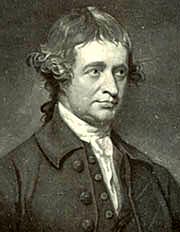











 Posts
Posts