TO BE FILED:The Triumph of Monetarism?
J. Bradford DeLong
U.C. Berkeley and NBER
delong@econ.berkeley.edu
http://www.j-bradford-delong.net/
(510) 643-4027
October 16, 1999
Introduction
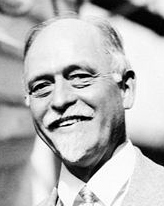
The story of twentieth-century macroeconomics begins with Irving Fisher (1896, 1907, 1911). Appreciation and Interest, The Rate of Interest, and The Purchasing Power of Money fueled the intellectual fire that became known as monetarism. To understand the determination of prices and interest rates and the course of the business cycle, monetarism holds, look first (and often last) at the stock of money--at the quantities in the economy of those assets that constitute readily-spendable purchasing power.
Twentieth century macroeconomics ends with the community of macroeconomists split across two groups, and pursuing two research programs. The New Classical research program walks in the footprints of Joseph Schumpeter's (1939) Business Cycles, holding that the key to the business cycle is the stochastic character of economic growth. It argues that the "cycle" should be analyzed with the same models used to understand the "trend" (see Kydland and Prescott (1982), McCallum (1989), Campbell (1994)).
The competing New Keynesian research program is harder to summarize quickly. But surely its key ideas include the five propositions that:
- The frictions that prevent rapid and instantaneous price adjustment to nominal shocks are the key cause of business-cycle fluctuations in employment and output.
- Under normal circumstances, monetary policy is a more potent and useful tool for stabilization than is fiscal policy.
- Business cycle fluctuations in production are best analyzed from a starting point that sees them as fluctuations around the sustainable long-run trend (rather than as declines below some level of potential output).
- The right way to analyze macroeconomic policy is to consider the implications for the economy of a policy rule, not to analyze each one- or two-year episode in isolation as requiring a unique and idiosyncratic policy response.
- Any sound approach to stabilization policy must recognize the limits of stabilization policy--the long lags and low multipliers associated with fiscal policy; the long and variable lags and uncertain magnitude of the effects of monetary policy.
Many of today's New Keynesian economists will dissent from at least one of these five planks. (I, for example, still cling to the belief--albeit without much supporting empirical evidence--that policy is as much gap-closing as stabilization policy.) But few will deny that these five planks structure how the New Keynesian wing of macroeconomics thinks about important macroeconomic issues. And few will deny that today the New Classical and New Keynesian research programs dominate the available space.
But what has happened to monetarism at the end of the twentieth century? Monetarism achieved its moment of apogee with both intellectual and policy triumph in the late-1970s. Its intellectual triumph came as the NAIRU grew very large and the multiplier grew very small in both journals and textbooks. Its policy triumph came as both the Bank of England and the Federal Reserve declared that henceforth monetary policy would be made not by targeting interest rates but by targeting quantitative measures of the aggregate money stock. But today Monetarism seems reduced from a broad current to a few eddies.
So what has happened to the ideas and the current of thought that developed out of the original insights of Irving Fisher and his peers?
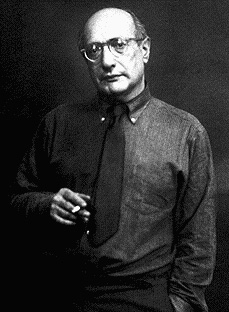
The short answer is that much of this current of thought is still there, but its insights are there under another name. All five of the planks of the New Keynesian research program listed above had much of their development inside the twentieth-century monetarist tradition, and all are associated with the name of Milton Friedman. It is hard to find prominent Keynesian analysts in the 1950s, 1960s, or early 1970s who gave these five planks as much prominence in their work as Milton Friedman did in his.
The importance of analyzing policy in an explicit, stochastic context and the limits on stabilization policy that result comes from Friedman (1953a). The importance of thinking not just about what policy would be best in response to this particular shock but what policy rule would be best in general--and would be robust to economists' errors in understanding the structure of the economy and policy makers' errors in implementing policy--comes from Friedman (1960). The proposition that the most policy can aim for is stabilization rather than gap-closing was the principal message of Friedman (1968). We recognize the power of monetary policy as a result of the lines of research that developed from Friedman and Schwartz (1963) and Friedman and Meiselman (1963). And a large chunk of the way that New Keynesians think about aggregate supply saw its development in Friedman's discussions of the "missing equation" in Gordon (1974).
Thus a look back at the intellectual battle lines between "Keynesians" and "Monetarists" in the 1960s cannot help but be followed by the recognition that perhaps New Keynesian economics is misnamed. We may not all be Keynesians now, but the influence of Monetarism on how we all think about macroeconomics today has been deep, pervasive, and subtle.
Why then do we today talk much more about the "New Keynesian economists" than about the "New Monetarists economists"? I believe that to answer this question we need to look at the history of Monetarism over the twentieth century. And I believe that the most fruitful way to look at the history of Monetarism is to distinguish between four different variants or subspecies of Monetarism that emerged and for a time flourished in the century just past: First Monetarism, Old Chicago Monetarism, High Monetarism, and Political Monetarism.
First Monetarism
The First Monetarism is Irving Fisher's Monetarism. The ideas of Fisher, his peers, and their pupils make up the first subspecies. It is true that the ideas that we see as necessarily producing the quantity theory of money go back to David Hume, if not before. But the equation-of-exchange and the transformation of the quantity theory of money into a tool for making quantitative analyses and predictions of the price level, inflation, and interest rates was the creation of Irving Fisher.
This first subspecies of Monetarism, however, fell down on the question of understanding business-cycle fluctuations in employment and output. The business cycle analysis of some of the practitioners of this first subspecies of monetarism was subtle and sophisticated. Irving Fisher's (1933) "The Debt-Deflation Theory of Great Depressions" can still be read with profit. But the business cycle theory of this first subspecies of monetarism was by and large not as subtle, and not as sophisticated.
Other economists became exasperated with monetarist analyses of events made by their colleagues in the immediate aftermath of World War I. This exasperation led one of the very best of this first subspecies of monetarists--John Maynard Keynes, Mark I--to declare in his Tract on Monetary Reform (1923) that the standard quantity-theoretic analyses were completely useless:
Now 'in the long run' this [way of summarizing the quantity theory: that a doubling of the money stock doubles the price level] is probably true.... But this long run is a misleading guide to current affairs. In the long run we are all dead. Economists set themselves too easy, too useless a task if in tempestuous seasons they can only tell us that when the storm is long past the ocean is flat again.
John Maynard Keynes's exasperation with the way that the First Monetarism was used by economists in works like, say, Lionel Robbins's (1934) The Great Depression led him on the intellectual journey that ended with the non-Monetarist John Maynard Keynes, Mark II, and The General Theory of Employment, Interest and Money.
Most economists would agree with Keynes. Milton Friedman certainly does. In his 1956 "The Quantity Theory of Money--A Restatement," Friedman sets out that one of his principal goals is to rescue monetarism from the "atrophied and rigid caricature" of an economic theory that it had become in the interwar period at the hands of economists such as Robbins and Joseph Schumpeter (1934), who argued that monetary and fiscal policies were bound to be ineffective--counterproductive in fact--in fighting recessions and depressions because they could not create true prosperity, but only a false prosperity that would contain the seeds of a still longer and deeper future depression.
According to Friedman, it was the inadequacies of this framework that opened the way for the original Keynesian Revolution. The atrophied and rigid caricature of the quantity theory painted a "dismal picture." By contrast, "Keynes's interpretation of the depression and of the right policy to cure it must have come like a flash of light on a dark night" (Friedman (1974)). Keynes's General Theory may not have had a correct theory of business-cycle fluctuations in employment and output, but it least it had a theory, and a theory that did not dismiss all macroeconomic policies as pointless to affect business cycles.
Old Chicago Monetarism
Slightly later but somewhat alongside this first subspecies of First Monetarism came what Friedman always called the Chicago School oral tradition: the Old Chicago Monetarism of Viner, Simons, and Knight. In economic theory they stressed the variability of velocity and its potential correlation with the rate of inflation. In economic policy they blamed monetary forces that caused deflation as the source of depression. It was monetary and fiscal policies that had "permitt[ed] banks to fail and the quantity of deposits to decline" that were at the root of America's macroeconomic policies in the Great Depression. To cure the depression they called for massive stimulative monetary expansion and large government deficits, or at least for policies to make sure that any deflation that took place was balanced (Viner (1933)).
The debate over whether Old Chicago Monetarism was properly a theory has gone on intermittently for thirty years. Don Patinkin (1969, 1972) and Harry Johnson (1971) denied that this Chicago School oral tradition existed. They saw a set of macroeconomic policies advocated by Simons, Knight, Viner, and company that made sense, but that were ad hoc, free-floating, and at best tenuously connected with their underlying monetary theory. In Patinkin and Johnson's view, Old Chicago Monetarism was a retrospective construction by Milton Friedman (1956). In their view, Friedman used "Keynesian" tools and insights to provide a retrospective post-hoc theoretical justification for policy recommendations that had little explicit theoretical base at the time, and to construct for himself some intellectual antecedents.
You can side with Patinkin and Johnson and dismiss Old Chicago Monetarism as too amorphous and vague to be called a theory or a school. You can side with Friedman and supporters like Tavlas (1997), and call Old Chicago Monetarism a theory--even if only an implicit theory, a theory never written down anywhere, an "oral tradition." You can then go on to say, with Friedman (1974), that it was this oral tradition that made possible the kind of macroeconomic analysis found in Viner (1933): a "subtle and relevant version... of the quantity theory... a flexible and sensitive tool for interpreting movements in aggregate economic activity and for developing relevant policy prescriptions."
You can note that Friedman does not disagree with Patinkin that Old Chicago Monetarism needed further development. Friedman did write that: "after all, I am not unwilling to accept some credit for the theoretical analysis" found in "The Quantity Theory--A Restatement" and used by all the others who contributed to the landmark Studies in the Quantity Theory of Money. Or you can recognize that it all depends on what you mean by a "theory" or a "tradition," and what you understand to be the dividing line between theoretically-based and ad-hoc policy recommendations.
In my view there is nothing of substance at stake in such debates.
But it is important to note, as George Tavlas (1997) points out, that Old Chicago Monetarism (a) did not believe that the velocity of money was stable, and (b) did not believe that control of the money supply was straightforward and easy. It did not believe that the velocity of money was stable because inflation lowered and deflation raised the opportunity cost of holding real balances. The phase of the business cycle and the concomitant general price level movements powerfully affected incentives: economic actors had strong incentives to economize on money holdings during times of boom and inflation, and to hoard money balances during times of recession and deflation. These swings in velocity amplified the effects of monetary shocks on total nominal spending.
It did not believe that controlling the money supply was easy because fractional-reserve banking in the absence of deposit insurance created the instability-generating possibility of bank runs. The fear by banks that they might be caught illiquid could cause substantial swings in the deposit-reserves ratio. The fear by deposit holders that their bank might be caught illiquid could cause substantial swings in the deposit-currency ratio. And together these two ratios determined the money multiplier.
Thus the overall level of the money supply was determined as much by these two unstable ratios as by the stock of high-powered money itself. And the stock of high-powered money was the only thing that the central bank could quickly and reliably control.
Classic Monetarism
Monetarism-subspecies-three, Classic Monetarism, either emerged as a natural evolution of Old Chicago Monetarism or springing full-grown like Athena from the brains of the Chicago School after World War II. Classic Monetarism as laid out in Friedman's classic Essays in Positive Economics, Studies in the Quantity Theory of Money, A Program for Monetary Stability (see Friedman, 1953b, 1956, 1960, 1968)., and works by many others (like Brunner (1968), or Brunner and Meltzer (1972)) contained strands of thought that have proven remarkably durable
Classic Monetarism contained empirical demonstrations that money demand functions could retain remarkable amounts of stability under the most extreme hyperinflationary conditions (chief among them Cagan (1956)), analyses of the limits imposed on stabilization policy by the uncertain strength and lags of policy instruments (see Friedman (1953a)), the stress on the importance of policy rules and of rules that would be robust (see Friedman (1960), the belief that the natural rate of unemployment is inevitably close to the average rate of unemployment (Friedman (1968)), Friedman and Schwartz's (1963) long narrative of the potency of monetary policy, econometric demonstrations of the short-run power of monetary policy (see Brunner and Meltzer (1963), Anderson and Jordan (1970), Goodhart (1970)), and the start of the process that has cut the multiplier down from the value of four or five that it possessed in economists' minds in 1947 to the value of maybe one that it possesses in economists' minds today (see Friedman (1957)).
These elements and conclusions of the Classic Monetarist research program have endured. They make up much of what the New Keynesian wing of macroeconomics believes very strongly today.
But these strands of Classic Monetarism were not the whole. There were two other strands as well.
The first such strand has not fared very well. It is best seen as an attempt to eliminate the sources of macroeconomic instability identified by Old Chicago Monetarism. The worry that control of the monetary base was insufficient to control the money stock was to be dealt with, in Friedman's (1960) Program for Monetary Stability, by reforming the banking system to eliminate every possibility of fluctuations in the money multiplier. Shifts in the deposit-reserve and deposit-currency ratios would be eliminated by requiring 100% reserve banking. Shifts in the deposit-reserve ratio then become illegal. Banks can never be caught illiquid. And in the absence of any possibility that banks will be caught illiquid, there is no reason for there to be any shifts in the deposit-currency ratio either.
Shifts in the velocity of money in response to cyclical bursts of inflation and deflation that amplified fluctuations in the rate of growth of the money stock would be eliminated by the constant-nominal-money-growth rule. Without cyclical fluctuations in the money stock and in inflation, there would be no cause of cyclical fluctuations in the velocity of money. Thus banking system reform and Federal Reserve reform would eliminate the monetary causes of the business cycle.

This component of Classic Monetarism--the program for monetary stability--has not flourished over the past half century. The tide, instead, has flowed in the direction of the deregulation of the financial sector, not in the more intensive regulation that would be required to enforce 100% reserve banking and a strict separation between investments and transactions deposits. The sharp swings in the velocity of money in the 1980s led not to a renewed commitment to stable inflation and money growth to eliminate such swings, but instead to a distrust by central bankers of monetary aggregates as indicators. There are few live remnants of the program to control the sources of monetary instability identified by Old Chicago Monetarism.
The second such strand has fared better within the intellectual ecology. For at some point in the first post-World War II generation, the Chicago School developed a strong fear and distaste for the state. The monetarist policy recommendations of a stable growth rate for nominal money and a constrained, automatic central bank were then seen as having an added bonus: they were tools to advance the libertarian goal of the shrinkage of the state.
A central bank not constrained by the constant nominal money growth rate rule can get itself into all kinds of mischief. It could use the inflation tax to gain command over goods and services. It could try to stimulate aggregate demand and manipulate the business cycle in order to create a favorable economic climate at election time.
In general there were two reasons to fear unconstrained policy formulated by politically-chosen central bankers: it could fail, or it could succeed. It could fail in the sense that central bankers appointed by politicians without concern for their competence could advance destructive economic policies. It could succeed in the sense that it could pursue policies that were in the government's, the bureaucrats', or the political party's own but not in the public interest. A large chunk of this strand of monetarism shapes macroeconomists' thoughts today, mostly as transmitted through Kydland and Prescott (1977).
Classic Monetarism--shorn of its program for monetary stability--became intellectually very powerful in the 1970s. Increased awareness of the difficulties of passing legislation in the U.S. and the leakages that diminished the multiplier shifted the balance of opinion in the direction of attributing relatively greater force to monetary policy. The Volcker disinflation left few in doubt that central banks had and could rapidly use their powerful levers to control nominal spending. And Classic Monetarism rose to its peak of intellectual influence as Milton Friedman's and Edward Phelps 's prediction that the stable short-run Phillips curve would break down was made just in time to be proven spectacularly correct by the economic history of the 1970s.
Political Monetarism
But the multi-stranded complex of doctrines and ideas that was Classic Monetarism--with its institutional reform side, its analytical side, and its political-economy side--was not the Monetarism that became a powerful political doctrine in the 1970s. Political Monetarism was something different.
Political Monetarism argued not that velocity could be made stable if monetary shocks were avoided, but that velocity was stable. Thus the money stock became a sufficient statistic for forecasting nominal demand, and central bankers could close their eyes to all economic statistics save monetary aggregates alone. Political Monetarism argued not that institutional reforms were needed to give the central bank the power to tightly control the money supply, but that the central bank did control shifts in the money supply. The central bank was the source in its actions or in its failure to neutralize private actions of all monetary forces. Everything that went wrong in the macroeconomy had a single, simple cause: the central bank had failed to make the money supply grow at the appropriate rate.
Political Monetarism expresses skepticism about the potential for non-monetary shocks to spending to affect output significantly: the major effect of a fiscal stimulus is "to make interest rates higher than they would otherwise be" not to boost nominal demand--unless the fiscal stimulus is "financed by printing money." Political Monetarism is at least somewhat skeptical of the dependence of the velocity of money on interest rates: lower interest rates "make it less expensive for people to hold cash. Hence, some of the funds may be added to idle cash balances rather than spent or loaned." And Political Monetarism concludes that any policy that does not affect "the quantity of money and its rate of growth" simply cannot "have a significant impact on the economy."
All theories and doctrines are stripped down to a core that includes substantial proportions of misrepresentation and overstatement when the doctrines become political and policy weapons. And from today's perspective it is clear that the stripping-down that created Political Monetarism was unfortunate. For what we now believe to be truly valuable about the work done by the Monetarist tradition was deemphasized. While the elements that were emphasized--the sufficiency of money growth as an indicator of demand, the stability of velocity, the assumption that it was easy and straightforward for the central bank to find and control the most relevant measure of the money stock--are elements that turned out to be empirically false in the 1980s and 1990s. Perhaps they would have proven true had the Classic Monetarist program for monetary stability been implemented. But that world of no slippage between the monetary base and nominal income--no slippage between the monetary base and the money stock, and no slippage in velocity--was not the world that we turned out to live in.
Hence Political Monetarism crashed and burned in the 1980s. The elision of the difficulties in controlling the money stock from the monetary base created a great hostage to fortune. Charles Goodhart's law made itself felt: whatever monetary aggregate was being targeted by a central bank turned out to be the one with the lowest correlation with nominal income. Controlling the money supply that was relevant for total spending turned out to be very difficult indeed.
The claim that only policies that affected the money stock could affect nominal demand proved even more unfortunate, for the velocity of money turned unstable in the 1980s, as indeed Old Chicago Monetarists would have expected that it would: a steep reduction in the rate of inflation does greatly alter the opportunity cost of holding real balances.
But even as Monetarism subspecies four was failing its empirical test, large elements of Monetarism subspecies three--Classic Monetarism--were achieving their intellectual hegemony. For under normal circumstances monetary policy is a more potent and useful tool for stabilization than it fiscal policy. The frictions that give slope to the expectational aggregate supply curve are key causes of business cycle fluctuations. The natural rate hypothesis has strong empirical support, and does mean that fluctuations are best analyzed as being about trend rather than being beneath potential. It is better to analyze macroeconomic policy by considering the long-run implications of rules. And any sound view of stabilization policy must recognize how limited are its possibilities for success.
These insights survive, albeit under a different name than "Monetarism." Perhaps the extent to which they are simply part of the air that modern macroeconomists today believe is a good index of their intellectual hegemony.
References
Leonall Anderson and Jerry Jordan (1970), "Monetary and Fiscal Actions: A Test of Their Relative Importance in Economic Stabilization," Federal Reserve Bank of St. Louis Monthly Review 52:4 (April), pp. 7-25.
Karl Brunner (1968), "The Role of Money and Monetary Policy," Federal Reserve Bank of St. Louis Monthly Review 50:7 (July), pp. 8-24.
Karl Brunner and Alan Meltzer (1963), "Predicting Velocity," Journal of Finance (May), pp. 319-334.
Karl Brunner and Alan Meltzer (1972), "Friedman's Monetary Theory," Journal of Political Economy. Reprinted in Robert J. Gordon, ed. (1974), Milton Friedman's Monetary Framework: A Debate with His Critics (Chicago: University of Chicago Press: 0226264076).
Philip Cagan (1956), "The Monetary Dynamics of Hyperinflation," in Milton Friedman, ed., Studies in the Quantity Theory of Money (Chicago: University of Chicago Press).
Philip Cagan (1965), Determinants and Effects of Changes in the Stock of Money, 1875-1960 (New York: Columbia University Press).
John Campbell (1994), "Inspecting the Mechanism: An Analytical Approach to the Stochastic Growth Model," Journal of Monetary Economics 33: pp. 463-506.
Irving Fisher (1896), Appreciation and Interest (New York: Macmillan).
Irving Fisher (1907), The Rate of Interest (New York: Macmillan).
Irving Fisher (1911), The Purchasing Power of Money (New York: Macmillan).
Irving Fisher (1933), "The Debt-Deflation Theory of Great Depressions," Econometrica 1.
Milton Friedman (1948), "A Monetary and Fiscal Framework for Economic Stability," American Economic Review 38:2 (June), pp. 245-64. Reprinted in Essays on Positive Economics (Chicago: University of Chicago Press: 1953), pp. 133-156.
Milton Friedman (1953a), "The Effects of a Full-Employment Policy on Economic Stability: A Formal Analysis," in Essays on Positive Economics (Chicago: University of Chicago Press: 1953), pp. 117-132.
Milton Friedman (1953b), Essays on Positive Economics (Chicago: University of Chicago Press).
Milton Friedman (1956), "The Quantity Theory of Money–A Restatement," in Studies in the Quantity Theory of Money (Chicago: University of Chicago Press: 0226264068), pp. 3-21.
Milton Friedman (1957), A Theory of the Consumption Function (Princeton: Princeton University Press).
Milton Friedman (1960), A Program for Monetary Stability (New York: Fordham University Press: 0823203719).
Milton Friedman (1968), "The Role of Monetary Policy," American Economic Review 58:1 (March), pp. 1-17.
Milton Friedman (1970), "A Theoretical Framework for Monetary Analysis," Journal of Political Economy 78:2 (April), pp. 193-238.
Milton Friedman (1971a), "A Monetary Theory of Nominal Income," Journal of Political Economy 79:2 (April), pp. 323-37.
Milton Friedman (1971b), A Theoretical Framework for Monetary Analysis (New York: NBER: Occasional Paper 112). Reprinted in Robert J. Gordon, ed. (1974), Milton Friedman's Monetary Framework: A Debate with His Critics (Chicago: University of Chicago Press: 0226264076), pp. 1-61.
Milton Friedman (1972), "Comments on the Critics," Journal of Political Economy. Reprinted in Robert J. Gordon, ed. (1974), Milton Friedman's Monetary Framework: A Debate with His Critics (Chicago: University of Chicago Press: 0226264076).
Milton Friedman and David Meiselman (1963), "The Relative Stability of Monetary Velocity and the Investment Multiplier in the United States, 1897-1958," in Stabilization Policies (Englewood Cliffs: Prentice-Hall).
Milton Friedman and Anna J. Schwartz (1963), A Monetary History of the United States (Princeton: Princeton University Press).
Charles Goodhart (1970), "The Importance of Money," Quarterly Bulletin of the Bank of England (June), pp. 159-98.
Robert J. Gordon, ed. (1974), Milton Friedman's Monetary Framework: A Debate with His Critics (Chicago: University of Chicago Press: 0226264076).
Peter Hall (1986), Governing the Economy (Cambridge: Harvard University Press).
Harry Johnson (1971), "The Keynesian Revolution and the Monetarist Counterrevolution," American Economic Review 61 (May), pp. 1-14.
John Maynard Keynes (1923), A Tract on Monetary Reform (London: Macmillan).
John Maynard Keynes (1936), The General Theory of Employment, Interest, and Money (London: Macmillan).
Edmund W. Kitch, ed. (1983). "The Fire of Truth: A Remembrance of Law and Economics at Chicago, 1932-1970." Journal of Law and Economics.
Finn Kydland and Edward Prescott (1977), "Rules Rather Than Discretion: The Inconsistency of Optimal Plans," Journal of Political Economy 87: 3 (June), pp. 473-492.
Finn Kydland and Edward Prescott (1982), "Time to Build and Aggregate Fluctuations," Econometrica 50 (November), pp. 1345-70.
Bennett McCallum (1989), "Real Business Cycle Models," in Robert Barro, ed., Modern Business Cycle Theory (Cambridge: Harvard University Press): pp. 16-50.
Don Patinkin (1969), "The Chicago Tradition, the Quantity Theory, and Friedman," Journal of Money, Credit, and Banking 1:1 (February), pp. 46-70.
Don Patinkin (1972), "Friedman on the Quantity Theory and Keynesian Economics," Journal of Political Economy. Reprinted in Robert J. Gordon, ed. (1974), Milton Friedman's Monetary Framework: A Debate with His Critics (Chicago: University of Chicago Press: 0226264076).
Lionel Robbins (1934), The Great Depression (London: Macmillan).
Joseph Schumpeter (1939), Business Cycles (New York: McGraw-Hill).
Joseph Schumpeter (1934), "Depressions," in Douglass Brown et al., Economics of the
Recovery Program (New York: McGraw-Hill, 1934).
George Tavlas (1997), "The Chicago Tradition," Journal of Economic Perspectives.
*James Tobin (1972), "Friedman's Theoretical Framework," Journal of Political Economy. Reprinted in Robert J. Gordon, ed. (1974), Milton Friedman's Monetary Framework: A Debate with His Critics (Chicago: University of Chicago Press: 0226264076).
Jacob Viner (1933), Balanced Deflation, Inflation, or More Depression (Minneapolis: University of Minnesota Press).
Paul Volcker and Toyoo Gyohten (with Lawrence Malkin, ed.) (1992), Changing Fortunes: The World's Money and the Threat to American Leadership (New York: Random House).
Last year I published an essay (DeLong, 2000) arguing that modern Keynesians are really monetarists. Even if they--we--do not really like to admit it, most of the key elements in how modern "new Keynesian" economists view the world are derived from or heavily influenced by the work of Milton Friedman.
But that essay left me unsatisfied, for it was only half of the story. Just as modern Keynesians are (in many respects) monetarists, so modern monetarists are really Keynesians--even though they like to admit it even less. They are Keynesians in the sense that they have the same profound and deep distrust in the laissez-faire market economy's ability to deliver macroeconomic stability. Moreover, they share the confidence John Maynard Keynes had that limited and strategic government interventions and policies could produce macroeconomic stability while still leaving enormous space for the operation of the market.
Thus there are no believers in true laissez-faire left, at least not as far as academic macroeconomics is concerned. The rhetoric of post-World War II monetarism held that it was a return to laissez-faire in macroeconomics. All the government had to do was to get out of the way and leave monetary policy in "neutral," and macroeconomic stabilization would be successfully achieved. But on closer inspection the "neutral" monetary policy advocated in works like Friedman and Schwartz (1963) turns out to be a policy that pre-Keynesian generations would have called extraordinarily activist on a number of levels. The laissez-faire rhetoric obscures the extraordinarily broad common ground that Milton Friedman shares with John Maynard Keynes.
This recognition has important implications for understanding the meaning and effect of the monetarist counterrevolution of the late 1960s and 1970s. The majority view of the monetarist counterrevolution was shaped while it was ongoing by Harry Johnson's Ely Lecture, "The Keynesian Revolution and the Monetarist Counterrevolution" (Johnson, 1971). Johnson saw the monetarist counterrevolution as a true intellectual revolution--one that renders the previous literature obsolete, irrelevant, and uninteresting as the post-revolutionary generation focuses on new issues and dismisses the old questions and answers as badly posed or simply incoherent. Johnson also--relatively cynically--saw the monetarist counterrevolution as the triumph not of new evidence (or a reevalution of old evidence) but as the triumph of misleading rhetoric, and was not sure that it reflected an advance in knowledge. And Johnson saw the counterrevolution as a genuine counterrevolution that would--if successful--return economists' thinking to its previous state.
I want to argue that, underneath its laissez-faire rhetoric about a non-activist, neutral monetary policy, the monetarism of the monetarist counterrevolution had been thoroughly infected by the Keynesian virus. It carried with it a way of thinking about macroeconomic policy that was as "activist" in its own way as John Maynard Keynes could have ever wished.What Today's Keynesians Believe
What do today's "new Keynesian" macroeconomists believe? Their research program is complex and hard to summarize briefly, but any list of its key ideas and premises would include the five propositions that:
--The key to understanding real fluctuations in employment and output is to understand the process by which business cycle-frequency shocks to nominal income and spending are divided into changes in real spending and changes in the price level.
-- Under normal circumstances, monetary policy is a more potent and useful tool for stabilization than is fiscal policy.
--Business cycle fluctuations in production are best analyzed from a starting point that sees them as fluctuations around the sustainable long-run trend (rather than as declines below some sustainable potential output level).
--The right way to analyze macroeconomic policy is to consider the implications for the economy of a policy rule, not to analyze each one- or two-year episode in isolation as requiring a unique and idiosyncratic policy response.
-- Any sound approach to stabilization policy must recognize the limits of stabilization policy—the long lags and low multipliers associated with fiscal policy; the long and variable lags and uncertain magnitude of the effects of monetary policy.
All five of the planks of the New Keynesian research program listed above had much of their development inside the twentieth-century monetarist tradition, and all are associated with the name of Milton Friedman. It is hard to find prominent Keynesian analysts in the 1950s, 1960s, or early 1970s who gave these five planks as much prominence in their work as Milton Friedman did in his.
Monetarist Roots of Modern Keynesianism
The importance of analyzing policy in an explicit, stochastic context and the limits on stabilization policy that result comes from Friedman (1953a). The importance of thinking not just about what policy would be best in response to this particular shock but what policy rule would be best in general--and would be robust to economists' errors in understanding the structure of the economy and policy makers' errors in implementing policy--comes from Friedman (1960). The proposition that the most policy can aim for is stabilization rather than gap-closing was the principal message of Friedman (1968). We recognize the power of monetary policy as a result of the lines of research that developed from Friedman and Schwartz (1963) and Friedman and Meiselman (1963). And a large chunk of the way that New Keynesians think about aggregate supply saw its development in Friedman’s discussions in Friedman (1970) and Friedman (1971a).
Thus a look back at the intellectual battle lines between "Keynesians" and "monetarists" in the 1960s cannot help but be followed by the recognition that perhaps "new Keynesian" economics is misnamed. We may not all be Keynesians now, but the influence of "monetarism" on how we all think about macroeconomics today has been deep, pervasive, and subtle.
The form of "monetarism" that has had a profound and deep influence on macroeconomics today was Milton Friedman's monetarism. It either emerged as a natural evolution from the old oral Chicago monetarist tradition of the Great Depression era (according to Friedman, 1974) or sprang full-grown like Athena from Milton Friedman's brain (according to Patinkin, 1972, and Johnson, 1971). This classic form of monetarism as laid out in Friedman's classic Essays in Positive Economics, Studies in the Quantity Theory of Money, A Program for Monetary Stability (see Friedman, 1953b, 1956, 1960, 1968) contained a number strands of thought that have proven remarkably durable.
Classic monetarism contained empirical demonstrations that money demand functions could retain remarkable amounts of stability under the most extreme hyperinflationary conditions (see Cagan, 1956). It analyzed the limits imposed on stabilization policy by the uncertain strength of policy instruments and the variable lags with which they took effect (see Friedman, 1953a). Its stress on the importance of policy rules and of rules that would be robust (see Friedman, 1960) has still not been adequately and fully incorporated into mainstream thought. The belief that the natural rate of unemployment is inevitably close to the average rate of unemployment (Friedman, 1968) and thus that monetary policy cannot affect the average rate of unemployment is standard in modern macro models (see Romer, 2000). Friedman and Schwartz's (1963) long narrative of the potency of monetary policy together with econometric demonstrations of the short-run power of monetary policy produced a more realistic assessment of the relative roles of fiscal and monetary policy, and started the process that has cut the multiplier down from the value of four or five that it possessed in economists' minds in 1947 to the value of maybe one and a half that it possesses in economists' minds today.
What Happened to the Label "Monetarism"?
Why then do we today talk about the "new Keynesian economists" and not about "new Monetarists economists"? I believe that the answer to this question hinges on the fact that the word "monetarism" became attached to one particular variety of monetarism. It became attached to "political monetarism"--the belief that it was easy to maintain a stable rate of growth of the money stock. and that maintaining a stable rate of growth of the money stock would solve most (if not all) of the problems of stabilization policy.
Political Monetarism argued not that velocity could be made stable if monetary shocks were avoided, but that velocity was stable. Thus the money stock became a sufficient statistic for forecasting nominal demand, and central bankers could close their eyes to all economic statistics save monetary aggregates alone. Political Monetarism argued not that institutional reforms were needed to give the central bank the power to tightly control the money supply, but that the central bank did control shifts in the money supply. The central bank was the source in its actions or in its failure to neutralize private actions of all monetary forces. Everything that went wrong in the macroeconomy had a single, simple cause: the central bank had failed to make the money supply grow at the appropriate rate.
"Political monetarism" had the advantage that it was easy for politicians to understand and could be conveyed in op-ed pieces. "Political monetarism" had the advantage that it made it easy to critique whatever economic policy was being followed by the opposition party and its central bankers. "Political monetarism" had the advantage that it made it easy to say what one would do differently.
"Political monetarism" had the disadvantage that it was not true.
"Political monetarism" crashed and burned in the early 1980s. It became clear that stable control of the money stock was not easy to obtain. It became clear that stable control of the money stock did not solve the problems of stabilization policy because the velocity of money was unstable. Indeed, Goodhart's law maintained that the better your control over any particular measure of the money stock, the more unstable its velocity would be (Goodhart, 1970). And the velocity of money turned extraordinarily unstable after 1980.
III. Modern Monetarists Are Keynesians
Speaking broadly and sketchily, business cycle theory back before the Keynesian revolution had two strands: the quantity theory strand, and the over-investment strand.
The Pre-World War II Quantity Theory of Money
Pre-Keynesian Business Cycle Theory
The quantity theory of money goes back to David Hume. But the transformation of the quantity theory of money into a tool for making quantitative analyses and predictions of the price level, inflation, and interest rates was the creation of Irving Fisher (1911).
However, the quantity theory of money as developed by Fisher (1911) and his peers was not a useful tool for business cycle analysis. It amounted to an assertion that other things being equal--ceteris paribus--the price level would be proportional to the money stock coupled with a laundry list of what those other things might be. But it did not investigate the relationship of monetary policy and monetary shocks to the "ceteris" that were to be "paribus." And it did not engage in any significant analysis of the money supply determination process at all.
These theoretical shortcomings led other economists to become exasperated with monetarist analyses of events made by their colleagues in the monetary and financial chaos that was the immediate aftermath of World War I. This exasperation led John Maynard Keynes to write what is perhaps the most frequently quoted of his many lines, the declaration in his Tract on Monetary Reform (1923) that standard quantity-theoretic analyses were useless:
"Now 'in the long run' this [way of summarizing the quantity theory: that a doubling of the money stock doubles the price level] is probably true.... But this long run is a misleading guide to current affairs. In the long run we are all dead. Economists set themselves too easy, too useless a task if in tempestuous seasons they can only tell us that when the storm is long past the ocean is flat again..."
Most economists today would agree with Keynes. Milton Friedman certainly does. In his 1956 "The Quantity Theory of Money--A Restatement," Friedman sets out that one of his principal goals is to rescue monetarism from the "atrophied and rigid caricature" of an economic theory that it had become in the interwar period. According to Friedman, it was the inadequacies of this framework that opened the way for the original Keynesian Revolution. The atrophied and rigid caricature of the quantity theory painted a "dismal picture." By contrast, "Keynes's interpretation of the depression and of the right policy to cure it must have come like a flash of light on a dark night" (Friedman (1974)). Keynes's General Theory may not have had a correct theory of business-cycle fluctuations in employment and output, but it least it had a theory.
The second strand of pre-Keynesian business cycle theory, was, to caricature it only slightly, the over-investment theory claim that nothing could be done to avoid, moderate, or shorten depressions. One of the most striking declarations of this "liquidationist" point of view came from Herbert Hoover's Secretary of the Treasury, Andrew Mellon, who saw the Great Depression as a healthy process of macroeconomic purgation. In his memoirs Herbert Hoover (1952) wrote wrote bitterly of Mellon and the others who had advised inaction during the downslide.
This point of view was not one that originated with bankers and politicians. It was held by some of the most eminent economists of the day. I take Joseph Schumpeter's (1934) expression of it to be representative--certainly Schumpeter's is the most rhetorically powerful and analytically coherent. Schumpeter begins from the observation that the course of economic development is never smooth. Investments and enterprises are gambles on the future, made by innovative entrepreneurs who see new things to be done or new ways to produce old commodities.
Sometimes these gambles will fail. The actual future that comes to pass is one in which ex post certain investments should not have been made, or in which ex post certain enterprises should not have been undertaken because they are not producing the requisite profits. The economy is left with "too much" capital given what the state of technology factor supplies, and demand turned out to be, or is perhaps left with the "wrong kinds" of capital.
The best that can be done in such a situation is to shut down those production processes and enterprises that were based on guesses about the way the future would look that did not come to pass. The liquidation of investments and businesses releases factors from unprofitable uses; they can then be redeployed to other sectors, used to produce socially useful current services (in the "too much" capital case) or alternative investment goods (in the "wrong kinds" case), and used by further waves of entrepreneurs in new gambles on a still-uncertain future. But without the initial liquidation, the redeployment and the subsequent wave of innovation and entrepreneuship cannot take place.
It follows, says Schumpeter, that depressions are this process of liquidation and preparation for the redeployment of resources. From Schumpeter’s perspective, "depressions are not simply evils, which we might attempt to suppress, but…forms of something which has to be done, namely, adjustment to…change." This socially productive function of depressions creates "the chief difficulty" faced by economic policy makers. For "most of what would be effective in remedying a depression would be equally effective in preventing this adjustment" (Schumpeter, 1934; p. 16). The process of dynamic economic growth requires that underutilized factors register their availability on markets. Policies that stimulate demand in recessions keep factors engaged in activities that do not produce value in excess of social cost. Such policies keep factor markets from registering the potential availability of productive resources for redeployment.
Is it possible to iron out the cycles, leaving an economy growing steadily on some equilibrium path rather than irregularly with rapid booms and slumps? Schumpeter (1939) thinks not, for business cycles are not "…like tonsils, separable things that might be treated by themselves." Instead, business cycles are "…like the beat of the heart, of the essence of the organism that displays them." In order for one wave of entrepreneurship to be followed by another, prospective entrepreneurs must know where and in what quantities resources available for recombination and redeployment are available. Until they can learn this, they face "the imposibility of calculating costs and receipts in a satisfactory way…[T]he difficulty of planning new things and the risk of failure are greatly increased.…[I]t is necessary to wait until things settle down…before embarking on [new] innovation."
Schumpeter thus argues that monetary policy does not allow policy makers to choose between depression and no depression, but only between depression now and a worse depression later. "Inflation…pushed far enough [would] undoubtedly turn depression into the sham prosperity so familiar from European postwar experience," claims Schumpeter (1934), but it "would, in the end, lead to a collapse worse than the one it was called in to remedy." Hence his "…analysis leads us to believe that recovery is sound only if it does come of itself. For any revival which is merely due to artificial stimulus leaves part of the work of depressions undone and adds, to an undigested remnant of maladjustment, new maladjustment of its own which has to be liquidated in turn, thus threatening business with another [worse] crisis ahead."
Stimulative monetary policies, therefore, "are particulary apt to keep up, and add to, maladjustment, and to produce additional trouble for the future." Moreover, words like "stimulative" carry a special meaning in this context: if private sector actions would lead to a fall in, say, the nominal money stock, then a public sector attempt to counteract the consequences of such private-sector actions by injecting sufficient reserves to hold the nominal money stock constant would be "stimulative."
The doctrine that in the long run the Great Depression would turn out to have been "good medicine" for the economy, and that proponents of stimulative policies were shortsighted enemies of the public welfare drew many anguished cries of dissent. British economist Ralph Hawtrey scorned those who warned against stimulative policies at the nadir of the Great Depression. To call for more liquidation and deflation was, Hawtrey said, "to cry, ‘Fire! Fire!’ in Noah’s flood." Keynes (1931) tried to discredit the "liquidationist view" with ridicule. He called it an "imbecility" to argue that the "wonderful outburst of productive energy" during the boom of 1924–29 had made the Great Depression inevitable. He spoke of Schumpeter and his fellow travelers as:
"…austere and puritanical souls [who] regard [the Great Depression] …as an inevitable and a desirable nemesis on… "overexpansion" as they call it.…It would, they feel, be a victory for the mammon of unrighteousness if so much prosperity was not subsequently balanced by universal bankruptcy. We need, they say, what they politely call a ‘prolonged liquidation’ to put us right. The liquidation, they tell us, is not yet complete. But in time it will be. And when sufficient time has elapsed for the completion of the liquidation, all will be well with us again…"
Keynesian Monetarism
It is on this point that we find complete and total agreement between John Maynard Keynes and Milton Friedman. The critique of monetary policy during the Great Depression found in Friedman and Schwartz (1963) is precisely that the Federal Reserve did not do enough to stimulate the economy during the Great Depression. It injected reserves into the banking system, yes, but it did not inject enough reserves to counteract the decline in the money multiplier that took place between 1929 and 1933 that reduced the money stock and starved the economy of liquidity. As Friedman (1974) observed, the Old Chicago Monetarism of Jacob Viner, Henry Simons, and Frank Knight had stressed the variability of velocity, its potential correlation with the rate of inflation, and the instability of the money multiplier. Thus they condemned the Hoover administration government for monetary and fiscal policies that had "permitt[ed] banks to fail and the quantity of deposits to decline" that they saw at the root of America's macroeconomic policies in the Great Depression. To cure the depression they called for massive stimulative monetary expansion and large government deficits.
They (a) did not believe that the velocity of money was stable, and (b) did not believe that control of the money supply was straightforward and easy. It did not believe that the velocity of money was stable because inflation raised and deflation lowered the opportunity cost of holding real balances. The phase of the business cycle and the concomitant general price level movements powerfully affected incentives: economic actors had strong incentives to economize on money holdings during times of boom and inflation, and to hoard money balances during times of recession and deflation. These swings in velocity amplified the effects of monetary shocks on total nominal spending.
It did not believe that controlling the money supply was easy because fractional-reserve banking in the absence of deposit insurance created the instability-generating possibility of bank runs. The fear by banks that they might be caught illiquid could cause substantial swings in the deposit-reserves ratio. The fear by deposit holders that their bank might be caught illiquid could cause substantial swings in the deposit-currency ratio. And together these two ratios determined the money multiplier. Thus the overall level of the money supply was determined as much by these two unstable ratios as by the stock of high-powered money itself. And the stock of high-powered money was the only thing that the central bank could quickly and reliably control.
The worry that control of the monetary base was insufficient to control the money stock was to be dealt with, in Friedman's (1960) Program for Monetary Stability, by reforming the banking system to eliminate every possibility of fluctuations in the money multiplier. Shifts in the deposit-reserve and deposit-currency ratios would be eliminated by requiring 100% reserve banking. Shifts in the deposit-reserve ratio then become illegal. Banks can never be caught illiquid. And in the absence of any possibility that banks will be caught illiquid, there is no reason for there to be any shifts in the deposit-currency ratio either.
Shifts in the velocity of money in response to cyclical bursts of inflation and deflation that amplified fluctuations in the rate of growth of the money stock would be eliminated by the constant-nominal-money-growth rule. Without cyclical fluctuations in the money stock and in inflation, there would be no cause of cyclical fluctuations in the velocity of money. Thus banking system reform and Federal Reserve reform would eliminate the monetary causes of the business cycle, and would make both the money supply and the velocity of money stable.
It is important to recognize that in its proper context--that of the pre-World War II version of the quantity theory and the pre-World War II over-investment theory--this is a very Keynesian vision of macroeconomic policy.. As Robert Skidelsky puts it in his three-volume biography of John Maynard Keynes, Keynes's key contribution was not to find a middle way between "laissez-faire and central planning... conservatism and socialism" but a genuine Third Way that achieved the benefits each traditional pole of politics had claimed but had never been able to deliver. Keynes saw the market economy as having two great flaws: first, that demand for investment was extraordinarily and pointlessly volatile as business leaders and investors attempted the hopeless task of trying to pierce the veil of time and ignorance, and, second, that the fluctuations in the wage level that classical economic theory relied on to bring the economy back into balance after such an investment fluctuation either did not work at all or worked too slowly to be relevant for economic policy. (No, I am not going to be drawn into the debate about "unemployment disequilibrium.") But if these problems could be fixed, Keynes believed, then the standard market-oriented toolkit of economists was worthwhile and relevant once more.
And this is exactly Friedman's position. The tools used are a little different--rather than Keynes's focus on investment plus government spending, Friedman focuses on the banking system and the money stock. But in each case the vision is one of powerful and strategic but focused and limited government intervention and control of a narrow section of the economy, in the hope that the merits of laissez-faire can flourish in the rest of the economy.
My conclusion is simple. Much of the history of macroeconomic thought is often taught as the rise and fall of alternative schools. Monetarists tend to write of the rise and fall of Keynesian economics--its rise during the Great Depression, and its fall in the 1970s under the pressure of stagflation and the theoretical critiques of Friedman, Phelps, Lucas, Sargent, and Barro. They tend to see this as the rise "interventionism" and then its decline and replacement by a more hands-off view that holds that monetary policy should be "neutral." Keynesians write of the rise and fall of monetarism--its rise during the monetarist counterrevolution, its fall as the instability of velocity and the money multiplier became clear, and its replacement by the modern "new Keynesian" paradigm.
Neither story appears to me to give an accurate or even a particularly useful vision of how it really happened. The fall of monetarism as a political doctrine was coupled with the victory of "monetarist" ideas and ways of thinking in the mainstream: that was the point of DeLong (2000). And what Friedman and Schwartz (1963) would call a "neutral" hands-off monetary policy during the Great Depression--one that kept the nominal money stock fixed--would have been condemned by pre-World War II over-investment theorists as extraordinarily interventionist. Indeed, it would have been. Between 1929 and 1933 the Federal Reserve raised the monetary base by 15% while the nominal money stock shrunk by a third. The position of Friedman and Schwartz (1963) is that the Federal Reserve should have injected reserves into the banking system much, much faster. Sometimes to be "in neutral" requires that you push the pedal through the floor.
References
Philip Cagan (1956), "The Monetary Dynamics of Hyperinflation," in Milton Friedman, ed. (1956), Studies in the Quantity Theory of Money (Chicago: University of Chicago Press).
J. Bradford DeLong (2000), "The Triumph [?] of Monetarism," Journal of Economic Perspectives.
Irving Fisher (1911), The Purchasing Power of Money (New York: Macmillan).
Milton Friedman (1953a), "The Effects of a Full-Employment Policy on Economic Stability: A Formal Analysis," in Essays on Positive Economics (Chicago: University of Chicago Press: 1953), pp. 117-132.
Milton Friedman (1953b), Essays on Positive Economics (Chicago: University of Chicago Press).
Milton Friedman (1956), "The Quantity Theory of Money—A Restatement," in Studies in the Quantity Theory of Money (Chicago: University of Chicago Press: 0226264068), pp. 3-21.
Milton Friedman (1968), "The Role of Monetary Policy," American Economic Review 58:1 (March), pp. 1-17.
Milton Friedman (1960), A Program for Monetary Stability (New York: Fordham University Press: 0823203719).
Milton Friedman (1970), "A Theoretical Framework for Monetary Analysis," Journal of Political Economy 78:2 (April), pp. 193-238.
Milton Friedman (1971a), "A Monetary Theory of Nominal Income," Journal of Political Economy 79:2 (April), pp. 323-37.
Milton Friedman (1974), "Comments on the Critics," in Robert J. Gordon, ed. (1974), Milton Friedman’s Monetary Framework: A Debate with His Critics (Chicago: University of Chicago Press: 0226264076).
Milton Friedman and David Meiselman (1963), "The Relative Stability of Monetary Velocity and the Investment Multiplier in the United States, 1897-1958," in Stabilization Policies (Englewood Cliffs: Prentice-Hall).
Milton Friedman and Anna J. Schwartz (1963), A Monetary History of the United States (Princeton: Princeton University Press).
Charles Goodhart (1970), "The Importance of Money," Quarterly Bulletin of the Bank of England (June), pp. 159-98.
Robert J. Gordon, ed. (1974), Milton Friedman’s Monetary Framework: A Debate with His Critics (Chicago: University of Chicago Press: 0226264076).
Seymour Harris (1934), "Higher Prices," in Douglass Brown et al., Economics of the
Recovery Program (New York: McGraw-Hill, 1934).
Herbert Hoover (1952), Memoirs (New York: Macmillan).
Harry Johnson (1971), "The Keynesian Revolution and the Monetarist Counterrevolution," American Economic Review 61 (May), pp. 1-14.
John Maynard Keynes (1923), A Tract on Monetary Reform (London: Macmillan).
John Maynard Keynes (1936), The General Theory of Employment, Interest, and Money (London: Macmillan).
Don Patinkin (1972), "Friedman on the Quantity Theory and Keynesian Economics," Journal of Political Economy.
Lionel Robbins (1934), The Great Depression (London: Macmillan).
David Romer (2000), Advanced Macroeconomics 2nd ed. (New York: McGraw-Hill).
Joseph Schumpeter (1934), "Depressions," in Douglass Brown et al., Economics of the
Recovery Program (New York: McGraw-Hill, 1934).
Joseph Schumpeter (1939), Business Cycles (New York: Macmillan).

 says:























 Posts