Showing posts with label UNHCR. Show all posts

Tuesday, May 5, 2009

70,000 the number of Central Africans fleeing to Chad to escape armed conflict over the past six years

TO BE NOTED: From Irin:

"
CENTRAL AFRICAN REPUBLIC-CHAD: Violence continues to drive out CAR families


Photo: Celeste Hicks/IRIN
Children from Central African Republic who are among the some 18,000 people who have fled to southern Chad since the beginning of the year
DAHA, SOUTHERN CHAD, 5 May 2009 (IRIN) - Aid agencies are racing to position food and other relief supplies for some 18,000 men, women and children from Central African Republic who fled to southern Chad, most of whom have taken refuge next to the border. Rains due in the coming weeks will cut access to the refugees, aid workers say.

Up to 100 Central Africans continue to pour into Chad each day, fleeing armed attacks on civilians and fighting between rebels and government forces in northern CAR.

“The rainy season has almost started and many of these roads [leading to the refugee sites] will become impassable,” Annette Rehrl, spokesperson for the UN Refugee Agency (UNHCR) in Chad, told IRIN. “This basically means the refugees will be cut off.”

The UN Office for the Coordination of Humanitarian Affairs (OCHA) said in a recent bulletin: “The situation is currently under control but access problems during the rainy season remain a worry for everyone.”

More on CAR unrest
Remote refugees pose logistical hurdle
CAR refugees not ready to return home
Think-tank warns of heightened risk of violence as talks open
UNHCR officials say the refugees will not be moved, despite the agency’s policy that a refugee camp should be at least 50km from a border. The village of Daha, where about 11,000 of the 18,000 refugees are living, is just metres from the Awok River, which forms the border between Chad and CAR.

The refugees will not be relocated, UNHCR’s Måns Nyberg told IRIN. The government has not agreed to designate a site for them and most of the refugees have said they want to stay close to the border, he said.

Mahamat Nour Abdoulaye, coordinator of the government National Commission for the Reception and Reinsertion of Refugees (CNAR), told IRIN that during CNAR missions to the area, refugees have said that they do not want to move.

“For now there is no plan to move the refugees. Were we to move them it would have to be to another department, some 200 kilometres away; they have said they prefer to stay where they are.”

He noted that currently the refugees are secure even with their proximity to the border.

Many refugees told IRIN they do not want to move farther inside Chad and leave behind relatives who are hiding in the bush in CAR.


Photo: Celeste Hicks/IRIN
Many of the refugees say they want to stay near the Chad-CAR border so as not to lose contact with relatives hiding in the bush in northern CAR
Refugees are also living in the border village of Massambagne, some 100km northeast of Daha. The UN Children’s Fund (UNICEF) interim head of office in Daha, Ahmat Issa Outman, told IRIN: “We are most worried about Massambagne, where there is only one well for 1,000 locals and more than 1,000 refugees.”

The remaining refugees are in Betimera and Koi, farther north.

UNICEF and the NGO Solidarité are rushing to build wells before the rains come, aid workers told IRIN.

The UN World Food Programme has begun to pre-position food so it will be available when the rains arrive. Families recently received a two-month supply of maize flour, pulses and cooking oil, according to Jacques Baikita, UNHCR assistant protection officer in Daha.

Central Africans at Daha told IRIN that civilians have been caught in crossfire, with some accused by the government of supporting rebels.

The 18,000 refugees – who have fled in waves since January – bring to about 70,000 the number of Central Africans fleeing to Chad to escape armed conflict over the past six years.

ch/np/aj


Theme(s): (IRIN) Conflict, (IRIN) Refugees/IDPs"


Reference map of Central African Republic
Map of 'Reference%20map%20of%20Central%20African%20Republic'

Sunday, April 26, 2009

final phase of the repatriation of tens of thousands of Burundian civilians who fled to Tanzania in 1972

TO BE NOTED: From

Some of the 1972 Burundians even dismantled their homes at Katumba and took the construction materials back to Burundi. © UNHCR/B.Bannon
UNHCR News Stories

Repatriation of 1972 Burundian refugees from Tanzania enters final phase

DAR ES SALAAM, Tanzania, April 24 (UNHCR) - The final phase of the repatriation of tens of thousands of Burundian civilians who fled to Tanzania in 1972 got under way this week when a UNHCR convoy carrying almost 500 people crossed the border and arrived at a new transit centre in Burundi.

The UNHCR assisted voluntary repatriation operation, organized in cooperation with the governments of both countries, aims to end one of the world's most protracted refugee situations.

The refugee agency hopes this year to repatriate some 25,000 of the so-called 1972 Burundians, from three "old settlements," who have opted to go back home. The remaining 165,000, most of them born and raised in Tanzania, have opted to stay.

The first UNHCR return convoy of the year left the Lake Tanganyika town of Kigoma in north-west Tanzania on Wednesday carrying 473 refugees from Katumba. They had left this old settlement by train on Tuesday with their personal belongings and livestock. Some even dismantled their homes and took the construction materials back to Burundi.

Returnees who talked to UNHCR were glad to be going back home after so many years. "I feel relief in my heart, because I am finally back in my home country. This is what I longed for before I die," 76-year-old Yokoniya Ntabiye told UNHCR after arriving at the Gitara Transit Centre in southern Burundi.

But the refugees also acknowledged the debt they owed to Tanzania and the refugee agency. "I want to thank the government of Tanzania for treating us all these years with dignity, and not just as refugees," said Phillip Budogero, who was an infant when his parents fled inter-ethnic conflict in Burundi. "We have benefitted from communal services such as education and health," he added.

On arrival at the newly-built Gitara centre, the refugees underwent a medical check and were given an aid package, including cash support, food and household items. They will be transported to their home communes.

But the returnees will face many challenges in Burundi, especially because they left the country so long ago. Many will face problems reclaiming their land in the small Central African nation. For these people, UNHCR provides temporary shelter and supports the peaceful mediation of their land disputes.

As for landless returnees, the Burundian government and UN partners, including UNHCR, help them settle in integrated "peace villages." Four of these villages have been opened for hundreds of people in recent months.

The returnees arrived shortly after the last active rebel group in Burundi disbanded and converted into a political party.

The three old settlements in western Tanzania - Ulyankulu, Katumba and Mishamo - housed some 220,000 of the 1972 Burundians. Last year, more than 30,000 of them returned home after they were given the option of repatriation or local integration. The citizenship applications of those who opted to stay are now under review by the Tanzanian authorities.

The 1972 refugees differ from those who fled from Burundi to Tanzania in the 1990s and for whom UNHCR actively promotes return to Burundi. Numbering some 40,000, they are hosted at the Mtabila camp in the Kigoma region.

UNHCR has helped some 390,000 Burundian refugees return home from Tanzania since the beginning of its assisted repatration operations in 2002. When assisted and unassisted are totalled, more than 470,000 people have returned to Burundi since 2002.

By Eveline Wolfcarius in Dar Es Salaam, Tanzania and Bernard Ntwari in Gitara Transit Centre, Burundi"

Map of Burundi

Saturday, April 18, 2009

both parties to the conflict to adhere to international humanitarian law and ensure that the safety of the innocent civilian population

TO BE NOTED: From UNHCR:

A group of internally displaced people in Sri Lanka. UNHCR has stepped up its emergency response in the north of the country. © UNHCR/G. Amarasinghe
UNHCR News Stories

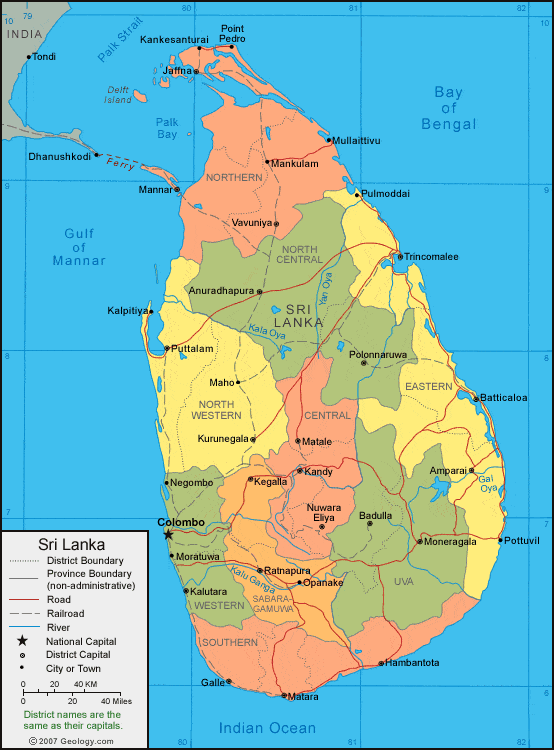
UNHCR steps up emergency response in Sri Lanka as new displacement tops 63,000

COLOMBO, Sri Lanka, April 17 (UNHCR) – UNHCR has stepped up its emergency response in the north of Sri Lanka, where more than 63,000 people have so far been displaced by heavy fighting between the military and the Liberation Tamil Tigers of Eelam (LTTE).

The displaced people fleeing the conflict zone in the north-eastern coastal pocket are being accommodated at several transit and internal displacement sites in the districts of Vavuniya, Jaffna and Mannar.

UNHCR – together with the government and other partners – is responding with massive shelter support and regular distribution of non-food aid items while carrying out protection monitoring. The aid distributions have so far been focused on Vavuniya, where a majority of the internally displaced people (IDPs) are being accommodated.

The agency has so far distributed some 36,000 plastic mats, over 22,000 bed sheets, 32,000 mosquito nets, more than 46,000 articles of clothing, 9,000 kitchen sets and thousands of hygiene kits.

The construction of shelter units by UNHCR's partners at government-designated sites is also progressing as planned. Despite formidable challenges, work on one site in Vavuniya with a capacity of up to 27,000 people is scheduled to be completed by Monday. The agency has asked the government to provide more land, including in the district of Mannar, to help alleviate overcrowding at current sites and to relieve pressure on services in Vavuniya.

"UNHCR welcomes positive steps by the government to address several protection concerns at the sites in Vavuniya," agency spokesman Ron Redmond told reporters in Geneva on Friday. "Short visits by friends and relatives to the sites are now allowed. UNHCR monitored the first round of visits on Monday [April 13]."

He added that telephone, telegramme and mail services are now operating in almost all sites in the district. Meanwhile, Redmond said, "approximately 1,800 IDPs with special needs, particularly the elderly, have been released from the sites, and some 1,345 separated families have so far been reunited, according to the government."

While commending these initiatives, Redmond said UNHCR was also urging the government to accelerate progress on other outstanding protection concerns, including maintaining the civilian character of the IDP sites and the separation of ex-combatants from the civilian population; expediting the screening process in IDP camps; and subsequently allowing freedom of movement. UNHCR has made a number of concrete suggestions on how best to proceed and will continue to work closely with the government to ensure that minimum international standards are met at all sites, he said.

The spokesman said UNHCR believed the ultimate objective of the government should be the safe and voluntary return of the displaced to their villages of origin by removing obstacles to return.

"Chief among them is the challenging task of demining," Redmond said. "We urge the international community to provide the government with technical and financial support to carry out mine clearance in areas of return."

He said UNHCR remains deeply concerned about the plight of the civilian population still trapped inside the conflict zone. "Those fleeing into government-controlled areas provide similar accounts of the dire humanitarian conditions prevalent inside the area," the spokesman noted. "The situation has worsened due to the ongoing heavy rains and winds, with most families living in flooded areas under damaged tarpaulin tents and beneath trees."

The refugee agency also called on the LTTE to immediately allow people caught in the conflict zone to move to areas where they feel safe.

"We also urge both parties to the conflict to adhere to international humanitarian law and ensure that the safety of the innocent civilian population is the top priority," Redmond said."

Sri Lanka political map


Monday, April 13, 2009

Maybe with all those ships out there fighting piracy, the plight of those desperately trying to pass through might get a little more focus

TO BE NOTED: From UN Dispatch:

"
If seven African migrants drown off the coast of Yemen...

...and the media doesn't really pay attention, do they still drown? Of course they do. And there are a whole lot more than seven:

UNHCR said 350 boats and 17,936 people have arrived in Yemen this year after crossing the Gulf of Aden from the Horn of Africa. To date, 116 people have been reported dead and 66 are missing at sea.

This is one of the places in the world where dangerous migration attempts, by refugees so down-and-out where they are that they are willing to risk their lives crossing (even piracy-infested) seas, result in trauma and tragedy for many would-be migrants. Maybe with all those ships out there fighting piracy, the plight of those desperately trying to pass through might get a little more focus."

Thursday, March 19, 2009

led to the return of more than 180,000 Congolese refugees

TO BE NOTED: From UNHCR:

New brick houses dot Sebele village, where Amina lives. © UNHCR/F.Fontanini
UNHCR News Stories

UNHCR shelter programme in South Kivu needs fresh funding

BARAKA, Democratic Republic of the Congo, March 18 (UNHCR) – Pressure to provide new housing in South Kivu is mounting as more and more people return to the relatively peaceful and stable province in the Democratic Republic of the Congo (DRC). But the ability of agency's such as UNHCR to keep pace with demand will depend on the continuing generosity of donors.

"The absence of adequate housing is one of the biggest challenges refugees face upon their return to South Kivu. After years of absence, most find their homes destroyed and have nowhere to stay," Sebastien Apatita, head of the UN refugee agency's office in Baraka, explained during a recent visit.

Most of the refugees returning to South Kivu come from camps across Lake Tanganyika in Tanzania. Last year, the agency funded the construction of some 500 shelters in the province's Uvira and Fizi districts to accommodate some 2,500 of the more than 14,500 returnees it helped back home, mostly via this lakeside port.

Over the next two years, with thousands more refugees expected back, UNHCR hopes to provide the resources to build 1,500 more houses in Uvira and Fizi for the most vulnerable families. But this ambitious target will depend on receiving sufficient funding during a time of economic recession.

"It's a very critical situation," said UNHCR Regional Representative Mohamed Boukry. "Unless we receive contributions, we will have no choice but to reduce this important assistance to thousands of Congolese refugees coming back home from Tanzania," he added.

UNHCR does not construct the new brick houses and shelters in South Kivu, but provides the materials and tools. This includes corrugated iron sheets for roofing, pre-made doors and windows, nails, axes, hammers and the like. The families then build their own houses.

Those who might find it difficult or impossible to build their own homes, including single women, the elderly and the ill, get help from the community. Amina,* a single mother of four, did not know what to make of the shelter kit she received from UNHCR after being ferried across the lake to Baraka.

"I did not how to use it, but then – thanks to help of my brothers and sisters – we succeed in building a house," she proudly told visitors in the village of Sebele, located a few kilometres from Baraka. UNHCR and its partners follow up to make sure that the shelter kits have been used properly.

"It is a miracle to come home with almost nothing and almost immediately to have a house after spending more than 10 years in a tent in a refugee camp," Amina enthused.

The beneficiaries of the programme are identified by members of the community with advice from UNHCR and the government's National Commission for Refugees.

Years of devastating civil war in the DRC formally ended in 2003, with a peace treaty. While human rights abuses continue to be recorded in South Kivu, the province has largely remained peaceful in recent years, unlike neighbouring North Kivu province, where conflict continues to displace people.

The relative improvements in security in South Kivu, Equateur and Katanga provinces has led to the return of more than 180,000 Congolese refugees, mainly from Tanzania, the Republic of Congo and Zambia, since UNHCR repatriation operations started in 2005. This year, UNHCR plans to help home about 35,000 Congolese from Tanzania and Zambia.

* Name changed for protection reasons

By Francesca Fontanini in Baraka, Democratic Republic of the Congo"

Tuesday, February 17, 2009

have sought safety in South Sudan since attacks by the rebel Lord's Resistance Army (LRA) last year has now surpassed the 15,000 mark.

TO BE NOTED: You know it's bad when you're fleeing to Sudan:

"Influx of Congolese refugees into South Sudan continues

This is a summary of what was said by UNHCR spokesperson Ron Redmond – to whom quoted text may be attributed – at the press briefing, on 17 February 2009, at the Palais des Nations in Geneva.

The number of Congolese refugees who have sought safety in South Sudan since attacks by the rebel Lord's Resistance Army (LRA) last year has now surpassed the 15,000 mark.

UNHCR staff late last week accompanied local South Sudanese authorities to Lasu, a sparsely populated village in Central Equatoria State where they found the population of Congolese refugees had swelled from 2,000 to approximately 6,000. Most of them fled from the DRC town of Aba, which has been attacked several times since January, the latest last week. Lasu is 45 km from the border with the Democratic Republic of the Congo (DRC).

There had been fears of a mass influx of refugees from Aba after last week's LRA attack. Refugees interviewed in Lasu by our team confirmed that Aba, with an estimated population of 100,000, was deserted. Earlier reports of large numbers of displaced people moving towards Central Equatoria in South Sudan appear to have been unfounded and it is now believed they have moved to the south based on accounts from the new arrivals in Lasu.

Meanwhile, unconfirmed reports from local residents indicate that LRA are also active in South Sudan, looting property and abducting 21 people in the village of Neuf, 9 km from Lasu.

Our team reports that refugees in Lasu are generally in good health but are in need of emergency assistance. They are living in the open, with only one well to share with the local population and no food. There are a dozens of unaccompanied and separated children, separated from their parents during flight. Aid agencies are coordinating assistance, including the provision of clean water and the emergency construction of latrines to improve the sanitation situation. WFP is sending food from Juba today (Tuesday) and UNHCR began a verification of refugees on Saturday. The relief effort is also being supported by UNICEF (water and sanitation), and MSF-Belgium and MEDAIR (health care).

Meanwhile, in South Sudan's Western Equatoria State, the registered population of Congolese refugees who fled LRA attacks in the Dungu area of north-western DRC in January has reached 9,139. The majority are in Ezo (2,258) near the Sudan's border with the Central African Republic, while others temporarily settled around Yambio in Gangura (2,451), Sakure (910) and Yambio itself (1,813). An additional 1,707 are scattered in seven villages in Yambio and Maridi Counties near Sudan's border with DRC. UN agencies are collaborating with local authorities to provide security and assistance to these populations.

It is critical to move all of these refuges away from border areas both for security reasons and to facilitate distribution of aid. Access to the refugees will soon become impossible when the seasonal rains begin in April and roads become impassable. Work is underway in other camps away from the border. Demarcation of plots at Makpandu camp, north of Yambio, is completed and construction of shelters is ongoing alongside installation of water and latrines. About 400 of the planned 2,000 shelters are completed. The transfer of those who are willing to move began in mid-December, with more than 1,000 relocated to date.

Story date: 17 February 2009
UNHCR Briefing Notes

Friday, February 13, 2009

UNHCR reiterates its call for a full judicial investigation into the reported murders

TO BE NOTED:

Indigenous Colombians flee violence in remote homelands

This is a summary of what was said by UNHCR spokesperson Ron Redmond – to whom quoted text may be attributed – at the press briefing, on 13 February 2009, at the Palais des Nations in Geneva.

UNHCR teams have reached some 200 indigenous people who have arrived in remote villages in south-west Colombia after fleeing violence on their collective territory. On Tuesday, UNHCR called for a full investigation into the reported killings of 17 Awá indigenous people in Telembi Tortugaña, in one of the most isolated and conflict-ridden parts of the country. Two UNHCR teams, along with other UN agencies, arrived yesterday (Thursday) in the villages of Samaniego and Buenavista, where around 200 Awá people have managed to take refuge.

The 114 Awá people who reached the village of Buenavista are in very poor health after making the long and hazardous journey from their territory. There are many landmines in the area. Many of the children show signs of chronic malnutrition. There is very limited infrastructure in Buenavista to receive them. Officials from the state body responsible for assistance for displaced people have arrived in the area and will start coordinating delivery of humanitarian supplies. Humanitarian assistance is in place in Samaniego, where 68 Awá had arrived by Thursday afternoon.

The Awá authorities have requested that all the displaced be moved out of the area as soon as possible and taken to a safer location further south, where the local Awá community is organizing itself to receive them.

Despite the efforts of the authorities to reach the site of the reported massacre, so far no civilian state institutions have managed to enter the area, and the bodies of the 17 presumed dead have not been found. On Wednesday, there were local reports that up to 13 more people had been killed on another collective territory known as El Sandal.

UNHCR reiterates its call for a full judicial investigation into the reported murders. It again asks all parties to respect international humanitarian law and urges the Colombian government to fulfill its obligations to protect civilians.

Located on the Pacific Coast along the border with Ecuador, the department of Nariño is one of the regions of Colombia most affected by the civil conflict. For the past two years, it has had the highest rate of forced displacement in the country. The Awá are the largest indigenous group in that part of Colombia and are suffering from harassment, threats, murders and forced displacement as a result of the presence of armed groups on their territory.

The UNHCR field office in Nariño has been working closely with the Awa people, who like many Colombian indigenous groups have been struggling for years to keep out of the country's internal conflict. With 21,000 people, the Awá are the largest indigenous group in Nariño. They are one of 87 different indigenous groups in Colombia. More than a third of these groups are at risk of extinction, largely as a result of armed conflict and forced displacement.

More than 300,000 people were displaced in Colombia in 2007 and preliminary 2008 figures show a similar trend, bringing the total number of registered internally displaced people to more than 2.8 million.

With 12 offices in Colombia, UNHCR works with the government to help it fulfill this protection duty and with indigenous organizations all over the country.

Story date: 13 February 2009
UNHCR Briefing Notes

Saturday, January 17, 2009

"People live in fear in the forest. Many of them are unable to move, as they fear that the LRA is going to attack them."

Although we see signs of peace in the Congo, the LRA is still on the loose. From the UNHCR:

A young girl injured in an attack on Duru village in Orientale province. © UNHCR/D.Nthengwe

Survivors of Lord's Resistance Army attacks urgently need assistance

DURU, Democratic Republic of the Congo, January 16 (UNHCR) – UNHCR members of a joint United Nations team expressed shock Friday at the physical condition of civilians who have survived repeated attacks in recent months by Ugandan rebels on their village in the northern Congolese province of Orientale.

The UN team flew by helicopter to Duru on Wednesday and reported that this once vibrant village was deserted and overgrown with vegetation after attacks by the Lord's Resistance Army (LRA).

First attacked by the LRA in September, Duru was again targeted by the rebel group earlier this week, leaving four people dead and the village a virtual ghost town. Back in September, the village had some 6,000 inhabitants. Now, less than 1,000 people remain.

Some of the survivors remaining in the vicinity came out of hiding to meet the visitors. They were traumatized and in urgent need of assistance. Many were clad in rags and looked famished and weak after spending nights in the bush without blankets or shelter. "We are hungry and we are poor," said one man. ( GOOD LORD )

The UN refugee agency field officers heard accounts of atrocities carried out by the LRA fighters when they raided Duru on Monday and Tuesday, killing four people, injuring an infant girl and abducting a nine-year-old boy. "I feel sad for my daughter," said the mother of the four-year-old shot in the leg. "She has lost her father," added the woman, who has two other children.

More than 560 ( 560 )civilians have been killed since the LRA began its campaign of violence last September in an area of Orientale province near the Democratic Republic of the Congo's borders with Uganda and South Sudan. This UNHCR estimate includes the victims of reported attacks this week on Duru and Diagbe, further to the north. More than 115,000 people are believed to have been forcibly displaced by the violence and the figure is likely to grow.

The villagers in Duru told UNHCR that the rebels looted and torched their houses, forcing residents to flee into the forest. Some of them made their way towards Dungu, a regional centre some 90 kilometres to the south where UNHCR has a team. Another 2,000 have crossed into Sudan.

The survivors seen in Duru told UNHCR that they did not feel safe, fearing new assaults, rape and abductions. There are no medical personnel in the village and no medicine. The villagers also said it was not safe to drink water from the wells. ( AWFUL )

Aid agencies face enormous logistical challenges reaching communities affected by the LRA attacks. Duru, for example, can only be reached by helicopter with a security escort of UN peace-keepers. Limited physical access, insecurity and impassable roads are hampering both the delivery and the distribution of relief supplies.

Aid is, however, coming to other parts of Dungu district. On Tuesday, a UN convoy carrying 70 tonnes of food and aid items provided by UN humanitarian agencies, including UNHCR, reached Dungu. The trucks spent 10 days on the road after picking up the World Food Programme and UNHCR aid in Goma, the capital of neighbouring North Kivu province.

In the coming days and weeks, the UN refugee agency and its partners hope to reach some 100,000 displaced people in locations such as Duru, Faradje, Doruma, Watsa and Isiro, which have not received any assistance since September. More joint missions are planned to threatened areas this weekend to assess the scale of the displacement and needs of the population.

By David Nthengwe

in Duru, Democratic Republic of the Congo

By Margarida Fawke
In Dungu, Democratic Republic of the Congo"

From Peter Eichstaedt:

"Condemnation, but no action( GREAT )

The United Nations Security Council has once again condemned the atrocities that are currently being committed by the Lord's Resistance Army.

On Friday, the UNSC issued a press statement, read aloud by the Council President Jean-Maurice Ripert of France, which chairs the council this month.

Here it is:

"The members of the Security Council strongly condemned the recent attacks carried out by the Lord's Resistance Army (LRA), which have resulted in over 500 dead and over 400 abducted, as well as the displacement of over 104,000 people. The members of the Council expressed their grave concern at the scale of these atrocities and emphasized that those responsible must be brought to justice.

"The members of the Security Council reiterated the statement of the President of the Security Council 22 December 2008. The members of the Council expressed their deep concern that the Council’s previous calls for the LRA to cease its attacks, and recruitment and use of children, and to release all women, children and non-combatants, have not been heeded.

"The members of the Security Council demanded that the members of the LRA cease all attacks on civilians immediately, and urged them to surrender, assemble, and disarm, as required by the Final Peace Agreement."

Does the world need yet another strongly worded statement? It seems that the LRA, and its leader Joseph Kony, the self-proclaimed prophet and spirit medium, has committed enough atrocities in the past twenty-two years( 22 YEARS ) to warrant more than grumbling from the UN's guiding council.( TOO TRUE )

The French like to present themselves as the bastion of "liberty, fraternity, and equality," but they're disinclined to do much to enforce those values. ( THEY DID A GREAT JOB IN RWANDA )

It's not as though France couldn't.

As I stated last week during a interview on BBC radio's The World Today show, putting an end to Kony and the LRA's endless rampages will take more than letting the Ugandan army wander around the jungles of northeastern Democratic Republic of the Congo.

It will take a well-trained and well-equipped force authorized by the UN and composed of international troops with the specific goal of capturing or killing Kony.

This is not without precedent. It's been done before in other African countries, including eastern DRC when the inept horde of UN peacekeepers there, which number an astounding 17,000 soldiers, were unable to keep the peace. The UN authorized a limited European Union force to enter the country, settle the situation, then pull out. It worked.

Such a force is sitting very close by. It's called European Force, or Eufor, and is about 5,000 EU troops, mostly French, who are in eastern Chad on the border with Sudan.( THEY'VE DONE A GREAT JOB HELPING OUT IN SUDAN )

They're positioned as a deterrent to any further invasions by the Sudan-backed rebels who attacked the Chad capital of Ndjamena last February. And, some speculate that the force may be there to help protect Chad's oil fields( YES. THEY'RE NOT THERE TO STOP GENOCIDE. BETWEEN RWANDA AND SUDAN, FRANCE DOESN'T HAVE A RECORD OF CARING ABOUT GENOCIDE. ), which are pumping out crude that is piped to the west coast of Africa via Cameroon.

But, there's not much for them do these days. Why can't the UN send them in for one-month mission? It's clear the Ugandan army needs help, as does South Sudan and the Central African Republic, where most say the LRA is headed.

The Sudan People Liberation Army (SPLA), which is South Sudan's army, has found dozens of body of people believed to be killed by the Ugandan Lord Resistance Army (LRA) after being abducted.

And, the BBC reports that rebels attacked a village in the DRC this week, killing four people, including a girl of four and abducting a boy of nine. A bishop in South Sudan says two men had their hands and legs chopped off and were beaten to death, as boys watched.

The BBC noted that the LRA now operates in at least four countries in the region, and that the CAR has sent troops to its border with DR Congo in an effort to push back the rebels.

The survivors of the LRA attacks told a UN agency that the rebels looted and torched their houses, forcing them to flee into the forest.

"What we saw was shocking," David Nthengwe, UNHCR spokesman for eastern DR Congo, told the BBC. "People live in fear in the forest. Many of them are unable to move, as they fear that the LRA is going to attack them."

Clearly the Ugandan army is not making much progress. Yet, the Eufor sits there in Chadian desert, just an hour away by air.( GOOD LUCK WAITING FOR THESE HUMANITARIANS )

Friday, January 16, 2009

"If this lasts another six months or a year, they'll start looking for better equipment, and we risk a Mai Mai phenomenon,"

From Stop The War In North Kivu:

"
OCHA humanitarian info on North Kivu In From the field on January 16, 2009 at 1:22 pm

I have just received a report from the Office for the Coordination of Humanitarian Affairs (OCHA) on the information meeting they hold this morning in Goma.

For anyone interested, all their information can be found here."

Let's check in on the Congo. From Reuters:


1 of 1Full Size

By Joe Bavier

DUNGU, Congo (Reuters) - Congolese villagers are forming self-defence groups to protect homes and families from Ugandan LRA rebels.( CAN YOU IMAGINE HAVING TO WORRY ABOUT THE LRA SHOWING UP IN YOUR NEIGHBORHOOD? )

LRA rebels have killed 567 people( 567 ) and displaced 115,000 in northeast Democratic Republic of Congo's Oriental province since September, U.N. refugee agency UNHCR says. Attacks surged after Ugandan forces spearheaded an anti-LRA offensive in December.

In silence broken only by the buzz of insects and the crunch of earth under their plastic sandals, eight men file through the cool night, hunting rifles in hand, scanning the darkness for those who killed their neighbours and burned their homes.

Elsewhere in the areas surrounding the town of Dungu, dozens more like them stalk the forest, mostly farmers and internal refugees armed with locally made guns or bows and arrows.

"This is very necessary for me, first and foremost, for the town, and for the people who are suffering in the bush, who have done nothing and who are dying," said Pascal Kalemba, the bottom half of his boyish face hidden by an airline sleeping mask.

Lord's Resistance Army rebel fighters attacked Dungu in September, as efforts to negotiate a peace deal to end their two-decade bush war against the Ugandan government broke down.

"They just walked straight into town. They started to burn houses and kill people," Kalemba said.

At the time, not a single Congolese soldier was deployed in the town of 57,000 inhabitants, located near Garamba National Park, the LRA's stronghold since it fled to Congo in 2005.

On December 14, a Ugandan-led multinational force, including Congolese and South Sudanese soldiers, launched an offensive aiming to capture the rebels' reclusive leader Joseph Kony.

Instead, the operation splintered the rebels into smaller groups that are now attacking villages, slaughtering civilians, raping women and kidnapping children for use as sex slaves and child soldiers. The U.N. death toll may be conservative.( UNREAL )

New York-based Human Rights Watch says three days of raids alone, starting on Christmas Day, killed at least 600 people. Most were beaten to death with clubs or hacked with machetes.

ARMY "RUNS AWAY"

The head of Dungu's self-defence force, former chief Etienne Dalafata, said despite the deployment of over 3,500 government troops to the area, villages must defend themselves.

"We've already gone on operations with the army, but when we go into the bush they get scared and run away. They are city soldiers," he said.

Dalafata said his force enjoys the town's support and that militias have sprung up across Congo's northern borderlands.

All of this worries Felicien Balani, president of Dungu's local civil society association.

"Our army must make them unnecessary. They find their justification in its ineffectiveness. If this lasts another six months or a year, they'll start looking for better equipment, and we risk a Mai Mai phenomenon," he said.

Mai Mai ethnic militias sprang up across eastern Congo in the 1990s during invasions by Rwanda and proxy rebel groups.

Like Dalafata's men, the Mai Mai initially said they took up arms to protect their communities. But they became notorious for bloody massacres of civilians, rape, and ritual cannibalism.( PLEASE NOT AGAIN )

Since September, the Dungu militia has taken just three LRA prisoners from a number of clashes with the Ugandan rebels.

All, they said, were turned over to the army.

But this week a self-defence patrol in Nzope village on the eastern edge of Garamba caught two LRA suspects. It mutilated and killed one before handing the other over to the authorities.

In Dungu, Kalemba said he feels no hatred for these latest invaders. He simply wants them to go home.

"Why are they persecuting us? Why?" he said.

"If it comes to a battle, we will die together."

I truly believe that indifference allows this to happen. Shame on us! Including me.

Wednesday, January 14, 2009

"Another 408 people have been kidnapped by the LRA since the outbreak of violence in September last year"

From the UNHCR:

"UNHCR concerned about displaced Congolese and continuing LRA attacks


DUNGU, Democratic Republic of the Congo, January 13 (UNHCR) – The UN refugee agency on Tuesday expressed mounting concern about the plight of more than 100,000 Congolese civilians force to flee their homes to escape attacks by a rebel Ugandan force in the northern province of Orientale.

"We are increasingly concerned about the humanitarian situation and continuing attacks by ... the Lord's Resistance Army (LRA)," said UNHCR spokesman Ron Redmond, adding that the death toll in the Democratic Republic of the Congo (DRC) province bordering Uganda and South Sudan is now estimated at 537 people.

"Another 408 people have been kidnapped by the LRA since the outbreak of violence in September last year, including victims abducted in attacks over the past four days," said the spokesman, citing figures gathered by UNHCR staff in the town of Dungu.

Rough estimates of the number of forcibly displaced in this part of the DRC have now surpassed 104,000. Many of these internally displaced people (IDP) are still hiding in the bush, particularly in areas around the town of Faradje, which was heavily hit during the Christmas period. Out of an estimated 37,000 people who escaped from Faradje, some 16,000 have been registered so far in Tadu and surrounding villages south of Faradje. More than 10,000 of them are children.

In the Dungu area, which was attacked by the LRA last September, the local Red Cross has just completed the registration of displaced in the town and 27 nearby villages. Out of 54,777 IDPs registered, more than 27,000 are women and nearly 15,000 are children under the age of five.

The Congolese, Sudanese and Ugandan armed forces began a joint military operation against the LRA in mid-December.

The latest series of LRA attacks targeted villages and settlements south-west of Faradje. The village of Tomati, 57 kilometres south-west of Faradje, was reduced to ashes on Saturday. LRA attacks Friday and Sunday on Sambia, a mining village some 75 km from Faradje, left at least seven people dead.

"Throughout the region, sightings of LRA rebels are causing panic and new displacement. Our staff in Dungu reported this morning that there are considerable, ongoing population movements in the direction of Faradje and areas south of Dungu. In addition, 2,000 people have reportedly arrived in Ezo in neighbouring South Sudan," the spokesman said.

The UN refugee agency is extremely concerned about civilians who are caught in a conflict zone near the borders of the DRC, the Central African Republic and Sudan. According to local health authorities, the population in the Doruma area is about 56,000 people. In the Faradje district, also the scene of frequent clashes over the past few weeks, there are some 350,000 residents.

The displaced population is in dire need of food, shelter, medicine, clothes and other aid items. The area, which by itself poses immense logistical challenges due to the lack of decent roads, remains highly volatile. Safe humanitarian access remains a key challenge for UNHCR and other agencies as they strive to bring assistance.

By Margarida Fawke
In Dungu, Democratic Republic of the Congo"

Add this to the previous post, and you have some idea how bad things are getting in an already dismal situation.

Monday, January 12, 2009

"I don't think that we'll be able to help everybody,"

From the UNHCR:

Miljo Miljic and his family left their hometown of Tuzla with almost nothing. © UNHCR/M.Jankovic
UNHCR News Stories

Protracted Refugee Situation: The continuing struggle of Europe's forgotten refugees ( FORGOTTEN PEOPLE. THE RESULT OF ANOTHER ETHNIC CONFLICT. THEY WILL EVENTUALLY HAVE TO BECOME SERBIANS. )

RIPANJ, Serbia, January 12 (UNHCR) – Miljo Miljic and his family live in a spartan apartment in the Serbian village of Ripanj. There are no family photos, no paintings, no book collection, no heirlooms – no possessions recalling their former lives in their hometown of Tuzla in Bosnia and Herzegovina.

"We didn't take anything with us because we didn't have time. We had to run for our lives. The only thing that comes to mind in such a situation is to save your children and your own life," says Miljo. "You don't think about the photographs, you don't think about personal documents, clothes, whatever."

Miljo, his wife Milica, son Milutin and daughter Stanislava are refugees, forced to flee Tuzla in 1992. All they have as proof of their past and their identity is a refugee card. Their belongings were left behind as Miljo and his wife, clutching their then infant children, rushed to escape.

More than half-a-million civilians fled to Serbia from Bosnia and Herzegovina and from Croatia in the 1990s conflicts. Considerable success has been achieved on local integration, with over 200,000 former refugees now holding Serbian citizenship. But some 96,000 refugees remain – the remnants of Europe's largest protracted refugee situation. Many live in desperate conditions and face a bleak future.

The experience of the Miljic family is quite common. On arrival in Serbia, they were accommodated with 350 other refugees in the Suplja Stena Collective Centre just south of the Serbian capital, Belgrade. It was effectively a refugee camp where they slept in a single room with 27 other people and shared the bathroom, lavatory and kitchen.

Milica says this was the worst period of her life. "It was horrible when we arrived at the collective centre. I thought I'd kill myself, but then we had to look after these two small children," she recalls. Things got a little bit better when the family were given their own room.

They stayed in Suplja Stena until 2003, when the collective centre was privatized and sold. Although the centre was only meant to be a temporary solution for Serbia's refugees, it was still a shock for the Miljic's to be cast out into the street and forced to fend for themselves.

In nearby Ripanj, they found someone willing to rent two rooms and a bathroom. They have been there ever since, but life is still a struggle. "We live from what we earn day-by-day; we never know when the next job will come. It's very difficult to take care of two children and to put them through school," says Miljo. Life is easier in the summer when they find work cleaning holiday homes and gardening, but in the winter it is really difficult to make ends meet.

Miljo and Milica thought about going back to Tuzla, but their old home had been trashed and looted and they did not feel safe. They considered selling the property, but they would never make enough from the sale to build a new place. What's more, their children had grown used to Serbia. So repatriation is not an option; nor is resettlement.

That leaves local integration. But taking Serbian nationality will not guarantee them employment or a new house, while the cash-strapped government cannot afford to give too much under its social welfare programmes. So they are holding onto their refugee cards, which entitle them to basic medical care and occasional humanitarian assistance from UNHCR and its partners.

But Miljo and Milica are aware that one day their refugee status will be revoked because they are no longer deemed to be in danger and the root causes of the Balkan refugee problem have almost ceased to exist. That won't end the problem of finding employment and paying for food, rent and medical bills at a time when they will be near retirement age.

At least they have managed, despite the difficulties, to provide their children with a decent education. This has been their investment in the future. Milutin is still in high school, but Stanislava, who has applied for Serbian citizenship, is doing an internship in a Belgrade hospital after finishing nursing school.

The parents are pinning their hopes on Stanislava finding a decent job, even though unemployment is high in Serbia and the economic outlook is grim. "We only want for our children to complete their schooling, find employment and be better off than we are. I don't think about us anymore," says Miljo.

UNHCR helps where it can, but the refugee agency also has limited resources and the situation is unlikely to improve during the current recession. "I don't think that we'll be able to help everybody," says Lennart Kotsalainen, UNHCR's representative in Serbia, while adding that the government and the international community should at least help the most vulnerable.

The UN refugee agency has recently put renewed stress on finding solutions to protracted refugee situations, which account for some 6 million people worldwide who have been in exile for at least five years – many of them for decades. High Commissioner for Refugees António Guterres said last month that political will was a main precondition for finding durable solutions.

He said each protracted situation was unique and solutions must be comprehensive, using a combination of approaches that can include repatriation, local integration, and resettlement to a third country. For Serbians such as the Milic family, a real and lasting solution still seems remote.

By Andrej Mahecic
In Ripanj, Serbia"