Showing posts with label Dimon. Show all posts

Friday, January 30, 2009

It's the economic policy equivalent of curing a drug addict by giving the addict a prescription for the drug of choice.

From Peston on BBC:

"
Bankers and responsibility
  • Robert Peston
  • 30 Jan 09, 10:02 AM

A heavy burden is on the shoulders of Jamie Dimon - as probably the only American banker of seniority whose reputation has not been smashed to smithereens by the crash of '08.

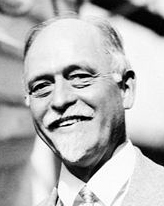
Jamie DimonUnlike so many of his battered peers, the chairman of JP Morgan has had the courage (or chutzpah?) to show his mug in Davos. And, by all accounts, he's been saying worryingly sensible things in those private bankers' meetings that are being held to provide finance ministers and government heads with the financial industry's view on how to save the global economy.

I am told that at the World Economic Forum's so-called governors' meeting yesterday - in which the banks, brokers, private equity firms and hedge funds tried to draw up a common agenda for reform - he warned against placing too much faith in the possible creation of a central clearing system for financial transactions between banks.

The proponents of such a system believe that it would restore confidence to inter-bank lending - which has been sadly lacking for most of the past 18 months and has been a massive contributor to the implosion of the global machine for creating credit.

The reason it could restore confidence is that it would involve the establishment of what's known as a central counterparty, which would in effect insure banks against loss if another bank was unable to honour commitments.

If there were a central counterparty, fnancial institutions that lend to each other would have less reason to fear that - in extremis - they could not get their money back.

Which would appeal to most bankers (as if you needed telling), especially in this era of high anxiety.

Except that Dimon posed the question whether it would really be sensible to reduce the requirement for bankers to think long and hard about who they're lending to and why.

After all, the mess we're in stems from bankers placing too much faith in computer models and the opinion of third-party credit-rating agencies when deciding where to make their loans and investments.

The debt bubble that precipitated the current debt drought and global recession was caused in large part by bankers abdicating their very basic responsibility to know their borrowers properly and to assess whether these borrowers had the remotest chance of being able to repay their debts.

So if we're going to try to prevent bankers messing up our economy again, do we want them to take greater responsibility for their actions, or less?

Surely in the new world economic order which will be built - though Davos has been disappointingly short of coherent visions of what will be constructed from the rubble - we need bankers to know their customers and to propely evaluate the risks of lending.

But the more that they're insured against losses on lending, the less incentive they will have to lend responsibly.

Which brings us to the Great Paradox (capital "G", capital "P") of our government's measures to restore the flow of credit to real businesses and households.

All of these schemes involve taxpayers' insuring away some of the risks for banks and financial institutions of lending and investing.

In respect of new lending, this is the effect of the Bank of England's new asset purchase scheme, the proposed state guarantee for asset-backed securities, and assorted guarantees for bank lending to businesses.

Taxpayers are even taking on the liability for banks' dodgy old loans and investments, through the establishment of the new public sector insurer of banks' toxic debts, which should probably be christened "The Imprudential".

In other words it is explicit government policy to reduce bankers' responsibility for their actions, their lending, even more than was already the pernicious case.

We're in this mess because too much was lent by too many in a wholly irresponsible way.

And ministers are now encouraging more of this lending by further reducing the responsibility of the lenders for their actions.

It's the economic policy equivalent of curing a drug addict by giving the addict a prescription for the drug of choice.

It might work. Or it might just make our economy's dependence on unsustainably high levels of debt even worse - and thus cause us even more pain when we're ultimately weaned off the addiction.

UPDATE: Here are some thoughts of mine from today's The World at One on how banks could become "good" again.

Me:

173.
At 10:09pm on 30 Jan 2009, DonthelibertDem wrote:

"We're in this mess because too much was lent by too many in a wholly irresponsible way"

Then why are we leaving them in charge? We should nationalize them and chuck them out.

Wednesday, January 21, 2009

"but it seems to be the best of many bad solutions"

Andrew Ross Sorkin in the NY Times:

"Dealbook:Obama’s Bailout Challenge

Another week, another bailout.

Governments in several countries are suddenly scrambling to deliver a second round of financial support to their teetering banking systems, after a first wave handed out at the height of the financial crisis failed miserably in its mission of getting credit flowing again( TRUE ).

Britain on Monday set the stage for a full takeover of its banking system. And now, Barack Obama is trying to figure out how to shore up this nation’s banking industry as its crisis snowballs.

Mr. Obama is going to have one heck of a first day on the job. Already, his aides have a bevy of ideas to sift through, ranging from having government buy banks’ troubled assets, to creating a “bad bank” to soak them up.( YIKES )

And it doesn’t stop there. Others say he should follow the model of Sweden and flat-out nationalize the American banking system( NOT THE ENTIRE SYSTEM. COME ON. ). Or he should inject more money into the banks and force them to lend it( THEY'RE SO GOOD AT IT. ). Another view says he should take a page from Henry M. Paulson Jr., the Treasury secretary, and try to “ring fence” the entire system with the equivalent of government insurance for banks.

Lawrence H. Summers, Mr. Obama’s chief economic adviser, hinted Sunday that he’d been developing a new plan, and seemed to suggest he was leaning toward finding a way to press banks to lend more money. “The focus isn’t going to be on the needs of banks,” he said. “It’s going to be on the needs of the economy for credit.”

Prime Minister Gordon Brown made similar noises on Monday, when he outlined a new £100 billion plan in which the government wrests a promise from banks to raise lending in exchange for having the taxpayer limit the banks’ losses from troubled assets.

“That will be legally binding,” Mr. Brown declared.

But let’s stop for a moment. This has been a popular — and populist — view that has emerged over recent months: those greedy bankers are hoarding our tax dollars instead of lending the money the way they were supposed to do. And it needs to stop.

This view, however, may be misplaced. As Citigroup and Bank of America have sadly demonstrated, if they had lent the money they were given last fall as part of the Treasury Department’s $700 billion bailout plan, they would be in even more trouble than they are now. And we, the taxpayers, would be even worse off.

Why? Because the government bought preferred shares with its first round of capital injections, banks, whose capital cushions have already thinned drastically, must keep the capital on their books if they are eventually to repay the loans.( THAT'S TRUE )

Yet if the banks directly lent the money being pumped into them, many could go bankrupt, requiring the government to step in again( YEP ). At the end of the day, as Mr. Obama and others have acknowledged, the nation must have a viable financial system.

Jamie Dimon, the chief executive of JPMorgan Chase, whose bank received TARP funds, took the issue seriously last week on a conference call with investors. “There have been a lot of questions out there on whether banks are making loans,” he said. “We are making loans all the time, but we are trying to follow the intent and spirit of TARP, which is to help the economy of the United States recover and make sure we’re financing people.”

Mr. Dimon, however, represents just one bank, and it may be the only bulge bracket bank in the nation that is healthy.

Which leads us to the much-heralded idea of following Sweden’s model of nationalizing our banking system. This approach worked quite well for the Swedes in 1992, when their banking industry was teetering much the way ours is now after a real estate bubble and lax lending led to a realization that the banking system was insolvent.

The Swedes spent $11.7 billion at the time, taking huge stakes in their banks. It took years, but eventually, they sold these stakes successfully. And while the gamble at the time was huge — the bill was about 4 percent of its gross domestic product — some observers say Sweden has since been whole. So intriguing was the idea, the Swedes sent a delegation to Washington in September to talk about their experience.

But the Swedish model, as attractive as it appears at first blush, would be a challenge to pull off here in the United States. Aside from the fact that America isn’t about widespread nationalization( JUST WIDESPREAD AND FOOLISH BAILOUTS ), the biggest problem with the Swedish model is that when it is applied here, it costs more — much more.( DID YOU HEAR THAT IT WORKED? )

America has already spent $1.5 trillion trying to solve our problem. To pull off a response similar to Sweden’s, we’d probably have to double, if not triple, that number. The chances we’d recover the money are even slimmer, given how much time it will take a larger economy like ours to come back from such a severe recession.( AND BUYING TOXIC ASSETS? )

More important, the values of our financial garbage — subprime mortgages, C.D.O.’s and derivatives — may eventually prove ethereal. Sweden’s banks had at least backed real tangible assets.

With options narrowing, Mr. Obama is also being pressed to consider the Paulson “ring fence” plan, adopted by Mr. Brown of Britain on Monday. And while it may work there, it would be difficult to make it work here in a systemwide way. So far, it’s been used in an ad hoc manner, customized for each bank.

So we’ve been left with a plan pushed by Sheila C. Bair, the chairwoman of the Federal Deposit Insurance Corporation, that calls for the government to buy up toxic assets from the banks, similar to the original plan for the TARP money.

But that plan was abandoned for all the right reasons: it would mean government would either have to buy the assets at inflated prices from banks — and therefore lose even more money on them — or risk forcing such massive write-downs that the banks would be insolvent all over again.( THAT'S IT )

I know what you’re saying: it’s easy to to knock down others’ ideas — what’s your idea?

Well, how about just following the current system of injecting money into banks to recapitalize them when they need it and “ring-fencing” bad assets when we can? It may not be popular, and it may take a while to work, but it’s one of the few viable alternatives. Perhaps we’ll have to pony up even more money — and maybe we should take an even bigger slice of equity — but it seems to be the best of many bad solutions."

Not quite.

Wednesday, October 15, 2008

Who Was Counting On A Bailout?

Via Chump Changer, the following:

"Read the story carefully and note which bankers seem to love the plan most: JP Morgan's Jamie Dimon and Bank of America's Ken Lewis. The guy who seem to have been counting on a bailout since long before the government suspected it would be giving it to them. "

It's good to put names to the list of people who were counting on a bailout. I, of course, belief that this belief was widespread, and that the government knew that it was implicitly committed to a bailout.

Still, I take the post as a little positive proof of this.