(updated below - Update II)
While fiercely loyal establishment spokespeople such as The Washington Post's Ruth Marcus continue to insist that prosecutions are only appropriate for common criminals ("someone breaking into your house") but not our glorious political leaders when they break the law (by, say, systematically torturing people), the Bush administration has righteously decided that torture is such a grotesque and intolerable crime that political leaders who order it simply must be punished in American courts to the fullest extent of the law . . . . if they're from Liberia:
MIAMI (AP) -- U.S. prosecutors want a Miami judge to sentence the son of former Liberian President Charles Taylor to 147 years in prison for torturing people when he was chief of a brutal paramilitary unit during his father's reign.
Charles McArthur Emmanuel, also known as Charles "Chuckie" Taylor Jr. is scheduled to be sentenced Jan. 9 by U.S. District Judge Cecilia M. Altonaga. His conviction was the first use of a 1994 law allowing prosecution in the U.S. for acts of torture committed overseas.
Even in the U.S., it's hard to believe that federal prosecutors who work for the Bush DOJ were able to convey the following words with a straight face:
A recent Justice Department court filing describes torture - which the U.S. has been accused of in the war on terror - as a "flagrant and pernicious abuse of power and authority" that warrants severe punishment of Taylor.
"It undermines respect for and trust in authority, government and a rule of law," wrote Assistant U.S. Attorney Caroline Heck Miller in last week's filing. "The gravity of the offense of torture is beyond dispute."
The AP article which reported on these proceedings, by Curt Anderson, is almost as illustrative an exhibit of how our country operates as the trial itself is. Marvel at this passage:
Emmanuel had argued in previous court papers that he was being unfairly prosecuted for acts similar to those committed by U.S. personnel in Iraq and elsewhere.
The administration of President George W. Bush has been criticized by some around the world and in Congress for using aggressive interrogation techniques. Justice Department memos were seen as providing legal underpinnings for some of the techniques.
However, administration officials have blamed abuses at places such as Iraq's Abu Ghraib prison on a small number of soldiers or agents and insisted there has been no systematic mistreatment of detainees in Iraq, Afghanistan or the prison camp at Guantanamo Bay, Cuba.
Acts which, when ordered by Liberians, are "criminal torture" meriting life imprisonment magically become, when ordered by Americans, mere "aggressive interrogation techniques." And while not all of the "techniques" used by the Liberians were authorized by Bush officials ("hot clothes irons" and "biting ants shoveled onto people's bodies"), many of the authorized American techniques are classic torture tactics and resulted in the deaths of many detainees and the total insanity of many more.
Worse, AP -- with canine-like subservience -- mindlessly recites the Bush administration's excuses (Abu Ghraib was due to low-level rogue bad apples and "there has been no systematic mistreatment of detainees") without even mentioning the ample evidence proving how false those government claims are. That's standard American "journalism" for you: "Our Government says X, and even if it's false and even if it's intensely disputed, we'll just leave it at that." Doing anything more -- as NBC News' David Gregory pointed out -- is "not their role."
There's something beautifully illustrative about this torture prosecution. Apparently, it's not just appropriate, but necessary and urgent, for American courts to be used to prosecute the leaders of small African nations who order torture exclusively in their own land. Doing that is necessary to uphold what the Bush DOJ calls "respect for and trust in authority, government and a rule of law."
But -- say Bush loyalists and our pliant political class in unison -- the one thing that we cannot tolerate is for American courts to be used to impose accountability on American leaders who authorized illegal torture. And, of course, the only thing worse than doing that would be to subject them to prosecution by another country or, creepier still, an international tribunal. That would be an intolerable infringement of our sovereignty, we say as we prosecute the son of Liberia's President for acts he undertook exclusively inside Liberia.
In Liberia, the Taylor regime, for many years, was genuinely threatened by numerous rebels and revolutionary factions -- ones supported by other countries -- seeking to overthrow the Liberian government. The torture which Taylor, Jr. was accused of ordering occurred during a brutal civil war.
Liberia undoubtedly has its own Jack Goldsmiths and Stuart Taylors who insist that the torture which the Taylors ordered -- though perhaps "crossing a line or two" -- was done for the Good and Safety of the Liberian People and to defend the Government against these foreign and domestic threats. The Taylors undoubtedly have their loyalists who echo our own Cass Sunsteins and Ruth Marcuses, urging that it would be so much better for the country if everyone just let bygones be bygones and looked to the pretty future and the challenges Liberians face and not get distracted by litigating the unpleasant and partisan fights of the past.
But, like most of the alleged principles to which our political elite professes allegiance, America and its leaders are entitled to a different set of standards and better treatment( THERE'S ONLY ONE ). Thus, Charles Taylor belongs at the Hague, being prosecuted as a war criminal. His son belongs in an American criminal court being prosecuted by the Bush DOJ for torture. And George Bush and Dick Cheney belong on their "ranches," enjoying full-scale immunity for the crimes they committed and a rich and comfortable retirement, treated as the esteemed and well-intentioned (even if sometimes misguided) dignitaries that they are. Virtually the only people in the world who fail to recognize this self-evident, ludicrous and disgusting hypocrisy are America's political and media elites and those who are misled by them.( WELL SAID )
UPDATE: Michael Mukasey, who refuses even to say whether waterboarding is torture and has repeatedly acted to protect Bush officials from prosecution, appeared two weeks ago at the U.S. Holocaust Memorial Museum and actually spoke these words (h/t sysprog):
It serves as a daily reminder to the leaders of the free world, and to the many visitors to our nation’s capital, that law without conscience is no guarantee of freedom; that even the seemingly most advanced of nations can be led down the path of evil; and that we must confront horror with action and vigilance, not lethargy and cowardice. . . .
Just as the Museum has focused on present-day mass killings such as those in Rwanda or Darfur, we at the Department are doing what we can to ensure that those responsible for such atrocities are brought to justice. We have provided support to the International Criminal Tribunals for Rwanda and the former Yugoslavia; to the Special Court for Sierra Leone, and to the Iraqi High Tribunal. And where we can, we are bringing our own cases. Both the Office of Special Investigations and the Domestic Security Section – parts of the Department’s Criminal Division – are pursuing cases against perpetrators of those international atrocities who find their way into our country.
The most prominent example of those efforts is the recent conviction of Chuckie Taylor Jr., the son of the former President of Liberia, who was convicted of torturing his countrymen. His conviction – the first in history under our criminal anti-torture statute – provides a measure of justice to those who were victimized by his reprehensible acts, and it sends a powerful message to human rights violators around the world that, when we can, we will hold them accountable for their crimes.
Mukasey actually had the audacity to approvingly quote from Robert Jackson's addresses to the Nuremberg Trials, at which this central proposition of Western justice -- now explicitly renounced by America's political and media establishment -- was ostensibly established:
The common sense of mankind demands that law shall not stop with the punishment of petty crimes by little people. It must also reach men who possess themselves of great power . . . .
Unsurprisingly, Mukasey neglected to mention that Jackson, in his opening remarks to the tribunal, called "aggressive war" the "greatest menace of our times," and in his summation, Jackson observed that "the plot for aggressive wars" is "the central crime in this pattern of crimes, the kingpin which holds them all together."
The glaring contradictions in Mukasey's words are too self-evident to warrant explanation. Ponder, instead, the opinion which Mukasey -- by uttering such brazen statements in public and knowing he can do with impunity -- is implicitly expressing about how broken is our establishment media and how distorted is our political discourse.( IT'S A DISGRACE )
UPDATE II: Alberto Gonzales gave a painfully self-pitying interview to The Wall St. Journal this week and announced that the real victims aren't the detainees who were tortured in our secret and not-so-secret prison camps, nor the millions of dead or displaced Iraqis, nor the Americans whose communications were illegally spied upon without warrants. No, the Real Victims of the last eight years are Bush officials like him who face criticism for what they did:
I am portrayed as the one who is evil in formulating policies that people disagree with. I consider myself a casualty, one of the many casualties of the war on terror.
Here we find the predominant -- virtually unanimous -- Beltway mentality: when high American officials break our laws, it's nothing more than "formulating policies that people disagree with." Gonzales cried out: "What is it that I did that is so fundamentally wrong, that deserves this kind of response to my service?" The answers are obvious to anyone paying even minimal attention. Steve Benen points out just some of them here."
'Tis the night before Christmas and the season of goodwill. The mood is forgiving. Our faces warm with mulled wine, our tummies full, we're meant to slump in the armchair, look back on the year just gone and count our blessings - woozily agreeing to put our troubles behind us.
As in families, so in the realm of public and international affairs. And this December that feels especially true. The "war on terror" that dominated much of the decade seems to be heading towards a kind of conclusion. George Bush will leave office in a matter of weeks and British troops will leave Iraq a few months later. The first, defining phase of the conflict that began on 9/11 - the war of Bush, Tony Blair( AND I LIKE BLAIR ) and Osama bin Laden - is about to slip from the present to the past tense. Bush and Blair will be gone, with only Bin Laden still in post. The urge to move on is palpable( IT'S EFFECTING THIS FINANCIAL CRISIS ).
You can sense it in the valedictory interviews Bush and Dick Cheney are conducting on their way out. They're looking to the verdict of history now, Cheney telling the Washington Times last week: "I myself am personally persuaded that this president and this administration will look very good 20 or 30 years down the road.( DELUSIONAL )" The once raging arguments of the current era are about to fade, the lead US protagonists heading off to their respective ranches in the west, the rights and wrongs of their decisions in office to be weighed not in the hot arena of politics, but in the cool seminar rooms of the academy.
Not so fast.
Yes, the new year would get off to a more soothing start if we could all agree to draw a line and move on. But it would be wrong( I AGREE ). First, because we cannot hope to avoid repeating the errors of the last eight years unless they are subject to a full accounting( TRUE ). (It is for that reason Britain needs its own full, unconstrained inquiry into the Iraq war.) Second, because a crucial principle, one that goes to the very heart of the American creed, is at stake. And third, because this is not solely about the judgment of history. It may be about the judgment of the courts - specifically those charged with punishing war crimes( I AGREE ).
Less than a fortnight ago, in the news graveyard of a Friday afternoon, the armed services committee of the US Senate released a bipartisan report - with none other than John McCain as its co-author - into the American use of torture against those held in the war on terror. It dismissed entirely the notion that the horrors of Abu Ghraib could be put down to "a few bad apples". Instead it laid bare, in forensic detail, the trail of memos and instructions that led directly to the then defence secretary, Donald Rumsfeld( DISASTER ).
The report was the fruit of 18 months of work, involving some 70 interviews. Most of it is classified, but even the 29-page published summary makes horrifying reading. It shows how the most senior figures in the Bush administration discussed, and sought legal fig leaves for, practices that plainly amounted to torture( THAT ARE TORTURE ). They were techniques devised in a training programme known as Survival, Evasion, Resistance and Escape or SERE, that aimed to teach elite American soldiers how to endure torture should they fall into the hands of pitiless enemies. The SERE techniques were partly modelled on the brutal methods used by the Chinese against US prisoners during the Korean war. Yet Rumsfeld ruled that these same techniques should be "reverse engineered", so that Americans would learn not how to endure them - but how to inflict them. Which they then did, at Guantánamo, Abu Ghraib and beyond.
The Senate report cites the memorandums requesting permission to use "stress positions, exploitation of detainee fears (such as fear of dogs), removal of clothing, hooding, deprivation of light and sound, and the so-called wet towel treatment or the waterboard". We read of Mohamed al Kahtani - against whom all charges were dropped earlier this year - who was "deprived of adequate sleep for weeks on end, stripped naked, subjected to loud music, and made to wear a leash and perform dog tricks". Approval for this kind of torture, hidden under the euphemism of "enhanced interrogation", was sought from and granted at the highest level( UNREAL. THE US ).
And that doesn't mean Rumsfeld. The report's first conclusion is that, on "7 February 2002, President George W Bush made a written determination that Common Article 3 of the Geneva conventions, which would have afforded minimum standards for humane treatment, did not apply to al-Qaida or Taliban detainees". The result, it says, is that Bush "opened the door" to the use of a raft of techniques that the US had once branded barbaric and beyond the realm of human decency( I AGREE ).
For this Bush should surely be held to account( I AGREE ). And yet there is no sign that he will, and precious little agitation that he should. A still smiling Cheney denies the Bush administration did anything wrong. Note this breathtaking exchange with Fox News at the weekend. He was asked: "If the president during war decides to do something to protect the country, is it legal?" Cheney's answer: "General proposition, I'd say yes."
It takes a few seconds for the full horror of that remark to sink in. And then you remember where you last heard something like it. It was the now immortalised interview between David Frost and Richard Nixon. The disgraced ex-president was asked whether there were certain situations where the president can do something illegal, if he deems it in the national interest. Nixon's reply: "Well, when the president does it, that means that it is not illegal( NIXON WAS LINCOLN COMPARED TO BUSH AND CHENEY )."
It is no coincidence that Cheney began his career in the Nixon White House. He has the same Nixonian disregard for the US constitution, the same belief that executive power is absolute and unlimited - that those who wield it are above the law, domestic and international. It is the logic of dictatorship.
But Nixon was forced from office, his vision of an unrestrained presidency rejected. If Bush and Cheney are allowed to retire quietly, America will have failed to reassert that bedrock principle of the republic: the rule of law( I AGREE ).
This is why there must be a reckoning. Bush will do all he can to avoid it: and it is wholly possible that one of his last acts as president will be to cover himself, his vice-president and all his henchmen with a blanket pardon. Even if that does not happen, Barack Obama is unlikely to want to spend precious capital pursuing his predecessor for war crimes( SAD ).
But other prosecutors elsewhere in the world should weigh their responsibilities( GO FOR IT ). In the end, it was a lone Spanish magistrate, not a Chilean court, who ensured the arrest of Augusto Pinochet. A pleasing, if uncharitable, thought this Christmas, is that Rumsfeld, Cheney and Bush will hesitate before making plans to travel abroad in 2009. Or indeed at any time - ever again."
The answer: enthusiasm for water-boarding. I’m in Phnom Penh, Cambodia, and dropped by the Tuol Sleng genocide museum, where I soldiered through the haunting photos of the victims and pictures of tortures. The museum is on the site of the main torture center used by the Khmer Rouge during their brutal genocide in the 1970’s, and I was with my interpreter, whose father was executed by the Khmer Rouge.
Then I came to a familiar picture: a man being water-boarded. Beside it was the actual water-board that the Khmer Rouge used. It turns out that the Khmer Rouge had the same fondness for water-boarding as an interrogation technique that Dick Cheney does.
I do hope that one of Barack Obama’s first acts is an executive order barring any government official, including those in the intelligence community, from ever engaging in water-boarding again."
At the very least.
(updated below - Update II)
Behold the now-solidified Smart, Reasonable American Consensus on torture: the agreed-upon method for dismissing away -- mitigating and even justifying -- the fact that our leaders, more or less out in the open, instituted a systematic torture regime with the consent of our key elite institutions and a huge bulk of the American citizenry, engaging in behaviors which, for decades, we insisted were inexcusable war crimes when engaged in by others( SAD BUT TRUE ):
Sure, it was wrong. OK, we "crossed some lines." Yeah, we probably shouldn't have done it, etc. etc. etc. (yawn). But . . . . when American leaders did it, it was different( I THOUGHT THAT THESE PEOPLE WERE KANTIANS. NO RELATIVISM HERE. UNIVERSAL RULES. ) -- fundamentally different -- than when those evil/foreign/dictator actual-war-criminals did it. Our leaders had good reasons for doing it. They were kind and magnanimous torturers. They committed war crimes with a pure heart. They tortured because they were scared, because they felt guilty that they failed to protect their citizens on 9/11, because they were eager -- granted: perhaps too eager -- to keep us, their loyal subjects, safe from The Murderous Terrorists.( LEAVE ME OUT. I'LL FACE GOD TODAY RATHER THAN HAVE A FEW EXTRA YEARS AND TORTURE ON MY BRIEF )
Here are Tufts University Political Science Professor Dan Drezner and Stanford Philosophy Professor Joshua Cohen demonstrating how good-hearted, profoundly reasonable, oh-so-intellectually sophisticated Americans diligently struggle with -- torture themselves over -- what they have convinced themselves is the vexing question of whether our leaders should be considered "war criminals" by virtue of . . . . having committed unambiguous war crimes( TRUE ):
This is now the conventional wisdom, the settled consensus, of our political and media elites with regard to America's torture program. It's perfectly appropriate that Drezner cites and heaps praise on the self-consciously open-minded meditation on the torture question from The Atlantic's Ross Douthat because -- as I wrote in response to Douthat -- our political elites have now, virtually in unison, convinced themselves that ambiguity and understanding with regard to American war crimes are the hallmarks of both intellectual and moral superiority( GOOD LORD ).
This is the justifying argument the political class has latched onto -- one that was spawned, revealingly enough, by Bush DOJ official Jack Goldsmith: sure, some of this might have been excessive and arguably wrong, but it was all done for the right reasons, by people who are good at heart. So common is this self-justifying American rationalization that it has now even infected the mentality of long-time Bush critics, such as The Los Angeles Times Editorial Page, which today argued that prosecutions for Bush officials are inappropriate, even though they clearly broke multiple laws, because "they did so as part of a post- 9/11 response to terrorism( AND THAT EXCUSES IT HOW ? )." As this excellent reply from Diane at Cab Drollery puts it: "civility and understanding( NEITHER ALLOW TORTURE UNDER ANY CIRCUMSTANCES ) is far more important to them than simple justice( THAT SENTENCE IS MEANINGLESS )."
* * * * *
There are so many fallacies with this mindset that it's almost impossible to describe them all in one sitting. But the worst fallacy, the most destructive and self-delusional, is the stunted self-centeredness in which this view is grounded. As I detailed in the post I wrote about Douthat's flamboyant "struggle" on the torture question, virtually every single war criminal in history can recite good reasons for undertaking "excessive" measures. Other than psychopaths who do it exclusively for sadistic entertainment( THAT'S HOW THEY END UP USUALLY ), every torturer can point to actual fears, or genuine threats, or legitimate grievances that led them to sanction violence and brutality( SO THEY SAY ).
But people like Goldsmith, Drezner, Douthat, and The Los Angeles Times Editorial Page can only see a world in which they -- Americans -- are situated at the center. They cite the post-9/11 external threats which American leaders faced, the ostensible desire of Bush officials to protect the citizenry, and their desire to maximize national security as though those are unique and special motives, rather than what they are: the standard collection of excuses offered up by almost every single war criminal( TRUE ).
If ostensible self-protective motives are now considered mitigating factors in the commission of war crimes -- or, worse, if they justify immunity from prosecution -- then there is virtually no such thing any longer as a "war crime" that merits punishment( TRUE ). Every tyrant and every war criminal can avail themselves of this self-defense. But advocates of this view -- "Oh, American officials only did it to protect us from The Terrorists" -- can't or won't follow their premise to this logical conclusion because their oh-so-sophisticated and empathetic understanding that political leaders act with complex motives only extends to their own leaders, to Americans.( AMERICAN EXCEPTIONLISM IS RELATIVISTIC )
But the rest of the world's war criminals -- the non-Americans -- have no such complexities. They are basically nothing more than Saturday morning cartoon villains who commit war crimes not for any rational or justifiable reason or due to some grave predicament, but rather, out of some warped, cackling pleasure or to satisfy their evil, palm-rubbing plot for world domination and conquest. It's not an accident that, in the run-up to the war, our Government and media jointly issued a deck of illustrated playing cards to demonize Iraqi leaders, complete with cartoon villain names. It's how many Americans have been trained to conceive of whoever the Enemy de Jour is, but never our own leaders.
This is the self-absorbed mindset that allows the very same people who cheered for the attack on Iraq to, say, righteously condemn the Russian invasion of Georgia as a terrible act of criminal aggression. Russia's four-week occupation of Georgia is a heinous war crime, while our six-year-and-counting occupation of Iraq is a liberation. Russia drops destructive, lethal bombs on civilian populations, but the U.S. drops Freedom Bombs. Russian leaders were motivated by a desire for domination even though they withdrew after a few weeks; Americans, as always, are motivated by a desire to spread love and goodness. Freedom is on the March( A DISGACE ).
In the response I wrote to Douthat's piece, I wrote that this excuse-making for the Bush torture regime "isn't really anything more than standard American exceptionalism -- more accurately: blinding American narcissism -- masquerading as a difficult moral struggle." But that almost gives it too much credit. Really, this is nothing more than stunted adolescence. The definitive adolescent mindset is pure self-centeredness personified; it demands infinite understanding of and sympathy with one's own predicament and choices, and offers none for anyone else's. That's all this is: our Leaders -- Americans -- had good reasons to torture and therefore it shouldn't be punished; others who do it (the ones with foreign, unpronounceable names) have no good reasons and should be treated as criminals.( IT'S FINE IF YOU'RE A RELATIVIST AND DON'T BELIEVE IN UNIVERSAL STANDARDS )
* * * * *
There's an irony to the fact that this infinite capacity to self-justify is purely adolescent in nature. As the above-excerpted clip demonstrates, those who view American Torture as a fascinating moral dilemma over which Serious People publicly agonize -- as Drezner put it: "if you're a national security person, you don't care about the legal niceties . . . it is a complicated question; it's not cut and dried"( GOOD TO KNOW. IS ANYTHING CUT AND DRIED? ) -- have actually convinced themselves that their refusal to make clear, definitive judgments is a hallmark not only of their moral superiority, but of their intellectual superiority as well. Only shrill ideologues and simpletons on either side believe that the torture question is "cut and dried." They actually believe that their indecisive open-mindedness on such clear moral questions is a sign of their rich and deep complexity, even though it's nothing more than an adolescent inability to assess the world through any prism other than their own immediate reflexive desires and self-interest.
Independently ironic is the fact that these self-styled complex intellectuals are actually embracing the most intellectually superficial and simplistic form of analysis possible. On one side, they hear Dick "dunk in the water" Cheney and Rush "just blowing off steam" Limbaugh overtly justifying torture. On the other side, they hear what they perceive as the Far Left "civil liberties extremists" arguing that torture unambiguously is a war crime and those who order it are and therefore should be treated as war criminals( THAT'S MY POSITION ).
But all good, smart, Serious Broder-esque elites know that the Truth is never found on either extreme( THAT'S POISONING THE WELL, A LOGICAL FALLACY. ). It's always found in the center -- defined as whatever result is derived by randomly mixing the two poles( IT GENERALLY MIGHT BE, BUT YOU HAVE TO DEFINE THE QUESTION ). Even on questions involving the clearest legal and moral lines -- such as torture -- the Center is intrinsically right. Hence: "yes, torture is wrong; but no, our Leaders don't deserve prosecution for it because their hearts were in the right place." It's as intellectually shallow as it gets -- smart people always go to the center. That it's intellectually shallow doesn't prove it's wrong. But it's ironic indeed that these reflexive Centrists have convinced themselves that their reliance on this simpleton's crutch is proof of their elevated intellectual rigor( FUNNY THEY DON'T CREDIT AMBIGUITY AND GOOD MOTIVES ELSEWHERE ).
More simplistic still is the very idea that the motives of Bush officials -- including Dick Cheney and Don Rumsfeld -- can be reduced to one clear and pure desire( WE CAN'T KNOW THIS ): To Protect Us. Even one's own motives, let alone those of others, are notoriously difficult to ascertain( TRUE ). The certainty claimed by those who are defending Bush officials about what their motives were in torturing is absurd. There are all sorts of reasons to believe that they were motivated, at least in part, by the power that comes from torture, or a desire for vengeance, or the belief that the detainees in our custody were sub-human, or just general indifference to law and morality( TRUE ). How have those ignoble motives been ruled out by their defenders and noble motives so emphatically embraced? Ultimately, though, the reason leaders torture is irrelevant. It's one of those few absolute taboos, and it's almost as immoral to seek to dilute that taboo by offering motive-based mitigations as it is to engage in it in the first place.
Recall the Ward Churchill( I'VE MET HIM AND LIKED HIM, BUT HIS COMMENTS WERE DISGRACEFUL AND FALSE ) controversy, when an obscure academic was catapulted to infamy for a deeply satisfying Two Minute Hate Session, so that he could be held up as the consensus symbol of perverted anti-American amorality -- because he suggested that the acts of the 9/11 attackers should be understood, perhaps even deemed mitigated, by the justifiable grievances that motivated them( FALSE ). Yet just a few short years later, here we find that exact theory being hauled out in defense of our own leaders:
Sure, they engaged in acts that are universally criminalized and despised by all civilized societies, but it's not enough simply to evaluate those acts on their own. The underlying reasons -- their root causes -- need to be considered in order to determine how bad they really were. The motives of our leaders were good, and therefore their acts were, at worst, morally ambiguous.
A "root cause" theory( THIS THEORY IS ALWAYS FALSE )that is deemed unspeakably evil in American discourse when applied to non-Americans is immediately embraced by our elites when we need a way to explain the fact that our own leaders committed unambiguous war crimes( PURE RELATIVISM ).
It's certainly true that the Drezners and Douthats are nowhere near as extreme as the Cheneys and Limbaughs. After all, the former pay lip service to the idea that torture is wrong, whereas the latter explicitly defend it. But I actually prefer the Cheney/Limbaugh candor to the Drezner/Douthat pseudo-intellectual conceit, which is, ultimately, more pernicious. What they're offering is blatant excuse-making and mitigation-rationale -- the Ward Churchill defense -- thinly disguised as an intellectually sophisticated, profoundly reasonable moral struggle. They pretend to be offended by what was done while offering Reasonable Person theories that justify forgetting about all of it and even implicitly believing that it was done for noble ends. Most of all -- worst of all -- they seek to depict their own ambivalence about torture (American Torture, that is) as the only morally and intellectually respectable position, while those who call it a war crime and want it treated as such are blinded ideologues and extremists, impervious to the Serious, multi-layered complexities of the world( I GENERALLY ACCEPT THIS, BUT THERE ARE MORAL ABSOLUTES ).
UPDATE: Back in June, 2004, Matt Stoller wrote a piece -- entitled "Daniel Drezner, the Mediocre Reasonable Conservative" -- that captured much of the mentality I'm describing here. Matt's focus was on Drezner's various apologist behaviors for the Iraq War (which, needless to say, Drezner supported, and which I, too, wrote about before -- here: see Item 6). Back then, Stoller specifically said this about Drezner: "The problem as I see it is the essential unwillingness of someone like Drezner to admit what he knows is true - Iraq is an attempt at empire perpetrated by deeply illiberal individuals."( TRUE )
In reply, Drezner wrote -- and, remember, this was in June, 2004: more than four years ago:
Oh, please — an empire that sent in fewer troops than was necessary? An administration that now seems hell-bent on getting out of the country? Where’s your evidence for empire?
"Hell-bent on getting out of the country": that's from a self-styled expert in international affairs in 2004. This is why I've become increasingly resistant to the notion that the abuses and destruction of the last eight years should be blamed exclusively on the Bush administration. It's undoubtedly true they are culpable in all of it, but -- as several commenters here pointed out -- most of what the administration did was, with some notable exceptions, either actively cheered on or implicitly justified via this type of obsequious apologetics by our elite institutions: Congress, the media, academia, etc.( TRUE ) As demonstrated by the collective attempt now to prettify the "pure-at-heart" torture regime and thus relieve these elites of responsibility for it, none of these apologist efforts has abated in the slightest.
As always, it's important to emphasize that examining Drezner's comments here is worthwhile only as an illustrative endeavor -- not because his mindset is rare or unique to him, but precisely because it isn't. In fact, so appropriately and revealingly, this pro-war, torture-mitigating, "hell-bent-on-getting-out" academic is about to become, beginning early next year, the official blogger for Foreign Policy, the establishment journal of America's Foreign Policy Community.
That's a perfect microcosm of the last eight years: Support the Iraq War. Spout patently false claims to justify it. Rationalize and mitigate American Torture by insisting it's a complicated question and was authorized with good and noble motives. Have your credibility, visibility and establishment credentials enhanced. ( YIKES )
UPDATE II: Joshua Cohen, via email, objected to how his views here were characterized. After exchanging several emails with him yesterday, I was entirely unconvinced that I had mischaracterized anything he said, but nonetheless invited him to write a response, which I promised to post in full, unedited form and append to this post. The reply submitted by Cohen is here.
As I told him, it's a bit difficult to argue that one's comments have been distorted when the person criticizing the comments posts the full, unedited video of the original discussion, as I did here. I'm perfectly content to have everyone compare his actual remarks in the video to what I wrote in the one instance I mentioned Cohen and decide for themselves if his comments were fairly characterized here or not.
On his own blog, Dan Drezner has also posted a "reply," one that -- as the comment section to his post reflects -- is almost entirely bereft of substance. I replied to what he wrote in his comment section."
Ask supporters of Fidel Castro why he imprisoned dissidents and created a police state and they'll tell you -- accurately -- that he was the head of a small, defenseless island situated 90 miles to the South of a huge, militaristic superpower that repeatedly tried to overthrow his government and replace it with something it preferred. Ask Hugo Chavez why he rails against the U.S. and has shut down opposition media stations and he'll point out -- truthfully -- that the U.S. participated to some extent in a coup attempt to overthrow his democratically elected government and that internal factions inside Venezuela have done the same.
Iranian mullahs really do face internal, foreign-funded revolutionary groups that are violent and which seek to overthrow them. Serbian leaders -- including those ultimately convicted of war crimes -- had legitimate grievances about the treatment of Serbs outside of Serbia proper and threats posed to Serbian sovereignty. The complaints of Islamic terrorists regarding U.S. hegemony and exploitation in the Middle East are grounded in factual truth, as are those of Gazan terrorists who point to the four-decades-old Israeli occupation. Georgia really did and does face external threats from Russia, and Russia really did have an interest in protecting Russians and South Ossetians under assault from civilian-attacking Georgian artillery. The threat of Israeli invasion which Hezbollah cites is real. Some Muslims really have been persecuted by Hindus.
But none of those facts justify tyranny, terrorism or war crimes. There are virtually always "good reasons" that can be and are cited to justify war crimes and acts of aggression. It's often the case that nationalistic impulses -- or genuine fears -- lead the country's citizens to support or at least acquiesce to those crimes. War crimes and other atrocities are typically undertaken in defense against some real (if exaggerated) threat, or to target actual enemies, or to redress real grievances.
But we don't accept that justifying reasoning when offered by others. In fact, those who seek merely to explain -- let alone justify -- the tyranny, extremism and/or violence of Castro, or Chavez, or Hamas, or Slobodan Milosevic or Islamic extremists are immediately condemned for seeking to defend the indefensible, or invoking "root causes" to justify the unjustifiable, or offering mitigating rationale for pure evil.
Yet here we have American leaders who now, more openly than ever, are literally admitting to what has long been known -- that they violated the laws of war and international treaties which, in the past, we've led the way in advocating and enforcing. And what do we hear even from the most well-intentioned commentators such as Douthat? Yes, it was wrong. True, they shouldn't have done it. But they did it for good reasons: they believed they had to do it to protect us, to guard against truly bad people, to discharge their heavy responsibility to protect the country, because we were at war.
All of the same can be said for virtually every tyrant we righteously condemn and every war criminal we've pursued and prosecuted. The laws of war aren't applicable only in times of peace, to be waived away in times of war or crisis. To the contrary, they exist precisely because the factors Douthat cites to explain and mitigate what our leaders did always exist, especially when countries perceive themselves at war. To cite those factors to explain away war crimes -- or to render them morally ambiguous -- is to deny the very validity of the concept itself.
The pressures and allegedly selfless motivations being cited on behalf of Bush officials who ordered torture and other crimes -- even if accurate -- aren't unique to American leaders. They are extremely common. They don't mitigate war crimes. They are what typically motivate war crimes, and they're the reason such crimes are banned by international agreement in the first place -- to deter leaders, through the force of law, from succumbing to those exact temptations. What determines whether a political leader is good or evil isn't their nationality. It's their conduct. And leaders who violate the laws of war and commit war crimes, by definition, aren't good, even if they are American."
It's late, so I'll just say that I agree.













2) The rules for LOLR( from here on down this includes any government guarantee ) intervention should be clear, public, and followed, otherwise Moral Hazard is ineffective. All guarantees must be explicit.
3) The terms must be onerous.
"Who can forget the end of "Planet of the Apes" when Charlton Heston, kneeling before the half-buried remains of the Statue of Liberty, slams his fists into the sand and cries, "You maniacs! You blew it up! Ah, damn you ... damn you all to hell!"
Now imagine the same scene, but with a half-buried Morgan Stanley building standing in for Miss Liberty and a time-traveling Walter Bagehot playing the lead and you've got the perfect Hollywood dramatization of the real-life tragedy that, with luck, is having its denouement on Wall Street.
Bagehot? The great Victorian man of letters, best remembered today as the second and most celebrated editor of the British magazine The Economist, wasn't exactly a hunk. But he certainly could have delivered those futile last lines with real conviction, for he was among the first to recognize the vast destructive potential of that newfangled weapon of Victorian finance: the modern central bank.
Bagehot first alerted readers to this potential and offered his suggestions for containing it in an article that appeared in The Economist after the great panic and credit crisis of 1866. That panic witnessed the spectacular collapse of Overend, Gurney & Co., which had long been Great Britain's premier investment house.
Bagehot understood that, during such panics, the Bank of England alone commanded the confidence needed to serve other financial firms as a "lender of last resort." But as Bagehot put it later in his book "Lombard Street: A Description of the Money Market" (1873), the bank's "faltering way" -- its arbitrary and inconsistent use of its unique lending powers -- tended only to make things worse.
"The public," Bagehot wrote, "is never sure what policy will be adopted at the most important moment: it is not sure what amount of advance will be made. ... And until we have on this point a clear understanding with the Bank of England, both our ability to avoid crises and our terror at crises will always be greater than they would otherwise be."
The ultimate source of trouble, Bagehot believed, was the very existence of the Bank of England and the special privileges it enjoyed. But because nothing save a revolution seemed likely to do away with the "Old Lady of Threadneedle Street," as it was called, Bagehot's preferred, practical solution was for the bank expressly to commit itself to lending freely during crises, though on good collateral only, and at "penalty" rates.
The restrictive provisions were supposed to limit aid to otherwise solvent firms panic had rendered illiquid.
Bagehot's recommendation has since become a sort of master precept of central banking -- albeit one that's mainly honored in the breach by central bankers.
To be fair to today's central bankers, there's never been much agreement on how to apply Bagehot's rule in practice. Just what do "good collateral" and "penalty rates" mean in times like these?
While no one might precisely be able to define good collateral -- and one can debate whether the rate at which banks offer to lend unsecured funds to other banks, known as the London Interbank Offered Rate, or LIBOR rate, plus 8 percent constitutes a "penalty" rate -- who even pretends that recent central bank lending has been based on good collateral?
But rescuing insolvent firms is the least of it. The real damage comes from the Treasury's utter lack of any consistent last-resort lending rule. The recently enacted financial institutions bailout bill does little to clarify this.
That's just the sort of thing that troubled Bagehot almost a century and a half ago, when central banks were still in their swaddling clothes. Yet central bankers and governments still don't get it, despite the lip service they pay to this great thinker from our past."
Neither Barack Obama nor John McCain had much of value to say about the financial crisis as it raged through the headlines this fall. Rather than shred their campaign strategies, they played it safe, as most politicians would have. But in the name of justice we ought to recall that there was one candidate who did foresee our predicament with considerable accuracy when it still lay far in the future. Ron Paul, in almost every speech he made during the Republican primaries, spoke of bubbles, reckless credit growth, and the "unsustainability" of present policy. So why isn't there more demand for the common-sense solutions he put forward? Because common sense is not much use in a financial panic. This was the great discovery of Walter Bagehot, the prolific 19th-century essayist and journalist, who was editor of the Economist from 1860 to 1877. (His name rhymes with gadget.) Ninety-nine percent of the time, common sense is a synonym for practicality. But in a serious banking crisis, doing the commonsensical thing--hunkering down and counting your pennies--has proved to be not practical at all. Bagehot's Lombard Street is an insider's look at the Bank of England, and at the principles on which political and financial leaders act when advanced economies come under pressure. Those principles are depressing in the extreme for anyone with an uncomplicated idea of how a democracy works. But they are effective. That is why, in the so-called Anglo-Saxon world, Bagehot's book still provides the bedrock of policy thinking during financial emergencies, including our present one. Lombard Street was published in 1873, seven years after the sudden collapse of Overend, Gurney & Co., a bank that lost £11 million, spread panic among investors, sparked a run, and became "the model instance of all evil in business." The crisis made such a deep impression on British finance and government that the country did not have another bank run for 141 years--not until Northern Rock collapsed in the summer of 2007. (English investors must have longer memories than American ones. Most of our own noxious subprime mortgages were contracted, and the securities built on them concocted, after Enron became our own model instance of evil in 2001.) It was the Bank of England that took charge of averting panic, during the Overend, Gurney crisis and thereafter. It did so by injecting credit into the economy, by bailing people out. Bagehot approved of this. Many ordinary retailers could not pay their suppliers until they got the money for the things they sold. Without credit, they would be ruined, and the ruin would spread to those to whom they owed money. This was not a question of moral failing, it was just the way a modern economy worked. But the modern economic system interacts with the modern political system--democracy--in a rather uncomfortable way. Indeed, at more than one juncture in Lombard Street, Bagehot framed the problem of booms and busts as part of the "increasingly democratic structure of English commerce." People in a democracy are most comfortable when their institutions do the same things that they would do as individuals. In a crisis, banks--like everyone else--reflexively hoard their money. But a central bank must do the opposite. It must lend freely. This was the most basic affront to common sense that the Bank of England presented, but it was not the worst. The worst was that the bank could carry out its necessary duties as a lender of last resort only by breaking the law. The basis of the bank's operating procedure--and of its soundness--was the Bank Act of 1844. We would call it a regime of sound money. It included stringent caps on the ratio of notes issued to reserves held. These caps were hewed to when the economy was running smoothly. Yet at the time Bagehot was writing, a quarter century later, the law had already been suspended three times. Not just that. "No similar occasion has ever yet occurred," Bagehot wrote, "in which it has not been suspended." So the law on which the solvency of the British nation rested was ironclad, except when someone felt a need to break it. Stranger still, never did the Bank of England acknowledge its duty as the lender of last resort. Some of its governors even denied that any such duty existed. Bagehot thought the bank should come clean about what it really was:
But there was a reason for the central bankers' dissembling. If the bank ever acknowledged a duty to rescue banks by generous extensions of credit, it would create a form of moral hazard. Thomson Hankey, a Bank of England director whom Bagehot much admired (and to whom the financial writer James Grant devotes an admiring essay in his new book Mr. Market Miscalculates), called Bagehot's lender-of-last-resort views "the most mischievous doctrine ever broached in the monetary or banking world in this country." In practice, Bagehot was right and Hankey was wrong. The bank was beyond question the lender of last resort. In principle, Hankey was right and Bagehot was wrong. Unless there was a real, credible threat that a bank would be allowed to fail, the guarantee of rescue would simply get priced into any financial bubble that developed, making things worse when the bubble popped. The situation required what we would now call "strategic ambiguity"--both Hankey's doctrine and Bagehot's practice, which contradicts it. The situation today requires the same mix. Central banking is thus often a high-stakes game of chicken. And sometimes, when banks enter the game insufficiently scared, it will be played out to the end. It certainly was in September when the U.S. Treasury terrified the financial world by not coming to the rescue of Lehman Brothers. This was a catastrophe in terms of Bagehot's practice, but it will produce benefits in terms of Hankey's principle. It will discourage people from paying more than is reasonable for assets on the belief that they come equipped with an insurance policy (the promise of a central bank rescue) that has been underwritten by taxpayers. The Republicans who nearly derailed the Treasury's Troubled Assets Relief Program in September played a similar role. A final problem is that there are limits to how accountable a central bank can be. Everyone is always hollering for clear rules and transparency. But a dirty secret of regulation is that it frequently influences conduct most effectively when it is capricious and opaque. Any regulatory system will reveal its vulnerabilities over long use. If it addresses economic problems in a predictable way, savvy investors will find a way to "game" that predictability. You can draw an analogy with antidepressant drugs. There is no permanent right match of medication for a depressive. Antidepressants work only until the mind (or is it the brain?) finds a way around them, at which point a new, unfamiliar drug must be substituted. In the same way, no matter how good the content of a regulatory regime, it must change periodically if big market players are to be kept from profiting off it. As Bagehot outlined his system, he was conscious that the practical realities of banking required him to heap paradox upon paradox. There is a hint of both Andrew Jackson and Thomas Aquinas in the way he referred to central banking as an "unnatural" thing in its very conception. "The business of banking ought to be simple," he wrote. "If it is hard it is wrong." If it is hard, the banker is either delegating poorly or has entangled his institution in complex transactions where it has no business. According to Bagehot, "Adventure is the life of commerce, but caution, I had almost said timidity, is the life of banking." Centralizing a society's cash reserves is complicated, reckless, and artificial:
In his ideas of company size, Bagehot harkened back to the 18th century rather than ahead to our own. To modern eyes, Bagehot is, as a factual matter, simply wrong. The natural tendency under free-market conditions is towards consolidation, and even monopoly. If you want small firms, you must protect them through government--whether this means Teddy Roosevelt-ian trust-busting, French-style subsidies to tobacconists, the EU's hounding of Microsoft, or the NIMBY anti-Wal-Mart campaigns aimed at preserving Mom-and-Pop stores. Bagehot sometimes contradicted himself on this point, noting also that "a large bank always tends to become larger, and a small one tends to become smaller," but his application of the word unnatural to a large central bank was frequent and must be taken as his settled view. It is curious that Bagehot, a contemporary of Marx, came to the opposite (and false) conclusion about how firms evolve. Where Bagehot would agree with Marx is in his belief that there is something predictably destabilizing about modern economies. You don't need banks to have a precarious economy, or one liable to speculation--Bagehot noted that there were no banks, as we would understand them, in 1720, at the time of the South Sea Bubble and the Mississippi Scheme. But modern banking is precarious by design. "In exact proportion to the power of this system is its delicacy," he wrote. "I should hardly say too much if I said its danger." The power, delicacy, and danger all have the same source. In fact they are just different names for the same thing: leverage. At the very opening of the book, Bagehot illustrates with exquisite simplicity how, at least in a boom economy, traders on margin can "harass and press upon, if they do not eradicate, the old capitalist." The old capitalist in question is the poor sap who believes all this stuff about neither-a-borrower-nor-a-lender-be and is foolish enough to be using his own cash:
Later, Bagehot showed that this need for leverage is no different for those selling money than it is for those selling dry goods. The banker can no more choose not to lend than the merchant can choose not to borrow:
In finance, once you can have leverage, you must have leverage. Once you have some leverage, getting more of it than your competitors is a matter of survival. And when governments and central banks debate whether to loosen or tighten up money, they face a constant clamor from the financial world to permit more leverage still. That is why, even in democracies, the instruments of monetary policy tend to be kept far from the influence of voters, and even hidden from view. Otherwise, credit tends to spiral. Bubbles result. Nothing could be more foolish than to assume that this process of spiraling speculation is unleashed by "greed," unless by greed you mean human nature. Credit spirals are a darker aspect of the world Adam Smith described in The Wealth of Nations and Bernard de Mandeville did in the Fable of the Bees. Just as society can be improved by the uncoordinated action of the selfishly motivated, an economy can collapse for reasons having nothing to do with anybody's cupidity. We should be moral in the way we think about money, but a credit system tends to make a mess of moral accounting. Bagehot described London's financial district as "a sort of standing broker between quiet saving districts of the country and the active employing districts." Decent, puritanical Suffolk farmers want to put their money in a safe place; Lancashire entrepreneurs want money to put to work. Thanks to London bankers, both can follow their wishes and make a profit in the process. We have an idea that the Suffolk dairyman is the "moral" party here (he's saving) and the Lancashire speculator the "immoral" one (he's gambling). But, once a banking system intervenes, they are both gambling and they are both saving. In good times you are welcome to mouth the folkloric cliché that holds farmers to be better people than financiers. When depression looms, you had better realize that the rain falls on the just and the unjust. Many Americans who have wound up underwater on their houses and maxed out on their credit cards are greedy, climbing, brand-intoxicated, materialistic shopaholics who thought the world owed them a living. But just as many of them are not. They are trapped, as surely as financial institutions are, in a system based on wild borrowing. Participation in this system is not exactly required, but it is not exactly optional, either. One's quality of life is determined not just by one's purchasing power but also by one's relative economic standing. Chagrin at seeing one's neighbors get richer faster may be a sign of bad character, but do not for a minute assume there is nothing to feel chagrin about! When it comes to the very goods people deem most essential--the proper mate; the schooling of one's children; the size, location, elegance, and comfort of one's house--relative standing is more important than absolute wealth. Those who kept their money in savings banks in the 1990s lost out to those who did things we are supposed to disapprove of, like "spending money they didn't have," borrowing profligately to invest in stocks and even bonds, which appreciated at an average of 15 percent a year over the decade. Among rich people, how one entered the present decade had more to do with how one had done in the stock market than with how one had done in the labor market. Is that just? Of course it's not! It's easy to see now. But while the boom was going on there was all sorts of rationalizing about why it was okay that the social hierarchy should be reordered through stock and housing speculation. One line of argument was that people who did not have a ton of money in stocks, as well as those who rented rather than bought the houses they lived in, were foolish. This line of argument peaked at the turn of the decade, when Americans elected a president who had argued that the public was foolish for not launching its retirement savings onto the open seas of the stock market. Bagehot saw that a speculative mania eventually sweeps up everyone in its path. "Every great crisis reveals the excessive speculations of many houses which no one before suspected," he wrote, "and which commonly indeed had not begun or had not carried very far those speculations, till they were tempted by the daily rise of price and the surrounding fever." Avaricious people get hurt, but it is in the nature of crashes that they are not the ones who get hurt most. A tragic figure present in almost every historic account of speculation and collapse in history is the person who believed, year after year, that the boom was an illusion, and held himself aloof until, at the very last minute, whether out of self-doubt or deference to the opinions of his fellow man, he entered the fray and was (having bought at the top, rather than the bottom, of the market) wiped out. What a wicked irony! His punishment is as much for his long and wise forbearance as for his momentary weakness. So the "cultural contradictions of capitalism" run deeper than we thought. The classic idea, as laid out in their different ways by the economist Joseph Schumpeter and the sociologist Daniel Bell, is that capitalism rewards diligence; diligence produces wealth; wealth begets idleness; and idleness undermines capitalism. But when, as now, push comes to shove, we can ask whether there is really anything particularly capitalist about the virtues of diligence and self-restraint. The real capitalist virtues appear to be optimism and luck. From a central-banking perspective, the cultural contradictions are not results of capitalism but elements of it. The problem with central banking is that it reacts to a system that has been mismanaged by rewarding the managers. That is why objections to central banking, although they can come from the right (Ron Paul, Jim Bunning) or the left (Barney Frank, William Greider), tend to be populist. Bagehot was no populist. He was comfortable with the idea that what some people think should be more important than what other people think:
Although he would surely fault Treasury Secretary Hank Paulson for many things, the criticism most often heard at present--that Paulson is too close to former colleagues on Wall Street, where he worked for years as CEO of Goldman Sachs--would strike Bagehot as misplaced. Because it is on Wall Street, alas, that "the state of credit" is to be determined:
To be blunt, credit is successfully reestablished when financial elites say, "When." Credit is close to a synonym for the mood of the ruling class. To say an economy is based on credit is to say it is based on animal mysteries. Glamour, prestige, élan, sprezzatura, cutting a figure . . . that is what the economy is made of. It is a rather terrifying thought. Viewed as Bagehot viewed it, from the perspective of a central bank in a crisis, an advanced economy looks an awful lot like a primitive economy." |
"Loyal readers, please take a moment to check out Gretchen Morgenson’s column this week. She’s taken a close look at the buyout of Bear Stearns organized by the Federal Reserve, and she has come to an intriguing conclusion: that the Fed not only wanted to prevent financial havoc - it also wanted to deter speculators who were betting on big banks to fail.
Adherents of the Walter Bagehot school of central banking - and I have been among them at times - have cried foul at the sight of big bailouts and the granting of emergency credit at low interest rates. The Bagehot argument is that emergencies that arise from the risks that banks have chosen to take should not be treated with overwhelming sympathy. Emergency credit should be offered, yes, but at rates that will make banks think twice about using the safety net again. That’s not the case this time around (neither in the United States nor in Britain, and probably not in Europe either by the time the folks in Brussels are finished), so the central banks may be telling financial institutions that they can take silly risks without fear of disaster.
But if Morgenson is right, there is a long-term purpose here, too: to reduce the winnings of those who bet on failure, and thus to reduce the incentives to bring that failure to pass. And let’s face it, the speculators aren’t operating in a vacuum; their bets can start to snowball with market sentiment, as they did against Lehman Brothers last week. Still, the Bagehot argument (often called moral hazard) is also a powerful one - which one do you agree with?"
Federal Reserve Chairman Ben Bernanke, who has read his Bagehot and kept a copy in his Princeton office when he was a professor, responded to recent developments first by pumping money into the markets through the New York Fed’s open-market operations and then last week by easing the terms on loans to banks from the Fed’s discount window.
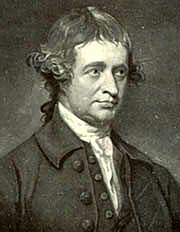
Bagehot (pictured at right) still makes for good reading at times like this.

“What is wanted and what is necessary to stop a panic is to diffuse the impression, that though money may be dear, still money is to be had. If people could be really convinced that they could have money if they wait a day or two, and that utter ruin is not coming, most likely they would cease to run in such a mad way for money. Either shut the Bank at once, and say it will not lend more than it commonly lends, or lend freely, boldly, and so that the public may feel you mean to go on lending. To lend a great deal, and yet not give the public confidence that you will lend sufficiently and effectually, is the worst of all policies; but it is the policy now pursued.”
Robert Feldman, Morgan Stanley’s chief economist for Japan, writes in a note today that it’s key to distinguish between internal discredit — private domestic lenders retreating — and external discredit, which Bagehot defined as a foreign drain on a bank’s money. (Bagehot’s solution to the problem of external discredit is to still lend freely but “at very high rates.”) That doesn’t apply in today’s floating rate system, Feldman says, and exchange rates don’t provide a good substitute, with the dollar’s drop against the yen suggesting we have external discredit while the strengthening against the euro saying we don’t.
Feldman writes: “My view is that the modern counterpart of ‘external discredit’ is moral hazard. The credit of the U.S. IS a problem, since no one knows how big the subprime and related housing market problems really are. Given how poorly banks know their clients, the ‘high rates’ part should come into play. There is no way to re-establish confidence unless those who have made loans to questionable borrowers pay a price for rash lending. Only then will markets regain confidence that risk is under control.
“The next stage of the credit problem — and whether it affects the real economy seriously — depend on eliminating the moral hazard,” Feldman says. “The faster the moral hazard in eliminated, the less impact on the real economy.”
Fed officials are acutely aware of the moral hazard, having resisted action for weeks to not be seen as bailing out risky investments. But they also don’t want a crisis to feed on itself. The Fed stressed its statement, in lowering the discount rate for banks, that it would accept “a broad range of collateral…including home mortgages and related assets.” The central bank sought to reassure a market that had been roiled by risky investments in subprime mortgages.
That’s how the Bank of England halted a panic in 1825, as Bagehot recounts: “A panic, in a word, is a species of neuralgia, and according to the rules of science you must not starve it. The holders of the cash reserve must be ready not only to keep it for their own liabilities, but to advance it most freely for the liabilities of others. They must lend to merchants, to minor bankers, to ‘this man and that man,’ whenever the security is good. In wild periods of alarm, one failure makes many, and the best way to prevent the derivative failures is to arrest the primary failure which causes them. The way in which the panic of 1825 was stopped by advancing money has been described in so broad and graphic a way that the passage has become classical. ‘We lent it,’ said Mr. Harman, on behalf of the Bank of England, ‘by every possible means and in modes we had never adopted before; we took in stock on security, we purchased Exchequer bills, we made advances on Exchequer bills, we not only discounted outright, but we made advances on the deposit of bills of exchange to an immense amount, in short, by every possible means consistent with the safety of the Bank, and we were not on some occasions over-nice. Seeing the dreadful state in which the public were, we rendered every assistance in our power.’ After a day or two of this treatment, the entire panic subsided, and the ‘City’ was quite calm.”
"Bagehot advocated in 1873 that a Lender of Last Resort in a crisis should lend at a penalty rate to solvent but illiquid banks that have adequate collateral. The doctrine has been criticised as having no place in our modern interbank market, but this is wrong. Bagehot’s prescription aims to eliminate the coordination problem of investors at the base of the crisis. It is still a useful guide for action when the interbank market stalls.1 It makes clear that discount-window lending to entities in need may be necessary in a crisis.
Bagehot's doctrine, however, is easy to state and hard to apply. It requires the central bank to distinguish between institutions that are insolvent and those that are merely illiquid. It also requires them to assess the collateral offered. Central banks, because of information limitations, are bound to make mistakes, losing face and money in the process. This doesn’t mean they should not try.
Poor collateral versus massive liquidity
The collateral should be valued under “normal circumstances”, that is, in a situation where the coordination failure of investors does not occur. This involves a judgment call in which the central bank values the illiquid assets. A central bank that only takes high quality collateral will be safe, but will have to inject much more liquidity and/or set lower interest rates to stabilise the market. This may fuel future speculative behavior. Some of this may have happened in the Greenspan era, in the aftermath of the crisis in Russia and LTCM, and after the crash of the technological bubble. The ECB and the Federal Reserve have accepted now partially illiquid collateral that the market would not. This seems appropriate and releases pressure to lower interest rates to solve the problem, something that should be done only if there are signs of deterioration in the real economy. The problem is that central banks are extending the lender of last resort facility outside the realm of traditional banks to entities, like Bear Stearns, that they do not supervise and, therefore, over which they do not have first hand information. How does the Fed know whether Bear Stearns or other similar institutions are solvent? It seems that the Fed is not following Bagehot’s doctrine here.
Finally, if banks and investors are bailed out now, why should they be careful next time? This is the moral hazard problem: help to the market that is optimal once the crisis starts has perverse effects in the incentives of market players at the investment stage. The issue is that only when the moral hazard problem is moderate does it pay to eliminate completely the coordination failure of investors with central bank help. When the moral hazard problem is severe, a certain degree of coordination failure of investors - that is, allowing some crises - is optimal to maintain discipline when investing and, amending Bagehot, some barely solvent institutions should not be helped."
To repeat Bagehot's Rule: "very large (domestic) loans at very high rates are the best remedy for the worst malady of the money market when a foreign drain is added to a domestic drain." The Fed, and the U.S. government more generally, have so far got it only half right."
http://findarticles.com/p/articles/mi_m2751/is_56/ai_55015114/pg_6"In a number of recent blog contributions, we have sketched the role of a modern central bank as ‘market maker of last resort’ (MMLR). This MMLR is the analogue, in a world where intermediation is increasingly through financial markets, to Bagehot’s lender of last resort (LOLR) in a world where most intermediation took place through banks (see e.g. Willem H. Buiter and Anne C. Sibert “The Central Bank as the Market Maker of last Resort: From lender of last resort to market maker of last resort"; Willem H. Buiter “Central banks as market makers of last resort, again”; Willem H. Buiter and Anne C. Sibert “A missed opportunity for the Fed”).
The market maker of last resort function can be fulfilled in two ways. First, the central bank can make outright purchases and sales of a wider range of securities than they currently do. Second, central banks can accept a wider range of securities as collateral in repos, and in collateralised loans and advances at the discount window than they currently do. Following Bagehot’s rule, the MMLR should buy these securities outright or accept them as collateral only on terms that would imply a stiff financial penalty to the owner. The central bank of course already applies a liquidity ‘haircut’ even to liquid instruments offered as collateral in repos or at the discount window. Because the MMLR would have to establish a buying price ‘in the dark’, that is, unaided by recent relevant market prices, and would inevitably take on much more credit risk than central banks have become accustomed to, the ‘haircuts’ should be severe – a financial version of ‘short back and sides’.I doubt a week has gone by since last summer during which I haven't seen some pundit or other trot out Walter Bagehot's dictum that in the event of a credit crunch, the central bank should lend freely at a penalty rate. More often than not, this is contrasted with the actions of the Federal Reserve, which seems to be lending freely at very low interest rates.
Ben Bernanke, in a speech today, addressed this criticism directly:
What are the terms at which the central bank should lend freely? Bagehot argues that "these loans should only be made at a very high rate of interest". Some modern commentators have rationalized Bagehot's dictum to lend at a high or "penalty" rate as a way to mitigate moral hazard--that is, to help maintain incentives for private-sector banks to provide for adequate liquidity in advance of any crisis. I will return to the issue of moral hazard later. But it is worth pointing out briefly that, in fact, the risk of moral hazard did not appear to be Bagehot's principal motivation for recommending a high rate; rather, he saw it as a tool to dissuade unnecessary borrowing and thus to help protect the Bank of England's own finite store of liquid assets. Today, potential limitations on the central bank's lending capacity are not nearly so pressing an issue as in Bagehot's time, when the central bank's ability to provide liquidity was far more tenuous.
I'm no expert on Walter Bagehot, and in fact I admit I've never read Lombard Street. But I'll trust in Bernanke as an economic historian on this one, unless and until someone else makes a persuasive case that Bagehot's penalty rate really was designed to punish the feckless rather than just to preserve the Bank of England's limited liquidity."
"So, we have, what I will call "Grant's Graham For Investing":
1) Decent Size
2) Current Assets Exceed Liabilities By Two Times
3) 10 Continuous Years Of Profit
4) 20 Continuous Years Of Dividends
5) 10 Years Of Earnings Growth Exceeding 33%
6) Price To Earnings Ratio Less Than 15
7 ) Price To Book Ratio Less Than 1.5"The Government will succumb and will lend taxpayers' money to non-financial companies.
In a way, there's no choice, because we'll be hobbled for years as an economy if our few remaining manufacturers and exporters are wiped out."
"Trader's Narrative's Due Diligence":
"The process of investigation undertaken by an party to gather material information on actual or potential risks involved in a financial transaction or relationship."
 Posts
All Comments