Showing posts with label DRC. Show all posts

Friday, April 17, 2009

US Amb Susan Rice joined other UN Security Council representatives to call on UN peacekeepers to protect civilians in the DR Congo from LRA attacks

TO BE NOTED: From ResolveUganda:

"
Weekly Roundup for April 11-17: Ugandan army clashes with LRA rebels in DR Congo
When we started this organization a few years ago, a top UN official had just given the conflict in northern Uganda the infamous title of "one of the world's most neglected crises". Since that time, the hard work of activists across the country and throughout the world have raised the profile of this issue in the international community and caused our leaders to pay more attention than they ever had before. Unfortunately, that new-found notoriety, demonstrated this week in a statement from the UN Security Council, has not been matched with the action necessary to resolve the conflict. Words will not end this war, so we must keep taking action until our politicians follow suit. Thank you for your persistence.

Onto the news...

The Good: The US and other members of the UN Security Council last week condemned LRA raids and urged UN peacekeepers in the DR Congo to protect civilians from further attacks.

The Bad: The Council has yet to back up its strong words with concrete action to reinforce the shorthanded UN peacekeeping force in the DR Congo.

The Ugly: At least six people were reportedly killed last Friday in a clash involving the Ugandan military and LRA rebels.

Regional Security

Situation in Northern Uganda

  • Seven people were injured during a land dispute in northern Uganda, part of a growing trend of violent land disputes in areas where people are returning to their homes after years of being displaced.
  • A Ugandan court ruled that the Ugandan government must compensate 6,000 northern Ugandans whose cattle and property were destroyed by the Ugandan military in the 1980s. Failure of the Ugandan government to compensate northerners for these losses in the past has been a persistent source of tension in the region.


International Response

File:Ugandan districts affected by Lords Resistance Army.png
Size of this preview: 487 × 600 pixels

Thursday, April 2, 2009

Last summer, I traveled to the Congo and saw firsthand the rape survivors, the former soldiers, and the devastation

TO BE NOTED: From Enough:

Enough Takes On Congo's Conflict Minerals

Printer-friendly version
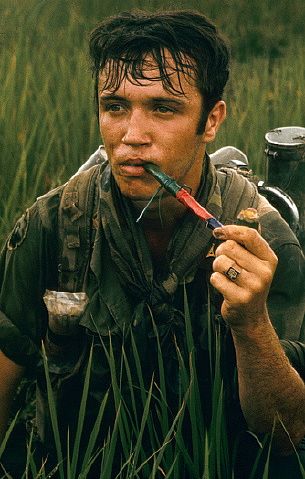
Emile Hirsch

Today, the Enough Project is launching the Conflict Minerals initiative to hold responsible electronic companies that are funding militias, war, and death by purchasing conflict minerals in Congo. Many of these companies may not even be fully aware of the pain they are causing through these purchases, but the time has come for everybody to be responsible for their actions. The people of the Congo have suffered enough. Join us in support of this campaign, and know that you are contributing to helping people who need your help - right now.

Last summer, I traveled to the Congo and saw firsthand the rape survivors, the former soldiers, and the devastation that war has done. It’s time to do what we can.

Join us. We have had enough.

Learn more by reading Enough's newest strategy paper Can You Hear Congo Now? Cell Phones, Conflict Minerals, and the Worst Sexual Violence in the World, and by visiting Enough's Conflict Minerals special page.

Emile Hirsch is an Enough Envoy.

The Conflict Minerals initiative is part of Enough's Raise Hope for Congo campaign.

Saturday, March 28, 2009

his appointment was welcomed by Resolve Uganda and the head of the Senate Africa subcommittee.

TO BE NOTED: From Resolve Uganda:

"
Weekly Roundup for March 14-27: Obama nominates top US Africa diplomat, Ugandan military withdraws from DR Congo

Last week President Obama nominated Johnnie Carson as the top Africa diplomat within his new Administration. Carson, a former US ambassador to Uganda, brings a wealth of experience dealing with the LRA and northern Uganda to the job and his appointment was welcomed by Resolve Uganda and the head of the Senate Africa subcommittee.

Carson will need every iota of his experience and skills to take up the tough challenge of renewing US leadership on efforts to deal with the LRA. Last week the Ugandan military withdrew its forces from the DR Congo, just over three months after launching a US-supported military operation against LRA rebels hiding in Congolese territory that ultimately failed to capture top rebel commanders. With LRA attacks escalating once again, our efforts are needed more than ever to ensure that Mr. Carson, Secretary Clinton and President Obama take the steps needed to permanently end this war.

The Good: Nearly 80,000 northern Ugandans have left displacement camps to return home since December of last year.

The Bad: Despite this progress, violent conflicts over land have forced hundreds of northerners to flee their homes in recent weeks.

The Ugly: After a brief lull, LRA attacks in the DR Congo are worsening and forcing more Congolese civilians to flee their homes.

Regional Security

  • The Ugandan army abruptly withdrew its forces from the DR Congo after a three-month operation against the LRA. Ugandan officials insisted that the operation was a success, but admitted that Congolese political pressure was their primary reason for leaving. The operation failed to capture Joseph Kony or his top two commanders, and also failed to stop massive rebel reprisal attacks on civilians.
  • Congolese troops and UN peacekeepers in the DR Congo announced that they would boost troop levels in northeastern DR Congo to better protect civilians and continue operations against the LRA, though their capacity to do so effectively will likely remain limited.
  • Richard, a Congolese child abducted by the LRA last September, told The Guardian Weekly newspaper about his experience with the rebels after his recent escape.

Situation in Northern Uganda

  • Violent land conflicts in northern Uganda have killed four people since the beginning of 2009 and forced 120 families to flee their homes. The disputes allegedly involve different clans with competing claims to land in several districts of .

International Response

  • UN special envoy announced plans to initiate contact with LRA leader Joseph Kony, following the withdrawal of Ugandan military forces from Congolese soil. Ugandan government officials said they welcomed any move by Kony to sign the final peace agreement negotiated last year, but were not willing to re-open negotaions on the deal."

Friday, March 20, 2009

We are getting increasing reports of FDLR targeting civilians they accuse of collaborating.

TO BE NOTED: From Stop The War In North Kivu:

"
Negative hornets
2009 March 20

We are getting increasing reports of FDLR targeting civilians they accuse of collaborating. We’re seeing increased instances of rape and killings of civilians“(…) “A hornets’ nest has been stirred up, and I’m not sure that anyone is prepared to deal with the angry hornets.”

Anneke Van Woudenberg (HRW) recently said this regarding the “counter attack” of FDLR forces in the Kivus after the departure of the Rwandan Armed Forces at the end of February.

I agree with this opinion. The metaphor, though, is a dangerous one. I find picturing the FDLR as a “hornest´nest” pretty close to a term well-known in the region: that of “negative forces”.

As in any other war, language in the Great Lakes Region is a tool of propaganda. For years, one of the biggest propaganda successes of the Rwandan regime was coining the term “negative forces” referring to FDLR. Almost everyone used it for a while. By using it, everything regarding this group became instantly bad. However, many historians and analysts have shown that the degree of revengeful violence inflicted in the Kivus by the Rwandan Armed Forces was comparable to the unbearable suffering Rwanda went through in 1994. This to say: there is not one single “negative force” in this affair, but many. One side, though, has been able to present itself as a pure and simple victim for a long time. That is part of the truth (a painful truth that has to be remembered and never forgotten), but not the whole of it.

There are no memorials for the people that were slaughtered at the other side of the border, in Congolese soil. And they were many."

Thursday, March 19, 2009

led to the return of more than 180,000 Congolese refugees

TO BE NOTED: From UNHCR:

New brick houses dot Sebele village, where Amina lives. © UNHCR/F.Fontanini
UNHCR News Stories

UNHCR shelter programme in South Kivu needs fresh funding

BARAKA, Democratic Republic of the Congo, March 18 (UNHCR) – Pressure to provide new housing in South Kivu is mounting as more and more people return to the relatively peaceful and stable province in the Democratic Republic of the Congo (DRC). But the ability of agency's such as UNHCR to keep pace with demand will depend on the continuing generosity of donors.

"The absence of adequate housing is one of the biggest challenges refugees face upon their return to South Kivu. After years of absence, most find their homes destroyed and have nowhere to stay," Sebastien Apatita, head of the UN refugee agency's office in Baraka, explained during a recent visit.

Most of the refugees returning to South Kivu come from camps across Lake Tanganyika in Tanzania. Last year, the agency funded the construction of some 500 shelters in the province's Uvira and Fizi districts to accommodate some 2,500 of the more than 14,500 returnees it helped back home, mostly via this lakeside port.

Over the next two years, with thousands more refugees expected back, UNHCR hopes to provide the resources to build 1,500 more houses in Uvira and Fizi for the most vulnerable families. But this ambitious target will depend on receiving sufficient funding during a time of economic recession.

"It's a very critical situation," said UNHCR Regional Representative Mohamed Boukry. "Unless we receive contributions, we will have no choice but to reduce this important assistance to thousands of Congolese refugees coming back home from Tanzania," he added.

UNHCR does not construct the new brick houses and shelters in South Kivu, but provides the materials and tools. This includes corrugated iron sheets for roofing, pre-made doors and windows, nails, axes, hammers and the like. The families then build their own houses.

Those who might find it difficult or impossible to build their own homes, including single women, the elderly and the ill, get help from the community. Amina,* a single mother of four, did not know what to make of the shelter kit she received from UNHCR after being ferried across the lake to Baraka.

"I did not how to use it, but then – thanks to help of my brothers and sisters – we succeed in building a house," she proudly told visitors in the village of Sebele, located a few kilometres from Baraka. UNHCR and its partners follow up to make sure that the shelter kits have been used properly.

"It is a miracle to come home with almost nothing and almost immediately to have a house after spending more than 10 years in a tent in a refugee camp," Amina enthused.

The beneficiaries of the programme are identified by members of the community with advice from UNHCR and the government's National Commission for Refugees.

Years of devastating civil war in the DRC formally ended in 2003, with a peace treaty. While human rights abuses continue to be recorded in South Kivu, the province has largely remained peaceful in recent years, unlike neighbouring North Kivu province, where conflict continues to displace people.

The relative improvements in security in South Kivu, Equateur and Katanga provinces has led to the return of more than 180,000 Congolese refugees, mainly from Tanzania, the Republic of Congo and Zambia, since UNHCR repatriation operations started in 2005. This year, UNHCR plans to help home about 35,000 Congolese from Tanzania and Zambia.

* Name changed for protection reasons

By Francesca Fontanini in Baraka, Democratic Republic of the Congo"

Tuesday, March 17, 2009

This does not mean, though, that Braeckmann´s story is wrong.

TO BE NOTED: From Stop The War In North Kivu:

"
US playing the stick and the carrot with Rwanda
2009 March 17

On March 2nd, the US based company Contour Global announced the investment of 325 million U$ to develop a gas extraction and electricity generation facility which “will provide 100 MW of natural gas fired electricity to Rwanda and the East African Region”. According to Contour Global, this is the biggest investment in the history of Rwanda (you can download the press release here).

The Rwandan army finished the joint military operation and left Congolese soil on February 27th.

Of course, both news have no link to each other."

And:

"Just too good to be true?

2009 March 16

I read a beautiful story a few days ago. It is like a new chapter of The West Wing, the wonderful TVseries where a decent and capable man, who studied in LSE and won the Nobel Price for Economics, rules the most powerful country on Earth and tries to be a force for good.

In this beautiful chapter, the President of the United States and his new administration do care about human rights, have a great operating knowledge of the problems of the people in North Kivu, and use their power to change the situation for better. The plot shows how Congolese authorities visiting Washington are happily impressed by the new administration´s knowledge of the conflict. They are listened, and the new men in Washington are remarkably able to open a dialogue process. They put an end to CNDP, ensure the normalization of the relationship between the DRC and Rwanda… and the first stone for a durable end to violence is in place.

Sounds like Alice in Wonderland, but this is mainly what Colette Braeckmann says in her last post. The text has been widely visited and traduced.

I guess that in the following chapters of this unexpected new season of the West Wing, the IDPs start to return home.

Colette Braeckmann is not no matter who. When she talks, people quiet and listen. However, here in the ground things do not seem so nice. IDPs continue to flee violence in Masisi and the FDLR claims to be hitting hard the FARDC.

This does not mean, though, that Braeckmann´s story is wrong. The problem is that governance is so poor in the DRC that the gap between the macro level and the reality on the ground is enormous. The weakest the state is, the longest it takes for decissions to be put into practice.

Joseph Kabila was recently here, and so did Ban Ki Moon. These visits, together with recent events and articles like Braeckmann´s, let us dream that the discussions taking place behind doors can really change the scenario, for good and forever. Sounds like Alice in wonderland, but having a black president in the white house sounded like that only two years ago, so… Let´s see.

This being said, no matter how much silence good diplomacy needs, no one knows what is being/has been discussed. Not very democratic as a process for a country considering itself as the champion of freedom."

Saturday, February 21, 2009

The problem is: if Rwandan armed forces really leave, how are the FARDC suppose to hold their current position in the front line?

From Stop The War In North Kivu:

"
US: “Real success in the Kivus”. Sure?
2009 February 21

Through words of its ambassador in the DRC, the US have publicly shown their full support for the joint military operation taking place in the Kivus. This kind of open declaration, and the way things are happening, can let us even think that plan the itself has been conceived by US diplomacy and proposed to Kigali and Kabila with a “you take it, or you take it” approach, soften with the idea of a “win-win” situation for everyone.

It seems that once the US speaks, the EU feels that it has to express itself on the matter.

Eurac, an influential European advocacy network, has expressed interesting recommendations on the current scenario, mainly advocating for less military muscle and more negotiation. This is not an easy thing to say now, though, because we are knowing that the FDLR keeps on killing civilians. However, let´s make this clear: the FDLR are not the only negative forces in this war, no matter how many times Rwanda has tried to label them with this term. All armed groups involved in this war are more than negative (Filip Reytnjens expressed the spiral of violence in the Great Lakes region after the genocide with a very lucid sentence: “this is not a story of good guys fighting bad guys. This a story of bad guys”).

Following the on-going diplomatic plan, Rwanda affirmed yesterday what most Congolese citizens wanted to hear: that Rwandan troops will leave the country this same week. “Tomorrow [for today] they are going to issue (the orders). They will begin pulling back slowly,” a Rwandan spokesman said yesterday. He said that the withdrawal will be completed for next Wednesday.

The problem is: if Rwandan armed forces really leave, how are the FARDC suppose to hold their current position in the front line?

Many people in this part of the world remember the last time Rwandan forces left the Kivus. An expression was coined that time. People said that Rwandan soldiers “left through the main entrance and came back through the back window“. This is to say, they continued their presence in Congolese soil in a more disguised, but real, way. Many Congolese fear this could be the case again.

Me:

To tell you how strange reporting in the US is, I'm going to post you a post I submitted to the NY Times today which was rejected. It was on the Bob Herbert column:

The war in the DRC and the recent rampage of the Lord's Resistance Army are not invisible if you care to look. Here are a few resources:

http://af.reuters.com...

http://stopthewarinnorthkivu.wordpress.com...

http://blogs.lesoir.be/colette-braeckman/

http://petereichstaedt.blogspot.com/

Recently, the US was involved in pressuring Rwanda to intervene with the cooperation of the DRC in the DRC, and in helping Uganda search for the LRA, which turned into a nightmare for many because the search was poorly organized.So the US is involved, although more needs to be done. The UN's role is not what it should be. Here is a very good essay on the UN in the DRC:

http://www.grip.org...

Don the libertarian Democrat

— Don, Tacoma, WA

So I'm trying to publicize places where one can keep up on the crisis, but it's not easy. I've no idea if the problem was mentioning other blogs or using French sources. Je ne comprend pas. I didn't look that up. It might not be correct. I'm much better at reading French.

Perhaps we’ve heard so little about them because the crimes are so unspeakable, the evil so profound.

From the NY Times:

"
The Invisible War

Perhaps we’ve heard so little about them because the crimes are so unspeakable, the evil so profound.

For years now, in the Democratic Republic of Congo, marauding bands of soldiers and militias have been waging a war of rape and destruction against women. This sustained campaign of mind-bending atrocities, mostly in the eastern part of the country, has been one of the strategic tools in a wider war that has continued, with varying degrees of intensity, since the 1990s. Millions have been killed.

Women and girls of all ages, from old women to very young children, have been gang-raped, and in many cases their sexual organs have been mutilated. The victims number in the hundreds of thousands. But the world, for the most part, has remained indifferent to their suffering.

“These women are raped in front of their husbands, in front of their children, in front of their parents, in front of their neighbors,” said Dr. Denis Mukwege, a gynecologist who runs a hospital in Bukavu that treats only the women who have sustained the most severe injuries.

In some cases, the rapists have violated their victims with loaded guns and pulled the triggers. Other women have had their organs deliberately destroyed by knives or other weapons. Sons have been forced at gunpoint to rape their mothers. Many women and girls have been abducted and sexually enslaved.

It is as if, in these particular instances, some window to what we think of as our common humanity had been closed. As The Times’s Jeffrey Gettleman, on assignment in Congo, wrote last fall:

“Many of these rapes have been marked by a level of brutality that is shocking even by the twisted standards of a place riven by civil war and haunted by warlords and drug-crazed child soldiers.”

Dr. Mukwege visited me at The Times last week. He was accompanied by the playwright, Eve Ensler, who has been passionate in her efforts to bring attention and assistance to the women of Congo.

I asked Dr. Mukwege to explain how it was in the strategic interest of the various armed groups to rape and otherwise brutalize women. He described some of the ramifications of such atrocities and the ways in which they undermine the entire society in which the women live.

“Once they have raped these women in such a public way,” he said, “sometimes maiming them, destroying their sexual organs — and with everybody watching — the women themselves are destroyed, or virtually destroyed. They are traumatized and humiliated on every level, physical and psychological. That’s the first consequence.

“The second consequence is that the whole family and the entire neighborhood is traumatized by what they have seen. The ordinary sense of family and community is lost after a man has been forced to watch his wife being raped, or parents are forced to watch the rape of their daughters, or children see their mothers raped.

“Neighbors are witnesses to this. Many flee. Families are dislocated. Social relationships are lost. There is no more social network, village network. Not only the victims have been destroyed; the whole village is destroyed.”

The devastating injuries treated by Dr. Mukwege at his hospital can all but stun the imagination. There is no need to detail them further here. AIDS and other sexually transmitted diseases are commonplace. Often the ability to bear children is destroyed. In many other cases, women end up giving birth to the children of their rapists.

“The hospital can take care of 3,600 women every year,” said Dr. Mukwege. “That is our maximum capacity. We can’t take any more.”

He spoke of ambulance teams that would drive into villages and be besieged by rape victims desperately seeking treatment. “It is awful to see 300 women in need of help,” he said, “and you have to take 10 because the ambulance can only take 10.”

Ms. Ensler spoke of her encounter with an 8-year-old girl during one of her trips to Congo. The girl’s father had been killed in an attack, her mother was raped, and the girl herself was abducted. The child was raped by groups of soldiers over a two-week period and then abandoned.

The girl felt too ashamed to allow herself to be held, Ms. Ensler said, because her injuries had left her incontinent. After explaining how she persuaded the child to accept an embrace, to be hugged, Ms. Ensler said, “If we’re living in a century when an 8-year-old girl is incontinent because that many soldiers have raped her, then something has gone terribly wrong.”

Despite the presence in the region of the largest U.N. peacekeeping mission in the world, no one has been able to stop the systematic rape of the Congolese women.

If these are not war crimes, crimes against humanity, then nothing is."

Me:

The war in the DRC and the recent rampage of the Lord's Resistance Army are not invisible if you care to look. Here are a few resources:

http://af.reuters.com...

http://stopthewarinnorthkivu.wordpress.com...

http://blogs.lesoir.be/colette-braeckman/

http://petereichstaedt.blogspot.com/

Recently, the US was involved in pressuring Rwanda to intervene with the cooperation of the DRC in the DRC, and in helping Uganda search for the LRA, which turned into a nightmare for many because the search was poorly organized.So the US is involved, although more needs to be done. The UN's role is not what it should be. Here is a very good essay on the UN in the DRC:

http://www.grip.org...

Don the libertarian Democrat

— Don, Tacoma, WA

Tuesday, January 20, 2009

"triggered a conflict-driven humanitarian catastrophe that killed an estimated 5.4 million people."

From Reuters:

Photo
1 of 1Full Size

By John Kanyunyu

KIBATI, Congo (Reuters) - Rwandan troops crossed into eastern Congo on Tuesday in a joint military operation by the Great Lakes neighbours to disarm Rwandan Hutu rebels seen as a root cause of more than a decade of conflict.( WOW )

While both countries presented the operation as part of internationally-backed efforts to end conflict in Democratic Republic of Congo, analysts said allowing the Rwandan army in posed political risks for Congolese President Joseph Kabila.( TRUE )

The presence of the Rwandan Hutu FDLR fighters, who finance themselves by exploiting illegal mines( NB ) in the mineral-rich east, triggered two previous Rwandan invasions of Congo that led to a wider 1998-2003 conflict. It also helped cause a 2004 rebellion by Congo Tutsi rebels who went on the offensive late last year.

Diplomats and U.N. peacekeepers said that up to 2,000 Rwandan troops entered Congo's eastern North Kivu province on Tuesday under a December joint accord to act against the mostly Hutu Democratic Forces for the Liberation of Rwanda (FDLR).

The FDLR's strength is estimated at around 6,000 fighters, spread across North and South Kivu.

"The operations are beginning. We have invited Rwandan officers with their security contingents for their safety. They are observers ... The operations to disarm the FDLR are planned for a length of 10 to 15 days," Lambert Mende, Congo's information minister and government spokesman, told Reuters.

But the size of the Rwandan deployment appeared to be more than a simple observation mission.

A Reuters reporter saw hundreds of Rwandan troops, wearing Rwandan flag patches on their uniforms and carrying mortars, rocket launchers and AK-47s, moving into Congo in the Kibati area north of the North Kivu provincial capital Goma.

Rwandan military spokeswoman Major Jill Rutaremara told Reuters in Kigali the details of the operation were "secret".

Rwanda's Information Minister, Louise Mushikiwabo, said the Rwandan forces would operate under Congolese command.

"This is a result of recent intense and sincere efforts -- diplomatic, military and other ... to bring peace and stability to the region." he told Reuters by text message.

U.N. peacekeepers also confirmed the Rwandan deployment.

"This morning between 1,500 and 2,000 RDF (Rwanda Defence Forces) crossed the border in the Munigi-Kibati zone," Lieutenant-Colonel Jean-Paul Dietrich, military spokesman for the U.N. force, MONUC, said. MONUC, the biggest U.N. peace force, said it had not been involved in planning the operation.

Congolese army forces were on the move with tanks, armoured personnel carriers and mobile rocket launchers, Dietrich said.

FEARS OF ESCALATION

Analysts said the latest entry of Rwandan troops into Congo, at the same time as a Ugandan-led offensive against Ugandan LRA rebels further north in Orientale, were an acknowledgement by Kabila that he had failed to pacify his country( VERY TRUE ). He had promised to do this after winning 2006 elections.

"Look where we are, two years after elections, the Rwandan army back in Congo and the Ugandans are back in Congo ... and the Congolese get screwed again( SAD BUT TRUE )," one veteran foreign Congo analyst, who asked not be named, said.

The analyst recalled Congo's 1998-2003 war, when Rwanda and Uganda backed rival rebel groups.

"It's a confirmation of what everybody knows -- the DRC army has no control over its own territory( TRUE )," said a foreign diplomat.

The presence in eastern Congo of Rwandan Hutu FDLR rebels, many of whom participated in Rwanda's 1994 genocide, has been at the heart of more than a decade of bloodshed.

The 1998-2003 war sucked in the armies of half a dozen nearby countries, and triggered a conflict-driven humanitarian catastrophe that killed an estimated 5.4 million( 5.4 MILLION ) people.

Rwanda and Congo have agreed on several past occasions to cooperate to tackle the Hutu rebels, but have failed to carry this out amid accusations that ill-disciplined Congolese government forces have sided with the FDLR Hutu fighters.

Fighting flared again in North Kivu last October, when the National Congress for the Defence of the People (CNDP), a Congolese Tutsi rebel group led by renegade General Laurent Nkunda ended a ceasefire and launched an offensive against Goma.

The fighting, which killed hundreds and displaced around 250,000 people, prompted fears of a fresh regional war.

U.N. experts told the Security Council last month that the governments of both Rwanda and Congo had been backing rebel groups in the conflict, and recommended targeted sanctions such as travel bans and freezing of assets against some individuals( ANYTHING ).

Since then diplomatic efforts to achieve a peaceful solution have picked up pace with frequent high-level contacts between Kigali and Kinshasa, in the absence of formal diplomatic ties."

If they actually cooperate, this might be the right course of action to end this nightmare.

Friday, January 16, 2009

"If this lasts another six months or a year, they'll start looking for better equipment, and we risk a Mai Mai phenomenon,"

From Stop The War In North Kivu:

"
OCHA humanitarian info on North Kivu In From the field on January 16, 2009 at 1:22 pm

I have just received a report from the Office for the Coordination of Humanitarian Affairs (OCHA) on the information meeting they hold this morning in Goma.

For anyone interested, all their information can be found here."

Let's check in on the Congo. From Reuters:


1 of 1Full Size

By Joe Bavier

DUNGU, Congo (Reuters) - Congolese villagers are forming self-defence groups to protect homes and families from Ugandan LRA rebels.( CAN YOU IMAGINE HAVING TO WORRY ABOUT THE LRA SHOWING UP IN YOUR NEIGHBORHOOD? )

LRA rebels have killed 567 people( 567 ) and displaced 115,000 in northeast Democratic Republic of Congo's Oriental province since September, U.N. refugee agency UNHCR says. Attacks surged after Ugandan forces spearheaded an anti-LRA offensive in December.

In silence broken only by the buzz of insects and the crunch of earth under their plastic sandals, eight men file through the cool night, hunting rifles in hand, scanning the darkness for those who killed their neighbours and burned their homes.

Elsewhere in the areas surrounding the town of Dungu, dozens more like them stalk the forest, mostly farmers and internal refugees armed with locally made guns or bows and arrows.

"This is very necessary for me, first and foremost, for the town, and for the people who are suffering in the bush, who have done nothing and who are dying," said Pascal Kalemba, the bottom half of his boyish face hidden by an airline sleeping mask.

Lord's Resistance Army rebel fighters attacked Dungu in September, as efforts to negotiate a peace deal to end their two-decade bush war against the Ugandan government broke down.

"They just walked straight into town. They started to burn houses and kill people," Kalemba said.

At the time, not a single Congolese soldier was deployed in the town of 57,000 inhabitants, located near Garamba National Park, the LRA's stronghold since it fled to Congo in 2005.

On December 14, a Ugandan-led multinational force, including Congolese and South Sudanese soldiers, launched an offensive aiming to capture the rebels' reclusive leader Joseph Kony.

Instead, the operation splintered the rebels into smaller groups that are now attacking villages, slaughtering civilians, raping women and kidnapping children for use as sex slaves and child soldiers. The U.N. death toll may be conservative.( UNREAL )

New York-based Human Rights Watch says three days of raids alone, starting on Christmas Day, killed at least 600 people. Most were beaten to death with clubs or hacked with machetes.

ARMY "RUNS AWAY"

The head of Dungu's self-defence force, former chief Etienne Dalafata, said despite the deployment of over 3,500 government troops to the area, villages must defend themselves.

"We've already gone on operations with the army, but when we go into the bush they get scared and run away. They are city soldiers," he said.

Dalafata said his force enjoys the town's support and that militias have sprung up across Congo's northern borderlands.

All of this worries Felicien Balani, president of Dungu's local civil society association.

"Our army must make them unnecessary. They find their justification in its ineffectiveness. If this lasts another six months or a year, they'll start looking for better equipment, and we risk a Mai Mai phenomenon," he said.

Mai Mai ethnic militias sprang up across eastern Congo in the 1990s during invasions by Rwanda and proxy rebel groups.

Like Dalafata's men, the Mai Mai initially said they took up arms to protect their communities. But they became notorious for bloody massacres of civilians, rape, and ritual cannibalism.( PLEASE NOT AGAIN )

Since September, the Dungu militia has taken just three LRA prisoners from a number of clashes with the Ugandan rebels.

All, they said, were turned over to the army.

But this week a self-defence patrol in Nzope village on the eastern edge of Garamba caught two LRA suspects. It mutilated and killed one before handing the other over to the authorities.

In Dungu, Kalemba said he feels no hatred for these latest invaders. He simply wants them to go home.

"Why are they persecuting us? Why?" he said.

"If it comes to a battle, we will die together."

I truly believe that indifference allows this to happen. Shame on us! Including me.

Thursday, January 1, 2009

"View of Bulengo IDP camp, Goma, DRC, November 2008"

From The Hub:

"
View of Bulengo IDP camp, Goma, DRC, November 2008
  • Tag
  • Flag
  • Rate
  • Save
  • Download
close
close

Please login to flag content.

close

Please login to rate media.

close

Please login to save to media.

close

Download

v3.wmv (6.6mb)

View of Bulengo IDP camp, Goma, DRC, November 2008"

Saturday, December 27, 2008

"The financial crisis aside, DRC is facing a huge humanitarian and security crisis in the east brought on by armed conflict"

A post on the Congo from Africa Can...End Poverty:

"
DR Congo Perspectives on the Financial Crisis
The main impact of the global financial crisis on the DRC economy is the slowdown in overall economic growth, which is projected to be 6 percent in 2009. With the crisis going on, the situation is likely to deteriorate. Two of the major sectors expected to drive DRC growth in 2009, i.e. infrastructure and mostly mining, have already been severely affected by the crisis.
The fall in global prices for key DRC commodity exports (including copper which declined by half within a few weeks) is at the foundation of the problem( YES ). As a result, a number of mining companies are scaling down activities until commodity markets stabilize. This also poses a great threat on employment. Most of the investment in infrastructure for the coming years is expected to be financed through the Chinese deal “Infrastructure against Mining”. Given the sharp decline in mineral prices, infrastructure investment at this scale can no longer be achieved or will have to be postponed. Export revenues will decline significantly due to lower commodity prices, and the current account surplus, sustained by booming commodity prices, is projected to turn into a deficit in 2009-10. International reserves are also expected to decrease significantly, and debt service payments are to be delayed. In the domestic financial system, there is risk of bank deposits and credits shrinking. Foreign aid is likely to be affected as well.
The financial crisis aside, DRC is facing a huge humanitarian and security crisis in the east brought on by armed conflict( YES ). These two crises are expected to have a considerable impact not only on the government’s fiscal position (lower revenue and higher security spending), but also on social sectors due to the mass movement of people( YES ). To address the crises issues the government is working to maintain macroeconomic stability and is in discussions with the donor community for emergency financial support and to agree on a PRGF (The Poverty Reduction and Growth Facility (PRGF) is the IMF's low-interest lending facility for low-income countries. PRGF-supported programs are underpinned by comprehensive country-owned poverty reduction strategies.FROM DON) which is expected to lead to HIPC ( September 2006 marked the tenth anniversary of the HIPC Initiative. Started in 1996, the Initiative was enhanced in 1999 as an outcome of a comprehensive review by IDA and the IMF, including public consultations. The Initiative’s debt-burden thresholds were adjusted downward, which enabled a broader group of countries to qualify for larger volumes of debt relief. Moreover, a number of creditors, including the main multilaterals, started to provide earlier assistance to qualifying countries in the form of interim relief at decision point. Finally, the “floating completion point” was introduced, providing incentives to speed up reforms and increase country ownership.FROM DON ) completion point as soon as possible."

This shows how war effects an economy.

Thursday, December 25, 2008

"consumers in the west do have the power to limit their funds."

Caroline Sourt in the Guardian about the East Congo, and what we can do about it ( which isn't much ):

"Caroline Sourt

As Simon Tisdall has pointed out on Comment is Free, the conflict in eastern Democratic Republic of the Congo looks intractable – and there is little appetite, in Britain or elsewhere, to send more troops there. But while the fighting is not going to stop as long as militias control the region's natural resources, consumers in the west do have the power to limit their funds( GOOD ).

One of the precious metals mined in eastern Congo is coltan. It is used in many common products: mobiles, computers, digital cameras, GPS equipment, airbags, hearing aids and even pacemakers. While 80% of the world's known coltan reserves are in eastern Congo, only about 1% of the metal sold on the open market is Congolese.

The reality is that most of Congo's coltan is sold illegally and the revenue, instead of going towards the country's development, is helping to fund the ongoing violence. The coltan mines in the east are controlled by various armed groups. One of the consequences is that civilians, including children, are recruited as forced labour. The mortality rate in these mines is high.

In a UN report discussed yesterday by the security council, the Congolese and Rwandan governments are accused of backing militias to fight a "war by proxy". All the groups, including the Congolese army, are accused of human rights violations that range from massacres and torture to widespread rape of women and children. In this on-off war, it's estimated that 45,000 people die each month( 45,000 ); since August, 250,000( 250,000 ) have been displaced.

The UN's force in Congo, Monuc, has so far failed to stop the fighting, despite being the largest and most expensive peacekeeping mission in the world( COME ON ). Democratic Republic of the Congo is the size of western Europe: 17,000 troops, or even the proposed increase to 20,000-strong force, are insufficient. The EU recently refused to send in soldiers, preferring to try political negotiations. What it should be doing is to regulate the international sales of Congolese minerals more efficiently( TRUE ).

Just as blood diamonds fuelled the civil war in Sierra Leone, the illegal trade fuels the DRC conflict. As long as militias and politicians continue to make money from minerals, there is no real incentive to find a lasting peace( I SUPPOSE THAT'S TRUE ). The companies involved in buying Sierra Leone's diamonds only located their consciences when consumers started asking questions about where their gems were coming from, and profits were threatened.

A certificate systemis supposed to detail the origins of any coltan, but it is not strictly adhered to. Many companies don't ask and if they do, they settle for vague answers and fraudulent papers because Congo's coltan is abundant and much cheaper than that of rival exporters.

Now, a break. From Reuters:

"By Joe Bavier

KINSHASA (Reuters) - Democratic Republic of Congo hopes to set up a scheme to certify columbite-tantalite produced within its borders in 2009, the country's Deputy Mines Minister Victor Kasongo said on Tuesday.

The illegal traffic of the rare metal, used in mobile phone chips and commonly referred to as coltan, helped fuel a 1998-2003 war and resulting humanitarian crisis in the central African country that killed an estimated 5.4 million people.

But a new G8-backed and German-financed pilot initiative aimed at creating a mineral fingerprint for coltan could soon help developing countries trace ore that is illegally exported and boost their profits from legal exports.

Kasongo said he hoped a global certification process aimed at ethically-minded consumers would follow.

"All the large companies are fighting for this. They'll be able to display a certificate to prove fair trade. You'll begin seeing many machines, many iPods, that are certified," he said.

Congo plans to use the data to set up its own certification process within the next eight months, which should help the creation of a global system similar to the Kimberley Process set up to end the trade in "blood diamonds" from war zones.

"We believe that in 2009 we should be able to enforce certification ... early next year," Kasongo told Reuters in an interview. "Licences. Centralised control. Certification. More revenues to Congo. More peace and stability. Those are the things we are aiming for."

A team from Germany's Federal Institute for Geosciences and Natural Resources is due to arrive in Congo on April 2.

Researchers will map the country's coltan producing areas and isolate unique characteristics of local ore samples to create mechanisms for tracing ore to its origin.

"BLOOD COLTAN"

Congo, believed by many experts to possess the world's largest coltan reserves, was one of the principal suppliers of the ore as demand from the mobile phone and electronics industries spiked in the late 1990s.

Much of the so-called "blood coltan" originating in Congo was illegally smuggled into Uganda, Rwanda, and Burundi during a five-year war that saw the plunder of its natural resources by neighbours and foreign-backed militias.

Congo's coltan-rich eastern borderlands remain a patchwork of militia-controlled zones and rebel fiefdoms, where a United Nations Security Council-commissioned report recently said illegal armed groups still buy weapons with mining revenues.

Ethical concerns and more efficient industrialised mining have now made Australia the world's leading producer and exporter of coltan.

Congo hopes the certification process will rehabilitate the image of its coltan and help to stabilise its eastern reaches.

"We'll make sure that the coltan is not linked to any military activities. We understand that once we have control of the coltan itself, we'll have some control over the stability of the area," Kasongo said."

Back to our post:

The vast majority of those who donate to charitable appeals for Congo are unaware that their Christmas present purchases are probably feeding the conflict as fast as charities can alleviate it. Asking a few more questions about the gifts we buy would force the suppliers to come clean about their origins."

It's the least that we can do.