Showing posts with label Coy. Show all posts

Wednesday, May 20, 2009

In real life, he explains, households and businesses are highly uncertain

TO BE NOTED: From Business Week:

"
Macroeconomics: Adjusting the Big Picture

Three experts weigh in on how to better handle, and even avoid, the next global financial crisis

Is macroeconomics worthless? Far from it. Here are three economists trying to draw lessons from the global economic crisis so the world does a better job of keeping growth on track next time.

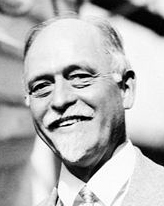
Hyun Song Shin, 49, Princeton University
Big Idea: The Federal Reserve should pop credit bubbles early by raising interest rates.
The financial crisis arose, in large part, because companies and households borrowed too much. Shin faults macroeconomists for developing models that didn't allow for the possibility of risks such as a bubble in lending or a deterioration of credit standards. "Over the past 10 years our mainstream colleagues in macroeconomics have somewhat neglected finance," he says.

The economists at the Federal Reserve, too, weren't looking at the right problems, says Shin: "These things crept up behind the backs of the central bankers. It was a blind spot."

Shin says the Fed should nudge rates up when credit is expanding rapidly. He's looking for data that give hints of trouble, such as heavy secured borrowing by financial firms. Creating better models of the economy is "not easy, but I think it's too defeatist to say it's impossible," says Shin.

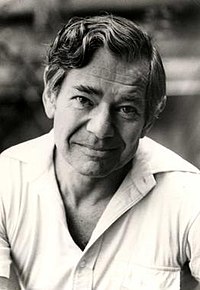
Roger E.A. Farmer, 54, University of California at Los Angeles
Big Idea: The Fed should make large-scale purchases of equities to restore investor confidence and get the economy back on track.
Farmer thinks Fed stock purchases would be more effective than the Obama Administration's deficit spending. He frets that if the government puts more money in the public's pockets via increased spending or tax cuts, people won't spend it as long as they feel poor because of stock market losses.

The answer, in Farmer's view, is for the Fed to set a target for how high it wants the stock market to be by a certain date, then commit to buying enough shares (through broad-based index funds) to hit that target. Higher stock prices will make people feel wealthier and spend more, creating prosperity. Symmetrically, he would have the Fed sell to hold down prices in boom times.

Similar ideas have been tried before in Hong Kong, Taiwan, and Japan. They've had mixed results but are credited with helping to rescue Hong Kong from the Asian financial crisis in 1998. "I get a lot of interest from other economists," he says, "but it takes a long while for new ideas to spread."

Thomas Sargent, 65, New York University and Hoover Institution
Big Idea: The economy is volatile, in part, because households and businesses hold "fragile beliefs" that shift quickly.
In the 1970s, Sargent was one of the thinkers behind "rational expectations," which says that ordinary people can correctly anticipate the range and likelihood of possible future outcomes.

Sargent now says that theory was an oversimplification. In real life, he explains, households and businesses are highly uncertain. Developments such as an unexpected government action or a major company going bust can cause people to drastically revise their beliefs about what might happen next.

The good news: Beliefs may shift back again through unexpected positive events. Sargent is not willing to say how that might happen, but he notes that in the early 1980s the Federal Reserve was able to lower the public's expectations about long-term inflation. That, in turn, caused actual inflation to fall, ending a period of stagflation.

Coy is BusinessWeek's Economics editor."

Wednesday, March 18, 2009

At the least, no one can say that the Fed isn't trying

TO BE NOTED: From Business Week:

"The Fed Breaks Out the Heavy Artillery
With rate cuts no longer an option, Bernanke & Co. launch a massive plan to buy up mortgage-backed securities, agency debt, and Treasuries to boost the economy and the markets

With the furor over American International Group (AIG) bonuses distracting Congress and the Obama Administration, the Federal Reserve thrust itself back to the front lines on Mar. 18 with a trillion-dollar-plus campaign of shock and awe against the deepening recession. At the conclusion of its two-day policy meeting, the independent central bank—which doesn't have to ask anyone for permission to spend money—committed itself to buying enormous quantities of asset-backed securities and debt in order to lower interest rates and revive housing, consumer lending, and small-business loans.

"With the rest of Washington moving in slow motion (and in some cases hindering the revival in capital markets), the Fed continues to move ahead aggressively," Barclays Capital (BCS) economist Ethan Harris wrote after the announcement.

Math reminder: A billion is a thousand million, and a trillion is a thousand billion. So the size of the Fed's intervention makes the $165 million worth of bonuses to executives of AIG look puny in quantitative terms—while not, of course, diminishing their moral and political significance.

Statement Full of Surprises

Expectations of Fed buying raised the prices, and consequently pushed down the interest rate yields, on mortgage-backed securities as well as Treasury bonds, which were included in the deal. Stocks rose slightly as well, while the dollar fell on inflation worries. The yield on the benchmark 10-year Treasury note plummeted one-half percentage point, to around 2.5%.

"The good news is that the Fed is clearly being a lot more aggressive," said Desmond Lachman, a resident fellow at the American Enterprise Institute. "The bad news is that I think it reflects their assessment that the economy is a whole lot weaker than they thought it would be."

The Fed did not cut short-term interest rates because it can't—they're already at virtually zero. The post-meeting statement said the rate-setting Federal Open Market Committee "anticipates that economic conditions are likely to warrant exceptionally low levels of the federal funds rate for an extended period."

The FOMC statement was full of surprises, albeit in the Fed's typical bland language. The Fed committed itself to buying another $750 billion this year in mortgage-backed securities issued by "agencies" like Fannie Mae and Freddie Mac, on top of the $500 billion it had already committed to buying. It doubled to $200 billion the amount of agency debt it will buy this year.

And in a surprising change of direction, the Fed said it will buy $300 billion of longer-term Treasury securities. Up until now, Federal Reserve Chairman Ben Bernanke had said there was no need for the Fed to buy Treasuries since there was a strong market for them already. The Fed's new thinking seems to be that it can't hurt to try a little Treasury buying in hopes that the money will trickle down to non-Treasury securities. It said the goal of the Treasury purchases is "to help improve conditions in private credit markets."

Aimed at Boosting Market Psychology

Lachman hypothesized that one reason for the Fed's aggressiveness is that Congress—frozen in place by the public's revulsion over the AIG bonuses—is unlikely to advance any more money for bailouts of financial institutions, even though many still need help to become healthy. "This political circus that's going on over AIG means there's not going to be any more money for banks," Lachman said in a conference call with journalists after the Fed statement.

The Fed's statement probably was intended to have a psychological impact on the markets, because the Fed went further than it needed to in announcing the new purchases. Harm Bandholz, economist at UniCredit Research in New York, noted that the Fed had bought only 19% of the mortgage-backed securities and only 40% of the agency debt that it had already said it was buying, so there was no rush to announce more purchases.

Economists differed on the likely effectiveness of the Fed's efforts. Joseph Mason, a professor at Louisiana State University's E.J. Ourso College of Business, worried that unless banks are repaired, the Fed's efforts to push money into the economy will be no more effective than "pushing on a string."

But Paul Dales, an economist for Capital Economics, wrote in a report after the Fed statement that "the sheer size of the measures suggests that they will do some good, thus increasing the chances of a decent recovery next year. At the least, no one can say that the Fed isn't trying."

Coy is BusinessWeek's Economics editor."