"Nigeria aims to knock-out Delta militants
By Matthew Green in Lagos
Published: May 21 2009 18:09 | Last updated: May 21 2009 18:09
Nigeria’s military has launched its biggest offensive in the Niger Delta in years, hoping to deal a decisive blow against armed groups who have crippled much of Africa’s biggest oil industry.
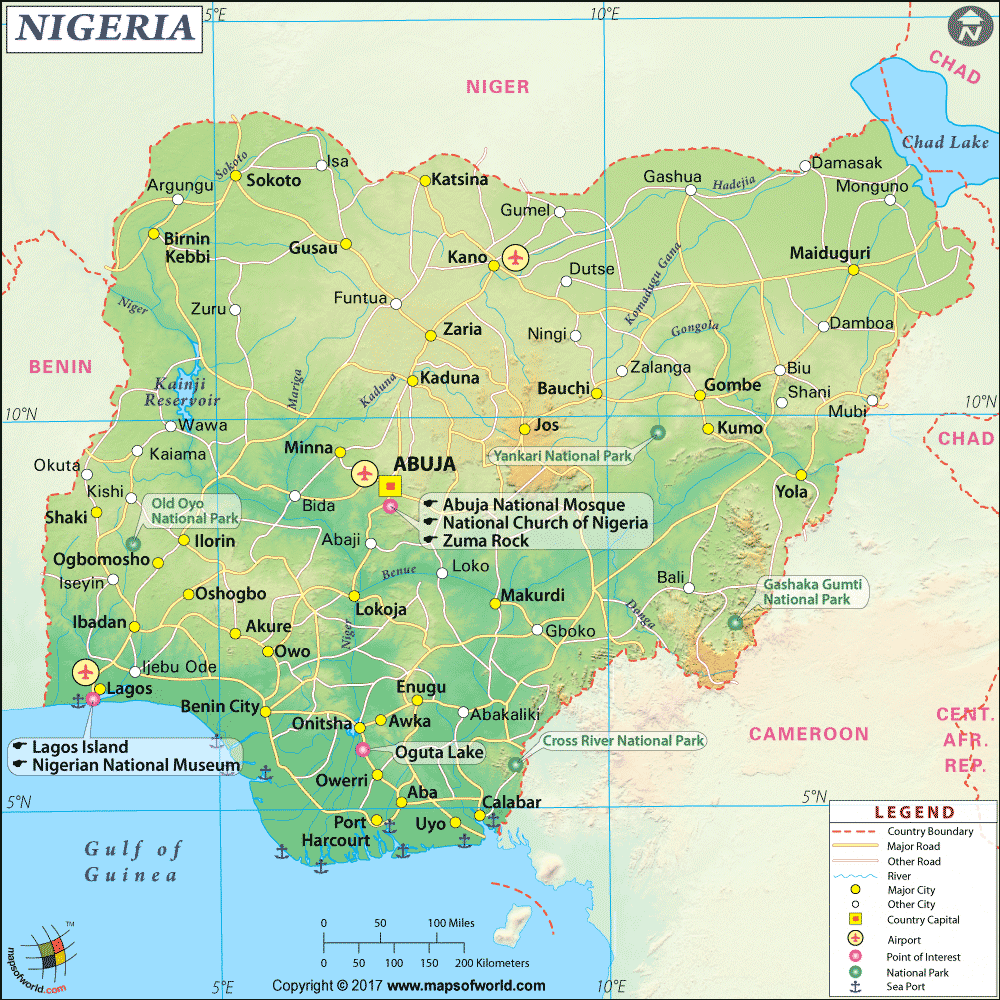
Hundreds of troops backed by gunboats, helicopter gunships and jets have taken part in operations during the past week to chase militants from key bases in the western delta and pursue them into villages in the region’s creeks.
The campaign suggests the government of Umaru Yar’Adua, the president, is emphasising the use of force to neutralise the threat posed by the gunmen in spite of previous pledges to open dialogue or offer amnesties to find a peaceful way to restore security.
The upsurge in fighting has been a factor in pushing global oil prices above $62 per barrel this week although on Thursday they slipped closer to $60. The Nigerian National Petroleum Corporation, the state oil company, said there has not been a significant impact on production.
Companies such as Royal Dutch Shell, ExxonMobil and Total who have operations in Nigeria will be watching to see whether the offensive taking place outside the city of Warri succeeds in pushing militants on to the defensive, or provokes retaliatory strikes against vulnerable pipelines snaking through the region’s vast wetlands.
The Movement for the Emancipation of the Niger Delta, an umbrella group that works with various armed factions, has pledged “all-out war” in one of many statements to journalists since the military attacked an important militant camp a week ago.
The group has, however, yet to demonstrate it still has the ability to mount the kind of spectacular attacks seen in early 2006, when it shut down roughly a fifth of Nigeria’s production, much of it operated by Shell.
The offensive has provoked an outcry among organisations representing the Ijaw community in the western delta and human rights groups who have said the campaign has put many civilians at risk.
Amnesty International issued a statement on Thursday saying that thousands of people had been forced by the fighting to flee their homes and that it had received reports that hundreds of people had been killed. Nigeria’s military said that it was only targeting militants. It was not immediately possible to verify the claims on casualties.
Security experts who track the delta say Nigeria’s military has been preparing for some time to launch a campaign against militant camps, hoping to remove leaders and scatter followers who may not have the appetite for a prolonged campaign in the harsh terrain of surrounding mangrove swamps.
Whether the strategy will succeed may depend on how quickly armed factions -- many of which are fuelled by profits from industrial scale oil theft and kidnapping -- will be able to regroup or encourage allies in other parts of the delta to mount strikes.
Mend and other groups say they are fighting for a fairer share of Nigeria’s oil wealth for the Niger Delta, a region where the line between politically-motivated militancy and gangster-style criminal enterprise is often blurred.
The legacy of previous attacks on Nigeria’s oil infrastructure has added to the pressure on state finances at a time when the country is already struggling from the impact of the fall in oil prices from last year’s record highs.
Odein Ajumogobia, the minister of state for petroleum, said Nigeria was pumping about half of an installed capacity he estimates at 3.2m barrels of oil per day. He said production fell as low as 1.2m b/d of oil last month, one of the lowest levels seen in decades."
























 Posts
Posts