Showing posts with label Amnesty International. Show all posts

Tuesday, June 9, 2009

“Dignity refers to carrying humanity with respect and honour” Anonymous, Kenya

TO BE NOTED: From:


Irene Khan visits Kibera and launches e-action

kenya-e-action

A member of the Soweto Forum in door to door campaign explains the SMS action to a Peter, a slum dweller ©Amnesty International

em>Evangelia Papada is in Kenya

We left the hotel at 8am and headed for the high-rise project, one of the entry points to Kibera, the biggest slum in Kenya and perhaps in the entire continent.

It has been a very exciting day from the start. Immediately after we arrived, we met with the ISSA community project in Laini Saba, one of Kibera’s most active neighbourhoods. We have planned to march through Kibera and raise support and interest for our action with a street theatre act.


Eventually, we arrived in the neighbourhood of Soweto and met with Amnesty International Secretary General, Irene Khan, and a team of colleagues and journalists. In an atmosphere of traditional dancing and celebration, Irene Khan addressed the crowd and urged everybody to speak out, to tell the Kenyan government what it means for them to live with dignity. It was a very special event, one of joy and people participation.

The response has been very positive. Some of the texts we have received from Kibera are truly inspiring. I would like to share some with you:

For me, living with dignity means “setting principles to your ways and standard of living and be true to them.” Anonymous, Kenya

“Dignity is having three meals a day. Clean water. shelter. Good roads. justice for all but not for the few corrupt” Peter, Kenya

“Dignity refers to carrying humanity with respect and honour” Anonymous, Kenya


Map of Nairobi indicating Kibera in red

Saturday, June 6, 2009

Iran’s presidential election on 12 June, will take place against a backdrop of discrimination, worsening repression of dissent and violent unrest

TO BE NOTED: From AI:

"
Iran’s presidential election amid unrest and ongoing human rights violations

5 June 2009

Iran’s presidential election on 12 June, will take place against a backdrop of discrimination, worsening repression of dissent and violent unrest.

In the run-up to its tenth presidential election from which women candidates have been barred, the country has witnessed the arbitrary arrest and harassment of activists and members of minority communities, censorship, armed attacks and suicide bombings.

Amnesty International has welcomed the commitments made by some electoral candidates during their campaigns to address the issue of women's rights and the problems of ethnic minorities and the poor. "The ongoing efforts of women’s rights activists have forced the issue of women's rights into the debate, sometimes at the cost of their freedom," said Hassiba Hadj Sahraoui, Middle East and North Africa Deputy Programme Director at Amnesty International. "All candidates should heed their calls for equality and make ending discrimination a priority."

Another issue requiring urgent action from the new president is the execution of juveniles for crimes committed when they were children. "At least 139 juveniles are on death row in Iran," said Hassiba Hadj Sahraoui. "The outrage after the execution of young painter Delara Darabi, the debates in the country and the initiatives of civil society to end this abhorrent practice must be matched by decisive action by the new president."

The organization has expressed its concern about Iran’s discriminatory selection process for electoral candidates, which involves the Council of Guardians screening all candidates for election to "ensure their suitability for the Presidency".

In a public statement on 15 May, Amnesty International urged the Council of Guardians to ensure that no one was excluded from standing as a candidate solely on the grounds of their race, colour, sex, language, religion, social origin or political or other opinion and that none of the 42 women who registered to stand were barred solely on account of their gender. However, all but four candidates were excluded, including all the women candidates.

The four remaining candidates are: current President Mahmoud Ahmadinejad; former Speaker of Parliament Mehdi Karroubi; Mohsen Rezai, former Commander of the Revolutionary Guards and current Secretary of the Expediency Council; and Mir Hossein Mousavi, who served as Iran’s Prime Minister during the Iran-Iraq war in the 1980s.

Iranians have faced censorship during the campaign: the authorities blocked access to the social networking web sites Facebook and, briefly, Twitter on 23 May. Candidates and their supporters opposing current president Mahmoud Ahmadinejad had been using the sites to spread information as part of their campaigns. Surprised by the outcry, the authorities unblocked access to Facebook three days later.

The campaign of Mir Hossein Mousavi – himself a member of the Azerbaijani minority - has attracted allegations of racism after a video posted on YouTube on 14 May allegedly showed former President Mohammad Khatami (who supports Mr Mousavi) making comments belittling Iranian Azerbaijanis. Mr Khatami has since stated that the video was a fake. In the days after the video surfaced, hundreds of Azerbaijani activists held rallies and made protests, demanding an apology from Mr Khatami. Some have been arrested and are being held in incommunicado detention.

In the pre-election period, Amnesty International has also received reports suggesting increased waves of arbitrary arrests and harassment targeting in particular members of Iran’s religious and ethnic minority communities, including Baha'is and converts from Islam, students, trade unionists and women’s rights activists.

Emad Bahavar, of the banned Iran Freedom Movement, who was campaigning for the presidential election of Mir-Hossein Mosavi, was detained on 27 May on suspicion of "spreading propaganda against the system".

It was reported that Mr Bahavar, 31, was detained by an order issued by the Revolutionary Court. Security guards searched Mr Bahavar’s residence and a number of his personal effects, such as his computer, were confiscated. Mr Bahavar was reported to have been released on Tuesday.

Other cases of arbitrary detention include the arrest on 19 April of Mehdi Mo’tamedi Mehr, a member of the Committee to Defend Free, Healthy and Fair Elections and a member of the Freedom Movement.

Before his arrest he had been called by a Ministry of Intelligence official and told that publication of a statement entitled Civil Society Institution as Election Observers: An Assurance toward Free, Healthy and Fair Elections by the Committee would be an act against national security.

The statement was published anyway, and he was arrested. He has been accused of "acting against state security". On 29 April, security forces prevented other members of the committee from holding a meeting in the Raad Legal Institute which belongs to Mohammad Ali Dadkhah, a prominent lawyer and member of the High Oversight Council of the Centre for Human Rights Defenders (CHRD). The CHRD headed by Nobel Peace Prize laureate Shirin Ebadi was forcibly closed in December 2008 and has not been allowed to reopen.

At least two Amir Kabir University students remain detained without trial by the Ministry of Intelligence in Section 209 of Evin Prison in Tehran following their arrests in February 2009. Other students arrested with them who have since been released have said that they were tortured in detention. On 28 April 2009, a Revolutionary Court judge said that eight students, including those still detained, had been accused of cooperating with the People’s Mojahedin Organization of Iran, an opposition group based in exile. He added that they had intended to ìcarry out some activities in the universityî during the forthcoming election.

Jelveh Javaheri is the only woman among around 20 people still held after their arrest on 1 May 2009. She is a member of the One Million Signatures Campaign (also known as the Campaign for Equality), which is collecting signatures to a petition demanding equal rights for women.

Most – including Jelveh Javaheri's journalist husband Kaveh Mozaffari - were arrested in Laleh Park in Tehran where a celebration of International Workers' Day was being held, but Jelveh Javaheri was arrested at home without an arrest warrant when security officials came with her husband to search their house. She has since been charged with "acting against national security through membership in the One Million Signatures Campaign and with the aim of disrupting public order and security."

"By imprisoning people for merely expressing dissenting views, the Iranian authorities are stifling the free debate which is a pre-requisite of elections," said Hassiba Hadj Sahraoui. "Citizens should be able to freely express their grievances and their demands so that candidates can address them."

"All individuals and groups should be allowed to peacefully exercise their rights to freedom of expression, association and assembly, including in ways which dissent from state policies and practices, in the run-up to the presidential election."

In the run-up to the elections violent unrest has intensified in Sistan-Baluchistan province in south-eastern Iran. A member of the armed Baluch group, the People's Resistance Movement of Iran (PRMI) carried out a suicide bomb attack on a mosque in the provincial capital of Zahedan on 28 May. Up to 25 people were reported to have been killed and dozens more were injured. The PRMI said that the attack was a reprisal for the execution of several Sunni clerics in recent years.

"The bombing of the mosque is a total disregard of principles of international humanitarian law, by which the PRMI has pledged to abide. We condemn it unreservedly," said Hassiba Hadj Sahraoui.

Less than 48 hours after the bombing, three men were hanged in public near the site of the attack amid claims that they were responsible. Later comments clarified that the three men had been in detention at the time of the bombing, but that they had "confessed" to providing the explosives used in the bombing. Further unrest broke out afterwards with up to ten people killed, and dozens arrested.

Iran's Baluch minority suffer discrimination by the state authorities leading to gross violations of their economic, social and cultural rights. They live mainly in the provinces of Sistan-Balouchistan and Kerman, and are believed to constitute between one to three per cent of the country’s total population of around 70 million. They are mainly Sunni Muslims, whereas the majority of Iran’s population are Shi’a Muslims."

http://www.worldatlas.com/webimage/countrys/asia/ciamaps/ir.jpg

Tuesday, June 2, 2009

"When it comes to the protection of human rights, however, the Chinese government has consistently failed to live up to the world's expectations."

TO BE NOTED: From AI:

"
Twenty years later, China must hold inquiry into Tiananmen Square crackdown
© 1989 Hei Han Khiang">Peaceful protesters gathered in the Tiananmen Square, China, May 1989

Peaceful protesters gathered in the Tiananmen Square, China, May 1989

© 1989 Hei Han Khiang


2 June 2009

Hundreds of civilians were killed and injured 20 years ago during the violent military crackdown on peaceful demonstrators in and around Beijing’s Tiananmen Square on 3 and 4 June 1989.

A number of people are still in prison for their involvement in the 1989 pro-democracy protests. 

The Chinese government has not released official figures but several non-governmental organizations estimate between 20 and 200 individuals remain in detention. Amnesty International urged the Chinese authorities on Tuesday to hold an open and independent inquiry into events of 1989.

"The National People’s Congress has within its powers the ability to lead the way in calling for an account of all those who died, those who were imprisoned and those who remain in prison still as a result of the crackdown," wrote Amnesty International in an open letter sent to Wu Bangguo, the Chairman of the National People's Congress of China, on 13 May 2009.

"A number of people who remain in prison were convicted of 'counter revolutionary' crimes that were removed from the Chinese Criminal Code in 1997," said Roseann Rife, Amnesty International's Asia-Pacific Deputy Director. "The Chinese authorities should immediately release these prisoners as a first step towards accountability."

The Chinese authorities' ongoing suppression of public discussion of the events means that many have been sentenced to imprisonment after 1989 simply for exercising their right to freedom of expression. For example, those hosting online discussions or posting poems about the crackdown online have been targeted.

That suppression has intensified in the lead up to the 20th anniversary of the protests, as the Chinese authorities have detained and threatened human rights activists and lawyers across the country.

Amnesty International has documented at least 100 cases of activists who have been detained briefly or faced violence from authorities this year as they defended land rights, housing rights and labour rights. Signatories of the Charter 08, a petition calling for legal and political reforms, continue to face questioning. Several of these cases are related to the surveillance of activists ahead of the anniversary.

In the first four months of 2009, the organization also discovered at least four cases of lawyers who were threatened with violence by the authorities as they defended their clients, at least 10 cases where lawyers were hindered from meeting or representing clients and at least one case in which a lawyer was detained for doing his work. Lawyers recently have been threatened with denial of their licenses in retaliation for their work on rights defence cases.

At the launch of the Amnesty International Report 2009 on 28 May, the organization’s Secretary General Irene Khan called on China to sign and ratify the International Covenant on Civil and Political Rights.

Although the Chinese government's recent initiative in launching the National Human Rights Action Plan, which reiterates guarantees against illegal detention and to protect human rights guaranteed in the Chinese Constitution, was welcomed by Amnesty International, the Plan's success hinges on the actual implementation.

"In the midst of a global economic downturn, the Chinese government has demonstrated its readiness to take up leadership in stabilizing the world economic system," said Roseann Rife. "When it comes to the protection of human rights, however, the Chinese government has consistently failed to live up to the world's expectations."


Monday, May 11, 2009

This brings the total estimated casualty figure to more than 7,000 killed and 13,000 injured since January

TO BE NOTED: From AI:

"
UN Security Council must act immediately to stop "bloodbath" in Sri Lanka

Yolanda Foster, Amnesty International's Sri Lanka expert, describes the situation in the country, 11 May 2009

© Amnesty International

Download this audio file

© Private">Children injured by shelling, Kilinochchi, Sri Lanka, 10 May 2009.

Children injured by shelling, Kilinochchi, Sri Lanka, 10 May 2009.

© Private


© Private">Child injured by shelling, Kilinochchi, Sri Lanka, 10 May 2009.

Child injured by shelling, Kilinochchi, Sri Lanka, 10 May 2009.

© Private


© Private" style="display: none;">

11 May 2009

The horrific condition facing civilians in north eastern Sri Lanka has been described as a “bloodbath” by the United Nations. Amnesty International has said that it demands immediate action by the United Nations Security Council.

In the last few days, more than 400 people – including more than 100 children – are reported to have been killed in a two-day bombardment of the 2 square kilometre area designated as a “Safe Zone” by the Sri Lankan army. This brings the total estimated casualty figure to more than 7,000 killed and 13,000 injured since January. There are an estimated 50,000 civilians still trapped in the area.

Medical personnel in the area have told Amnesty International that the artillery barrage continued throughout the weekend. The Sri Lankan government has denied using artillery, instead blaming the Liberation Tigers of Tamil Eelam.

Both the Tigers and Sri-Lankan Military have been violating the laws of war. Over the last several months, the Tamil Tigers have used civilians trapped in the conflict zone as a buffer against government forces.

When civilians have tried to flee, they have been attacked by the Tigers. The Sri Lankan military has in the past used heavy artillery, which is indiscriminate under the circumstances, causing civilian deaths and injuries.

“The controversy over who is responsible for these devastating attacks underlines the need for the Security Council to demand immediate access to the area by humanitarian organizations as well as UN observers,” said Sam Zarifi, Amnesty International’s Asia-Pacific director. “The Security Council should emphasize that both the government and the LTTE will be held fully accountable for any breaches of their obligations under international humanitarian and human rights law.”

There are grounds to fear that the Sri Lankan military will launch an even heavier military offensive after 13 May, when general elections end in neighbouring India. India’s powerful regional Tamil political parties have made protection of civilians in Sri Lanka a key election issue.

“There are real fears that the ‘bloodbath’ will turn into a flood of misery after 13 May. The Security Council must act on its responsibility to protect the civilians in Sri Lanka before hundreds more are killed and wounded by the two sides or succumb to malnutrition and disease,” said Sam Zarifi.

Amnesty International called on all international donors to Sri Lanka to ensure that their money is not used to fuel human rights abuses. In a joint letter [http://www.hrw.org/en/news/2009/05/10/japan-back-un-action-sri-lanka] to the government of Japan, Amnesty International, Human Rights Watch, the International Crisis Group, and the Global Centre for the Responsibility to Protect called on Japan, one of Sri Lanka’s largest international donor, to support formal action by the Security Council and implement aid policies that help protect the rights of Sri Lankan civilians.

The Sri Lankan government has repeatedly claimed that it will stop the use of heavy artillery in the ‘Safe Zone’.

“The Sri Lankan’s frequently broken promises of not using heavy artillery against civilians shows that it is not a credible source of information,” said Sam Zarifi.

Amnesty International has urged the Sri Lankan authorities to allow immediate and unhindered access to the troubled areas – including the "No Fire Zone" – to international monitors and agencies, who can assess the situation first hand and help ensure that the humanitarian and human rights crisis is addressed.

Hospitals in northern Sri Lanka have become overrun with dead and wounded people after a weekend of shelling caused heavy civilian casualties in the region.

"Due to the huge number of injured civilians, the hospital is unable to give services to all patients," a local Sri Lankan doctor told Amnesty International. "Many wounded civilians are being left without treatment for more than 24 hours and over half of hospital staff is not reporting for duty because their homes are under attack."

"Many civilians' temporary tarpaulin houses were shelled," confirmed the doctor.

Amnesty International has called on the government of Sri Lanka and the opposition Tamil Tigers to take immediate action to prevent further civilian casualties.

“Civilians are suffering injuries and dying because both the Tigers and the government troops are violating international humanitarian law,” said Zarifi. “The civilians caught in the cross-fire also face an alarming lack of life saving humanitarian aid including medical supplies, food and water.”

The government’s restrictions on media have escalated sharply in recent months. At least 16 media workers have been unlawfully killed in Sri Lanka since the beginning of 2006. Others have been arbitrarily detained, tortured and allegedly disappeared while in the custody of security forces.

Last week, the Sri Lankan government expelled three British television journalists who had managed to provide the first uncensored information about conditions inside the internment camps housing tens of thousands of people displaced from the conflict area."

Tuesday, April 21, 2009

More than 4,500 civilians are believed to have died in the fighting according to UN estimates in north eastern region in Sri Lanka.

TO BE NOTED: From AI:

"
Civilian casualties rising in Sri Lanka conflict
© Private">Malnourished baby in the Sri Lanka 'No Fire Zone' Vanni, April 2009

Malnourished baby in the Sri Lanka 'No Fire Zone' Vanni, April 2009

© Private


© Private">Waiting for food in the Sri Lanka 'No Fire Zone' Vanni, April 2009

Waiting for food in the Sri Lanka 'No Fire Zone' Vanni, April 2009

© Private


21 April 2009

More than 4,500 civilians are believed to have died in the fighting according to UN estimates in north eastern region in Sri Lanka. There were hundreds of civilian casualties reported on Monday alone. Immediate action must be taken by all parties concerned to prevent further mass killings of civilian/non-combatants.

An estimated 100,000 civilians remain trapped in the conflict zone between the Tamil Tigers and the Sri Lankan army in the north of the country. On Monday, the Sri Lankan government gave the Liberation Tigers of Tamil Eelam (LTTE) 24 hours to lay down their arms or face further attack in a "final offensive" raising concerns that civilian casualties could spiral.

"The security of civilians trapped between Sri Lankan forces and the Tamil Tigers is paramount," said Yolanda Foster, Amnesty International's Sri Lanka expert. "The plight of these civilians demands that the Sri Lankan government and the LTTE take all necessary measures immediately to prevent unlawful killing of civilians and that they fully comply with their obligations under international humanitarian law.

"The LTTE and the Sri Lankan government must cease hostilities with immediate effect and agree to extend a humanitarian pause for a reasonable duration, in order to permit civilians to leave as well as the reopening of access routes for food, water and medical supplies. "

Both parties have an obligation to comply with international humanitarian law in all circumstances. However, the government appears to have resorted to the use of heavy weapons such as artillery, which is intended for use on conventional battlefields and are not capable of pinpoint targeting. The use of artillery in densely populated areas is likely to lead to indiscriminate attacks.

"The Tamil Tigers must cease forced recruitment, the use of civilians as human shields and deliberate attacks on civilians who have tried to escape from areas under their control," said Yolanda Foster. "They must immediately allow those civilians who wish to leave to do so."

According to reports, over 35,000 civilians have been able to exit the combat zone in the last few days. In the last week, Amnesty International has received reports of a number of enforced disappearances of young Tamil men separated from their families during the screening process.

"The Sri Lankan authorities should allow international monitors to visit ‘reception centres,’ to help reassure both fleeing civilians and surrendered LTTE fighters that they will be treated according to international standards," said Yolanda Foster.

Amnesty International has urged the United Nations Security Council to discuss the crisis without any further delay.

"The Council must express concern at the escalation of violence and the deteriorating humanitarian and human rights situation, in particular the resulting heavy civilian casualties of recent days," said Yolanda Foster.

"The Council must call for a humanitarian truce, urge that the government and the LTTE immediately take all necessary steps to fully comply with their obligations under international humanitarian and human rights law, and stress that the perpetrators of grave violations of human rights and international humanitarian law must be held individually responsible and prosecuted for such violations.

"The situation is extremely bleak and calls for immediate action. Both parties must fully observe their obligations under international humanitarian law to limit civilian casualties and ensure that critical humanitarian assistance reaches families in desperate need,” said Yolanda Foster.

Read More

Immediate humanitarian truce needed in Sri Lanka to help trapped civilians (News, 17 April 2009)
Renewed calls for humanitarian truce in Sri Lanka (News, 27 March 2009)
More civilians killed in Sri Lanka fighting (News, 10 February 2009)
Call for a truce in Sri Lanka as humanitarian situation deteriorates (News, 6 February 2009)"

Friday, April 17, 2009

Such investigations will be a deterrent to future violations.

TO BE NOTED: From AI:

"
No progress in Chechnya without accountability

17 April 2009

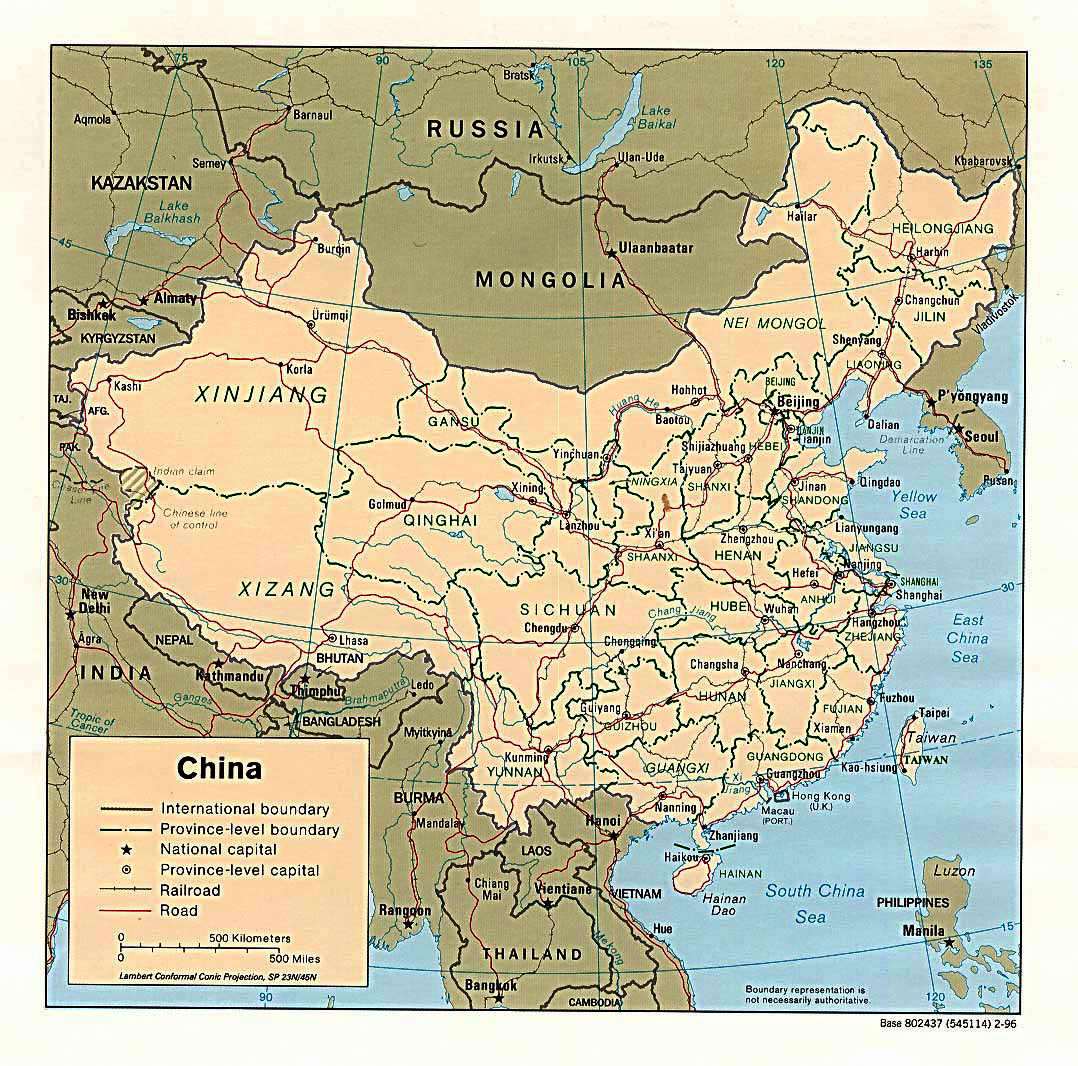
Russia announced the end of its decade long “counter-terrorism operation” in Chechnya on Thursday, claiming that "normality" had returned to the territory.

Amnesty International has warned that normalization is not possible without full accountability for the gross human rights violations of the last 10 years.

"The true benchmark of a return to normality is to give people what they have been wanting for over a decade - they want the truth, and they want justice," said Irene Khan, Amnesty International's Secretary General.

"They want to know the fate and whereabouts of relatives and friends who are among the disappeared, and they want those responsible brought to account.

"Only thorough and independent investigations into past and continuing human rights violations can bring normalization and security in Chechnya. Such investigations will be a deterrent to future violations.

"Opening the region to independent observers and journalists would be a signal that the authorities there are ready for transparency, but a change of status is absolutely meaningless without the political will to change reality."

Amnesty International has consistently exposed cases of human rights violations in the region, including war crimes committed by both Russian federal forces, forces under the present Chechen government of President Ramzan Kadyrov and Chechen armed groups.

They include indiscriminate killings, excessive use of force, deaths in custody, torture and ill-treatment in custody, alleged unlawful killings, arbitrary detentions, secret detention, abductions, enforced disappearances, threats to human rights activists, the targeting of relatives of suspected fighters, and the forced evictions of internally displaced people.

The organization has repeatedly called for impartial investigations and for those found responsible to be brought to justice. The investigations carried out by the authorities are ineffective and have led to entrenched impunity in regards to abuses committed by law enforcement agencies.

Amnesty International understands that only one person has been convicted in relation to a case of enforced disappearance - and the fate of his victim remains unknown.

Investigations into crimes committed by armed fighters have been marred by allegations of torture and ill-treatment of suspects and a blatant absence of respect for international standards of fair trial.

Victims of human rights abuses fear reprisals if they turn to the authorities, while those submitting cases to the European Court of Human Rights (ECHR) have faced reprisals ranging from threats and intimidation to disappearances.

To date the European Court of Human Rights has made rulings in about 100 cases concerning human rights violations committed in the course of the conflict in Chechnya. In most of these cases, the Court found Russia responsible for the death, torture or enforced disappearances of people in Chechnya or for the failure to investigate such crimes.

"It is vital that Russia takes steps to fully implement the rulings of the European Court, in particular in terms of investigations of proven violations and measures to prevent violations in the future," Irene Khan said.

"Without true respect for the rule of law from all sides, and a genuine commitment to address the festering legacy left by the blatant failure of political will at all levels to prevent and punish a catalogue of grievous abuses there can be no stability and security for the people in Chechnya as well as in the rest of the Russian Federation.

"Victims of human rights abuses in Chechnya and in Russia as a whole have been waiting for years for justice and for the authorities to reveal the truth about crimes committed during the counter-terrorist operation. Now is the time to restore their rights."
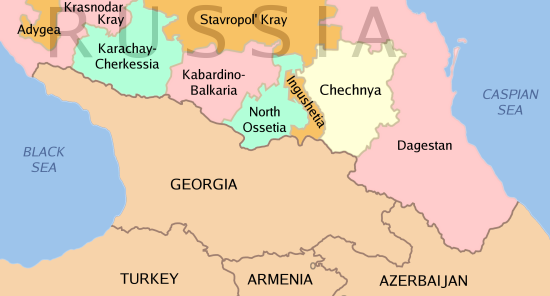
File:Chechnya and Caucasus.png

Thursday, April 16, 2009

Two other journalists of opposition newspapers currently imprisoned by the Azerbaijan authorities are Eynulla Fətullayev and Qənimət Zahid.

TO BE NOTED: From AI:

"
Azerbaijan journalist pardoned after almost three years in prison
© Institute for Reporter Freedom and Safety">Azerbaijan journalist Sakit Zahidov outside prison on the day of his release, 9 April 2009

Azerbaijan journalist Sakit Zahidov outside prison on the day of his release, 9 April 2009

© Institute for Reporter Freedom and Safety


© Institute for Reporter Freedom and Safety">Azerbaijan journalist Sakit Zahidov with a family member on the day of his release, 9 April 2009

Azerbaijan journalist Sakit Zahidov with a family member on the day of his release, 9 April 2009

© Institute for Reporter Freedom and Safety


16 April 2009

The Azerbaijan authorities released an opposition journalist on 9 April, after he had served almost three years in prison. Sakit Zahidov was pardoned under an amnesty act passed in March by the country’s parliament, the Milli Mejlis.

Serious doubt had been cast on Sakit Zahidov’s conviction and imprisonment after the authorities’ failed to clarify ambiguities in the evidence and irregularities in trial procedures. Amnesty International considered him to be a prisoner of conscience.

The organization welcomed his release while expressing its concern that opposition and independent journalists continue to face harassment, physical assault, intimidation and imprisonment on account of their journalistic activity.

A well-known satirist for the opposition newspaper Azadlıq (Freedom), as well as a poet, Sakit Zahidov was arrested on 23 June 2006 on charges of possessing and distributing illegal drugs. He was sentenced to three years’ imprisonment for being a user of illegal drugs.

Amnesty International said it believed that the real reason for his imprisonment was solely the authorities’ attempt to curb his right to freedom of expression and silence his critical reporting of their activities.

After his arrest, Sakit Zahidov alleged that evidence had been planted and claimed that the authorities targeted him because of his work. The authorities also harassed members of his family and the Azadliq newspaper.

Two other journalists of opposition newspapers currently imprisoned by the Azerbaijan authorities are Eynulla Fətullayev and Qənimət Zahid.

Having worked on the outspoken weekly Monitor newspaper, which closed after the murder of its editor Elmar Hüseynov, Eynulla Fətullayev then launched two popular opposition newspapers. Realny Azerbaydzhan (Real Azerbaijan) and Gündəlik Azərbaycan (Azerbaijan Daily) were both closed in May 2007 after a series of inspections of their premises by the authorities.

Eynulla Fətullayev was tried twice in 2007 and sentenced to eight and a half years’ imprisonment on charges of defamation, terrorism, incitement of ethnic hatred and tax evasion. Amnesty International has said that it believes he is a prisoner of conscience and has called for his immediate and unconditional release.

Sakit Zahidov’s brother Qənimət Zahid is the editor-in-chief of Azadlıq. He was arrested on charges of hooliganism on 10 November 2007; he was alleged to have insulted a female passer-by outside his office, and then to have inflicted minor bodily harm on a man accompanying her.

Azerbaijani human rights activists have previously documented the use of “provocations” against opposition activists and many believe this case to have been artificially created to silence Qənimət Zahid’s journalism.

Qənimət Zahid was sentenced to four years’ imprisonment in March 2008, on charges of hooliganism and assault. Amnesty International has said that it believes he is a possible prisoner of conscience and will call for his release if allegations that he was targeted for his journalistic activity are confirmed.

Read More

Three years after editor's murder, Azerbaijan journalists still abused (News, 29 February 2008)
Azerbaijan: five journalists released (Public statement, 3 January 2008)
Azerbaijan: Prisoner of conscience sentenced to a further eight and a half years' imprisonment (Press release, 1 November 2007)
Azerbaijan: Immediate release for prisoners of conscience (Press release, 11 October 2007)
Azerbaijan: Appeal Cases: Well-known satirist Sakit Zahidov imprisoned following an unfair trial with questionable evidence (Report, 24 January 2007)"

http://all-of-azerbaijan.com/images/azerbaijan-multimedia/map/azerbaijan-map-12.jpg

Sunday, April 5, 2009

Allegations of unlawful killings, beatings, racial abuse and excessive use of force by France’s police officers are rarely investigated effectively.

TO BE NOTED: From AI:

"
Police abuse goes unchecked in France

Video: Police impunity in France

© Amnesty International

© Private">A memorial calling for justice for Abdelhakim Ajimi. Abdelhakim Ajimi died in 2008 in Grasse after being restrained by police.

A memorial calling for justice for Abdelhakim Ajimi. Abdelhakim Ajimi died in 2008 in Grasse after being restrained by police.

© Private


© Private">Abou Bakari Tandia in hospital following his detention.

Abou Bakari Tandia in hospital following his detention.

© Private


© Amnesty International" style="display: none;">Demonstration calling for investigation into the death of Abou Bakari Tandia, 24 January 2009
© Private" style="display: none;">Blood-stained clothes belonging to Philippe, who said he was beaten by police officers as he left a police station in May 2007.
© Private" style="display: none;">Injury to Philippe's head, requiring stiches.
© Private" style="display: none;">Injuries sustained to Evelyn's arm. She reported being ill-treated by a police officer who pulled over her car in Paris
© Private" style="display: none;">On the evening of 8 May 2008, Lamba Soukouna was allegedly kicked and hit with the butt of a gun by several police officers in V
© Amnesty International" style="display: none;">Albertine Sow reported being punched in the face and hit in the stomach by a police officer while six months' pregnant.

2 April 2009

French police have been accused of committing gross human rights violations – often against ethnic minorities – for which they are seldom brought to justice, says a new Amnesty International report.

Allegations of unlawful killings, beatings, racial abuse and excessive use of force by France’s police officers are rarely investigated effectively.

"In a climate where police abuse can go unchecked, the pattern of de facto impunity with regard to law enforcement officials in France is unacceptable," said David Diaz-Jogeix, Deputy Director of the Europe and Central Asia Programme at Amnesty International.

Procedures for investigating complaints against the police in France fail to meet standards required by international law. Victims of or witnesses to police ill-treatment increasingly find themselves charged with the criminal offences of insulting or assaulting a police officer.

Amnesty International’s research shows that the vast majority of complaints concern French citizens from ethnic minorities or foreign nationals.

"Law enforcement officials in France perform a difficult and dangerous task, often at great personal risk. However, when police misconduct takes place it must be investigated promptly, thoroughly, independently and impartially," David Diaz-Jogeix said.

"People need to trust their police. Currently, this is frequently not the case. This will not be possible until they see that appropriate disciplinary measures are taken in time and officers responsible for criminal conduct are brought to justice."

Although not every complaint made against the police has merit, there are large discrepancies between the number of complaints made and the number of disciplinary sanctions imposed.

According to limited information, from the 663 complaints examined by the police inspectorate in 2005, 16 resulted in dismissal. In 2006, from the 639 allegations of violence, only eight ended with dismissal. A high number of complaints against law enforcement officials are closed by the prosecutor without reaching trial.

"People have a right to complain but when it comes to the police, the odds are stacked against you if you want to make a complaint. The judicial system is institutionally biased in their favour. Victims, many of whom are French citizens from an ethnic minority or foreign nationals, are all too often left without justice," David Diaz-Jogeix said.

Amnesty International has called on the French authorities to take steps to reform the current system and create an independent police complaints commission with adequate powers and resources to conduct thorough and effective investigations.

"The French authorities must take measures to ensure that no-one is above the law. It is crucial that the public has confidence in the police force," David Diaz-Jogeix said.

READ MORE

France must do more for victims of police ill-treatment (Appeal for Action, 2 April 2009)"

Thursday, April 2, 2009

The beating follows the assault of well-known lawyer Pedro Infanda by the military.

TO BE NOTED: From AI:

"
Critics of Guinea-Bissau military beaten by military personnel
© Private">Luís Vaz Martins, the president of the Guinea-Bissau Human Rights League

Luís Vaz Martins, the president of the Guinea-Bissau Human Rights League

© Private


2 April 2009

Francisco José Fadul, a Court President and former Prime Minister of Guinea-Bissau, was beaten by military personnel at his home in Bissau in the early hours of Wednesday morning. He is currently in intensive care at the Simão Mendes National Hospital in Bissau.

Francisco Fadul held a press conference on Monday 30 March calling on the government to hold the military accountable for corruption and other crimes. He was reported to have been beaten by at least four military officials who hit him with the butts of their firearms and told him he was "too talkative". He received injuries all over his body – including the head – and a stab wound on his arm.

The beating follows the assault of well-known lawyer Pedro Infanda by the military. Pedro Infanda was arbitrarily arrested by military officials on Monday 23 March and taken from his office to the Quartel Amura de Bissau military installation, where he was severely beaten with wooden objects for four days, and tortured.

He was denied access to medical treatment, his family and an attorney. His entire body is covered in bruises. He is also currently in intensive care at the Simão Mendes National Hospital.

Hours before his unlawful arrest, Pedro Infanda held a press conference in his office speaking on behalf of his client, Jose Americo Bubo Na Tchute, former head of the Guinea Bissau Navy. In the press conference, Pedro Infanda expressed his client's opinion that the newly appointed Chief of Staff of the Armed Forces was not competent for his post.

Military officials do not have the authority to arrest civilians in Guinea-Bissau. Amnesty International expressed concern that the military has been permitted to arrest and detain civilians in violation of national laws.

Amnesty International has also received reports that, Luís Vaz Martins, the president of the Human Rights League of Guinea-Bissau, was also threatened. An armed man in civilian clothes is reported to have gone to his office on Wednesday, around 5pm, looking for him. The man is reported to have said that the human rights league was "too talkative" and made threats to kill Luís Martins.

"The military of Guinea-Bissau is using extreme measures against any opposition or criticism – instilling fear in any who might consider freely expressing their views regarding military practices," said Erwin van der Borght, Amnesty International’s Africa Programme Director.

Amnesty International also said that the unlawful arrests and ill-treatment by the military were also a violation of Guinea-Bissau’s international human rights obligations.

"The government must investigate immediately these arrests and beatings by the military, and ensure those responsible are brought to justice and that similar attacks do not happen again," said Erwin van der Borght. "The military must be told in no uncertain terms that they do not have the authority to arrest or detain civilians."

Saturday, March 21, 2009

prisoners in the country are being denied medical treatment, possibly as an extra punishment

TO BE NOTED: From AI:

"
Deaths in custody in Iran highlight prison authorities' disregard for life

20 March 2009

The death in custody of an internet blogger in Iran on Wednesday raised renewed fears that prisoners in the country are being denied medical treatment, possibly as an extra punishment.

Omid Reza Mirsayafi's death follows that of another political prisoner, Amir Hossein Heshmat Saran, who died in suspicious circumstances on 6 March after five years in prison.

"The full circumstances of both prisoners' deaths have yet to become clear, but it appears that both may have resulted from a failure or refusal on the part of the prison authorities to allow them urgently needed medical treatment," said Hassiba Hadj Sahraoui, Deputy Director of the Middle East and North Africa Programme.

"The Iranian authorities have an obligation to ensure that both deaths are urgently and impartially investigated, and to ensure that any officials responsible for denying or withholding medical treatment or for contributing to these prisoners' deaths in other ways are brought to justice."

Omid Reza Mirsayafi died at Tehran's Evin Prison less than six weeks after starting a 30-month sentence. He was convicted of "insulting the Supreme Leader" and "propaganda against the system" in relation to articles he had written on his blog. He denied the charges.

He is reported to have been suffering from depression, for which he received some medication from the prison clinic and to have become seriously ill after taking an overdose.

Another prisoner, who is a medical doctor, Dr Hesam Firouzi, provided immediate assistance and recommended his hospitalization. Despite this prison staff were reported to have failed to recognize the seriousness of his condition and did not transfer him to hospital.

Two weeks earlier, Amir Hossein Heshmat Saran died at a hospital in Karaj shortly after he was taken there from Raja’i Shahr (or Gohardasht) Prison. He was serving an eight-year sentence imposed in 2004 for establishing the United National Front political party.

He died after he was reported to have become seriously ill on 4 March. His wife has said that, when she visited him in hospital on 5 March, he appeared to be in a coma and that he was shackled to the hospital bed. After his death, a hospital doctor told her that he had suffered a brain haemorrhage and a lung infection and that he should have been hospitalized sooner.

Other political prisoners have died in custody in suspicious circumstances in recent years. Abdolreza Rajabi, a member of the People's Mojahedin Organization of Iran (PMOI), died unexpectedly in Reja'i Shahr Prison on 30 October 2008.

In 2006, Akbar Mohammadi, a student, died in Evin Prison, and Valiollah Feyz Mahdavi, a PMOI member under sentence of death, died in Reja’i Shahr Prison after hunger strikes in which they were apparently denied adequate medical attention.

"These latest deaths underline the urgent need for the Iranian authorities to improve prison conditions and to take immediate measures to ensure that all prisoners in their custody are treated humanely," said Hassiba Hadj Sahraoui.

"It is shameful that the health of prisoners is disregarded to such an extent that they are denied potentially life-saving treatment and allowed to die while in the care of the state. We fear that refusal of timely medical care is being used as another tactic in the arsenal of repression of dissent in Iran."

Thursday, March 19, 2009

The Cuban authorities took action on Tuesday to suppress peaceful demonstrations marking the 6th anniversary of a crackdown against dissidents.

TO BE NOTED: From AI:

"
Demonstrations disrupted in Cuba
© APGraphicsBank">Activists 'Ladies in White' sit at entrance of Santa Rita Roman Catholic Church, Havana, Cuba, 20 March 2005

Activists 'Ladies in White' sit at entrance of Santa Rita Roman Catholic Church, Havana, Cuba, 20 March 2005

© APGraphicsBank


19 March 2009

The Cuban authorities took action on Tuesday to suppress peaceful demonstrations marking the 6th anniversary of a crackdown against dissidents. Several members of the Damas de Blanco (Ladies in White) were prevented from travelling to Havana for activities marking the anniversary.

Some were blocked from leaving their homes and one of them was forced to get off the bus that was taking her to Havana and was driven back to her home.

“The Cuban authorities must stop this continuing harassment of activists who are peacefully attempting to exercise their freedom of expression and association,” said Gerardo Ducos, Cuba researcher at Amnesty International.

Two members of the Damas de Blanco were previously detained for several hours on 8 March and several others prevented from leaving their homes, in an apparent attempt to prevent them from participating in events to commemorate International Women' Day.

The Damas de Blanco is an unofficial group formed by women who are relatives and friends of those imprisoned in the March 2003 crackdown. The Cuban authorities arrested 75 men and women for their peaceful expression of opinions critical of the government in 2003.

The 75 were subjected to summary trials and were sentenced to long prison terms of up to 28 years. Amnesty International declared them to be prisoners of conscience. Fifty-four remain in prison.

The Damas de Blanco organizes peaceful marches where they distribute flowers and call for the release of their relatives and friends who are still in prison. In 2005, Damas de Blanco was awarded The Sakharov Prize for Freedom of Thought by the European Parliament.

The five representatives nominated by the group to collect the award in Strasbourg were unable to travel from Cuba, because they did not receive the necessary travel documents from the Cuban authorities."

Wednesday, March 18, 2009

Two people are known to have died of kidney failure after having been subjected to the ordeal.

TO BE NOTED: From AI:

"
Hundreds accused of 'witchcraft' persecuted in The Gambia

18 March 2009

Up to 1,000 people in The Gambia have been taken from their villages by “witch doctors”, taken to secret detention centres and forced to drink hallucinogenic concoctions.

The liquid they are forced to drink has led many to have serious kidney problems. Two( 2 ) people are known to have died of kidney failure after having been subjected to the ordeal.

The incidents are part of a “witch hunting campaign” spreading terror throughout the country.

Eyewitnesses and victims told Amnesty International that the “witch doctors”, who they say are from neighbouring Guinea, are accompanied by police, army and national intelligence agents. They are also accompanied by "green boys" – Gambian President Yahya Jammeh’s personal protection guards.

According to victims and their relatives, “witch doctors” have been visiting villages with armed security and taking villagers they accuse of being “witches” – many of them elderly – by force, sometimes at gunpoint. They are then taken to secret detention centres.

Some have been held for up to five days. They are forced to drink unknown substances that cause them to hallucinate and behave erratically. Many are then forced to confess to being a witch. In some cases, they are also severely beaten, almost to the point of death.

The most recent incident took place on 9 March in Sintet village in the Foni Jarrol district. Up to 300 people were forced to go to the President’s farm in Kanilai. According to one witness:

“At 5am the paramilitary police armed with guns and shovels surrounded our village and threatened the villagers that anyone who tries to escape will be buried six feet under. Fear gripped the village, children were crying and traumatised. They randomly identified over 300 men and women who were forced at gunpoint into waiting buses and ferried to the President’s hometown.

"Once there, they were stripped and forced to drink ‘dirty water’ from herbs and were also bathed with these dirty herbs. A lot of these people who were forced to drink these poisonous herbs developed instant diarrhoea and vomiting whilst they lay helpless.

"I stayed there for five days. I experienced and witnessed such abuse and humiliation. I cannot believe that this type of treatment is taking place in Gambia. It is from the dark ages.”

The incidents have taken place in the Foni Kansala district, an area near to President Jammeh’s farm in Kanilai. However, many people believe that the “witch hunting” campaign will spread throughout the rest of the country. Hundreds of Gambians have already fled to the Casamance region in Senegal after their villages were attacked.

The witch doctors were invited to The Gambia early this year, soon after the death of President Jammeh’s aunt. The President is reported to believe that witchcraft was used in her death.

Halifa Sallah, a prominent opposition figure who has written about the activities of witch doctors for the main opposition newspaper, Foroyya, was arrested at his home on 8 March. He has since been charged with sedition and spying, and is currently in Mile II, the Central Prison in the Gambia. His next court date is set for 25 March. Amnesty International is concerned that he is at risk of being tortured or ill-treated and that his trial will be unfair.

Halifa Sallah is former member of the Pan African Parliament and minority leader of the National Assembly. He is Secretary General of the People’s Democratic Organization of Independence and Socialism and coordinator of the National Alliance for Democracy and Development. He stood as a presidential candidate in the Gambia in 2006.

Amnesty International has called on The Gambian government to put an immediate stop to the witch-hunting campaign. The organization has also urged the authorities to investigate the incidents and to bring those responsible to justice."

Monday, March 16, 2009

investigation that looks at all alleged violations of international law - by Israel, by Hamas and by other Palestinian armed groups involved

TO BE NOTED: From AI:

"
UN urged to 'find truth' about Gaza conflict

Researching allegations of war crimes in Israel and Gaza

© Amnesty International

© APGraphicsBank">Aftermath of Israeli airstrike, Gaza Strip, 6 January 2009

Aftermath of Israeli airstrike, Gaza Strip, 6 January 2009

© APGraphicsBank


16 March 2009

A group of 16 of the world's leading war crimes investigators and judges - backed by Amnesty International - has urged the United Nations to launch a full inquiry into alleged gross violations of the laws of war committed by both sides during the recent conflict in Gaza and southern Israel.

An open letter - entitled 'Find the truth about Gaza war' - was sent to the UN Secretary-General Ban Ki-moon on Monday. The letter's signatories include Archbishop Desmond Tutu, former UN High Commissioner for Human Rights Mary Robinson and judge Richard Goldstone, formerly Chief Prosecutor of the International Criminal Tribunals for the former Yugoslavia and for Rwanda.

A UN inquiry is currently investigating attacks which were carried out against UN facilities and personnel in Gaza during the three-week conflict.

"The UN investigation is not sufficient as a response to the grave violations that were committed during the conflict. Hundreds of civilians were killed or killed, and it is vital that the circumstances in which they were attacked are fully investigated," said Malcolm Smart, Director of Amnesty International’s Middle East and North Africa Programme.

"Those responsible for war crimes or other serious violations of international humanitarian law and human rights abuses must be held to account."

"What is needed is a comprehensive international investigation that looks at all alleged violations of international law - by Israel, by Hamas and by other Palestinian armed groups involved in the conflict."

The letter's signatories - who have led investigations of crimes committed in former Yugoslavia, Kosovo, Darfur, Rwanda, Sierra Leone, South Africa, East Timor, Lebanon and Peru - say that they have been "shocked to the core" by events in Gaza.

They have urged world leaders "to send an unfaltering signal that the targeting of civilians during conflict is unacceptable by any party on any count."

The letter calls for the establishment of a UN commission of inquiry into the Gaza conflict that:
  • Has a mandate to carry out a prompt, thorough, independent and impartial investigation of all allegations of serious violations of international humanitarian law committed by all parties to the conflict
  • Acts in accordance with the strictest international standards governing such investigations
  • Can provide recommendations as to the appropriate prosecution of those responsible for gross violations of the law by the relevant authorities
Prof. William A. Schabas, former member of the Sierra Leone Truth and Reconciliation Commission, said: "The international community must apply the same standard to Gaza as it does to other conflicts and investigate all abuses of the laws of war and human rights."

Sunday, February 22, 2009

Both Israel and Hamas used foreign-supplied weapons to attack civilians according to fresh evidence released by Amnesty International.

TO BE NOTED: From AI:

"
Foreign-supplied weapons used against civilians by Israel and Hamas
© APGraphicsBank">Israeli artillery fires towards southern Gaza Strip, from Israel side of the border

Israeli artillery fires towards southern Gaza Strip, from Israel side of the border

© APGraphicsBank


© Amnesty International">Label on the remains of a missile that killed three paramedics and a child, Gaza, January 2009

Label on the remains of a missile that killed three paramedics and a child, Gaza, January 2009

© Amnesty International


© Amnesty International">Rocket remants collected at Sderot police station, Israel, 28 January 2008

Rocket remants collected at Sderot police station, Israel, 28 January 2008

© Amnesty International


© Amnesty International" style="display: none;">Phosphorous shell cases found in Khuzna, Gaza, 24 January 2009

20 February 2009

Both Israel and Hamas used foreign-supplied weapons to attack civilians according to fresh evidence released by Amnesty International.

Munitions from the USA, Israel’s main foreign arms supplier, were used by Israel forces during three-week conflict in Gaza and southern Israel. Hamas and other Palestinian armed groups fired hundreds of rockets that had been smuggled in or made of components from abroad at civilian areas in Israel.

Amnesty International has called on the UN to impose a comprehensive arms embargo on the parties to the conflict.

"Israeli forces used white phosphorus and other weapons supplied by the USA to carry out serious violations of international humanitarian law, including war crimes," said Donatella Rovera, who headed Amnesty International's fact-finding mission to southern Israel and Gaza.

"Their attacks resulted in the killing of hundreds of children and other civilians and massive destruction of homes and infrastructure. At the same time, the firing of rockets by Hamas and other Palestinian armed groups, though far less lethal than the weaponry used by Israel, also caused several civilian deaths and constitute a war crime."
For many years, the USA has been the major supplier of conventional arms to Israel. Under a 10-year agreement to 2017, the USA is due to provide $30 billion in military aid to Israel, a 25% increase compared to the period preceding the Bush administration.

"To a large extent, Israel's military offensive in Gaza was carried out with weapons, munitions and military equipment supplied by the USA and paid for with US taxpayers’ money," said Malcolm Smart, Amnesty International's Director for the Middle East.

In Gaza, as the fighting ended, Amnesty International researchers found fragments and components from munitions used by the Israeli Army - including many that are US-made – littering school playgrounds, in hospitals and in people’s homes. They included artillery and tank shells, mortar fins and remnants from Hellfire and other airborne missiles and large F-16 delivered bombs, as well as still smouldering highly incendiary white phosphorus remains.

They also found remnants of a new type of missile, seemingly launched from unmanned drones, which explodes large numbers of tiny sharp-edged metal cubes, each between 2mm and 4mm square in size. These lethal purpose-made shrapnel had penetrated thick metal doors and were embedded deep in concrete walls, and are clearly designed to maximize injury.

In southern Israel, Amnesty International also saw the remains of "Qassam", Grad and other indiscriminate rockets fired by Hamas and other Palestinian armed groups against civilian areas. These unsophisticated weapons cannot be aimed accurately and stand no comparison with the weaponry deployed by Israel but they have caused several deaths of Israeli civilians, injuries to others and damage to civilian property.

Even before the three week conflict, those who armed the two sides will have been aware of the pattern of repeated misuse of weapons by the parties.

"As the major supplier of weapons to Israel, the USA has a particular obligation to stop any supply that contributes to gross violations of the laws of war and of human rights," said Malcolm Smart. "The Obama Administration should immediately suspend US military aid to Israel.

"We urge the UN Security Council to impose an immediate and comprehensive arms embargo on Israel, Hamas and other Palestinian armed groups until effective mechanisms are found to ensure that munitions and other military equipment are not used to commit serious violations of international law.

"In addition all states should suspend all transfers of military equipment, assistance and munitions to Israel, Hamas and other Palestinian armed groups until there is no longer a substantial risk of human rights violations. There must be no return to business as usual, with the predictably devastating consequences for civilians in Gaza and Israel."