Showing posts with label Enron. Show all posts

Monday, January 19, 2009

Following Lehman’s filing on Sept. 15, “there was a spiral of confidence disappearing

More on the Lehman Debacle. From Bloomberg:

"By Jennifer Ryan

Jan. 19 (Bloomberg) -- Lehman Brothers Holdings Inc.’s rescue failed when U.S. officials couldn’t find a bank to provide the same trading guarantees that Bear Stearns Cos. received, the New York Federal Reserve’s general counsel said.

“Plan A was to prepare a Bear Stearns-style rescue, plan B was the alternative case,” Thomas Baxter, who attended the discussions to save the bank, told a conference in London today. “The problem with plan A was the problem with guarantees” and “if you don’t have that guarantee and a strong hand, market confidence in a weaker member is going to continue to erode.”

Lehman’s failure in September led to the biggest bankruptcy filing in history and prompted an escalation in the financial crisis which threatened to undermine banks around the world. An agreement by U.K.-based Barclays Plc to buy Lehman was blocked at the last minute by British regulators.( WOW )

“The facts are often that people conclude that we let Lehman fail, and that factual predicate is not accurate, that the government let Lehman fail,” Baxter said. “The problem we encountered on Sunday, Sept. 14, is Barclays wasn’t in a position to give a similar guarantee of the trading obligations of Lehman” as JPMorgan Chase & Co. gave to Bear.

Bank of America Corp and Barclays were the only two potential suitors for Lehman when officials met before the bankruptcy filing on Sept. 15., said Baxter, speaking at a conference organized by the Financial Markets Group of the London School of Economics.

‘Cast of Characters’

“When we started into Lehman weekend on Friday, Sept. 12, we gathered at the New York Fed,” he said. “The cast of characters were the secretary of the Treasury, Hank Paulson, my president, Tim Geithner, the chairman of the SEC,” Christopher Cox, and the heads of as many as 14 financial institutions.

“It soon became clear that Bank of America was not so much interested in Lehman, but something else. That was Merrill.” Baxter said. “So we lost Bank of America. That left Barclays.”

The group of bankers and officials was trying to repeat the Bear rescue on Lehman, except that this time officials told lenders that “unlike with Bear, you all are going to finance the assets that are taken to facilitate the acquisition. That was plan A,” Baxter said.

“The problem with plan A was not an absence of financing” because the bankers in the room did agree on a deal, Baxter said. “They had the money and they were willing to put it out.”

‘More Technical’

The hitch was “much more technical,” Baxter said.

“The problem for plan A relates to, what do you do in the period between the announcement of a merger and the actual closing of the merger?” Baxter said. He said plan A failed because Barclays couldn’t guarantee the trading obligations.

Barclays agreed to acquire Lehman after a syndicate of banks consented to backstop a new entity that would take over $55 billion to $60 billion of Lehman’s troubled assets, according to people familiar with the negotiations. The deal fell apart when the U.K.’s Financial Services Authority refused to sign off on the Barclays purchase that day and U.S. officials refused to take further steps to save the deal.( GOOD WORK )

The New York Fed meeting then turned to discuss plan B, Baxter said.

“The best option was to put the parent of Lehman into bankruptcy, to continue an operation as broker-dealer at least in the U.S., and to continue a broker-dealer operation through Federal Reserve liquidity,” Baxter said. “That happened.”

‘Big Time’ Loans

In the week after the bankruptcy filing, the Fed loaned “big time” to keep the broker-dealer in business, with funds totaling as much as $50 billion, he said. Barclays then returned to the table and bought the division.

“If you go back and study the way we did Bear Stearns, you’ll see the importance of the guarantees( I AGREE ),” Baxter said.

Following Lehman’s filing on Sept. 15, “there was a spiral of confidence disappearing( A CALLING RUN, DEBT-DEFLATION SPIRAL ),” Tony Lomas, a partner at PricewaterhouseCoopers who is administering Lehman’s U.K. bankruptcy, told the same conference today. He previously worked on the aftermath of Enron Corp.’s financial collapse.

“We had a call Saturday night, we were appointed Sunday lunchtime,” Lomas said. “We had half a day to prepare. In the Enron insolvency, we had a two-week window to talk with management on what they would do if support from the parent stopped.”

To contact the reporter on this story: Jennifer Ryan in London at Jryan13@bloomberg.net"

This was a terrible mistake.

Wednesday, December 24, 2008

"Federal officials are bringing far fewer prosecutions as a result of fraudulent stock schemes than they did eight years ago"

Since you know that I think that Fraud, Negligence, Fiduciary Misconduct, and Collusion, are the second most important cause of this crisis, I think you can guess how I feel about this story in the NY Times:

"By ERIC LICHTBLAU
Published: December 24, 2008

WASHINGTON — Federal officials are bringing far fewer prosecutions as a result of fraudulent stock schemes than they did eight years ago, according to new data, raising further questions about whether the Bush administration has been too lax in policing Wall Street.( A MAJOR MISTAKE )

Legal and financial experts say that a loosening of enforcement measures, cutbacks in staffing at the Securities and Exchange Commission, and a shift in resources toward terrorism at the F.B.I. have combined to make the federal government something of a paper tiger in investigating securities crimes. ( A MAJOR CAUSE OF THIS CRISIS )

At a time when the financial news is being dominated by the $50 billion Ponzi scheme that Bernard L. Madoff is accused of running, federal officials are on pace this year to bring the fewest prosecutions for securities fraud since at least 1991, according to the data, compiled by a Syracuse University research group using Justice Department figures.( WHAT A DISGRACE )

There were 133 prosecutions for securities fraud in the first 11 months of this fiscal year. That is down from 437 cases in 2000 and from a high of 513 cases in 2002, when Wall Street scandals from Enron to WorldCom led to a crackdown on corporate crime, the data showed.

At the S.E.C., agency investigations that led to Justice Department prosecutions for securities fraud dropped from 69 in 2000 to just 9 in 2007, a decline of 87 percent, the data showed.

Federal officials took issue with some of the data compiled by the Syracuse group and said that they had maintained a strong commitment to rooting out fraud and abuse in the stock markets. While the S.E.C. could not provide numbers of its own on criminal cases arising from its investigations, Scott Friedstad, the deputy director of enforcement at the commission, said the numbers did not reflect “the reality that I see on the ground.”

“We are as committed as ever to vigorous enforcement efforts,” he said.

But a number of investor advocates and securities lawyers who are critical of the S.E.C.’s recent performance say they will be anxiously watching the incoming Obama administration to see what steps it may take to restore the agency’s battered credibility and re-establish it as a watchdog against corporate abuse.( HEAR HEAR )

President-elect Barack Obama has named Mary Schapiro, head of the Financial Services Regulatory Authority, to lead the S.E.C, and he has promised an overhaul of the agency and other financial regulatory offices to provide tougher oversight.( PLEASE )

“I think the S.E.C. has completely fallen down on the job,” said Jacob H. Zamansky, a New York lawyer who specializes in representing investors who have lost money in fraud cases. “They’re more interested in protecting Wall Street than protecting investors. The new administration has to do a complete overhaul of the S.E.C.” ( A MAJOR CAUSE )

The F.B.I., which frequently investigates stock fraud cases either on its own or in partnership with the S.E.C., has also had a sharp decline in the number of white-collar cases it has brought in the last several years — partly a reflection of a huge shift in staffing and resources to counterterrorism operations since the Sept. 11 attacks, officials said. ( THAT WORKED WELL )

David Burnham, co-director of the Syracuse research group, which is known as the Transactional Records Access Clearinghouse, or TRAC, said the decline in stock fraud prosecutions growing out of the F.B.I. “really is no surprise. It’s a reflection of a choice that was made right after 9-11 to move investigators into terrorism, and this is the cost of that.( COULDN'T DO BOTH. WE NEEDED TO GO TO IRAQ )

“Maybe it’s the correct call,” he added, “but with both the F.B.I. and the S.E.C., the federal government is really the only place that does white-collar crime on a systematic basis.”( YOU HAVE NO IDEA WHERE THIS CRISIS WILL LEAD )

The economic collapse of the last few months has brought intense scrutiny of the S.E.C. amid accusations that it failed to foresee and prevent the collapse of one major financial institution after another as a result of risky overinvestment in mortgage-backed securities.

“As an overheated market needed a strong referee to rein in dangerously risky behavior, the commission too often remained on the sidelines,” Arthur Levitt, who served as chairman of the S.E.C. during the Clinton administration, told the Senate Banking Committee in October.

The Madoff scandal, now under investigation by federal prosecutors in Manhattan, has ratcheted up criticism even further.

Christopher Cox, chairman of the S.E.C., ordered an internal investigation last week into what he said were the agency’s “multiple failures” to investigate credible allegations of wrongdoing by Mr. Madoff.

The S.E.C.’s own data suggests that the agency has put increasing emphasis on using non-criminal means, like civil fines and what are known as deferred prosecution agreements, in dealing with allegations of wrongdoing. The number of S.E.C. cases handled through civil or administrative remedies has grown from 503 in 2000 to 636 this year. ( GOOD WORK )

Critics of the S.E.C. also attribute the decline in criminal cases to shortages in staffing and resources in the agency’s investigative units, policy changes that have reduced the authority of investigators to pursue cases on their own, and a “revolving door” phenomenon that has led investigators to leave the agency for high-paying jobs in the industry that they once helped to monitor.( A MAJOR CAUSE )

“It’s been awful,” Sean Coffey, a former fraud prosecutor in New York who now represents investors in securities litigation, said of the S.E.C.’s recent enforcement record. The agency has “neutered the ability of the enforcement staff to be as proactive as they could be. It’s hard to square the motto of investor advocate with the way they’ve performed the last eight years.” ( A TOTAL DISGRACE )

Mr. Coffey said he believed the declining number of stock fraud prosecutions is partly a result of the backlash the Bush administration experienced after its aggressive pursuit of corporate crime following the Enron collapse in 2002, which led to the creation of a national task force on corporate wrongdoing. ( THEY LISTENED TO THEIR MASTERS )

In the last few years, he said, “the administration has been sending the message that we’re going to loosen the binds on the market to compete in the global marketplace, and they’ve pulled the throttle back on prosecutions because it wasn’t politically necessary anymore.” ( THAT WORKED WELL )

I'm saying that this is the second major cause of this crisis, and it is a result of decisions by the absolute worst administration, by a factor of ten, than any other administration since the beginning of the twentieth century. Hoover lived in a much tougher era, and was a genius compared to Bush. Nixon was Lincoln compared to Bush. When he's gone, the worldwide sigh of relief might effect global warming.

Sunday, December 21, 2008

"What happened to the ideology? On closer inspection, it turned out to be something of a cover all along."

Robert Reich also has a pretty good idea of our Political Culture:

"Greenspan’s real failure of imagination was his inability to believe there are useful market rules beyond those that protect private property and prevent outright fraud. This, presumably, was why he kept insisting for so long that government be held at bay( WHO KNOWS WHAT HE REALLY BELIEVES? ).

But now the United States has chosen to deal with the financial crisis by buying up a significant fraction of the shares of the nation’s major banks and its largest insurance company, underwriting the loans of a large portion of the nation’s home-lending industry, and is on the verge of underwriting the nation’s largest automobile makers. Yet little if any of this largesse has found its way to the broader public( A VERY BIG SOCIAL PROBLEM WITH THE BAILOUTS ) – to homeowners in danger of defaulting on their mortgages and losing their homes, small businesses close to insolvency, state and local governments cutting public services because of budget shortfalls, families unable to afford health insurance, or young people unable to obtain loans to finance university tuition. ( TREASURY AND THE FED ARE TRYING NOW )

The ideology of a perfectly self-correctly free market( THEY DO NOT BELIEVE IN THAT AT ALL ) has given way to what might be described as a raid by America’s biggest banks and corporations on the public purse, supposedly justified( ACTUALLY JUSTIFIED AS NECESSARY TO THE FUNCTIONING OF OUR SYSTEM, AND CONSIDERED A FORM OF FDIC INSURANCE THAT ONLY A FEW PEOPLE SEEM TO BE AWARE OF ) by benefits to the broader public which seem never to materialize( THE INVESTMENT CLASS IS THE BROADER PUBLIC IN THEIR VIEW ). What happened to the ideology?( THE ONE ABOUT GOVERNMENT GUARANTEEING TO HELP THEM IN A CRISIS? IT'S WORKING OUT JUST AS PLANNED. SURELY YOU KNOW THAT? ) On closer inspection, it turned out to be something of a cover all along( THAT'S IT ).

During the same years Greenspan called for deregulation of financial markets( ONLY THESE ), Wall Street was accelerating its bankrolling of the U.S. Congress( THAT'S THE FDIC INSURANCE I WAS REFERRING TO ). Securities and investment firms contributed larger and larger amounts of money – not just to conservative Republicans who might expect such support but also to Democrats who had never been so graced before( OF COURSE. THAT'S OUR SYSTEM ). According to Center for Responsive Politics, Wall Street firms dramatically increased their contributions to both parties during these years. Their share of total donations to the Democratic Senatorial Campaign Committee, for example, rose continuously, from 5 percent during the 1999-2000 election cycle to 15 percent by the 2007-2008 cycle.

The money was accompanied, and often raised, by Wall Street lobbyists who pushed Congress in the same direction Greenspan urged – blocking regulation of derivatives, weakening oversight of subprime mortgage lending, and preventing the Securities and Exchange Commission from doing its job. ( IN OTHER WORDS, GETTING GOVERNMENT OFF THEIR BACKS WHEN IT SUITED THEM )

To take but one example, the collapses of Enron, WorldCom, and several other giant corporations in 2002 revealed a troubling pattern of credit-rating agencies repeatedly assuring investors that such companies were good investments until just before they went under. When the Securities and Exchange Commission asked Congress for additional authority to oversee the credit-rating agencies, Wall Street and its lobbyists blocked the measure( IT WAS CLEAR WHY BACK IN THE S & L CRISIS ). With hindsight, it’s clear why. Wall Street investment banks were paying the agencies to rate various mortgage backed securities after first advising the firms that issued them – and collecting fees – on how to package them to get high ratings. Years later many of these same securities, based on risky loans, would prove to be worthless, threatening financial institutions worldwide. ( ALL TRUE )

Apparently Greenspan hasn't learned anything from all this( HE'S NOT SURPRISED. COME ON. ), but the rest of us have no excuse. The real choice ahead is between democratic capitalism and authoritarian capitalism( MELODRAMATIC ) . China is perfecting the latter. But unless we are careful we – the citizens of democratic capitalist nations – will discover that our form of capitalism has become more authoritarian( WE HAVEN'T YET? OH MY. ) than democratic. The current economic crisis surely poses a test for capitalism( A SOCIAL TEST. READ BURKE ). But it is also a test of democracy( AN ECONOMIC TEST. READ HAYEK )."

Our system is a Welfare State in which various Interest Groups compete to get the government's aid and largess. Almost everyone wants government intervention. All they differ in is the details of what they want the government to do. However, De-Regulation is not an end in itself, but a system in which the Government gives certain businesses more leeway while continuing to explicitly and implicitly guarantee government help in a financial crisis. What was not anticipated was the size of the crisis and ineffectiveness of the government's response.

I don't know exactly what Democratic Capitalism means to Reich. We have it. What we've had for the last eight years is just a peculiarly obnoxious form of it. It's up to the New Administration and Congress to do a better job of governing. It's hard right now how to see it being worse.

I suppose that my biggest difference with Reich is that I believe less government would alleviate some of these problems. However, that will not be possible without a growing and prosperous Middle Class, which I do not believe that we have now. I base that belief on using my eyes to see the obvious, which must be much harder to do than it seems.

Monday, December 8, 2008

"The practical problem is that the institutions involved are probably too big to jail. "

Burke turned up in Jesse's Cafe Americain today, so we've got to feature it:

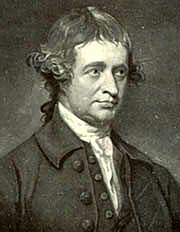
"Among a people generally corrupt, liberty cannot long exist."
Edmund Burke

Although Nassim Taleb makes some excellent points he is a bit narrow in his analysis because of his superior knowledge and experience in a highly specific area of the crisis, which in some ways is a broader cultural crisis.

There may be enough fraud involved in the US over the past twenty years for multiple prosecutions under the RICO statutes. Or it just may be the end result of a general breakdown in morals, from the top down by example perhaps.

One does find some institutions appearing as enablers at the heart of every crisis, from LTCM to Enron to the Accounting Frauds to the Tech Bubble to the Credit Bubble.

No, this was worse than the silence of the witnesses to the assault of Kitty Genovese that gave the label to the bystander effect.

In this case there were 'bystanders' who financially benefited from the assault and who not only kept quiet but actively intimidated and silenced other bystanders through ridicule and fear of retribution. But there are also many who simply did not care then and will not care once the markets rally once again. This is the sad commentary on a nation corrupted by easy money.

There were many bystanders who did call 911 and were ignored because those in the enforcement chain were either asleep on the job or had other competing interests.

The practical problem is that the institutions involved are probably too big to jail.

That is their strength, but ironically also their weakness."

I agree with Jesse, and made a similar point, which is that Taleb, and I'm a big fan, seemed to put actual culprits into the bystander dock.

I love "Too Big To Jail", although I do believe that, as the S & L Crisis had Charles Keating and a few others, there will be a few high profile prosecutions to make everyone feel fine with most of the guilty getting off.

I do not want that to happen, which is why, on my blog, as Taleb has done, only I don't have his smarts or expertise, I believe that I have shown that these investments are not that complicated, at least as to understanding the risk, and that fraud, negligence, fiduciary mismanagement, and collusion, should be vigorously prosecuted where they are found. That's the main reason that I don't like Systemic and Mechanistic Explanations. They have a bad habit of being used to exonerate criminals.

As long as I'm at Jesse's, I think I'll join Burke for a cup of java:


Café Americano

Café Americano
Spécialité Maison