Showing posts with label Bottom Billion Blog. Show all posts

Saturday, April 18, 2009

I don’t agree with her that aid is useless

TO BE NOTED: From The Bottom Billion Blog:

"
Freakonomics: Paul Collier answers reader questions

The New York Times ‘Freakonomics’ blog has a Q&A with Paul around African Development Issues. Read the full article here.

What activities/goods/services are cheap in the first world but expensive in Africa, and why? Please answer this question from both a consumer’s perspective and from a business owner’s perspective.
– William Cross

Answer

Anything that is imported because of tariffs and monopoly distribution channels. Many services are badly organized such as retail distribution. On the other hand, some e-services are very good value in Africa.

Question

What impact will the current recession have on the poorest/bottom billion? What policy intervention by Western/poor-country governments would make a significant difference and is realistic to expect?
– Rachel Eden

Answer

Recession: very different transmission channels, remittances down hit ordinary households, and the drop in commodity prices hits government revenues. But it is not all doom and gloom; Africa will still grow, unlike the U.S. and the U.K.

Policy intervention: a really easy one would be to require our banks, plus the tax-haven banks, to be as transparent about corrupt money deposited in them as about money linked to terrorism.

Question

What do you think of Dambisa Moyo’s argument that foreign aid to Africa should be reduced because it engenders dependency and undermines entrepreneurship? — Frank

Answer

Dambisa was my student, and I am delighted that young Africans are no longer prepared to have their continent defined by victimhood. They recognize that Africans can shape their own future. However, I don’t agree with her that aid is useless. Especially with the drying up of private finance, now is the hour for public international money; it is needed. It is, however, often badly used.

Question

As an American citizen, what actions can I take to improve conditions for the bottom billion? Is there federal legislation I can advocate for or a charity I can donate to? — Kathleen Lisson

Answer

Legislation: extend the Africa Growth and Opportunity Act. Charities: Kiva and lots of exciting social enterprise. WorldVision is pretty sensible in my experience."


By Stephen J. Dubner March 24, 2009, 11:25 am

Bring Your Questions for “Bottom Billion” Economist Paul Collier

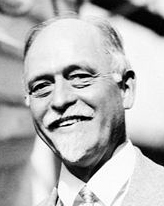
INSERT DESCRIPTIONPaul Collier

Paul Collier, an award-winning Oxford University economist, is a self-described Africanist who researches the effects of civil war, aid, and the “problems of democracy” in societies that have lots of resources but low incomes.

He is so far best known as the author of The Bottom Billion; his latest book, Wars, Guns, and Votes, has just been published. And he blogs here.

Both of Collier’s parents left school when they were 12, and his father ran a small shop that kept the family “just about afloat,” Collier recalls. “His frustration at limited opportunities has, for me, been the spur to working on Africa. I do not see Africa as romantically different — some magical ‘other.’ I see it as a place where millions of ordinary people are not able to realize their potential and, like my father, lead frustrating lives.”

In just the past two years, Collier has been senior adviser to Tony Blair’s Commission for Africa, addressed the General Assembly of the U.N., and met with Condoleezza Rice on her U.K. visit. He has also completed the first external review of I.M.F. operations for the board of the I.M.F.

Collier is a good person to ask about development economics, poverty, population growth, and just about anything else you can think of in that realm. So fire away in the comments section below. As with past Q&A’s, we will post his answers here in a few days."

Thursday, April 16, 2009

importance of science, technology and education investment as part of Rwanda’s ambitious development strategy

TO BE NOTED: From The Bottom Billion Blog:

"
Leapfrogging technology and Rwanda’s knowledgebase

An interesting lecture from Rwandan President Paul Kagame speaking at MIT. In the talk he addresses the importance of science, technology and education investment as part of Rwanda’s ambitious development strategy. Rwanda’s sees technology and the knowledgebase of the country as critical to unlocking growth across not just in the technology sector, or in the export of ICT services, but as integral to the countries overall development path. By focusing on the country’s human capital and its access to technology, the spillovers can benefit all aspects of the economy- from innovative energy technology to deliver electricity to rural areas, to technology-enhanced healthcare delivery models. Kagame also sees technology such as mobile phones as the key to more efficient business operation, such as distributed agricultural pricing systems.

The Rwandan President in the lecture emphasises the leapfrogging power of mobile phone technology, seen not just in Rwanda but across the developing world- however the question remains how widely can the success of mobiles be emulated for other technologies? I remain skeptical that the successes in mobile technology access in low-income countries can be translated into similar successful technological ‘leapfrogging’ in, for example explosive growth in rural computer access, simply by trusting the technology and the market. This is especially true for a replication of the private-sector-driven mobile phone sector, which is perhaps unique in its light-touch network potential. Instead, pushing the real technological boundaries will empahsise the need for more traditional forms of government infrastructure investment alongside innovative private sector action and partnerships.

It is still too early to judge, but I am enthusiastic about the present Rwandan government investment strategy to initiate the necessary infrastructure and taking this technological momentum to unlock the private sector possibilities- building of a national fibre network, roll out of national WiMAX access, a Kigali technology park and business incubator and external fibre landing stations to connect Rwanda to the coming east African undersea fibre. The strategies success or failure will hinge crucially on handover of the impetus to private sector actors. Indeed now it is up to private enterprise, foreign investment and the countries talent to sustain this momentum and fulfil Vision 2020’s ambition of Rwanda as a regional technology and telecommunications hub.

From the MIT Compton Lecture series website:

“Our continent is no longer all about violence and disease and human disasters that scarred many African countries in recent decades,” says Kagame. “We are now becoming a continent of opportunities.”

There are those who doubted Rwanda could “constitute a viable state,” says Kagame, but 14 years after bloody genocide and civil war, his country has managed an astonishing revival — enough “stability and resilience to allow the economy to grow at an average 7% annually in the past several years.” Other African nations have been expanding at the same pace; oil producers are zooming along at even faster clips. Kagame attributes this recovery to such factors as the “leapfrogging power of mobile technology,” where hundreds of millions of new cell phone users, even in remote areas without electricity, drive the growth of new business. And the number of internet subscribers in Africa is growing more than three times as fast as the rest of the world, says Kagame.

Cell phones and the internet allow Rwandan and other micro entrepreneurs to develop business networks. Kagame describes how technology helped a Kigali bakery expand beyond its neighborhood to reach more customers and suppliers, enabling workers to move into larger homes. In Kenya, Kagame recounts, a new agricultural commodity exchange “has reduced barriers between farmers, traders and consumers,” with the internet and cell phone text messages providing timely market information. This network has improved the incomes of farm families by 25%, leading to better healthcare and education. Rwanda’s power utility is also reaping the benefits of technology, keeping track of customers and accounts more efficiently, and no longer relying on government handouts.

But while technology has enabled Africans “to leapfrog some features of underdevelopment,” Kagame says it is not enough. “Our vision of becoming a middle income country by 2020 … requires thinking and acting inventively, boldly and creatively.” Kagame wants to build a foundation not just in technology but in science. Doing this requires a heavy investment in all levels of education. “Without a knowledge base,” he says, “Africa’s imperative for agricultural and industrial development to create wealth will remain unrealized.” He calls for members of the MIT community to join “in overcoming our challenges and turning them into rewarding opportunities.”

(Hat tip: Africa Unchained)"