Showing posts with label Mark-To-M. Show all posts

Thursday, May 14, 2009

by booking assets at a higher price than the market would offer, the banks reported earnings that never existed

TO BE NOTED: From Forbes:

"
Debt Markets

Chanos: Prosecute Bank Execs

05.07.09, 05:45 PM EDT

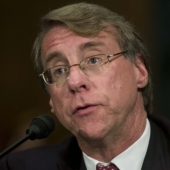
At a conference Wednesday night, fund manager Jim Chanos accused banks of exagerating earnings for years.

pic
James Chanos

James Chanos, a well-known short seller and hedge fund manager, said banks knowingly booked inflated earnings when selling the financial products that led to their downfall and the government bailout. The earnings wound up in bonus pools and banker's pockets.

"It's the heart of one of the greatest heists of all time," he said, without naming specific banks. Their executives probably won't be prosecuted because explaining how investment banks created and sold collateralized debt obligations and other structured financial products would test a jury's attention span. "The jury's eyes would glaze over."

The top underwriters of collateralized debt obligations from 2005 to 2007 were Bank of America ( BAC - news - people )-Merrill Lynch and Citigroup ( C - news - people ) with $237 billion of the $724 billion sold during that period. Representatives from both banks either didn't return calls or declined to comment.

Chanos, president of Kynikos Associates, was an early critic of Enron and rating agencies, reportedly shorting Moody's in 2007. Last year, he argued against proposed changes to mark-to-market accounting rules and made enough smart bets in the downturn to come in ninth on Forbes' list of top earning money managers with an estimated $300 million (see "Wall Street's Highest Earners").

During a discussion over the roots of the financial crisis at New York University Wednesday evening, participants spread the blame on rating agencies, the tight connections between Wall Street firms and elected officials and federal regulators. Chanos put banks' underwriting structured financial assets at the heart of it. (see "The Junk Alchemy of CDOs.")

Like many pools of asset-backed products, collateralized debt obligations are sliced into tiers, called tranches. The highest tier was considered safe, often sporting a AAA-badge from credit rating agencies, and paid out the lowest yield compared with riskier tiers ranked below it. In Chanos' telling, the banks typically kept a 3% to 5% cut as their fee for orchestrating the deal. He said sometimes the fee came from the lowest-ranking section, the equity tranche. "In many cases, the fee was a toxic tranche," he said. "They were immediately worth 30 cents on the dollar, but not priced that way."

In effect, by booking assets at a higher price than the market would offer, the banks reported earnings that never existed, he argued. The earnings wound up in the bonus pool and were then paid out. "There's no doubt in my mind that this is fraud," he said. "This was the bezzle," he added, using the late economist John Kenneth Galbraith's term for the hidden embezzled inventory that piles up in boom times.

Brad Hintz, a senior analyst at Sanford Bernstein and the former chief financial officer for Lehman Brothers, disputed Chanos' characterization of the underwriting process. Banks kept the top tranches thinking they were the safest, he said. And the problem, as Merrill Lynch found out, was that those AAA-rated securities turned out to be toxic. The rest of the story is well known: Bear Stearns, Lehman and Merrill couldn't move asset-backed securities off their books. "One of the key mistakes was putting illiquid assets on their balance sheets, not realizing fixed income markets could become illiquid."

Sunday, April 19, 2009

sound risk management policy should compliment any accounting methodology in place and not be driven by it

TO BE NOTED: From Due diligence and operational risk in hedge funds :

"
What happened to FAS 157 for hedge funds?

APRIL 15, 2009

FAS 157 (aka: the fair-value measurement standard) is an accounting standard which first took effect in November 2007. According to the Financial Accounting Standards Board (FASB), FAS 157 “…defines fair value, establishes a framework for measuring fair value in generally accepted accounting principles (GAAP), and expands disclosures about fair value measurements.”

FAS 157 has a number of ramification outside the hedge fund industry. As an example, here is a recent video examining the effects on banks of relaxing mark-to-market accounting rules.

FAS 157 was a big deal when it was first put into effect. For hedge fund’s (and their auditors) FAS 157 presented a number of unique due diligence challenges. Specifically, the original incarnation of FAS 157 requires hedge funds, in their audited financial statements, to classify assets into one of three levels. The levels are supposed to show indicate to investors the amount of certainty with which they can value an asset.

Level 1 - Assets with readily observable market prices. Inputs for the assets in this level are quoted prices (unadjusted) in active markets.

Level 2 - Assets with no readily observable prices but they have inputs that are based on them. An example of this would be an interest-rate swap whose components are observable points - such as a Treasury bond.

Level 3 - Assets where one or more of those inputs does not have readily observable prices. Level 3 is the most controversial Level.

There is a general perception that investors place a premium on liquidity and that for the vast majority of hedge fund situations the more liquid (i.e. - Level 1) the better. As such, the natural progression of FAS 157 led to a struggle between hedge funds and auditors in the way their assets would be presented to investors.

When FAS 157 first was announced many hedge funds (and their auditors) were unsure which FAS 157 Level certain assets should be classified. It seemed some hedge funds/auditors were set to error on the side of caution. Others seemed more open to assuaging their hedge fund client’s vocal objections to the classification of certain assets.

Some people in the private equity world have classified FAS 157 as “stupid.” The SEC’s former Chief Accountant Lynn Turner, has given FASB a failing ‘F’ grade. cartoon+aacounting What happened to FAS 157 for hedge funds?

(Others have raised questions about which FAS 157 assets should be classified in when they have no value (such as toxic assets). In light of the recent economic environment it seems that change is in the air to reform FAS 157. In recent Congressional testimony a number of big names (Ben Bernanke, Sheila Bair, Tim Geitner, Mary Schapiro) have suggested reforming FAS 157 (aka: Mark-to-Market) and Fair Value accounting.

Even FASB has acknowledged that FAS 157 needs some work and since issued three final Staff Positions (FSPs) thumb FAS157AB cover 09 What happened to FAS 157 for hedge funds?intended to provide additional application guidance and enhance disclosures regarding fair value measurements and impairments of securities - which is accounting speak for clarify what we should have made clear the first time. Maybe FASB should read some this book before making anymore recommendations.

Specifically, the three groups of FSPs are:

1) FSP FAS 157-4 (the exciting sequel to FAS 157-3)- Determining Fair Value When the Volume and Level of Activity for the Asset or Liability Have Significantly Decreased and Identifying Transactions That Are Not Orderly

2) FSP FAS 107-1 and APB 28-1, Interim Disclosures about Fair Value of Financial Instruments03fasb01 190 What happened to FAS 157 for hedge funds?

3) FSP FAS 115-2 and FAS 124-2, Recognition and Presentation of Other-Than-Temporary Impairments

“The issuance of these final FSPs follows a period of intensive and extensive efforts by the FASB to gather input on our proposed guidance,” states FASB Chairman Robert H. Herz.

Thanks for all your hard work.

So let me get this straight - FASB puts out a rule which confuses everyone and provides little guidance on how to use it. Then works really hard to clarify it while hedge fund’s, investors and auditors twist in the wind in the interim. Why wasn’t all of this work put into gathering input gathered done beforehand? The FSPs are expected to be voted on later this week.

fasb safety What happened to FAS 157 for hedge funds?Some have blamed mark-to-market accounting as fueling some of the problems with the economy. Others have claimed there is nothing wrong with the rules but rather other issues such as over leverage should be blamed. FAS 157 is nothing more than a classification system. On face value it will do nothing to effect the actual underlying assets held by a hedge fund manager. It raises a number of issues related to judgment of hedge fund managers and their auditors. It is unclear if different auditors would classify certain assets into levels uniformly.

Hopefully, the new guidance from FASB will remove some of the judgment and discretion for the FAS 157 classification process. At the end of the day I question whether mark-to-market accounting really deserves all the criticism it has received. While there are good arguments on both sides, certainly a sound risk management policy should compliment any accounting methodology in place and not, as it seems had been the case with many hedge funds, be driven by it."

Monday, April 13, 2009

no exact measures of the illiquidity discount or of expected losses based on fundamentals

TO BE NOTED: From Crisis Talk:

"
The Great Mark-to-Market Debate

The leaders of the Group of 20 (G20) recently called on the Financial Accounting Standards Board (FASB) and the International Accounting Standards Board (IASB) to improve financial reporting standards for calculating the market value of assets in illiquid markets. The debate over mark-to-market accounting, which is a subset of fair-value accounting, and its role in the financial crisis, made its way to Congress during the first half of March 2009. The concern is that banks will not incur the losses booked per mark-to-market accounting as asset values recover over time from today’s clearance sale prices.

The mark-to-market concept may sound trivial, especially when compared to a $787 billion rescue plan, but getting it right would be a significant step toward addressing the causes of the credit crisis. The main aim is to simplify the complexity of financial reporting and off-balance sheet financing and to make progress towards a single set of high quality global accounting standards.

In a forthcoming paper in the Journal of Economic Policy Reform, I discuss the costs of mark-to-market valuation within the US 2009 (Bailout) Emergency Economic Stabilization Act (EESA). The paper highlights how mark-to-market valuation standards influenced financial institutions, explains why mark-to-market policy suspension proponents can support EESA, and explains how the FASB and the SEC can count on EESA while assessing the need for mark-to-market valuation policy.

Briefly, these are the ways in which mark-to-market accounting standards have influenced financial institutions:

  1. It led them to revalue assets they held to their market value on the day that the reporting period ended.
  2. Mark-to-market accounting standards introduced more volatility to the balance sheets of firms.
  3. The devaluation that resulted from the markdown of mortgage-backed securities has forced highly-leveraged financial firms to ask for new capital or put liquid assets on sale to bring their leverage down.
  4. The problem with mark-to-market comes when assets are not easily measured.
  5. The losses are likely to harm bondholders less than stockholders because banks may need to raise capital by selling shares.
  6. Illiquidity leads expected losses based on credit fundamentals to divert substantially from “mark-to-market” losses. The liquidity premium is the key difference given that there are no exact measures of the illiquidity discount or of expected losses based on fundamentals.
Comments (0) E-mail Digg Bookmark Facebook

Friday, April 3, 2009

income on very cheap “toxic” assets can compensate for the impairment on loan losses. My guess is that it will

TO BE NOTED: From Inner Workings:

"
Goldman Sachs is basically right about the bank rally, but… April 3rd, 2009
By
David Goldman

…the question is: what are bank stocks worth? Robert Merton, remember, defines a stock as an option on future cash flows. When those cash flows do not exist or are quite uncertain, it’s hard to use the dividend discount model.

Right now, Citigroup (for example) is priced exactly to option value. Using the option calculator for options on Citigroup at ivolatility.com, I obtain a price for a 10-year call on Citigroup stock at a $2.74 strike of — exactly $2.41. In other words, the value of Citigroup stock is the same as that as an option on Citigroup, in the absence of dividends. At yesterday’s close, the market is saying that there might be something there, or there might not — the price of the stock is the price of a lottery ticket. Whether Citigroup exists as a going concern depends mainly on the whim of the federal government. When the market feared nationalization, the value of the option collapsed to $.97.

If we postulate that Citigroup can eke out a minimal level of profits as a zombie bank, eating the dead flesh of toxic assets (as today’s news reports suggest), then its value should be a bit higher than the pure option value. My guess is $4 to $5 is where Citigroup settles, with a comparable level of $10 or so for Bank of America. I don’t think we are going to see Citi or B of A at their old highs for decades, if ever.

So in that sense I agree with Goldman Sachs that there is no true bank rally to be anticipated from mark-to-market changes. Nonetheless, suspending MTM permits banks to become barely-profitable zombies. It is true that loan losses will continue to mount. The question is whether the income on very cheap “toxic” assets can compensate for the impairment on loan losses. My guess is that it will. I know some of the very worst garbage that Citigroup holds in portfolio, for example, so-called AAA securities backed by CCC-rated junk bonds arising from leveraged buyouts. AAA’s off CCC’s — that was pretty hard-core stuff. The hedge fund for which I was chief strategist helped invent these securities, and sold a bunch of them to Citigroup’s Structured Investment Vehicles (SIV’s). And they still are paying.

Remember that Goldman Sachs’ party line always opposed suspending mark to market. Lloyd Blankfein made the outrageous argument in a Financial Times commentary in February that Goldman had traded its way out of a hole in a mark to market world, and didn’t understand why everyone else didn’t. I commented at the time,

There is an obvious fallacy of composition here: Goldman is a clever house, and cleverly reduced risk ahead of others, which it accomplished by selling risk to less-clever institutions. If everyone had been as clever as Goldman Sachs, everyone would have tried to sell at the same time and the market would have crashed in a Krakatoa-like explosion. Everybody can’t be cleverer than the rest, which is what mark-to-market accounting incentivizes everyone to be: first in, first out.

Goldman Sachs has been trash-talking its commercial bank competition all along. I would take comments from Goldman Sachs with a grain of salt (everyone always has taken such comments with several grains of salt). The point is valid (don’t expect a true recovery), but there is probably is a bit of upside in bank stocks from present levels.

Once again: Zombie is as good as it gets. Zombie is beautiful. Zombie is better than dead. And ordinary unhappiness is better than hysterical misery."

Tuesday, March 31, 2009

Unless the Legacy Loan Program winds up buying assets at $90 or more, banks won't sell.

TO BE NOTED: From Accrued Interest:

"PPIP: Maybe you'd like it back in your cell?

The big question surrounding the toxic asset plan is will banks sell? I've put a little pencil to paper here and come up with some actual numbers.

First of all, I expect the Legacy Securities Program will work wonderfully. Sellers will flock to it like Jawas to a stray astromech droid. This program is aimed at securities which have been severely impaired from both a credit and liquidity perspective. CLOs, RMBS, ABS, CMBS, etc. The program should succeed in turning these programs into just liquidity impaired. In effect, it will separate the red ones with the bad motivators from the blue ones in prime condition. That will be key to an eventual economic recovery. It should foster a healthy new issue market for RMBS, ABS and CMBS (don't know that CLOs can come back), which will help get the velocity of money back to a more normal level.

Obviously having ready buyers able to earn impressive ROEs should improve the value of the underlying assets. Financial institutions have already marked these securities to market, an improvement in the actual value of the instruments ought to result in an improvement of balance sheets. This will particularly benefit financials who invested primarily at the top of the asset-backed capital structure. It will also benefit those that hold more risk in securities (such as brokerages Goldman Sachs and Morgan Stanley and possibly some P&C insurers) and less those that hold risk in loans (such as almost all banks). Even there, much of Goldman and Morgan's risks are tied to the equity markets, not to debt markets. Same goes for life insurance, generally speaking.

That brings us to the with the Treasury's Legacy Loan Program. I expect this to go over like the exotic twi'lek dancer's routine in Jabba's palace. The plan will indeed increase the theoretical price at which banks could sell loans. That's fine, but its short help. Loans haven't been marked to market. Instead, they are held at book value less an allowance for expected loss.

I've done some deep dives on bank residential loan portfolios. Getting detailed data is a challenge, but basically I tried to figure out what percentage of the bank's current portfolio is "challenged." High CLTV, bad geographics, low FICO, etc. You can make a relatively safe assumption that most of the loss reserve is pledged to those kinds of loans. Anyway, I can't find any big banks that are holding, say home equity loans at less than 90% of face. Unless the Legacy Loan Program winds up buying assets at $90 or more, banks won't sell.

So will the PPIF's pay $90? I doubt it. Take home equity loans as an example. Start with the following assumptions:

  • PPIFs get loans at 1mo-LIBOR +50bps. Its hard to say exactly what the cost of funds might be, but worth noting that FDIC paper trades around L+20.
  • 6-1 leverage, which is the max allowed under the program. I think its reasonable that non-delinquent, prime loans would get the max leverage.
  • Assume the loans float at Prime-flat.
  • Assume the loans are 1-2 years old, and will repay over the course of 6 years. To make it easy I'm going to assume equal payments per month.
  • The pool of loans will suffer 10% cumulative losses, all of which occur in the first two years. I won't write down the losses as they occur, simply take away the interest. That's consistent with a hold-to-maturity IRR calculation.
  • Finally, and perhaps most importantly, I'm assuming that the PPIF equity investors are targeting an IRR of 20%.
The result? $82.5.

That price will render it impossible for most banks to sell. For example, based on Bank of America's recent earnings presentation, it has something like $250 billion of prime, non-delinquent home equity loans with 90%+ LTV. I'd call this the kind of stuff that isn't exactly toxic, but selling could improve BAC's risk exposure significantly. Say they effectively have a $90 mark on these. If they sell at $82, they'd suffer an 8% loss versus their capital, or $20 billion. BAC has core equity capital of $48 billion. You do the math.

I don't expect commercial loans to be much better. Now a lot of commercial stuff has large loan loss reserves, and therefore sales would more easily be accretive to capital. But commercial loans are also present an information asymmetry problem. You can put a zillion residential loans into a pool and get some semblance of diversification. You can then look at average stats and get some idea of the make-up of the loans: geo diversification, average FICO, etc. A bank that is selling a commercial loan is telling you they don't want that commercial loan anymore.

This isn't to say the toxic asset plan will have no positive impact, but it is likely to be more indirect than investors are currently hoping. The best chance banks have for decreasing their residential loan portfolios is a revived securitization market, which is the primary aim of the TALF. Banks may be more willing to sell a portion of their home equity loans as a senior security, with the bank retaining a subordinate position. In that case, the bank might retain the upside while still freeing up some capital. In addition, a revived securitization market would give the market confidence that banks have enough liquidity to hold their loan portfolios to maturity.

It will also help banks who have made larger writedowns, especially those that made acquisitions. At the time of acquisition, the bank has to write down the loan to fair market value. In the case of J.P. Morgan's acquisition of WaMu, or Wells Fargo's acquisition of Wachovia, there would be no motivation to under-estimate the FMV decline. Those banks could therefore enjoy improved capital positions from certain sales. "

We are dealing with something not normal over the last 70 years, and overall market values are reflecting that

TO BE NOTED: From The Aleph Blog:

"Of Course not at Par; That’s Par for the Course

There are several truths well-known to educated investors that have been glossed over in all of the discussions of mark-to-market accounting, or SFAS 157. (Really SFAS 133, but SFAS 157 clarified it.)

  • Accounting rules have little impact on stock prices. Almost every academic study on accounting rules supports that idea. Why? Investors attempt to estimate the stream of free cash flows that an asset will throw off. Accounting rules can help or hinder that. Because SFAS 157 attempts to calculate a present value of cash flows for level 2 and 3 assets, it aids in that estimation.
  • Parties involved confuse regulatory with financial accounting. Mainly due to the laziness of financial corporations in the boom phase of our markets, they looked to minimize effort, and make the accounting the same for regulatory and financial purposes. This was foolish, because there is no one accounting method that is ultimate. Every financial statement answers one main question. For GAAP, the balance sheet asks “What is the net worth?” Regulatory accounting would ask “Is net worth positive under conditions of moderate stress, including the possibility that markets go illiquid, and we have to rely on cash flows to pay off the liabilities?”
  • There are always two ways to do accounting. You can do mark-to-market, or you can do book value accounting with impairment. Darkness encourages skepticism. In a period where there are few credit risks, book value accounting will be well-received. In an era where credit risks are significant, book value accounting will be no help, investors will distrust book value, and the effect might be less than where fair value estimates are provided. Regardless, the cash flows will still flow.
  • Equity-like investments deserve equity-like accounting. They should be market to market, as equities are. With derivatives, this is the reason that we mark them to market, their values are so variable. So we should mark speculative mortgage investments: estimate the future cash flows, and discount them at a high, but not equity-like interest rate.
  • But what of assets that are seemingly money good, but the few trades that have happened indicate a value at 60% of par, possibly because of The Bane of Broken Balance Sheets, or Time Horizon Compression. Here’s the problem: we have a lot of people alleging that those values can’t be right. Let them stand up and start buying to prove it all wrong. Part with precious liquidity to gain uncertain yield. It is quite possible that we are in a depression, and as such, there are too many assets relative to the ability to fund them — asset values must fall. Don’t immediately assume that the few trades in the market are ridiculous because they are lower than your current marks.
  • Some argue that there is an inconsistency between loans and bonds. Bonds get marked to market, while loans are marked at book. There is no inconsistency. The loans are held to maturity, unless sold. The bonds could be held to maturity as well, in which case they are at book value, and only changed if there is a need for a writedown, the same as the loans. Most companies have not chosen that option, largely because they want the right to sell assets if they want to. But that locks in their accounting; if they want the ability to sell, they must accept balance sheet volatility.
  • We have to differentiate SFAS 157 from misapplications of SFAS 157, which might be driven by the auditors. SFAS 157 does not mean last trade. In thin markets, companies are free to use discounted cash flow and other analyses to estimate fair value.
  • Now all of this said, practically, SFAS 157 leads to overestimating the value of assets. In the consulting work I have done, companies are not willing to mark their volatile assets down to levels near their fair value, much less last trade, which is worse. They are hoping for some huge return of risk-taking to appear, and revalue their assets. What if present conditions persist for five to ten years, where there are too many debts relative to the wilingness to fund them, as in the Great Depression? In that situation, SFAS 157 would prove to be too flexible, with banks marking assets higher than warranted.

The anti-SFAS 157 arguments rely on an assumption that things aren’t so bad — that mean-reversion is right around the corner. We are in a situation where marginal cash flows to purchase dud assets aren’t there. Mean reversion is a long way off, and the valuations of financial assets reflect that consistently. Try selling a bunch of whole loans held at par. See what the offers are. Why aren’t banks doing that to raise liquidity? Because the prices don’t justify it.

You can’t fight cash flows. Accounting exists to partition cash flows into periods, so that analysis of businesses can be done, and debt financing can be secured. In the end, cash flows win out, regardless of the accounting methods.

Thus my opinion: SFAS 157 is a good standard, and I am no fan of the FASB generally. There are misapplications of SFAS 157, forced by auditors, I believe. SFAS 157 already offers decent flexibility to management teams — let them use that flexibility, but no more. After that, let the regulators set their own solvency rules.

-==-=-=–==–=-=-=-==–=-==-=-=-

PS — What foes of SFAS 157 are unwilling to admit, is that lenders lent money near the peak of an amazing bull market, and now the collateral values lent against are far less than imagined at the time of lending.

It’s like the FRAM oil filter ad — “you can pay me now or pay me later.” There is a great deal of hubris involved in arguing that the market as a whole is out-of-whack. (Much as I had hubris toward the end of the bull phase… let me stab myself.) In ordinary bear markets, there is some strength somewhere to support asset values. That is not true now. We are dealing with something not normal over the last 70 years, and overall market values are reflecting that. Eventually accounting values will get there, as they did in the thirties."

Sunday, March 29, 2009

Modifying mark-to-market gives them the key to the front gate as well

TO BE NOTED: From Option ARMageddon:

"Letter to FASB: Don’t Change Mark-to-Market! March 29, 2009 – 3:49 pm

by Rolfe Winkler, CFA

John Gavin of Disclosure Insight has written a letter to FASB opposing its proposal to refine mark-to-market rules. Like John, I hope FASB sees the light.

It has been said that changing MTM rules would be like giving inmates keys to their own prison. Seems to me banks already have keys—to their own cells certainly, and to every other door inside the prison. After all, they have wide latitude to mark most assets to model (level 2) or to myth (level 3). Modifying mark-to-market gives them the key to the front gate as well.

From John:

Our letter includes…a study we published only about 10 days ago entitled, “Bank Goodwill Impairment Study.” Using goodwill as a proxy for overall balance sheet integrity, we found reason to question the…balance sheets for at least 70% of 50 of the largest banks trading in the US. That’s largely because a full 70% did not impair goodwill (at all) at year-end despite a significant percentage of them trading below book and even tangible book values (we called Bank of America the poster child in that regard and provide analysis of why their $80+ billion in goodwill is desperately in need of impairment).

This is the list of all the people/entities that have submitted comments to the FASB thus far. No surprise here, the majority are from the banks who have clearly organized themselves to keep the heat on the FASB.

Ours is letter #38. It appears we are the only independent investment research firm taking a stand on this.

The study attached to the letter (pages 4-15) includes some great data tables. I highly recommend it. The pdf format is easier to read than Scribd’s version, a link to it here.

Letter to FASB: Don’t Change Mark-to-Market!

Tuesday, March 10, 2009

Bernanke may not want MTM rules to be “suspended,” rather he would like to see them “improved.”

From Operation ARMageddon:

"Does Bernanke Want to Dump Mark-to-Market Rules? March 10, 2009 – 3:21 pm

by Rolfe Winkler, CFA

Reader H forwarded an interesting article from CNN Money. It quoted Fed Chairman Bernanke saying he wouldn’t support a suspension of mark-to-market (also called “fair value”) accounting:

“I would not support any suspension of mark-to-market,” the Fed chief told the Council on Foreign Relations after delivering a speech on financial regulation.

Though it makes his task of rescuing banks much harder, even Treasury Secretary Geithner has said he supports MTM as a means to improve the transparency of balance sheets. But a closer look at Bernanke’s prepared remarks suggests the Fed Chairman has a more open mind. (emphasis mine)

It seems obvious that regulatory and supervisory policies should not themselves put unjustified pressure on financial institutions or inappropriately inhibit lending during economic downturns. However, there is some evidence that capital standards, accounting rules, and other regulations have made the financial sector excessively procyclical–that is, they lead financial institutions to ease credit in booms and tighten credit in downturns more than is justified by changes in the creditworthiness of borrowers, thereby intensifying cyclical changes.

Rolfe here. Excessively pro-cyclical is exactly how opponents describe mark-to-market accounting. If credit structures are still performing, why should banks be forced to mark them down? Banks forced to take writedowns have less capacity to lend. Since lending is a primary source of cash to buy assets, reducing lending reduces the bid for those assets. Asset values fall, which results in less lending and even lower asset prices. It’s a self-reinforcing cycle. Hence “procyclical.”

The same thing helped inflate the bubble by encouraging more lending on the way up. As I noted yesterday: “As asset values increased, so did the value of collateral to support new lending. More lending inflated asset prices, increasing the value of collateral yet again, encouraging still more lending. Since house prices never fall, everyone imagined this cycle could continue ad infinitum. And even if they didn’t think so, no one was going to get in the way. Too much money was being made.”

In his recent book, George Cooper quoted a fascinating 19th Century paper by J.C. Maxwell, which spoke of the need for counter-cyclical “governors” to control the oscillations of mechanical systems. When a machine gets going too fast, it’s necessary to ease on the brake. But not so hard that the system comes to a crashing halt. When it slows down, it’s necessary to hit the gas. But not so much that the system speeds up out of control. Good central bankers should operate the same way. It’s their job “to take away the punch bowl just as the party gets going.” Unfortunately, they utterly failed to do so.

Bernanke may not want MTM rules to be “suspended,” rather he would like to see them “improved.” Hmmmm. Could this be a reason financials jumped so much today? Back to Bernanke’s speech:

The ongoing move by those who set accounting standards toward requirements for improved disclosure and greater transparency is a positive development that deserves full support. However, determining appropriate valuation methods for illiquid or idiosyncratic assets can be very difficult, to put it mildly. Similarly, there is considerable uncertainty regarding the appropriate levels of loan loss reserves over the cycle. As a result, further review of accounting standards governing valuation and loss provisioning would be useful, and might result in modifications to the accounting rules that reduce their procyclical effects without compromising the goals of disclosure and transparency.

Indeed, work is underway on these issues through the Financial Stability Forum, and the results of that work may prove useful for U.S. policymakers.

Bernanke has consistently said he doesn’t support suspension of mark-to-market because he doesn’t want to increase the opacity of balance sheets. But this speech suggests otherwise. It’s interesting that he mentions the Financial Stability Forum. They’ve said quite clearly that they want to dump MTM…

Personally, I’m still not sure on this issue, though I lean toward supporting MTM.

On the one hand, I understand Bernanke’s point about the importance of counter-cyclical governors to help systems oscillate within an acceptable range. On the other hand, our system moved so far beyond an acceptable range that we may need to bring the whole thing to a halt in order to repair the damange.

If anything, it’s far more imperative now that we reduce lending. As the equity value of our economy falls our collective leverage ratio is actually going higher. Piling on more debt is a terrible idea. By hammering banks’ capital reserves, MTM accounting is forcing severe cuts in lending. That is very painful for the economy, but it is exactly the medicine we need.

I firmly believe that lower asset prices are the only way we can rebuild a solid economic foundation. Bankers are invested in propping up asset values by whatever means necessary in order to protect their balance sheets and their bonuses. MTM accounting is one of the few weapons we have against them.

BUT. To the degree someone can prove that banks are being forced to mark down assets unnecessarily, I would be open to reversing my position here. I just wonder….are there securities still classified as “performing” that the market knows are likely to default before maturity??? If so, then it’s helpful to give the market the power to call bullshit. Would love to hear readers’ thoughts on this.

————————-

Speaking of “governors,” the middle of the CNN article notes that the uptick rule might be coming back. The rule prevents short sellers from selling at stock prices lower than the previous trade. This keeps shorts from piling on as stocks fall. It’s a great example of counter-cyclical governor…a far less draconian measure than banning shorting altogether."

Me:

  1. Your comment is awaiting moderation.

    As near as I can tell, and someone can correct me if I’m wrong, the point of raising capital standards when a financial institution is downgraded is to keep people from pulling money out of that institution, which they might do if they see that the institution is bleeding capital. Investors need to be shown that their institution is solvent. If you lower those requirements, you will need a government guarantee on those institutions, at least enough to forestall people pulling their money out if they can.

    I agree that we should take a value investing view of the appreciation of assets, but this idea seems a bad deal for the taxpayers, at the very least. The answer is for businesses to build a war chest going up, in order to see them through the going down, or some variation thereof.

    By Don the libertarian Democrat on Mar 10, 2009

Wednesday, March 4, 2009

have the unintended reverse impact during a panic, tying up cash that banks need to pay out in order to stem the panic

From Econlog:

Mark to Market


Economist Jeff Hummel sent out the following to a large e-mail list. I'm reprinting the whole thing here and appending my comments.

Jeff's e-mail:

Mark-to-market accounting has received a lot of criticism during the
current financial crisis. But a recent email from Less Antman, a CPA and
financial planner, offers the best explanation I've seen of why
government-mandated capital requirements are the real source of the
problem. Economists now realize that reserve requirements, designed to
make banks more LIQUID, have the unintended reverse impact during a panic,
tying up cash that banks need to pay out in order to stem the panic. As a
result, reserve requirements are fast disappearing as a tool of bank
regulation. Similarly, capital requirements, designed to make banks more
SOLVENT, also have the reverse impact during a crisis. What follows is
Less's analysis:

"Any discussion of mark-to-market accounting must differentiate between
the beneficial effects of honestly reporting assets at what they are
actually worth and the destructive impact of inflexible regulations that
utilize the principle. Current discussions have blurred the distinction.

"(1) The Financial Accounting Standards Board (FASB) determined that
securities held by a company which it intends to sell when funds are
needed for another purpose ought to be reported at fair market value
rather than historical cost. This seems eminently sensible to me.

"(2) The FASB allowed an exception for debt securities which would
eventually mature at a fixed price, and which the company had the positive
intent and ability to hold to maturity. Mark-to-market accounting is
specifically not required when the company elects to classify the security
as one to be held to maturity.

"(3) In spite of ignorant comments to the contrary, 'market' doesn't mean
that the last trading price of a security must always be used, nor that a
security whose market has virtually disappeared due to unusual
circumstances must be valued at zero or near zero. The FASB EXPLICITLY
permits the use of alternative market measures in such circumstances, such
as the complicated derivative pricing model known as Black-Scholes. For
instance, Berkshire Hathaway (Warren Buffett's company) has $8.1 billion
(at cost) of derivatives on its books, all carried under mark-to-market
accounting, but none of them currently priced based on the non-existent
market for those derivatives.

"I am fully supportive of the use of mark-to-market accounting on balance
sheets. It is clearly the most honest way to report derivatives. So what's
the problem with mark-to-market accounting? I see the following
government-created problems associated with them:

"(1) Mark-to-market was adopted by regulators as the basis for determining
minimum capital requirements. Creating an inflexible regulation based on
an inherently volatile measure was always an accident waiting to happen.

"(2) While foresighted bank executives might have chosen to maintain
capital in excess of regulatory requirements so that a decline in value
wouldn't trigger a crisis, it would have made no business sense to do so,
since it would have reduced their lending income and ability to pay
competitive rates on deposits or offer other benefits to attract
customers. In a free market, they would have been able to do so, since
they would have gained a reputation advantage from their greater safety,
but with FDIC insurance protecting all deposits, customers don't shop
based on safety, as they assume they are protected by the government from
the loss of their deposits. Thus, only the rates and benefits offered by a
bank matter to a customer, not the reliability of the bank, thanks to the
FDIC."

(JRH interjecting: I might add that Less's point here is well supported by
the historical record. Prior to government deposit insurance, U.S. banks
voluntarily maintained capital-asset ratios in the neighborhood of 10 to
20 percent, way above current mandated levels.)

"(3) With banks thus always seeking to keep only the minimum required
capital, the problem was further exacerbated by the Basel capital
requirement formula, which requires less than half the capital if kept in
the form of AAA securities compared to high quality individual mortgages
(as I discuss in my article on Credit Default Swaps, forthcoming in the
April 2009 issue of THE FREEMAN). This caused an explosive increase in the
worldwide demand for AAA securities as a result of the needs of regulatory
arbitrage.

"(4) With capital of virtually every international bank invested as
heavily as possible in AAA securities critical to the financial
competitiveness of the bank, the problem was further exacerbated by the
ratings cartel created by the SEC in 1975, which effectively mandated that
companies obtain a rating from Moody's, S&P, or Fitch, who were thus
effectively insulated from the destructive effects of reputational damage
by a system that made it impossible for them to be put out of business by
more accurate upstart rating services. This also prevented better methods
of risk measurement (such as Credit Default Swaps) from replacing ratings.

"(5) Fannie and Freddie fed the supply by creating AAA securities in
gigantic sums, initially from the securitization of high-quality
mortgages, then from lower-quality mortgages that had components
artificially improved in quality from the creation of 'tranches,' and
finally from lower tranches artificially improved in quality as a result
of Credit Default Swap protection from AAA-rated companies such as AIG
(also discussed in my CDS article). AAA ratings that were, in many cases,
undeserved.

"(6) It is also possible, although I haven't thought this through, that
the mortgage lending boom itself was stimulated by the need for AAA
securities to satisfy regulatory arbitrage needs worldwide, and once it
was clear that low-quality mortgages could be turned into AAA securities,
the lowering of lending standards was inevitable, even absent the CRA and
FHA mandates.

"So, thanks to various government interventions, banks operated with the
minimum capital required by the mark-to-market application of the law,
consisting almost entirely of artificially created AAA securities
benefiting from artificially high market pricing resulting from sloppy
ratings. And then reality bit, and an honest revaluation of these
securities based on mark-to-market accounting, linked to inflexible
government regulations, brought down the banking industry. And that is the
extent to which I believe mark-to-market accounting can be blamed for this
crisis. "

David's addition:
Jeff's comment above reminded me of George Kaufman's article. "Deposit Insurance," in the first edition of The Concise Encyclopedia of Economics. Note the following statement in the article:

In the thirties, before deposit insurance, banks held capital of almost 15 percent of assets. (Capital, which consists of money put up by shareholders, is the "cushion" to absorb losses.) Moreover, bank owners had personal double liability. They were liable not only for the amount of their investment, but also for an additional amount up to the par value--the price at which the shares were initially offered--of their shares. By the late seventies bank capital ratios had fallen to only 6 percent of assets and double liability had been abolished.
CATEGORIES: Finance , Monetary Policy"

Me:

I need some help with this. Maybe I'm missing the point.

The point of adding capital as a bank is essentially downgraded is to keep people from attacking the bank for money. As long as they're adding money as they go down, there's no panic.

If I hear that, as my bank is getting worse and worse off, its reserves are going down, I'm immediately heading to that bank, since the bank definitely cannot fulfill all claims.

The only problem arises when they can't get any more capital, at which point they will indeed have problems. You might keep your money in a bank bleeding capital, but count me out.

The problem of the Calling Run is based on uncertainty. Since no one knows what the assets are worth, investors call in the money, if they can, before the business goes bust. Again, in a Calling Run, you might be willing to value assets based on a predicted future, but count me out. I want to know what we can get now.

Sunday, January 4, 2009

"The funny thing is, there’s nothing all that radical about most of these changes"

From the NY Times:

"
The End of the Financial World as We Know It " By MICHAEL LEWIS and DAVID EINHORN

"AMERICANS enter the New Year in a strange new role: financial lunatics. We’ve been viewed by the wider world with mistrust and suspicion on other matters, but on the subject of money even our harshest critics have been inclined to believe that we knew what we were doing. They watched our investment bankers and emulated them: for a long time now half the planet’s college graduates seemed to want nothing more out of life than a job on Wall Street.

This is one reason the collapse of our financial system( IT'S TRUE. THE CRISIS STEMS FROM ITS BEGINNING HERE. ) has inspired not merely a national but a global crisis of confidence( THAT'S IT. THE FEAR AND AVERSION TO RISK. )Good God, the world seems to be saying, if they don’t know what they are doing with money, who does?

Incredibly, intelligent people the world over remain willing to lend us money( THEY ARE BUYING US TREASURIES IN A FLIGHT TO SAFETY ) and even listen to our advice; they appear not to have realized the full extent of our madness. We have at least a brief chance to cure ourselves. But first we need to ask: of what?

To that end consider the strange story of Harry Markopolos. Mr. Markopolos is the former investment officer with Rampart Investment Management in Boston who, for nine years, tried to explain to the Securities and Exchange Commission that Bernard L. Madoff couldn’t be anything other than a fraud. Mr. Madoff’s investment performance, given his stated strategy, was not merely improbable but mathematically impossible( THAT'S NOT GOOD ). And so, Mr. Markopolos reasoned, Bernard Madoff must be doing something other than what he said he was doing.

In his devastatingly persuasive 17-page letter to the S.E.C., Mr. Markopolos saw two possible scenarios. In the “Unlikely” scenario: Mr. Madoff, who acted as a broker as well as an investor, was “front-running” his brokerage customers. A customer might submit an order to Madoff Securities to buy shares in I.B.M. at a certain price, for example, and Madoff Securities instantly would buy I.B.M. shares for its own portfolio ahead of the customer order. If I.B.M.’s shares rose, Mr. Madoff kept them; if they fell he fobbed them off onto the poor customer( FRAUD ).

In the “Highly Likely” scenario, wrote Mr. Markopolos, “Madoff Securities is the world’s largest Ponzi Scheme.” Which, as we now know, it was.

Harry Markopolos sent his report to the S.E.C. on Nov. 7, 2005 — more than three years before Mr. Madoff was finally exposed — but he had been trying to explain the fraud to them since 1999. He had no direct financial interest in exposing Mr. Madoff — he wasn’t an unhappy investor or a disgruntled employee. There was no way to short shares in Madoff Securities, and so Mr. Markopolos could not have made money directly from Mr. Madoff’s failure. To judge from his letter, Harry Markopolos anticipated mainly downsides for himself: he declined to put his name on it for fear of what might happen to him and his family if anyone found out he had written it. And yet the S.E.C.’s cursory investigation of Mr. Madoff pronounced him free of fraud.

What’s interesting( COLLUSION ) about the Madoff scandal, in retrospect, is how little interest anyone inside the financial system had in exposing it. It wasn’t just Harry Markopolos who smelled a rat. As Mr. Markopolos explained in his letter, Goldman Sachs was refusing to do business with Mr. Madoff; many others doubted Mr. Madoff’s profits or assumed he was front-running his customers and steered clear of him. Between the lines, Mr. Markopolos hinted that even some of Mr. Madoff’s investors may have suspected that they were the beneficiaries of a scam( YEP ). After all, it wasn’t all that hard to see that the profits were too good to be true. Some of Mr. Madoff’s investors may have reasoned that the worst that could happen to them, if the authorities put a stop to the front-running, was that a good thing would come to an end( I THINK THAT THIS IS LIKELY ).

The Madoff scandal echoes a deeper absence inside our financial system, which has been undermined not merely by bad behavior( FRAUD, NEGLIGENCE, FIDUCIARY MISMANAGEMENT, AND COLLUSION ) but by the lack of checks and balances( INVESTIGATIONS AND PROSECUTIONS ) to discourage it. “Greed” doesn’t cut it as a satisfying explanation for the current financial crisis. Greed was necessary but insufficient; in any case, we are as likely to eliminate greed from our national character as we are lust and envy( I AGREE. IT DOESN'T EXPLAIN IT. ). The fixable problem isn’t the greed of the few but the misaligned interests of the many.

A lot has been said and written, for instance, about the corrupting effects on Wall Street of gigantic bonuses. What happened inside the major Wall Street firms, though, was more deeply unsettling than greedy people lusting for big checks( TRUE ): leaders of public corporations, especially financial corporations, are as good as required to lead for the short term.

Richard Fuld, the former chief executive of Lehman Brothers, E. Stanley O’Neal, the former chief executive of Merrill Lynch, and Charles O. Prince III, Citigroup’s chief executive, may have paid themselves humongous sums of money at the end of each year, as a result of the bond market bonanza. But if any one of them had set himself up as a whistleblower — had stood up and said “this business is irresponsible and we are not going to participate in it” — he would probably have been fired. Not immediately, perhaps. But a few quarters of earnings that lagged behind those of every other Wall Street firm would invite outrage from subordinates, who would flee for other, less responsible firms, and from shareholders, who would call for his resignation. Eventually he’d be replaced by someone willing to make money from the credit bubble( I AGREE ).

OUR financial catastrophe, like Bernard Madoff’s pyramid scheme, required all sorts of important, plugged-in people to sacrifice our collective long-term interests for short-term gain. The pressure to do this in today’s financial markets is immense. Obviously the greater the market pressure to excel in the short term, the greater the need for pressure from outside the market to consider the longer term( NO.THE GOVERNMENT IS IN CHARGE OF THE LONGER TERM. ). But that’s the problem: there is no longer any serious pressure from outside the market. The tyranny of the short term has extended itself with frightening ease into the entities that were meant to, one way or another, discipline Wall Street, and force it to consider its enlightened self-interest.

The credit-rating agencies, for instance.

Everyone now knows that Moody’s and Standard & Poor’s botched( COLLUSION AND CONFLICT OF INTEREST ) their analyses of bonds backed by home mortgages. But their most costly mistake — one that deserves a lot more attention than it has received — lies in their area of putative expertise: measuring corporate risk.

Over the last 20 years American financial institutions have taken on more and more risk, with the blessing of regulators, with hardly a word from the rating agencies, which, incidentally, are paid by the issuers of the bonds they rate( YEP ). Seldom if ever did Moody’s or Standard & Poor’s say, “If you put one more risky asset on your balance sheet, you will face a serious downgrade.”

The American International Group, Fannie Mae, Freddie Mac, General Electric and the municipal bond guarantors Ambac Financial and MBIA all had triple-A ratings. (G.E. still does!) Large investment banks like Lehman and Merrill Lynch all had solid investment grade ratings. It’s almost as if the higher the rating of a financial institution, the more likely it was to contribute to financial catastrophe( THIS MAKES SENSE, BECAUSE THE POINT WAS TO INCREASE LEVERAGE, WHICH IS EASIER TO DO WITH A BETTER RATING. ). But of course all these big financial companies fueled the creation of the credit products that in turn fueled the revenues of Moody’s and Standard & Poor’s.

These oligopolies( A CARTEL ), which are actually sanctioned by the S.E.C., didn’t merely do their jobs badly. They didn’t simply miss a few calls here and there. In pursuit of their own short-term earnings, they did exactly the opposite of what they were meant to do: rather than expose financial risk they systematically disguised it( FRAUD, ETC. ).

This is a subject that might be profitably explored in Washington. There are many questions an enterprising United States senator might want to ask the credit-rating agencies. Here is one: Why did you allow MBIA to keep its triple-A rating for so long? In 1990 MBIA was in the relatively simple business of insuring municipal bonds. It had $931 million in equity and only $200 million of debt — and a plausible triple-A rating.

By 2006 MBIA had plunged into the much riskier business of guaranteeing collateralized debt obligations, or C.D.O.’s. But by then it had $7.2 billion in equity against an astounding $26.2 billion in debt. That is, even as it insured ever-greater risks in its business, it also took greater risks on its balance sheet.( INCREASED LEVERAGE WAS THE OBJECT OF CDOs )

Yet the rating agencies didn’t so much as blink. On Wall Street the problem was hardly a secret: many people understood that MBIA didn’t deserve to be rated triple-A. As far back as 2002, a hedge fund called Gotham Partners published a persuasive report, widely circulated, entitled: “Is MBIA Triple A?” (The answer was obviously no.)

At the same time, almost everyone believed that the rating agencies would never downgrade MBIA, because doing so was not in their short-term financial interest. A downgrade of MBIA would force the rating agencies to go through the costly and cumbersome process of re-rating tens of thousands of credits that bore triple-A ratings simply by virtue of MBIA’s guarantee. It would stick a wrench in the machine that enriched them. (In June, finally, the rating agencies downgraded MBIA, after MBIA’s failure became such an open secret that nobody any longer cared about its formal credit rating.)

The S.E.C. now promises modest new measures to contain the damage that the rating agencies can do — measures that fail to address the central problem: that the raters are paid by the issuers.( EXACTLY )

But this should come as no surprise, for the S.E.C. itself is plagued by similarly wacky incentives. Indeed, one of the great social benefits of the Madoff scandal may be to finally reveal the S.E.C. for what it has become.( COLLUSION )

Created to protect investors from financial predators, the commission has somehow evolved into a mechanism for protecting financial predators with political clout from investors( THAT'S IT. ). (The task it has performed most diligently during this crisis has been to question, intimidate and impose rules on short-sellers — the only market players who have a financial incentive to expose fraud and abuse.( I AGREE. ))

The instinct to avoid short-term political heat is part of the problem; anything the S.E.C. does to roil the markets, or reduce the share price of any given company, also roils the careers of the people who run the S.E.C. Thus it seldom penalizes serious corporate and management malfeasance( THIS IS WHY THE SECOND MAJOR CAUSE OF THIS CRISIS, FRAUD, ETC., BECAME AN EPIDEMIC. ) — out of some misguided notion that to do so would cause stock prices to fall, shareholders to suffer and confidence to be undermined. Preserving confidence, even when that confidence is false, has been near the top of the S.E.C.’s agenda.

IT’S not hard to see why the S.E.C. behaves as it does. If you work for the enforcement division of the S.E.C. you probably know in the back of your mind, and in the front too, that if you maintain good relations with Wall Street you might soon be paid huge sums of money to be employed by it.( TRUE )

The commission’s most recent director of enforcement is the general counsel at JPMorgan Chase; the enforcement chief before him became general counsel at Deutsche Bank; and one of his predecessors became a managing director for Credit Suisse before moving on to Morgan Stanley. A casual observer could be forgiven for thinking that the whole point of landing the job as the S.E.C.’s director of enforcement is to position oneself for the better paying one on Wall Street.( IT IS. THAT'S OUR SYSTEM. CRONYISM AND COLLUSION. )

At the back of the version of Harry Markopolos’s brave paper currently making the rounds is a copy of an e-mail message, dated April 2, 2008, from Mr. Markopolos to Jonathan S. Sokobin. Mr. Sokobin was then the new head of the commission’s office of risk assessment, a job that had been vacant for more than a year after its previous occupant had left to — you guessed it — take a higher-paying job on Wall Street.

At any rate, Mr. Markopolos clearly hoped that a new face might mean a new ear — one that might be receptive to the truth. He phoned Mr. Sokobin and then sent him his paper. “Attached is a submission I’ve made to the S.E.C. three times in Boston,” he wrote. “Each time Boston sent this to New York. Meagan Cheung, branch chief, in New York actually investigated this but with no result that I am aware of. In my conversations with her, I did not believe that she had the derivatives or mathematical background to understand the violations( I'M TELLING YOU THAT YOU DON'T HAVE TO BE GAUSS ).”

How does this happen? How can the person in charge of assessing Wall Street firms not have the tools to understand them? Is the S.E.C. that inept? Perhaps, but the problem inside the commission is far worse — because inept people can be replaced. The problem is systemic. The new director of risk assessment was no more likely to grasp the risk of Bernard Madoff than the old director of risk assessment because the new guy’s thoughts and beliefs were guided by the same incentives( YES. PRESUPOSITIONS. ): the need to curry favor with the politically influential and the desire to keep sweet the Wall Street elite( THE INVESTOR CLASS. BUT, GUYS, THAT'S OUR SYSTEM. HELLO. ).

And here’s the most incredible thing of all: 18 months into the most spectacular man-made financial calamity in modern experience, nothing has been done to change that, or any of the other bad incentives that led us here in the first place.( WE'D HAVE TO CHANGE THE SYSTEM. )

SAY what you will about our government’s approach to the financial crisis, you cannot accuse it of wasting its energy being consistent or trying to win over the masses. In the past year there have been at least seven different bailouts, and six different strategies. And none of them seem to have pleased anyone except a handful of financiers.( TOTALLY TRUE )

When Bear Stearns failed, the government induced JPMorgan Chase to buy it by offering a knockdown price and guaranteeing( ESSENTIAL ) Bear Stearns’s shakiest assets. Bear Stearns bondholders were made whole and its stockholders lost most of their money.

Then came the collapse of the government-sponsored entities, Fannie Mae and Freddie Mac, both promptly nationalized( ESSENTIAL ). Management was replaced, shareholders badly diluted, creditors left intact but with some uncertainty. Next came Lehman Brothers, which was, of course, allowed to go bankrupt. At first, the Treasury and the Federal Reserve claimed they had allowed Lehman to fail in order to signal that recklessly managed Wall Street firms did not all come with government guarantees( THEY DO. THEY WERE FOOLED BY THEIR OWN SELF-DELUSIONS. ); but then, when chaos ensued, and people started saying that letting Lehman fail was a dumb thing to have done, they changed their story and claimed they lacked the legal authority to rescue the firm.

But then a few days later A.I.G. failed, or tried to, yet was given the gift of life with enormous government loans. Washington Mutual and Wachovia promptly followed: the first was unceremoniously seized by the Treasury, wiping out both its creditors and shareholders; the second was batted around for a bit. Initially, the Treasury tried to persuade Citigroup to buy it — again at a knockdown price and with a guarantee( ESSENTIAL ) of the bad assets. (The Bear Stearns model.) Eventually, Wachovia went to Wells Fargo, after the Internal Revenue Service jumped in and sweetened the pot with a tax subsidy.( FROM TARP )

In the middle of all this, Treasury Secretary Henry M. Paulson Jr. persuaded Congress that he needed $700 billion to buy distressed assets from banks — telling the senators and representatives that if they didn’t give him the money the stock market would collapse. Once handed the money, he abandoned his promised strategy, and instead of buying assets at market prices, began to overpay for preferred stocks in the banks themselves. Which is to say that he essentially began giving away( THAT'S IT ) billions of dollars to Citigroup, Morgan Stanley, Goldman Sachs and a few others unnaturally selected for survival. The stock market fell anyway. ( NO ONE COULD FIGURE OUT EXACTLY WHAT THE HELL THEY WERE DOING )

It’s hard to know what Mr. Paulson was thinking as he never really had to explain himself, at least not in public. But the general idea appears to be that if you give the banks capital they will in turn use it to make loans in order to stimulate the economy( HE KNEW BETTER ). Never mind that if you want banks to make smart, prudent loans, you probably shouldn’t give money to bankers who sunk themselves by making a lot of stupid, imprudent ones( THAT'S WHY THE SWEDISH PLAN WAS BETTER ). If you want banks to re-lend the money, you need to provide them not with preferred stock, which is essentially a loan, but with tangible common equity — so that they might write off their losses, resolve their troubled assets and then begin to make new loans, something they won’t be able to do until they’re confident in their own balance sheets. But as it happened, the banks took the taxpayer money and just sat on it( YES. A CREDIT STIMULUS WITHOUT THE STIMULUS. ).

Continued at "How to Repair a Broken Financial World."

Michael Lewis, a contributing editor at Vanity Fair and the author of “Liar’s Poker,” is writing a book about the collapse of Wall Street. David Einhorn is the president of Greenlight Capital, a hedge fund, and the author of “Fooling Some of the People All of the Time.” Investment accounts managed by Greenlight may have a position (long or short) in the securities discussed in this article."

"Continued from "The End of the Financial World As We Know It"

Mr. Paulson must have had some reason for doing what he did. No doubt he still believes that without all this frantic activity we’d be far worse off than we are now. All we know for sure, however, is that the Treasury’s heroic deal-making has had little effect on what it claims is the problem at hand: the collapse of confidence in the companies atop our financial system.( ONE OF THE MAIN PROBLEMS OF TARP AND ALL THE OTHER GOVERNMENT ACTIONS IS THAT THEY ARE HARD TO ASSESS. )

Weeks after receiving its first $25 billion taxpayer investment, Citigroup returned to the Treasury to confess that — lo! — the markets still didn’t trust Citigroup to survive. In response, on Nov. 24, the Treasury handed Citigroup another $20 billion from the Troubled Assets Relief Program, and then simply guaranteed( ESSENTIAL ) $306 billion of Citigroup’s assets. The Treasury didn’t ask for its fair share of the action, or management changes, or for that matter anything much at all beyond a teaspoon of warrants and a sliver of preferred stock. The $306 billion guarantee was an undisguised gift. The Treasury didn’t even bother to explain what the crisis was( IT'S A CALLING RUN ), just that the action was taken in response to Citigroup’s “declining stock price.”

Three hundred billion dollars is still a lot of money. It’s almost 2 percent of gross domestic product, and about what we spend annually on the departments of Agriculture, Education, Energy, Homeland Security, Housing and Urban Development and Transportation combined. Had Mr. Paulson executed his initial plan, and bought Citigroup’s pile of troubled assets at market prices, there would have been a limit to our exposure, as the money would have counted against the $700 billion Mr. Paulson had been given to dispense. Instead, he in effect granted himself the power to dispense unlimited sums of money without Congressional oversight. Now we don’t even know the nature of the assets that the Treasury is standing behind. Under TARP, these would have been disclosed.

THERE are other things the Treasury might do when a major financial firm assumed to be “too big to fail” comes knocking, asking for free money. Here’s one: Let it fail.( NO )

Not as chaotically as Lehman Brothers was allowed to fail. If a failing firm is deemed “too big” for that honor, then it should be explicitly nationalized( THAT'S THE ANSWER ), both to limit its effect on other firms and to protect the guts of the system. Its shareholders should be wiped out, and its management replaced. Its valuable parts should be sold off as functioning businesses to the highest bidders — perhaps to some bank that was not swept up in the credit bubble. The rest should be liquidated, in calm markets. Do this and, for everyone except the firms that invented the mess, the pain will likely subside.( THAT WAS AND IS MY SOLUTION. IT ALSO FULFILLS BAGEHOT'S PRINCIPLES )

This is more plausible than it may sound. Sweden, of all places, did it successfully in 1992( AS I'VE SAID, IT WORKED ). And remember, the Federal Reserve and the Treasury have already accepted, on behalf of the taxpayer, just about all of the downside risk of owning the bigger financial firms. The Treasury and the Federal Reserve would both no doubt argue that if you don’t prop up these banks you risk an enormous credit contraction — if they aren’t in business who will be left to lend money? But something like the reverse seems more true: propping up failed banks and extending them huge amounts of credit has made business more difficult for the people and companies that had nothing to do with creating the mess( TRUE ). Perfectly solvent companies are being squeezed out of business by their creditors( A CALLING RUN ) precisely because they are not in the Treasury’s fold( GUARANTEED ). With so much lending effectively federally guaranteed, lenders are fleeing anything that is not.( IN ALL HONESTY, THEY WANT THE GUARANTEES. )

Rather than tackle the source of the problem, the people running the bailout desperately want to reinflate the credit bubble, prop up the stock market and head off a recession. Their efforts are clearly failing: 2008 was a historically bad year for the stock market, and we’ll be in recession for some time to come. Our leaders have framed the problem as a “crisis of confidence”( IT IS THE FEAR AND AVERSION TO RISK ) but what they actually seem to mean is “please pay no attention to the problems we are failing to address.”

In its latest push to compel confidence, for instance, the authorities are placing enormous pressure on the Financial Accounting Standards Board to suspend “mark-to-market” accounting( IN ODER TO END THE CALLING RUN BY, WEll, ENDING THE CALLING. OF COURSE, THIS MIGHT WELL NOT WORK ). Basically, this means that the banks will not have to account for the actual value of the assets on their books but can claim instead that they are worth whatever they paid for them.

This will have the double effect of reducing transparency and increasing self-delusion (gorge yourself for months, but refuse to step on a scale, and maybe no one will realize you gained weight). And it will fool no one. When you shout at people “be confident,” you shouldn’t expect them to be anything but terrified.

If we are going to spend trillions of dollars of taxpayer money, it makes more sense to focus less on the failed institutions at the top of the financial system and more on the individuals at the bottom. Instead of buying dodgy assets and guaranteeing deals that should never have been made in the first place, we should use our money to A) repair the social safety net, now badly rent in ways that cause perfectly rational people to be terrified( I AGREE ); and B) transform the bailout of the banks into a rescue of homeowners.( THIS IS TERRIBLY HARD )

We should begin by breaking the cycle of deteriorating housing values and resulting foreclosures. Many homeowners realize that it doesn’t make sense to make payments on a mortgage that exceeds the value of their house. As many as 20 million families face the decision of whether to make the payments or turn in the keys. Congress seems to have understood this problem, which is why last year it created a program under the Federal Housing Authority to issue homeowners new government loans based on the current appraised value of their homes.

And yet the program, called Hope Now, seems to have become one more excellent example of the unhappy political influence of Wall Street. As it now stands, banks must initiate any new loan; and they are loath to do so because it requires them to recognize an immediate loss. They prefer to “work with borrowers” through loan modifications and payment plans that present fewer accounting and earnings problems but fail to resolve and, thereby, prolong the underlying issues. It appears that the banking lobby( STILL VERY POWERFUL ) also somehow inserted into the law the dubious requirement that troubled homeowners repay all home equity loans before qualifying. The result: very few loans will be issued through this program.( TRUE )

THIS could be fixed. Congress might grant qualifying homeowners the ability to get new government loans based on the current appraised values without requiring their bank’s consent. When a corporation gets into trouble, its lenders often accept a partial payment in return for some share in any future recovery. Similarly, homeowners should be permitted to satisfy current first mortgages with a combination of the proceeds of the new government loan and a share in any future recovery from the future sale or refinancing of their homes. Lenders who issued second mortgages should be forced to release their claims on property. The important point is that homeowners, not lenders, be granted the right to obtain new government loans. To work, the program needs to be universal and should not require homeowners to file for bankruptcy.( MAYER/HUBBARD. IT HAS PROBLEMS THOUGH. )

There are also a handful of other perfectly obvious changes in the financial system to be made, to prevent some version of what has happened from happening all over again. A short list:

Stop making big regulatory decisions with long-term consequences based on their short-term effect on stock prices. Stock prices go up and down: let them. An absurd number of the official crises have been negotiated and resolved over weekends so that they may be presented as a fait accompli “before the Asian markets open.” The hasty crisis-to-crisis policy decision-making lacks coherence for the obvious reason that it is more or less driven by a desire to please the stock market. The Treasury, the Federal Reserve and the S.E.C. all seem to view propping up stock prices as a critical part of their mission — indeed, the Federal Reserve sometimes seems more concerned than the average Wall Street trader with the market’s day-to-day movements. If the policies are sound, the stock market will eventually learn to take care of itself. ( YES AND NO. THE MARKETS TELL US WHAT THE PRESUPPOSITIONS THAT INVESTORS WORK UNDER ARE. SINCE THEY HAVE THE MONEY, THEIR VIEW IS IMPORTANT. )

End the official status of the rating agencies. Given their performance it’s hard to believe credit rating agencies are still around. There’s no question that the world is worse off for the existence of companies like Moody’s and Standard & Poor’s. There should be a rule against issuers paying for ratings. Either investors should pay for them privately or, if public ratings are deemed essential, they should be publicly provided. ( SOMETHING OF THIS SORT )

Regulate credit-default swaps. There are now tens of trillions of dollars in these contracts between big financial firms. An awful lot of the bad stuff that has happened to our financial system has happened because it was never explained in plain, simple language( HERE I AGREE. BUT IT COULD HAVE BEEN. THAT'S WHY I SAY THAT IT'S FRAUD, ETC. ). Financial innovators were able to create new products and markets without anyone thinking too much about their broader financial consequences — and without regulators knowing very much about them at all. It doesn’t matter how transparent financial markets are if no one can understand what’s inside them. Until very recently, companies haven’t had to provide even cursory disclosure of credit-default swaps in their financial statements.

Credit-default swaps may not be Exhibit No. 1 in the case against financial complexity, but they are useful evidence. Whatever credit defaults are in theory, in practice they have become mainly side bets on whether some company, or some subprime mortgage-backed bond, some municipality, or even the United States government will go bust. In the extreme case, subprime mortgage bonds were created so that smart investors, using credit-default swaps, could bet against them. Call it insurance if you like, but it’s not the insurance most people know. It’s more like buying fire insurance on your neighbor’s house, possibly for many times the value of that house — from a company that probably doesn’t have any real ability to pay you if someone sets fire to the whole neighborhood( THAT WAS MY EXAMPLE. HOWEVER, I'VE POSTED ON CASES IN WHICH I BELIEVE CDSs MAKE SENSE. BUT LEWIS IS NOW MUCH BETTER ON THIS THAN IN HIS LAST ARTICLE. ) . The most critical role for regulation( OR SUPERVISION ) is to make sure that the sellers of risk have the capital to support their bets.

Impose new capital requirements on banks. The new international standard now being adopted by American banks is known in the trade as Basel II. Basel II is premised on the belief that banks do a better job than regulators of measuring their own risks — because the banks have the greater interest in not failing. Back in 2004, the S.E.C. put in place its own version of this standard for investment banks. We know how that turned out. A better idea would be to require banks to hold less capital in bad times and more capital in good times( THIS IS A VERSION OF MY VALUE INVESTING SUPERVISION, SO I LIKE IT. ). Now that we have seen how too-big-to-fail financial institutions behave, it is clear that relieving them of stringent requirements is not the way to go.

Another good solution to the too-big-to-fail problem is to break up any institution that becomes too big to fail.( GOOD LUCK )

Close the revolving door between the S.E.C. and Wall Street( GOOD LUCK ). At every turn we keep coming back to an enormous barrier to reform: Wall Street’s political influence. Its influence over the S.E.C. is further compromised by its ability to enrich the people who work for it. Realistically, there is only so much that can be done to fix the problem, but one measure is obvious: forbid regulators, for some meaningful amount of time after they have left the S.E.C., from accepting high-paying jobs with Wall Street firms.

But keep the door open the other way. If the S.E.C. is to restore its credibility as an investor protection agency, it should have some experienced, respected investors (which is not the same thing as investment bankers) as commissioners. President-elect Barack Obama should nominate at least one with a notable career investing capital, and another with experience uncovering corporate misconduct( A VERY GOOD IDEA ). As it happens, the most critical job, chief of enforcement, now has a perfect candidate, a civic-minded former investor with firsthand experience of the S.E.C.’s ineptitude: Harry Markopolos.

The funny thing is, there’s nothing all that radical about most of these changes( COMMON SENSE OR BANKING AND INVESTOR 101. I AGREE. ). A disinterested person would probably wonder why many of them had not been made long ago. A committee of people whose financial interests are somehow bound up with Wall Street is a different matter."

A much better article than the last one by Lewis. My disagreement is on the importance of the government guarantees, being, for me, paradoxically, the problem and the solution.