Showing posts with label P.Wilmott. Show all posts

Sunday, January 11, 2009

He met the mathematicians at the heart of the City - and found out why some say they are to blame for the financial crisis.

Via Alea, another excellent BBC post:

"
The maths of the credit crunch

Tim Harford (image copyright: Fran Monks)
BBC Radio 4 and iPlayer
Subscribe to the podcast
As the downturn takes hold, BBC Radio 4's More or Less programme looks at the maths behind the credit crunch.

Since 2007, presenter and economist Tim Harford( HE'S VERY GOOD IN THE FT ) has been exploring and explaining the numbers which have contributed to - and have characterised - the global economic downturn.

He met the mathematicians at the heart of the City - and found out why some say they are to blame for the financial crisis.

He uncovered the flaws of the bankers' bonus system, and discovered a mathematical error which might have led the banks into trouble.

He interviewed quantitative finance expert Paul Willmott and The Financial Times journalist Gillian Tett.

And he met the guardians of what could be the financial world's most important number.

You can listen to all of Tim's reports here.

PAUL WILMOTT, QUANTITATIVE FINANCE EXPERT

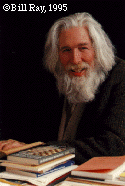
Paul Wilmott is a lecturer in financial mathematics and runs the profession's most popular website. ( HE'S TERRIFIC )

Paul Wilmott

He is a fan of quantitative finance( AS AM I ) - but he thinks that its misuse( YES ) has played a part in creating the current banking crisis.

In November 2007, More or Less asked whether the financial mathematicians known as "quants" - short for quantitative analysts - were to blame for what was then being termed "the credit squeeze".

WHO ARE THE QUANTS?
Paul Wilmott discussed his concerns with Professor William Perraudin of the Tanaka Business School at Imperial College London.

Tim Harford chaired the discussion.

The risks of risk management

In December 2008, Tim invited Paul Wilmott back to talk about the problems in more detail.

Banks and hedge funds rely on highly-paid mathematicians and economists - "quants" - to evaluate risk.

So why did they not they see the credit crunch coming?

Paul Wilmott says some mathematicians have a tendency to get fixated on the numbers, failing to think about the big picture.

RISKY RISK MANAGEMENT

He posed a scenario.

Imagine you are at a magic show. The magician takes an ordinary pack of 52 playing cards, and gives it to a man in the audience to shuffle. He then asks a volunteer to think of a card. "The ace of spades," she replies.

The magician turns to the man with the pack of cards and removes a single card from the deck. What is the probability that the card is the ace of spaces?

To hear the answer listen to the interview, or read Paul Wilmott's article on the risks of risk management.

A fundamental mathematical error

Paul Wilmott says an additional cause of the credit crunch is that people simply got their sums wrong.

GETTING THE SUMS WRONG
He told More or Less these errors might have contributed to the mispricing of financial derivatives, and thus to the travails of the banks, the credit crunch, and the economic downturn.

The maths of the bonus system

Many traders were paid bonuses if they made money.

And yet, collectively, their trades bankrupted some banks and nearly bankrupted many more.

THE TRADER'S DILEMMA
Why did traders, paid for performance, all make the same mistake at the same time?

Paul Wilmott set out the trader's dilemma.

AT HOME WITH THE QUANTS
In October 2007, Tim Harford got a glimpse into the world of the quants.


William Hooper
The most successful of these talented mathematicians will come up with mathematical formulae that make them and their bank or hedge fund employers millions of pounds per year.

They are highly secretive about their work, not wanting others to know the details of their systems.

MEET THE QUANTS
But one of them, William Hooper, invited Tim Harford into his beautiful London home.

Read more about quantitative analysts

A trader's apology

William Hooper has since left the world of finance to start his own business.

He has been reflecting on the global economic problems and the question of who is to blame - read A trader's apology.

GILLIAN TETT, THE FINANCIAL TIMES
Gillian Tett is an assistant editor of the Financial Times and oversees the global coverage of the financial markets.( SHE'S VERY GOOD )


Gillian Tett
Five years ago, she was shocked to discover what she says could best be described as an iceberg in the middle of the City.

The role of the media

She was studying media coverage of the City and began to realise journalists were doing lots of stories on stocks and shares, mergers and acquisitions, but nothing on what had become a much bigger part of finance - the credit and derivative markets.

She says business journalists were simply not covering the City in a representative way.

THE FINANCIAL ICEBERG

You had a small part of the financial system bobbing above the water but a vast shadowy mass of activity pretty much hidden beneath the waves.

And hidden not just from ordinary people, but hidden from politicians, from many regulators, and unfortunately from much of the media too.

UNDERSTANDING LIBOR

The London Interbank Offered Rate - LIBOR - has been dubbed the financial world's most important number.

A view of the City

Published each day in the UK, it is the rate at which the banks lend to each other and it influences over $150 trillion (£100 trillion) of funds worldwide.

The Libor number is compiled by putting together the estimates of the cost of borrowing from at least eight banks, and then discarding the highest and lowest of the sample to leave an average rate which then becomes the daily 'Libor Fix'.

LIBOR

But the figure's validity is being questioned, with critics dubbing it "the rate at which banks won't lend".

Tim Harford was granted exclusive access to the operations centre where the daily rate is compiled.

More or Less is broadcast on BBC Radio 4. To find out more, visit the programme website, or subscribe to the More or Less podcast."

Thursday, January 8, 2009

"Financial markets are alive but a model, however beautiful, is an artifice."

Paul Wilmott :

"Financial Modelers' Manifesto
The Financial Modelers' Manifesto

Preface

A spectre is haunting Markets – the spectre of illiquidity, frozen credit, and the failure of financial models.

Beginning with the 2007 collapse in subprime mortgages( THE CALLING RUN BEGINS ), financial markets have shifted to new regimes characterized by violent movements, epidemics of contagion from market to market, and almost unimaginable anomalies (who would have ever thought that swap spreads to Treasuries could go negative?)( THE FLIGHT TO SAFETY ). Familiar valuation models have become increasingly unreliable. Where is the risk manager that has not ascribed his losses to a once-in-a-century tsunami?( TRUE. WEATHER WORDS. )

To this end, we have assembled in New York City and written the following manifesto.

Manifesto

In finance we study how to manage funds – from simple securities like dollars and yen, stocks and bonds to complex ones like futures and options, subprime CDOs and credit default swaps. We build financial models to estimate the fair value of securities, to estimate their risks and to show how those risks can be controlled. How can a model tell you the value of a security? And how did these models fail so badly in the case of the subprime CDO market?

Physics, because of its astonishing success at predicting the future behavior of material objects from their present state, has inspired most financial modeling. Physicists study the world by repeating the same experiments over and over again to discover forces and their almost magical mathematical laws. Galileo dropped balls off the leaning tower, giant teams in Geneva collide protons on protons, over and over again. If a law is proposed and its predictions contradict experiments, it's back to the drawing board. The method works. The laws of atomic physics are accurate to more than ten decimal places.

It's a different story with finance and economics, which are concerned with the mental world of monetary value( HUMAN AGENCY ). Financial theory has tried hard to emulate the style and elegance of physics in order to discover its own laws. But markets are made of people, who are influenced by events, by their ephemeral feelings about events and by their expectations of other people's feelings( HUMAN AGENCY ). The truth is that there are no fundamental laws in finance( I AGREE. THERE ARE JUST MORE OR LESS USEFUL THEORIES. ). And even if there were, there is no way to run repeatable experiments to verify them.

You can hardly find a better example of confusedly elegant modeling than models of CDOs. The CDO research papers apply abstract probability theory to the price co-movements of thousands of mortgages. The relationships between so many mortgages can be vastly complex. The modelers, having built up their fantastical theory, need to make it useable; they resort to sweeping under the model's rug all unknown dynamics; with the dirt ignored, all that's left is a single number, called the default correlation. From the sublime to the elegantly ridiculous: all uncertainty is reduced to a single parameter that, when entered into the model by a trader, produces a CDO value. This over-reliance on probability and statistics is a severe limitation. Statistics is shallow description( IT HAS LIMITED USE ), quite unlike the deeper cause and effect of physics, and can’t easily capture the complex dynamics of default.

Models are at bottom tools for approximate thinking( YES ); they serve to transform your intuition about the future into a price for a security today. It’s easier to think intuitively about future housing prices, default rates and default correlations than it is about CDO prices. CDO models turn your guess about future housing prices, mortgage default rates and a simplistic default correlation into the model’s output: a current CDO price.

Our experience in the financial arena has taught us to be very humble in applying mathematics to markets, and to be extremely wary of ambitious theories, which are in the end trying to model human behavior( TRUE ). We like simplicity, but we like to remember that it is our models that are simple, not the world.( YES )

Unfortunately, the teachers of finance haven’t learned these lessons. You have only to glance at business school textbooks on finance to discover stilts of mathematical axioms supporting a house of numbered theorems, lemmas and results. Who would think that the textbook is at bottom dealing with people and money? It should be obvious to anyone with common sense that every financial axiom is wrong, and that finance can never in its wildest dreams be Euclid. Different endeavors, as Aristotle wrote, require different degrees of precision. Finance is not one of the natural sciences, and its invisible worm is its dark secret love of mathematical elegance and too much exactitude.

We do need models and mathematics – you cannot think about finance and economics without them – but one must never forget that models are not the world( I AGREE ). Whenever we make a model of something involving human beings, we are trying to force the ugly stepsister’s foot into Cinderella’s pretty glass slipper. It doesn't fit without cutting off some essential parts( EXACTLY ). And in cutting off parts for the sake of beauty and precision, models inevitably mask the true risk rather than exposing it. The most important question about any financial model is how wrong it is likely to be, and how useful it is despite its assumptions( EXACTLY ). You must start with models and then overlay them with common sense and experience.( THAT'S IT )

Many academics imagine that one beautiful day we will find the ‘right’ model. But there is no right model, because the world changes in response to the ones we use( TRUE ). Progress in financial modeling is fleeting and temporary. Markets change and newer models become necessary. Simple clear models with explicit assumptions about small numbers of variables are therefore the best way to leverage your intuition without deluding yourself.( I AGREE )

All models sweep dirt under the rug( TRUE ). A good model makes the absence of the dirt visible. In this regard, we believe that the Black-Scholes model of options valuation, now often unjustly maligned, is a model for models; it is clear and robust. Clear, because it is based on true engineering; it tells you how to manufacture an option out of stocks and bonds and what that will cost you, under ideal dirt-free circumstances that it defines. Its method of valuation is analogous to figuring out the price of a can of fruit salad from the cost of fruit, sugar, labor and transportation. The world of markets doesn’t exactly match the ideal circumstances Black-Scholes requires, but the model is robust because it allows an intelligent trader to qualitatively adjust for those mismatches. You know what you are assuming when you use the model, and you know exactly what has been swept out of view.( THAT'S WHAT MAKES IT USEFUL )

Building financial models is challenging and worthwhile: you need to combine the qualitative and the quantitative, imagination and observation, art and science, all in the service of finding approximate patterns( THAT'S IT ) in the behavior of markets and securities. The greatest danger is the age-old sin of idolatry. Financial markets are alive( TRUE. ORGANIC. ) but a model, however beautiful, is an artifice. No matter how hard you try, you will not be able to breathe life into it. To confuse the model with the world is to embrace a future disaster driven by the belief that humans obey mathematical rules.( EXACTLY )

MODELERS OF ALL MARKETS, UNITE! You have nothing to lose but your illusions.

The Modelers' Hippocratic Oath

~ I will remember that I didn't make the world, and it doesn't satisfy my equations.( TRUE )

~ Though I will use models boldly to estimate value, I will not be overly impressed by mathematics.( GOOD )

~ I will never sacrifice reality for elegance without explaining why I have done so.( GOOD )

~ Nor will I give the people who use my model false comfort about its accuracy. Instead, I will make explicit its assumptions and oversights.( YES )

~ I understand that my work may have enormous effects on society and the economy, many of them beyond my comprehension.( TRUE )

Emanuel Derman and Paul Wilmott January 7 2009"

As I've said, Wilmott has become, along with Buiter, essential reading. This post basically sums up what I mean by a Human Agency Explantion.

Tuesday, December 16, 2008

"Nothing that I have ever seen in investment banking and fund management has impressed me as a disincentive to crooked behaviour, absolutely nothing"

Another excellent post by Paul Wilmott:

There are honest people, and there are dishonest people, a whole spectrum. I like to think I'm near the honest end, I would have worn a white hat in the old cowboy movies. And I've had the misfortune to have met a few from right up close to the other extreme, with the black hats. Most people wear hats of various shades of grey. High finance is a business which encourages people to shift towards the dishonest end of the spectrum by putting temptation in their way, and the dishonest are drawn to this field by its quick and easy rewards.( WOW )

Nothing that I have ever seen in investment banking and fund management has impressed me as a disincentive to crooked behaviour, absolutely nothing.( I BELIEVE HIM )

As a keen observer of human behaviour I have been fascinated watching people's attitude towards money. In academia they struggle with their mixed feelings, on the one hand hating the filthy stuff since they are supposed to be above such worldly matters, but on the other hand rather liking what they can do with it. The really rich see it as nothing more than a measure of their success in life, a score. Some balanced people, few and far between, realise they need it, and that more is better than less, but it's not the main focus in their lives. Then there is the common greed that we see in our business, nasty and unpleasant. And nasty, unpleasant greed is so easy to feed, it is encouraged in banking, but it has some unpleasant side effects.

The Madoff affair has highlighted several things, brought some corrupt practices to light, but we haven't really learned anything new from all of this. The old lessons, the ones that should have been learned years ago, are just as valid ( HOW TRUE ). As I keep saying, there is little reason for regulators to do anything: People have short memories; People are easily distracted; The legal system is now much better at protecting the guilty than protecting the innocent.

Just like the Social Services in the UK, regulators do such a useless job that they are now permanently on the defensive. I bet you that few people working for regulators are doing their jobs right now, I bet most of their day is spent figuring out how to protect themselves against the growing backlash.

Quite frankly I don't see much difference between Madoff's Ponzi scheme and naive auditors, self-serving regulators and morally corrupt ratings agencies( I AGREE ). They are all part of a financial system that encourages scams, scams that may then take years to sort out and years before the culprits are punished, meanwhile out on comfortable bail. The US legal system is particularly easy to 'play' so as to drag proceedings out so long that the accused dies of natural causes before justice is done.

There is no disincentive for dishonest behaviour in investment banking at the moment, in fact the opposite. If someone wants to invest with a manager they think might be dishonest but successful then they will ignore the dishonesty. If the investor loses their shirt then tough, serves them right. (Of course, it won't be their money, so anyone found not having done their full due diligence ought to be arrested.) I know of several people who manage money who have broken serious laws, lawbreaking that would prevent them managing money. And I know of some investors who know that I know, but who, when considering investing with these people, deliberately do not ask for my opinion as part of their due diligence. Why not? Because once they hear what I have to say then they would no longer be able to invest with the crooked, but oh-so-smooth and convincing manager. If you've ever bought a dodgy DVD at the market, or a hi-fi from a man in the pub, then you are just as culpable. And you therefore might find some sympathy for a lot of people being blamed at the moment. I haven't, and I don't.( I AGREE )

When I first realised, several years ago, that due diligence is deliberately not being done I proposed that formal psychometric testing be part of the process of setting up a hedge fund or managing money. I know this is easy to criticize or trivialize, especially by all the 'left-brainers' working in finance. But equally I'm not a great fan of having to pass multiple-choice exams to get letters after your name showing how many regulations you know, I don't think this has much relevance today. But in this business trust is so important. In a world where we never get to know the people looking after our life savings, as we might have done in the old days, I can think of no other simple indicator of testing trustworthiness. Some people are dishonest, some can't be trusted. Do you care? I do, and always have. Maybe other people don't, that's greed at work, but they will eventually, perhaps only after they've lost lots and lots of money."

Due Diligence Deliberately Not Being Done. I believe him, which is why I believe that Fraud, Negligence, Fiduciary Mismanagement, and Collusion, are, as a group, the second most important cause of this crisis, and if we don't root it out and prosecute it, then this will happen again in the near future. I'm saying that it will happen again within ten years.

Wilmott is becoming like Buiter. They are both essential reading.

Tuesday, December 9, 2008

"Their modelling of markets is a strange combination of the childishly naïve and the absurdly abstract. "

Paul Wilmot with a very important post:

"As you will no doubt know, I have been frustrated by quants for a long, long time. Their modelling of markets is a strange combination of the childishly naïve and the absurdly abstract."

He said it. Not me.

"On a one-to-one basis many people working in banks will complain to me about the models they have to implement. They will complain about instability of the Heston volatility model for example. I will explain to them why it is unstable, why they shouldn't be using it, what they can do that's better and they will respond along the lines of "I agree, but I don't have any choice in the matter." Senior quants are clearly insisting on implementations that those on the front line know are unworkable."

Here's a description:

"In finance, the Heston model is a mathematical model describing the evolution of the volatility of an underlying asset. It is a stochastic volatility model: such a model assumes that the volatility of the asset is not constant, nor even deterministic, but follows a random process."

Actually it's interesting, but maybe for another time. It involves counterfactuals and possible worlds.

"And a large number of people complain to me in private about what I have started calling the 'Measure Theory Police.' These 'Police' write papers filled with jargon, taking 30 pages to do what proper mathematicians could do in four pages. They won’t listen to commonsense unless it starts with 'Theorem,' contains a 'Proof,' and ends with a 'QED.' I'll write in detail about the Measure Theory Police at a later date, but in the meantime will all those people complaining to me about them please speak up...you are preaching to the converted, go spread the word!

For several years I tried to argue scientifically, in papers, book, seminars, etc. about all the abysmal modelling I saw. Of all the conferences that I speak at, you would think that quant events would be the ones at which the audience would have the best appreciation of good versus bad modelling. Frustratingly, quant conferences have audiences with great technical skills but the least imagination. If you're not lecturing about the wonders of correlation, but about the stupidity of correlation, then expect a hostile ride. But I battled on, I have a very tough skin!"

It sounds fun.

"Then I thought I'd try a different tack. If data, scientific explanations and commonsense won't get the truth across then something else was required. (It turns out that the 'something else' was losses of trillions of dollars and a global recession!)"

Couldn't you have tried something less drastic?

"So I started introducing audiences to relevant aspects of human psychology. I explained about the famous experiments in peer pressure to highlight why people were adopting the same models as everyone else. I explained about the famous experiments in diffusion of responsibility, mentioned recently in an article by Taleb and Triana, so that people would understand why they were sitting around not doing anything about the terrible state of affairs. Perhaps a little bit of cognitive behavioural therapy might help them understand their own motives and this would bring about a change of practice in finance. Of course, I was overambitious. Audiences were entertained and amused, a good time was had by all. And then they went back to their day jobs and the implementation of the same old copula nonsense.

Combine peer pressure with diffusion of responsibility and fear for their jobs and most people will keep quiet. Sad, but expected and, reluctantly I will admit, understandable."

What he's describing is what I call a Human Agency Explanation.

"What is not understandable is the role in recent events played by regulators and rating agencies. Their jobs are not to toe the party line. The job of the regulator is to hold up the yellow card to banks with bad practices and the job of the rating agencies is to give an honest assessment of creditworthiness. In neither case should they have been effectively colluding with banks in increasing the amount of risk taken."

I couldn't agree more.

"I have an analogy for you. "

They're decidedly risky fellows.

"A rating agency or a regulator visits a bank. They are being shown around the premises, looking at all the products they have and how they are managed. They come to one desk on which there is a pile of nuclear material. "That's a large pile of nuclear material. How much does it weigh?" they ask. "Oh, nothing to worry about, only half the critical mass," comes the reply. They go on to the next desk and see a similar pile. "Nothing to worry about, only half the critical mass." They go next door to another bank, and they see the same story. It doesn't take a genius to see the potential risks. The regulators and the credit rating agencies saw something similar, with CDOs and the like being the explosive material."

That's a scary analogy.

"In the early days of the current crisis the talk was of blame. That was precisely the wrong thing to consider at that time. Shore up the financial system asap, that was the most important thing to do. A quick response was what mattered, the details didn't. Now is the time to start considering blame and punishment. And yes, there has to be punishment. You cannot have obscene rewards for those working in banking, salaries tens or hundreds of times the national averages without expecting and demanding corresponding responsible behaviour. It is both morally objectionable and financially dangerous to not have the huge upside balanced by a matching downside for irresponsible actions. And so I point the finger at rating agencies and regulators as those near the top of those who must take the blame."

That's awfully refreshing to read.

"Realistically I expect further frustration and a return to business as usual. "

After a lot of talk and a few token prosecutions, that's what I expect as well. But this blog grows in power by the century!