Showing posts with label Jesse's. Show all posts

Tuesday, January 20, 2009

"The remaining option is to tolerate, even encourage, a faster rate of inflation"

I was going to post on this story, but Jesse's Cafe Americain has already done it:

"Some Thoughts on the Debt Disaster in the US and UK and Possible Alternatives


This is a rather important essay in that it nicely frames up the problem that we face, and the constraints on the remedies at our disposal.

We will be speaking more about that in the near term, but for now here is a framework by which to understand the boundaries, the 'lay of the land.'

The key point is that the debt to GDP ratio has become unsustainable. The way to correct this is to lower it to a level that is manageable and to work it down.

It will likely require a combination of inflation and debt reduction by bankruptcies and writedowns in order to restore the economy to something which can be used to achieve a balance.( TRUE )

Liquidationism( A CALLING RUN. DEBT-DEFLATION SPIRAL. ) is a trap because it reduces GDP and cripples the productive economy as it reduces debt. It is similar to poisoning a patient to treat an infection. It is favored only by those who believe that they can insulate themselves and profit by it.

Without serious systemic reforms, any remedies will not obtain traction, merely provide a new step function for a repetition of the cycle of debt expansion, as was done in the series of credit bubbles under Alan Greenspan and Bush-Clinton.( FAIR ENOUGH )

The impact will be felt around the globe because of the interconnectedness of the world economy and finance, but the heart of the problem is in the US and the UK.


Economic Times
US and UK on brink of debt disaster
20 Jan, 2009, 0419 hrs IST

LONDON: The United States and the United Kingdom stand on the brink of the largest debt crisis in history.

While both governments experiment with quantitative easing, bad banks to absorb non-performing loans, and state guarantees to restart bank lending, the only real way out is some combination of widespread corporate default, debt write-downs and inflation to reduce the burden of debt to more manageable levels. Everything else is window-dressing. (Quantitative easing, bad banks, and state guarantees are the instruments of inflation. The amount of inflation that the West can manage will greatly affect the amount of these more draconian measures - Jesse)( I AGREE )

To understand the scale of the problem, and why it leaves so few options for policymakers, which shows the growth in the real economy (measured by nominal GDP) and the financial sector (measured by total credit market instruments outstanding) since 1952.

In 1952, the United States was emerging from the Second World War and the conflict in Korea with a strong economy, and fairly low debt, split between a relatively large government debt (amounting to 68 percent of GDP) and a relatively small private sector one (just 60 percent of GDP).

Over the next 23 years, the volume of debt increased, but the rise was broadly in line with growth in the rest of the economy, so the overall ratio of total debts to GDP changed little, from 128 percent in 1952 to 155 percent in 1975.

The only real change was in the composition. Private debts increased (7.8 times) more rapidly than public ones (1.5 times). As a result, there was a marked shift in the debt stock from public debt (just 37 percent of GDP in 1975) toward private sector obligations (117 percent). But this was not unusual. It should be seen as a return to more normal patterns of debt issuance after the wartime period in which the government commandeered resources for the war effort and rationed borrowing by the private sector.( TRUE )

From the 1970s onward, however, the economy has undergone two profound structural shifts. First, the economy as a whole has become much more indebted. Output rose eight times between 1975 and 2007. But the total volume of debt rose a staggering 20 times, more than twice as fast. The total debt-to-GDP ratio surged from 155 percent to 355 percent.( TRUE )

Second, almost all this extra debt has come from the private sector. Despite acres of newsprint devoted to the federal budget deficit over the last thirty years, public debt at all levels has risen only 11.5 times since 1975. This is slightly faster than the eight-fold increase in nominal GDP over the same period, but government debt has still only risen from 37 percent of GDP to 52 percent.( TRUE )

Instead, the real debt explosion has come from the private sector. Private debt outstanding has risen an enormous 22 times, three times faster than the economy as a whole, and fast enough to take the ratio of private debt to GDP from 117 percent to 303 percent in a little over thirty years.

For the most part, policymakers have been comfortable with rising private debt levels. Officials have cited a wide range of reasons why the economy can safely operate with much higher levels of debt than before, including improvements in macroeconomic management that have muted the business cycle and led to lower inflation and interest rates. But there is a suspicion that tolerance for private rather than public sector debt simply reflected an ideological preference( A FAIR POINT ).

THE DEBT MOUNTAIN

The data makes clear the rise in private sector debt had become unsustainable. In the 1960s and 1970s, total debt was rising at roughly the same rate as nominal GDP. By 2000-2007, total debt was rising almost twice as fast as output, with the rapid issuance all coming from the private sector, as well as state and local governments.

This created a dangerous interdependence between GDP growth (which could only be sustained by massive borrowing and rapid increases in the volume of debt) and the debt stock (which could only be serviced if the economy continued its swift and uninterrupted expansion).

The resulting debt was only sustainable so long as economic conditions remained extremely favorable( TRUE ). The sheer volume of private-sector obligations the economy was carrying implied an increasing vulnerability to any shock( YES ) that changed the terms on which financing was available, or altered the underlying GDP cash flows.

The proximate trigger of the debt crisis was the deterioration in lending standards( AND FRAUD ) and rise in default rates on subprime mortgage loans. But the widening divergence revealed in the charts suggests a crisis had become inevitable sooner or later. If not subprime lending, there would have been some other trigger( TRUE. HOWEVER, A CALLING RUN WAS NOT INEVITABLE. ).

WRONGHEADED POLICIES

The charts strongly suggest the necessary condition for resolving the debt crisis is a reduction in the outstanding volume of debt, an increase in nominal GDP, or some combination of the two, to reduce the debt-to-GDP ratio to a more sustainable level.

From this perspective, it is clear many of the existing policies being pursued in the United States and the United Kingdom will not resolve the crisis because they do not lower the debt ratio.

In particular, having governments buy distressed assets from the banks, or provide loan guarantees, is not an effective solution( IT IS NECESSARY TO STOP THE RUN THOUGH. THIS MUST COME FIRST.). It does not reduce the volume of debt, or force recognition of losses. It merely re-denominates private sector obligations to be met by households and firms as public ones to be met by the taxpayer.

This type of debt swap would make sense if the problem was liquidity rather than solvency. But in current circumstances, taxpayers are being asked to shoulder some or all of the cost of defaults, rather than provide a temporarily liquidity bridge.

In some ways, government is better placed to absorb losses than individual banks and investors, because it can spread them across a larger base of taxpayers( ONLY THE GOVERNMENT CAN GIVE A BELIEVABLE GUARANTEE THAT WILL STOP THE RUN. ). But in the current crisis, the volume of debts that potentially need to be refinanced is so large it will stretch even the tax and debt-raising resources of the state, and risks( OK ) crowding out other spending.

Trying to cut debt by reducing consumption and investment, lowering wages, boosting saving and paying down debt out of current income is unlikely to be effective either. The resulting retrenchment would lead to sharp falls in both real output and the price level, depressing nominal GDP. Government retrenchment simply intensified the depression during the early 1930s. Private sector retrenchment and wage cuts will do the same in the 2000s.

BANKRUPTCY OR INFLATION

The solution must be some combination of policies to reduce the level of debt or raise nominal GDP. The simplest way to reduce debt is through bankruptcy, in which some or all of debts are deemed unrecoverable and are simply extinguished, ceasing to exist.

Bankruptcy would ensure the cost of resolving the debt crisis falls where it belongs. Investor portfolios and pension funds would take a severe but one-time hit. Healthy businesses would survive, minus the encumbrance of debt.

But widespread bankruptcies are probably socially and politically unacceptable( NATIONALIZATION IS A FORM OF SOCIALLY ACCEPTABLE BANKRUPTCY, BECAUSE IT GIVES THE TAXPAYERS REAL ASSETS FOR THEIR MONEY. ). The alternative is some mechanism for refinancing debt on terms which are more favorable to borrowers (replacing short term debt at higher rates with longer-dated paper at lower ones).

The final option is to raise nominal GDP so it becomes easier to finance debt payments from augmented cashflow. But counter-cyclical policies to sustain GDP will not be enough. Governments in both the United States and the United Kingdom need to raise nominal GDP and debt-service capacity, not simply sustain it.

There is not much government can do to accelerate the real rate of growth. The remaining option is to tolerate, even encourage, a faster rate of inflation to improve debt-service capacity. Even more than debt nationalization, inflation is the ultimate way to spread the costs of debt workout across the widest possible section of the population.( I AGREE WITH THE NEED FOR INFLATION, BUT MAINLY IN ORDER TO STOP THE DEBT-DEFLATION SPIRAL. THIS IS FISHER'S PLAN. )

The need to work down real debt and boost cash flow provides the motive, while the massive liquidity injections into the financial system provide the means. The stage is set for a long period of slow growth as debts are worked down and a rise in inflation in the medium term."

( BASICALLY, I AGREE WITH THIS POST. HOWEVER, THE CALLING RUN MUST BE STOPPED BEFORE INFLATION CAN TAKE HOLD. THAT NEEDS A GOVERNMENT GUARANTEE. )


Also, remember this Casey Mulligan post:

"I'm Glad that Gas is Cheaper

The CPI fell 1.7 percent between October and November. That's a lot -- if that continued for 12 consecutive months, the annual inflation rate would be -18 percent!

However, essentially all of the drop was reduced energy prices. As a net oil importer, the U.S. is better off when oil is cheaper relative to the goods that we produce.

Nevertheless, I would like to see the Federal Reserve take bigger steps to keep INflation going. Inflation will alleviate some economic problems; prolonged deflation will aggravate them."

Sunday, January 4, 2009

"But for now at least you have the means to understand what money supply is and how it is measured"

Another nice resource post from Jesse's Cafe Americain:

"Money Supply: A Primer


You walk into a Merchant and a sign says, "All Items on Sale Today for Cash Only No Credit."

You are interested in purchasing an item. The Merchant, being a crafty sort asks "How much money do you have to spend(in US dollars)?"

How would you answer that if you are being truthful?

You might start by looking into your wallet and pockets, and counting all the cash and coins you have with you at that moment.

M0: Monetary Base

This is equivalent to the monetary base, or M0. It is money you have that is immediately available requiring no change or conversion. There is very little risk to the merchant, unless it happens to be counterfeit which is easily verified.

"Not enough" says the Merchant. "I am sorry, but do you have more?"

M1

Then you remember that in addition to cash, you have your checkbook with a current balance in it, and a debit card to an account you maintain in a local bank, but with no overdraft or lines of credit provisions.

That plus the currency in your pockets is M1. See the difference? You do not have ALL your money in your pockets for immediate presentation, but with a little transactional effort the money is readily available and it is inherently your money, it belongs to you. It is just being held elsewhere besides your pockets and wallet. The merchant assumes a little more risk, but he can quickly call your bank to verify that the funds are available for the check, and the debit card is even more mechanized. More risk, a little more delay, but almost as 'good as cash.'

"I am sorry sir," says the Merchant, "but this is still not enough to exchange for such a valuable object as I have for sale here."

M2

You think about it, and remember that you have a savings account across the street at the bank, and a money market fund at your brokerage office next door, that have more of your money on deposit. You have no cards for those accounts, but it would be an easy thing to walk next door or across the street and obtain the cash.

This is M2. There is a more complex transaction involved, since the transfer is not electronic as in the case of a debit card, and you must leave the store to obtain the money in the form of currency unless they bring it over to you. But it is your money that is available to you on demand. There is a small amount of risk of your bank not being solvent when you need the money, but these are slight inconveniences compared to the safety of not carrying around large sums of money that earn no interest in the form of cash.

"I am so sorry," says the Merchant. "But this item is far too valuable to part with for such a sum as you have offered."

M3

You think about it, and remember that you have a large Certificate of Deposit at the bank across the street that matures in one year. There is a small penalty if you redeem it today to receive your money since you promised it to them for a time in exchange for a specific return, and you must fill out some paperwork, but it is still your money. It involves no sale of an asset or conversion.

That is M3. It involves money that is still yours without borrowing, but has additional conditions set up on it for its retrieval.

One could make the case, and perhaps appropriately so, that while certificates of deposit with a term contract that might effect their value are money, they are not readily available money since the terms of the CD's may differ greatly. They are not 'liquid' and the value before maturity is not always certain due to a penalty.

MZM

If one takes all the things we describe as M2, but takes out the time deposits or certificates of deposit, and includes ALL money market funds, that is what the Fed considers to be the broadest measure of liquid money, or Money of Zero Maturity (MZM). "Zero maturity" means that the money is not tied up for a period of time to mature to its full value.

Are credit cards or loans Money? No,those are all forms of borrowing something that is not yours that you promise to return with conditions. You are receiving money that was not yours.

Credit Is Not Money.

Credit, or debt, is the 'potential' for money, a way of receiving it.

Whether water is held in a canteen, a well, a cistern, or a private lake, it is still water and it is yours if you own it. So too money is still money if it is yours, no matter under what conditions you hold it or save it for your use.

The cloud of credit, or debt depending on your perspective, is the potential for money as it is defined in our economy. It is a source of money. At a given point in time, you either have the money as your property or you do not.

But the source is not the money itself, and the source can be different and can change over time. In our society borrowing is so common and so technologically convenient that there is little difference in most people's mind between credit and money.

But the difference is that if you spend real money, you incur no obligation for it in the future. You receive no payment request from another at the end of the month.

That is what money is, at least in our economy, and the various measure of money as it is held and shifts through the economy and a variety of transactions, where it flows and rest in pools, and moves again. A measure of the money supply is a snapshot in time.

How money increases or decreases, and how it is stored or held, is a significant indicator of economic activity for those who study such things. It is also significantly affected by custom, technology, and the prevailing mood and perception of the public.

The best and broadest measures of money supply are either MZM, or M2, now that M3 is no longer being reported by the Fed. This can easily be seen from the illustrations.

As springs feed into brooks, and brooks streams, and streams into rivers, and rivers into lakes, so the money supply components change in size and shape over time as money flows from its various sources. The speed of the flow is the 'velocity of money' and as one can easily understand that flow will have a different force and speed depending on when you measure it, and whether you are measuring one of the streams or a major river.

People often prefer to jump into discussions and turn them into debates (arguments) with hair-splitting definitions (what is 'control' of the money supply) and red herrings (why does a dollar cross the road?) before defining any terms or facts and setting some boundaries for the analysis, because their goal too often is not understanding, but to promote some theory or point of view. 'Winning the argument' is their objective, not a search for the truth.

Money is the instrument of the official economy. This gives money a certain arbitrariness over time because, after all, it is the product of a committee. Official money is the creation of government, managed by its agents, validated by the people who use it.

Official money rises and falls from favor to disfavor, as do governments. What if you were a citizen of Zimbabwe? Or the US in the 1860's? Or Germany in 1922? How would you feel about your official money then? Why is it different for you now? What would change your opinion?

What is the 'natural growth rate' of the money supply? Zero?

The discussion of how money supply increases, and who or what determines the supply, and what an appropriate level of growth would be is a matter for discussion on another day. So too is the strange phenomenon of 'natural forms of money' that keep turning up in every era and nearly every society.

But for now at least you have the means to understand what money supply is and how it is measured, and how it is different from potential money, or credit, the representations of money, and asset stores of wealth."

Now David Friedman, with a good resource post:

"
The Price of Money and Other Errors

It is common for people who think they understand economics to describe the interest rate as the price of money. If it were true, then printing more money would lead to lower interest rates, and many of the same people think it does.

The next time someone tells you that the interest rate is the price of money, ask him what he thinks a reasonable interest rate is and offer to buy some money from him—at ten cents on the dollar if the rate he suggests is ten percent. As that example illustrates, the interest rate is not the price of money. The price of money is what you must give up to get it. If apples cost fifty cents each, the price of money is two apples. More generally, the price of money is the inverse of the price level—when prices are high, that means that money is not worth very much.

The interest rate is the rent of money measured in money. Suppose you borrow a hundred dollars at ten percent. If the price of a dollar is two apples, you are borrowing the price of two hundred apples and paying the price of twenty apples a year in interest. If the money supply doubles, prices double, including the price of an apple, you are borrowing the price of a hundred apples and paying the price of ten apples a year in interest. If you prefer, you could do the same real transaction as before by borrowing two hundred dollars and paying twenty dollars a year interest, still at ten percent.

As this example suggests, there is no connection between the amount of money in circulation and the interest rate. There is a connection between the rate of change of the amount of money in circulation and the interest rate, but it goes in the opposite of the direction implied by the error I am discussing. When the money supply is increasing and prices are rising, nominal interest rates are high, not low, because lenders must be compensated for the fact that they will be paid back in dollars worth less than the ones they lent.

Much of the confusion here comes from the multiple meanings of the term "money." When we say someone has lots of money, we don't usually mean that he has a lot of green paper or a large balance in his checking account; we mean that he is wealthy. His wealth might be in money, it might be in valuable real estate, it might be in stocks and bonds. If there is lots of money in that sense—more precisely, if lots of people have wealth they would like to lend out—that will tend to lower interest rates. But that has nothing to do with the amount of money in circulation.

What brings up this particular confusion at the moment is the attempt to link the current crisis with the events that led to the Great Depression. Those events produced a sharp drop in the money supply, due to banks going broke and depositors either losing or withdrawing their deposits. Given the nature of a fractional reserve system, replacing a mix of currency and deposits with just currency reduces the total amount of money in circulation, in that case by a lot. The problem could have been prevented if the Federal Reserve System had kept those banks from failing, which was part of the purpose it had been set up for, a purpose that had been served earlier by the private arrangements among banks that it effectively replaced( A GOOD POINT ).

That series of events cannot happen now because the FDIC insures bank deposits( TRUE ). What we are observing is not a drop in the money supply. It is a loss of wealth, as firms discover that their assets, in particular mortgages and securities backed by mortgages, are worth less than they thought. That explains why the proposed bailout is enormously greater than would be required to prevent a run on bank deposits( TRUE. BUT NOT A CALLING RUN. ). $700 billion is roughly half the total money supply of the U.S. (M1—currency plus checking accounts and similar assets)--and about half of that is currency, which isn't going to vanish whatever happens to the banks. The total wealth of the economy is enormously greater than the total amount of money in the economy, and the bailout is a response not to a reduction in the amount of money but a reduction in the amount of wealth.

That also explains why the bailout has very little to do with preventing another Great Depression. The U.S. money supply at the moment is at or near its all time high, and it is hard to see how anything likely to happen, with or without a bailout, will reduce it by much. The mechanism that set off the Great Depression isn't happening.( I AGREE )

What is happening is the failure of lots of firms. The failure of a firm doesn't wipe out wealth, except to the extent that the firm itself—its firm culture, web of relationships and such—has some value. When a firm fails, that is at least some evidence that that value was negative, which is why nobody chose to buy out the firm and keep it going. The ordinary assets of the firm—its buildings, land, stocks, bonds, mortgages, and whatever it owns—don't vanish when the firm fails, they get sold to someone else.

The bailout is not a way of preventing the loss of value. The loss (or transfer) of value occurred when people made bad mortgage loans( TRUE ). What happened more recently was the recognition of that loss. All the bailout can do is to shift( SOME OF THE ) the loss from some people to others, from the stockholders and creditors of firms that are now effectively bankrupt( THESE BUSINESSES I AGREE ) to the taxpayers( I AGREE ).

All of which comes back to confusion over the meaning of "money."

Now, Bob McTeer:

"Is the Fed Printing Too Much Money?

For as long as I can remember people have referred to the Fed printing money-usually when they disapprove. The implication is that printing money is inflationary.

I've always assumed that those who use that terminology understood that "printing money" shouldn't be taken literally. Nowadays, I'm not so sure. Several financial talking heads I've heard recently sound like they mean it literally. Often the context has been whether the Fed might buy longer-term treasuries.

While most of you know this, I feel compelled to point out that the Fed doesn't literally print money. That is done by the Bureau of Engraving and Printing, which is under the Treasury Department. The amount of printed or paper money that gets into circulation is not determined by the Bureau, the Treasury, or the Fed. It is determined by the preference of the public for holding currency as opposed to deposit accounts in financial institution.

If the public collectively decides it wants to hold more of their money in the form of currency-as they normally do as the Christmas season approaches-they simply cash more checks at their banks and take the currency. The proportion of the money supply (however we define it) held in paper money rises relative to the proportion held as deposits. More checks cashed at banks are paid for by the public with deposit balances. The banks will, in turn, order more currency from the Federal Reserve, paying for it by drawing down their reserve balances on deposit at the Fed. When the Fed's own inventory of currency gets low, it orders more from the Bureau of Engraving and Printing and pays for it by increasing Treasury deposits at the Fed. So the amount of currency printed is up to the public.
I should mention that when paper money gets too worn or damaged, the Fed destroys it and replaces it with new inventory from the Bureau. That means there is a relatively steady printing of new currency even when the total money supply-currency plus certain deposits-isn't growing rapidly.

The Fed influences the creation of money while the public determines the portion to be held in currency. Substituting "creating money" for "printing money" would correct many assertions that are made. However, the term "creating money" may also be misunderstood by those who aren't familiar with the process.

The Fed normally "creates money" by buying short-term government securities in the open market. The seller of the government securities gives up the securities and gets more deposits in his bank. He traded one asset for another. The banks owe more deposit liabilities to their customers, offset by more reserve deposits at the Fed-when it deposited the check received from its customer. The Fed has more government securities on the asset side of its balance sheet offset by more reserve liabilities owed to the banks. Everybody's balance sheet balances. New money was created in the process, but no net new assets or wealth. New money was created-not printed. If its growing deposits (money supply) causes the public to rebalance into more currency, more money might then be "printed," but it will be paid for with deposit money."

All three of these posts provide clear explanations and should be kept.

The question of whether the Fed is creating too much money these days is a different question to be dealt with separately."

Friday, December 26, 2008

"against the predations of the powerful, but also as a shield against would-be Robespierres with their reigns of terror."

I have similar feelings as Jesse's Cafe Americain, but a different analysis:

"The Predator Class ( I SIMPLY DON'T SEE THESE PEOPLE AS ANYTHING BUT SINCERE BELIEVERS IN GOVERNMENT INTERVENTION AND LARGESS, WHATEVER THEY CLAIM )


Its interesting to read this essay from early 2006 today in the light of what we have seen in the intervening period. A number of people who might have dismissed this out of hand back then might see a little more truth behind the rhetoric today.

So, how can the political system reform itself? How can we reestablish checks, balances, countervailing power, and a sense of public purpose? How can we get modern economic predation back under control, restoring the possibilities not only for progressive social action but also—just as important—for honest private economic activity? Until we can answer those questions( WE MIGHT WANT TO TRY AND DO SOMETHING AS WELL ), the predators will run wild.

It is something to think about for the New Year, for all parties involved. FDR was denounced as a 'traitor to his class' at the time( SPOT ON ), but in reality he was one of the most insightful of leaders. If one views outcomes in other contemporary governments from 1916 to 1940, and considers what a Huey Long administration might have been as an example, the New Deal seems like a wise and appropriate political move for all involved.

Why are people so reluctant to believe that sociopaths and narcissists can use the power of the pen to prey on people? Because they are well spoken and organized? We would contend that these are the most dangerous of the emotionally warped with a need to acquire, dominate and control, because they are smarter and more calculating than the impulse murderers, burglars, rapists, thieves, and pedophiles.

There is a need for economic law and enforcement as there is a need for the less cerebral, hairy knuckled criminal law and enforcement( VERY TRUE ). The notion that people become naturally good, rational and well-adjusted because they are wearing a suit is ludicrous, especially to anyone who has worked with many of those who move in the upper echelons of money and power( I AGREE. VERY UTOPIAN. UNBURKEAN ).

Some of the scariest people we have ever met were articulate and pathologically driven borderline psychopaths with a need to acquire political and economic power. It is the focus of their illness that makes them powerful. They are not distracted by the diffusion of emotional responses that color most people's actions. They have a need, and the will to satisfy it, no matter what it takes.

As an aside, we have met many kind and gentle and thoughtful people in all walks of life, rich and poor. It is not the office that makes the person; it is their character. Class prejudice is mistaken and unjust, and there is always someone less fortunate than you who might view you as the object of their anger, no matter who you might be. The hypocrisy and injustice of prejudice and 'class warfare' knows few limits( I AGREE ).

There will always be those at the extremes who need to 'take it to the limit,' with a well stocked foreign retreat in case things get ugly. But for most of us, restoring a sense of justice and order and putting the nation back into some kind of working balance will be high on the priority list, if not for ourselves, then for our families. Violence does not work, ever. The Constitution is a restraint that works both ways, against the predations of the powerful, but also as a shield against would-be Robespierres with their reigns of terror( VERY BURKEAN ).

It is going to take a lot of hard work, and time. Its been a long time coming, it will be a long time gone( I AGREE ). But it has been done before by those who created this nation, and it can be done to restore it again.

We are not doomed. Our situation is not hopeless. But the system is badly out of balance( TRUE ), and will have to be restored by meaningful reform. There will be inflation and selective defaults, real justice and show trials, innovation and false starts, disproprotionate suffering, uncertainty and even some level of conflict. But eventually the accounts will be squared and we will gather ourselves together an move forward. The sooner we start, the sooner it will be over."

I believe that we've started, but the going will be rough.

Thursday, December 11, 2008

"always seeking to avoid the zero profit outcome through unfair market advantages and the stifling of competition."

Jesse's Cafe Americain has a post that I've been thinking about that Cate liked as well:

"There is a ideology that would like to believe that all people are naturally good and rational, and that markets are therefore naturally efficient and free if just left alone to themselves and allowed to function without regulation or management."

From my perspective, such views are what I call Kantian. They have uses for Political Theory and Economics, but are simply of limited value in Politics and Political Economy. One book that I really enjoy is David Friedman's "The Machinery Of Freedom" 2nd Ed. It is valuable as Economics and Political Theory, but I don't agree that it would be feasible.

"This line of argument is often pursued by certain faux conservatives when arguing that the police should be dismissed and the locks removed from the doors, in advance of a period of sustained looting of the common folk by the wealthy elite."

These are people that I'm not familiar with.

"One thing almost all idealists have in common is that their work exists largely on paper, and is rarely to be found in practical implementations over any sustained period."

I would say that idealists are people who don't accept the distinction that I drew above.

"That is why there are so few farmers and women in this camp of free market idealists because their daily struggle with disorder and decay teaches them that nothing goes the way of order and productive results without plenty of hard work, repeated effort and at least occasional observation."

Free Market Idealists tend to be few and far between. There are people who use various free market ideas that, upon closer examination of their actions, are clearly not free market idealists.

"It is the man in his easy chair reading his books that believes that the dishes clean themselves, the clothes are self-folding and storing, and the children organize their rooms and personal hygiene willingly without 'interference.'"

Wait a second. That sounds like me.

"This romantic belief in natural goodness is a great fallacy underlying the Greenspan-Reagan doctrine of trickle down easy money and the prima facie good of boundless deregulation."

These people tend to be a little too intent on imprisoning people who commit crimes to believe that people are naturally good. They do believe in law and order.

"It is similar to the belief in the natural goodness of all men and the self-ordering of large societies towards justice and equality without effort. It sounds nice, but in practice it is just ridiculous and almost utterly without support except in the minds of its philosophical adherents. No one who has ever driven in a major metropolitan area can possible believe it."

Self-Ordering has limits.

"What people forget is that it takes rules and referees and a great deal of hard work and repeated efforts to create and maintain a fair game and a level playing field for the many who may wish to play."

This is true.

"So too with the notion of a natural tendency to free markets. Its just not true. Markets tend to gravitate to oligopoly, insider dealing, fraud and utter inefficiency. Free market capitalists quickly come to hate competition with their success, and are always seeking to avoid the zero profit outcome through unfair market advantages and the stifling of competition."

This is true. That's why they tend not to be free market adherents in practice.

"Markets can be over-regulated by central planners, and it is always the road to ruin. But they can also be under-regulated and allowed to degenerate into the same awful excesses that governments and peoples fall into at various times in their history, periods of seemingly collective madness, disregard for the individual, and the rise of the will to power."

This is also true.

"Government is best that governs least indeed, but with the appropriate level of government to uphold the principles under which people come together to interact in a society and avoid despotism and anarchy. There is a range of good and evil in people, and they join in society for their mutual protection, and the accomplishment of efforts requiring a broad participation."

It's finding the appropriate level that's hard because it takes compromise.

"It is no accident that Jefferson was one of the framers of the Constitution, which although remarkable in its simplicity is ingeniously complex in its design, and fine balances of powers that endure with the commitment and sacrifice for the greater good of each succeeding generation."

I think that what I disagree with is that the people who are the most egregious perpetrators in this crisis don't believe in free markets in the same way as the people at Cato and Reason. They believe in a system that responds to interests as well as to other factors. That's why, in my little reference system, interest groups are a major part of political parties. I don't find such people idealists, but, on the contrary, realists, whose views about being bailed out if things went sideways on them are being borne out as we speak. They are the ultimate realists, because they're the ones actually in power. Not us.

Monday, December 8, 2008

"The practical problem is that the institutions involved are probably too big to jail. "

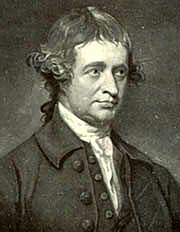
Burke turned up in Jesse's Cafe Americain today, so we've got to feature it:

"Among a people generally corrupt, liberty cannot long exist."
Edmund Burke

Although Nassim Taleb makes some excellent points he is a bit narrow in his analysis because of his superior knowledge and experience in a highly specific area of the crisis, which in some ways is a broader cultural crisis.

There may be enough fraud involved in the US over the past twenty years for multiple prosecutions under the RICO statutes. Or it just may be the end result of a general breakdown in morals, from the top down by example perhaps.

One does find some institutions appearing as enablers at the heart of every crisis, from LTCM to Enron to the Accounting Frauds to the Tech Bubble to the Credit Bubble.

No, this was worse than the silence of the witnesses to the assault of Kitty Genovese that gave the label to the bystander effect.

In this case there were 'bystanders' who financially benefited from the assault and who not only kept quiet but actively intimidated and silenced other bystanders through ridicule and fear of retribution. But there are also many who simply did not care then and will not care once the markets rally once again. This is the sad commentary on a nation corrupted by easy money.

There were many bystanders who did call 911 and were ignored because those in the enforcement chain were either asleep on the job or had other competing interests.

The practical problem is that the institutions involved are probably too big to jail.

That is their strength, but ironically also their weakness."

I agree with Jesse, and made a similar point, which is that Taleb, and I'm a big fan, seemed to put actual culprits into the bystander dock.

I love "Too Big To Jail", although I do believe that, as the S & L Crisis had Charles Keating and a few others, there will be a few high profile prosecutions to make everyone feel fine with most of the guilty getting off.

I do not want that to happen, which is why, on my blog, as Taleb has done, only I don't have his smarts or expertise, I believe that I have shown that these investments are not that complicated, at least as to understanding the risk, and that fraud, negligence, fiduciary mismanagement, and collusion, should be vigorously prosecuted where they are found. That's the main reason that I don't like Systemic and Mechanistic Explanations. They have a bad habit of being used to exonerate criminals.

As long as I'm at Jesse's, I think I'll join Burke for a cup of java:


Café Americano

Café Americano
Spécialité Maison


Saturday, December 6, 2008

My Morning Cafe

I don't know why I'm so into charts and graphs lately, but here are a couple more interesting ones from Jesse's Cafe American:

"
US Dollar Weekly Chart with Commitments of Traders


See the US Dollar Very Long Term Chart for context.


"US Dollar Very Long Term Chart


I'm beginning to wonder if I click on Jesse's because of this:

Café Americano

Café Americano
Spécialité Maison

Thursday, December 4, 2008

"After all, how can a near meltdown of the world’s financial system result in gold falling and the dollar going up? "

Jesse's Cafe Americain quotes Across The Curve and adds a couple charts:

From Across the Curve:

T Bills
December 4th, 2008 11:42 am

I just spoke to a bill trader who noted that a large chunk of the bill list is trading at zero percent. He mentioned a point that I had forgotten but is worth noting. Bills always trade well in December because at year end there is demand for them as investors of every ilk dress up their balance sheets. He has seen that demand to a far greater extent than normal.

He says that given all that has transpired this year there will be enormous demand for bill through the entire month of December. He has seen demand from an eclectic group of investors from around the globe. He expects the treasury to announce shortly a series of cash management bills which would total about $100 billion.

In his opinion if they do not issue bills will scream through zero
.

So get used to these low rates they are here for a while.


Let's revisit the current situation.


The comparisons are not quite focused with today in terms of bills and bonds, since the funding preferences of Treasury are different now than they were back then, but you get the general idea of 'Treasuries' and their role in a flight to safety in a portfolio allocation.


But check this post out from Trader's Narrative:

"The mad rush into US government treasury bonds has pushed their yields to never before imagined levels. But according to the simple 1 year rate of change, we may be close or have already seen the end of this “bubble”, as this long term chart shows:

30 year US treasury bond yield long term chart 1 yr ROC

Although I think the bond market

will return to its senses soon enough, US government bonds are not in a real “bubble”. But the extra-ordinary demand for US treasury bonds is at least partially responsible for the strength of the US dollar. Which I’m sure itself is surprising and confounding the gold bugs more than anyone else. After all, how can a near meltdown of the world’s financial system result in gold falling and the dollar going up? Isn’t that the exact opposite of what a sane person would expect to happen?

This recent chapter in financial history is chock full of unprecedented extremes and “Black Swans“. Among them, the yield inversion between equities and treasury bonds (Bloomberg):

dividend yield compared to 10 yr treasury yield bloomberg

Something that we haven’t seen in 50 years. And something that was just as jarring when it was witnessed in 1958. The sharp drop in rates is half the explanation, the other half is the dramatic rise in stock dividend yields."

You know my position. I believe that interest rates are going up, because this downward drive has been based, not on fundamentals, but an overblown aversion and fear of risk, and an accompanying flight to safety. That's also why I think that printing money will work.

Monday, December 1, 2008

"In this they were undoubtedly wise, because I should not have been able to tell them."

Firstly, a quote about counting from Titchmarsh:

"Little children easily learn to count. Very early in their lives, they notice the existence around them of recognizable objects. As soon as they can speak, they learn to say the names of some of these. Almost at once they notice that some objects may be classed together, as being obviously of the Same kind. In particular they notice the existence of pairs of objects, and learn to use the word "two". When I speak of two hands and two feet, the child realizes that the set of my hands has something in common with the set of my feet. When I turn on a light and then another light, the child says "two lights". This is the beginning of counting.

Soon other numbers three, four, five and so on are learnt. The use of the word "one" probably comes later, the existence of single objects, being at first too obvious to call for a special name. "Nought", the negation of the existence of any objects of a particular class, is a comparatively abstract idea, which only occurs to us when we are used to counting. Some ancient races had no symbol for "nought", which they did not think of as the same sort of thing as "'one" or "two".

Older children learn the routine of counting up to quite large numbers. Beyond thirty or forty this must soon cease to have any particular meaning for them, but the rhythm of counting (twenty-one, twenty-two, twenty-three) makes it rather like saying very easy poetry. Children sometimes even count backwards to amuse themselves.

It soon becomes obvious that the process of counting can go on a very long way. I once overheard my children discussing the question, "What is the largest number?" One of them thought that it must consist entirely of 9's. The second thought that it must be possible to get it by using all the words "hundred", "thousand", "million", and whatever else there might be, in the most favourable way (the idea of repetition not being thought of). The third objected that one could never count as far as that, supposing apparently that to make it fair one ought to be able to count through all the numbers up to the largest. They all agreed that the subject presented serious difficulties, and passed on to other topics.

They did not ask me what the largest number was. In this they were undoubtedly wise, because I should not have been able to tell them. I should have been faced, like any other mathematician, with a serious dilemma. Either there is a largest number, and when we get to it we must stop; or we go on for ever, and the set of numbers is endless, or, as we say, infinite.

It might be said that, as all the numbers which are ever actually used or thought of individually form a finite set, we might as well confine our attention to such a set, and avoid the necessity of trying to think about infinite classes of numbers. Perhaps it would be possible to do this, but it would really make the practice of mathematics more difficult. Not only should we be condemned for ever to the trivialities of finite arithmetic, but almost every statement in mathematics would be limited by a condition that the numbers involved must not be too large. Of course in our minds there is no barrier to endless counting. However far we have got, we can always count one more.

Practically all mathematicians agree that there is no upper limit beyond which counting must cease; that is, they agree to regard the numbers which begin with one, two, three, ... , the primal elements of mathematics, as an infinite class. Such an agreement, or declaration, which is itself incapable of proof, but which is a necessary starting point for further thinking, is called an axiom. The axiom about the set of numbers going on for ever is called the axiom of infinity."

I thought of counting when I read this post in Reason by Matt Welch:

"The L.A. Times on Sunday updated the numbers on 2008's historic (and historically awful) round of bailouts, and came out with a shiny new figure: $8.5 trillion. It's a useful piece of journalism, so I almost hate to complain, but the lead-paragraph framing is really annoying:
With its decision last week to pump an additional $1 trillion into the financial crisis, the government eliminated any doubt that the nation is on a wartime footing in the battle to shore up the economy. The strategy now -- and in the coming Obama administration -- is essentially the win-at-any-cost approach previously adopted only to wage a major war.
What a godawful mix of imprecise, played-out metaphors ("wartime footing," "battle," "major war") and couldn't-possibly-be-accurate absolutism ("eliminated any doubt," "win-at-any-cost approach," "only"). As in the inaccurate, propogandistic usage of "rescue" over "bailout," this paragraph conveys the impression that the financial crisis can be likened to a finite, singular goal, one that can be accomplished if only you marshal enough resources. Neither are true. Globalized economies are organisms that evolve constantly, not stationary mountains that can be climbed with enough sherpas. And by definition, not all government interventions into a national economy get you closer to the goal of allaying a capital-C Crisis, particularly when key elements of said Crisis (politicized lending practices, moral hazard caused by federal guarantees, cheap monetary supply, mark-to-market accounting rules) were caused by...government intervention!"

Hold on mate! I agree, but apoplexy isn't the answer either.

"Anyway, the rest of the article is actually about that latter conundrum, which is another reason to read it. Here is a section devoted to sanity:
Once the financial crisis eases, higher interest rates and soaring inflation will be risks. If they materialize, they could dramatically increase the government's borrowing costs to meet its annual debt payments. For consumers, borrowing could become more expensive even as the price of everyday items rise, holding back economic growth.

"We could have a super sub-prime crisis associated with the meltdown of the federal government," warned David Walker, president of the Peter G. Peterson Foundation and former head of the Government Accountability Office.

My only quibble there being with the word "if," since we will have bailout-triggered inflation, mes amis."

Where's the bit about sanity? My only quibble is with the phrase "mes amis".

"And here's a quote that scares me:

"You just throw everything you have at the problem to try to fix it as quickly as you can," said David Stowell, a finance professor at Northwestern University's Kellogg School of Management. "We're mortgaging our future to a certain extent, but we're trying to do things that give us a future."

Submitted for your approval, Matt. I thinks it's the word "mortgaging" that scares him. He's afraid it's Subprime.

"As the economics journalist Amity Shlaes told Nick Gillespie in a January 2008 interview, such kitchen-sink problem solving, and the uncertainty it creates, certainly prolonged the Great Depression. A selection from that interview:
Both the Hoover and Roo­sevelt administrations (but especially the Roosevelt administration) were so unpredictable. That hurt the economy very much, and when I went back and saw the extent I was astounded. Uncertainty is a factor that I thought needed to be explored. There were lots of people who said, "I will not invest 'til I know what's going to happen."
During the Depression, you heard the phrase "bold, persistent experimentation" all the time. We've been taught that was good. Somebody had to do something, was what we learned. But what I saw was this enormous cost, especially during the second half of the 1930s."

The Kitchen Sink approach. Yikes.

What really bothered me was the number $8.5 Trillion. What's the point of keeping track? Originally, I thought that it was a good idea to keep track of what the IMF was doing in this crisis, so I got in touch with Brad Setser and Calculated Risk ( Who've had a very bad day today, I'm sorry to say ), but neither took up the gauntlet.

Then, I thought for about a microsecond about keeping track of layoffs, but that was beyond awful to contemplate.

Finally, this Trillion Dollar number. There's a great graph on shopyield.com and Jesse's Cafe Americain, with lots of great colors, which normally entrance me like an infant, but the numbers, as I'd already said to Stacy-Marie Ishmael, were a terrible bummer pour moi, ma cherie.

So, here's my comment on Reason:

Don the libertarian Democrat | December 1, 2008, 11:58am | #

Who's counting?

Not me.

Wednesday, November 26, 2008

"Looks like AIG might have to take a hit for the team."

By now you know ( I'm addressing myself ) that I believe that the two main causes of our current predicament are implicit and explicit government guarantees ( I should probably add, "and how they were handled". ) and Fraud, Negligence, and Fiduciary Misconduct. Here from Jesse's Cafe Americain:

"Rogue executive in a rogue company.

Tainting the purity of Wall Street insiders most likely.

Looks like AIG might have to take a hit for the team.

Ex-AIG exec under probe by U.S. prosecutors
Wed Nov 26, 2008 1:35am EST

NEW YORK (Reuters) - Former American International Group Inc executive Joseph Cassano is under investigation by U.S. prosecutors for possibly misleading auditors and investors about subprime mortgage-related losses, according to a Bloomberg report citing people familiar with the probe.

The report said investigators are asking auditors at PricewaterhouseCoopers about memos they wrote last fall on how Cassano and other AIG executives valued contracts protecting $62 billion in mortgage-backed securities.

The U.S. government is also investigating AIG's reliance on valuations that have been questioned by auditors and banks, according to the report."

The team is quite large.