Showing posts with label United Nations. Show all posts

Monday, April 13, 2009

Because if we are scared, then we give them a free hand to kill more of us

TO BE NOTED: From Reuters:

"Talk is not cheap for Kenya activists
Posted by: Njuwa Maina
Tags: Africa Blog, , , , , , , , , , ,

In Kenya, it may be dangerous to speak your mind.

In a country that once prided itself on its freedom of speech and lively public debate,
political activists now say their lives are being threatened, and a U.N. special investigator has said that Kenyan police systematically intimidate human rights defenders.

“Dozens of prominent and respected human rights defenders have been targeted in a blatant campaign designed to silence individual monitors and instill fear in civil society organizations at large”, said U.N. Special Rapporteur on extra-judicial killings Phillip Alston, in a report he released on April 7.

Alston was appointed in February to investigate allegations that at least 500 people have been victims of extra-judicial executions at the hands of Kenyan security forces since 2007.

Weeks after his appointment, two activists who had spoken out against police brutality were murdered in broad daylight when their car was blocked on a central Nairobi street and unknown gunmen opened fire on them.

The two men, Oscar Kingara and Paul Oulu, were outspoken critics of a police campaign against an outlawed religious movement known as the Mungiki, which has been accused of operating extortion gangs and committing gruesome murders.

To crack down on the sect, the police carried out raids on whole neighbourhoods suspected of harbouring Mungiki members, flushing out residents in door-do-door swoops, irrespective of whether they were actually members of the gang.

Oscar Kingara’s brother Michael has no doubt that his vocal opinions about the police raids were the reason he was killed.

“From the threats that have been issued in the past over the last one month … there were so many threats I will not mince my words, and say the government is responsible,” Michael Kingara told Reuters. “The government knows who executed my brother.”

Kenya’s coalition government has also been criticized by the international community for allowing a culture of impunity to grow. But this government, formed as a solution to last year’s post-election violence, is now falling apart; the extra-judicial murders are just one of many issues that divide it.

The government spokesman, Alfred Mutua, had linked Kingara and Oulu directly to the Mungiki just hours before they were killed; an accusation later rejected by Prime Minister Raila Odinga, who called on the international community to help solve the murders.

“I appeal to the United Nations, the U.S. government and the European Union to help unravel
this matter,” said Odinga. “I urge those with investigative agencies like the FBI or the Scotland Yard, to offer the services of those agencies to Kenya.”

Meanwhile, the threats continue, say Kenya’s political activists. Paul Muite is a lawyer and politician who held a seat in parliament until 2007 and says that he himself has been directly
threatened. He feels that those currently in power have little interest in protecting the people that they should be serving.

“We have never had a people-centred government who put the interests of the people first,” Muite told Reuters Africa Journal. “They’re right-wing conservatives whose only purpose is to line their pockets … and they really don’t care at all one away or the other.”

The murders of Oscar Kingara and Paul Oulu are still under investigation. The colleagues who survive and mourn them are determined not to stop fighting for what they believe in.

“We cannot afford to be scared,” says human rights activist Njeri Kabeberi. “Because if we are scared, then we give them a free hand to kill more of us. But … you of course think about who is next. And you hope that before you are next, you shall have done enough for this country.”

Friday, April 3, 2009

the new law appears to legalize spousal rape, to require women to get their husband’s permission to leave the house, work or visit the doctor

TO BE NOTED: From the UN:

"
About that Abusive New Law in Afghanistan

In response to this question Michelle Goldberg said:

Since we've been discussing the role of the United States in fostering women's sexual and reproductive rights worldwide, I'm curious as to what others think the US should do about the new Shia Personal Status law in Afghanistan. As most of you no doubt know, the new law appears to legalize spousal rape, to require women to get their husband’s permission to leave the house, work or visit the doctor, and to grant child custody to fathers and grandfathers, a provision that will further entrap women in abusive situations. On Thursday the Associated Press quoted one provision stating that a woman is “bound to preen for her husband as and when he desires,” and that a husband has the right to sex with his wife every four nights. “Unless the wife is ill or has any kind of illness that intercourse could aggravate, the wife is bound to give a positive response to the sexual desires of her husband."

In Canada, the government has pledged to exert direct pressure on Afghanistan to jettison it, but the US seems to be approaching it with more circumspection. Which, of course, is not surprising -- I spoke to someone in Kabul early this morning who told me that Shia leaders are outraged over the international condemnation. The US, needing allies against Al Qaeda and the Taliban, surely doesn't want to be seen as meddling in Afghanistan's internal affairs. Still, Hillary Clinton promised to put women's rights at the center of American foreign policy, and it seems to me that if our government is serious, it can't just uphold them when it's convenient or uncontroversial.

Thursday, March 19, 2009

Israel's military assault on densely populated Gaza appeared to constitute a grave war crime

TO BE NOTED: From Reuters:

Photo
«»1 of 4Full Size

By Stephanie Nebehay

GENEVA (Reuters) - A United Nations human rights investigator said on Thursday that Israel's military assault on densely populated Gaza appeared to constitute a grave war crime.

Richard Falk, U.N. special rapporteur on human rights in the Palestinian territories, said the Geneva Conventions required warring forces to distinguish between military targets and surrounding civilians.

"If it is not possible to do so, then launching the attacks is inherently unlawful and would seem to constitute a war crime of the greatest magnitude under international law," Falk said.

"On the basis of the preliminary evidence available, there is reason to reach this conclusion," he wrote in an annual 26-page report submitted to the U.N. Human Rights Council.

Falk gave the same death toll from Israel's offensive in December and January -- 1,434 Palestinians, including 960 civilians -- as the Palestinian human rights center.

Israel, which lost 13 people during the war, disputes the figures and has accused Hamas fighters in Gaza of using civilians as human shields during the conflict -- an allegation which Falk said should be investigated.

He called the Israeli attacks a "massive assault on a densely populated urbanized setting" in which the entire civilian population had been subjected to "an inhumane form of warfare that kills, maims and inflicts mental harm."

"As all borders were sealed, civilians could not escape from the orbit of harm," he said.

This denial of people's right to flee the war zone as refugees may also constitute a crime against humanity, he said.

WAR CRIMES PROBE

Falk called for an independent experts group to probe possible war crimes committed by both Israeli forces and Hamas. It should gather eyewitness testimony as well as explanations from Israeli and Palestinian military commanders.

Violations included Israel's alleged "targeting of schools, mosques and ambulances" during the offensive, which lasted from December 27 to January 18, and its use of weapons including white phosphorus, as well as Hamas's firing of rockets at civilian targets in southern Israel.

Falk said that Israel's blockade of the coastal strip of 1.5 million people violated the Geneva Conventions and this suggested further war crimes and possibly crimes against humanity.

The aggression was not legally justified and may represent a "crime against peace" -- a principle established at the Nuremberg trials of Nazi war criminals, according to Falk, an American law professor who serves as the Human Rights Council's independent investigator.

Falk, who is Jewish, suggested the Security Council might set up an ad hoc criminal tribunal to establish accountability for war crimes in Gaza, noting Israel has not signed the Rome statutes establishing the International Criminal Court.

He was denied entry to Israel two weeks before the assault started, forcing him to abort a planned mission to Gaza. In his report, he said that the refusal had set an "unfortunate precedent" for treatment of a special rapporteur.

On Monday, he is to present his report formally to the Human Rights Council, a 47-member forum where Islamic and African countries backed by China, Cuba and Russia have a majority. Neither Israel nor its chief ally the United States are members.

(Editing by Mark Trevelyan and Jonathan Wright)

Saturday, February 14, 2009

Libya objected to explicitly calling for the Sudanese government to halt their aerial bombing raids on South Darfur.

TO BE NOTED:

A Dearth of International Cooperation at the U.N.

Printer-friendly version
United Nations logo

U.S. ambassador to the United Nations Susan Rice vented her frustration at the failure of the U.N. Security Council to reach agreement on a statement condemning the escalating violence and civilian deaths in Darfur:

We're really quite deeply disappointed that the Security Council after over a week of effort couldn't reach consensus on a clear presidential statement that would have condemned the increased bloodshed in Darfur…We had hoped to have a presidential statement that would have spoken with one voice in condemning the ongoing violence.

Who blocked the Council from issuing a unanimous presidential statement? Yes, you guessed it, it was Libya. AP reports that Libya objected to explicitly calling for the Sudanese government to halt their aerial bombing raids on South Darfur.

It goes without saying that it is a bad sign that the Security Council was unable to reach consensus on a ceasefire statement; if the Council can’t agree on this sort of document, decisions over peacekeeping mandates and other complex matters may prove to be a nightmare in coming months."

Friday, February 13, 2009

"and it is a crime to recruit children for the purpose of war - and it is just unacceptable."

TO BE NOTED:

"
Hub Exclusive: Ban-Ki Moon calls for action to "stamp out" recruitment of child soldiers

Download

Ban-Ki_Moon_FLVforHub.flv (7.2mb)


Attribution 3.0 Unported

UN Secretary-General Ban-Ki Moon speaks exclusively to WITNESS' Priscila Neri on the occasion of Red Hand Day - the international day calling for action to end the recruitment and use of child soldiers.
"As the Secretary-General of the United Nations I have seen many human rights abuses - very appalling... And this issue of child soldiers is certainly one of the most serious human rights violations - and it is a crime to recruit children for the purpose of war - and it is just unacceptable."
Priscila interviewed Secretary-General Moon at an event at Unicef in New York City to commemorate Red Hand Day, 12th February 2009.

"What is needed is a comprehensive international investigation that looks at all alleged violations of international law "

TO BE NOTED:

"
UN urged to extend Gaza investigation
© APGraphicsBank">Aftermath of Israeli airstrike, Gaza Strip, 6 January 2009

Aftermath of Israeli airstrike, Gaza Strip, 6 January 2009

© APGraphicsBank


13 February 2009

United Nations (UN) Secretary-General Ban Ki-Moon has been urged to broaden an investigation of attacks on UN installations in Gaza so that it becomes a comprehensive inquiry into all alleged violations of international law by all parties to the conflict.

Amnesty International has described the planned investigation, announced on Tuesday, as "welcome yet insufficient".

"The UN's investigation must not be so limited as to look only at recent attacks by Israeli forces on UN schools, staff and property in Gaza. It is not only the victims of attacks on the UN who have a right to know why their rights were violated and who was responsible, and to obtain justice and reparation," said Secretary General Irene Khan.

"What is needed is a comprehensive international investigation that looks at all alleged violations of international law - by Israel, by Hamas and by other Palestinian armed groups involved in the conflict."

Amnesty International researchers, who visited both Gaza and southern Israel during the fighting and in its immediate aftermath, found compelling evidence of war crimes and other serious violations of international humanitarian law.

This included direct attacks by Israeli forces on Palestinian civilians and civilian objects in Gaza, attacks which breached the prohibition on disproportionate attacks. Amnesty International also witnessed the use of weapons, such as white phosphorus, which have indiscriminate effects when used in densely-populated civilian areas.

In the same period, Hamas and other Palestinian armed groups fired hundreds of indiscriminate rockets into civilian population centres in southern Israel.

Amnesty International has urged the UN Security Council to support its call for a comprehensive investigation.

"The Security Council must live up to its responsibility to uphold international law and to ensure full accountability," said Irene Khan. "It should support a full and independent investigation that covers all attacks that may have violated the laws of war during the recent fighting in Gaza and southern Israel."

Amnesty International has also called on all UN member states to support the Secretary-General's initiative and to demand a comprehensive UN investigation into all alleged abuses of international humanitarian and human rights law during the conflict in Gaza and southern Israel.

"Long-term peace and security cannot be found in the Middle East unless accountability is established for crimes under international law and the cycle of impunity for serious violations perpetrated by all parties has come to an end," said Irene Khan."

Thursday, January 15, 2009

Core producer price inflation in December climbed to an annual 4.3 per cent rate

From the Times:

"
Global economy to shrink; deflation greatest threat, says UN

The deepening global recession means that the world economy as a whole could shrink next year and will battle to avoid destructive Thirties-style deflation, the United Nations said yesterday.

The UN alert over what threatens to be the worst year for the global economy since the Second World War came as fears of deflation were stoked when US producer price inflation slid into negative territory, registering an annual fall of 1.5 per cent last month.

In a bleak assessment of world prospects, the UN said that the global economy was now deteriorating at such a pace that its main projections in yesterday’s grim report were already out of date.

Rather than its main published forecast for world growth this year of a meagre 1 per cent, the UN said that its more pessimistic scenario of zero growth, or outright global decline by 0.4 per cent, was now more realistic.

Heiner Flassbeck, director of globalisation and development strategies at the UN Conference on Trade and Development (Unctad), said: “There is nothing unfortunately at the moment where we can say ‘this is positive’ or ‘this is giving a positive stimulus’ . . . For the world as a whole, the outcome could be zero, or even slightly below zero [growth]. I do not say this will go on for ever, but the coming months will get extremely tough.”

Mr Flassbeck said that the greatest threat now came from deflation( YES ) of the sort suffered during the Great Depression, when falls in wages of 10 to 15 per cent in some economies triggered a drastic slump in consumer demand and brought world growth to a virtual standstill.

With official interest rates across the West tumbling towards zero, the UN issued a call for coordinated fiscal stimulus packages in countries around the world, such as that being planned by the incoming Obama Administration in the US.( GOOD )

The European Central Bank yesterday stepped up its efforts to combat the eurozone recession, cutting interest rates by a further half-point to 2 per cent, equalling previous record lows for the single currency era. The ECB has now cut rates by 2.25 percentage points since October.

Jean-Claude Trichet, the ECB president, signalled that the bank was set to cut eurozone rates still further, but indicated that the next move would probably come in March. “We didn’t say that it was now the limit and we would not move any more,” he said.

Anxieties over deflation taking hold were multiplied, meanwhile, by yesterday’s US producer prices figures. The cost of goods leaving factories fell for a fifth month in a row, dropping by 1.9 per cent, or 1.5 per cent down on a year earlier.

Headline US inflation, for consumer prices, is also widely tipped to turn negative in further official figures today.

However, these trends still fall short of full-blown deflation of the destructive sort suffered in the Thirties, since they are so far driven almost entirely by the rapid reversal of the past surge in oil prices. These have now plummeted from record highs above $140 a barrel in July last year to reach levels yesterday just above $35.

So-called “core” US inflationary pressures, which strip out food and energy costs, remain far higher than headline inflation. Core producer price inflation in December climbed to an annual 4.3 per cent rate in yesterday’s figures, for example.( GOOD )

— The Russian rouble sank to historic lows against the dollar and euro yesterday as a growing threat of recession forced Moscow to further devalue the currency( WOW ).

After the Russian central bank widened the rouble’s permitted trading band for the fourth time in recent months, the currency fell to its lowest levels against the dollar since Russia opened up its economy in the Nineties, allowing the dollar to climb to 32.35 roubles. The euro also hit a record high of 42.55 roubles.

The move came with the once-booming Russian economy sliding as demand for its oil and gas slumps( NO EXPORTS )."

Monday, December 29, 2008

"“The one who needs to be condemned by the international community is Hamas,”

From the NY Times:

"
Foreign Minister of Israel Says Hamas Should Be Condemned( WITH THIS I AGREE )

Israeli Foreign Minister Tzipi Livni defended the Israeli assault in Gaza, saying on America’s Sunday morning talk shows that Hamas, not Israel, “is the one who needs to be condemned by the international community.” ( SHE'S RIGHT ABOUT SOMETHING )
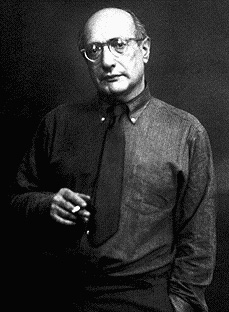
Reacting to anger from the Arab world, as well a call by the United Nations to cease hosilities, Ms. Livni said on “Fox News Sunday” that the assault “is needed in order to change the realities on the ground, and to give peace and quiet to the citizens in southern Israel.” ( WON'T WORK )

Speaking from Jerusalem in taped interviews, Ms. Livni said that until Hamas recognized Israel’s right to exist and ceased rocket attacks against Israel, they remained terrorists who needed to be acted against( I WOULD ADD THAT THEY NEED TO STOP BEING EXPLICIT JEW HATERS ). The Israeli air assault has killed at least 280 Palestinians since it began Saturday.

She said army was seeking to avoid unnecessary deaths in the assault against Hamas headquarters in Gaza( NOT GOOD ENOUGH ). Palestinian hospitals have reported numerous civilians among the dead and wounded.

“We are targeting Hamas, we are not looking for civilians to kill more than that,” she said in a second interview, on NBC’s “Meet the Press.”

She added that the Israelis had warned Palestinian civilians to leave places where Hamas officials and fighters were known to be located( HAMAS WILL FOLLOW THEM. ).

“The one who needs to be condemned by the international community is Hamas,” she continued on “Meet the Press.” “Israel is a state that implements its right to defend itself and its citizens( THERE ARE RULES OF LAW AND DECENCY AND RELIGION THAT LIMIT THE IMPLEMENTATION OF THOSE RIGHTS ).”

Ms. Livni said that she had been in “close connection” Secretary of State Condoleezza Rice, and that she had spoken with her Saturday night. The Bush administration has been supportive of the assault, condemning Hamas for its repeated rocket and mortar attacks against Israel in recent weeks. Ms. Rice, in a statement issued Saturday, said that she “holds Hamas responsible for breaking the cease-fire and for the renewal of violence in Gaza.”

The army has not ruled out a ground assault, Ms. Livni added, and has called up thousands of reservists. “We will make these decisions according to the situation on the ground,” she said. “All the options are open.”

The rocket attacks from Gaza are a clear violation of the rules of war. They are clearly targeting civilians. As well, you cannot even fire a missile without a definite MILITARY target in mind. Randomly firing off rockets violates the rules of war.

From the Geneva Conventions, Protocol I:

4. Indiscriminate attacks are prohibited. Indiscriminate attacks are: (a) those which are not directed at a specific military objective; (b) those which employ a method or means of combat which cannot be directed at a specific military objective; or (c) those which employ a method or means of combat the effects of which cannot be limited as required by this Protocol;

and consequently, in each such case, are of a nature to strike military objectives and civilians or civilian objects without distinction. ( HAMAS IS CLEARLY VIOLATING THIS CONVENTION )

5. Among others, the following types of attacks are to be considered as indiscriminate: (a) an attack by bombardment by any methods or means which treats as a single military objective a number of clearly separated and distinct military objectives located in a city, town, village or other area containing a similar concentration of civilians or civilian objects;

and

(b) an attack which may be expected to cause incidental loss of civilian life, injury to civilians, damage to civilian objects, or a combination thereof, which would be excessive in relation to the concrete and direct military advantage anticipated.( I CONSIDER ISRAEL TO BE VIOLATING THIS )

Hamas is also clearly violating this:

Civilians must not be used to protect military installations or operations against attacks. (Protocol I, Art. 51, Sec. 7)

Saturday, December 13, 2008

"The findings portray a complex proxy struggle between the nations"

There can be little doubt about what's going on in the Eastern part of the Congo. Lydia Polgreen in the NY Times:

"GOMA, Congo — A report to the United Nations Security Council by a panel of independent experts found evidence of links between senior officials of the Congolese and Rwandan governments and the armed groups fighting in eastern Congo. The findings portray a complex proxy struggle between the nations, with each using armed forces based in the area to pursue political, financial and security objectives in a region ravaged by conflict.

The report, which was based on months of independent research in the region, gives the clearest picture yet of the underpinnings of the fighting in eastern Congo, revealing a sordid network of intertwined interests in Congo and Rwanda that have fueled the continuing chaos. Tiny Rwanda and its vast neighbor to the west, Congo, have long been connected by a shared history of ethnic strife. In the aftermath of the Rwandan genocide in 1994, Hutu militias that carried out the killing fled into Congo, then known as Zaire."

This is like the Sudan. It's never going to end.

"In 1996, Rwanda backed a rebel force led by Laurent Kabila that ultimately toppled Congo’s longtime president, Mobutu Sese Seko. The initial aim had been to capture the Hutu fighters who had carried out the genocide, but the fighting devolved into a frenzy of plundering of Congo’s minerals, spawning a conflict that drew in half a dozen nations and left as many as five million people dead. Most died of hunger and disease.

The report’s findings on the current conflict are likely to strain already tense relations between the countries, providing ammunition for each. Congolese officials have accused Rwanda of supporting Tutsi rebels led by a renegade general from the same ethnic group as much of Rwanda’s establishment.

Rwanda has accused Congo’s government of colluding with an armed group led by some of the Hutu militia who carried out the 1994 genocide in Rwanda. These are the fighters who fled afterward to Congo and eventually formed a group known by its French abbreviation, the F.D.L.R. It preys on Congolese civilians and enriches itself with the country’s gold, tin and coltan, a mineral used in making the tiny processors in electronic equipment.

The independent experts found extensive evidence of high-level communication between the government of Rwanda and the Tutsi rebel group known as the Congress for the Defense of the People, led by the renegade general Laurent Nkunda, based on reviews of satellite phone records.

The report said that the calls were “frequent and long enough to indicate at least extensive sharing of information.”

In interviews, several of General Nkunda’s fighters described Rwandan soldiers’ helping the rebels inside Congo, according to the report. Rwandan soldiers also helped bring recruits, some of them children, to Congo’s border to fight in General Nkunda’s rebellion, the report said.

It also investigated how General Nkunda was paying for his militia, documenting hundreds of thousands of dollars in payments for taxes in territory that he controls. The report also named prominent business executives who had backed him financially.

Congo’s military, meanwhile, has been collaborating with the Hutu militia that is led by the authors of the Rwandan genocide, according to the report. The weak and undisciplined Congolese Army has frequently relied on help from these fighters in battling General Nkunda’s troops.

In exchange for ammunition, the militia fighters have helped in numerous offensives, the report said, citing by name several senior Congolese military officers who had handed over matériel to the Hutu forces. According to satellite phone records, senior military and intelligence figures in Congo have spoken frequently with top Hutu militia leaders.

“It is obvious that Rwandan authorities and Congolese authorities are aware of support provided to rebel groups,” Jason K. Stearns, the coordinator for the five-member panel that produced the report, said Friday at a news conference at the United Nations. “They haven’t done anything to bring it to an end.”

He said the Congolese government said that it had no policy to aid the Hutu militia but that there might be support from individual military commanders. Both governments said that telephone records showing conversations between officials and rebels did not constitute support, he added. "

In other words, it's a proxy war in Eastern Congo over minerals and money that's also a continuation of the effects of the Rwandan Genocide.

I refuse to believe that more can't be done.

Friday, November 14, 2008

"sending former Secretary of State Madeleine Albright and former Republican Representative Jim Leach instead. "

Here's the list of guests to the party from Bloomberg:

"G-20 members are Argentina, Australia, Brazil, Canada, China, France, Germany, India, Indonesia, Italy, Japan, South Korea, Mexico, Russia, Saudi Arabia, South Africa, Turkey, the U.S., the U.K. and the European Union.

The Netherlands and Spain are also be represented, as are the IMF, World Bank, and United Nations."

I'm not going to comment until I find out what happens. That seems a wiser course of action.

Bon appetit.

Here's nice agenda from The Times:

"Differing agendas

United States The US is scared of new, onerous regulation and is urging European countries to respect free-market principles on the basis that long-term state intervention will damage economic growth. But US policy on bailing out troubled industries is split: Barack Obama, the President-elect, wants to use federal funds to rescue American car companies; many Republicans do not.

Britain Gordon Brown has a long list. To start with, he wants “co-ordinated fiscal stimulus packages” — which means getting countries to increase public spending to create new jobs and offer tax rebates to families. He wants the IMF to create a council of experts to monitor the markets for danger signs — his much-vaunted early-warning system — and the IMF’s coffers to be boosted by cash-rich states such as Saudi Arabia and China. He is also calling for a clean-up of the banking system, including a network of regulators to scrutinise the world’s biggest banks.

France President Sarkozy is also pushing for cross-border regulation, meaning he wants to control French banks even when they are operating outside French borders. He sees the crisis as an opportunity to depose the US dollar as the king of currencies, and replace it with the euro. Mr Sarkozy would also like an overhaul of the world financial architecture, including making rating agencies more regulated and forcing accounting standards to be the same worldwide.

Germany The Germans are deeply suspicious of secretive hedge funds, which control about $2.5 trillion worth of assets and whose activities are not regulated. They blame the hedge funds for market volatility and driving down shares by short-selling. Angela Merkel, the Chancellor, also backs greater powers for the IMF to oversee international companies, revised rules for rating agencies and making it harder to hide risks off company balance sheets.

Russia President Medvedev wants more say in the IMF, so he is teaming up with Mr Sarkozy to back President Bush into a corner. He wants alternatives to the IMF as lenders of last resort and is willing to contribute to the cost of the new agencies. Russia has also pressed for international budgetary and economic rules to prevent any further crises

China China wants to press the West for a bigger role in global financial bodies such as the IMF but at the same time it has been trying to lower Western expectations that it will join in global actions. It cites as reasons its own economic problems and limited resources as a developing country.

Brazil and other developing nations These want changes to the voting structure at the IMF and the World Bank’s to give them more of a voice."