Showing posts with label Sri Lanka. Show all posts

Wednesday, May 20, 2009

Sinhala-Only Act of 1956 led to ethnic riots in that year and in 1958, marking the beginning of acute Sinahalese-Tamil animosity

TO BE NOTED: From Language Log:

"The linguistic roots of the Sri Lankan civil war

« previous post |

In the coverage of the civil war in Sri Lanka, I haven't seen much discussion of its linguistic aspects. In particular, the Sinhala Only Act of 1956 was a key event, whose causes and consequences are worth considering.

According to Michael Edward Brown and Sumit Ganguly, Fighting words: language policy and ethnic relations in Asia, 2003:

The passage of the Sinhala-Only Act of 1956 was a turning point in Sinhalese-Tamil relations. Tamil grievances subsequently grew because, in Sri Lanka as elsewhere, language policies had wide-ranging implications for educational and economic opportunities. By the 1970s many Tamil youth had become both radicalized and militarized. […]

Both groups, in the main, enjoyed cordial relations for more than 2,000 years. Then, in the 1950s the Sinhalese abandoned the movement to make both Sinhala and Tamil the country's official language and instead instituted Sinhala as its sole official language. The Sinhala-Only Act of 1956 led to ethnic riots in that year and in 1958, marking the beginning of acute Sinahalese-Tamil animosity. The manner in which the Sinhala-Only Act and Sinhalese linguistic nationalism facilitated violent conflict, however, has not been fully appreciated.

The Sri Lanka article in the CIA World Factbook characterizes Sri Lanka's current distribution of languages this way:

Sinhala (official and national language) 74%, Tamil (national language) 18%, other 8% (note: English is commonly used in government and is spoken competently by about 10% of the population).

The Wikipedia article on Sri Lanka says that

Sinhalese and Tamil are the two official languages of Sri Lanka. English is spoken by approximately 10% of the population, and is widely used for education, scientific and commercial purposes. Members of the Burgher community speak variant forms of Portuguese Creole and Dutch with varying proficiency, while members of the Malay community speak a form of creole Malay that is unique to the island.

Ethnologue, using the 1993 census, gives 13.2M speakers of Sinhalese, 3M speakers of Tamil, 74K speakers of English, and 50K speakers of Sri Lankan Creole Malay.

The British East India Company took control of Sri Lanka in 1796; and the island remained a British colony for 150 years, until independence came in 1948. During this time, English was the language of the civil service and the judicial service.

According to Neil DeVotta, Blowback: linguistic nationalism, institutional decay, and ethnic conflict in Sri Lanka, 2004:

The Sinhala-only language movement ensued when hitherto politically and economically marginalized Sinhalese forces coalesced to demand preferential treatment from the government. […]

The initial agitation surrounding the language issue was … called the swabasha (self-language) movement.

The swabasha movement included both Sinhalese and Tamils who campaigned for their respective languages to replace English. It must be recognized that the swabasha movement was not designed to revamp the [colonial] governmental structure. On the contrary, it was an attempt by the hitherto marginalized vernacular speakers to change the criteria by which the opportunities for socioecnomic upward mobility via education and government employment were determined. The proponents of swabasha wanted the rules of the game tweaked so that they too could partake of the spoils. […]

The excellent English education system instituted by American missionaries in the northern regions had taught many Tamils English. Indeed, by 1930, literacy in English in the Northern Province was second only to Columbo. […] The paucity of industry and agriculture in the northern regions, the prestige and security stemming from state sector employment, and the opportunity thereby for upward social mobility in the rigidly casteist Tamil society encouraged many northern Tamils to migrate south seeking a university education and governmental careers. Tamils consequently became heavily overrepresented in the elite Ceylon Civil Service, the judicial service, and higher education. Two years prior to independence, for example, Tamils made up 33 percent of the civil service and 40 percent of the judicial service. They also accounted for 31 percent of the students in the university system. In the medical and engineering fields, Tamils numerically equaled the Sinhalese. Such overrrepresentation diminished the appeal of the swabasha movement for upper-class and upper-caste Tamils, and the movement to replace English with the vernacular languages was thus Sinhalese-led. […]

Sinhalese nationalists, apparently agitated over the Tamils being overrepresented in the coveted civil service, began to adopt a communalist posture and demanded that swabasha mean Sinhala-only. This demand was the first real indication that the informal rules governing Sinhalese-Tamil coexistence could be undermined … What is important to recognize is that the socio-economic structures that encouraged government employment, given the security and prestige such employment afforded during an era of economic scarcity, were a major reason for the call for Sinhala-only. […]

In resorting to chauvinistic rhetoric, Bandaranaike was well assisted by numerous lay Buddhists and activist Bhikkuhs, who together organized emotive and impressive processions demanding a Sinhala-only policy. Such bhikkus anathematized the Tamils as "parasites," argued that linguistic parity was undemocratic and unjust, since 80 percent of Ceylonese spoke Sinhala, and cliamed that the failure to institute a Sinhala-only policy "would be the death-knell of the Sinhalese". These monks evidenced no desire for compromise and instead suggested that Sri Lanka was for the Sinhalese only. For example, one leading monk thundered: "The Dravidians want parity or Tamilnad. We will give them neither. This country belongs to the Sinhalese. We can't give even an inch it to the Tamils." Other monks claimed that not just Sinhala but Buddhism too would disappear if parity was instituted. […]

It was obvious that a Sinhala-only policy would have a radical effect on minorities' future employability, especially in the state sector. With the bill's passage, Suntharalingam complained, "the Sinhalese would hold all jobs from top to bottom and the Tamils would hold the scavenging and latrine cooly jobs."

In chapter 4 of the Brown and Ganguly collection cited above, DeVotta wrote that

The Tamil protests that accompanied the passage of the Sinhala-Only Act were unprecedented. When the bill was introduced on June 5, 1956, the Tamil Federal Party organized a satyagraha (peaceful protest) outside the parliament building. The Tamil protest was met by a counterprotest organized by the Eksath Bhikkhu Peramuna. A mob representing the latter attacked the Tamil protesters and was responsible for unleashing riots that killed nearly 150 Tamils. […] Tamil leaders characterized the Sinhala-Only Act as a form of "apartheid,"…

On the other side, some Sinhalese felt that linguistic hegemony was essential to their linguistic survival. K.M. De Silva, William Howard Wriggins, J.R. Jayewardene of Sri Lanka, 1988, quote Jayewardene:

"The great fear I had was that Sinhalese being a language spoken by only 3,000,000 people in the whole world would suffer or may be entirely lost in time to come if Tamil is also placed on an equal footing with it in this country. The influence of Tamil literature, a literature used in India by over 40,000,000 and the influence of Tamil literature and Tamil culture in the country, I thought, might be deterimental to the future of the Sinhalese language."

Jayewardene played a key role in passing the 1956 Sinhala Only Act. When he came back into power as Prime Minister in 1977, at the same time that the Tamil United Liberation Front won in Tamil-speaking areas on a platform of secession, he orchestrated the passage of a new constitution (in 1978) which created the office of Executive President, with much broader powers. The 1978 constitution also offered a linguistic concession to the Tamils, in the form of Article 19:

18. The Official Language of Sri Lanka shall be Sinhala.
19. The National Languages of Sri Lanka shall be Sinhala and Tamil.

In the aftermath of the riots of 1977, the government also withdrew the controversial university-entrance policies of 1974. However, this seems to have too little and too late, especially given the uncertain meaning and apparently erratic implementation of articles 18 and 19. So the Thirteenth Amendment, certified 11/14/1987, four years after open civil war broke out in 1983, said that

2. Article 18 of the Constitution of the Democratic Socialist Republic of Sri Lanka (hereinafter referred to as the "Constitution") is hereby amended as follows:-
(a) by the renumbering of that Article as paragraph (1) of that Article;
(b) by the addition immediately after paragraph (1) of that Article of the following paragraphs:
(2) Tamil shall also be an official language.
(3) English shall be the link language.
(4) Parliament shall by law provide for the implementation of the provisions of this Chapter.

By that time, however, it was far too late to end the civil war by making concessions on linguistic issues.

This is all reminiscent of what happened 2000 kilometers to the north at about the same time, when post-colonial apprehensions about linguistic aspects of cultural capital led to the partition of India and the later division of Pakistan. See "Language in Pakistan", 8/28/2007; "Camp language", 12/31/2007; "Scripts, scriptures and scribes", 1/3/2008.

[My morning's research for this post (thank you, Google books!) introduced me to a term that surprised me, though it shoudn't have: Buddhist fundamentalism. Nothing in this post, however, should be construed as offering support for the LTTE, a brutal and corrupt terrorist organization whose destruction seems to me to have been a necessary condition for progress.]

May 20, 2009 @ 8:11 am · Filed by Mark Liberman

Monday, May 11, 2009

This brings the total estimated casualty figure to more than 7,000 killed and 13,000 injured since January

TO BE NOTED: From AI:

"
UN Security Council must act immediately to stop "bloodbath" in Sri Lanka

Yolanda Foster, Amnesty International's Sri Lanka expert, describes the situation in the country, 11 May 2009

© Amnesty International

Download this audio file

© Private">Children injured by shelling, Kilinochchi, Sri Lanka, 10 May 2009.

Children injured by shelling, Kilinochchi, Sri Lanka, 10 May 2009.

© Private


© Private">Child injured by shelling, Kilinochchi, Sri Lanka, 10 May 2009.

Child injured by shelling, Kilinochchi, Sri Lanka, 10 May 2009.

© Private


© Private" style="display: none;">

11 May 2009

The horrific condition facing civilians in north eastern Sri Lanka has been described as a “bloodbath” by the United Nations. Amnesty International has said that it demands immediate action by the United Nations Security Council.

In the last few days, more than 400 people – including more than 100 children – are reported to have been killed in a two-day bombardment of the 2 square kilometre area designated as a “Safe Zone” by the Sri Lankan army. This brings the total estimated casualty figure to more than 7,000 killed and 13,000 injured since January. There are an estimated 50,000 civilians still trapped in the area.

Medical personnel in the area have told Amnesty International that the artillery barrage continued throughout the weekend. The Sri Lankan government has denied using artillery, instead blaming the Liberation Tigers of Tamil Eelam.

Both the Tigers and Sri-Lankan Military have been violating the laws of war. Over the last several months, the Tamil Tigers have used civilians trapped in the conflict zone as a buffer against government forces.

When civilians have tried to flee, they have been attacked by the Tigers. The Sri Lankan military has in the past used heavy artillery, which is indiscriminate under the circumstances, causing civilian deaths and injuries.

“The controversy over who is responsible for these devastating attacks underlines the need for the Security Council to demand immediate access to the area by humanitarian organizations as well as UN observers,” said Sam Zarifi, Amnesty International’s Asia-Pacific director. “The Security Council should emphasize that both the government and the LTTE will be held fully accountable for any breaches of their obligations under international humanitarian and human rights law.”

There are grounds to fear that the Sri Lankan military will launch an even heavier military offensive after 13 May, when general elections end in neighbouring India. India’s powerful regional Tamil political parties have made protection of civilians in Sri Lanka a key election issue.

“There are real fears that the ‘bloodbath’ will turn into a flood of misery after 13 May. The Security Council must act on its responsibility to protect the civilians in Sri Lanka before hundreds more are killed and wounded by the two sides or succumb to malnutrition and disease,” said Sam Zarifi.

Amnesty International called on all international donors to Sri Lanka to ensure that their money is not used to fuel human rights abuses. In a joint letter [http://www.hrw.org/en/news/2009/05/10/japan-back-un-action-sri-lanka] to the government of Japan, Amnesty International, Human Rights Watch, the International Crisis Group, and the Global Centre for the Responsibility to Protect called on Japan, one of Sri Lanka’s largest international donor, to support formal action by the Security Council and implement aid policies that help protect the rights of Sri Lankan civilians.

The Sri Lankan government has repeatedly claimed that it will stop the use of heavy artillery in the ‘Safe Zone’.

“The Sri Lankan’s frequently broken promises of not using heavy artillery against civilians shows that it is not a credible source of information,” said Sam Zarifi.

Amnesty International has urged the Sri Lankan authorities to allow immediate and unhindered access to the troubled areas – including the "No Fire Zone" – to international monitors and agencies, who can assess the situation first hand and help ensure that the humanitarian and human rights crisis is addressed.

Hospitals in northern Sri Lanka have become overrun with dead and wounded people after a weekend of shelling caused heavy civilian casualties in the region.

"Due to the huge number of injured civilians, the hospital is unable to give services to all patients," a local Sri Lankan doctor told Amnesty International. "Many wounded civilians are being left without treatment for more than 24 hours and over half of hospital staff is not reporting for duty because their homes are under attack."

"Many civilians' temporary tarpaulin houses were shelled," confirmed the doctor.

Amnesty International has called on the government of Sri Lanka and the opposition Tamil Tigers to take immediate action to prevent further civilian casualties.

“Civilians are suffering injuries and dying because both the Tigers and the government troops are violating international humanitarian law,” said Zarifi. “The civilians caught in the cross-fire also face an alarming lack of life saving humanitarian aid including medical supplies, food and water.”

The government’s restrictions on media have escalated sharply in recent months. At least 16 media workers have been unlawfully killed in Sri Lanka since the beginning of 2006. Others have been arbitrarily detained, tortured and allegedly disappeared while in the custody of security forces.

Last week, the Sri Lankan government expelled three British television journalists who had managed to provide the first uncensored information about conditions inside the internment camps housing tens of thousands of people displaced from the conflict area."

Wednesday, May 6, 2009

Philippines had the largest number of new IDPs in 2008. Some 600,000 people fled their homes

TO BE NOTED:


New Figures, Analysis Suggest Internal Displacement on the Rise

Thursday, April 30, 2009

The LTTE is a terrorist organisation that is now using innocent civilians as human shields.

TO BE NOTED:

Times Online Logo 222 x 25

From
April 30, 2009

Victory without humanity can be no triumph

We have seen for ourselves why an international relief effort is now urgently needed in Sri Lanka

Recent demonstrations in London, Paris and elsewhere have brought the situation in Sri Lanka to wide public attention. But the island's civil war has been running for 28 years. The Tamil minority in the north has long argued that it is marginalised politically and economically.

In the early 1980s the LTTE (the Liberation Tigers of Tamil Eelam, or Tamil Tigers) started fighting for an independent Tamil state. By 1986 it had full control of the northern Jaffna peninsula. What began with violent protest soon led to civil war - to the majority the assertion of military power by a sovereign government against a murderous terrorist organisation, to the minority the abuse of violent power by the State. Repeated attempts to find a political solution ran aground.

The Government of Sri Lanka now believes that it is in the final stages of that campaign. Its military advance is undoubted. The LTTE leadership appears trapped in an ever-diminishing strip of land, now only a few square kilometres. But despite its size, at least 50,000 civilians remain there with the LTTE, the others having fled to “screening centres” and IDP (internally displaced people) camps. So civilian suffering and loss of life continues, and the chances of any kind of political settlement recede.

We visited Sri Lanka yesterday for a simple reason: time is running out for those trapped or displaced by the fighting. Our mission was simple too: to make, in person, the case for the humanitarian relief that the UN, the EU and the G8 have called for.

We saw the situation for ourselves in Vavunja, close to the fighting, where we visited displaced Tamils and saw the newly arrived French field hospital. We heard stories of individual human tragedy: civilians forced by the LTTE not to leave its stronghold, deaths and injuries from bombs and artillery, and families separated, desperately seeking news of their loved ones - fears from the recent past, fears for their present situation and fear of what might happen in the future.

The UN and EU have spoken loud and clear about the immediate needs. First, both sides must act to protect civilians inside the so-called no-fire zone (which has become the opposite). We have called for some time for the Government of Sri Lanka to set a ceasefire in place and for the LTTE to allow all civilians under its control to leave the conflict area safely and as quickly as possible, preferably under UN auspices.

The Government of Sri Lanka's announcement of a cessation of heavy military combat is a welcome step towards the protection of civilians. Similar announcements have been made in the past. This one must be implemented and kept to. The UN had an agreement with the Government to send a mission into the conflict zone to help to assess and address civilian needs. That agreement has not been implemented. It must be.

The second concern is over arrangements and conditions for the displaced persons fleeing the zone. Here the refusal to allow the UN, the aid agencies, and the media full and proper access is quite wrong. The Government wants to “screen” civilians escaping the fighting to ensure that LTTE fighters cannot get into the wider community to continue the struggle using terrorist means. But it is vital that this process is transparent - the Government must allow the UN and other international agencies proper access to all stages of the screening process.

Third, conditions for civilians who have fled the fighting are an important concern. Any country would struggle with 200,000 IDPs. When these include many who are injured and traumatised, as well as the old and children, this is doubly the case. In the past, the Sri Lankan Government has been unwilling to let international aid agencies get involved directly. But without a properly managed, resourced and co-ordinated humanitarian aid effort, their suffering will only intensify. That is why we fully supported the visit this week to Sri Lanka of Sir John Holmes, the UN Under-Secretary General for Humanitarian Affairs. Within the IDP camps, there must be better medical facilities and improved access to food and shelter. Britain and France have made commitments of money and medicine and shelter. So have others. But there needs to be proper access.

Finally, while our focus today is short term, we cannot ignore the long-term context. The Government of Sri Lanka is an elected one and is rightly held to the high standards expected of members of the UN - so all its obligations under international humanitarian law must be respected. To the LTTE we repeat the EU's longstanding position that violence will not serve the Tamil people and affirm that only the renunciation of violence will bring progress.

In the future, the communities of Sri Lanka will have to find ways to live together. That will not be achieved through military victory alone. The deep-seated sense of political alienation that has fuelled Tamil resentment towards successive governments in Sri Lanka must be addressed through a political process of integrity and decency. We are under no illusions about how entrenched positions are on either side. The Government of Sri Lanka believes it is days away from the victory that it has sought for three decades, but at the cost of too many civilian lives. The LTTE is a terrorist organisation that is now using innocent civilians as human shields. The gravity of the situation means that the international community has a duty to respond and to do all that we can to halt the suffering.

People ask what does it have to do with us? As members of the UN Security Council we do not shy away from the responsibility of sovereign governments and the international community to protect civilians. Hillary Clinton, the US Secretary of State, has joined us in describing the failure to protect civilians in Sri Lanka as truly shocking. Yesterday we took our plea direct to the Sri Lankan Government. In its moment of triumph it must show the humanity and self-interest to find a way to win the peace.

Bernard Kouchner is France's Minister of Foreign Affairs; David Miliband is Foreign Secretary"

The UN says nearly 6,500 civilians have been killed since January in the most recent wave of fighting

TO BE NOTED: From the Guardian:

"
Miliband in row with Sri Lankan defence minister

• Exchange followed foreign secretary's criticism of army tactics
• Military kills 25 Tigers as rebels vow never to surrender

Kouchner and Miliband in Sri Lanka

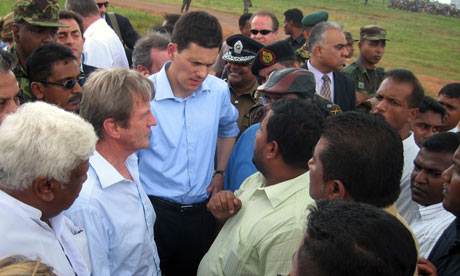
France's foreign minister Bernard Kouchner (second left) and British foreign secretary David Miliband (centre) visiting the Menikfam Vanni refugee camp in northern Sri Lanka yesterday Photograph: David Gray/Reuters

The foreign secretary, David Miliband, was involved in a heated exchange with a Sri Lankan minister over the safety of civilians in the area held by the Tamil Tigers, according to a newspaper report from the country reproduced on its defence ministry's website.

The story in the Island claims Miliband interrupted the Sri Lankan defence secretary, Gotabaya Rajapaksa, yesterday as he was describing how the army had rescued 200,000 civilians from the Liberation Tigers of Tamil Eelam (LTTE), to say Britain had credible information that civilians were being harmed by the army's firing.

Rajapaksa responded by warning Britain against being "duped" by the Tiger's "disinformation campaign", adding: "Even BBC is dishing out LTTE propaganda material without verification."

When Miliband, who was in the country with his French counterpart, Bernard Kouchner, to push for a humanitarian truce in the war with the Tamil rebels, said his claim was based on credible information from sources in the LTTE-held no-fire zone, Rajapaksa was "apparently annoyed", according to the report.

"The defence secretary said anyone who knew the LTTE would not believe that any reliable information would emanate from that area under its jackboot," it said.

The report added: "The defence secretary said it was up to the British delegation to decide whether it should believe what a terrorist group said or what a responsible officer of a legitimate government told them."

The Foreign Office said it did recognise the account of the meeting.

"What is certainly true is that the foreign secretary set out clearly the importance of a ceasefire/humanitarian assistance with all key members of the government of Sri Lanka that he met," a spokeswoman said.

The Sri Lankan government has refused growing diplomatic pressure to stop its offensive against the rebel group's last stronghold in the north-east to safeguard the estimated 50,000 civilians trapped in the area. On Sunday, the LTTE called for a ceasefire but the proposal was rejected by the government.

Today the LTTE vowed it would never surrender to the advancing Sri Lankan forces, as the military released video footage of attacks on the depleted rebel group's navy.

The footage shows the Sri Lankan navy's elite special boat squadron blowing up what it says were Sea Tiger boats. The attacks – using heavy weapons, which the government said it was no longer using following criticism from the international community – destroyed six boats, including four "suicide craft", and killed 25 rebels, according to the military.

However, the Tamil Tigers remained defiant. In an email sent to the Associated Press from the war zone, the rebel political chief, Balasingam Nadesan, said the group would not surrender and urged the international community to step up pressure for a ceasefire.

"If any country really cares about these people, I ask that country to go beyond its 'diplomatic boundaries' for the sake of saving human lives and make Sri Lanka stop this genocidal war," he wrote.

"Surrendering and laying down our arms are out of the question. Our freedom struggle will continue until [our] legitimate aspirations are met."

Nadesan denied accusations by the government and international rights groups that the rebels were holding civilians as human shields to slow the military offensive. He dismissed reports that the rebels' top leaders had fled the country, saying they "are still in our homeland and leading the freedom struggle".

The Tamil Tigers have been fighting since 1983 for a state for minority Tamils in the north and east of Sri Lanka after decades of marginalisation by governments dominated by the Sinhalese majority.

The UN says nearly 6,500 civilians have been killed since January in the most recent wave of fighting."

Monday, April 27, 2009

War crimes have undoubtedly been committed by the Tigers. They may well have been committed also by the Sri Lankan military

TO BE NOTED: From the Guardian:

"
Silence over Sri Lanka

Why do those in the international community who expressed outrage over Gaza stay silent while Tamils die?

In Sri Lanka a bloody conflict is reaching its bloody conclusion. Some 30 years ago, the Tamil population that inhabits the north and east of the island began an insurrection against the government, establishing for this purpose an organisation known as the Liberation Tigers of Tamil Eelam. The ultimate aim of the Tamil Tigers was to establish an independent Tamil state, thus partitioning the island. The means chosen to bring this about was to create terror and mayhem throughout the island, and, if necessary, beyond it. Not content with common-or-garden political assassinations and random murders, the Tamil Tigers pioneered the use of the suicide bomb and the suicide belt. Banned and proscribed as a terrorist organisation by more than 30 countries, including the US and the European Union, the Tigers are said to have been responsible for more suicide attacks than Hamas, Islamic Jihad and al-Qaida combined.

Now the endgame is in sight. Using methods pioneered by the British army in its successful campaign against the Boer insurgency more than a century ago, the Sri Lankan army has systematically removed civilians from the war zone while simultaneously refusing to heed international calls for a ceasefire because of the inevitable loss of civilian lives in coastal strips that remain under Tiger control. War crimes have undoubtedly been committed by the Tigers. They may well have been committed also by the Sri Lankan military.

Yes, this bloody conflict is reaching its bloody conclusion. So where, I ask myself, is the international outrage against the government of Sri Lanka? Why haven't we heard calls from, say, the Arab League for an immediate, unconditional ceasefire on the island and for Sri Lankan forces to leave Tamil areas? Why did President Ahmadinejad not condemn Sri Lanka from the Geneva podium that he occupied so shamelessly last week? Why, in this country, have we not heard calls for an economic boycott of Sri Lanka? Why have the offices of travel agencies offering package holidays to Sri Lanka not been picketed? Why has the Royal Court theatre not promoted a play highlighting the plight of the Tamil population? Why has the Lib-Dem leader, Nick Clegg, not demanded an immediate cessation of British arms shipments to Sri Lanka, and the EU not suspended all economic cooperation with the country? Why has Gordon Brown's international development secretary, Douglas Alexander, not announced that British taxpayers' money is to be used to fund a scheme to highlight Sri Lankan human rights abuses in Tamil areas and that the UK government will give legal assistance in Sri Lanka to individuals and institutions challenging (to quote a brochure recently issued by Alexander's department) "military policies that violate human rights"?

I'll tell you why. Because Sri Lanka is not Israel. Because the Tamils are not Arabs. And because here, in the UK, the Tamil vote is negligible whereas the Muslim vote is not.

Yes, I know there have been some violent scenes in Parliament Square, which is even now occupied by Tamil protesters. But that's the point. The protesters and the hunger strikers are all Tamils. Where are the homegrown cheerleaders that spearheaded protests in London during the recent military action by Israel in Gaza? Tony Benn, for example? George Galloway? Jenny Tonge? Come to that, where is the saturation media coverage of the Sri Lankan assault on the remaining Tamil strongholds?

Whenever I complain about the British media's obsession with Israel and its problems with some of its Arab neighbours, I can count on someone to tell me that I'm paranoid. But I'm not, am I? The human tragedy unfolding in Sri Lanka, and its totally peripheral treatment by the media, the British government and the British political elite – not to mention the international community – does, I am very sorry to say, prove my point."

Saturday, April 25, 2009

about 13,500 civilians have been killed and 14,000 wounded

TO BE NOTED: From the NY Times:

"
From Sandy Strip of Sri Lanka, Tales of Suffering as War Traps Thousands

Reuters

A Sri Lankan soldier on Friday looked over civilians who had fled the war zone in the northern part of the country controlled by Tamil rebels. As many as 100,000 civilians may be trapped there.
By THOMAS FULLER

COLOMBO, Sri Lanka — In more peaceful times, the narrow, sandy strip of land that hugs the coast near the northeastern town of Mullaittivu might attract tourists to its Indian Ocean beaches.
Skip to next paragraph
David Gray/Reuters

As a soldier looked on, smoke rose Friday from the combat zone near the town of Putumattlan, in northern Sri Lanka.

The New York Times

Wounded civilians are dying at a hospital in Vavuniya.

Now, as the country’s long-running civil war appears to be reaching its climax, a picture of desperation is emerging from the sliver of territory between a lagoon and the sea where rebels from the ethnic Tamil minority are making their last stand.

Stories of suffering have streamed out of the area along with the tens of thousands of civilians who were able to break through the front lines last week and straggle into overwhelmed hospitals and refugee camps.

Tim Pruchnic, an American surgeon working at a hospital in the northern town of Vavuniya, said in a telephone interview that many of his patients were so weak they were dying after operations that would not normally be life threatening.

After months in the combat zone, patients are exhausted, malnourished and dehydrated, said Dr. Pruchnic, who works with the aid group Doctors Without Borders. Another doctor who works with the aid group at the same hospital, Paul McMaster, said some of his patients were losing limbs to amputations because their injuries — often from shrapnel, gunshots and land mines — had gone untreated for too long and became infected.

Civilians have been trying for weeks and sometimes months to leave the ever-shrinking area of fighting between the government and the Tamil Tiger rebels in the north, but the rebels have been holding them as human shields, building earthen barriers that make it harder not only for soldiers to get in but also for civilians to get out, according to aid agencies and the Sri Lankan military. The rebels have also forced some civilians to take up arms, the United Nations says. The government, meanwhile, has ignored appeals from the United Nations, India, the United States and other nations for a cease-fire until all the civilians are out of the combat zone.

Last week, the government was able to explode one of the rebels’ barriers, allowing about 100,000 civilians to flee.

“Even in ordinary times a population of 100,000 would be a huge burden on the health system,” said Gordon Weiss, the United Nations spokesman in Colombo. “But these are people who have had three months with very little food, they’ve traveled across mine fields and endured months of shelling and small-arms fire. It’s no surprise that the hospitals are overwhelmed.”

Shortages of doctors and nurses are also growing severe, in part because of what Mr. Weiss described as bureaucratic “bottlenecks” in the approval process for visas of foreign aid workers.

Some of the civilians who have fled ended up in the hospital at Vavuniya, where doctors say the maximum capacity is normally 600 patients. Last week, 1,700 people were crowded into its wards. Dr. Pruchnic said many of the patients, including children, arrived without their families.

“There are kids here who have had amputations, their mother and father are gone — their whole family is missing,” he said. “Yet they can still smile. I’m amazed at their resilience.”

On Saturday, the Tigers said that tens of thousands of civilians faced “imminent” starvation, according to a Web site that serves as their voice, Tamilnet.

The International Committee of the Red Cross, which evacuated hundred of wounded civilians by fishing boats used as ferries in recent days, has also warned of the lack of food and an “acute shortage of vital medical supplies” in the combat zone.

The government’s advance has been slowed somewhat by the rebels’ earthen barriers, according to Brig. Gen. Udaya Nanayakkara, a military spokesman. He said the military was now moving forward only several yards a day as troops cleared mines and booby traps. The rebels are equipped with at least one tank, artillery pieces, armor-plated vehicles, assault weapons and satellite phones, he said.

Conditions in the rebel-held territory are difficult to verify because journalists and aid workers have been barred from the combat zone.

The general also said the mingling of rebels among civilians had complicated the military’s advance.

Among the nearly 200,000 people who have escaped rebel-held territory since January, about 3,000 were determined to be fighters disguised as civilians, General Nanayakkara said. He estimates there are 500 fighters left in rebel-held territory.

“The moment we take all the trapped civilians out it’s just a matter of 48 hours to get rid of them,” General Nanayakkara said of the rebels.

Since late January, when rebel-held territory shrank significantly, about 13,500 civilians have been killed and 14,000 wounded, according to a United Nations tally. The United Nations estimates there are 50,000 to 100,000 civilians stuck on the sandy spit of land. The military says it is more like 15,000 people.

Whatever the number, the frailest among them may never make it out alive.

Patients arriving at Vavuniya hospital are usually young or middle-aged: Dr. Pruchnic says he has seen few elderly people.

“The old don’t seem to make it here,” he said. “There’s a few. But I think they’re mostly dying on the way.”

Sharon Otterman contributed reporting from New York."

Tuesday, April 21, 2009

More than 4,500 civilians are believed to have died in the fighting according to UN estimates in north eastern region in Sri Lanka.

TO BE NOTED: From AI:

"
Civilian casualties rising in Sri Lanka conflict
© Private">Malnourished baby in the Sri Lanka 'No Fire Zone' Vanni, April 2009

Malnourished baby in the Sri Lanka 'No Fire Zone' Vanni, April 2009

© Private


© Private">Waiting for food in the Sri Lanka 'No Fire Zone' Vanni, April 2009

Waiting for food in the Sri Lanka 'No Fire Zone' Vanni, April 2009

© Private


21 April 2009

More than 4,500 civilians are believed to have died in the fighting according to UN estimates in north eastern region in Sri Lanka. There were hundreds of civilian casualties reported on Monday alone. Immediate action must be taken by all parties concerned to prevent further mass killings of civilian/non-combatants.

An estimated 100,000 civilians remain trapped in the conflict zone between the Tamil Tigers and the Sri Lankan army in the north of the country. On Monday, the Sri Lankan government gave the Liberation Tigers of Tamil Eelam (LTTE) 24 hours to lay down their arms or face further attack in a "final offensive" raising concerns that civilian casualties could spiral.

"The security of civilians trapped between Sri Lankan forces and the Tamil Tigers is paramount," said Yolanda Foster, Amnesty International's Sri Lanka expert. "The plight of these civilians demands that the Sri Lankan government and the LTTE take all necessary measures immediately to prevent unlawful killing of civilians and that they fully comply with their obligations under international humanitarian law.

"The LTTE and the Sri Lankan government must cease hostilities with immediate effect and agree to extend a humanitarian pause for a reasonable duration, in order to permit civilians to leave as well as the reopening of access routes for food, water and medical supplies. "

Both parties have an obligation to comply with international humanitarian law in all circumstances. However, the government appears to have resorted to the use of heavy weapons such as artillery, which is intended for use on conventional battlefields and are not capable of pinpoint targeting. The use of artillery in densely populated areas is likely to lead to indiscriminate attacks.

"The Tamil Tigers must cease forced recruitment, the use of civilians as human shields and deliberate attacks on civilians who have tried to escape from areas under their control," said Yolanda Foster. "They must immediately allow those civilians who wish to leave to do so."

According to reports, over 35,000 civilians have been able to exit the combat zone in the last few days. In the last week, Amnesty International has received reports of a number of enforced disappearances of young Tamil men separated from their families during the screening process.

"The Sri Lankan authorities should allow international monitors to visit ‘reception centres,’ to help reassure both fleeing civilians and surrendered LTTE fighters that they will be treated according to international standards," said Yolanda Foster.

Amnesty International has urged the United Nations Security Council to discuss the crisis without any further delay.

"The Council must express concern at the escalation of violence and the deteriorating humanitarian and human rights situation, in particular the resulting heavy civilian casualties of recent days," said Yolanda Foster.

"The Council must call for a humanitarian truce, urge that the government and the LTTE immediately take all necessary steps to fully comply with their obligations under international humanitarian and human rights law, and stress that the perpetrators of grave violations of human rights and international humanitarian law must be held individually responsible and prosecuted for such violations.

"The situation is extremely bleak and calls for immediate action. Both parties must fully observe their obligations under international humanitarian law to limit civilian casualties and ensure that critical humanitarian assistance reaches families in desperate need,” said Yolanda Foster.

Read More

Immediate humanitarian truce needed in Sri Lanka to help trapped civilians (News, 17 April 2009)
Renewed calls for humanitarian truce in Sri Lanka (News, 27 March 2009)
More civilians killed in Sri Lanka fighting (News, 10 February 2009)
Call for a truce in Sri Lanka as humanitarian situation deteriorates (News, 6 February 2009)"

Saturday, April 18, 2009

both parties to the conflict to adhere to international humanitarian law and ensure that the safety of the innocent civilian population

TO BE NOTED: From UNHCR:

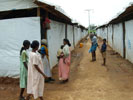
A group of internally displaced people in Sri Lanka. UNHCR has stepped up its emergency response in the north of the country. © UNHCR/G. Amarasinghe
UNHCR News Stories

UNHCR steps up emergency response in Sri Lanka as new displacement tops 63,000

COLOMBO, Sri Lanka, April 17 (UNHCR) – UNHCR has stepped up its emergency response in the north of Sri Lanka, where more than 63,000 people have so far been displaced by heavy fighting between the military and the Liberation Tamil Tigers of Eelam (LTTE).

The displaced people fleeing the conflict zone in the north-eastern coastal pocket are being accommodated at several transit and internal displacement sites in the districts of Vavuniya, Jaffna and Mannar.

UNHCR – together with the government and other partners – is responding with massive shelter support and regular distribution of non-food aid items while carrying out protection monitoring. The aid distributions have so far been focused on Vavuniya, where a majority of the internally displaced people (IDPs) are being accommodated.

The agency has so far distributed some 36,000 plastic mats, over 22,000 bed sheets, 32,000 mosquito nets, more than 46,000 articles of clothing, 9,000 kitchen sets and thousands of hygiene kits.

The construction of shelter units by UNHCR's partners at government-designated sites is also progressing as planned. Despite formidable challenges, work on one site in Vavuniya with a capacity of up to 27,000 people is scheduled to be completed by Monday. The agency has asked the government to provide more land, including in the district of Mannar, to help alleviate overcrowding at current sites and to relieve pressure on services in Vavuniya.

"UNHCR welcomes positive steps by the government to address several protection concerns at the sites in Vavuniya," agency spokesman Ron Redmond told reporters in Geneva on Friday. "Short visits by friends and relatives to the sites are now allowed. UNHCR monitored the first round of visits on Monday [April 13]."

He added that telephone, telegramme and mail services are now operating in almost all sites in the district. Meanwhile, Redmond said, "approximately 1,800 IDPs with special needs, particularly the elderly, have been released from the sites, and some 1,345 separated families have so far been reunited, according to the government."

While commending these initiatives, Redmond said UNHCR was also urging the government to accelerate progress on other outstanding protection concerns, including maintaining the civilian character of the IDP sites and the separation of ex-combatants from the civilian population; expediting the screening process in IDP camps; and subsequently allowing freedom of movement. UNHCR has made a number of concrete suggestions on how best to proceed and will continue to work closely with the government to ensure that minimum international standards are met at all sites, he said.

The spokesman said UNHCR believed the ultimate objective of the government should be the safe and voluntary return of the displaced to their villages of origin by removing obstacles to return.

"Chief among them is the challenging task of demining," Redmond said. "We urge the international community to provide the government with technical and financial support to carry out mine clearance in areas of return."

He said UNHCR remains deeply concerned about the plight of the civilian population still trapped inside the conflict zone. "Those fleeing into government-controlled areas provide similar accounts of the dire humanitarian conditions prevalent inside the area," the spokesman noted. "The situation has worsened due to the ongoing heavy rains and winds, with most families living in flooded areas under damaged tarpaulin tents and beneath trees."

The refugee agency also called on the LTTE to immediately allow people caught in the conflict zone to move to areas where they feel safe.

"We also urge both parties to the conflict to adhere to international humanitarian law and ensure that the safety of the innocent civilian population is the top priority," Redmond said."

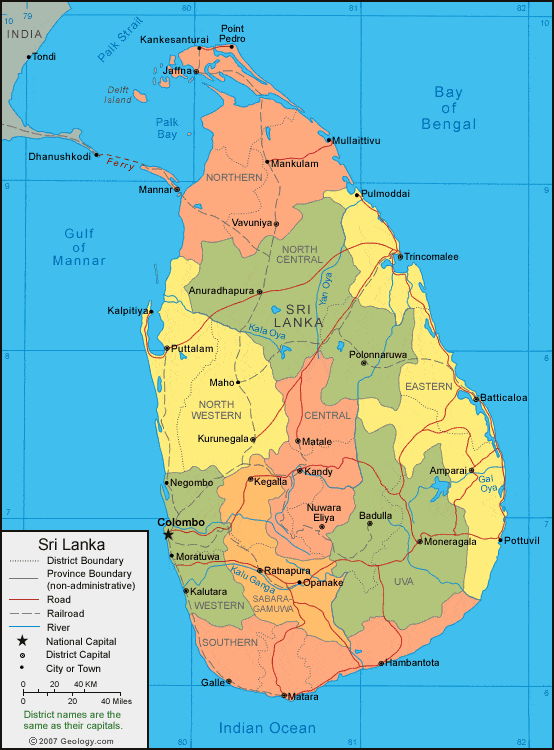
Sri Lanka political map


Thursday, April 9, 2009

The UN’s human rights chief, Navi Pillay, has suggested that both may be guilty of war crimes.

TO BE NOTED: From the Economist:

"Sri Lanka's war

Killing civilians
Apr 9th 2009 | COLOMBO
From Economist.com


A doctor describes a slaughter in Sri Lanka

AFP/AP
AFP/AP


Get article background

OVER 60 refugees are reported to have been killed by shellfire in north-eastern Sri Lankan on Wednesday April 8th. They were among thousands trapped by fighting between the army and surviving Tamil Tiger rebels, who are making a last stand on Mullaitivu beach, a sandy-spit between the Indian Ocean and a long lagoon.

The beach, which is roughly 17km in length and 1.5km wide, has been designated as a “no-fire zone” by the army, which claims to have surrounded it. Yet the civilians encamped there—perhaps 150,000 in all, according to the International Committee of the Red Cross (ICRC)—have been regularly bombarded, for which each side blames the other. The UN’s human rights chief, Navi Pillay, has suggested that both may be guilty of war crimes.

The army says it has engaged in almost no fighting since April 5th, when it emerged victorious from a three-day battle outside the no-fire zone, where it killed 525 Tigers. An army spokesman says it has not used indirect fire in the region—including artillery and mortar rounds—for several weeks. According to a doctor working in a makeshift hospital in the no-fire zone, however, it saw unprecedentedly heavy shellfire and civilian casualties on Wednesday.

By phone from the war-zone, he said that 296 wounded refugees had been brought to the hospital, a converted school building, and that 47 had died there. Typically with “big lacerations in the abdomen, in the chest, very bad head injuries”, the wounded included 52 children under the age of 15. The doctor, who requested that his name not be published, said that the hospital, which has eight doctors and 20 nurses employed by the government to work in the Tigers’ formerly extensive fief, had been overwhelmed by this influx. Already, he said, a dire shortage of drugs had driven them to carry out surgery on people dosed with painkillers, but not anaesthetic. Over 100 of the newly wounded were therefore evacuated (along with 400 others) aboard small fishing boats to a ship manned offshore by the ICRC. The doctor said he had heard that at least three of these evacuees subsequently died.

Shortly after 7am, the doctor said he had seen the effect of the first bombardment of the day. He said five shells had landed, a few minutes and up to 30m apart, in an area thick with refugees: three of their jerry-built shelters, constructed of sticks and plastic sheeting, took direct hits. The doctor said 13 people, including a mother of four children and at least one child, were killed by the volley, and 55 were seriously wounded.

“It’s a very fearful situation,” he said. “Everywhere you look, people are dying, like hunted animals.” Because the government has barred journalists and most aid workers from the battlefield, it was not possible to verify his report. But the figures it contains are consistent with those quoted to the BBC by another doctor at the hospital, and with reports sent, from various sources, to foreign diplomats in Colombo. The ICRC has said that one of its workers was killed in the no-fire zone by shellfire on Wednesday.

The doctor said that in March nearly 2,800 wounded refugees were admitted to the hospital, of whom over 500 had died there. Many others, he said, had been killed and buried without reaching the hospital. These figures are broadly consistent with other estimates. Of 2,400 sick and wounded evacuated from Mullaitivu beach from January to mid-March, 1,900 underwent surgery for shrapnel and splinter wounds.

Though the government denies shelling the no-fire zone, it has admitted doing so to foreign diplomats, to return the Tigers’ fire, and only where it could ensure no civilian would be harmed. Given that artillery fire is said to be accurate with a 250m-margin for error, this may explain some of the casualties. But the government suggests it is the Tigers who are firing on the refugees, who they are certainly holding hostage, in an effort to smear the army and provoke international outrage and a ceasefire. For their part, the Tigers, who the army says are down to 200 hardened fighters, accuse it of killing the refugees.

According to the doctor on Mullativu beach, each bombardment provokes a clamour of refugees wanting to escape. Over 20,000 have done so in the past three weeks. But the doctor said that many are being deterred from trying because of the dangers of crossing a battle-field-and because of the “local police”, a possible euphemism for the Tigers. Contrary to official reports, the doctor said that sporadic fighting appeared to be continuing outside the no-fire zone."

Wednesday, March 18, 2009

"Hundreds of children have been killed and many more injured as a result of the conflict in Sri Lanka,

TO BE NOTED: From ReliefWeb:

"
Hundreds of children reported killed, more injured, in Sri Lankan violence


NEW YORK, USA, 18 March 2009 – In a statement issued yesterday, UNICEF Executive Director Ann M. Veneman expressed alarm at the high number of children affected by continuing violence in the northern area of Sri Lanka known as the Vanni.

"Hundreds of children have been killed and many more injured as a result of the conflict in Sri Lanka," Veneman said. "Thousands are now at risk because of a critical lack of food, water and medicines."

More than 150,000 people are currently trapped by fighting between government troops and the rebel group known as the Liberation Tigers of Tamil Eelam, or LTTE.

"Regular, safe access for humanitarian agencies is urgently required, so that lifesaving supplies can be provided, and civilians must be allowed to move to safe areas where essential humanitarian support is more readily available," Veneman added.

40,000 have escaped

Around 40,000 people have been able to escape the conflict zone, and humanitarian groups are rushing to assist them.

"UNICEF has been rapidly setting up toilets, getting proper sanitation and providing clean water," said UNICEF Sri Lanka Chief of Communication James Elder. "We're also supporting hospitals who, of course, are overcrowded with the injured."

Elder said there are over 500 pregnant women among the displaced; UNICEF is supplying pregnancy kits for them. If the fighting continues, the number of children and women in need could increase exponentially in the coming weeks.

Rights of children compromised

Even temporary displacement can have a massive impact on children's health and development. UNICEF is working to mitigate the effects of school disruptions and the adverse psychological effects caused by exposure to violence in Sri Lankan conflict areas.

Veneman urged all sides in the conflict to prevent civilian casualties and respect the rights of children.

"Children are the innocent victims of Sri Lanka's conflict," she said. "They desperately need assistance and extraordinary efforts must be taken to protect them."

Wednesday, March 4, 2009

Unfortunately, the same cannot be said for what's been happening in Tamil areas of Sri Lanka.

TO BE NOTED: From the Guardian:

"
Stop Sri Lanka's bloody civil war

Sri Lanka's government has turned a blind eye to the mass killing of Tamils. The Commonwealth should threaten expulsion

We heard on a nightly basis about the events in Gaza earlier this year. Unfortunately, the same cannot be said for what's been happening in Tamil areas of Sri Lanka. It's understandable that these terrible events rarely make the evening news: the Sri Lankan government bans the media and aid agencies. Yet 2,000 innocent people have lost their lives and hundreds of thousands more have lost their homes as the government has sought to end the terrorism of the Tamil Tiger rebels.

Sri Lanka has been in the grip of civil war for over 25 years as the Tamils – who make up nearly a fifth of the island's 18 million population – have tried to gain independence. Nobody denies that the Tigers have been brutal in their methods, often leaving civilians dead in terrorist attacks. But this can't excuse what's happening to many innocent Tamil civilians today. And Commonwealth ministers, who met in London today, must say so in the strongest possible terms.

The Sri Lankan government has declared a victory in its long running battle with the Tigers, having captured what was once rebel-held territory. But at the same time, they have left many without food, water or sanitation. And they have kicked out the United Nations agencies, which might have helped to alleviate people's suffering.

This is not just a faraway problem in a faraway place. There are 150,000 Tamils living in Britain today, many of them desperately worried for the relatives they have left behind. And while the civil war has cost 75,000 lives over its bloody path, the violence is far worse today. Since the New Year, not only have 2,000 people lost their lives, but a further 5,000 have been injured. That's more than the highest estimates for casualties in Gaza.

There are also reports that particularly lethal cluster-bombs, banned white phosphorous and multi-barrelled rocket launchers have been fired on the civilian population. Hospitals have been bombed, as have places that the government has encouraged people to see as "safe zones".

In many cases, the killings have been what independent observers would define as genocide, with whole communities killed in a form of ethnic cleansing. With the eyes of the world turned elsewhere, the Sri Lankan government has felt able to get away with this slaughter, despite condemnation from the Dalai Lama and the UN secretary general.

They mustn't any longer. Ministers must condemn the Sri Lankan government and make clear that the country faces expulsion from the Commowealth – which expects its members to observe human rights – unless it allows the UN and aid agencies full access to the region.

I also hope our foreign secretary, David Miliband, will do his bit to ensure that a peaceful conclusion is reached to this bloodiest of wars. If we don't act now, many more innocent people will lose their lives in the months ahead."

Wednesday, February 18, 2009

Because of problems of access to the conflict zone where fighting continues, there are no reliable figures of the numbers affected.

TO BE NOTED: From ReliefWeb:

"
Sri Lanka: Children suffering the most in conflict - UNICEF


VAVUNIYA, 18 February 2009 (IRIN) - Just nine years old, Thevaki was trapped in the crossfire between government forces and the Liberation Tigers of Tamil Eelam (LTTE) and barely escaped with her life.

"I don't remember anything. I just remember the blood," she said, gesturing to the bandaged shrapnel wound on her head.

After six days in a government hospital in Vavuniya - a humanitarian hub for more than 30,000 ethnic Tamil civilians fleeing southward - she is back with her family in one of 16 transit sites in the northern Sri Lankan town.

But while doctors say her physical wounds will heal, they warn that the memory of what she saw, including 10 days of constant shelling in a "no-fire zone" outside the town of Mullaithivu, could take longer.

Children are suffering the most in the ongoing conflict in Sri Lanka, says the UN.

Because of problems of access to the conflict zone where fighting continues, there are no reliable figures of the numbers affected.

"Children are bearing the brunt of a conflict which is not theirs," James Elder, UN Children's Fund (UNICEF) spokesman in Sri Lanka, told IRIN. "They are being killed, they are being injured, they are horribly traumatised, and they are short of clean water and medicines," he said.

Until recently, many of the children were living in bunkers and trenches for weeks on end. Many had seen family, including their parents, killed. Others suffered horrific injuries, including burns, fractures, shrapnel and bullet wounds, and lost limbs, Elder said.

Separated children

In addition, there are reports of children being separated from their families during the government screening process in Kilinochchi and Omanthai, the former frontline about half-an-hour's drive north of Vavuniya.

To address this, UNICEF has established a data base to help track separated and unaccompanied adults, but as there is no independent observation of the screening process, it remains a source of concern.

Reports suggest there have been a number of instances when children are placed in one transit site in Vavuniya while their parents are placed in another, as well as the issue of unaccompanied minors arriving.

According to mental health experts, this brings a whole new level of trauma for the children as it is generally the family that can provide the greatest support in the recovery process.

"If we could prevent separation in the first place, that would help a lot," Elder stressed.

UNICEF is working closely with local authorities to reunite families, as well as seeking ways to mitigate the number of families being separated.

In addition, the agency is working to provide play and psycho-social activities at transit sites to give children a greater sense of normality; however, access for UNICEF's implementing partners remains difficult to negotiate.

"These children need a safe and secure environment, which is key to their long-term recovery," Elder said. "What they need most is to be with their families, to know that they will be safe."

Yet while fighting continues and more and more Tamil civilians make their way to Vavuniya, Elder emphasised that much of the Vanni's population are still trapped.

"We mustn't forget that there are tens of thousands of children who are still in the Vanni [in the north] and have to live out this nightmare on a daily basis," he said.

According to government sources, some 100,000 civilians remain in the Vanni while the UN estimates the number to be nearer 250,000.

Forced recruitment

Meanwhile, UNICEF on 17 February raised another concern over reports of a growing number of children being recruited by the LTTE.

"We have clear indications that the LTTE has intensified forcible recruitment of civilians and that children as young as 14 years old are now being targeted," Philippe Duamelle, UNICEF's representative in Sri Lanka, said.

"These children are facing immediate danger and their lives are at great risk. Their recruitment is intolerable," he said.

From 2003 to the end of 2008, more than 6,000 children were recruited by the LTTE, the UNICEF statement said.

UNICEF reiterated calls to the government and the LTTE that civilians, especially children, must be given every protection from the fighting."

Friday, February 13, 2009

"We don't know what to do. We desperately need peace in Sri Lanka."

From the Washington Post:

In Sri Lanka, Tales Of Jungle Terror
Civilians Fleeing War Describe Forbidding Terrain, Killings

By Emily Wax
Washington Post Foreign Service
Friday, February 13, 2009; A10

VAVUNIYA, Sri Lanka

Trying to quiet her crying infant son, the young mother grabbed her 11-year-old's hand and told him to follow her. Starting out at dusk, they spent hours hiding in the jungle terrain, crouching amid the crossfire between the Sri Lankan army and Tamil Tiger rebels.

Like thousands of other civilians stuck in the epicenter of the seemingly final battles of this civil war, Sashi Kumari Selvarajha's family was struggling to flee through marshlands and across the front lines, hoping for safety, she said through tears. But just as they crossed the line, she said, rebel forces open fire.

"We started running on Monday night. But we didn't think it was safe. So we stopped to sleep in the jungle. As the sun rose, we fled. But my husband and mother-in-law got killed," said a distraught Selvarajha, 31, as she unloaded her bags at a crowded camp for the war-displaced in government-held Vavuniya District, where 2,000 haggard and dehydrated civilians arrived Wednesday. "I'm never going back to that place."

Hers is a rare firsthand account of the harrowing flight of thousands of civilians to this heavily fortified frontier town. It came as the Sri Lankan army said it would end a largely ineffective "safe zone," which health officials and diplomats said had been shelled by both sides. Instead, troops would set up a new safe zone on a 7.5-mile-long strip of land on the northeastern coast where civilians were already seeking refuge, Brig. Udaya Nanayakkara, a military spokesman, said Thursday.

Most civilians who flee the fighting are put into military-run camps that officially do not allow outsiders. Stone-faced and red-eyed relatives line up behind sandbags, coils of barbed wire and machine-gun nests as soldiers check their identity papers before they can find missing loved ones.

A brother and sister stood weeping inside the camp and told how their 41-year-old father was shot dead when they attempted to cross into government-held areas. Their mother and sister are fighting for their lives in Vavuniya's hospital.

"We lost our father. We lost everything," said Rasendran Nitha, 17, who huddled with her brother, Rasendran Radanraj, 20. "We don't know what to do. We desperately need peace in Sri Lanka."

As the army continues its offensive to end the 25-year-long rebel war, the Sri Lankan government has come under increasing international pressure to halt its offensive and allow an estimated 250,000 civilians trapped in the northern Wanni region safe passage.

The government has refused and also says the number of trapped civilians is lower. It argues that the Tigers, known for their frequent use of suicide bombers, are using civilians as human shields, a claim that rebels deny but that diplomats and human rights workers here agree is taking place.

Letting up on the fighting would allow the rebels to escape along with the displaced, President Mahinda Rajapakse's government has said. The United States has labeled the Tigers a terrorist group. The government says tens of thousands of civilians have fled the ever-shrinking coastal strip controlled by the Tigers, now estimated at less than 61 square miles.

Here in Vavuniya, many traumatized civilians said the past few weeks of fighting have left them confused about where to find safety. John Manni, 38, spent a harrowing Monday trying to decide on which side to stay in Vallipunam, a forested area between the army and rebel lines. He believed the government side would be safest, but as his family crossed over the front lines, his 12-year-old niece, two uncles and an aunt were killed. He isn't sure who did the firing.

"Army said to come to their side. The LTTE said to stay with them," said Manni, using the abbreviation for the rebel group's official name, the Liberation Tigers of Tamil Eelam. "We thought we should come to army side. Then someone fired on us. We had to leave the bodies so we could run away. There were so many bodies lying in the jungle."

The government has largely sealed off the war zone to journalists, so reports have been impossible to verify. The refugee camps have also been closed to journalists, although in recent days more aid workers and visitors have been given short periods of access.

The Tamil Tigers accuse the government of waging a genocide against ethnic Tamils -- who make up about 18 percent of the island nation's population of 21 million people -- in the north and east of the country. They say the international community should be aware of the "false propaganda of the Sri Lankan state," according to TamilNet.

"People wander from place to place seeking refuge and are forced to lead a life worse than animals in the marsh and jungles," the LTTE's political division said in a statement. "They are being shot."

Several diplomatic sources in Colombo said the Tamil Tigers have prevented civilians from leaving for three reasons. First, the civilians act as a human shield for the rebels. Also, they are a potential pool of conscripts and the rebel group's only real hope of survival now that large numbers of their own people have been killed. Finally, the civilian suffering could embolden the Tamil diaspora and others to force a cease-fire on the government.

The conflict has also raised a problem for those trying to help fleeing civilians, international aid workers in Vavuniya said. Some in the government worry that rebels are mixing among the civilian population.

The Tamil Tiger rebels are accused of forcibly recruiting at least one member of each family in their de facto state in the north, which until recently occupied 5,600 square miles of land. Those entering one of five camps in Vavuniya go through a series of screenings to make sure they are not fighters for the rebel group, aid workers running the camps said.

But checkpoints have become dangerous. On Monday, a female suicide bomber blew herself up and killed 30 people while pretending to be a refugee.

At the same time, aid workers and some Tamil activists are concerned about government plans to create long-term "welfare villages," where civil war refugees would live for up to three years. The government has said it needs that much time so troops could clear mines and finish fighting, but experts warn of alienating an already fearful Tamil population.

"Yes, we have a problem since the population has for so long been under the Tigers. But Sri Lanka also has a real opportunity here to reach out to the Tamils in the camps and not turn them into cages," said Kumar Rupasinghe, chairman of the Foundation for Co-Existence in Colombo. "We urge the government to ensure that people are resettled quickly and given a good livelihood. Otherwise they will be angry and dependent on aid. It could . . . increase ethnic tensions."

From this town, where Sri Lankan flags fly from every shop and armored personnel carriers are driven through the main shopping district, civilians said they were too exhausted and terrified to move.

In Vavuniya, soldiers jump in and out of auto-rickshaws, machine guns in hand. Many families in surrounding villages have become members of the patriotic civilian paramilitary force, armed with AK-47s "to protect their villages" from Tamil Tigers. The defense ministry last summer sent a nationwide text message: "Young Patriots, come join with our armed forces and be a part of a winning team."

Some here worry about how a transition can be made from war to peace with so many guns around. Others wonder whether it's all really over.

Mari Maththu Raman, 51, is a fisherman who attended a wedding 12 years ago and was caught behind rebel lines. He started a new life. But during the recent fighting, he decided to escape. On Tuesday, his 17-year-old son was killed at Vallipunam. Raman said he wasn't sure which side to blame. He is thankful for this camp, although he fears more danger lies ahead.

"There are still some Tigers left," Raman said, his hands shaking. "We don't know when the war will be over."

Me:

It is essential that reporters and human rights groups be allowed in to monitor for human rights abuses on both sides. It is also essential that the government truly reach out to all ethnic groups in Sri Lanka. Otherwise, this will go on in some other form. But we, on the outside, should be calling for an end to all war crimes, monitors allowed in, and equal treatment for all Sri Lankans.

Thursday, February 5, 2009

What underlies the conflict is the idea that Sri Lanka is not a nation defined by geography, but by competing races.

From the Guardian:

"
Sri Lanka's identity war

The Tamil Tigers are facing military defeat, but victory will be pyrrhic unless the Sinhalese rethink their supremacist attitudes

The speech by Sri Lanka's president claiming the extinction of the Tamil Tigers might signal the end of a war, but not of the fighting. What underlies the conflict is the idea that Sri Lanka is not a nation defined by geography, but by competing races.

The Indian Ocean island is home to a bewildering array of subnational and communal identities. There are Sinhalese Buddhists, Tamil Hindus, Tamil Christians, Dutch Burghers and Tamil-speaking Muslims known as Moors.

It now looks like two ancient civilisations – Tamils and Sinhalese – are locked in a Manichean struggle. The leadership of both peoples increasingly see Sri Lanka as an arena for conflict between absolute good and absolute evil. As both sides view the other as Satan, they both scorn compromise.

What we have here is south Asia's curse of identity violence. Once a group – be it defined by ethnicity or caste or creed – acquires the status of a nation it becomes intolerant of all others. There's no doubt the failure of the Sinhalese in the 1960s to include Tamils in a national political project sowed the seeds of today's conflict.

In India, it is Hindu nationalists who question minority rights and want to reduce Muslims and Christians to second-class citizens. Pakistan, an Islamic republic, has its Sunni-Shia schism and the split between Punjab and the rest of the country. Bhutan's Buddhists expel Nepali Hindu immigrants.

This view of the world is aired openly in public. Sri Lanka's army chief Sarath Fonseka thought little of saying that the country "belongs to the Sinhalese … [minorities] can live in this country with us. But they must not try to, under the pretext of being a minority, demand undue things."

In this mindset, minorities exist merely on the goodwill of the majority. The most inclusive identity of all – being Sri Lankan – is a vanishing option for Tamils while Sinhalese thought is being slowly overtaken by fantasises of a Buddhist nirvana off the tip of India.

Bizarrely, statues of Gautama, icon of peace, have been used by the Sri Lankan state to mark territory seized from terrorists. Reducing every non-Sinhalese to a possible terrorist leads to dangerous waters. Sri Lanka must be the only democracy in the world to bomb its own citizens.

The Liberation Tigers of Tamil Eelam suffer from a bloody version of this psychosis. There is little in the Tigers' revolutionary make-up that suggests were they ever to have created a state in the north and east of Sri Lanka that Sinhalese minorities would have felt safe. They have continued to murder Tamils who disagree with them – most notably, Sri Lanka's foreign minister Lakshman Kadirgamar.

The LTTE spent the ceasefire years rearming rather than rebuilding links with the mainland – a preference for militarism that led the group to decide not to back Sinhala politicians ready to do a deal with them.

The result was that Mahinda Rajapaksa, a populist Sinhala politician, won the presidency in 2005 rather than Ranil Wickramasinghe, who relied upon Tamil votes and who as prime minister had signed a ceasefire agreement with the LTTE in 2002. Rajapaksa has been the nemesis of Tiger hubris.

But the blame rests on both sides. The state's failure to devolve power into smaller units to take care of the ethnic and linguistic needs of a region left no safety valve for Tamil grievances. The Tamil population has been in thrall to men of violence, justifying slaughter with slogans of self-determination.

In this brief moment of victory, Sri Lankan politicians will have to ponder the cost. They will admit perhaps only to themselves that human rights have disappeared, opponents have been exterminated and innocent lives have been lost. Sinhalese leaders will have to deal with a brutalised Tamil population.

In picking up the pieces, perhaps Sri Lanka's establishment will eventually see that a total partisan victory is unattainable. The Tigers may have got a beating but there's little to stop them from returning to old-fashioned terrorism. Suicide bombers, assassination squads and guerrilla units are most likely to re-emerge unless there is a political settlement acceptable to all.

Identity politics makes this more difficult, but not impossible. To end this bloody cycle, both sides need to realise that conflict is part of human life – and rather than let it spin into violence, it should be fought with words."

Me:

DonthelibertDem

05 Feb 09, 10:10pm (1 minute ago)

"But the blame rests on both sides. The state's failure to devolve power into smaller units to take care of the ethnic and linguistic needs of a region left no safety valve for Tamil grievances. The Tamil population has been in thrall to men of violence, justifying slaughter with slogans of self-determination.

In this brief moment of victory, Sri Lankan politicians will have to ponder the cost. They will admit perhaps only to themselves that human rights have disappeared, opponents have been exterminated and innocent lives have been lost. Sinhalese leaders will have to deal with a brutalised Tamil population.

In picking up the pieces, perhaps Sri Lanka's establishment will eventually see that a total partisan victory is unattainable. The Tigers may have got a beating but there's little to stop them from returning to old-fashioned terrorism. Suicide bombers, assassination squads and guerrilla units are most likely to re-emerge unless there is a political settlement acceptable to all.

Identity politics makes this more difficult, but not impossible. To end this bloody cycle, both sides need to realise that conflict is part of human life – and rather than let it spin into violence, it should be fought with words."

We should certainly call for better treatment of minorities, human rights, freedom of the press, etc. We should also demand that no war crimes be committed. Now is also the time for the Tigers to disband.

As for anger at pressure from the rest of the world, it might have just worked in North Kivu silently, by countries pressuring Rwanda to cooperate with the Congo. But I don't agree with Randeep on this. Nothing could be worse than the indifference towards the Congo, or pussyfooting for thirty years with Mugabe. If you want people to notice the conflict, and help end it, you have to offer them the means of expressing that anger. Otherwise, they'll direct their attention elsewhere, where people won't be telling them to help but shut up.