Showing posts with label Royal Dutch Shell. Show all posts

Wednesday, June 10, 2009

1789 US statute, the Alien Tort Claims Act, allowing noncitizens to file cases in US courts for human rights abuses occurring overseas

TO BE NOTED:


"
Shell settles Nigerian human rights suit for 15.5 million dollars

Published: 9 June 2009 09:11 | Changed: 9 June 2009 16:05

By AP, Reuters

Royal Dutch Shell agreed to a 15.5 million US dollar (11,2 million euro) settlement Monday to end a lawsuit alleging that the oil giant was complicit in the executions of activist Ken Saro-Wiwa and other civilians by Nigeria's former military regime in the 1990s.
Members of the Ogoni community demonstrate in front of the court in New York.   Photo AP
Members of the Ogoni community demonstrate in front of the court in New York.
Photo AP

Shell, which continues to operate in Nigeria, said it agreed to settle the lawsuit in hopes of aiding the "process of reconciliation." But Europe's largest oil company acknowledged no wrongdoing in the 1995 hanging deaths of six people, including poet Saro-Wiwa.

"Shell has always maintained the allegations were false," said Malcolm Brinded, Shell's executive director for exploration and production. "While we were prepared to go to court to clear our name, we believe the right way forward is to focus on the future for Ogoni people, which is important for peace and stability in the region," he said. "This gesture also acknowledges that, even though Shell had no part in the violence that took place, the plaintiffs and others have suffered."

In the 1990s protesters, who campaigned nonviolently for a fairer share of Nigeria's oil wealth for the poor and against environmental damage by the industry, were convicted of murder in a trial that human rights groups labelled a sham. Protests led by Saro-Wiwa forced Shell in 1993 to abandon its oil fields in Ogoniland, a tiny part of the Niger Delta whose people Saro-Wiwa represented.

The settlement came as the more than decade-long dispute was due to go to trial in the US. "We litigated with Shell for 13 years and, at the end of the day, the plaintiffs are going to be compensated for the human rights violations they suffered," said Paul Hoffman, a lawyer for the victims' families who had brought the cases along with the New York-based Center for Constitutional Rights. "Had we tried the case and won, the plaintiffs were still looking at years of appeals," he said.

Hoffman said that 5 million dollars would go into a trust for the benefit of the Ogoni people. The rest of the money would go to lawyers' fees and compensation for the families.

"I think he would be happy with this," Saro-Wiwa's 40-year-old son, Ken Saro-Wiwa Jr., said in a telephone interview from London. Though Shell denied any wrongdoing, "the fact that they would have to settle is a victory for us." Fourteen years after the Nigerian activists were hanged, Saro-Wiwa said he thinks Shell has started to acknowledge that it needs a "social license" to operate in a foreign countries. For example, the company has agreed to pay for a study of environmental damage that drilling has caused the Ogoni region. "They have a long way to go," he said. "But at least they realise some of their actions can come back to haunt them as we saw in New York."

"Is it enough to bring back the lives of our clients? Obviously not," said Jenny Green, a lawyer for the Center for Constitutional Rights in New York who helped file the lawsuit in 1996. But Green said it will send a message to Shell and other multinationals that operate in developing countries. "You can't commit human rights violations as a part of doing business," she said. "A corporation can't act with impunity. And we think there is accountability in this settlement."

The lawsuits sought unspecified damages from Shell for backing the jailing, torturing and killing of the protesters as well as for polluting the region's air and water. They were brought under a 1789 US statute, the Alien Tort Claims Act, allowing noncitizens to file cases in US courts for human rights abuses occurring overseas.

A multinational company has never been found liable of human rights abuses by a US jury, but a few have settled out of court. The Shell case would have been the third to go to trial and the second involving a major oil company.

Villagers in Indonesia are suing Exxon Mobil, claiming it employed guards who kidnapped, tortured and murdered civilians. Chevron is awaiting a verdict from a judge in Ecuador that could lead to a potential 27 billion dollar judgement stemming from a dispute over the role of Texaco, which Chevron bought in 2001, in environmental damages in the Amazon rain forest."
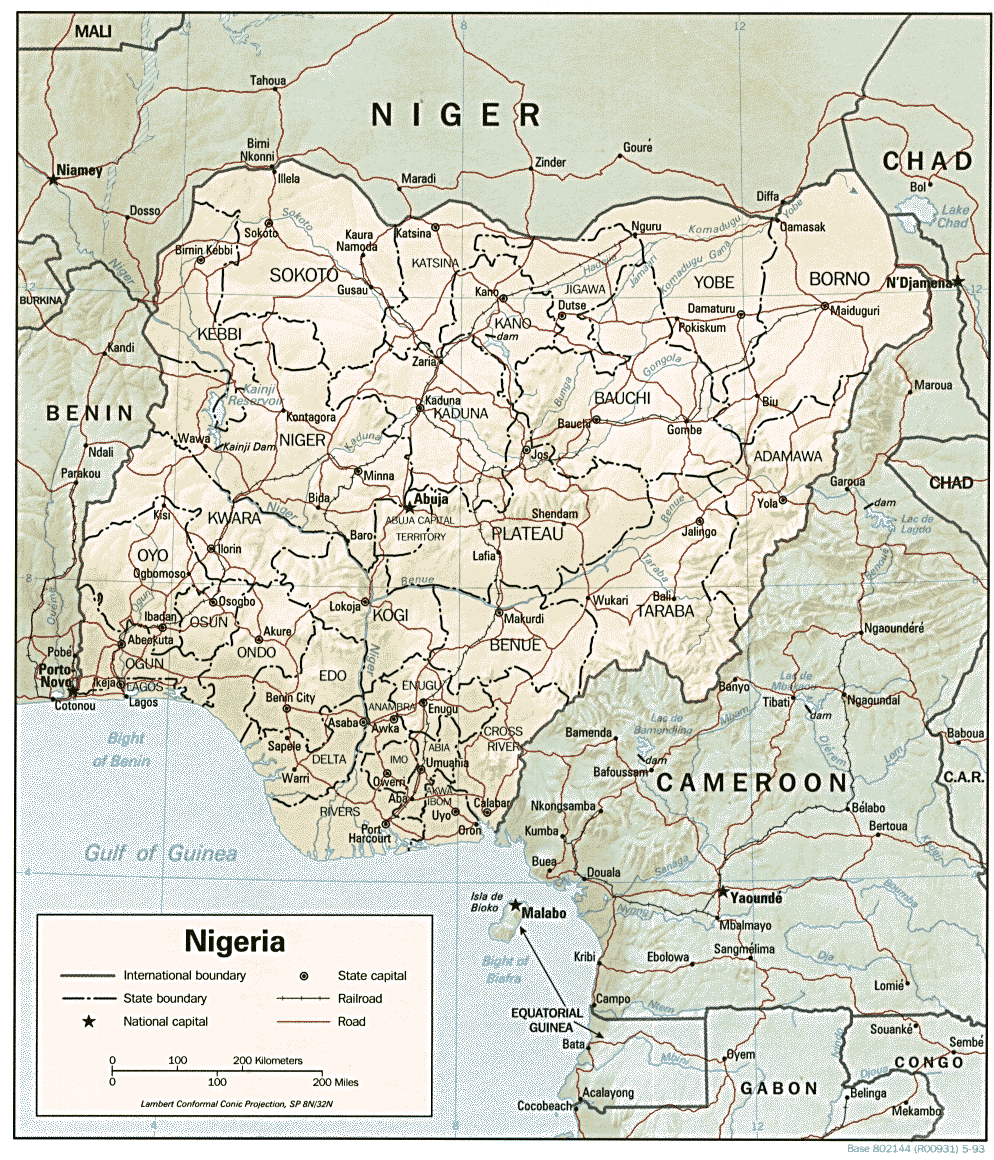
http://www.lib.utexas.edu/maps/africa/nigeria.gif

Friday, May 22, 2009

forced by the fighting to flee their homes and that it had received reports that hundreds of people had been killed

TO BE NOTED: From the FT:

"
Nigeria aims to knock-out Delta militants

By Matthew Green in Lagos

Published: May 21 2009 18:09 | Last updated: May 21 2009 18:09

Nigeria’s military has launched its biggest offensive in the Niger Delta in years, hoping to deal a decisive blow against armed groups who have crippled much of Africa’s biggest oil industry.

Hundreds of troops backed by gunboats, helicopter gunships and jets have taken part in operations during the past week to chase militants from key bases in the western delta and pursue them into villages in the region’s creeks.

The campaign suggests the government of Umaru Yar’Adua, the president, is emphasising the use of force to neutralise the threat posed by the gunmen in spite of previous pledges to open dialogue or offer amnesties to find a peaceful way to restore security.

The upsurge in fighting has been a factor in pushing global oil prices above $62 per barrel this week although on Thursday they slipped closer to $60. The Nigerian National Petroleum Corporation, the state oil company, said there has not been a significant impact on production.

Companies such as Royal Dutch Shell, ExxonMobil and Total who have operations in Nigeria will be watching to see whether the offensive taking place outside the city of Warri succeeds in pushing militants on to the defensive, or provokes retaliatory strikes against vulnerable pipelines snaking through the region’s vast wetlands.

The Movement for the Emancipation of the Niger Delta, an umbrella group that works with various armed factions, has pledged “all-out war” in one of many statements to journalists since the military attacked an important militant camp a week ago.

The group has, however, yet to demonstrate it still has the ability to mount the kind of spectacular attacks seen in early 2006, when it shut down roughly a fifth of Nigeria’s production, much of it operated by Shell.

The offensive has provoked an outcry among organisations representing the Ijaw community in the western delta and human rights groups who have said the campaign has put many civilians at risk.

Amnesty International issued a statement on Thursday saying that thousands of people had been forced by the fighting to flee their homes and that it had received reports that hundreds of people had been killed. Nigeria’s military said that it was only targeting militants. It was not immediately possible to verify the claims on casualties.

Security experts who track the delta say Nigeria’s military has been preparing for some time to launch a campaign against militant camps, hoping to remove leaders and scatter followers who may not have the appetite for a prolonged campaign in the harsh terrain of surrounding mangrove swamps.

Whether the strategy will succeed may depend on how quickly armed factions -- many of which are fuelled by profits from industrial scale oil theft and kidnapping -- will be able to regroup or encourage allies in other parts of the delta to mount strikes.

Mend and other groups say they are fighting for a fairer share of Nigeria’s oil wealth for the Niger Delta, a region where the line between politically-motivated militancy and gangster-style criminal enterprise is often blurred.

The legacy of previous attacks on Nigeria’s oil infrastructure has added to the pressure on state finances at a time when the country is already struggling from the impact of the fall in oil prices from last year’s record highs.

Odein Ajumogobia, the minister of state for petroleum, said Nigeria was pumping about half of an installed capacity he estimates at 3.2m barrels of oil per day. He said production fell as low as 1.2m b/d of oil last month, one of the lowest levels seen in decades."

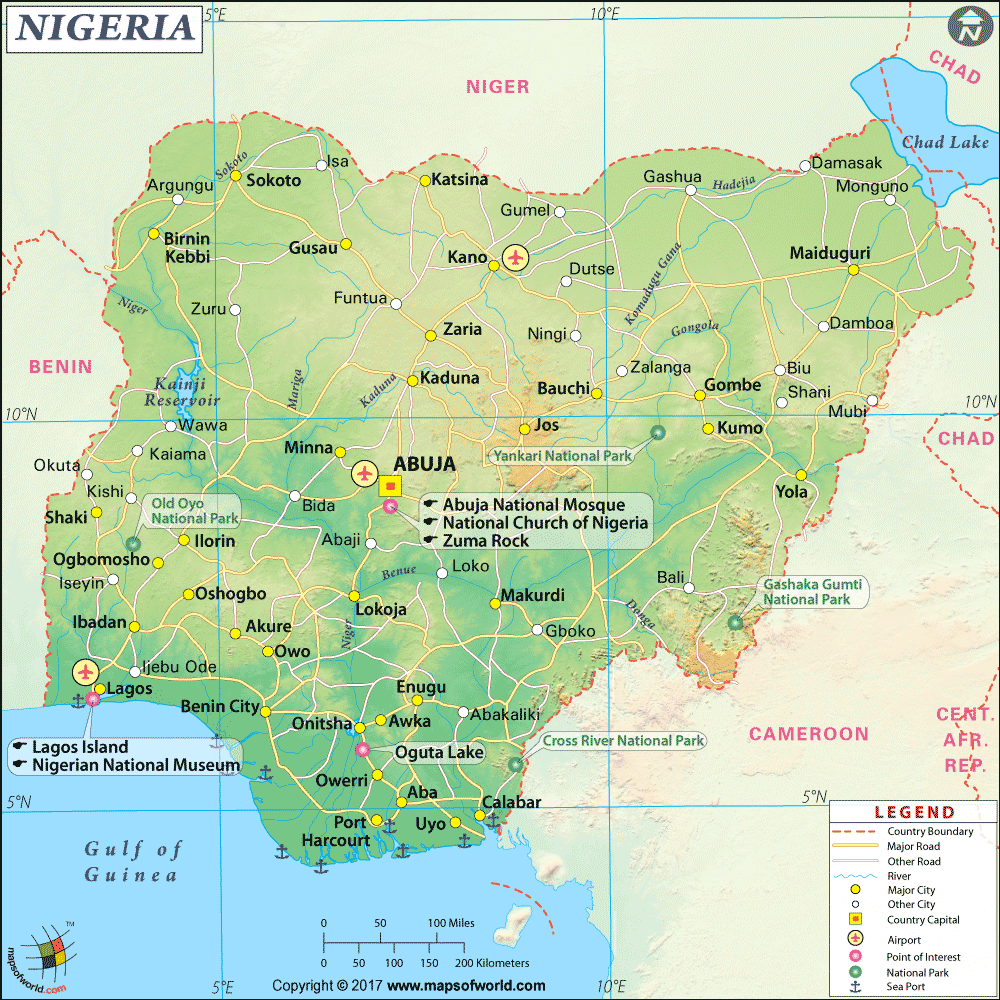
http://www.mapsofworld.com/nigeria/maps/nigeria-map.jpg

Sunday, November 30, 2008

"Nigeria is reluctant to take on debt owed to Western majors."

I have to say that I'm suspicious of this. From the FT:

"Royal Dutch Shell
hopes to boost oil output in Nigeria after agreeing a new plan to tackle chronic funding shortfalls hitting production at its joint venture with the government.

The Anglo-Dutch oil major has accepted the outlines of a presidential proposal under which the joint venture would raise its own financing rather than rely on cash from the government, say people familiar with the talks.

As an interim measure, Shell has offered to lend the government the money to back its share of the financing costs until the scheme is finalised. Terms have yet to be agreed, partly because Nigeria is reluctant to take on debt owed to Western majors."

I'm wondering whether this reluctance is due to human rights questions.