

skip to main | skip to sidebar

Libertarian Democrat Point Of View: An Eccentricity

On this blog, I post stories, comments, anything that interests me. Sometimes, I comment upon them. I post the entire story, column, or whatever, in order to save it for my reference. On the right are comments, blogs, etc., that I find useful, or that express what qualify as my opinions. Feel free to contact me via the comment option. Rest assured, you will be treated civilly. On this blog, the assumption is that, properly presented, anyone can understand anything.

Sunday, January 11, 2009

Crosby Stills & Nash - Wind on The Water to The Last Whale

Afternoon music:

Posted by Don at 12:08 PM
Labels: Crosby Stills and Nash - Wind on The Water to The Last Whale

0 comments:

Post a Comment

Newer Post Older Post Home
Subscribe to: Post Comments (Atom)
http://www-1.unipv.it/deontica/Gallpics/classici/Austin.jpg

http://www.abfar.co.uk/pgw_imgs/pgw.jpg

http://www.gap-system.org/~history/BigPictures/Wittgenstein.jpeg

http://repos-fs.matrix.msu.edu/cls/a0/a0/cls-a0a0r4-a.jpg

http://www.chm.bris.ac.uk/webprojects2003/ashby/leviportrait.jpg

http://3.bp.blogspot.com/_107syZMKBtU/RnJ8wuQwyAI/AAAAAAAAAtA/TmxSxGQZvcI/s320/AMERY_Jean2.jpg

http://magyarmuzeum.org/uploaded/images/20041023-143357_6.jpg

http://plus.maths.org/issue39/features/dawson/Godel_alone.jpg

http://www.danagioia.net/assets/images/portraits/justicediner.jpg

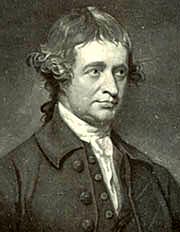
http://www.brainythoughts.com/wp-content/Edmund_Burke2_c.jpg

http://www.summit.mccsc.edu/mlk2k6/Martin%20Luther%20King%20Jr.%20Pic.jpg
http://philosophy.princeton.edu/images/faculty/Vlastos.jpg

http://upload.wikimedia.org/wikipedia/en/thumb/4/4f/Walter_Kauffman.jpg/200px-Walter_Kauffman.jpg

http://www.phillwebb.net/Topics/Morality/Williams/Williams.jpg

http://homepage.newschool.edu/het//profiles/image/graham2.gif

http://www.allaboutjazz.com/gallery/snitzer/tmonk.jpg


http://magazine.uchicago.edu/9506/June95images/BOBRaymondSmullyan.gif

http://www.econlib.org/library/knight.jpg

http://www.otoolsa.com/uploaded_images/nelson_mandela-741830.jpg

http://images.usatoday.com/news/_photos/2006/passages/milton-friedman.jpg

http://weblogs.variety.com/thesetlist/images/2008/04/13/jackson_2.jpg

http://media.nowpublic.net/images//b2/e/b2e8feb50c9eec9555ee2fe473b05e46.jpg

Portrait of H.C. Simons


http://www.lancs.ac.uk/staff/ecagrs/Photo%20Gallery%20of%20Economists_files/fisher.jpg

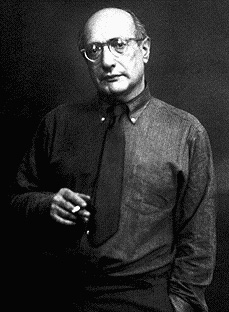
http://www.nndb.com/people/910/000084658/rothko-crop.jpg

http://davidlavery.net/grotesque/Site%20Images/People/Walter%20Bagehot.gif

http://www.media-visions.com/examiner/images/AdamSmith1.jpg

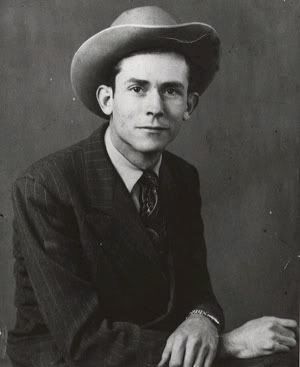
http://i61.photobucket.com/albums/h56/AtOm80/Music/HankWilliamsSr.jpg
If people did not sometimes do silly things, nothing intelligent would ever get done.

Frazer's account of the magical and religious views of mankind is unsatisfactory; it makes these views look like errors.

Are you not really a behaviourist in disguise? Aren't you at bottom really saying that everything except human behaviour is a fiction?" — If I do speak of a fiction, then it is of a grammatical fiction

Could one imagine a stone's having consciousness? And if anyone can do so—why should that not merely prove that such image-mongery is of no interest to us?

An 'inner process' stands in need of outward criteria

For a large class of cases--though not for all--in which we employ the word "meaning" it can be defined thus: the meaning of a word is its use in the language.

What Copernicus really achieved was not the discovery of a true theory but of a fertile new point of view.

mathematics is a motley of techniques and proofs.

Everything that can be said, can be said clearly.

Whenever he does anything, this is before his mind. In a way, how are we to know whether to say he believes this will happen or not?

Asking him is not enough. He will probably say he has proof. But he has what you might call an unshakeable belief. It will show, not by reasoning or by appeal to ordinary grounds for belief, but rather by regulating for in all his life

I did not get my picture of the world by satisfying myself of its correctness; nor do I have it because I am satisfied of its correctness. No: it is the inherited background against which I distinguish between true and false.

All testing, all confirmation and disconfirmation of a hypothesis takes place already within a system. And this system is not a more or less arbitrary and doubtful point of departure for all our arguments; no it belongs to the essence of what we call an argument. The system is not so much the point of departure, as the element in which our arguments have their life.

What I hold fast to is not one proposition but a nest of propositions.

At the core of all well-founded belief, lies belief that is unfounded.

Knowledge is in the end based on acknowledgement.

At the end of reasons comes persuasion.

Nothing is so difficult as not deceiving oneself.

The way you use the word "God" does not show whom you mean — but, rather, what you mean.

One can mistrust one's own senses, but not one's own belief.
If there were a verb meaning "to believe falsely," it would not have any significant first person, present indicative.

What has to be accepted, the given, is — so one could say — forms of life.

If a lion could talk, we could not understand him.

An entire mythology is stored within our language.

There are, indeed, things that cannot be put into words. They make themselves manifest. They are what is mystical.

Scepticism is not irrefutable, but obviously nonsensical, when it tries to raise doubts where no questions can be asked.
For doubt can exist only where a question exists, a question only where an answer exists, and an answer only where something can be said.

The mystical is not how the world is, but that it is.

The subject does not belong to the world, but it is a limit of the world.

It is quite impossible for a proposition to state that it itself is true.

What do I know about God and the purpose of life?
I know that this world exists.

That I am placed in it like my eye in its visual field.
That something about it is problematic, which we call its meaning.
This meaning does not lie in it but outside of it.
That life is the world.
That my will penetrates the world.
That my will is good or evil.
Therefore that good and evil are somehow connected with the meaning of the world.
The meaning of life, i.e. the meaning of the world, we can call God.
And connect with this the comparison of God to a father.
To pray is to think about the meaning of life.

Make sure that your religion is a matter between you and God only.


La Bête: Mon cœur est bon, mais je suis un monstre.


You can never plan the future by the past.

We must all obey the great law of change. It is the most powerful law of nature, and the means perhaps of its conservation.

Economy is a distributive virtue, and consists not in saving but selection. Parsimony requires no providence, no sagacity, no powers of combination, no comparison, no judgment.

A very great part of the mischiefs that vex the world arises from words.

It is the nature of all greatness not to be exact.

The march of the human mind is slow.

Liberty, too, must be limited in order to be possessed.

If any ask me what a free Government is, I answer, that, for any practical purpose, it is what the people think so, — and that they, and not I, are the natural, lawful, and competent judges of this matter.

A state without the means of some change is without the means of its conservation.

Better to be despised for too anxious apprehensions, than ruined by too confident a security.

Our patience will achieve more than our force.

Politics and the pulpit are terms that have little agreement.

All government, indeed every human benefit and enjoyment, every virtue, and every prudent act, is founded on compromise and barter we give and take; we remit some rights, that we may enjoy others

It is one of the finest problems in legislation, What the state ought to take upon itself to direct and what it ought to leave, with as little interference as possible, to individual discretion.

History is a preceptor of prudence, not of principles.

No rational man ever did govern himself, by abstractions and universals.

I always distinguish between a man's talkative and writative character.

A revolution will be the very last resource of the thinking and the good.

... all that wise men ever aim at is to keep things from coming to the worst. Those who expect perfect reformations, either deceive or are deceived miserably.

Man acts from motives relative to his interests; and not on metaphysical speculations.

Before men can transact any affair, they must have a common language to speak otherwise all is cross-purpose and confusion.

We owe an implicit reverence to all the institutions of our ancestors.

Manners are of more importance than laws. Manners are what vex or soothe, corrupt or purify, exalt or debase, barbarize or refine us, by a constant, steady, uniform, insensible operation, like that of the air we breathe in.


Free government is self-government. A government of the people by the people. The best government of this sort is that which the people think best.

All the inducements of early society tend to foster immediate action; all its penalties fall on the man who pauses; the traditional wisdom of those times was never weary of inculcating that "delays are dangerous," and that the sluggish man — the man "who roasteth not that which he took in hunting" — will not prosper on the earth, and indeed will very soon perish out of it. And in consequence an inability to stay quiet, an irritable desire to act directly, is one of the most conspicuous failings of mankind.

I wish the art of benefiting men had kept pace with the art of destroying them; for though war has become slow, philanthropy has remained hasty. The most melancholy of human reflections, perhaps, is that, on the whole, it is a question whether the, benevolence of mankind does most good or harm. Great good, no doubt, philanthropy does, but then it also does great evil. It augments so much vice, it multiplies so much suffering, it brings to life such great populations to suffer and to be vicious, that it is open to argument whether it be or be not an evil to the world, and this is entirely because excellent people fancy that they can do much by rapid action — that they will most benefit the world when they most relieve their own feelings; that as soon as an evil is seen "something" ought to be done to stay and prevent it.

The great difficulty which history records is not that of the first step, but that of the second step. What is most evident is not the difficulty of getting a fixed law, but getting out of a fixed law; not of cementing (as upon a former occasion I phrased it) a cake of custom, but of breaking the cake of custom; not of making the first preservative habit, but of breaking through it, and reaching something better.

One of the greatest pains to human nature is the pain of a new idea.

Credit means that a certain confidence is given, and a certain trust reposed. Is that trust justified? and is that confidence wise? These are the cardinal questions. To put it more simply credit is a set of promises to pay; will those promises be kept?

The less money lying idle the greater is the dividend.

The reason why so few good books are written is, that so few people that can write know anything. In general an author has always lived in a room, has read books, has cultivated science, is acquainted with the style and sentiments of the best authors, but he is out of the way of employing his own eyes and ears. He has nothing to hear and nothing to see. His life is a vacuum.

You may talk of the tyranny of
Nero and Tiberius; but the real tyranny is the tyranny of your next-door neighbor... Public opinion is a permeating influence, and it exacts obedience to itself; it requires us to think other men's thoughts, to speak other men's words, to follow other men's habits.

It is good to be without vices, but it is not good to be without temptations.


Why should it not be the whole function of a word to denote many things?

It may justly be urged that, properly speaking, what alone has meaning is a sentence

We become obsessed with 'truth' when discussing statements, just as we become obsessed with 'freedom' when discussing conduct...Like freedom, truth is a bare minimum or an illusory ideal

Like 'real', 'free' is only used to rule out the suggestion of some or all of its recognized antitheses. As 'truth' is not a name of a characteristic of assertions, so 'freedom' is not a name for a characteristic of actions, but the name of a dimension in which actions are assessed.

[O]rdinary language is not the last word: in principle it can everywhere be supplemented and improved upon and superseded. Only remember, it is the first word.

...our common stock of words embodies all the distinctions men have found worth drawing, and the connections they have found worth marking, in the lifetime of many generations: these surely are likely to be more numerous, more sound, since they have stood up to the long test of survival of the fittest, and more subtle, at least in all ordinary and reasonable practical matters, than any that you or I are likely to think up in our armchair of an afternoon – the most favorite alternative method.

The situation in which I would properly be said to have evidence for the statement that some animal is a pig is that, for example, in which the beast itself is not actually on view, but I can see plenty of pig-like marks on the ground outside its retreat. If I find a few buckets of pig-food, that's a bit more evidence, and the noises and the smell may provide better evidence still. But if the animal then emerges and stands there plainly in view, there is no longer any question of collecting evidence; its coming into view doesn't provide me with more evidence that it's a pig, I can now just see that it is.


Nor is there any reason why the state should not assist the individuals in providing for those common hazards of life against which, because of their uncertainty, few individuals can make adequate provision. Where, as in the case of sickness and accident, neither the desire to avoid such calamities nor the efforts to overcome their consequences are as a rule weakened by the provision of assistance—where, in short, we deal with genuinely insurable risks—the case for the state’s helping to organize a comprehensive system of social insurance is very strong.


On Adam Smith ( From Gavin Kennedy):

"True, Adam Smith from November 1766 to March 1767 was in London and was consulted by Townshend on taxation policies that might redress the enormous debts that Britain had incurred in the various wars with France (the seven-years war cost £120 millions in defence of the £20 million a year trade between the colonies and the mother-country).

But Adam Smith’s contributions to Townshend’s thinking were largely, if not totally, confined to the creation of a ‘sinking fund’ to pay down the national debt to more manageable proportions (see Townshend’s letter to Smith, December 1766, pp 328-34, Correspondence of Adam Smith, Liberty Fund, 1987). "

"How then did it become associated with Adam Smith? Well, possibly, via the usual route of assimilation by those who hadn’t read their Adam Smith too closely, if at all, and from their not appreciating what he was talking about in what quick readers of Book V of Wealth Of Nations thought were his ‘modest’ proposals for government.

Defence expenditures (the first duty of the sovereign) were the largest single budget expenditure in the 18th century (the seven years war cost £125 million). It continued to rise until after the Napoleonic Wars (the on-and-off 23years war). Justice (the second duty) was also expensive, especially as the number of possible crimes codified into law rose dramatically in the last quarter of the 18th century (and led to the colonisation of Australia from 1788 for convicts).

But the real potential source of approved growth lay in the third duty, that of expenditures on public works and public institutions that facilitated commerce or were advantageous for social stability.

Roads, harbours, canals, and bridges formed a massive agenda for public expenditure and if carried out diligently would have added tens of millions to public expenditure annually for much of the next 50 years. To which, in time, would have spread expenditurs from what was called ‘police’ to city water, sewage and refuse disposal, and public health (he also suggested palliative care of leprosy victims and other ‘loathsome diseases’ in Wealth Of Nations - glimmers of a public health service?

Of public institutions, the main one was the ‘education of youth’. The public provision of ‘little schools’ in every parish (about 60,000 of them) alone would have been a massive budget line for the buildings and state subsidies of teacher remuneration, supplemented by fees charged to all parents, except the most destitute.

Smith already supported the public funding of the Royal Mint and the Post Office, plus various government inspectorates to ensure quality in certain outputs (bullion assaying; hallmarks; stamping of certain cloths, etc.,), and government officers of customs and excise, tax collectors and civil servants.

‘The dignity of the sovereign’, or the expenses of government, was a separate budget line too, and was bound to grow as governments grew larger across the economy at both national and local levels, as seen in the magnificent 19th century town halls and public buildings erected across the UK.

So, if ‘even Adam Smith’ had a large, and potentially growing, public expenditure agenda, it was consistent with his central theme that these expenditures were to ‘facilitate commerce’, and not to manage it or ‘crowd it out’, or replace it.

If anything, Smith’s admonition to his readers was to facilitate commercial markets where possible (clearly, in time, capital would become, and became, available for privately-financed, infra-structure projects), and also to utilize publicly-funded activities where necessary.

As always, Adam Smith was not an ideologue."

"Smith did not write a treatise on a free-market economy; he did write on human behaviour – his theory of moral sentiments – but he had no illusions about the ‘perfectibility’ of men or society. He was no ideologue; no man with a mission to solve all problems.

He wrote frankly about ‘merchants and manufacturers’ (and the need never to legislate in their interests without the most careful scrutiny of their proposals), and about the limitations of the majority of the population (the labourers and their families), for as long as they remained uneducated (‘unless government take some pains to prevent it’ WN V.i.f.50: p 782), and about the landowners, who owned much and ran everything, and ‘like all other men’ (this part is often overlooked by those who quote the sentence), ‘love to reap where they never sowed’ [WN I.vi.8: p 67; Canaan ed. 1937 p 49, Random House].

Adam Smith was not writing about ‘free market capitalism’ and nothing that has happened to the governance and political economy of all societies, since his time, suggests that it would be worthwhile to pontificate on moral sentiments and modern markets as if something fundamental had changed."

"Laissez-faire did not feature in Adam Smith’s Wealth Of Nations. He did not agree that laissez-faire was an appropriate policy – that came from some of the French Physiocrats – and identified many areas where it should not apply in a commercial society.

I posted the following list last month (from Jacob Viner), but its worth reminding readers of his stance:

"● The Navigation Acts, blessed by Smith under the assertion that ‘defence, however, is of much more importance than opulence’; (WN464)
● Sterling marks on plate and stamps upon linen and woollen cloth (WN138-9)
● Enforcement of contracts by a system of justice; (WN720)
● Wages to be paid in money, not goods;
● Regulations of paper money in banking; (WN437)
● Obligations to build party wars to prevent the spread of fire; (WN324)
● Premiums and other encouragements to advance the linen and woollen industries’; (TMS185)
● ‘Police’, or preservation of the ‘cleanliness of roads, streets, and to prevent the bad effects of corruption and putrifying substances’;
● ensuring the ‘cheapness or plenty [of provisions]’; (LJ6; 331)
● patrols by town guards, fire fighters and of other hazardous accidents; (LJ331-2)
● Erecting and maintaining certain public works and public institutions intended to facilitate commerce (roads, bridges, canals and harbours); (WN723)
● Coinage and the Mint; (WN478; 1724)
● Post office; (WN724)
● Regulation of institutions, such as company structures (joint stock companies; co-partneries, regulated companies); (WN731-58)
● Temporary monopolies, including copyright, patents, of fixed duration; (WN754)
● Education of youth (‘village schools’, curriculum design); (WN758-89)
● Education of people of all ages (tythes or land tax) (WN788);
● Encouragement of ‘the frequency and gaiety of publick diversions’; (WN796)
● The prevention of ‘leprosy or any other loathsome and offensive disease’ from spreading among the population; (WN787-88)
● Encouragement of martial exercises; (WN786)
● Registration of mortgages for land, houses, and boats over two tons; (WN861, 863)
● Government restrictions on interest for borrowing (usury laws) to overcome investor ‘stupidity’; (WN356-7)
● Laws against banks issuing low-denomination promissory notes; (WN324)
● Natural liberty may be breached if individuals ‘endanger the security of the whole society’; (WN324)
● Limiting ‘free exportation of corn’ only ‘in cases of the most urgent necessity’ (‘dearth’ turning into ‘famine’); (WN539)
● Moderate export taxes on wool exports for government revenue; (WN 879)

Jacob Viner concluded, unsurprisingly, that Adam Smith was not a doctrinaire laissez-faire advocate.

[From Viner, J. 1928. ‘Adam Smith and Laissez-faire’, In ‘Adam Smith, 1776-1928: Lectures to Commemorate the Sesquicentennial of the Publication of Wealth Of Nations, p 53, August M. Kelly, Fairfield, NJ; Lost Legacy provided the references to Wealth Of Nations.]"

"For example, besides government expenditures on defence against foreign invasions (not defence expenditures to intervene in European dynastic quarrels and wars for trivial ends, including defending loss-making colonies) and on the provision of systems of justice, minimally such as independent judges, jury trials, Habeas Corpus, and the rule of law, not men.

He suggested what amounted to a substantial public investment in public works, such as roads (Britain’s roads were appalling, right into mid-19th century), public bridges, safe harbours, and canals, as well as public investment in a national educational system through a ‘little school’ in every parish (about 60,000 of them!) to educate all boys between 6 and 14 (at the time the mode was not to educate girls in public schools, only at home), in ‘reading, writing, and account’, with a smattering of geometry and such skills useful for earning a living and be productive.

Public expenditure was to be paid for initially from taxation on the richer sectors of the population and their maintenance financed by charging tolls or user-charges of public facilities for the costs of repairs to roads and bridges, plus subscriptions according to potential means to pay for teachers, books, and school prizes, and to pay for palliative care for sufferers from ‘leprosy and other loathsome diseases’.

Government also should develop the postal service for public use (it was originally set up by government to monitor control of the nation’s territory by regular contact with its farthest reaches), it should provide assay officers to determine hallmarks on gold and silver bullion, and on quality standards of woollen goods, cloths and paper. It should also run an official mint to guarantee the purity of the coinage. He also was in favour of a central bank (the Bank of England) to manage government debt and to introduce necessary regulations to stop drawing and redrawing bills of credit and over-trading, to set maximum interest rates, and the minimum amount denominated on the promissory paper notes issued by private banks.

Altogether, this is a formidable list even for the 18th century, contrary to his modern image of him being against government intervention on some sort of laissez-faire (incidentally, a term Smith never used) principle. "

"Smith was not a utopian. He did not believe that there was a ‘master plan’, which if adopted would change the world towards perfection. Far from it; he denounced such ‘plans’ as the dangerous illusions of ‘men of system’, arrogant in their approach to society.

Smith took human nature as it was, pointed out several major areas where what was going on was deleterious to society (protectionism, monopolies, ‘jealousy of trade’, wars beyond the needs of defence against invasion, legal restraints on labouring people ‘combining' to raise wages or stop them being cut, while employers could ‘combine’ to resist their employees, laws preventing anybody but members of ancient Guild monopolies from exercising applying their labour as they wished, laws preventing working men seeking employment elsewhere than in the parish they lived in, and national policies that failed to educated children in ‘reading, writing, and account’ (girls were not educated at all, except in the middle class and above), and the absence of palliative care for persons afflicted with leprosy and ‘other loathsome diseases’.

In all this, Smith did not expect sweeping changes or any immediate changes. He set out only to persuade; not to impose. He did not believe that international free trade would ever be enacted, nor that slavery would ever be abolished (it’s still operating today in some countries), nor that the world would become full of ‘sweetness and light’. But it could be improved, at the margin, if legislators and those who influenced them were persuaded to do so."

"Adam Smith's Recommendations on Taxationby Nadia Weiner, Director of the Adam Smith Club of Sydney, Australia

Although Adam Smith is often quoted, the so-called "Father of Economics" has rarely been read, either by his detractors or his admirers. Consequently he is often misunderstood.

Smith, who made such a strong stand against the protectionist mercantile system of trade of his day, devoted over ONE THIRD of his masterpiece An Inquiry into the Nature and Causes of the Wealth of Nations, to discussing the subject of government revenue and the methods by which it may be best collected, including new taxes. This is not generally known.

When examining the different forms of taxation, Smith adheres to four maxims which a good tax should conform to:

    1. "The subject of every State ought to contribute towards the support of the government, as nearly as possible, in proportion to their respective abilities; that is, in proportion to the revenue which they respectively enjoy under the protection of the State."

    2. "The tax each individual is bound to pay ought to be certain, and not arbitrary. The time of payment, the manner of payment, and the quantity to be paid, ought all to be clear and plain to the contributor, and to ever other person."

    3. "Every tax ought to be levied at the time, or in the manner in which it is most likely to be convenient for the contributor to pay it."

    4. "Every tax ought to be so contrived as both to take out and to keep out of the pockets of the people as little as possible, over and above what it brings into the public treasury of the State."

Bearing all these things in mind, there are two types of taxation which obtain Smith's recommendations: a tax on luxury consumables and a tax on ground-rents (the annual value of holding a piece of land).

On the subject of luxury consumables, he is adamant about the definiton of 'luxury' and of 'necessary.' By his definition, a 'necessary' may vary from place to place and from time to time. At the time of his writing, linen shirts, leather shoes and a minimum of food and shelter were definitely to be regarded as essential to a minumum decent standard of living. Taxes on salt, soap, etc., he harshly criticized as inequitably taking from the poorest elements of society. Taxes on luxuries, which were to include tobacco, he considered excellent in that no one is obliged to contribute to the tax: "Taxes upon luxuries have no tendency to raise the price of any other commodities except that of the commodities taxed ... Taxes upon luxuries are finally paid by the consumers of the commodities taxed, without any retribution."

More deserving of priase is the tax on ground-rents: "Both ground- rents and the ordinary rent of land are a species of revenue which the owner, in many cases, enjoys without any care or attention of his own. The annual produce of the land and labour of the society, the real wealth and revenue of the great body of the people, might be the same after such a tax as before. Ground-rents, and the ordinary rent of land are, therefore, perhaps the species of revenue which can best bear to have a peculiar tax imposed upon them."

Excise, customs, taxes on profits, were, according to Smith, either expensive to collect, as in the case of excise, or disincentives to produce, as in the tax on profits. He reserves harsh words for taxes which occasion the invasion of privacy, and on the subject of excise he says: "To subject every private family to the odious visits and examination of the tax-gatherers ... would be altogether inconsistent with liberty."

The harshest condemnation of all, however, was for taxes upon labour: "In all cases, a direct tax upon the wages of labour must, in the long run, occasion both a greater reduction in the rent of land, and a greater rise in the price of manufactured goods, than would have followed from a proper assessment of a sum equal to the produce of the tax, [levied] partly upon the rent of land, and partly upon consumable comodities."


"Truly speaking, it is not instruction, but provocation, that I can receive from another soul. What he announces, I must find true in me, or reject; and on his word, or as his second, be he who he may, I can accept nothing."


Wall Street people learn nothing and forget everything.

I am no longer an advocate of elaborate techniques of security analysis in order to find superior value opportunities.

The individual investor should act consistently as an investor and not as a speculator. This means.. that he should be able to justify every purchase he makes and each price he pays by impersonal, objective reasoning that satisfies him that he is getting more than his money's worth for his purchase.

Most of the time common stocks are subject to irrational and excessive price fluctuations in both directions as the consequence of the ingrained tendency of most people to speculate or gamble... to give way to hope, fear and greed.

If you are shopping for common stocks, choose them the way you would buy groceries, not the way you would buy perfume.

Individuals who cannot master their emotions are ill-suited to profit from the investment process.

The underlying principles of sound investment should not alter from decade to decade, but the application of these principles must be adapted to significant changes in the financial mechanisms and climate.

Obvious prospects for physical growth in a business do not translate into obvious profits for investors.

The investor's chief problem - and even his worst enemy - is likely to be himself.

Basically, price fluctuations have only one significant meaning for the true investor. They provide him with an opportunity to buy wisely when prices fall sharply and to sell wisely when they advance a great deal. At other times he will do better if he forgets about the stock market and pays attention to his dividend returns and to the operating results of his companies.

The most realistic distinction between the investor and the speculator is found in their attitude toward stock-market movements. The speculator's primary interest lies in anticipating and profiting from market fluctuations. The investor's primary interest lies in acquiring and holding suitable securities at suitable prices. Market movements are important to him in a practical sense, because they alternately create low price levels at which he would be wise to buy and high price levels at which he certainly should refrain from buying and probably would be wise to sell.

It is far from certain that the typical investor should regularly hold off buying until low market levels appear, because this may involve a long wait, very likely the loss of income, and the possible missing of investment opportunities. On the whole it may be better for the investor to do his stock buying whenever he has money to put in stocks, except when the general market level is much higher than can be justified by well-established standards of value. If he wants to be shrewd he can look for the ever-present bargain opportunities in individual securities.

Confronted with the challenge to distill the secret of sound investment into three words, we venture the motto, Margin of Safety.

The fact that other people agree or disagree with you makes you neither right nor wrong. You will be right if your facts and your reasoning are correct.

"Even the intelligent investor is likely to need considerable willpower to keep from following the crowd."

"It is absurd to think that the general public can ever make money out of market forecasts."

"To achieve satisfactory investment results is easier than most people realize; to achieve superior results is harder than it looks."
"Of course, some of that is desirable. I'm not in favor of no government. You do need a government. But by doing so many things that the government has no business doing, it cannot do those things which it alone can do well. There's no other institution in my opinion that can provide us with protection of our life and liberty. However, the government performs that basic function poorly today, precisely because it is devoting too much of its efforts and spending too much of our income on things which are harmful. So I have no doubt that that's the major single problem we face."

My Blog List

  • 10Q Detective
    -
  • 124Monkeys
    GMDM’s Biggest Mistake of 2009 - Mike Jacobs. I’m not going to waste your time with a big buildup on what GMDM’s biggest miss of the past offseason was, it’s Mike Jacobs. Jacobs himself ...
    1 week ago
  • 3quarksdaily
    Iran erupts again, and here's an intellectual history of the Green Wave - Abbas Milani in The New Republic: What we are witnessing right now in the streets of Tehran is, first and foremost, a political battle for the future of the ...
    13 hours ago
  • A Credit Trader
    -
  • A Fistful Of Euros » A Fistful Of Euros
    -
  • A Fusionist Libertarian
    -
  • A Note on the Ethical Implications of the Stern Review on the Economics of Climate Change -- Kenny 16 (4): 432 -- The Journal of Environment & Development
    -
  • Abnormal Returns
    -
  • About Forvo
    -
  • Abraham Verghese
    Medical Tests: "Does it work?" matters less than "Does it pay?" - In a previous post I had worried that "Comparative Effectiveness Research" was going to be the sexy new buzz word, the one a fresh generation of physicians (...
    2 days ago
  • Accrued Interest
    -
  • ACCUMULATING PERIPHERALS
    Return of the Il-Matic - [cross-posted at FOARP] Nuke tests, missile tests, and now what appears to be a massive denial-of-service attack on South Korean government websites? Whils...
    1 day ago
  • Across the Curve
    Miscellaneous Links - There has been a chorus of world officials over the last several months questioning the role of the dollar as well as the need for a new reserve currency. ...
    3 hours ago
  • Across the Street
    -
  • Adam Smith, Wealth of Nations, Contents
    -
  • Adam Smith's Lost Legacy
    -
  • Africa Unchained
    Non-Existent Ivory Towers - Salisu Suleiman's searing indictment of Nigeria's Universities:I interact with students who know everything about soccer, nothing about Socrates; all about A...
    17 hours ago
  • Aguanomics
    -
  • AI News & Updates Feed
    Iran’s presidential election amid unrest and ongoing human rights violations - Iran’s presidential election on 12 June, will take place against a backdrop of discrimination, worsening repression of dissent and violent unrest. In the...
    4 weeks ago
  • Aid Watch
    Respecting local values: Western confusion about African orphans - by Diane Bennett When a remote area of South Sudan was resettling from the long-running civil war in 2001, tens of thousands of returnees were threatened by ...
    1 day ago
  • Ajay Shah's blog
    India Policy Forum: 2009 conference - There are very few good economics conferences in India, and NCAER runs two of them. Here are the materials of the 2009 IPF conference.
    16 hours ago
  • AL JAZEERA ENGLISH (AJE)
    No breakthrough in Honduras talks - Costa Rican president hosts separate meetings with Zelaya and Micheletti in mediation bid.
    17 minutes ago
  • Alea
    -
  • Alex Dalmady's Blog
    -
  • Alex Ross: The Rest Is Noise
    -
  • Alexander Smith | Journalist Profiles |
    -
  • Alexandra Gardner | Building Noises
    -
  • Alexandra Gardner | Composer
    -
  • All Kaiser Health News
    -
  • AllAboutAlpha.com
    Investing in some stocks should have qualified as an “extreme sport” says leading quant - Last week, a prominent academic showed how the S&P 500 had become an "extreme" sport before it tanked last year. This week, that same researcher turns his ...
    5 hours ago
  • Allison Arieff
    Rethinking the Mall - At a convention for shopping mall designers and developers, a glimpse of the future and, unfortunately, the past.
    5 weeks ago
  • Ambrose EvansPritchard Finance and business comments
    -
  • AMERICAblog News| A great nation deserves the truth
    -
  • American Mathematical Society
    -
  • Amery: a biographical introduction
    -
  • Andrew Norton
    Has the High Court imposed spending constraint on the Commonwealth? - In the Fairfax broadsheets this morning, constitutional law academic George Williams gives his reading of the High Court’s judgment in Pape v Commissioner ...
    22 hours ago
  • Angry Bear
    Nails: The 2012 Republican candidate for President? - From Lenny Dyksytra's letter to friends about his bankruptcy filing yesterday: William McKinley filed for protection while serving as Ohio's governor in 1...
    9 hours ago
  • Antonio Fatas and Ilian Mihov on the Global Economy
    Stimulus money and the Chateau of Fontainebleau - Here is an interesting article from the New York Times about how fast France is spending the approved "stimulus money" relative to the US. The reason is th...
    2 days ago
  • Ars Mathematica
    -
  • Art by Fernando Botero
    -
  • Arts & Letters Daily - ideas, criticism, debate
    -
  • ataxingmatter
    -
  • Backreaction
    Drained Brains - Economist Ahmed Tritah published the results of an interesting study on the brain drain phenomenon, the migration of European scientists to the USA: Th...
    2 days ago
  • Baghdad Bureau
    Video: Baghdadis' Reaction to U.S. Withdrawal From Cities - On the streets of central Baghdad there were celebrations, but some skepticism, about the American/Iraqi security plan timetable.
    1 week ago
  • Bank of Canada - Monetary Policy
    -
  • Bankruptcy Litigation Blog
    -
  • Bankstocks.com
    -
  • BBC NEWS | Peston's Picks
    -
  • BBC News | Science & Environment | World Edition
    World powers accept warming limit - Developed and developing nations agree global temperatures should not rise more than 2C above 1900 levels, a G8 declaration says.
    8 hours ago
  • BBC NEWS | Stephanomics
    -
  • Bernard Avishai Dot Com
    -
  • Bespoke Investment Group
    -
  • Bits
    -
  • Blog Watch
    -
  • Bloggings by boz
    -
  • Bob McTeer's Blog
    -
  • Boing Boing
    Dozens of US Military personnel spotted on Nazi networking site - The Southern Poverty Law Center, a hate-group watchdog organization based in Alabama, will present documentation to Congress on Friday about the presence o...
    5 hours ago
  • Brad DeLong's Egregious Moderation
    -
  • Brad Setser: Follow the Money
    -
  • Bronte Capital
    -
  • Brookings: Latest From Brookings
    -
  • Bruce Krasting
    FHFA Five-Year Plan – No Changes! - The FHFA released its five-year plan today. There are no surprises in this report. There are no innovative plans to change the troubled mortgage giants FNM...
    7 hours ago
  • Brussels Blog
    UK sleepwalks to the fringes of Europe - The composition of the newly elected European Parliament, which holds its first session next week, will make many Britons hang their heads in shame. For B...
    18 hours ago
  • Business | guardian.co.uk
    -
  • Business: Market Forces blog | guardian.co.uk
    -
  • BusinessWeek.com --
    -
  • By Justin Fox
    -
  • By the Numbers
    The Catholic Court - Thirty years ago eight of the nine Supreme Court justices were Protestant. Now only two are. Five are Catholic, and two are Jewish. If federal appeals judg...
    1 month ago
  • Cafe Hayek
    Paul Graham, hacker (by Russell Roberts) - Does anyone have contact info for Paul Graham, author of Hackers and Painters?
    4 hours ago
  • Calafia Beach Pundit
    -
  • Calculated Risk
    Missing the Point on Stated Income Loans - This article quotes a couple of mortgage brokers who somehow think the loss of stated income loans is a bad thing - and one who thinks they will "re-emerge...
    3 hours ago
  • Canucks Anonymous
    Keynes on the Fisher Effect II - My previous post on chapter 11 of the General Theory tried to interpret what Keynes was saying under the implicit assumption that the economy was at full e...
    1 week ago
  • Capitalists@Work
    "Reforming the Markets": Still Craven After All These Years - Yesterday the Government’s “Reforming Financial Markets” dropped on the virtual mat, and what a waste of electrons it is: let us hope they don’t physicall...
    15 hours ago
  • CARPE DIEM
    The Zimbabwean Titanium Trillion Dollar Campaign - The Zimbabwean newspaper, has been driven into exile for reporting on how the Mugabe regime has rigged elections, crushed the opposition, caused poverty,...
    12 hours ago
  • Cash and Burn
    -
  • Cassandra Does Tokyo
    Farewell JWM - So farewellthen(yet again) John W. Meriwether.Old saws aboundto describeyour fickle luck and less-thanillustrustriousness.Such as "Fortune favorsthe bold"err...
    1 day ago
  • Cato Unbound
    Concluding Remarks - Thanks yet again to all three respondents for a stimulating discussion. I’m sure my closing comments won’t do justice to your closing contributions, but I’...
    2 weeks ago
  • Cato-at-liberty
    -
  • Center for Responsible Lending
    -
  • CEPR.net
    Hondurenos resisten golpe, necesitaran ayuda de otros paises - 8 de julio, 2009, Mark Weisbrot En inglés
    1 day ago
  • Change Alley
    -
  • Change.org's Stop Genocide Blog
    -
  • Charles Kenny
    -
  • charleskenny.blogs.com/files/whole0606-1.pdf
    -
  • Charting Stocks
    -
  • Charts and Coffee
    -
  • Cheap Talk
    Win Bets at Parties: Simultaneous Chess - You need a lot of chessboards for this one, but on top of winning some money you will impress your pals. Challenge a large even number of people to play c...
    1 hour ago
  • CHIEMGAUER: Aktuell
    -
  • China Financial Markets
    -
  • China Law Blog
    -
  • Chris Blattman's Blog
    Rules of the road - UNHCR lent our project three Land Cruisers, prompting me to finally overcome my irrational aversion to driving in developing countries. I had no idea wha...
    11 hours ago
  • ChumpChanger
    Look, Google Books Can't Rip Off Everyone At Once - There were a lot of responses to my defense of Google Book Search, and a couple of them are worth mentioning here. Harvard law student Jason Harrow wrote t...
    1 week ago
  • CI - Index
    -
  • Clive Crook
    Supreme Court on Ricci - Greetings from Tonopah, Nevada. I am meandering west at the moment en route to join a group hiking in the High Sierras. Soon I shall be lugging my camera...
    5 days ago
  • ClubOrlov
    The Slope of Dysfunction - (Update: click here for a special version for the Nihonjin care of Masayuki .) Perhaps you have heard of the Peak Oil theory? Most people have by now, even ...
    2 weeks ago
  • cmartenson's blog
    -
  • CMSA | Home
    -
  • CNBC Top News and Analysis
    AIG Prepares to Pay More Bonuses: Report -
    2 hours ago
  • CNN.com
    Mediator: Resolution for Honduras may take time - Talks between two bitterly opposed sides in Honduras' ongoing political crisis were "frank, sincere and very transparent," but a resolution may not come qu...
    2 hours ago
  • Code and Culture
    -
  • Comment is free | guardian.co.uk
    Ministers who justify state snooping might now learn that biters can be bit - The News of the World phone-hacking scandal lays bare the chaos that surrounds our privacy and data security Every journalist knows that breaking the law...
    8 hours ago
  • Comment is free: liberty central | guardian.co.uk
    -
  • Committee on Financial Services
    Waters and Frank Introduce New Flood Insurance Legislation -
    16 hours ago
  • Congressional Oversight Panel: Blog
    -
  • Consider the Evidence
    -
  • Conversation avec Jacques Attali - Lexpress
    -
  • Cranky News and Views
    -
  • Crawl Across the Ocean
    Electoral Reform in Canada - This post is not about the question of what the best electoral system is, or whether we should adopt proportional representation. Instead, I am assuming th...
    1 day ago
  • Credit Slips
    Highly Questionable Medical Bankruptcy Figures from Fraser Institute - The National Center for Policy Analysis (NCPA) is flogging a study from the Fraser Institute in Canada that purports to show U.S. medical bankruptcies are a ...
    9 hours ago
  • Credit Writedowns
    Ten eastern European countries now looking to IMF for bailouts - This comes via der Standard, an Austrian daily. My translation below: The international financial crisis has hit eastern Europe harder than previously exp...
    7 hours ago
  • Crisis Talk - The World Bank Group
    -
  • CrossingWallStreet.com
    -
  • Crunchy Con
    Dhimmitude in Germany - This is a complete outrage: Police in the western German city of Duisburg have admitted they removed flags a student had hung in his apartment in support o...
    5 months ago
  • D-squared Digest -- FOR bigger pies and shorter hours and AGAINST more or less everything else
    -
  • Daily Finance
    Massucci's Take: Google Chrome challenges Microsoft's future - Filed under: Company News, Technology, Columns, Media First Microsoft Bing-ed Google's dominant search service. Now Google is striking back by announcin...
    5 hours ago
  • Daily Intel
    Bill Keller on Daily Show: ‘That’s the Last Time I Try to Be a Good Sport’ - "Well, that's the last time I try to be a good sport. Even my wife told me that I looked faintly ridiculous, and she was trying to make me feel better." ...
    5 hours ago
  • Daily Kos
    Green Diary Rescue & Open Thread: Driving Less - John Petro of the Drum Major Institute writes: Reducing How Much We Drive Should be a National Transportation Goal Last month, Senators John D. Rockefell...
    5 minutes ago
  • Dani Rodrik's weblog
    -
  • Data.gov
    -
  • David Laidler
    -
  • DealBook
    As G.M. Moves to Close Sale, a Picture From the Past - As General Motors prepares to close on the asset sale that will create a newer, slimmer version of the carmaker, DealBook finds a picture of the Obama auto...
    4 hours ago
  • Deals - Today's Business Deal News | Reuters.com
    -
  • Dealscape
    -
  • Dear John Thain
    -
  • Death and Taxes
    -
  • Death of Time
    The Important Lesson I Learned From Whoever It Was Who Defaced My Blog - In mid-April, this blog was “defaced” by someone who replaced my home page with some nonsensical statement that seemingly referred to terrorists in Algeria...
    2 months ago
  • Debtonation
    Ignorance of money helps bankers and politicians escape - 30 June, 2009. This column and its readers have been sadly neglected to meet the demands of other peoples’ agendas. I can only apologise. For it is other p...
    1 week ago
  • Decline and Fall of Western Civilization
    american ten-year demographics - david goldman's outline of the demographics of the united states have been mentioned here before and again just this week. today goldman offers another wor...
    11 hours ago
  • DefaultRisk.com The web's biggest credit risk modeling resource.
    -
  • Dem. Rep. of Congo | Africa - Reuters.com
    -
  • Derivative Dribble
    Understanding Obama’s Financial Overhaul - Also published on the Atlantic Monthly’s Business Channel. Joe Nocera has said his peace with respect to Obama’s proposed overhaul of the financial system....
    1 week ago
  • designing better futures
    -
  • Diana Krall Official Site | Verve Music Group
    -
  • Director's Blog
    Effect of the American Clean Energy and Security Act of 2009 on Different Regions of the Country - Today CBO released a letter describing studies by two teams of experts—one affiliated with the National Bureau of Economic Research (NBER) and one affiliat...
    13 hours ago
  • Disciplined Approach to Investing
    Investor Bearish Sentiment Increases - In the investor sentiment survey reported today by the American Association of Individual Investors, individual investor bearish sentiment increased to 54....
    1 hour ago
  • Discover Magazine | RSS
    -
  • Division of Labour
    -
  • Don Fishback's Market Update
    -
  • Donald Marron
    -
  • Dot Earth
    -
  • Dove's Eye View
    Qifa Nabki Suggests: Iran coverage - Elmaz Abinader just said to me tonight that with this Iran crisis, she doesn't know who to read and who to trust. I suggested Juan Cole, but agreed with her ...
    2 weeks ago
  • Dow Jones Economic Sentiment Indicator
    -
  • Dragonbeat
    -
  • dshort.com - Financial Life Cycle Planning
    -
  • ducati998
    flip-flop-fly’s fuckin fantastic freaking new offer - flip-flop-fly is back with a vengence, complete with a brand new offer for you via his pet ChartAddict. Take a squizzy at this. Take special note that this...
    10 hours ago
  • Due diligence and operational risk in hedge funds
    The Importance of Cash Controls: Chief Operating Officer Charged With Fraud - In what is an interesting twist on the continued stream of frauds and Ponzi schemes, it seems that rather than an alleged fraud being perpetrated by an inv...
    1 week ago
  • Démystifier la finance
    La situation s’aggrave en Californie: les enjeux - Tandis que le pays tout entier rend un dernier hommage a Michael Jackson, la situation de l’ Etat ou il est enterre devient de plus en plus intenable : l...
    1 day ago
  • East Asia & Pacific on the rise - - Making development work for all
    Regional roundup: Finance in East Asia - Jul. 10 - This is the latest installment of the regional round-up and it has been a while. However, there has not been much groundbreaking news related to the fin...
    55 minutes ago
  • Econbrowser
    -
  • EconLog
    "Canadafornia" Medical Care - Here's an excerpt from my chapter, "Free and Healthy at Half the Cost," in The Joy of Freedom: An Economist's Odyssey. I was writing about the single-payer h...
    6 hours ago
  • Econolog - latest posts
    -
  • Economic Cycle Research Institute News Feed
    India and U.S. upturns this year - 'India should expect an upturn this year' For over a decade, the New York-based Economic Cycle Research Institute (ECRI), an independent research firm, has...
    3 days ago
  • Economic Logic
    -
  • Economic Perspectives from Kansas City
    -
  • Economic Policy Institute
    Arbitration, Canadian style -
    2 days ago
  • Economic Policy Review
    The GAAP between politics and economics - Congress has thrown everything it can at the financial crisis, and has left appropriate concerns -- whether moral hazard, corruption, subsidies, or upholdi...
    1 month ago
  • Economic Principals
    The Perpendicular - The morning that I visited him last week, Mark Thoma had fielded back-to-back calls first thing from Reuters and Bloomberg. The day before, The Wall Street...
    4 days ago
  • Economics of Contempt
    -
  • Economist's View
    "The Fall of the Toxic-Assets Plan" - I have the same worries, so I would like to hear why we shouldn't be concerned that banks are holding overvalued assets on their balance sheets. What's the...
    10 hours ago
  • Economix
    -
  • EconomPic Data
    The Ultimate Armageddon Stock - Businessweek reports: Of the 500 stocks in the S&P 500, (according to data from Capital IQ) fewer than 20 have actually risen in value in the economic down...
    9 hours ago
  • Economy Experts
    -
  • EconoSpeak
    -
  • EconTech
    Links for 2009.07.08 - Oil speculation - Paul Krugman Blog - NYTimes.com Secrets of the WSJ - Paul Krugman Blog - NYTimes.com Climate, trade, Obama - Paul Krugman Blog - NYTimes.com
    1 day ago
  • Ecuador Rising - Hatarinchej
    Ecuador rejects provocative charges against Correa by Colombia - [image: correa uribe] Colombia Reports, July 8, 2009 Ecuador rejects the legal actions of Colombian lawyers against Ecuadorean President Rafael Correa f...
    22 hours ago
  • Edward Tenner
    -
  • Efficient Market Advisors - Economic Outlook
    EMA Economic and Market Commentary June 29, 2009 - Economic Outlook
    1 week ago
  • Efficient Market Portfolios: Services
    -
  • Employment, Interest, and Money
    -
  • Emre Deliveli's Blog on Economics
    -
  • (EN) Africa Can - end poverty
    -
  • English_Xinhua
    -
  • Enough
    -
  • Erasmus Journal for Philosophy and Economics » Current Issue
    -
  • Essays in positive economics - Google Book Search
    -
  • Euro Watch
    -
  • EUROPA - Press room
    -
  • European Tribune
    -
  • Executive Suite
    Madoff Victims: The Lawyers Respond - An attorney challenging the trustee's handling of the recovery and distribution of funds from the Madoff scheme makes his case.
    2 days ago
  • Explore Bonds
    -
  • Ezra Klein
    Tab Dump - • Is your grocery store humane? • Michael Lewis on AIG. • The Future of Risk! (Sounds exciting, doesn't it?) • Can the PPIP still save us, if we need it...
    6 hours ago
  • faculty.chicagobooth.edu/richard.thaler/research/Irving%20Fisher.pdf
    -
  • Falkenblog
    -
  • Fallacy Files
    Check it Out - Given the inflation-adjusted record high price of gasoline a couple of years ago, it will probably be awhile before I can go back to complaining about repo...
    2 days ago
  • Fama/French Forum
    -
  • Feature Column from the AMS
    -
  • Federalist
    Standardization Enhances Market Efficiency - Standardization is something of a public good. Therefore, do we need the coercive hand of government to promote standardization to ensure the good function...
    4 days ago
  • Felix Salmon | Blogs |
    -
  • Felix Salmon - All posts
    What's the price-quality correlation for bicycles? - Although I'm generally a fan of credit unions, and I'm certainly a fan of bicycling, I'm not at all a fan of this new bike-loan product: * Rates as low a...
    13 hours ago
  • files.posterous.com/braddelong/BeTPqdsXRh3LNPvif46kJnk904LrkXZ5lNpvCRFay89cXDWSydz4Y1yeT5Yr/20090527_viner_lecture.pdf?AWSAccessKeyId=1C9REJR1EMRZ83Q7QRG2&Expires=1243462700&Signature=qi5xbZ7rk2ONQk5I4NCYCgRDuh4%3D
    -
  • FinanceProfessor.com
    -
  • Financial Crisis and Recession
    Financial policy: Looking forward - Washington is turning its attention to the future, having put out most of the financial fires. The crisis seems to be over, but questions remain about how ...
    1 month ago
  • Financial World Online
    -
  • FinancialStability.gov
    -
  • FinancialWeek.com Breaking News Headlines
    Reversal? Stanford advisers sue the SEC - (InvestmentNews)—Financial advisers who worked for Houston-based Stanford Group stepped into the legal fray surrounding the $8 billion alleged fraud involv...
    4 months ago
  • finem respice
    There's No Such Thing As A Risk Free Lunch (Revisited) - The investigative powerhouse of Fox Business has suddenly discovered that years of government tampering with the Florida insurance market has effectively...
    1 week ago
  • Firedoglake
    -
  • FlowChart
    -
  • Floyd Norris
    -
  • footnoted.org
    Smithfield’s Chairman re-ups as a $1 million consultant… - Ever since he retired as CEO in August 2006, Joseph W. Luter III has been serving as non-executive Chairman and a consultant to Smithfield Foods (SFD). The...
    15 hours ago
  • Forbes.com - Bruce Bartlett
    -
  • Forbes.com - Nouriel Roubini
    -
  • Forbes.com: News
    Geithner's Derivative Drill - The Treasury Secretary takes to the hill to answer questions about the ''shadow banking system.''
    11 minutes ago
  • FRB: Finance and Economics Discussion Series: Screen Reader Version - Household Borrowing after Personal Bankruptcy*
    -
  • Freakonomics
    Quotes Uncovered: Brides and Fruit Flies - A while back, I invited readers to submit quotations for which they wanted me to try to trace the origins, using *The Yale Book of Quotations* and more rec...
    10 hours ago
  • Free exchange
    Link exchange - The best of the rest of the economics web
    7 hours ago
  • Freedom Democrats - Online community for Libertarian Democrats
    -
  • Freespace
    The Onion on Star Trek - Oh, god. The Onion has hit me personally this time... HT: a loser
    1 day ago
  • Front Porch Republic
    An Apology to Our Readers - I must apologize to all our readers and my fellow contributors here for the intrusion of my cousin Cassie Pigeon in a recent post under my byline. I had ...
    1 day ago
  • FT Alphaville
    Bullish Anglo picks new chairman - Anglo American is on Friday set to name Sir John Parker as its new chairman aiming to reassure shareholders that the international mining group has a stron...
    1 hour ago
  • FT.com - FTfm: View from the US
    Small lots bring big rewards to Christie's - While the trench warfare between Sotheby's and Christie's will continue, Christie's strategy seems well adapted for the present environment, writes John Di...
    4 days ago
  • FT.com - Samuel Brittan
    A new guide for the perplexed - Attempts to make sense of the financial crisis often lead to even more confusion, writes Samuel Brittan. Here is an attempt to outline the main issues
    11 hours ago
  • Fundmastery Blog
    -
  • Gad Lerner
    Il G8 sbiadisce, ma forse fila via liscio - Non so cosa ne pensate voi, ma la prima impressione superficiale del G8 in corso a L’Aquila è quella di un vertice cui riuscirà difficile trasformare le pa...
    16 hours ago
  • Gapminder.org
    High income - rare in tropical land-locked countries - The role of geography for the prospects of development has been hotly debated the last decade. Economists, like Jeffrey Sachs, have suggested that a countr...
    5 weeks ago
  • Gary H. Stern | The Federal Reserve Bank of Minneapolis
    -
  • gary-weiss.com
    Welcome to Ruth Madoff Rehabilitation Week - Bernie and Ruth taking a break between ripping off people/not know hubby was ripping off people ABC News is reporting that the feds have given back Ruth M...
    2 days ago
  • George Washington's Blog
    What Did the CIA Lie to Congress About? - CIA director Panetta admitted to Congress that the CIA misled Congress concerning "significant actions" from 2001 to the present. As Congress wrote to P...
    11 hours ago
  • Gerhard Richter
    -
  • GI-NET's blog
    -
  • Global Macro EconoMonitor
    GCC Sovereigns: A Little Better Off - Timothy Geithner, the U.S. Treasury Secretary, travels to the GCC (Saudi Arabia and the UAE) in a few days to commune with some of the more significant cre...
    4 hours ago
  • Global News Blog | Blogs |
    -
  • Global Property Guide
    -
  • Global View Today!
    Update from The Han province. - Apparently, this latest disruption in the Han province, all resulted from a fight that exposed all of the tensions in that area. Reports have it that there...
    37 minutes ago
  • Gramophone - Home - The world's best classical music magazine
    -
  • Grasping Reality with Both Hands: The Semi-Daily Journal Economist Brad DeLong
    "The Short and Simple Annals of the Poor..." - Thomas Gray, 1750: >Elegy Written in a Country Church-Yard": Oft did the harvest to their sickle yield, Their furrow oft the stubborn glebe has broke; How ...
    3 hours ago
  • Greed, Green and Grains
    -
  • Greg Mankiw's Blog
    -
  • Growth Commission Blog - -Exchanging Views on Growth and Development
    -
  • Growthology
    -
  • Gush-Shalom
    -
  • Healthcare Economist
    -
  • Hedge Fund Law Blog
    -
  • HedgeFund.net - Leading Source for Hedge Fund Performance, News and Information
    -
  • Hendrik Hertzberg
    -
  • HM Treasury News
    Government plans for the reform of financial markets - The Chancellor of the Exchequer Alistair Darling has today published 'Reforming Financial Markets', a document setting out the Government’s proposals for t...
    1 day ago
  • Holde Kunst Classical Music Blog
    -
  • Home
    Colombian coffee comes with smuggled cocaine - Customs agents discovered an extra ingredient in a shipment of Colombian coffee: nearly a half-ton of cocaine.
    4 hours ago
  • Home Page of Robert J. Shiller
    -
  • Home- Bank of Canada
    -
  • Housing Wire
    House Committee Considers TARP Reinvestment - The House Finance Services Committee today heard testimony on HR 3068, the TARP for Main Street Act of 2009. The bill, by the committee’s chairman Barney F...
    6 hours ago
  • How to Make a Difference
    -
  • Humble Student of the Markets
    -
  • Hussman Funds - Weekly Market Comment: Current Archive
    -
  • Ideas
    -
  • Ideas Special Report
    -
  • IEA Blog
    Don’t blame private schools, learn from them - We all know the tune. Private schools are a hotbed of elitism, pillars of a neo-feudal class system where people’s position in life is determined by birth ...
    19 hours ago
  • IMF -- International Monetary Fund Home Page
    -
  • immobilienblasen
    -
  • Impunity Watch - Home
    -
  • In the Dark
    Why the Big Bang is Wrong… - I suspect that I’m not the only physicist who has a filing cabinet filled with unsolicited correspondence from people with wacky views on everything from U...
    2 days ago
  • inca kola news
    OT: Proud father break - She's teaching me how to use the painting program now...five years old and its "Not like that, Dada! Look, if you press this...then this...then this....you...
    2 hours ago
  • Incentives Matter
    -
  • Income Security for All
    Pope Benedict, capitalism, and income security for all - Pope Benedict, capitalism, and income security for all “Pope Benedict XVI says modern capitalism is failing.” That was the caption on a CNN website story, ...
    1 day ago
  • Information Arbitrage
    -
  • Information Esthetics -
    bpc_ks_2325.jpg - [image: bpc_ks_2325.jpg] A lovely and very orderly use of last year’s calendar. The full comment is here. Thanks Katherine!
    1 year ago
  • Information Processing
    -
  • Informed Comment
    -
  • Inner Workings
    Demographics and Deflation: an unpleasant comparison - Back during Japan’s lost decade of 1990-2000 (the first lost decade, that is), Japan’s population had just began to age dramatically. In 1990 the elderly d...
    16 hours ago
  • Interesting Times
    Morality, War, Islam, Women - A light-hearted, gossipy roundtable discussion of Wendell Steavenson’s “The Weight of a Mustard Seed” (reviewed by me a few months ago in Abu Dhabi’s The N...
    1 week ago
  • Interfluidity
    -
  • Investing In Bonds
    -
  • Investment Postcards from Cape Town
    Prieur’s readings (July 9, 2009) - This post provides links a number of interesting articles I have read over the past few days that you may also enjoy.
    21 hours ago
  • IRIN
    LIBERIA: TRC furore overshadows peace building proposals - MONROVIA, 9 July 2009 (IRIN) - As an angry debate rages over the 200-plus people recommended for prosecution by the Truth and Reconciliation Commission (TR...
    9 hours ago
  • Irish/Ireland Business News, European Union, Global, World, International News from Finfacts Ireland
    -
  • Irrational Doomsday Blog
    -
  • Irving Fisher: Stamp Scrip; 1933; Content
    -
  • ISDA - International Swaps and Derivatives Association, Inc.
    -
  • iTulip.com: The Contrary View of the Markets
    -
  • İyigün Blog
    -
  • J Street
    -
  • Jack & Jill Politics
    Italy…..Obama Style… - President Barack Obama, center, and Italian Prime Minister Silvio Berlusconi, front left, stop for a photo after thanking emergency workers during a tour o...
    2 hours ago
  • Jackson Browne - Time the Conqueror
    -
  • James Pethokoukis
    -
  • Jay Hancock's blog
    Lenny Dykstra, were index funds too boring for you? - Another sad story of a jock blowing his millions. Lenny Dykstra, who loved the Atlantic City casinos when he played for the Phillies, sought protection from ...
    13 hours ago
  • Jeff Frankels Weblog
    The Labor Market is Still Down — “Master Your Statistics, So They Don’t Master You” - The quip “There are three kinds of lies: lies, damn lies, and statistics” is variously attributed to Benjamin Disraeli or Mark Twain. What should the ...
    1 week ago
  • Jeff Matthews Is Not Making This Up
    -
  • Jesse's Café Américain
    SP Futures Hourly Chart -
    8 hours ago
  • Jim Rogers Blog
    -
  • John Barrdear
    Howard and Costello - With the news that Peter Costello will not be seeking reelection, Peter Martin gives us two stories of Costello’s way of dealing with people. The first, w...
    3 weeks ago
  • John Corigliano | Official website
    -
  • John Gapper's Business Blog
    -
  • John Quiggin
    Reading Terry McCrann - Terry McCrann has responded to the call for a new inquiry into the financial system with a snark-filled piece which is of sociological, if not intellectual...
    15 hours ago
  • Josh Reviews Everything
    Losing four journalists at once is a record - Via @leighsales, here's the BBC's newest comedy series: Taking the Flak. The Beeb's comedy blog calls it "a comedy-drama following a team of journalists in a...
    15 hours ago
  • Jubilee Debt Campaign UK : Country information : Ecuador
    -
  • Julian Sanchez
    The “M” is for “Marketing” - Your daily emetic: Try to make it through this load of pap–a “manifesto” for “Generation M”—without bringing your lunch back up. A tiny sample: Dear Old P...
    7 hours ago
  • 'Just World News' with Helena Cobban
    -
  • Kellogg School of Management | All Blogs
    -
  • Kevin Drum - Mother Jones
    MoJo Mix: 9 July 2009 - *Laura again, dropping off a few MoJo stories I think you'll like. Don't worry, Kevin will be back in the next post.* My favorite Kevin Drum graf today: ...
    5 hours ago
  • Kiva Loans
    Irma Beatriz Martínez Palacios Martínez Palacios : El Salvador - [image: photo] *$25 of $650 raised. * Started raising funds on Jul 9, 2009 Irma Beatriz Martínez Palacios lives in the department of San Vicente in the...
    21 minutes ago
  • Knight, Risk, Uncertainty, and Profit | Library of Economics and Liberty
    -
  • Knowing and Making
    -
  • Knowledge Problem
    -
  • La Philosophie de l'Investissement
    How To Trade In Bear Markets - The Smart Money Tracker: It's time to hold on: "The chart shows my opinion of what most shorts would end up doing as the next leg down unfolds. I suspect m...
    10 hours ago
  • La république des livres
    Publier moins pour publier mieux - 659 romans français et étrangers paraîtront à la rentrée contre 676 l’an dernier à la même époque, moins de premiers romans et 75 essais. Est-ce suffisa...
    22 hours ago
  • Language Log
    A matter of chance - I've observed from time to time, half-seriously, that the ambiguity of plural noun-phrase comparison ("women have better hearing than men") causes — as wel...
    6 hours ago
  • Latest Activity on Sexy Re
    -
  • le carnet de Colette Braeckman
    Célébrer le 30 juin à Goma: un symbole fort - Voici moins d’un an, qui aurait cru que l’indépendance du 30 juin, date mythique s’il en est, serait célébrée à Goma ? A l’époque, le chef rebelle Laurent...
    1 week ago
  • Le Monde diplomatique - English edition
    -
  • Left Focus
    -
  • Les cordons de la Bourse
    Exclusif: risque d'annulation de la fusion Caisse d'Epargne-Banques Populaires - Le mariage Caisse d'Epargne-Banques Populaires risque d'être repoussé. Et de connaître le même sort que la fusion Suez-Gaz de France, qui avait mis plus de d...
    2 weeks ago
  • lesswrong: What's new
    Avoiding Failure: Fallacy Finding - Submitted by Patrick 15 comments When I was in high school, one of the exercises we did was to take a newspaper column, and find all of the fallacies it e...
    6 days ago
  • Let A Thousand Nations Bloom
    Another Kind of Libertarianism - Tyler Cowen categorizes the main strains of libertarianism, based on Tom Palmer’s new book, but leaves the Seasteading / A Thousand Nations approach out, a...
    1 day ago
  • Liberal Democrat Voice
    -
  • Liberal Values
    Quote of the Day - “Wait: Michael Jackson died? How come nobody covered that?” –Matthew Yglesias
    4 hours ago
  • Lisa Margonelli
    Regulating Oil and Onions... - The US is reportedly considering regulating "speculative" trading in the oil and gas markets, according to the New York Times. This brings to mind recent dis...
    2 days ago
  • Livewire - Amnesty International's blog
    And now the human rights defenders… - Massive street demonstrations were met with waves of arrests, reported killings and, it is now becoming clear that human rights activists are now also bein...
    1 week ago
  • logic for politics
    THREE LITTLE WORDS - The White House has chosen to back away from Sotomayor's (one-time) claim that "a wise Latina" might be a better judge than a white male by saying that she...
    5 weeks ago
  • Louis Kuijs's blog
    China: what long-term policies and reforms are needed to sustain growth? - In a previous blog I summarized our views on China’s growth prospects, developed while writing the World Bank’s recent China Quarterly Updateeconomic repo...
    1 week ago
  • Lucian Freud Online
    -
  • Médecins Sans Frontières International Homepage
    -
  • M.G. in Progress
    -
  • Macro and Other Market Musings
    -
  • Macro Man
    -
  • macroblog
    Markets work, even when they don’t - Remember when it used to be cool to be an advocate of free markets? I do, but after the events of the past year or so maintaining that position feels a bit l...
    1 day ago
  • MacroMania
    -
  • Main Page - Global Warming Art
    -
  • Make do and Mend with Miss Marketcrash
    -
  • Many Eyes
    -
  • Marc Faber Blog
    Buying Relatively Recession Resistant Businesses In Thailand - "Publicly traded companies in Thailand are trading at just 11 times estimated 2009 earnings, making them the second- cheapest in Asia after Pakistan. They ...
    1 day ago
  • Marginal Revolution
    -
  • Mark Rothko Online
    -
  • Mark Thoma's Other Blog
    Fertile Young Minds - I use Facebook to distribute my blog feed, and the friends it has suggested - one in particular - caused me to think of high school, and that, in turn, cause...
    4 days ago
  • MARK VALLEN'S "ART FOR A CHANGE"
    Exhibition: Man's Inhumanity to Man - [ Meanwhile... in Guatemala - Mark Vallen. 1988. Pencil on paper 10" x 14". On view at Man's Inhumanity to Man. Military death squads were responsible for to...
    3 months ago
  • Market Rewind
    07.08.09 - Small Lift off the Pivot - We have seen a positive range between the opening highs and the daily Pivot. While cumulative tick, up volume and the AD line all look positive and I'm lik...
    12 hours ago
  • Marketplace
    -
  • MarketSci Blog
    Larry Connors’ High Probability ETF Trading (A MarketSci-Style Review) - I’m going to be doing a MarketSci-style review of Larry Connors’ new book High Probability ETF Trading. By “MarketSci-style” I mean I’ll be putting Larry’s...
    3 hours ago
  • MarketWatch.com - Top Stories
    -
  • MasterResource
    Do Passenger Trains Save Energy? Another Look - In response to my recent post about whether passenger trains save energy, a reader asked about the “life-cycle costs of both forms [rails vs. highways] of ...
    23 hours ago
  • Matthew Yglesias
    -
  • Megan McArdle
    Extreme Health Care - Kevin Drum is skeptical that America does more in extremis than other healthcare programs: Boy, I'd sure like to see some backup for that. If by "extraord...
    9 hours ago
  • mergermarket.com
    -
  • Metamodern
    -
  • Michael Palmer
    -
  • Michael Spence's blog | Growth Commission Blog
    -
  • Middle East (UAE and GCC) Finance and Investment News
    UAE'S RAK eyes next tranche of $2 bln bond programme - Ras al-Khaimah, a member of the United Arab Emirates, has started marketing the next tranche of a $2 billion Islamic bond programme, the latest government-...
    12 hours ago
  • Minyanville
    -
  • Mises Dailies
    75 Years of Housing Fascism - In terms of the unforeseeable and destructive effects of government regulation, it's difficult to find a better example of a time bomb: it was set in 1934...
    1 day ago
  • Mish's Global Economic Trend Analysis
    -
  • Models & Agents
    -
  • Money | guardian.co.uk
    -
  • Money: Money blog | guardian.co.uk
    -
  • MonkeyBusinessBlog
    Hey Good Morning Congress!! How Was Your Nap? If You Get a Chance Go Over to The White House and Wake Them Up Too! - From Bloomberg News; The $3.5 trillion commercial real estate market is a ticking “time bomb” that could lead to a second wave of losses at large U.S. banks,...
    13 hours ago
  • Mostly Economics
    Burt Malkiel gives a thumbs up to behavioral finance - Greg Mankiw pointed to this superb interviewof Burton Malkiel. His book Random Walk to Wall Street is stuff of legends and takes everyone to his college da...
    16 hours ago
  • naked capitalism
    Citigroup: AIG Equity May Be Worth Zero - While recent news reports have tried to put a cheery face on the AIG bailout as asset sales are moving forward haltingly, the end game appears no better th...
    12 hours ago
  • Nature
    -
  • Nepalnews.com News from Nepal as it Happens
    -
  • Neuron
    -
  • Neurophilosophy
    -
  • NEW MATH by Craig Damrauer
    -
  • Newgeography.com - Economic, demographic, and political commentary about places
    -
  • NewMajority.Com Scroll
    HOW TO MAKE ELECTIONS COMPETITIVE AGAIN - AEIand#8217;s Peter Wallison talks to Jeb about his new book, Better Parties, Better Government
    3 days ago
  • News Current Issue
    -
  • News from the Liberal Democrats
    Ask Nick Clegg: On Monday we can change the way we do politics - Every week I travel around the country to meet people in their local town halls and listen to their views.
    13 hours ago
  • News N Economics
    Mortgage application volumes back up - what does this mean? - As the 10-year Treasury falls, so too do mortgage rates. A simple linear regression of the 30-yr fixed conventional mortgage rate on the 10-yr Treasury and...
    1 day ago
  • News: Datablog | guardian.co.uk
    -
  • News: Trader's Narrative
    -
  • Nicholas D. Kristof
    -
  • No Empty Wallets
    What Is It About Indonesia? - This article is a great read, it makes you question how we could adjust our current approach in Afghanistan and Iraq, and maybe save some of the billions w...
    5 hours ago
  • noiseFromAmeriKa
    -
  • nolanmccarty.com
    -
  • Not PC
    Labour and Hitler? - [image: nazi-com] Many blogs have already covered the story published in the *Manawatu Standard* that the First Labour Government and Hitler were rather ...
    3 hours ago
  • Notes on Credit Spreads» Notes on Credit Spreads | Discussing the Fundamental Price of Money.
    A Time to Blame or a Time for Humility? - Robert Samuelson, (who in full disclosure was a former neighbor) writes in the Washington Post today blaming economists for misreading the current crisis, ...
    3 days ago
  • NPR Blogs: Planet Money
    Putting A Price On Adultery - Did South Carolina Gov. Mark Sanford consider the cost of his affair? Photo illustration by Lindsay Powell from images by Davis Turner/Getty Images and iSt...
    7 hours ago
  • NRC Handelsblad | International
    -
  • Nudge blog
    -
  • Obsidian Wings
    Twitter Bleg - by publius This request is so 3008 that it's probably going to blow your mind. But I just downloaded TweetDeck, which allows you see multiple Twitter account...
    29 minutes ago
  • Offsetting Behaviour
    Rejoinder to BERL - On Monday, BERL released a statement rejecting criticism of their study. We have completed our reply, available here. Let's hit the highlights. BERL levies...
    3 hours ago
  • One Salient Oversight
    -
  • Option ARMageddon
    New blog address - Hi all, So my new blog is up. Here’s the link. In long form: http://blogs.reuters.com/rolfe-winkler BUT, this URL also works with the new blog: http://o...
    2 weeks ago
  • Options for Rookies
    Elite Trader Forum - Mea Culpa. As pointed out by Wayne of Sigma Options, I erred. His comment is below and this post was updated Jun 9, 12:40 PM. Elite Trader attracts a variety...
    19 hours ago
  • orgtheory.net
    -
  • Other People's Money: CBSNews.com
    Report: AIG Asks Gov't To Approve Bonus Payments - Report: AIG Asking Corporate Pay Czar Kenneth Feinberg To Approve Next Week's Bonus Payments
    53 minutes ago
  • Over the Counter
    The bonus question - Is pandering to popular outrage about curbing bankers' pay really what the industry needs? Working in high finance is not a job for the faint-hearted and nec...
    5 months ago
  • Overcoming Bias
    -
  • Paul Kedrosky's Infectious Greed
    Farming as the Next Big Thing - Agricultural investing is getting a lot of attention lately. A few examples follow: 1) It’s interesting to see a major university endowment get behind th...
    11 hours ago
  • Paul Krugman
    -
  • Paul Wilmott's Blog
    -
  • Pension Pulse
    -
  • Peterson Institute Update
    Interview: Escalating Tensions with North Korea - Marcus Noland cautions that more political, economic, and military pressure on North Korea could push the regime in Pyongyang toward more provocative behav...
    10 hours ago
  • PFM Blog
    Managing Crisis-related Fiscal Risks Borne by Central Banks: the Case of the United States - Posted by Ian Lienert. The consolidated balance sheet of the United States Federal Reserve Banks (“the Fed”) more than doubled during 2008. The Fed’s respo...
    2 days ago
  • Picking Nits
    -
  • Poets.org
    Poems of the American Revolution - The American Revolution inspired a vast body of literature, much of which attempts to allegorize the fledgling nation's birth and cast its genesis in the l...
    3 days ago
  • Political Philosophy
    Allah Akbar, Death to the Dictator! - God is Great and death to all dictators! The call from the rooftops of Tehran echoed around the world. God is Great and the dictators in charge of Iran and...
    1 week ago
  • Popular Delusions
    -
  • Positive Liberty
    -
  • PRICE THEORY: AN INTERMEDIATE TEXT by David Friedman
    -
  • Project Syndicate
    Stephen Schlesinger: Ban Ki-moon’s Hushed Power - NEW YORK – Days after Sri Lanka’s government defeated its long-time foe, the Tamil Tigers, in May, United Nations Secretary-General Ban Ki-moon flew into t...
    6 hours ago
  • ProPublica: Articles and Investigations
    Gov Web Sites Still Offer Conflicting Numbers on Stimulus Spending - by Christopher Flavelle, ProPublica - July 9, 2009 3:23 pm EDT [image: Soc] Last month, we noted that tracking stimulus spending at federal agencies was ...
    8 hours ago
  • ProPublica: Bailout
    -
  • Prospect Magazine, Political and Cultural Essays and Arguments
    -
  • Prospects for Peace
    -
  • Quantifiable Edges
    A Couple Of Links Courtesy of the Quantifinder - I'll try and get a new post up later. In the meantime, below are 2 studies the Quantfinder picked out yesterday from former blog posts: 1) 4 Lower Lows 2)...
    17 hours ago
  • R.B. Kitaj Online
    -
  • Real Estate, Homes for Sale & Real Estate Values - Zillow
    -
  • Real Property Alpha
    -
  • RealClearMarkets: Market-Related News, Analysis & Commentary
    -
  • RealClimate
    Two degrees - The countries of the G8 today approved a target of 2° C rise in global average temperature above the natural, preanthropogenic climate, that they resolve s...
    1 day ago
  • Reason Magazine - Hit & Run
    You Can Be the President, I'd Rather Be the Pope - I have no dogma in the fight over Pope Benedict XVI's new encyclical *Caritas In Veritate*, nor in the question of whether it's an anti-capitalist tract,...
    4 hours ago
  • Recursivity
    The Strangest Book on the Theory of Computation - Based on the description of the book in the World Scientific Press catalogue, I asked my university library to order a book entitled *Automata Theory* by ...
    3 days ago
  • ReliefWeb - Headlines
    OPT: ICJ advisory opinion renders Israeli construction of wall contrary to int'l law - Date: 10 Jul 2009 Source: International Court of Justice
    3 hours ago
  • research.stlouisfed.org/wp/2009/2009-017.pdf
    -
  • Resolve Uganda - News and Events
    "We Need a Strategy, Not a Silver Bullet, to Stop the LRA" writes Senator Feingold in Huffington Post - [image: Senator Feingold]In an op/ed published today in the Huffington Post, Senator Russ Feingold (D-WI), Chairman of the Senate's Subcommittee on Afric...
    2 days ago
  • Reuters Africa Blogs | Blogs |
    -
  • Reuters AlertNet - Homepage
    -
  • Reuters.com - World News, Financial News, Breaking US & International News
    -
  • Richard A. Posner
    Summer (and Fall) Reading - I would like to draw my readers' attention to four recent important contributions to the debate over our economic crisis. The first, which unfortunately will...
    4 days ago
  • Richard Fisher Speeches - News & Events - FRB Dallas
    -
  • Richard Florida
    -
  • Richard H. Serlin
    -
  • Richard's Real Estate and Urban Economics Blog
    -
  • Rick Bookstaber
    The 7 Habits of Highly Suspicious Hedge Funds - Note: This post will appear in The Journal of Investment Management You've heard this story before: A trader at a bank is knocking the cover off the ball. ...
    2 weeks ago
  • Risk Without Reward
    The Largest Sovereign Wealth Funds - A website dedicated to sovereign wealth funds has published a list of the largest SWF in the world - interesting reading. http://www.swfinstitute.org/funds.p...
    1 week ago
  • Robert Lanza
    -
  • Robert Reich's Blog
    When Will The Recovery Begin? Never. - The so-called "green shoots" of recovery are turning brown in the scorching summer sun. In fact, the whole debate about when and how a recovery will begin ...
    8 hours ago
  • Robert's Stochastic thoughts
    -
  • Roi Word
    Fear of the Enemy, Fear of the Friend. - In my latest article for CGNews’ special series on the impact of fear on the Arab-Israeli conflict, I explore the emotion of what I call “fear of the frien...
    10 hours ago
  • Rolfe Winkler
    Feds going after frauds - This afternoon CFTC announced three prosecutions for fraud. No doubt they'd like to avoid catching egg on their face a lá SEC post L'Affaire Madoff.
    7 hours ago
  • Room for Debate
    What's Sarah Palin's Political Future? - Republican strategists and conservative thinkers discuss the Alaska governor's role in the G.O.P.
    8 hours ago
  • Rootless Cosmopolitan - By Tony Karon
    Obama Slouching Towards an Iran War? - Following a weekend of reports that Vice President Joe Biden's comments on the possibility of Israel bombing Iran amounted to a "green light", President O...
    2 days ago
  • Rortybomb
    -
  • RSMG Weblog
    Story about Stuff - First of all I wish everyone who is reading this blog a Happy New Year! Over the Christmas break I came across the truly remarkable ‘Story about Stuff’. It...
    5 months ago
  • Rybinski.eu
    Madoff prevention mechanism needed - crowdsourcing» e-economy» intellectual-capital» Madoff» morgages» Take a look at the following link , it describes a giant mortgage fraud scheme that led t...
    1 month ago
  • Safe Bank Central - The first and best site for education about narrow banking
    -
  • Salon: Glenn Greenwald
    -
  • Salon: How the World Works
    -
  • Samuel Brittan - Articles, speeches, books
    -
  • Schaeffer's Investment Research - Blog
    -
  • Schaeffer's Investment Research - Blogs
    -
  • Scientific American
    It Ain't Easy Being a Pit Bull Owner - With all the negative publicity surrounding pit bulls today, why would anyone choose to have this type of dog that triggers prejudice in many people’s mi...
    7 hours ago
  • screamyGuy.net
    Turbine - Flocking and collisions
    4 months ago
  • Scribd Feed
    D.gray Man Changin' - Ú Changin' 87 D.Gray-man #### c œ œ œ œ œ œ œ œ œ œ œ œ œ œ œ œ œ œ œ œ œ œ œ œ œ œ œ œ œ œ œ œ œ œ œ œ œ œ œ œ œ œ œ œ œ œ œ œ & ? #### c w w w w œœœ œ œ ...
    36 minutes ago
  • SeekingAlpha.com: Home Page
    Lawson Software, Inc. F4Q09 (Qtr End 05/31/09) Earnings Call Transcript - Lawson Software, Inc. (LWSN) F4Q09 Earnings Call July 9, 2009 5:00 pm ET Complete Story »
    30 minutes ago
  • self-evident
    Bond crash/course: Inflation swaps - As you may have noticed, in the past few weeks stocks are down, gold is down, oil is down… And Treasury yields are also down. (So much for my “bond crash”....
    1 day ago
  • Sentrana Blog
    -
  • Seth's Blog
    Best new way to make an internal sale - How do you get your boss to approve something, the customer service people to understand the pain a system is causing or the folks in engineering to see thin...
    19 hours ago
  • Shadow Bankers
    -
  • Shadow Government Statistics
    Flash Update - (SGS Subscription required) • June Jobs Loss Was 513,000 Net of Concurrent Seasonal Factor Bias, Likely Topped 700,000 with Birth-Death Machinations • Payr...
    1 week ago
  • Shalom Rav
    Rescue the Spirit of Humanity - The humanitarian situation in Gaza has grown beyond intolerable. If you have any doubts, just read this devastatingly important article by Sara Roy, senio...
    1 week ago
  • Shock Minus Control
    Baby Induced Blogging Hiatus - Mrs. Shock Minus Control gave birth to our third boy this morning - blogging will be light for a while.
    1 week ago
  • shopyield.com
    -
  • Shores of the Dirac Sea
    -
  • Shtetl-Optimized
    -
  • SIFMA Research and Statistics
    -
  • Singularity University
    MarketWatch: Google-backed school preps for ‘disruption’ - By John Letzing, MOFFETT FIELD, Calif. (MarketWatch) – Investing during a recession is often touted as wise. Investing in classes loosely based on the scie...
    1 day ago
  • Skeptical CPA
    Mike Nifong Does Miami - "How does a court arrive at a 30 day sentence for someone who was driving drunk and killed a pedestrian? Simple: the drunk-driver arrives at a multi-millio...
    5 hours ago
  • Slate Magazine
    -
  • Smith: The Theory of Moral Sentiments | Library of Economics and Liberty
    -
  • socializing finance
    Financial Elites: ESRC Seminar Series (LSE, Sept 2009) - I am writing here to let you know about a forthcoming seminar in the ESRC Seminar Series ‘Studying Elites: Theory, Evidence, Practice’, organised by Mick M...
    3 days ago
  • Sovereign Myth
    - Going for History Having long hoped for an intra-elite solution to his circumstance, and having failed dismally, Thaksin Shinawatra has now opted for history...
    3 months ago
  • Spectator Live
    Ashes Hiatus - So, yes, little blogging. Blame a combination of Ashes cricket and an infestation of family... Hiatus will continue as I shall be at the cricket in Cardi...
    4 hours ago
  • Sponsor A Child - World Vision
    -
  • Start Making Sense
    On the road again - Last week (June 22-26) I was at an international tax conference in Berkeley. As it was devoted to looking at existing literature, I didn't hear much that w...
    1 week ago
  • State of The Planet
    Turning CO2 Into Stone - A power plant in Iceland is set to become the first in the world to try turning carbon dioxide emissions into solid minerals underground, starting this Sep...
    1 week ago
  • Statistical Modeling, Causal Inference, and Social Science
    The Obama Administration and LGBTQI Rights - A websearch turned up this link to our report on Jeff and Justin's research. It's great to see this stuff out there, but, really, "LGBTQI"? The way things ar...
    2 hours ago
  • Steve Keen's Oz Debtwatch
    Debtwatch 36 July 2009: It’s the Deleveraging, Stupid - Steve Keen’s Debtwatch No. 36 July 2009 It’s the Deleveraging, Stupid Gentleman, you have come sixty days too late. The depression is over. – Herbert Hoove...
    5 days ago
  • Stop the war in North Kivu
    -
  • Stopping Violence against Women and Girls | The Hunger Project
    -
  • Streetwise Professor
    Seeing is not necessarily believing - One of my new favorite blogs, Zero Hedge, echoes my serious reservations about the reliability of bullish statistics releases from China. The basic point ...
    10 hours ago
  • Stumbling and Mumbling
    Regulation vs nationalization - The Treasury today published its recommendations for regulating banks. For me, though, the question remains: why is regulation is superior to nationalization...
    1 day ago
  • Subsidyscope.com Updates
    Subsidyscope's New Look - Originally launched in January with data on the financial bailout, Subsidyscope will soon add information on subsidies in the transportation sector. The en...
    3 weeks ago
  • Sudden Debt
    -
  • Supply and Demand (in that order)
    An Ill-Timed and Ill-Targeted Stimulus - Copyright, The New York Times Company Last week’s disappointing employment report has raised the question of whether the stimulus package is working. Const...
    1 day ago
  • Swampland - TIME.com
    -
  • Taibblog
    -
  • Taming the Credit Cycle by Limiting High-Risk Lending - Economic Letter, June 2009 - FRB Dallas
    -
  • Tax Foundation - Tax Foundation's "Tax Policy Blog"
    Issues with CBO Numbers on Waxman-Markey Cap-and-Trade Bill - There currently exists a talking points war on the issue of numbers between proponents and opponents of the Waxman-Markey cap-and-trade bill that has pas...
    1 day ago
  • TaxVox: the Tax Policy Center blog
    Another stimulus? Say it Ain’t So. - Congressional Democrats, having apparently lost patience with the first Obama stimulus, are beating the drum for yet another round of government money to...
    8 hours ago
  • Ten Seconds Into The Future
    Hedge Funds: The State of the Craft: June 2009 - The fundamental picture: The second quarter of 2009 witnessed a continuation of the rally in all risky assets from equities to credit to commodities and en...
    1 day ago
  • TerryMichael.net - thoughts from a libertarian Democrat
    -
  • tg-40: U.S. Treasury Releases Terms of Capital Assistance Program
    -
  • That's just the way it is! Isn't it?
    -
  • The Aleph Blog
    Sorry, Doctor Shiller, not Everything can be Hedged - Many people don’t think through questions systematically. That includes very bright people like Dr. Robert Shiller, who said in this article in Fortune, “...
    21 hours ago
  • the alpha and omega
    DoS attacks on NYSE Euronext and NASDAQ OMX - eFinancialNews writes: NYSE Euronext and Nasdaq OMX Group said their public websites were targets of "cyber attacks," though market operations were unaffe...
    9 hours ago
  • The Ambrosini Critique
    Have poorer States faired worse in the recession? - That’s not the question Will Wilkinson asked, but until more disaggregate data becomes available we won’t know the impact of the recession on inequality. W...
    8 hours ago
  • The American Prospect Articles
    -
  • The Atlantic Business Channel
    Ron Paul: Audit The Fed! - Rep. Ron Paul (R-TX) is really fun to watch. That's why I've included a clip below from Reuters for you to enjoy. He hates, hates the Federal Reserve. In the...
    8 hours ago
  • The Australian | News |
    -
  • The Austrian Economists
    -
  • The Balance Sheet
    The Spike in Interest Rates - I’m back from a couple of weeks on the road, and was greeted on my return by the precipitous rise in the interest rate on long-term U.S. bonds—in less than...
    5 weeks ago
  • THE BARRICADE
    -
  • The Baseline Scenario
    -
  • The Beacon
    -
  • The Becker-Posner Blog
    The Senate and the Filibuster--Posner - The U.S. Senate is a very peculiar institution. It was not when it started. It was created to be a check on the popularly elected House of Representatives, b...
    4 days ago
  • The Bellows
    -
  • The Best Defense
    -
  • The Big Money
    -
  • The Big Picture
    An Inconclusive Start to the Q2 Earnings Season? - Good Evening: After an upside surprise from Alcoa and much better than expected initial jobless claims, U.S. stocks were poised to go much higher this morn...
    1 hour ago
  • The Bond Tangent
    SEC: California IOUs May Be Considered Securities - From MarketWatch: "The staff of the SEC has expressed its belief that California's recently issued IOUs are 'securities' under federal securities law. As s...
    3 hours ago
  • The Bonddad Blog
    Today's Market - I will post this in the morning. I just got done putting together the rough draft of my dissertation. 357 pages and I'm tired. See you in the morning. BD
    7 hours ago
  • The Bottom Billion Blog
    -
  • The Browser | the world in a window
    -
  • The Center of the Universe
    swap lines - [Skip to the end] Central bank liquidity swaps (13) 115,299 - 6,291 Fed advances to CB’s continues to fall indicating foreign banks are increasingly able t...
    3 days ago
  • The Compulsive Theorist
    -
  • The Cultural Tourist - NY Daily News
    -
  • The Daily Dish | By Andrew Sullivan
    CNN FTW - Nico, who follows Iran coverage more than anyone, remarks: Hats off to CNN. Its coverage of Iran today is blowing every other media outlet out of the water...
    2 hours ago
  • The Debts of a Nation
    The Debts of the World: Bubblicious! - Who can print the fastest? UK Looks at 125% LTV http://www.nakedcapitalism.com/2009/07/nationwide-brings-back-125-ltv.html Former US Treasury Secretary Ad...
    11 hours ago
  • The Economic Times
    -
  • The Edge of the American West
    Momentum - The death of Robert McNamara spurred some thoughts on Vietnam and the catastrophic American effort there. Why did one of the two most powerful nations in t...
    1 day ago
  • The Epicurean Dealmaker
    Ask Mr. Dealmaker - *EDITOR'S NOTE: In our neverending quest to inform, entertain, and titillate our Devoted Readership, the editors of this publication have decided to inaugu...
    2 weeks ago
  • The Ethical Werewolf
    England and Scotland - I'm in Edinburgh now, and I've got to pay my respects at Hume's tomb. And when I get back to London, I'll make sure to see Jeremy Bentham at UCL. Mostly, I...
    3 weeks ago
  • The Finance Buff
    Why Are Some Companies Hated By Consumers? - Why are some companies hated by consumers while other companies are loved? That sounds like something Harvard Business Review would write about. And indeed...
    1 day ago
  • The Financial Crimes
    What they don't teach you at the Harvard Business School - Takeover battles are usually about share price performance and profits growth but the tussle between the mining giants Xstrata and Anglo American has taken...
    7 hours ago
  • [ The Financial Ninja ]
    -
  • The Frontal Cortex
    -
  • The Good News Economist
    -
  • The Great Debate » John Kemp | The Great Debate |
    -
  • The Guardian World News
    -
  • The Hearing - An Economic Policy Discussion Moderated by Simon Johnson and James Kwak
    -
  • The Hub: Browsing: most recent
    -
  • The Kaufmann Governance Post
    -
  • The League of Ordinary Gentlemen
    -
  • The Lede
    -
  • The Loom
    A Tapeworm To Call My Own - Long after I’m dead, there will be stingrays swimming the Arafura Sea infested with tapeworms that bear my name. There are about 1.8 million species with n...
    1 day ago
  • The Machinery of Freedom
    -
  • The Market Ticker
    Follow-Up To Dennis Kneale And CNBC - So this evening Dennis Kneale asked me to appear on CNBC for a few minutes to discuss the "blogosphere", wanting to talk about the bloggers themselves, r...
    22 minutes ago
  • The Moderate Voice
    -
  • The Moral of the Story
    A Follow-Up on Where Michael Jackson Should Be Buried - More thoughts on what should be done with the bodies of the deceased.
    1 day ago
  • The Moscow Times Top Stories
    -
  • The NonSequitur
    -
  • The Oil Drum - Discussions about Energy and Our Future
    -
  • The Onion
    -
  • The People's Bank of China--Speeches
    -
  • The People's Bank of China--Speeches
    -
  • The Plank
    -
  • THE PRAGMATIC CAPITALIST
    -
  • The price of everything
    -
  • The Prudent Investor
    Former Assistant Treasury secretary: Treasury Works For Goldman Sachs - Continuing the series of sunny summer day bloggin' lite please enjoy the video below. For those busy with saving the world from its banks irresponsibilities...
    15 hours ago
  • The Quality of Government Institute
    -
  • The Quantum Pontiff
    -
  • The RBC
    -
  • The Reformed Broker
    Mirror Mirror on the Wall… - Which retailer sucks most of all? EconomPic puts it in picture form for the month of June 2009. Warning: This graph is violently depressing and is intende...
    9 hours ago
  • the research puzzle
    celebrating independence - During this holiday, we talk much of independence and the independent spirit. Coincidentally, everyone in the investment business wants to claim its import...
    6 days ago
  • The Stash
    -
  • The Truth About Cars
    Daily Podcast: Sex Sells - But if you can’t afford it, would you like to look at some attractive lease offers?
    6 hours ago
  • The U.S. Basic Income Guarantee Network
    -
  • The Undercover Economist
    Green innovation - I’m presenting Radio 4’s Analysis this week, and asking: “Given that so many people think the government should encourage low-carbon technologies, what sho...
    3 days ago
  • The Website of WIlliam Greider
    War Without End? - Come Home, America -- universally ignored by the media heavyweights -- has received a stunning review in Congress Daily (June 15, 2009). It was written b...
    3 weeks ago
  • TheMoneyIllusion
    Breathing Room? - A recent FT article encapsulates everything I don’t like about how the press is covering monetary policy. Or perhaps it is actually showing what I don’t l...
    7 hours ago
  • Think Tank
    -
  • ThinkMarkets
    -
  • Thomas Palley
    -
  • Tikun Olam-תקון עולם: Make the World a Better Place
    Meet the Newest Member of the Firedoglake Community - A few nice things have come my way in the past few weeks: after I submitted my first piece for Tikkun Magazine, Michael Lerner asked me to join the editori...
    4 hours ago
  • Tim Connor
    -
  • Tim Duy's Fed Watch
    A Tangled Policy Web - Incoming data continues to confirm an emerging period of relative economic tranquility following the financial storm of 2008. Importantly, the bleeding in co...
    1 week ago
  • TIME.com: The Curious Capitalist
    Let's just blame the fat people - I was among friends the other night, listening to a doctor go off about how health care in this country costs so much because Americans are fat. If she had...
    5 hours ago
  • Tracking the Economy
    Capitalism 3.0 - Capitalism 3.0- Dani Rodrik lecture
    3 weeks ago
  • Trader's Narrative
    -
  • Trading the Odds
    -
  • U.S. Securities and Exchange Commission (Home Page)
    -
  • Ultimi Barbarorum
    -
  • UN Dispatch
    Obama at major emitters meeting - POTUS' statement at L'Aquila: He said the U.S. - with its "much larger carbon footprint per capita" - now means to lead by example. "The United States h...
    9 hours ago
  • Uncertain Principles
    Thursday Baby Blogging 070909 - This is an action shot, but you can't really tell. [image: sm_week48.jpg] An instant after this was taken, SteelyKid succeeded in getting Appa off the c...
    4 hours ago
  • UnderstandingSociety
    Ontology of the French Revolution - How does the historian need to think as he or she formulates a discursive representation of a complex period of history? What assumptions does the histor...
    1 day ago
  • UNHCR | The UN Refugee Agency
    Stitching up a new life: Afghan refugees learn to support themselves in Iran - With fewer Afghan refugees going home, UNHCR is concentrating on giving those staying in Iran skills to earn support their families.
    4 weeks ago
  • Unqualified Offerings
    Secrets of Eric Martin - Revealed, at last! Note: Disabled the Digg plugin to see if today’s Google Reader problem goes away. This post brought to you in the spirit of research by ...
    2 hours ago
  • Unqualified Reservations
    -
  • Value Added
    -
  • VIX and More
    The VIX as a Hedging Tool - I generally use the VIX as a speculative vehicle rather than a hedging tool, but lately I have received several questions about how one might go about he...
    10 hours ago
  • Volatility
    Globalism to Relocalism - I want to offer a few thoughts on globalization, and why opposition to it is linked to relocalization. The European Union has just decided to impose a ta...
    1 day ago
  • VoxEU.org: Recent Articles
    Disaggregating financial development: The effects of lending to households and firms - *Thorsten Beck*, *Berrak Buyukkarabacak*, *Felix Rioja*, *Neven Valev*, 9 July 2009 How does financial development affect macroeconomic outcomes? Previous ...
    1 day ago
  • Ward on Words
    -
  • washingtonpost.com - Sebastian Mallaby (washingtonpost.com)
    China's Dollar Problem - With extraordinary speed, China has morphed from a diffident player in international finance into an impatient table-banger. Six months ago, one could muse...
    1 month ago
  • Wcw
    FINRA does something useful - [image: AIG 4.95% 3/20/12, CUSIP 02687QBL1, 3-Month Price Chart][image: AIG 4.95% 3/20/12, CUSIP 02687QBL1, 6-Month Price Chart][image: AIG 4.95% 3/20/12, ...
    1 week ago
  • web.econ.unito.it/prato/papers/qd57.pdf
    -
  • What I Saw in America
    -
  • What's new
    DHJ: Writing the second paper III. - This is a continuation of the preceding two threads here on the polymath1 project, which are now full. We are closing on on the computation of the sixth M...
    12 hours ago
  • When the Unconventional Becomes Conventional ...- 2009- Speeches- Publications and Research- Bank of Canada
    -
  • White Collar Crime Prof Blog
    -
  • Will Wilkinson
    -
  • Willem Buiter's Maverecon
    How not to reform financial markets - Just how weak is the UK government’s recent white paper Reforming financial markets? Imagine one small spoonful of tea leaves in a teapot the size of an ad...
    10 hours ago
  • William A Haseltine
    A Culture Offensive From the Kremlin Armory - The Kremlin Armory has opened its vast storehouse of treasures for display in the West in two major exhibitions. The "The Magnificence of the Tsars" on displ...
    1 month ago
  • William J. Polley
    The best things in life are free - I know that's an odd way for an economist to start a blog post, but bear with me.  It's a little bit tounge-in-cheek.So let's get the blog rolling again...
    3 days ago
  • winterspeak.com
    -
  • Wired Science
    -
  • Wolfram|Alpha
    -
  • World Beta - Engineering Targeted Returns and Risk
    -
  • World Is Witness
    Empty Desks in Duru - Our MI-17 transport helicopter rumbles to life and lifts up from the UN base outside of Dungu, above American-made Humvees parked next to piles of supplies...
    2 weeks ago
  • Worthwhile Canadian Initiative
    Too big a percentage to fail? - Suppose one big bank makes a mistake, and that big bank is 50% of the market? You have a problem. Suppose lots of little banks make the same mistake, and tho...
    16 hours ago
  • WSJ.com: China Journal
    Amazon: Blocked, Or Not, in China? - Figuring out when Web sites have been blocked by governments is an imprecise science.
    5 hours ago
  • WSJ.com: Developments
    -
  • WSJ.com: Real Time Economics
    Report Expects Next Wave of Investment From Asia, Oil Nations - Big oil investors and Asia’s central banks and sovereign wealth funds are poised to grow twice as fast as other institutional investors, underscoring how f...
    9 hours ago
  • www.ausubel.com/auction-papers/ausubel-cramton-troubled-asset-reverse-auction.pdf
    -
  • www.bankofcanada.ca/en/mpr/pdf/2009/mpr230409.pdf
    -
  • www.bankofengland.co.uk/publications/speeches/2009/speech374.pdf
    -
  • www.bcb.gov.br/Pec/seminarios/SemMetInf2007/Port/KevinJames.pdf
    -
  • www.bls.gov/opub/mlr/2008/08/art1full.pdf
    -
  • www.cfapubs.org/doi/pdf/10.2469/faj.v65.n3.3
    -
  • www.dexia-am.com/globalisedfinance/Globalisedfinance.pdf
    -
  • www.econ.berkeley.edu/~auerbach/fiscal_future.pdf
    -
  • www.financialstability.gov/docs/regs/FinalReport_web.pdf?bcsi_scan_447638299E31E942=0&bcsi_scan_filename=FinalReport_web.pdf
    -
  • www.frbatlanta.org/news/CONFEREN/09fmc/gorton.pdf
    -
  • www.frbsf.org/publications/economics/letter/2009/el2009-16.pdf
    -
  • www.imes.boj.or.jp/english/publication/mes/2000/me18-1-4.pdf
    -
  • www.markit.com/en/about/news/commentary/cds/cds.page?
    -
  • www.nber.org/~wbuiter/NAcrisis.pdf
    -
  • www.newyorkfed.org/research/staff_reports/sr372.pdf
    -
  • www.princeton.edu/economics/seminar-schedule-by-prog/macro-s09/monetary-fiscal-policy-co/schedule/pdfs/Goodfriend-paper-May-21.pdf
    -
  • www.realclearmarkets.com/articles/0520_pensions_elliott.pdf
    -
  • www.sps.ed.ac.uk/__data/assets/pdf_file/0017/30608/LRB.Safe10.pdf
    -
  • www.tau.ac.il/~agass/joseph-papers/tautology.pdf
    -
  • www.tdpf.org.uk/WHOleaked.pdf
    -
  • www.theparentscircle.com/
    -
  • www.treas.gov/press/releases/reports/032509%20legislation.pdf
    -
  • www.weforum.org/pdf/scenarios/TheFutureoftheGlobalFinancialSystem.pdf
    -
  • Zero Hedge
    Citadel Joins The Program Trading Industrial Espionage Fray, Sues Malyshev And Teza - The gloves are now completely off in the escalating program trading fiasco that was started by Goldman's former Sergey Aleynikov. Oddly, while Zero Hedge...
    9 hours ago

Other Sites

  • 321 Gold
  • A New Day Cambodia
  • Apne Aap
  • Baltic Dry Index
  • Barrons
  • BBA Libor
  • BEA
  • Best Friends
  • Bloomberg
  • BLS
  • Blue Dogs
  • Bond Buyer
  • Building Tomorrow
  • CBC The National At Issue
  • Central Asia Institute
  • Chicago Purchasing Manager
  • Children's Surgical Centre Cambodia
  • China's Web Page
  • Chinese Manufacturing
  • Chinese Output
  • clusterstock
  • Counterpunch
  • CreditFixings.com
  • CSI 300 Index
  • Daily Beast
  • Dartmouth Atlas
  • Dean Baker
  • Dept Of Labor
  • Developments In Literacy
  • Deworm The World
  • Dollar Index Spot
  • DTCC CDS's
  • Economist
  • edge
  • Elliott Carter At 100
  • Equality Now
  • Ethiopian Women Lawyers Assn.
  • Ezra Klein
  • Farm Sanctuary
  • FDIC
  • Financial Mail
  • Financial Market Liquidity
  • Financial Times
  • fleurs du mal . org
  • FMS
  • Freddie Mac Glossary Of Financial Terms
  • FS
  • GAO
  • Geneva Conventions Reference Guide
  • Haaretz
  • Helen Bamber Foundation
  • HFRI Index
  • Hist Of Paper Money
  • Home Price Index 20
  • Huffington Post
  • Human Rights Watch
  • ICC
  • IMF
  • IPA
  • ISE
  • James Surowiecki
  • Jesse Norman
  • JStreet
  • Kellog Insight
  • Key Rates
  • Layman's Finance Crisis Glossary BBC
  • Markit CDX Index
  • Markit iTraxx Europe Indices
  • Milton Reading Room
  • Money Week
  • Moody's
  • Moody’s seasoned Baa rate from RW
  • MPP
  • NY Times
  • Peter Eichstaedt
  • Pimco
  • Plan USA
  • Policy Exchange
  • Progressive Revival
  • Progressive Women's Assn
  • Prudent Bear
  • Public Markup
  • RGE Monitor
  • Risk
  • Samuel Johnson Sound Bite Page
  • SEC
  • Securitization.net
  • Somaly Mam
  • Spiegel
  • Steven Waldman
  • Sunday Leader
  • Taleb's Home Page
  • Tam Tam
  • Tanta Scholarship Fund
  • Tax News
  • TED Spread
  • Telegraph
  • The B of E
  • The Fed
  • The Fed 101
  • The Nation
  • The Times
  • TheMAX
  • Treasury Dept
  • UNICEF
  • USA Spending
  • Washington Post
  • Wordsworth Complete Poems
  • WSJ
  • Zimbabwean

Don's Terms Of Reference

Politics=The art of the possible
Political Theory=Theory of the good, just,etc. society.
Political Economy=The art of the possible
Economics=Theory of economic behavior

Political Parties are comprised of:
1) Policies
2) Interest Groups
3) Ideologies
4) Cultural views

Don's Hermeneutics: Like Rabbi Yishmael's Rules, Only Not

"Searle's Sagacity":

"If a person can't explain something simply, then they don't know what they're talking about. The only exception being Kant."

"Corollary to Searle's Sagacity":

"questions should be simple and comprehensible, and meant to elicit a simple explanation."

"Samuel Johnson's Dictum":

One thing about passing fifty years of age is that I now feel old enough to invoke what I call Samuel Johnson's Dictum. It is thus: If I invoke a view based on an author that I read in the past, and that view is not actually held by that author, I'm more than willing to claim the view as originating with me. The beauty of this Dictum is that it is self-referential. It is based upon my reading of Johnson and on Boswell, but I can't remember the actual references that led me to believe that Johnson believed something like this. In any case, I do.

"Burke's Principle":

Another of my motley list of nostrums is what I call Burke's Principle. Burke's Principle holds that there is a distinction between:
1) Political Theory: A theory of the perfect society, the good life, etc. Your general political philosophy.
2) Politics: The rather messy art of governing which involves dealing with what is possible on earth and compromising as the need arises.

"Burke's Rule":

"All government, indeed every human benefit and enjoyment, every virtue, and every prudent act, is founded on compromise and barter.
"

"Burke's Paradox":

"Mere parsimony is not economy. Expense, and great expense, may be an essential part in true economy.
"

"Burke's Prescience":

"You can never plan the future by the past.
  • Letter to a Member of the National Assembly (1791)"

"Burke's Wisdom":

"A very great part of the mischiefs that vex the world arises from words.
  • Letter to Richard Burke"
"Bagehot's Principles":

1) If the Fed exists, it will be the Lender Of Last resort, and that has to be taken in to account in real world Political Economy. It should lend freely in a crisis to solvent banks.

2) The rules for LOLR( from here on down this includes any government guarantee ) intervention should be clear, public, and followed, otherwise Moral Hazard is ineffective. All guarantees must be explicit.

3) The terms must be onerous.

4) The LOLR should get something valuable in return.

Here are a few others:

5) The taxpayer's interests should come first.

6) Moral Hazard needs to be constantly applied by quickly liquidating problem banks in normal times.

7) Any entity receiving a guarantee will have to be supervised or regulated effectively, and violations should be quickly and severely punished.

8) There is no doubt that any entity receiving a LOLR guarantee will need to be more conservative in its practices in order to limit the liability of the taxpayer.

9) There should be a class of financial concerns that can act more freely, but they should not receive LOLR guarantees. They will be strictly supervised or regulated though, and are subject to laws against fraud, etc."

Sources which back up my view of Bagehot:

http://www.pittsburghlive.com/x/pittsburghtrib/opinion/columnists/guests/s_593875.html

"Who can forget the end of "Planet of the Apes" when Charlton Heston, kneeling before the half-buried remains of the Statue of Liberty, slams his fists into the sand and cries, "You maniacs! You blew it up! Ah, damn you ... damn you all to hell!"

Now imagine the same scene, but with a half-buried Morgan Stanley building standing in for Miss Liberty and a time-traveling Walter Bagehot playing the lead and you've got the perfect Hollywood dramatization of the real-life tragedy that, with luck, is having its denouement on Wall Street.

Bagehot? The great Victorian man of letters, best remembered today as the second and most celebrated editor of the British magazine The Economist, wasn't exactly a hunk. But he certainly could have delivered those futile last lines with real conviction, for he was among the first to recognize the vast destructive potential of that newfangled weapon of Victorian finance: the modern central bank.

Bagehot first alerted readers to this potential and offered his suggestions for containing it in an article that appeared in The Economist after the great panic and credit crisis of 1866. That panic witnessed the spectacular collapse of Overend, Gurney & Co., which had long been Great Britain's premier investment house.

Bagehot understood that, during such panics, the Bank of England alone commanded the confidence needed to serve other financial firms as a "lender of last resort." But as Bagehot put it later in his book "Lombard Street: A Description of the Money Market" (1873), the bank's "faltering way" -- its arbitrary and inconsistent use of its unique lending powers -- tended only to make things worse.

"The public," Bagehot wrote, "is never sure what policy will be adopted at the most important moment: it is not sure what amount of advance will be made. ... And until we have on this point a clear understanding with the Bank of England, both our ability to avoid crises and our terror at crises will always be greater than they would otherwise be."

The ultimate source of trouble, Bagehot believed, was the very existence of the Bank of England and the special privileges it enjoyed. But because nothing save a revolution seemed likely to do away with the "Old Lady of Threadneedle Street," as it was called, Bagehot's preferred, practical solution was for the bank expressly to commit itself to lending freely during crises, though on good collateral only, and at "penalty" rates.

The restrictive provisions were supposed to limit aid to otherwise solvent firms panic had rendered illiquid.

Bagehot's recommendation has since become a sort of master precept of central banking -- albeit one that's mainly honored in the breach by central bankers.

To be fair to today's central bankers, there's never been much agreement on how to apply Bagehot's rule in practice. Just what do "good collateral" and "penalty rates" mean in times like these?

While no one might precisely be able to define good collateral -- and one can debate whether the rate at which banks offer to lend unsecured funds to other banks, known as the London Interbank Offered Rate, or LIBOR rate, plus 8 percent constitutes a "penalty" rate -- who even pretends that recent central bank lending has been based on good collateral?

But rescuing insolvent firms is the least of it. The real damage comes from the Treasury's utter lack of any consistent last-resort lending rule. The recently enacted financial institutions bailout bill does little to clarify this.

That's just the sort of thing that troubled Bagehot almost a century and a half ago, when central banks were still in their swaddling clothes. Yet central bankers and governments still don't get it, despite the lip service they pay to this great thinker from our past."


http://www.theweeklystandard.com/Content/Public/Articles/000/000/015/921taekw.asp?pg=1

"The Unwisdom of Crowds
Financial panics still require what Walter Bagehot prescribed--that practical men violate their own principles.
by Christopher Caldwell
12/22/2008, Volume 014, Issue 14


Neither Barack Obama nor John McCain had much of value to say about the financial crisis as it raged through the headlines this fall. Rather than shred their campaign strategies, they played it safe, as most politicians would have. But in the name of justice we ought to recall that there was one candidate who did foresee our predicament with considerable accuracy when it still lay far in the future. Ron Paul, in almost every speech he made during the Republican primaries, spoke of bubbles, reckless credit growth, and the "unsustainability" of present policy. So why isn't there more demand for the common-sense solutions he put forward? Because common sense is not much use in a financial panic.

This was the great discovery of Walter Bagehot, the prolific 19th-century essayist and journalist, who was editor of the Economist from 1860 to 1877. (His name rhymes with gadget.) Ninety-nine percent of the time, common sense is a synonym for practicality. But in a serious banking crisis, doing the commonsensical thing--hunkering down and counting your pennies--has proved to be not practical at all. Bagehot's Lombard Street is an insider's look at the Bank of England, and at the principles on which political and financial leaders act when advanced economies come under pressure. Those principles are depressing in the extreme for anyone with an uncomplicated idea of how a democracy works. But they are effective. That is why, in the so-called Anglo-Saxon world, Bagehot's book still provides the bedrock of policy thinking during financial emergencies, including our present one.

Lombard Street was published in 1873, seven years after the sudden collapse of Overend, Gurney & Co., a bank that lost £11 million, spread panic among investors, sparked a run, and became "the model instance of all evil in business." The crisis made such a deep impression on British finance and government that the country did not have another bank run for 141 years--not until Northern Rock collapsed in the summer of 2007. (English investors must have longer memories than American ones. Most of our own noxious subprime mortgages were contracted, and the securities built on them concocted, after Enron became our own model instance of evil in 2001.) It was the Bank of England that took charge of averting panic, during the Overend, Gurney crisis and thereafter. It did so by injecting credit into the economy, by bailing people out. Bagehot approved of this. Many ordinary retailers could not pay their suppliers until they got the money for the things they sold. Without credit, they would be ruined, and the ruin would spread to those to whom they owed money. This was not a question of moral failing, it was just the way a modern economy worked.

But the modern economic system interacts with the modern political system--democracy--in a rather uncomfortable way. Indeed, at more than one juncture in Lombard Street, Bagehot framed the problem of booms and busts as part of the "increasingly democratic structure of English commerce." People in a democracy are most comfortable when their institutions do the same things that they would do as individuals. In a crisis, banks--like everyone else--reflexively hoard their money. But a central bank must do the opposite. It must lend freely.

This was the most basic affront to common sense that the Bank of England presented, but it was not the worst. The worst was that the bank could carry out its necessary duties as a lender of last resort only by breaking the law. The basis of the bank's operating procedure--and of its soundness--was the Bank Act of 1844. We would call it a regime of sound money. It included stringent caps on the ratio of notes issued to reserves held. These caps were hewed to when the economy was running smoothly. Yet at the time Bagehot was writing, a quarter century later, the law had already been suspended three times. Not just that. "No similar occasion has ever yet occurred," Bagehot wrote, "in which it has not been suspended." So the law on which the solvency of the British nation rested was ironclad, except when someone felt a need to break it.

Stranger still, never did the Bank of England acknowledge its duty as the lender of last resort. Some of its governors even denied that any such duty existed. Bagehot thought the bank should come clean about what it really was:

There should be a clear understanding between the Bank and the public that, since the Bank hold our ultimate banking reserve, they will recognise and act on the obligations which this implies--that they will replenish [the reserve] in time of foreign demand as fully, and lend it in times of internal panic as freely and readily, as plain principles of banking require.

But there was a reason for the central bankers' dissembling. If the bank ever acknowledged a duty to rescue banks by generous extensions of credit, it would create a form of moral hazard. Thomson Hankey, a Bank of England director whom Bagehot much admired (and to whom the financial writer James Grant devotes an admiring essay in his new book Mr. Market Miscalculates), called Bagehot's lender-of-last-resort views "the most mischievous doctrine ever broached in the monetary or banking world in this country."

In practice, Bagehot was right and Hankey was wrong. The bank was beyond question the lender of last resort. In principle, Hankey was right and Bagehot was wrong. Unless there was a real, credible threat that a bank would be allowed to fail, the guarantee of rescue would simply get priced into any financial bubble that developed, making things worse when the bubble popped. The situation required what we would now call "strategic ambiguity"--both Hankey's doctrine and Bagehot's practice, which contradicts it.

The situation today requires the same mix. Central banking is thus often a high-stakes game of chicken. And sometimes, when banks enter the game insufficiently scared, it will be played out to the end. It certainly was in September when the U.S. Treasury terrified the financial world by not coming to the rescue of Lehman Brothers. This was a catastrophe in terms of Bagehot's practice, but it will produce benefits in terms of Hankey's principle. It will discourage people from paying more than is reasonable for assets on the belief that they come equipped with an insurance policy (the promise of a central bank rescue) that has been underwritten by taxpayers. The Republicans who nearly derailed the Treasury's Troubled Assets Relief Program in September played a similar role.

A final problem is that there are limits to how accountable a central bank can be. Everyone is always hollering for clear rules and transparency. But a dirty secret of regulation is that it frequently influences conduct most effectively when it is capricious and opaque. Any regulatory system will reveal its vulnerabilities over long use. If it addresses economic problems in a predictable way, savvy investors will find a way to "game" that predictability. You can draw an analogy with antidepressant drugs. There is no permanent right match of medication for a depressive. Antidepressants work only until the mind (or is it the brain?) finds a way around them, at which point a new, unfamiliar drug must be substituted. In the same way, no matter how good the content of a regulatory regime, it must change periodically if big market players are to be kept from profiting off it.

As Bagehot outlined his system, he was conscious that the practical realities of banking required him to heap paradox upon paradox. There is a hint of both Andrew Jackson and Thomas Aquinas in the way he referred to central banking as an "unnatural" thing in its very conception. "The business of banking ought to be simple," he wrote. "If it is hard it is wrong." If it is hard, the banker is either delegating poorly or has entangled his institution in complex transactions where it has no business. According to Bagehot, "Adventure is the life of commerce, but caution, I had almost said timidity, is the life of banking."

Centralizing a society's cash reserves is complicated, reckless, and artificial:

A republic with many competitors of a size or sizes suitable to the business, is the constitution of every trade if left to itself, and of banking as much as any other. A monarchy in any trade is a sign of some anomalous advantage, and of some intervention from without. .  .  . The natural system of banking is that of many banks keeping their own cash reserve, with the penalty of failure before them if they neglect it.

In his ideas of company size, Bagehot harkened back to the 18th century rather than ahead to our own. To modern eyes, Bagehot is, as a factual matter, simply wrong. The natural tendency under free-market conditions is towards consolidation, and even monopoly. If you want small firms, you must protect them through government--whether this means Teddy Roosevelt-ian trust-busting, French-style subsidies to tobacconists, the EU's hounding of Microsoft, or the NIMBY anti-Wal-Mart campaigns aimed at preserving Mom-and-Pop stores. Bagehot sometimes contradicted himself on this point, noting also that "a large bank always tends to become larger, and a small one tends to become smaller," but his application of the word unnatural to a large central bank was frequent and must be taken as his settled view. It is curious that Bagehot, a contemporary of Marx, came to the opposite (and false) conclusion about how firms evolve.

Where Bagehot would agree with Marx is in his belief that there is something predictably destabilizing about modern economies. You don't need banks to have a precarious economy, or one liable to speculation--Bagehot noted that there were no banks, as we would understand them, in 1720, at the time of the South Sea Bubble and the Mississippi Scheme. But modern banking is precarious by design. "In exact proportion to the power of this system is its delicacy," he wrote. "I should hardly say too much if I said its danger." The power, delicacy, and danger all have the same source. In fact they are just different names for the same thing: leverage.

At the very opening of the book, Bagehot illustrates with exquisite simplicity how, at least in a boom economy, traders on margin can "harass and press upon, if they do not eradicate, the old capitalist." The old capitalist in question is the poor sap who believes all this stuff about neither-a-borrower-nor-a-lender-be and is foolish enough to be using his own cash:

If a merchant have £50,000 all his own, to gain 10 per cent on it he must make £5,000 a year, and must charge for his goods accordingly; but if another has only £10,000, and borrows £40,000 by discounts (no extreme instance in our modern trade), he has the same capital of £50,000 to use, and can sell much cheaper. If the rate at which he borrows be 5 per cent, he will have to pay £2,000 a year; and if, like the old trader, he make £5,000 a year, he will still, after paying his interest, obtain £3,000 a year, or 30 per cent, on his own £10,000. As most merchants are content with much less than 30 per cent, he will be able, if he wishes, to forego some of that profit, lower the price of the commodity, and drive the old-fashioned trader--the man who trades on his own capital--out of the market.

Later, Bagehot showed that this need for leverage is no different for those selling money than it is for those selling dry goods. The banker can no more choose not to lend than the merchant can choose not to borrow:

The bill-broker has, in one shape or other, to pay interest on every sixpence left with him, and that constant habit of giving interest has this grave consequence: the bill-broker cannot afford to keep much money unemployed. He has become a banker owing large sums which he may be called on to repay, but he cannot hold as much as an ordinary banker, or nearly as much, of such sums in cash, because the loss of interest would ruin him.

In finance, once you can have leverage, you must have leverage. Once you have some leverage, getting more of it than your competitors is a matter of survival. And when governments and central banks debate whether to loosen or tighten up money, they face a constant clamor from the financial world to permit more leverage still. That is why, even in democracies, the instruments of monetary policy tend to be kept far from the influence of voters, and even hidden from view. Otherwise, credit tends to spiral. Bubbles result.

Nothing could be more foolish than to assume that this process of spiraling speculation is unleashed by "greed," unless by greed you mean human nature. Credit spirals are a darker aspect of the world Adam Smith described in The Wealth of Nations and Bernard de Mandeville did in the Fable of the Bees. Just as society can be improved by the uncoordinated action of the selfishly motivated, an economy can collapse for reasons having nothing to do with anybody's cupidity.

We should be moral in the way we think about money, but a credit system tends to make a mess of moral accounting. Bagehot described London's financial district as "a sort of standing broker between quiet saving districts of the country and the active employing districts." Decent, puritanical Suffolk farmers want to put their money in a safe place; Lancashire entrepreneurs want money to put to work. Thanks to London bankers, both can follow their wishes and make a profit in the process. We have an idea that the Suffolk dairyman is the "moral" party here (he's saving) and the Lancashire speculator the "immoral" one (he's gambling). But, once a banking system intervenes, they are both gambling and they are both saving. In good times you are welcome to mouth the folkloric cliché that holds farmers to be better people than financiers. When depression looms, you had better realize that the rain falls on the just and the unjust.

Many Americans who have wound up underwater on their houses and maxed out on their credit cards are greedy, climbing, brand-intoxicated, materialistic shopaholics who thought the world owed them a living. But just as many of them are not. They are trapped, as surely as financial institutions are, in a system based on wild borrowing. Participation in this system is not exactly required, but it is not exactly optional, either. One's quality of life is determined not just by one's purchasing power but also by one's relative economic standing. Chagrin at seeing one's neighbors get richer faster may be a sign of bad character, but do not for a minute assume there is nothing to feel chagrin about! When it comes to the very goods people deem most essential--the proper mate; the schooling of one's children; the size, location, elegance, and comfort of one's house--relative standing is more important than absolute wealth.

Those who kept their money in savings banks in the 1990s lost out to those who did things we are supposed to disapprove of, like "spending money they didn't have," borrowing profligately to invest in stocks and even bonds, which appreciated at an average of 15 percent a year over the decade. Among rich people, how one entered the present decade had more to do with how one had done in the stock market than with how one had done in the labor market. Is that just? Of course it's not! It's easy to see now. But while the boom was going on there was all sorts of rationalizing about why it was okay that the social hierarchy should be reordered through stock and housing speculation. One line of argument was that people who did not have a ton of money in stocks, as well as those who rented rather than bought the houses they lived in, were foolish. This line of argument peaked at the turn of the decade, when Americans elected a president who had argued that the public was foolish for not launching its retirement savings onto the open seas of the stock market.

Bagehot saw that a speculative mania eventually sweeps up everyone in its path. "Every great crisis reveals the excessive speculations of many houses which no one before suspected," he wrote, "and which commonly indeed had not begun or had not carried very far those speculations, till they were tempted by the daily rise of price and the surrounding fever." Avaricious people get hurt, but it is in the nature of crashes that they are not the ones who get hurt most. A tragic figure present in almost every historic account of speculation and collapse in history is the person who believed, year after year, that the boom was an illusion, and held himself aloof until, at the very last minute, whether out of self-doubt or deference to the opinions of his fellow man, he entered the fray and was (having bought at the top, rather than the bottom, of the market) wiped out. What a wicked irony! His punishment is as much for his long and wise forbearance as for his momentary weakness.

So the "cultural contradictions of capitalism" run deeper than we thought. The classic idea, as laid out in their different ways by the economist Joseph Schumpeter and the sociologist Daniel Bell, is that capitalism rewards diligence; diligence produces wealth; wealth begets idleness; and idleness undermines capitalism. But when, as now, push comes to shove, we can ask whether there is really anything particularly capitalist about the virtues of diligence and self-restraint. The real capitalist virtues appear to be optimism and luck. From a central-banking perspective, the cultural contradictions are not results of capitalism but elements of it.

The problem with central banking is that it reacts to a system that has been mismanaged by rewarding the managers. That is why objections to central banking, although they can come from the right (Ron Paul, Jim Bunning) or the left (Barney Frank, William Greider), tend to be populist. Bagehot was no populist. He was comfortable with the idea that what some people think should be more important than what other people think:

Almost all directors who bring special information labor under a suspicion of interest; they can only have acquired that information in present business, and such business may very possibly be affected for good or evil by the policy of the Bank. But you must not on this account seal up the Bank hermetically against living information.

Although he would surely fault Treasury Secretary Hank Paulson for many things, the criticism most often heard at present--that Paulson is too close to former colleagues on Wall Street, where he worked for years as CEO of Goldman Sachs--would strike Bagehot as misplaced.

Because it is on Wall Street, alas, that "the state of credit" is to be determined:

The state of credit at any particular time is a matter of fact only to be ascertained like other matters of fact; it can only be known by trial and inquiry. And in the same way, nothing but experience can tell us what amount of "reserve" will create a diffused confidence.

To be blunt, credit is successfully reestablished when financial elites say, "When." Credit is close to a synonym for the mood of the ruling class. To say an economy is based on credit is to say it is based on animal mysteries. Glamour, prestige, élan, sprezzatura, cutting a figure .  .  . that is what the economy is made of. It is a rather terrifying thought. Viewed as Bagehot viewed it, from the perspective of a central bank in a crisis, an advanced economy looks an awful lot like a primitive economy."

Site Meter

http://blogs.iht.com/tribtalk/business/globalization/?p=680

"Loyal readers, please take a moment to check out Gretchen Morgenson’s column this week. She’s taken a close look at the buyout of Bear Stearns organized by the Federal Reserve, and she has come to an intriguing conclusion: that the Fed not only wanted to prevent financial havoc - it also wanted to deter speculators who were betting on big banks to fail.

Adherents of the Walter Bagehot school of central banking - and I have been among them at times - have cried foul at the sight of big bailouts and the granting of emergency credit at low interest rates. The Bagehot argument is that emergencies that arise from the risks that banks have chosen to take should not be treated with overwhelming sympathy. Emergency credit should be offered, yes, but at rates that will make banks think twice about using the safety net again. That’s not the case this time around (neither in the United States nor in Britain, and probably not in Europe either by the time the folks in Brussels are finished), so the central banks may be telling financial institutions that they can take silly risks without fear of disaster.

But if Morgenson is right, there is a long-term purpose here, too: to reduce the winnings of those who bet on failure, and thus to reduce the incentives to bring that failure to pass. And let’s face it, the speculators aren’t operating in a vacuum; their bets can start to snowball with market sentiment, as they did against Lehman Brothers last week. Still, the Bagehot argument (often called moral hazard) is also a powerful one - which one do you agree with?"


http://blogs.wsj.com/economics/2007/08/20/from-bagehot-to-bernanke/

"In his 1873 book “Lombard Street,” the closest thing to a user’s guide to central banking, Walter Bagehot criticized the Bank of England’s handling of earlier panics by responding “hesitatingly, reluctantly, and with misgiving.”

Federal Reserve Chairman Ben Bernanke, who has read his Bagehot and kept a copy in his Princeton office when he was a professor, responded to recent developments first by pumping money into the markets through the New York Fed’s open-market operations and then last week by easing the terms on loans to banks from the Fed’s discount window.

Bagehot (pictured at right) still makes for good reading at times like this.

Bagehot

“What is wanted and what is necessary to stop a panic is to diffuse the impression, that though money may be dear, still money is to be had. If people could be really convinced that they could have money if they wait a day or two, and that utter ruin is not coming, most likely they would cease to run in such a mad way for money. Either shut the Bank at once, and say it will not lend more than it commonly lends, or lend freely, boldly, and so that the public may feel you mean to go on lending. To lend a great deal, and yet not give the public confidence that you will lend sufficiently and effectually, is the worst of all policies; but it is the policy now pursued.”

Robert Feldman, Morgan Stanley’s chief economist for Japan, writes in a note today that it’s key to distinguish between internal discredit — private domestic lenders retreating — and external discredit, which Bagehot defined as a foreign drain on a bank’s money. (Bagehot’s solution to the problem of external discredit is to still lend freely but “at very high rates.”) That doesn’t apply in today’s floating rate system, Feldman says, and exchange rates don’t provide a good substitute, with the dollar’s drop against the yen suggesting we have external discredit while the strengthening against the euro saying we don’t.

Feldman writes: “My view is that the modern counterpart of ‘external discredit’ is moral hazard. The credit of the U.S. IS a problem, since no one knows how big the subprime and related housing market problems really are. Given how poorly banks know their clients, the ‘high rates’ part should come into play. There is no way to re-establish confidence unless those who have made loans to questionable borrowers pay a price for rash lending. Only then will markets regain confidence that risk is under control.

“The next stage of the credit problem — and whether it affects the real economy seriously — depend on eliminating the moral hazard,” Feldman says. “The faster the moral hazard in eliminated, the less impact on the real economy.”

Fed officials are acutely aware of the moral hazard, having resisted action for weeks to not be seen as bailing out risky investments. But they also don’t want a crisis to feed on itself. The Fed stressed its statement, in lowering the discount rate for banks, that it would accept “a broad range of collateral…including home mortgages and related assets.” The central bank sought to reassure a market that had been roiled by risky investments in subprime mortgages.

That’s how the Bank of England halted a panic in 1825, as Bagehot recounts: “A panic, in a word, is a species of neuralgia, and according to the rules of science you must not starve it. The holders of the cash reserve must be ready not only to keep it for their own liabilities, but to advance it most freely for the liabilities of others. They must lend to merchants, to minor bankers, to ‘this man and that man,’ whenever the security is good. In wild periods of alarm, one failure makes many, and the best way to prevent the derivative failures is to arrest the primary failure which causes them. The way in which the panic of 1825 was stopped by advancing money has been described in so broad and graphic a way that the passage has become classical. ‘We lent it,’ said Mr. Harman, on behalf of the Bank of England, ‘by every possible means and in modes we had never adopted before; we took in stock on security, we purchased Exchequer bills, we made advances on Exchequer bills, we not only discounted outright, but we made advances on the deposit of bills of exchange to an immense amount, in short, by every possible means consistent with the safety of the Bank, and we were not on some occasions over-nice. Seeing the dreadful state in which the public were, we rendered every assistance in our power.’ After a day or two of this treatment, the entire panic subsided, and the ‘City’ was quite calm.”


http://www.realclearmarkets.com/articles/2008/03/bagehot_central_banking_and_th.html

"Bagehot advocated in 1873 that a Lender of Last Resort in a crisis should lend at a penalty rate to solvent but illiquid banks that have adequate collateral. The doctrine has been criticised as having no place in our modern interbank market, but this is wrong. Bagehot’s prescription aims to eliminate the coordination problem of investors at the base of the crisis. It is still a useful guide for action when the interbank market stalls.1 It makes clear that discount-window lending to entities in need may be necessary in a crisis.

Bagehot's doctrine, however, is easy to state and hard to apply. It requires the central bank to distinguish between institutions that are insolvent and those that are merely illiquid. It also requires them to assess the collateral offered. Central banks, because of information limitations, are bound to make mistakes, losing face and money in the process. This doesn’t mean they should not try.
Poor collateral versus massive liquidity

The collateral should be valued under “normal circumstances”, that is, in a situation where the coordination failure of investors does not occur. This involves a judgment call in which the central bank values the illiquid assets. A central bank that only takes high quality collateral will be safe, but will have to inject much more liquidity and/or set lower interest rates to stabilise the market. This may fuel future speculative behavior. Some of this may have happened in the Greenspan era, in the aftermath of the crisis in Russia and LTCM, and after the crash of the technological bubble. The ECB and the Federal Reserve have accepted now partially illiquid collateral that the market would not. This seems appropriate and releases pressure to lower interest rates to solve the problem, something that should be done only if there are signs of deterioration in the real economy. The problem is that central banks are extending the lender of last resort facility outside the realm of traditional banks to entities, like Bear Stearns, that they do not supervise and, therefore, over which they do not have first hand information. How does the Fed know whether Bear Stearns or other similar institutions are solvent? It seems that the Fed is not following Bagehot’s doctrine here.

Finally, if banks and investors are bailed out now, why should they be careful next time? This is the moral hazard problem: help to the market that is optimal once the crisis starts has perverse effects in the incentives of market players at the investment stage. The issue is that only when the moral hazard problem is moderate does it pay to eliminate completely the coordination failure of investors with central bank help. When the moral hazard problem is severe, a certain degree of coordination failure of investors - that is, allowing some crises - is optimal to maintain discipline when investing and, amending Bagehot, some barely solvent institutions should not be helped."


http://www.house.gov/jec/imf/blueprnt.htm

"This goal is not new. In fact, it underlay Walter Bagehot's (1873) classic policy prescriptions for domestic central banking: to lend freely at a penalty rate on good collateral. Bagehot argued an elastic and immediate supply of liquidity was essential to an effectively structured lender of last resort, and that appropriate loss sharing rules in the form of collateral requirements and penalty interest rates would discourage abuse of the safety net."

http://online.wsj.com/public/article_print/SB120908336730343529.html

"By slashing interest rates too much in 2007-2008, the Fed has accentuated the foreign drain and thus made the alleviation of the domestic drain more difficult. Yet, despite this mistake, Bagehot would approve of other actions the Fed has taken to deal with the domestic drain by unblocking specific impacted domestic markets. These include (1) swapping Treasury bonds for less safe private bonds, (2) opening its discount window to shaky borrowers, and (3) maybe even rescuing Bear Sterns. He would also approve of the relaxation of capital constraints on Fannie Mae, Freddy Mac and so on, for mortgage lending. Yet these measures will be insufficient if the foreign drain continues.

To repeat Bagehot's Rule: "very large (domestic) loans at very high rates are the best remedy for the worst malady of the money market when a foreign drain is added to a domestic drain." The Fed, and the U.S. government more generally, have so far got it only half right."

http://findarticles.com/p/articles/mi_m2751/is_56/ai_55015114/pg_6

"More than a century ago, a British economic journalist, Walter Bagehot, set out the classical principles for a central bank acting as lender of last resort: lend freely in a crisis at a penalty rate against collateral. Adapted to international lending, Bagehot's rule is the proper rule for a restructured, more effective IMF."

http://maverecon.blogspot.com/2007/08/central-banks-in-time-of-crisis.html

"In a number of recent blog contributions, we have sketched the role of a modern central bank as ‘market maker of last resort’ (MMLR). This MMLR is the analogue, in a world where intermediation is increasingly through financial markets, to Bagehot’s lender of last resort (LOLR) in a world where most intermediation took place through banks (see e.g. Willem H. Buiter and Anne C. Sibert “The Central Bank as the Market Maker of last Resort: From lender of last resort to market maker of last resort"; Willem H. Buiter “Central banks as market makers of last resort, again”; Willem H. Buiter and Anne C. Sibert “A missed opportunity for the Fed”).

The market maker of last resort function can be fulfilled in two ways. First, the central bank can make outright purchases and sales of a wider range of securities than they currently do. Second, central banks can accept a wider range of securities as collateral in repos, and in collateralised loans and advances at the discount window than they currently do. Following Bagehot’s rule, the MMLR should buy these securities outright or accept them as collateral only on terms that would imply a stiff financial penalty to the owner. The central bank of course already applies a liquidity ‘haircut’ even to liquid instruments offered as collateral in repos or at the discount window. Because the MMLR would have to establish a buying price ‘in the dark’, that is, unaided by recent relevant market prices, and would inevitably take on much more credit risk than central banks have become accustomed to, the ‘haircuts’ should be severe – a financial version of ‘short back and sides’.

http://www.independent.org/pdf/tir/tir_07_3_wood.pdf

"Further crises in 1857 and 1866 prompted the debate between Bagehot and
Thomson Hankey, a director and former governor of the Bank of England. Notwithstanding
the Bank’s undoubted responsibility, as trustee of the nation’s reserve, to
support the financial markets, Bagehot wrote:
If we ask how the Bank of England has discharged this great responsibility,
we shall be struck by three things: first, . . . the Bank has never by any
corporate act or authorised utterance acknowledged the duty, and some of
its directors deny it; second, (what is even more remarkable), no resolution
of Parliament, no report of any Committee of Parliament (as far as I know),
no remembered speech of a responsible statesman, has assigned or enforced
that duty on the Bank; third (what is more remarkable still), the distinct
teaching of our highest authorities has often been that no public duty of
any kind is imposed on the Banking Department of the Bank; that, for
banking purposes, it is only a joint stock bank like any other bank; that its
managers should look only to the interest of the proprietors and their
dividend; that they are to manage as the London and Westminster Bank or
the Union Bank manages. (1873, 153–54)
Although the Bank usually in the end supplied the market, its “faltering way”
caused needless uncertainty and more severe panics than if it communicated clearly
that it could be counted on (Bagehot 1873, 64). According to Bagehot, the rules—
to lend freely at penalty rates on sound collateral—under which assistance would be
provided should be stated also.
The public is never sure what policy will be adopted at the most important
moment: it is not sure what amount of advance will be made. The best
palliative to a panic is a confidence in the adequate amount of the Bank
reserve, and in the efficient use of that reserve. And until we have on this
point a clear understanding with the Bank of England, both our liability to
crises and our terror at crises will always be greater than they would
otherwise be. (1873, 196–97)"

One which doesn't quite:

http://www.portfolio.com/views/blogs/market-movers/2008/05/13/bernanke-on-bagehot?rss=true

"
Bernanke on Bagehot

I doubt a week has gone by since last summer during which I haven't seen some pundit or other trot out Walter Bagehot's dictum that in the event of a credit crunch, the central bank should lend freely at a penalty rate. More often than not, this is contrasted with the actions of the Federal Reserve, which seems to be lending freely at very low interest rates.

Ben Bernanke, in a speech today, addressed this criticism directly:

What are the terms at which the central bank should lend freely? Bagehot argues that "these loans should only be made at a very high rate of interest". Some modern commentators have rationalized Bagehot's dictum to lend at a high or "penalty" rate as a way to mitigate moral hazard--that is, to help maintain incentives for private-sector banks to provide for adequate liquidity in advance of any crisis. I will return to the issue of moral hazard later. But it is worth pointing out briefly that, in fact, the risk of moral hazard did not appear to be Bagehot's principal motivation for recommending a high rate; rather, he saw it as a tool to dissuade unnecessary borrowing and thus to help protect the Bank of England's own finite store of liquid assets. Today, potential limitations on the central bank's lending capacity are not nearly so pressing an issue as in Bagehot's time, when the central bank's ability to provide liquidity was far more tenuous.

I'm no expert on Walter Bagehot, and in fact I admit I've never read Lombard Street. But I'll trust in Bernanke as an economic historian on this one, unless and until someone else makes a persuasive case that Bagehot's penalty rate really was designed to punish the feckless rather than just to preserve the Bank of England's limited liquidity."


"So, we have, what I will call "Grant's Graham For Investing":

1) Decent Size

2) Current Assets Exceed Liabilities By Two Times

3) 10 Continuous Years Of Profit

4) 20 Continuous Years Of Dividends

5) 10 Years Of Earnings Growth Exceeding 33%

6) Price To Earnings Ratio Less Than 15

7 ) Price To Book Ratio Less Than 1.5"

"Cake As Gift Theory":

Now, I feel similarly about government incentives. When Fannie and Freddie tempted investors, this led to the housing bubble. I think that I'm going to call this the Cake As Gift Theory. I hand you a cake assuming that you have the good sense to eat it over time, and you gorge yourself and eat it at one sitting and get sick. Clearly I'm responsible for this by handing you the cake. Give you a gift or incentive, clearly I must assume that it will cause you to be irrational.

"Spigot Theory":

One other pet theory I have about finance, besides Bagehot's Principle, is the Spigot Theory. I might rename it. It applies to the low rate of interest or the sloshing pool of money explanations for the current crisis. Turn the tap too far, then you can't stop the tub from overflowing, even if you're a human agent standing right next to the tub. I call this a mechanistic explanation as opposed to an explanation based on human agency.

"The Pragmatic Milton Friedman Principle":

The Pragmatic Milton Friedman Principle. Friedman introduced a concept called the Negative Income Tax. He proposed it saying that it was a pragmatic compromise between the Welfare State and a basic libertarian position.

"Hardy's Harangue": To Me:

"There is no scorn more profound, or on the whole more justifiable, than that of the men who make for the men who explain. Exposition, criticism, appreciation, is work for second-rate minds. "

"Titchmarsh's Two Truths":

1)"Perhaps we could regard numbers as a sort of medium of exchange, like money. Most people are really interested in the goods and services which the world offers, and to them money is only a symbol for these. But it is not a meaningless symbol. A system of barter, in which we do without money and merely exchange goods, would be very inconvenient, and practically impossible in a complicated society. So a system in which we reduce all mathematics to statements such as "I have more fingers than you have noses" would be too cumbrous to contemplate seriously. Numbers are symbols, and very useful and interesting ones. To mathematicians who work with them every day they acquire a reality at least equal to that of anything else. "

2) "The question what numbers are has been much debated by philosophers, and they do not seem to have reached any agreement about it. There is nothing particularly surprising or distressing about this. It has been said that mathematicians are happy only when they agree, and philosophers only when they disagree. Philosophic doubts about the nature of number have never prevented mathematicians from getting on with their calculations, or from agreeing when they have got the right answer. So perhaps the situation is satisfactory to all parties. "

"Thoreau's Truth":About Government:
"I heartily accept the motto, "That government is best which governs least"; and I should like to see it acted up to more rapidly and systematically. Carried out, it finally amounts to this, which also I believe--"That government is best which governs not at all"; and when men are prepared for it, that will be the kind of government which they will have. Government is at best but an expedient; but most governments are usually, and all governments are sometimes, inexpedient."

"Will's Warning": Concerning The Use Of "Socialism":
Hyperbole is not harmless; careless language bewitches the speaker's intelligence. And falsely shouting "socialism!" in a crowded theater such as Washington causes an epidemic of yawning.

"Kling's Principle":About Regulated Banks And Unregulated Financial Entities
"The banks seem to find a way to take risks, and the unregulated folks seem to find a way to get guarantees."

"Janeway's Dictum": On Political Economy
"Political economy is not a science, it's a clinical art, like medicine."

"Cowen's Creed": On Policies

"YOU CAN’T TURN BAD TO GOOD The good New Deal policies, like constructing a basic social safety net, made sense on their own terms and would have been desirable in the boom years of the 1920s as well. The bad policies made things worse. Today, that means we should restrict extraordinary measures to the financial sector as much as possible and resist the temptation to “do something” for its own sake."

"Hendry's Heartfelt":

"I antagonise people,' says Hugh Hendry. 'It's part of my skill set."

"Diebel's Dare:

"You can’t be forced out further on the yield curve than a perpetual.”

"Peston's Promise": Good Until ...

"And, as I've been pointing out for some time, we are being asked to provide life support to a swathe of the real economy, from steel makers to car manufacturers.

The Government will succumb and will lend taxpayers' money to non-financial companies.

In a way, there's no choice, because we'll be hobbled for years as an economy if our few remaining manufacturers and exporters are wiped out."

"Trader's Narrative's Due Diligence":

"The process of investigation undertaken by an party to gather material information on actual or potential risks involved in a financial transaction or relationship."
My Favorite Dish: A Ritz Salad
Apples, grapefruit and potatoes in a mayonnaise sauce.
Delicious!

Favorite Writer: Clive Langham

Best Philosophical Analysis Ever: "You would not enjoy Nietzsche, sir. He is fundamentally unsound."

The Quotes Above

W. Bagehot, R.W. Emerson, M. Proust, W.H. Auden, W. Bagehot, P.Levine

Read J.L. Austin "A Plea For Excuses" here:

http://www.ditext.com/austin/plea.html

Read " Reflections on the Revolution in France by Edmund Burke 1790" here:

http://www.constitution.org/eb/rev_fran.htm

P. Levine reading "They Feed They Lion"

http://www.ibiblio.org/ipa/poems/levine/they_feed_they_lion.php

Read H.D. Thoreau " On Civil Disobedience " here:

http://sunsite.berkeley.edu/Literature/Thoreau/CivilDisobedience.html

Read W. Bagehot " Lombard Street" here:

http://bagehot.classicauthors.net/LOMBARDSTREET/LOMBARDSTREET9.html

Read Irving Fisher's "The Debt-Deflation Theory Of Great Depressions" here:

http://fraser.stlouisfed.org/docs/meltzer/fisdeb33.pdf

Read H.D. Thoreau "Walking" here:

http://www.ecotopia.org/ehof/thoreau/walking.html

About Rabbi Ishmael's Rules, see here:

http://en.wikipedia.org/wiki/Baraita_of_Rabbi_Ishmael

Read E.C. Titchmarsh on "Counting" here:

http://www-groups.dcs.st-and.ac.uk/~history/Extras/Titchmarsh_Counting.html

Read Granville Barker's "Voysey Ineritance" here:

http://books.google.com/books?hl=en&id=jFNFAAAAIAAJ&dq=the+voysey+inheritance&printsec=frontcover&source=web&ots=7TZP8W9Hlh&sig=yEoasq-eebAqE6H0iOnVaJhqFRs&sa=X&oi=book_result&resnum=4&ct=result#PPA6-IA3,M1

Read Henry James "The Sacred Fount" here:

http://www2.newpaltz.edu/~hathaway/sacredfount.html

Read "The Calculus Of Consent" here"

http://www.econlib.org/library/Buchanan/buchCv3Cover.html

Read "Did Reagan Rule In Vain? A Closer Look at True Expenditure Levels in the United States and Europe by Jacob Funk Kirkegaard " here:

http://petersoninstitute.org/publications/interstitial